
Crypto
Bitcoin Drops Under $82K as US CPI Rises Amid Higher Oil Prices

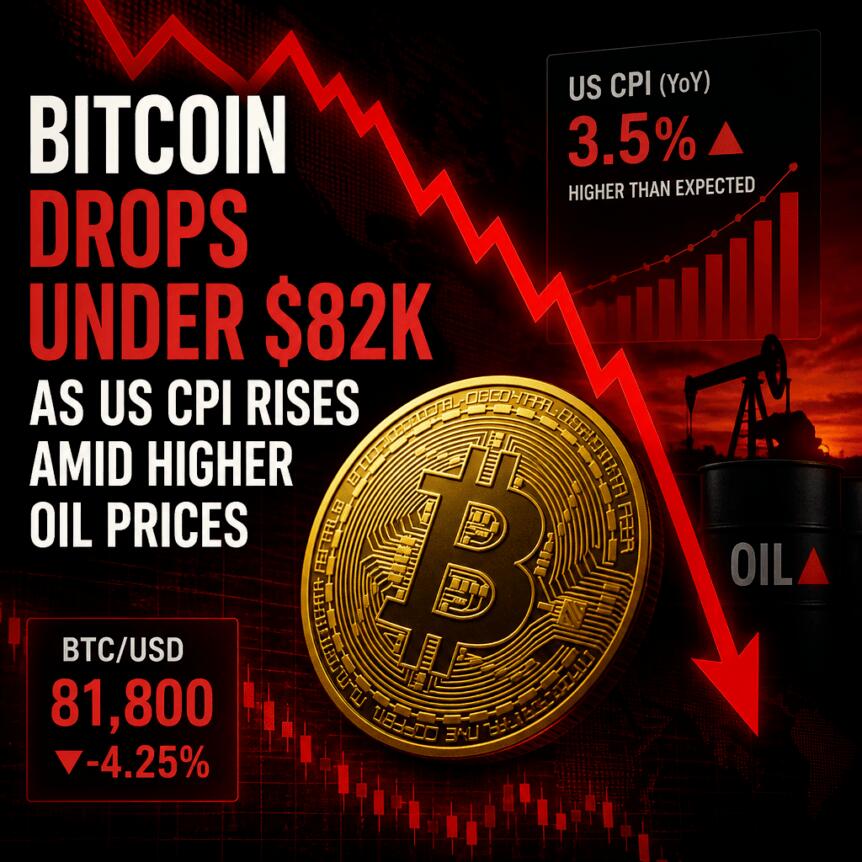
Bitcoin slipped below the psychologically important $82,000 level in the hours after the US Bureau of Labor Statistics released September Consumer Price Index (CPI) data, with the move closely tied to a hotter-than-expected inflation print and the market’s read-through to interest-rate expectations.
At around $81,926 on Bitstamp, BTC’s decline followed a CPI year-over-year rate of 3.7%—slightly above the 3.6% consensus—while fuel costs and broader energy-related components drove much of the surprise. The report also pushed up US Treasury yields and dragged gold lower, underscoring how macro repricing is still dictating near-term crypto price action.
Key takeaways
- Bitcoin fell to roughly $81,926 on Bitstamp after September CPI came in at 3.7% YoY versus 3.6% expected.
- Fuel and gasoline prices were the dominant factor, with gasoline up 9.1% YoY according to the BLS release.
- US bond yields jumped and gold declined to about $4,079 per ounce, signaling a broader risk-sensitive macro reaction.
- CME Group’s FedWatch Tool showed markets shifting toward the odds of a 25-basis-point move at the Fed’s late-October meeting.
Hotter US CPI tightens the macro grip on Bitcoin
TradingView data, as cited in coverage of the move, showed not only crypto but also gold and stock-index futures turning lower after CPI hit the tape. The CPI report confirmed a 3.7% year-over-year increase for September, which was 0.1 percentage points above the majority expectation, according to Bureau of Labor Statistics data.
The composition of the inflation gain mattered: fuel-price increases tied to global supply pressures—linked in the report discussion to the Middle East conflict and an oil-supply strain—were described as especially conspicuous.
The BLS release highlighted that gasoline was up 9.1% year-on-year, accounting for more than half of the “all items” monthly increase, while the energy index rose 5.2% over the month following a 2.1% increase in August. These details, from the BLS official CPI release, are important for investors because they suggest the inflation pressure is not only “core-like,” but also concentrated in inputs closely tied to global energy markets.
Core CPI also edges higher, limiting relief for rate-sensitive assets
Even beyond energy, the report did not provide broad cooling. Core CPI—defined as CPI excluding energy and food—came in at 2.6% year-on-year, also 0.1 percentage points higher than what markets expected.
Carson Group’s Sonu Varghese, commenting in an interview on CNBC, argued that investors should have anticipated elevated readings. He pointed to potential follow-through from higher diesel prices as well as demand-side effects tied to the “AI boom,” framing the “surprise” as increasingly difficult to justify given where the economy appears to be headed.
For crypto traders, the key takeaway is that even if the headline number is partially energy-influenced, the core component being firmer reduces the probability that markets can quickly pivot back to a softer Fed path purely on disinflation hopes.
Fed pricing shifts: higher yields and lower gold follow CPI
Market-rate expectations moved quickly after the CPI print. According to CME Group’s FedWatch Tool, the majority of participants adjusted toward a 25-basis-point rate hike at the Fed’s upcoming meeting on Oct. 28. The odds for that outcome rose to 53.7% from 22.1% the prior day, the tool’s data showed, while expectations for December reflected similarly hawkish probability levels, with a second 25-basis-point move standing at around 50%.
Theresa Sheehan of Econoday offered additional context, suggesting that—paired with softness in September payrolls—the FOMC may be inclined to hold rates at its late-October meeting while maintaining a bias toward hiking in December.
In commodities and rates, the CPI reaction followed a consistent macro playbook. Gold, which is often sensitive to real yields and the direction of monetary policy expectations, fell to approximately $4,079 per ounce. US bond yields rose as well, with the 10-year yield reaching 5.329%—described as roughly three basis points shy of new 24-year highs, based on the coverage’s referenced charting of market moves.
Economist Robin Brooks captured the sentiment in a blog post cited in the reporting, arguing that the CPI result was “the last thing global bond markets needed,” especially after earlier indications that a bond sell-off might be settling.
Where Bitcoin goes next: a defined zone and the next inflation catalyst
Despite the broader risk-off tone, Bitcoin’s immediate technical framing remained centered on a specific range. The article discussion noted BTC continuing to trade around a key area between $82,500 and $83,400, with analysts awaiting confirmation on whether that band could hold as support or instead give way.
That matters because macro-driven selloffs can quickly become self-reinforcing if a commonly watched level breaks. Conversely, if the range holds while yields stabilize, BTC often regains traction as traders refocus on crypto-specific flows rather than purely on duration and rate expectations.
Looking ahead, the next scheduled US data point in the chain of inflation signals is the Producer Price Index (PPI), due Friday, which was highlighted in prior Cointelegraph reporting referenced in the article. With CPI already shifting Fed pricing, traders are likely to watch whether PPI confirms another round of inflation pressure or—just as importantly—whether it points to easing input costs that could later feed into retail price trends.
For now, the main uncertainty is whether the CPI move proves to be a brief repricing tied to energy alone, or a more persistent inflation narrative that keeps yields elevated. Either way, Bitcoin appears to be reacting as a macro asset in the near term—so monitoring rate expectations and the next inflation prints may be as important as watching order-book dynamics.


Join Our Telegram channel to stay up to date on breaking news coverage
TD Cowen warns CFTC crypto rules may not survive past the 2028 election
The Commodity Futures Trading Commission’s new framework for leveraged crypto trading may not be finalized before the 2028 presidential election, and TD Cowen analysts say that timing puts the whole effort at risk.
Jaret Seiberg, a managing director at TD Cowen’s Washington Research Group, laid out the warning in a note dated October 12, 2026. “Time is running out,” he wrote. In his view, the agency at best delivers a formal proposal in late Q1 2027 or early Q2 2027, and finalizing the rule could stretch into early 2028. A rule finished that close to an election can be rewritten or scrapped by the next administration and a new slate of commissioners, the analysts argued, because agency rules lack the durability of a law passed by Congress.
The warning lands on a rulemaking that began on October 5, 2026, when the CFTC issued an advance notice of proposed rulemaking, a non-binding request for public input ahead of any formal rule. The notice asks for comment on a federal framework for retail crypto transactions involving leverage, margin or financing, an area the agency has never regulated through a dedicated federal lane.
Why the deadline matters
The CFTC moved after the Clarity Act, the market structure bill that would have handed the agency authority over spot crypto trading, stalled in the Senate in September 2026. Chairman Michael Selig has described the agency’s approach as a temporary solution meant to provide oversight while legislative efforts stay stuck, a framing TD Cowen reads as a concession that rulemaking alone cannot settle the industry’s regulatory status.
The analysts see no clean way out of the timing squeeze. Rushing the rule to beat the election raises the risk a judge blocks it on procedural grounds, Seiberg wrote, and even a careful process invites legal challenges that could run past 2028. In TD Cowen’s assessment, only legislation gives the framework a stable footing.
The comment period, set to run 60 days once the notice appears in the Federal Register, has not yet started. No publication date has been announced.
Join Our Telegram channel to stay up to date on breaking news coverage

Rival prediction markets Kalshi and Polymarket will reportedly be excluded from the Federal Trade Commission’s (FTC) probe into deceptive practices in the $167 million online sports gambling industry.
The two crypto-linked firms aren’t a focus of the FTC probe, which will instead set its sights on sportsbooks like DraftKings and FanDuel.
It will likely look into misleading advertisements, as well as the rate of suicides, hospitalizations, and bankruptcies caused by the industry.
Sources familiar with the matter told The Washington Sun that the industry evaluation “is in its early stages,” and that it’s conducted by political and career staffers.
New York alleges prediction markets cause problem gambling
Polymarket, which utilises blockchain technology, and Kalshi, which offers crypto perpetuals, are already under the scope of an insider trading probe overseen by Republican House Oversight Committee member James Comer.
The state of New York has also sued Kalshi and Polymarket this year, accusing them both of running an illegal gambling operation that’s encouraging problem gambling among people under the age of 21.
Last month’s Polymarket suit highlighted a study from the National Institutes of Health and American Psychological Association that linked pathological gambling to mental health disorders, suicidal behaviors and substance abuse.
Prediction markets say they aren’t offering gambling
Neither Kalshi nor Polymarket want to be considered gambling, and hope to be regulated federally under the Commodity Futures Trading Commission instead of individual states.
Kalshi CEO Tarek Mansour recently argued that prediction markets aren’t gambling because it is an open financial market that matches buyers and sellers.
Read more: American Indian tribes want Kalshi and Polymarket off their land
Last year, Polymarket CEO Shayne Coplan called DraftKings and FanDuel a sportsbooks “duopoly” that acts against winning bettors.
He said that Polymarket offers derivatives and shouldn’t be regulated like sportsbooks that offer gambling.
President Donald Trump’s son Donald Trump Jr. holds advisory roles in both firms. He holds $300,000 worth of Kalshi shares, and his investment firm 1789 Capital has invested $500 million in Polymarket.
Got a tip? Send us an email securely via Protos Leaks. For more informed news and investigations, follow us on X, Bluesky, and Google News, or subscribe to our YouTube channel.

BEIJING — U.S. credit card giant Visa announced Tuesday it had received approval from the People’s Bank of China for setting up a bank card clearing business in the country.
The news comes as the U.S. and Chinese presidents plan for their third meeting this year.
“This marks an important milestone toward the company serving China’s domestic payments market,” Visa said in a statement.
“For more than 40 years, Visa has been an active contributor to China’s dynamic payments landscape,” Visa CEO Ryan McInerney said. “We look forward to taking the necessary steps in the process, pursuant to the PBOC’s regulations, to begin operating domestically in China.”
McInerney joined U.S. President Donald Trump’s business delegation to Beijing in May and subsequently became chair of the U.S.-China Business Council in June. The Visa CEO also led a trip to Beijing in early September.
“The timing is notable,” said George Chen, partner and chair of digital practice, The Asia Group.
“Beijing chose to approve visa’s license just ahead of the APEC Leaders’ Meeting in Shenzhen next month, where Xi [Jinping] and Trump are expected to meet again,” he said. “The move suggests that Beijing is keen to demonstrate tangible progress for American businesses before Trump’s next visit to China.”
Trump told Fox News after his Beijing trip in May that he brought up Visa’s request to gain China market access. After the summit in September, China said it would approve applications from all foreign financial institutions to operate in the country.
Entering a closed market
Mainland China has kept a tight grip on its financial sector, favoring domestic players and restricting cross-border capital flows.
Visa previously said it had applied with the PBOC in May 2020 to operate a bank card clearing institution.
The company has worked with Chinese banks for dual-branded cards, for which China’s UnionPay processes transactions domestically and Visa processes overseas payments. In January, Visa said the mainland China-issued cards could be linked to Apple Pay for use overseas.
Rival Mastercard‘s joint venture in China said it started processing payments in 2024 after getting the PBOC’s approval to begin bank card clearing preparations in February 2020.
American Express was the first, receiving its processing license in June 2020 after getting the PBOC nod back in 2018.
Mobile pay dominates daily consumer transactions in China, primarily facilitated by Tencent’s WeChat and Alibaba-affiliate Ant’s Alipay.
Bitcoin’s price nosedived once again on Tuesday morning, but this time it marked a higher low and rebounded quickly toward $84,000.
Most larger-cap alts have experienced more substantial declines, including ZEC, ADA, and NEAR. SOL is below $110, ETH is down by over 1%, while XRP lost the $1.40 level.
BTC Goes Wild
Bitcoin’s troubles began at the start of the previous business week when it was rejected at $87,000 for the fourth or fifth time in the past half a month. At first, it held at $85,500 before bears took complete control and pushed it down to $83,500; the final move came last Thursday, when the cryptocurrency slumped to $80,400.
After losing nearly $7,000 in days, the asset was bound for a bounce-off, which took place by Friday evening and during the weekend. Bitcoin spent the next few days trading sideways between $82,000 and $83,000 before it tried to break out on Monday. However, it was stopped at $84,000 once again.
More volatility ensued on Tuesday morning as BTC dumped to $80,850 (on Bitstamp) and then rebounded just as quickly to $84,000. Similar violent fluctuations harm over-leveraged traders, and the total value of liquidated positions on a daily scale skyrocketed to over $800 million.
As of press time, BTC remains about $500 away from the $84,000 mark. Its market capitalization stands still at $1.670 trillion on CMC, while its dominance over the alts is up to 59.7%.

Alts See Red
Ethereum dipped to $2,400 earlier this morning, before rebounding to over $2,500. However, it’s still 1.2% down on the day. BNB is down to $745, while XRP has slipped further away from the coveted $1.40 level. SOL is below $110, HYPE has slumped by 5%, and so has ADA. Cardano’s token is below $0.24 as of now.
ZEC has dropped by over 6% to $1,226, while NEAR has plummeted by 10% to under $5.20. HBAR, ONDO, ENA, AVAX, PUMP, and WLD are also deep in the red. STX and BTW are among the few exceptions in the green today.
The total crypto market cap is down by over $20 billion on a 24-hour scale to $2.810 trillion on CMC.

The post ZEC and NEAR Plummet Hard, BTC Recovers From Rollercoaster Ride: Market Watch appeared first on CryptoPotato.


- KuCoin 5.0 integrates AI, trading tools, and wealth management services.
- KuCoin introduces a unified account for eligible spot, margin, and futures traders.
- The upgrade adds accessibility features and expands AI Assistant 5.x.
KuCoin has unveiled KuCoin 5.0, a comprehensive platform upgrade that integrates artificial intelligence (AI), trading tools, wealth management services, and accessibility features as the cryptocurrency exchange seeks to improve the user experience.
Announced on October 9, 2026, the upgrade covers six areas: compliance, technology, assets, experience, AI, and wealth management.
The company said the changes are intended to create a more unified and efficient platform, building on its global brand initiative, “Trust, Built-in,” and its “Trust First. Trade Next.” proposition.
The upgrade includes a redesigned interface, an expanded AI assistant, and new ways for users to manage funds across trading and wealth management services.
KuCoin 5.0 introduces redesigned interface and unified trading account
KuCoin 5.0 includes an updated Profile Center 2.0, featuring a card-based layout designed to make account information and frequently used functions easier to access.
The exchange has also upgraded its sub-account system to simplify account creation, strengthen security controls, and improve management.
Enhanced K-line charts offer additional tools and real-time data, with settings synchronised across devices.
The platform has introduced a colour vision accessibility mode to make charts and other visual information easier to distinguish for users with different colour vision needs.
KuCoin estimates that approximately 360 million people worldwide experience some degree of difficulty distinguishing colours.
The upgrade also retains Lite and Pro experiences to accommodate users with different levels of familiarity and trading requirements.
For eligible users at VIP1 level and above, KuCoin has introduced the Unified Trading Account (UTA). The feature brings spot, margin, and futures trading into a shared framework for funds, margin, and risk management.
According to the company, this arrangement reduces the need to transfer funds between separate accounts and allows for more efficient capital use across eligible products.
AI assistant expands across platform services
KuCoin 5.0 includes an upgrade to AI Assistant 5.x, creating a unified entry point for conversations, questions, and task completion across the platform.
The assistant covers market insights, Earn services, trading, customer support and campaigns.
It uses page context and user actions to better understand users’ requirements, recommend relevant services and help them complete tasks.
The company said the AI integration is intended to extend across the user journey rather than operate as a standalone feature.
Wealth management tools connect earning and trading
The upgrade also links earning and trading activities through wealth management products and benefits for VIP users, Earn access through sub-accounts and support for selected wealth assets within the UTA framework.
Main accounts and sub-accounts can participate in Earn while managing funds separately.
Meanwhile, KCUSD can be used as margin within the Unified Trading Account, reducing the need to move funds repeatedly between earning and trading activities.
KuCoin said these changes are supported by continued development of its compliance, technology and asset foundations.
“Trust should be something users can experience in every interaction—not only in how their assets are protected, but in how clearly, reliably and efficiently the platform works,” said BC Wong, CEO of KuCoin.
Wong added that KuCoin 5.0 translates the company’s long-term commitment to trust into its product, providing users with greater confidence and control while laying the groundwork for the next stage of digital finance.
The company said the upgrade establishes a foundation for further platform development by connecting trading, asset management, and intelligent services within a more integrated experience.

Omar has accused Trump of having a “weird” obsession with her
Trump has long targeted Omar and her birthplace Somalia during his anti-immigration speeches and remarks.
Last December, while delivering an address in Pennsylvania, Trump referenced Omar during an ant-immigration tirade, claiming she does “nothing but b-tch” and arguing she comes from a county considered to be “the worst” in the world. “We ought to get her the hell out,” the President said, pausing as members of the crowd chanted “send her back.”
Omar responded by saying Trump’s “obsession” with her is “beyond weird.”
“Since he has no economic policies to tout, he’s resorting to regurgitating bigoted lies instead,” said Omar via social media, reacting to a clip of the President’s speech. “He continues to be a national embarrassment.”
In January, Omar was approached by a man with a syringe during a Town Hall meeting in Minneapolis. The man sprayed her with a substance before being restrained by on-site security. Lab analysis later determined the liquid contained acetic acid and identified it as a mixture of water and apple cider vinegar. Last month, a 56-year-old man named Anthony James Kazmierczak was sentenced to 14 months in prison for the assault.

Join Our Telegram channel to stay up to date on breaking news coverage
Ledger has halted sales by its Southeast Asia reseller CryptoBilis after wallets belonging to customers who bought devices through that channel were drained of an estimated $72 million to nearly $90 million.
The hardware wallet maker said it is investigating the losses and has asked CryptoBilis to pause all sales and shipments of Ledger devices pending the outcome. Ledger advised users who purchased from the reseller in the past 90 days not to set up unused devices, and to move assets to a new Ledger device with a new seed phrase if their device is already in use. It said it would keep customers informed as the investigation progresses.
On-chain estimates of the losses differ. The analyst Specter traced ten collection addresses and counted inflows from hundreds of victim wallets across Ethereum, TRON and Bitcoin, putting total losses above $86 million as the count was still rising. The analyst tanuki42 put the figure above $72 million, and MistTrack estimated almost $90 million. Ledger has confirmed no dollar amount.
CryptoBilis claims to be the authorized reseller of Ledger products in Malaysia and sells devices in Indonesia, Malaysia and the Philippines. It has not responded to a request for comment.
The suspected mechanism is supply-chain tampering rather than a flaw in Ledger’s software. Binance founder Changpeng Zhao said the available information points to a supply chain attack at a single vendor, with a small number of people likely having bought fake or tampered devices. Security researcher Taylor Monahan, for her part, insisted there is no zero-day in Ledger products and warned that hasty fund-moving exposes users to phishing risk greater than the incident itself.
Some stolen funds have already moved. On-chain tracking shows the suspected attacker has laundered about 430 ETH, worth roughly $1.07 million, through the mixer Tornado Cash, and Arkham-tracked wallets linked to the thefts still hold about $70.6 million. Tether has frozen USDT on addresses tied to the thefts, after which the attacker began swapping USDT into USDD, a Tron-based stablecoin Tether cannot freeze.
Ledger declined further comment. Its investigation is ongoing.
Join Our Telegram channel to stay up to date on breaking news coverage

XRP Ledger developers have defended the emergency security patch used to fix a bug capable of creating XRP beyond the network’s fixed supply, saying they could not wait for the network’s usual two-week validator vote without exposing the flaw to attackers.
The fix, released on Sept. 25, came three days after a bug bounty report, and took effect immediately on any server that installed it. It was the first deliberate bypass of the normal amendment process since the system was introduced more than ten years ago, they said.
“With a normal amendment vote, the fix would have been public for weeks before it took effect, risking network security,” XRPL developers said in an X post on Sunday.
The expedited fix led to questions about XRPL’s level of decentralization. On its website, XRPL claims it is a fully decentralized, public blockchain — a characterization that has been central to arguments that its native token, XRP, is not a security.
XRPL security fix “raised a lot of questions”
Cyber Capital founder Justin Bons said Thursday that marketing XRP to retail investors as decentralized amounted to “straight-up fraud.” He argued that the Sept. 25 emergency release shipped as binaries only, temporarily withheld the source code and pressured operators to upgrade.
However, XRPL Foundation said the decision to skip the normal amendment process was made jointly by the Foundation, RippleX, core developers and validators after assessing the severity of the bug.
“No single party could make that call alone. Every validator and node operator chooses what software to run, and 3.4.1 only became required through a normal amendment vote with more than 80% validator support for two weeks. Protocol changes still go through amendments,” the foundation said.
Related: Ledger confirms unauthorized hardware implant, says losses may exceed $86M
XRP Kuwait, an independent validator operator, also rejected claims that the coordinated upgrades signaled centralized control.
“We disagree with the claim that operators coordinating an update is, in itself, proof of centralized control,” it said. “Coordination is not the same as control. Independent operators can assess a situation, communicate with one another, and reach the same conclusion without giving up their independence.”
Bug could have minted unlimited XRP
The bug was an integer overflow in the XRP Ledger’s payment engine that had been present since 2015, according to the project’s vulnerability disclosure report.
XRP balances are stored as 64-bit integers with a fixed maximum. When a sum exceeded that maximum, the calculation wrapped to a smaller number instead of failing.
An attacker could exploit this by creating hundreds of specially priced offers, each asking for a very large amount of XRP, then sending one payment that consumed them all.
The engine would credit each offer owner their full amount but charge the buyer only the tiny wrapped total. The difference would be newly created, spendable XRP.
The attack required deliberately constructed offers and could not be triggered by normal trading activity, according to the report. Developers said they found no evidence that the issue was exploited on any public network.
Magazine: Ledger attack spreads to EU, AI finds ’18 trillion XRP’ bug: Hodler’s Digest

MicroStrategy’s corporate Bitcoin strategy is back in focus after Strategy’s chair, Michael Saylor, posted a tease to investors about a possible near-term signal tied to the company’s latest BTC purchases. Writing on X, Saylor added the line “There’s always room for more orange,” a reference that has become shorthand for the firm’s continued willingness to add Bitcoin.
Still, for readers expecting a fresh, formal update through U.S. SEC filings, timing may be tight. An official disclosure related to the most recent activity is not expected to arrive before Tuesday because federal offices are closed on Monday for the Columbus Day holiday.
Key takeaways
- Strategy says it has pushed its most recent weekly Bitcoin buying far past its typical budget window through early October repurchases.
- According to an Oct. 5 SEC 8-K, Strategy ended the Sept. 28–Oct. 4 period holding exactly 848,000 BTC.
- Over the same dates, the company also repurchased about 1.77 million shares of its STRC preferred stock for $176.3 million.
- Analyst Shanaka Anslem Perera highlights that capital raised in the third quarter does not automatically translate into immediate BTC purchases, due to other uses such as cash reserves and preferred-share buybacks.
What Strategy disclosed in its latest SEC filing
At the center of this update is a filing that lays out Strategy’s activity across a defined one-week span. In an Oct. 5 8-K form with the U.S. Securities and Exchange Commission, the company reported that it bought 334 Bitcoin between Sept. 28 and Oct. 4, paying $28.7 million for the purchases. The buy adds to Strategy’s cumulative holdings, taking the company to exactly 848,000 BTC.
That same 8-K window also included a substantial preferred equity repurchase. Strategy said it repurchased roughly 1.77 million shares of its STRC preferred stock for $176.3 million during the same period.
For investors, the practical takeaway is that Strategy’s BTC program is not operating in isolation. The company is simultaneously managing its capital structure, including actions that reduce preferred-share exposure. That matters because it can affect how much cash remains available for later Bitcoin buys and how capital providers view near-term risk versus balance-sheet strengthening.
Saylor’s “orange” message and what investors may read into it
Saylor’s X post frames the next step as something investors should watch for on Sunday—suggesting there may be another sign of BTC accumulation. The phrasing, however, appears more like a broad encouragement than a specific update tied to a particular filing.
With Monday’s federal holiday likely to delay administrative timing, the market’s ability to confirm details through SEC channels may not improve until Tuesday. In other words, traders who rely on filings for verification may have to bridge the gap between public commentary and formal documentation.
In previous cycles, this kind of messaging can still move sentiment around whether additional buying is coming. But as Strategy’s disclosures show, the company’s real confirmation typically arrives through SEC paperwork, not social posts.
Why “cash now, buy later” remains a live question
Beyond the immediate Bitcoin figure, analysts are weighing how Strategy financed its recent actions and what that implies for future pace. Independent analyst Shanaka Anslem Perera pointed to third-quarter funding and how it translated into BTC holdings over time.
According to Perera, Strategy raised $5.41 billion from new common shares in the third quarter and ended that quarter with 1,666 more BTC than it held at the end of June. He also notes that Strategy’s SEC disclosures allocate 9.5% of the raised capital directly to bitcoin purchases. Other disclosed uses, Perera wrote, include a dollar reserve, cash, dividends, and preferred-share buybacks.
Perera’s central argument is that the relationship between raising capital and buying Bitcoin may not be one-to-one on a day-to-day or even quarter-to-quarter basis. In an interview carried by Cointelegraph on Sunday, he explained that “raising capital does not necessarily mean buying bitcoin,” emphasizing that investors should consider what the financing left behind—particularly cash and existing claims such as debt and preferred shares, which sit ahead of common stock.
At the same time, he clarified that the company’s retained cash can still fund later purchases. From a balance-sheet perspective, strengthening liquidity can also be supportive for shareholders, especially if it reduces pressure to sell assets or rely on external borrowing to sustain Bitcoin accumulation.
Bitcoin buy intensity versus capital structure management
The recent window highlighted in Strategy’s SEC filing suggests an active BTC posture, but it also illustrates how tightly the Bitcoin narrative is interwoven with other corporate moves. The company “ended September by spending more than six times its weekly Bitcoin buying budget,” according to the coverage context leading into the SEC disclosure. In that period, the firm bought 334 BTC for $28.7 million—bringing total holdings to 848,000 BTC.
Meanwhile, Strategy repurchased a large quantity of preferred stock for $176.3 million during the same week. That dual activity complicates simplistic interpretations. Instead of viewing Bitcoin buys as the only variable, investors also have to watch how Management allocates cash across different priorities: accumulating Bitcoin, building reserves, and addressing preferred equity.
This dynamic creates a useful lens for readers tracking Strategy. If BTC buying appears to slow while preferred repurchases or cash retention rises, it may reflect not a change in conviction, but a timing shift in how capital is deployed. Conversely, if BTC buys accelerate without corresponding reductions in liquidity, that may indicate the company is comfortable drawing down reserves or drawing from ongoing capital needs.
Perera’s remarks underscore this tension: even when disclosures show a portion of raised capital earmarked for Bitcoin, the rest may support other uses that don’t immediately show up as BTC purchases. That is why investors may want to focus not only on headlines about “more room for orange,” but on how each SEC filing breaks down timing and allocation.
Looking ahead, readers should watch for the next SEC update that confirms what Strategy actually executed in the days following Saylor’s message. The uncertainty is not whether the company remains committed to Bitcoin—recent filings and ongoing commentary point the other way—but rather the pace and sequencing of purchases relative to preferred buybacks and the remaining cash balance. With Tuesday’s filing timing likely to be the first clear checkpoint after the Columbus Day closure, the market may get fresh data soon enough to separate speculation from documented activity.
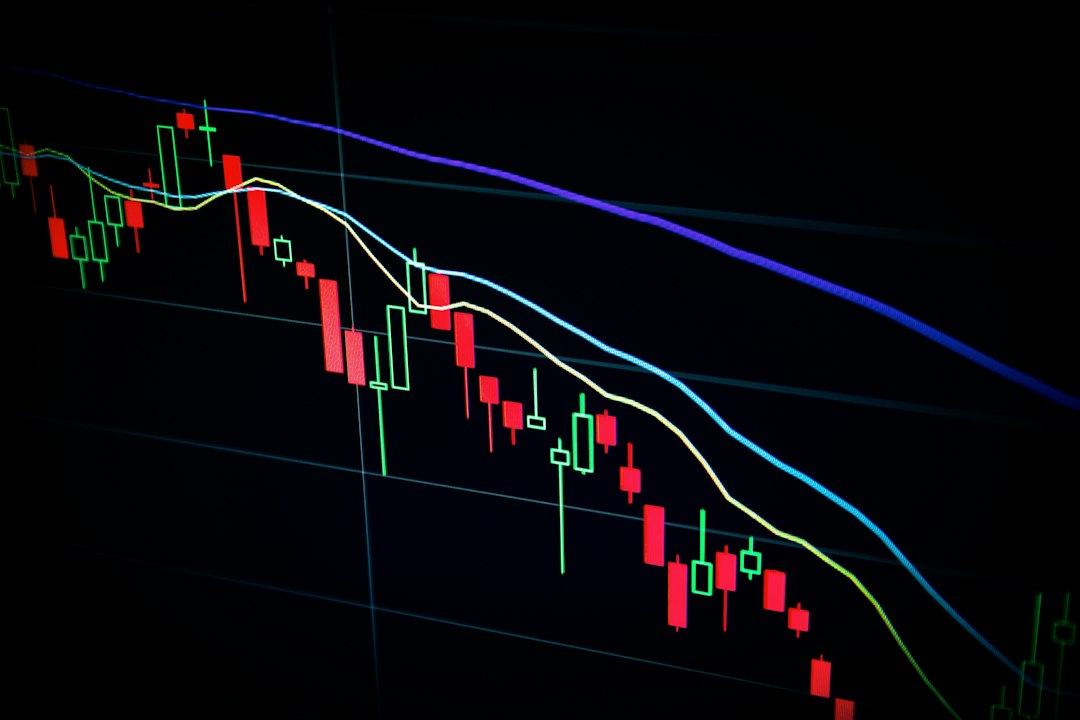
On-chain data indicates exactly one year ago today, the cryptocurrency market experienced an epic crash, recording approximately $19.2 billion in market-wide single-day liquidations, wiping out over 1.65 million investors, and setting the most brutal single-day liquidation record in history, comparable to the 2020 “312” black swan event. It is worth remembering not because of hype, but because understanding what happened helps UK traders prepare for future volatility.
The Scale of the Crash
Where Has the Market Been Since?
The broader picture:
What This Means for UK Traders Today
The October 11 crash reflected a complex mix of factors: overbought conditions after a strong rally, macro headwinds, and the mechanics of leveraged trading that amplified losses as liquidations cascaded through exchanges. But the core lesson is simple: cryptocurrency markets remain volatile, and sharp drops are a structural reality of the market.
Key takeaways for UK retail traders:
- Volatility is real. A 13% single-day drop in Bitcoin and 22-37% moves in major altcoins show why only invest what you can afford to lose entirely.
- Liquidations hurt. Over 1.65 million investors were wiped out in a single day, most of them using margin and derivatives. If you use leverage, understand your liquidation price in advance and size positions accordingly.
- Exchange choice matters. Thin liquidity on smaller platforms means your actual exit price could be far worse than the live price you see in news. Trade on well-capitalized, regulated exchanges.
- Recovery is slow. One year on, the market is still 34% below the October 2025 peak. If you believe in long-term crypto value, plan accordingly.
Caution remains warranted. UK traders should focus on building a portfolio strategy around volatility rather than trying to time the market.
What to Watch Now
Rather than trying to predict the next crash, UK traders should focus on:
- Your own portfolio size and leverage.
- Whether your exchange is FCA-regulated (important for UK consumer protection).
- Your exit strategy, not your entry.
- Whether your holding period matches your investment horizon.
The October 11 crash is a reminder that cryptocurrency markets remain young and volatile. Understanding that risk—and building a portfolio strategy around it—matters more than trying to time the market.

Anthropic warns small AI models could self-replicate through IoT devices

Bitcoin Drops Under $82K as US CPI Rises Amid Higher Oil Prices

Earth’s Condition Is ‘Serious and Getting Worse’ as Climate Change Intensifies


-

 Fashion4 days ago
Weekend Open Thread: Quince – Corporette.com
-

 Sports6 days ago
Saracens’ Venter Brands Premiership Rugby ‘Autocratic’ Over £5,000 Media Fine
-

 Business & Hustles4 days ago
PwC: Supply-Chain Diversification, AI and Energy Transition Open New Growth Paths for Thailand
-
 Entertainment6 days ago
10 Flawless Movies With the Cleverest Protagonists
-

 Sports6 days ago
Enzo Maresca all smiles as Man City return to training after guilty verdict
-

 Sports6 days ago
Southampton’s Eckert Spared Ban as FA Suspends Six-Week Sentence Over Spygate
-

 Sports5 days ago
Multiple Power Four programs face College Sports Commission investigations over alleged NIL cap evasion
-
 Sports6 days ago
Asiad selection row: Para-shooters allege corruption; PCI denies claims | Asian Games 2026
-

 Crypto3 days ago
XRP Ledger Defends Emergency Patch Amid Criticism
-

 Crypto6 days ago
Crypto.com Teams Up With Insilico Terminal to Give Traders Free Pro-Level Tools
-

 Crypto2 days ago
Rep. Omar Says She Will ‘Not Be Silenced’ After Federal Agents Raid Her Home
-

 Sports4 days ago
College Football Week 6 Bets: Three Picks for Saturday’s Biggest Games
-
 Crypto4 days ago
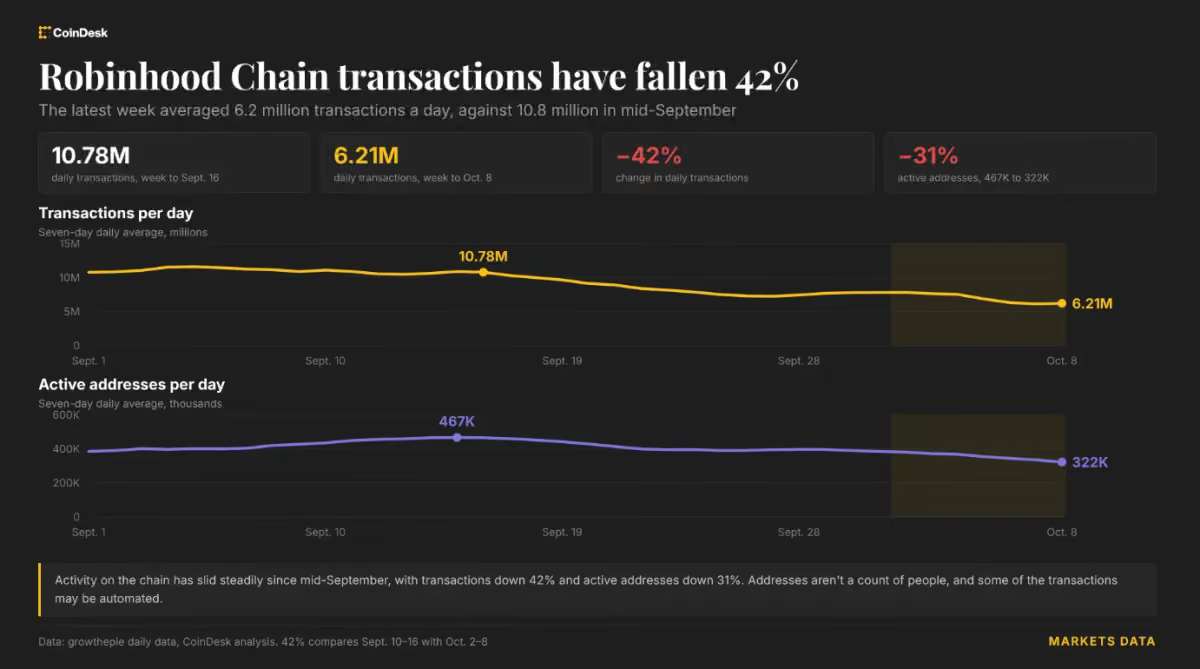
Robinhood Chain slowdown spreads from fees to trading as transactions fall 40%
-

 Sports3 days ago
Duke receives encouraging update regarding top prospect from class of 2028
-

 Crypto2 days ago
KuCoin unveils 5.0 upgrade with AI tools and unified trading account – CoinJournal
-

 Crypto5 days ago
Mashinsky Accepts Lifetime Industry Ban and Up to $35 Million in Conditional Payments | The Defiant
-

 Tech & AI6 days ago
ICE Emails Discuss Using Palantir-Supported Tool to Investigate Voter Fraud
-

 Crypto3 days ago
Saylor Signals Next Bitcoin Buying Plan After September STRC Buybacks
-

 Sports5 days ago
Morocco and Senegal await AFCON final verdict after arbitration hearing – Sports
-

 Sports5 days ago
Saudi oil crisis affects Neom project, 2034 World Cup plans
You must be logged in to post a comment Login