
Business & Hustles
Dividends & stock splits: L&T Tech, Shriram Finance among 24 stocks turning ex-record date this week. Do you own?


To be eligible for these corporate actions, investors must hold the shares in their demat accounts as of the respective record dates. The list is tentative, as more companies may announce record dates for dividends, bonus issues, stock splits and rights issues during the week.
Here is the day-wise list of corporate actions to watch out for this week:
October 26 (Monday)
Hexaware Technologies has fixed Monday as the record date for its interim dividend of Rs 9.5 per share. Midas Fashions will turn ex-record date for a stock split in the ratio of 1:2, meaning that every share with a face value of Rs 10 will split into two shares with a face value of Rs 5 each.

October 27 (Tuesday)
L&T Technology Services has fixed Tuesday as the record date for its interim dividend of Rs 20 per share. Anantam Highways Trust will also turn ex-record date for its dividend.Indian Emulsifiers and Magnus Steel and Infra have fixed Tuesday as the record date for their respective rights issues.
Also read | Jio IPO GMP today: All eyes on telecom major’s mega listing this week. What is grey market signalling?
October 28 (Wednesday)
Cyient has set Wednesday as the record date for its interim dividend of Rs 12 per share, while Nippon Life India Asset Management will turn ex-record date for an interim dividend of Rs 9.5 per share. Meanwhile, Urban Enviro Waste Management has fixed Wednesday as the record date for its rights issue in the ratio of 1:1.
October 29 (Thursday)
Shriram Finance has fixed Thursday as the record date for an interim dividend of Rs 6.5 per share, CRISIL for Rs 17 per share, and KSolves India for Re 1 per share.
Meanwhile, Chandni Machines will turn ex-record date for a stock split in the ratio of 1:10, where each share with a face value of Rs 10 will split into 10 shares with a face value of Re 1 each.
October 30 (Friday)
Chennai Petroleum Corporation has fixed Friday as the record date for an interim dividend of Rs 25 per share, Ador Welding for Rs 7.5 per share, Steel Strips Wheels for Rs 1.5 per share, Amwill Health Care for Rs 0.5 per share, Hypersoft Technologies for Rs 0.25 per share, and Sagility for Rs 0.15 per share. DCM Shriram and RailTel Corporation of India will also turn ex-record date for their respective dividends.
Additionally, Galaxy Agrico Exports and Meenakshi India will turn ex-record date for stock splits. Interactive Financial Services will turn ex-record date for its rights issue.
Disclaimer: This article has been written by Debaroti Adhikary, who is not a SEBI-registered Research Analyst or an Investment Adviser. Debaroti Adhikary and his/her ‘relative(s)’ (as defined under Section 2(77) of the Companies Act, 2013) do not hold any financial interest in the companies mentioned in this article as of the date of publication. The views/recommendations mentioned in this article, wherever applicable, are those of the respective SEBI-registered Research Analyst/brokerage and have been reproduced/reported with due attribution. They should not be construed as the views or recommendations of The Economic Times Digital or the journalist. Readers are advised to consider the original research report and make their investment decisions based on their own assessment. Brokerage disclaimers here.



KANSAS CITY — Foodservice operators are utilizing limited-time menu items to spur menu innovation.
For instance, fried chicken maker Jollibee has unveiled its honey garlic menu. The collection is aimed at consumers seeking sweet and salty flavor pairings and includes two items: honey garlic bone-in fried chicken and a honey garlic chicken sandwich. Both offerings feature a house-made honey garlic glaze.
“With our new honey garlic fried chicken and chicken sandwich, we’re delivering the perfect balance of familiar comfort and bold flavor innovation,” said Luis Velasco, senior vice president and marketing head, Jollibee North America.
Cracker Barrel Old Country Store has introduced its holiday menu featuring two new menu items. The company’s cinnamon swirl pancakes merge its existing cinnamon swirl french toast recipe with a pancake format, with cinnamon filling and cream cheese icing. The country fried turkey sandwich combines turkey tenderloin with gravy and cranberry relish served on a toasted bun.
Red Robin Gourmet Burgers intends to deliver a “premium” burger experience with its latest menu innovation, the prime rib stack burger. The limited-time item features a beef patty topped with sliced prime rib, caramelized onions, Monterey Jack cheese and garlic aioli on a brioche bun.
“Burgers are in our DNA, and we wanted to create a burger that brings a little extra indulgence to the table,” said Brian Sullivan, executive chef and vice president of culinary and beverage innovation at Red Robin.

Greenland Energy CEO Robert Price says the United States needs to look to “friendly jurisdictions” to become independent from foreign supplies of oil. His company is in the permitting process and plans to drill wells in Greenland in 2027.
An American company says it’s positioned to tap into a potentially massive oil prospect in Greenland next year, following President Donald Trump’s announcement that resource exploration “is getting ready to begin” on the Arctic island.
Greenland Energy Company is in the permitting process to drill its first well in 2027 in eastern Greenland, according to CEO Robert Price. The company claims that its project, in partnership with British company 80 Mile, holds the sole oil permits for exploratory drilling in Greenland, which makes it a potential key player in Trump’s interest in Greenland’s resources.
Trump announced on Truth Social last week that “massive” resource exploration was expected to start in Greenland.
“Massive Oil, Gas, and Mineral Exploration is getting ready to begin in our new and beautiful Greenland!” Trump posted on Truth Social.

Satellite imagery shows Jameson Land Basin in East Greenland, the proposed site for Greenland Energy Company’s oil drilling project. (Gallo Images/Orbital Horizon/Copernicus Sentinel Data 2026 / Getty Images)
“There are Experts that are saying that the amount of easily available Oil is far greater than that of almost any land, anywhere in the World and, even more importantly, from a Security Purpose in the Defense and Offense of both the United States of America, and Europe, is second to none,” he continued.
Trump’s announcement did not specify details about how or when resource exploration would begin in Greenland.
Greenland’s government stopped granting new oil and gas permits in 2021 over concerns about the environmental impact of oil extraction. However, existing permits granted before 2021 remain valid, pending additional government approval for extraction.
According to Greenland’s Ministry of Business and Mineral Resources, White Flame Energy, which is owned by 80 Mile, obtained two permits in 2015 and a third in 2018 for exploratory drilling and possible extraction of oil in Jameson Land in eastern Greenland. Price’s company, Greenland Energy has partnered with the British company as an investor in the endeavor and will act as the operator of the project.
Price says the project has drawn the attention of governments and investors due to the potential significance the oil might have to reduce U.S. dependence on foreign oil supplies. According to Price, an independent engineering report found that the planned drilling site could contain up to 13 billion barrels of crude oil.
The exact quantity of oil present in the Jameson Land Basin and whether the oil can be economically extracted will not be known until exploratory drilling occurs.
TRUMP’S GREENLAND OBSESSION ISN’T RANDOM. HERE’S WHAT’S AT STAKE

A container ship floats in the harbor in Nuuk, Greenland. The Arctic island is a geographically strategic location for the U.S. military. (Julia Wäschenbach/picture alliance/Getty Images / Getty Images)
Price has positioned his company’s project as a long-term solution to slow down chokepoints in the global supply chain caused by conflicts like the war in Iran.
“If we’re successful, or even partially successful, this could really help some of the chokepoints in the Middle East. So of course the U.S. government has been acknowledging what our project is and monitoring it,” Price told Fox Business.
According to Price, measurements taken at the surface of the proposed drilling site show that the crude oil Greenland Energy Company intends to extract genetically matches oil found in the North Sea, which means European refineries may have existing capabilities to process it.
TRUMP’S AMBITIOUS ENERGY BET COULD BE A WINNING HAND AS THE WORLD BURNS MORE OIL, GAS THAN EVER
Finding new oil supplies in “friendly jurisdictions” is essential to the United States maintaining its independence from foreign oil supplies, Price says.
“It’s incumbent upon the United States to look beyond the shale plays for a supply of energy moving forward,” said Price.
“That supply is dwindling, and that’s why we need to look to friendly jurisdictions like Greenland to bring on new supplies of oil for the people of the United States and the European community,” he continued.
Greenland’s government said that the Jameson Land project remains in the exploration phase, and exploratory drilling cannot start until environmental social impact assessments are approved. The government previously objected to the project’s proposed timeline to drill in the winter of 2026/2027, according to a statement on its website.
Price told Fox Business that his company has filed all environmental reports and plans to drill its first well at some point in 2027.
TRUMP’S MASSIVE GREENLAND DEAL MAKES CLEAR WHO CONTROLS THE ARCTIC’S STRATEGIC FUTURE

President Donald Trump, Denmark’s Prime Minister Mette Frederiksen and Greenland’s Prime Minister Jens-Frederik Nielsen sign a trilateral security deal on the sidelines of the 81st United Nations General Assembly in New York, on Sept. 22, 2026. (Brendan SMIALOWSKI / AFP via Getty Images / Getty Images)
Price is also president of USFM Corporation, a private company that is drilling for minerals, including cobalt, nickel and platinum, in western Greenland.
Price said that the security of Greenland is essential to both the future of both USFM’s mineral exploration and Greenland Energy’s potential oil drilling. He pointed to a recent security agreement between the U.S., Greenland and Denmark as important part of continuing resource exploration on the island.
| Ticker | Security | Last | Change | Change % |
|---|---|---|---|---|
| GLND | NO DATA AVAILABLE | – | – | – |
The three nations signed a trilateral agreement at the United Nations General Assembly in September. The security agreement permanently cements U.S. military rights in Greenland while affirming Greenland’s right to self-determination.
“Now we have clarity. Part of that clarity is Greenland Energy and USFM. We’re going to be in Green Land a very long time,” Price said. “We embrace the trilateral agreement because for a company like ours, having certainty in the security of Greenland for our long-term investment is very important.”
The security agreement does not affect existing oil permits or guarantee American resource exploration in Greenland.
CLICK HERE TO DOWNLOAD THE FOX NEWS APP
Greenland’s government declined to comment on Trump’s Truth Social announcement.

For people who enjoy beauty, fashion, and creative expression, becoming a makeup artist can be an appealing career goal. Makeup artists may work with individual clients, photographers, event organizers, bridal parties, or beauty businesses. However, building a successful career requires technical knowledge, consistent practice, and the ability to understand each client’s needs. Enrolling in makeup classes Brampton can be a useful first step for aspiring artists who want to develop their skills in a structured learning environment.
Build a Strong Foundation in Beauty Techniques
Every makeup artist needs a reliable understanding of basic application techniques. These include skin preparation, foundation matching, concealer placement, powder application, eyebrow definition, eyeshadow blending, and lip colour selection.
Learning the fundamentals helps students create balanced looks and understand how products interact. It also makes advanced techniques easier to learn because students already understand essential concepts such as blending, coverage, and colour coordination.
Beginners can benefit from breaking each technique into smaller steps. Instead of attempting a complete professional look immediately, they can practise one skill at a time and gradually combine the techniques.
Gain Practical Experience
Practical experience is essential for developing makeup artistry skills. Reading about products can provide useful information, but applying them personally helps students understand texture, coverage, blending, and application pressure.
A makeup Lesson Brampton may offer a learning opportunity for people who want to improve their practical knowledge. Prospective students should review the course curriculum to determine whether it includes demonstrations, supervised practice, and feedback.
Repeated practice also helps learners recognize common mistakes. For example, they can identify when foundation is too heavy, eyeshadow lacks blending, or contouring appears too strong. Correcting these issues gradually improves precision and consistency.
Understand Different Makeup Styles
Makeup artists often need to adapt their work to different occasions and personal preferences. A natural makeup look for a daytime event requires a different approach from dramatic evening makeup or a bridal look.
Students can explore soft glam, smoky eyes, classic eyeliner, colourful editorial makeup, and natural complexion techniques. Learning different styles expands creative flexibility and makes it easier to respond to individual requests.
Bridal and event makeup can be particularly interesting for aspiring artists. Exploring bridal makeup Brampton can introduce learners to occasion-focused beauty inspiration and techniques associated with polished event appearances.
Before providing bridal services professionally, artists should gain adequate practice and understand how to work with clients’ expectations, schedules, and preferred looks.
Learn Product Selection and Colour Theory
Product knowledge is another important part of makeup artistry. Artists need to understand differences between foundations, concealers, powders, eyeshadows, lip products, and setting products.
Colour theory can also help learners make better decisions. Understanding warm, cool, and neutral undertones can assist with foundation matching and colour coordination. Knowledge of complementary colours can inspire more creative eye makeup and help artists build cohesive looks.
Students should also learn to work within different budgets. A professional result does not always require the most expensive products; appropriate selection, good technique, and suitable tools are equally important.
Develop Hygiene and Client Communication Skills
Anyone considering a professional makeup career should take hygiene seriously. Clean brushes, sanitized equipment, disposable applicators where appropriate, and careful product handling help reduce contamination risks.
Client communication is equally valuable. Makeup artists should ask questions about preferred styles, event requirements, comfort levels, and relevant product sensitivities. A consultation before application can help clarify expectations and prevent misunderstandings.
Professional conduct also includes punctuality, respectful behaviour, transparent pricing, and clear communication about services.
Start Building a Portfolio
A portfolio allows aspiring artists to demonstrate their abilities. Beginners can create practice looks, photograph their work in consistent lighting, and organize images by style, such as natural makeup, evening makeup, and bridal-inspired looks.
Photographs should accurately represent the artist’s work. If images feature other people, permission should be obtained before publishing them.
Social media can help artists display their portfolios, share educational content, and connect with potential clients. However, a strong reputation develops through quality work, reliable service, and genuine client satisfaction rather than promotional activity alone.
Understand the Business Side of Makeup Artistry
Professional makeup work may involve managing appointments, calculating product costs, purchasing supplies, setting prices, and maintaining a schedule. Artists who work independently also need to consider marketing, customer service, and local business requirements.
A training course may focus primarily on practical makeup skills, so aspiring professionals should check whether business-related topics are included or need to be learned separately.
Conclusion
Makeup classes can help aspiring artists develop technical skills, understand products, explore different styles, and practise professional habits. While completing a course does not automatically guarantee employment or business success, structured learning can provide a useful foundation. With regular practice, a strong portfolio, effective communication, and continued improvement, aspiring makeup artists can work toward their long-term goals in the beauty industry.

LAS VEGAS – Americans between the ages of 13 to 29, also known as Gen Z, represent an estimated $6 trillion in convenience store spending over their lifetime, according to data presented by Jason Zelinski, vice president for retail-North America, NielsenIQ, Chicago. The young shoppers gravitate to convenience stores to spend their discretionary money on products that would not be readily available at home, items they or the gatekeeper do not stock during planned grocery shopping. Such items include energy drinks, protein bars and candy.
He added that Gen Alpha — children currently between 1 to 13 years old — is expected to have a similar influence to Gen Z once they start earning an income; however, they should already be on the radar of marketers, because the youngsters already know exactly what they want when they enter a convenience store.
Zelinski moderated a panel that focused on how Gen Z and Alpha will impact the future of convenience stores.
“They want what they want,” said Doug Yawberry, a panelist and president and chief executive officer of Weigel’s, a convenience store chain based in Powell, Tenn. “They’re very decisive in their product selection, so you’ve got to have what they want.”
The session included video-taped interviews with Gen Z and Gen Alpha consumers. Their comments emphasized the importance of convenience stores, especially when many live in households where groceries are often delivered. The impulse items they want are not at home, so the convenience store has become a destination for many. One Gen Zer said she expects the convenience store where she stops to have many flavor options of Monster-branded beverages to satisfy the taste she is craving that day.
That’s no easy task, as convenience stores are small-format retailers with limited space. They recognize the need for variety, but it’s a balancing act. Accommodating changing consumer tastes makes limited-edition offerings with special displays attractive merchandising options.
“We have to be a lot of things to a lot of people,” said Crystal Maggelet, CEO and chair of FJ Management Inc., which owns the Maverik chain of convenience stores, and is headquartered in Salt Lake City. “Young shoppers are constantly seeing variety on social media, and they want to try it. We need to offer it in our store, and quickly.”
This is where real-time category management becomes a powerful tool for both retailer and brand.
“There are so many trends out there,” Maggelet said. “You have to provide variety with all of these different brands and flavors and tastes to meet the consumer’s desire to always be on trend.”

Real-time category management is critical for both retailers and brands seeking to succeed in the convenience channel.
| Photo: ©MURDOCKSIMAGES – STOCK.ADOBE.COMAn opportunity for convenience store growth is foodservice. Gen Z and Gen Alpha have always known convenience stores as another option to fast-food restaurants for breakfast, lunch and dinner, whereas older consumers grew up with limited convenience store menus, namely nachos, hot dogs and occasionally pizza slices. Today, convenience store menus include made-to-order poke bowls, automated smoothie machines and hot food bars.
“I predict we are going to see a lot of growth with the younger generation,” said Frank Gleeson, president and CEO of the National Association of Convenience Stores, Alexandria, Va. “They expect variety because they’ve traveled all over the world.”
Gleeson’s assertion supports what Suzy Badaracco, president of Culinary Tides Inc., Oakland Park, Fla., said in the education session titled “Food and beverage trends shaping convenience in 2027.”
Convenience, emotional reward, exploration, value and wellness are all shaping buying decisions as we head into 2027, Badaracco said. Consumers, especially younger ones, continue to explore new cuisines and ingredients, presenting innovation opportunities for food and beverage formulators that cater to convenience.
Some of the most popular flavor profiles in the convenience channel are based on citrus profiles, chili peppers and global seasonings. She cited hot honey, mango habanero and upgraded barbecue as examples, and emphasized that sauces are a low-risk way to introduce new flavors.
“Innovation should focus on making discovery approachable,” she said.

The United Arab Emirates is reportedly considering pulling back billions of pounds in UK investments after an independent commission found Manchester City guilty of 114 financial rule breaches, in a row that has rapidly spilled out of football and into the realm of international business and diplomacy.
According to Bloomberg, Emirati officials have warned the UK government that the Premier League’s handling of the case could “have an influence on the bilateral state relationship.” The Telegraph has gone further, reporting that Abu Dhabi is threatening to withdraw funding from a planned Silicon Valley-style tech hub linking Oxford and Cambridge — a project that was supposed to be a flagship example of UAE investments in Britain’s innovation economy.
The warning lands at an awkward moment for a UK government eager to court Gulf capital. Ministers have spent years positioning Britain as an attractive destination for sovereign wealth and private Emirati money, from infrastructure and technology to property and energy. A sudden chill in that relationship, triggered by a football disciplinary case, would be an unwelcome complication for a Treasury already under pressure to demonstrate growth.
Why the UAE investments threat matters beyond football
Manchester City is owned by Abu Dhabi United Group, a vehicle linked to Sheikh Mansour bin Zayed Al Nahyan, deputy prime minister of the UAE. The Premier League brought 115 charges against the club covering breaches between 2009 and 2018; an independent commission upheld 114 of them, describing City’s conduct as a “sham” and finding that sponsorship deals were used to disguise nearly £1bn in payments funnelled from the ownership group rather than genuine commercial partners.
City has lodged an appeal, insisting the ruling contains “clear material errors of law, principle and fact” and is “unsafe,” and says it holds “irrefutable evidence” to support its case. But the scale of the finding — and the prospect of relegation, points deductions, fines or even stripped titles — has clearly rattled Emirati officials, who appear to view the Premier League’s actions as reflecting on the state itself rather than simply a football club.
That reaction underscores just how entangled sport, sovereign money and foreign policy have become. Gulf states have poured money into European football as a form of soft power and economic diversification, and any suggestion that those investments could be used as leverage — or punished by association — tends to provoke a sharp response. The threat to UAE investments in Britain is, in effect, a signal that Abu Dhabi sees its football club and its broader economic relationship with the UK as intertwined.
Downing Street caught between diplomacy and integrity
The political fallout has been swift. Prime Minister Andy Burnham said he would be “really concerned” to see City’s current owners sell up, praising their contribution to “the building of modern Manchester.” That comment drew accusations from the Conservative shadow sport minister, Louie French, that Burnham was “publicly backing the owners” in the middle of a live disciplinary matter, calling the remarks “frankly extraordinary.”
Downing Street has since tried to draw a firmer line, telling reporters the guilty verdict was “serious.” But the optics are awkward: the Telegraph reports that City chairman Khaldoon Al Mubarak met business secretary Jonathan Reynolds in Downing Street just two weeks before the Premier League announced its decision, fuelling speculation about whether commercial and diplomatic considerations were weighing on the process.
Burnham has insisted he will resist any pressure from Abu Dhabi to intervene, despite his past relationship with City’s ownership while serving as mayor of Manchester. Whether that resolve will be tested further depends on how seriously the UAE follows through on its reported threat to reconsider UK investments, and how the next stages of City’s punishment unfold.
More punishment still to come
The financial and reputational stakes are set to rise further. The Football Association has signalled it could impose its own additional sanctions on City once the Premier League’s verdict is finalised, following the precedent set with Chelsea, who were hit with a further £10m fine and a suspended transfer ban from the FA after already being penalised by the Premier League.
Given City won the FA Cup twice during the period under investigation, the governing body has wide scope to act, including uncapped fines, points deductions or the stripping of titles. For a club whose finances and sponsorship arrangements are already under forensic scrutiny, a second wave of punishment would only sharpen the uncertainty hanging over its ownership — and, by extension, over the UAE investments tied to it.
For now, the UK government faces a delicate balancing act: upholding the integrity of its most valuable sporting export while trying not to jeopardise a relationship with one of its most important sources of foreign capital. How that tension resolves could shape not just Manchester City’s future, but the broader flow of Gulf money into the British economy for years to come.

Whether you are starting a small business, expanding an existing company, or managing cash flow during a slow season, one important question often comes to mind: How much can you borrow?
Business loans can provide the funding needed to purchase inventory, buy equipment, hire employees, open a new location, or cover operating expenses. However, the amount you can borrow depends on several factors, including your business income, credit history, existing debts, collateral, and ability to repay the loan.
Understanding these factors can help you estimate your borrowing capacity, compare financing options, and avoid taking on more debt than your business can comfortably manage.
In this guide, we will explain how lenders determine business loan amounts, what affects your borrowing limit, and how to calculate a reasonable loan amount for your business.
What Determines How Much You Can Borrow for Your Business?
There is no single loan amount available to every business owner. Some lenders offer small working capital loans, while others provide larger financing facilities for established businesses with strong financial records.
Before approving a loan, lenders typically assess the following factors.
1. Business Revenue and Profitability
Your business revenue is one of the first things a lender may examine. Revenue shows how much money your business generates from sales, but lenders also want to understand how much remains after paying expenses.
For example, a business earning ₱500,000 per month may appear financially strong. However, if operating expenses, salaries, rent, inventory costs, and other obligations consume most of that revenue, the business may have limited cash available for loan repayments.
Lenders may review bank statements, financial statements, tax returns, sales reports, and other documents to evaluate your business’s financial performance.
Practical tip: Keep accurate financial records and separate your personal finances from your business finances. Organized records can help lenders evaluate your application and understand your ability to repay.
2. Credit History and Credit Score
Your credit history can influence whether a lender approves your application and how much financing you receive. Depending on the lender and loan product, your personal credit history, business credit profile, or both may be considered.
A positive credit history demonstrates that you have managed previous financial obligations responsibly. Late payments, unpaid loans, defaults, and excessive outstanding debt may raise concerns about your ability to handle additional borrowing.
Before applying for a business loan, review your existing credit obligations and check your credit information where available. Correct any inaccurate information and make payments on time.
Remember that a good credit history does not guarantee approval. Lenders also consider business performance, repayment capacity, loan purpose, and their own eligibility requirements.
3. Existing Loans and Financial Obligations
Even if your business generates substantial revenue, existing debts can reduce the amount you qualify to borrow.
For example, suppose your business already pays ₱40,000 per month for an equipment loan and ₱20,000 for another business financing facility. That is ₱60,000 in existing monthly debt payments before considering a new loan.
A lender will assess whether your business can handle another monthly payment without putting essential expenses at risk.
This is why paying down existing debt, when financially practical, may improve your borrowing position. Avoid taking out several loans simply because different lenders are willing to approve them.
4. Collateral and Business Assets
Some business loans require collateral, while others may be unsecured. Collateral is an asset pledged to secure a loan, such as qualifying real estate, equipment, or other acceptable property.
Secured financing may allow eligible borrowers to access larger loan amounts or different interest rates compared with certain unsecured products. However, the result depends on the lender, the asset’s value, the loan terms, and the borrower’s overall financial situation.
For example, a business owner seeking funds to purchase additional equipment may be able to explore equipment financing. A company that owns eligible property may also investigate secured business financing.
Before pledging an asset, understand the risks. If you default, the lender may have the right to seize or sell the collateral according to the loan agreement and applicable law.
5. Business Age and Operating History
How long your business has been operating can also affect your borrowing options.
New businesses often have limited financial records and little operating history. As a result, some lenders may require personal guarantees, additional documentation, collateral, or evidence of the owner’s financial capacity.
Established businesses may have more records to demonstrate stable sales, repeat customers, profitability, and responsible financial management.
However, a newly established business is not automatically disqualified. Some financing providers offer products specifically designed for startups and small businesses, although eligibility criteria and loan limits vary.

How Much Can You Borrow Based on Your Business Income?
One useful way to estimate your borrowing capacity is to start with your available monthly cash flow rather than your total sales.
Consider this simplified example of a small business in the Philippines:
- Monthly revenue: ₱400,000
- Monthly operating expenses: ₱300,000
- Cash remaining before debt payments and other adjustments: ₱100,000
- Existing monthly loan payments: ₱25,000
- Remaining cash before other adjustments: ₱75,000
The remaining ₱75,000 is not necessarily available entirely for a new loan. The business may still need to pay taxes, cover irregular expenses, maintain inventory, fund planned purchases, and build an emergency reserve.
Suppose the owner decides that only ₱25,000 per month can reasonably be allocated to a new loan payment. That amount becomes a starting point for comparing financing offers.
The actual loan principal will depend on the interest rate, repayment period, fees, payment frequency, and lender’s assessment.
Important: This example is for illustration only. It is not a lender’s approval formula or a guarantee of a specific borrowing limit.
Understanding Debt-to-Income and Debt-Service Ratios
Lenders use different financial measures to evaluate repayment capacity. Two concepts worth understanding are the debt-to-income ratio and the debt-service coverage ratio.
Debt-to-Income Ratio
The debt-to-income ratio compares monthly debt payments with monthly income. It is commonly associated with personal lending, including mortgages, but some lenders also examine similar measures when assessing business owners.
For example, if an individual earns ₱100,000 per month and pays ₱30,000 toward monthly debt obligations, the debt-to-income ratio is 30%.
The calculation is:
Debt-to-income ratio = Total monthly debt payments ÷ Gross monthly income × 100
Lower ratios generally indicate that less income is committed to debt payments. However, acceptable thresholds differ by lender, loan type, and the applicant’s overall circumstances.
Debt-Service Coverage Ratio
For business financing, lenders may examine the debt-service coverage ratio, or DSCR. This measure compares the income available to service debt with the required principal and interest payments.
The simplified formula is:
DSCR = Cash flow available for debt service ÷ Total required debt payments
For example, if a business generates ₱120,000 in cash flow available for debt service and has ₱80,000 in required debt payments during the same period, its DSCR is 1.5.
This means the business generates ₱1.50 in available cash flow for every ₱1.00 of scheduled debt payments, based on the figures used.
A stronger DSCR can indicate a greater ability to meet debt obligations. Nevertheless, lenders use different definitions of cash flow and may apply their own minimum requirements.
How to Calculate a Reasonable Business Loan Amount
If you want to estimate how much you can borrow, follow these practical steps before submitting an application.
Step 1: Identify Your Actual Funding Need
Start by identifying exactly what the money will be used for. Are you buying inventory, purchasing machinery, opening a new branch, hiring additional employees, or covering a temporary cash flow gap?
Create a budget that lists the expected costs. If you need ₱300,000 to purchase inventory and have ₱100,000 available from business funds, your financing requirement may be approximately ₱200,000, before accounting for other costs and any necessary cash reserve.
Borrowing for a defined purpose makes it easier to evaluate whether the loan can generate enough financial benefit to justify its cost.
Step 2: Calculate Your Available Monthly Cash Flow
Review your revenue, operating expenses, taxes, existing loan payments, and other recurring obligations. Use actual financial records rather than optimistic sales forecasts.
Consider how your cash flow changes during slow months. A seasonal business should not base its repayment plan entirely on its strongest sales period.
After accounting for necessary business expenses and existing debt, determine how much cash could reasonably be allocated to a new loan payment.
Step 3: Compare Interest Rates and Loan Terms
Do not focus exclusively on the advertised interest rate or the amount a lender is willing to approve. Examine the complete cost of borrowing.
Compare the annual percentage rate or another appropriate measure of the total borrowing cost, where available, along with processing fees, insurance charges, penalties, required deposits, and other applicable fees.
Check whether the interest rate is fixed or variable, how often payments are due, and whether early repayment carries a charge.
A longer repayment term may reduce the regular payment but increase the total interest paid. A shorter term may reduce total interest but create a heavier monthly burden.
Step 4: Estimate the Monthly Repayment
Use a reliable loan calculator to estimate the payment for different loan amounts, interest rates, and repayment periods.
For a standard loan with fixed periodic payments, the payment amount depends on the principal, periodic interest rate, and number of payments. Actual lender calculations may differ because of fees, payment timing, and the loan’s specific terms.
Test several scenarios. For example, compare the expected payment for a ₱200,000 loan with the payment for a ₱300,000 loan. Determine whether the larger amount remains manageable if sales fall or expenses increase.
Step 5: Leave Room for Unexpected Expenses
A business loan should not leave your company without working capital. Even a profitable business can experience delayed customer payments, equipment breakdowns, unexpected repairs, or sudden increases in supplier costs.
Maintain an appropriate cash reserve and avoid committing every available peso to loan repayments.
Your goal should be to secure enough financing to meet a legitimate business need while preserving the flexibility to operate during difficult months.
Types of Business Loans You Can Consider in the Philippines
Different financing products serve different purposes. The right choice depends on your business requirements, qualifications, and repayment capacity.
1. Bank Business Loans
Banks offer various financing products for eligible businesses, including working capital loans, term loans, and secured credit facilities.
Depending on the product, applicants may need to provide business registration documents, financial statements, tax records, bank statements, and collateral documents.
Bank financing may suit businesses with organized financial records and an established operating history. Approval requirements, interest rates, loan limits, and processing times vary between institutions.
2. Small Business Financing
Small business financing products are designed to address the needs of micro, small, and medium enterprises. Depending on the provider, financing may be available for inventory purchases, equipment, business expansion, or day-to-day operating expenses.
Business owners can investigate financing programs offered by banks, qualified financing companies, and relevant government institutions. Always confirm the current eligibility criteria, application requirements, fees, and repayment conditions directly with the provider.
3. Business Lines of Credit
A business line of credit allows an eligible borrower to access funds up to an approved limit, subject to the agreement’s terms.
Rather than receiving one large lump sum, a business may draw funds when needed and repay the outstanding balance according to the facility’s conditions.
This type of financing can be useful for managing short-term working capital needs, such as purchasing inventory before a busy season or covering temporary gaps between customer payments and supplier obligations.
However, fees and interest calculations vary. A line of credit should not become a permanent substitute for solving recurring cash flow problems.
4. Equipment Financing
Equipment financing can help businesses acquire machinery, vehicles, computers, refrigeration systems, and other assets used in their operations.
The equipment may serve as collateral, depending on the financing arrangement. Before applying, compare the total financing cost with the expected benefits, productivity improvements, and maintenance expenses associated with the purchase.
Make sure the additional income or savings expected from the equipment justify the monthly payments.
5. Invoice Financing
Businesses that sell products or services on credit may experience cash flow problems while waiting for customers to pay their invoices.
Invoice financing allows eligible businesses to access funds against qualifying unpaid invoices, subject to the provider’s terms. It may help bridge the gap between completing a sale and receiving payment.
Before choosing this option, understand the financing charges, advance rate, collection arrangements, and whether your business remains responsible if a customer fails to pay.
Can You Borrow Money to Start a Business?
Yes, some lenders offer financing for startups, but obtaining a business loan can be more difficult when the company has no established revenue or operating history.
Without financial records demonstrating consistent sales, a lender may place greater emphasis on the owner’s personal credit history, income, available assets, business plan, and other evidence of repayment capacity.
Before borrowing to launch a business, prepare a realistic financial plan that includes startup costs, expected monthly sales, operating expenses, working capital requirements, and a break-even analysis.
Consider starting with a smaller investment if possible. Using personal savings, bringing in a business partner, or testing demand before committing to a large loan may reduce financial risk.
If you decide to borrow, avoid relying entirely on projected profits to make repayments. Sales can take longer than expected to develop, and the business may need additional time to become profitable.
If you want to increase your chances of qualifying for suitable financing, focus on strengthening your business’s financial position before applying.
- Maintain accurate financial records. Keep your accounting records, bank statements, invoices, tax documents, and financial reports organized.
- Pay existing obligations on time. A consistent payment history can help demonstrate responsible financial management.
- Reduce unnecessary debt. Lower existing repayment obligations when practical, without exhausting your working capital.
- Improve profitability. Review expenses, pricing, inventory management, and operational efficiency to strengthen your cash flow.
- Prepare a clear business plan. Explain how the borrowed funds will be used and how the investment is expected to benefit the business.
- Borrow for a specific purpose. A documented funding requirement is easier to assess than an unexplained request for a large amount.
- Compare multiple lenders. Review eligibility requirements, total borrowing costs, repayment terms, and lender credibility before making a decision.
These steps do not guarantee approval or a higher loan limit, but they can help you prepare a stronger application and make better financing decisions.

Common Mistakes to Avoid When Applying for a Business Loan
Borrowing can support business growth, but poor financing decisions can put pressure on your operations. Watch out for these common mistakes.
Borrowing More Than You Need
A lender’s approved limit is not a recommendation to borrow the maximum amount. Taking on unnecessary debt increases interest costs and repayment obligations without necessarily improving business performance.
Ignoring the Total Cost of the Loan
A low advertised interest rate may not tell the whole story. Review applicable fees, the repayment schedule, and the total amount payable over the loan term before signing an agreement.
Underestimating Cash Flow Problems
Strong sales do not always mean strong cash flow. If customers pay late while suppliers require immediate payment, your business may struggle to cover its obligations.
Build realistic cash flow projections and test how your repayment plan would perform during a slow month.
Using Short-Term Loans for Long-Term Problems
Short-term financing may help with temporary working capital needs, but repeatedly borrowing to cover ongoing losses can make a difficult financial situation worse.
If your business consistently struggles to pay its expenses, review pricing, operating costs, inventory levels, and collection practices before taking on additional debt.
Failing to Read the Loan Agreement
Read the full agreement before accepting financing. Pay attention to interest calculations, fees, collateral requirements, personal guarantees, default provisions, prepayment terms, and the consequences of missed payments.
Ask the lender to explain any condition you do not understand. Do not rely solely on verbal promises that are absent from the written agreement.
Frequently Asked Questions About Business Borrowing
How much can a small business borrow?
The amount varies according to the lender, business revenue, profitability, credit history, existing debt, collateral, and repayment capacity. Some products offer relatively small amounts, while others provide larger facilities for qualified businesses. Check each lender’s current requirements rather than assuming that a specific loan limit applies to every business.
Can I get a business loan without collateral?
Yes, some lenders offer unsecured business loans or credit facilities. However, these products may have stricter eligibility requirements, lower borrowing limits, different interest rates, or personal guarantee requirements. Review the complete terms before applying.
Does a higher business income guarantee a bigger loan?
No. Higher revenue can support a loan application, but lenders also consider expenses, profitability, existing debt, credit history, and available cash flow. A business with high sales but thin profit margins may have less repayment capacity than a smaller, more profitable company.
How can I calculate how much I can afford to borrow?
Start by calculating your available cash flow after essential expenses and existing debt payments. Determine a sustainable amount for the new monthly payment, then use a loan calculator to compare different principal amounts, interest rates, and repayment terms. Keep a reserve for unexpected expenses and slower sales periods.
Will applying for several business loans affect my credit?
The effect depends on the lender, the type of credit inquiry, and the credit reporting system involved. Multiple formal credit applications within a short period may affect your credit profile in some circumstances. Ask lenders whether checking your eligibility involves a soft inquiry or a formal credit inquiry before submitting applications.
Should I borrow money to expand my business?
Borrowing may be appropriate when the expansion has a clear business purpose, realistic financial projections, and sufficient expected cash flow to support repayments. Estimate the additional costs and potential revenue, consider less expensive alternatives, and assess what would happen if the expansion performs below expectations.
Making Smart Business Financing Decisions
So, how much can you borrow for your business? The answer depends on more than the amount of money your company earns. Your credit history, profitability, existing financial obligations, collateral, and ability to make repayments all play a role in determining your financing options.
Before applying for a business loan, calculate how much funding you actually need, review your financial records, compare lenders, and estimate the total cost of borrowing. Most importantly, choose a repayment amount that your business can manage even when sales are lower than expected.
The right business loan can help you purchase inventory, improve operations, invest in equipment, or pursue a promising growth opportunity. The key is to borrow strategically, understand the risks, and ensure that the financing supports your long-term business goals rather than creating unnecessary financial pressure.
Disclaimer: This article is for general educational purposes only and does not constitute financial, legal, or tax advice. Loan approval, borrowing limits, interest rates, fees, and eligibility requirements vary by lender and applicant. Review the applicable loan agreement and consult a qualified financial professional when necessary.

Business News Philippines was launched in October 2015 as a portal for readers to learn more about operating a business in the Philippines.

Oil prices climbed on Thursday, October 22, after renewed attacks in Saudi Arabia prompted the United States to order some diplomats and family members to leave the country. Brent crude rose approximately 1.2% to US$110.11 a barrel, while US West Texas Intermediate gained 1% to US$98.12. The escalation has raised concerns about the security of Middle Eastern energy infrastructure and shipping routes, adding to uncertainty for energy-importing economies across Asia.
Key points
- Brent crude rose to US$110.11 a barrel, while WTI reached US$98.12 amid escalating Middle East tensions.
- Shipping risks have widened beyond the Strait of Hormuz, threatening crude-loading operations and regional energy logistics.
- Thailand faces potential increases in transport, manufacturing and tourism costs as businesses continue recovering from flooding.
The immediate supply risks extend beyond the Strait of Hormuz. Reuters reported at least 18 attacks on shipping over the preceding two weeks, with concerns that tanker attacks could spread into the Gulf of Oman and disrupt crude loading operations. Although US crude inventories declined by 3.06 million barrels in the latest reporting week, the broader market response reflects geopolitical uncertainty rather than inventory data alone.
For Thailand, higher oil prices can increase the cost of imported energy, transportation, electricity generation and industrial production. Airlines, logistics operators, manufacturers and tourism businesses are particularly exposed because fuel represents a significant operating expense. Companies may absorb some of the increase initially, but sustained high prices could eventually feed into consumer prices or force businesses to reduce margins and investment.
The timing adds to Thailand’s economic challenges. Businesses are still recovering from recent flooding, while the government has approved a THB10.5 billion relief package alongside debt-payment suspensions and soft loans. Higher energy costs could complicate that recovery by reducing household purchasing power and increasing the cost of reconstruction, inventory replacement and transport. The duration of the oil-price shock will therefore matter more than any single day’s movement.
Why it matters: Sustained oil prices above US$110 would complicate Thailand’s efforts to support economic growth while keeping inflation and business costs under control. Energy-intensive industries could face weaker margins, while households may have less money available for discretionary spending. The government may need to balance short-term relief against the fiscal cost of supporting businesses and consumers.


ABBOTT PARK, ILL. – Healthcare company Abbott intends to spin off its Nutrition business unit into an independent, publicly-traded company by the end of the year. Once completed, the new company will have approximately $8.5 billion in sales and feature brands like Ensure, Glucerna, Similac, Pediasure, Pedialyte and others.
“As we continue to shape Abbott for the future, this separation will benefit both companies, setting each one up for maximum success in its respective market,” said Robert B. Ford, chairman and chief executive officer of Abbott. “Our Nutrition business has a unique opportunity to capitalize on the growing demand for healthy nutrition, and it will be better positioned as an independent company to more effectively direct its strategic resources across its priorities.”
The Nutrition business employs approximately 16,000 and has 14 manufacturing sites around the world. During the first nine months of fiscal 2026, ended Sept. 30, Abbott’s Nutrition business had $6.4 billion in sales, down from the same period of the previous year when sales were $6.5 billion.
Daniel Salvadori, executive vice president and group president of Established Pharmaceuticals and Nutritional Products, will become CEO of the new company. Salvadori joined Abbott in 2014 and has led some of the company’s international businesses as senior vice president, Established Pharmaceuticals, Latin America and executive vice president of Nutritional Products before being appointed to his current position in 2021.
Abbott intends to separate the Nutrition business through a distribution of shares of the independent Nutrition company to Abbott shareholders. Upon completion of the separation, Abbott shareholders will own shares in both Abbott and the Nutrition company.
Business & Hustles
(VIDEO) Ongoing North Toledo Chemical Release Forces School Closures Evacuations and Shelter-in-Place Orders

A hazardous materials release of glycidyl methacrylate continued Wednesday in north Toledo, prompting a one-mile evacuation order, a three-mile shelter-in-place directive, and the closure of multiple school districts as emergency crews monitored an ongoing leak at an industrial terminal.
The incident began late Tuesday near Progress Avenue. Toledo Fire & Rescue ordered evacuations within a one-mile radius of the MC Tank Terminal at 1266 Progress Avenue at 10:48 p.m. Tuesday. By 4:24 a.m. Wednesday, officials expanded protective measures, directing everyone within a three-mile radius to shelter in place. The city identified the chemical as glycidyl methacrylate, an industrial substance used to improve the performance of certain plastics, paints and coatings. It is an irritant that can cause burning of the eyes, nose, mouth and skin. Symptoms of overexposure include headache, dizziness, tiredness, nausea and vomiting. Officials advised anyone experiencing symptoms to contact a medical professional and, for more serious reactions such as difficulty breathing, to seek emergency care or call 911.
MC Tank Transport Inc. confirmed that equipment associated with its operations was involved. In a statement, the company said its immediate concern was the safety of residents, responders and employees, and that it was working closely with Toledo Fire & Rescue and other authorities. It also said it had mobilized additional specialized resources and was coordinating with the American Red Cross on emergency lodging and transportation for displaced residents. The facility is associated with tank truck transportation and logistics services.
Toledo Mayor Wade Kapszukiewicz said at a morning news conference that the city was acting out of an abundance of caution. He noted that the tank involved had the potential to pose an explosive risk within roughly 12 hours of the initial event around 9:30 p.m. Tuesday, which delayed closer approach by hazmat teams until later Wednesday morning. One first responder was taken to a hospital, the only known injury reported as of mid-morning. No fatalities had been confirmed.
School closures disrupted the day for thousands of students and staff. Toledo Public Schools announced it was closed Wednesday because of the hazardous materials situation, with no students or staff to report. Washington Local Schools and Oregon schools were also closed. The Blade reported the closures early Wednesday, and Toledo Public Schools later confirmed the decision on social media, urging families in the shelter-in-place zone to continue following updates from first responders.
Road access was restricted around the evacuation zone. Officials closed streets including Enterprise Boulevard between Stickney Avenue and Benore Road, and Matzinger Road was reported inaccessible in some accounts. Nearby railroad lines were also shut down. The interstate remained open, but drivers were advised to roll up windows, recirculate vehicle air and proceed with caution. Dense fog and haze compounded the situation across the area, reducing visibility and making it difficult to distinguish weather from the chemical plume. One report described driving conditions as perilous, comparable to extremely thick fog. The chemical plume itself was observed moving and further limiting visibility on roadways, including portions of Interstate 75.
Temporary shelters were established for those ordered to leave. Shoreland Elementary School opened as a shelter site. Red Cross and TARTA buses were stationed in the Meijer parking lot off East Alexis Road to provide additional shelter and transport. Neighborhoods such as Raintree Village and the Alexis Addition were identified within the evacuation area. Residents outside the formal zones who noticed an unusual odor were still advised to stay indoors, close windows and doors, and turn off ventilation systems that draw in outside air. Pets were to remain inside.
The Ohio EPA and U.S. EPA were involved in air monitoring around the perimeter of the zones. Coast Guard guidance urged compliance with the evacuation and shelter orders for anyone operating on nearby waterways. City officials directed non-emergency questions away from 911, noting that dispatchers were being overwhelmed with calls related to the incident, and pointed residents toward Engage Toledo and official city and county channels for updates.
As of the latest city update at 9:15 a.m. Wednesday, the release remained ongoing, with crews continuing to monitor the scene. Officials emphasized that smelling an odor did not necessarily indicate toxic exposure levels but that precautionary measures should still be followed. The Toledo-Lucas County Health Department could be reached at 419-213-4100 for health-related guidance.
The situation remained fluid Wednesday morning as responders worked to stabilize the leak while residents in the affected zones stayed under orders. Further updates were expected from the City of Toledo, Toledo Fire & Rescue and Lucas County Emergency Management Agency as monitoring continued and conditions evolved.

A power failure at a Google data centre in London disrupted Google Cloud services across the company’s London region this morning, causing problems for customers of businesses including the banks Revolut and Lloyds, the delivery company DPD and the property website Rightmove.
Google said on its service health page that the incident began at 07:08 UK time today in its London region, which it labels europe-west2. In an update it said that “due to a power event we had suffered” there had been an outage within one zone of the region, europe-west2-b, and that the power event was “mitigated”.
Earlier updates said multiple services in the region were experiencing “elevated errors and intermittent network failures”. At the time of its latest update, Google listed 38 products as affected, including Compute Engine, Cloud Storage, BigQuery, Cloud SQL and Kubernetes Engine.
In an update posted at 12:58 UK time, Google said it was seeing services recover and was prioritising existing workloads, adding that customers “may not be able to yet create new workloads”. It said full recovery of existing workloads should be completed, “tentatively”, by 14:00 UK time.
Google’s advice to affected customers was to move workloads to another zone or region “if feasible”.
Revolut was particularly hard hit. The digital-only bank confirmed that “multiple services” had been affected, including card payments, transfers, ATM withdrawals, its trading platform and sign-ins, but said that “all our customers’ money and data are safe”.
In a post on X, Revolut said: “We’ve been working to fix the issue since it was identified this morning and apologise to anyone affected and for any inconvenience caused.”
Lloyds said: “Our app is online and customers can log in normally, though we understand some are having issues with certain online services this morning. We are aware of similar issues affecting other organisations and are monitoring the situation closely.”
Other websites and apps that appeared to be affected included HSBC and Royal Mail.
HM Courts & Tribunals Service also reported problems with its cloud video platform, which is used for some remote hearings, although it was unclear whether these were linked to Google.
The disruption follows several large IT failures in recent years. Two years ago a faulty software update from the American cybersecurity company CrowdStrike caused millions of computers running Microsoft Windows to crash, affecting everything from airports to the NHS. Amazon Web Services suffered a major outage last year.
In June, Worldpay said a third-party power disruption had caused intermittent problems authorising transactions, a fault that left pubs and shops taking cash only during an England World Cup match.
Dr Amro Al-Said Ahmad, a lecturer in computer science at Keele University, said: “The incident highlights the dependency effect of modern cloud ecosystems.
“When a core cloud region experiences failures, the impact extends far beyond the directly affected services. Applications, APIs, databases, authentication systems, payment platforms, analytics pipelines, and third-party SaaS products that depend on those services can all experience cascading failures.”
Research by the Cyber Monitoring Centre and Parametrix, which specialises in cover for technology downtime, found that more than 60 per cent of UK organisations are dependent on the cloud, rising to more than 80 per cent of FTSE 100 companies.
The same research found that around 80 per cent of UK organisations depend on Amazon Web Services, Microsoft Azure and Google Cloud, and put dependency in the finance sector at 76 per cent. It estimated that a 24-hour outage of a single Amazon Web Services region, eu-west-1, could generate losses of about £1bn, excluding downstream effects.
The structure of the UK cloud market has drawn scrutiny before. In 2023, Amazon and Google complained to the Competition and Markets Authority that Microsoft’s licensing practices restricted customer choice in cloud computing, a claim Microsoft disputed.
Google said it would provide a further update on the London incident by 14:00 UK time.

Amy Ingham
Amy Ingham is a reporter at Business Matters, covering UK business news with a focus on breaking news, business policy, late payments and insolvency. She joined the magazine in 2026 after completing the NCTJ Diploma in Journalism at Harlow College’s journalism school. Her recent reporting includes British Steel’s nationalisation and its impact on SME suppliers, the decline in late payments by large firms, and Insolvency Service director disqualifications. Reach her at aingham@cbmeg.co.uk.

Moonshot tells Kimi AI to code away, but leave the hacking alone

Greece Enacts Social Media Ban For Kids Under 15

Bitcoin ETFs reversed course in a day. Who is buying when the funds sell?


-

 Fashion1 day ago
Weekend Open Thread: Anine Bing
-

 Tech & AI5 days ago
Seattle ag-tech startup Carbon Robotics reduces workforce, citing economic conditions
-

 Entertainment6 days ago
David Pollack Reveals ‘Stunning’ Update About Wife’s Brain Cancer
-

 Tech & AI7 days ago
Amazon’s new Bee AI devices have a bystander problem, says former AWS security engineer
-

 Fashion6 days ago
What I Reach For Every Fall
-

 Tech & AI5 days ago
Amazon challenges Nvidia’s software advantage with new tool for its own AI chips
-

 Tech & AI5 days ago
DeepSeek updates V4.1-Flash model to improve performance
-

 Fashion5 days ago
Tuesday’s Workwear Report: Margeaux Blazer in Four-Season Stretch
-

 Tech & AI7 days ago
There’s more to headphones than music. Doctors say they can reduce health troubles post-surgery
-

 Fashion7 days ago
Amazon Sundays: Color, in Small Doses
-
Tech & AI7 days ago
Releasing Palm OS Archive, Developer Rediscovers Working Virus After 25 Years
-

 Tech & AI6 days ago
Driving On The Moon At A Blistering 11.6 MPH
-
 Crypto6 days ago
Software’s new consolidator gets big vote of confidence from Berkshire
-

 Tech & AI6 days ago
The Logitech G Pro X2 Rapid brings incredible esports performance to an approachable, compact gaming keyboard that’s simply a joy to use
-
 Crypto7 days ago
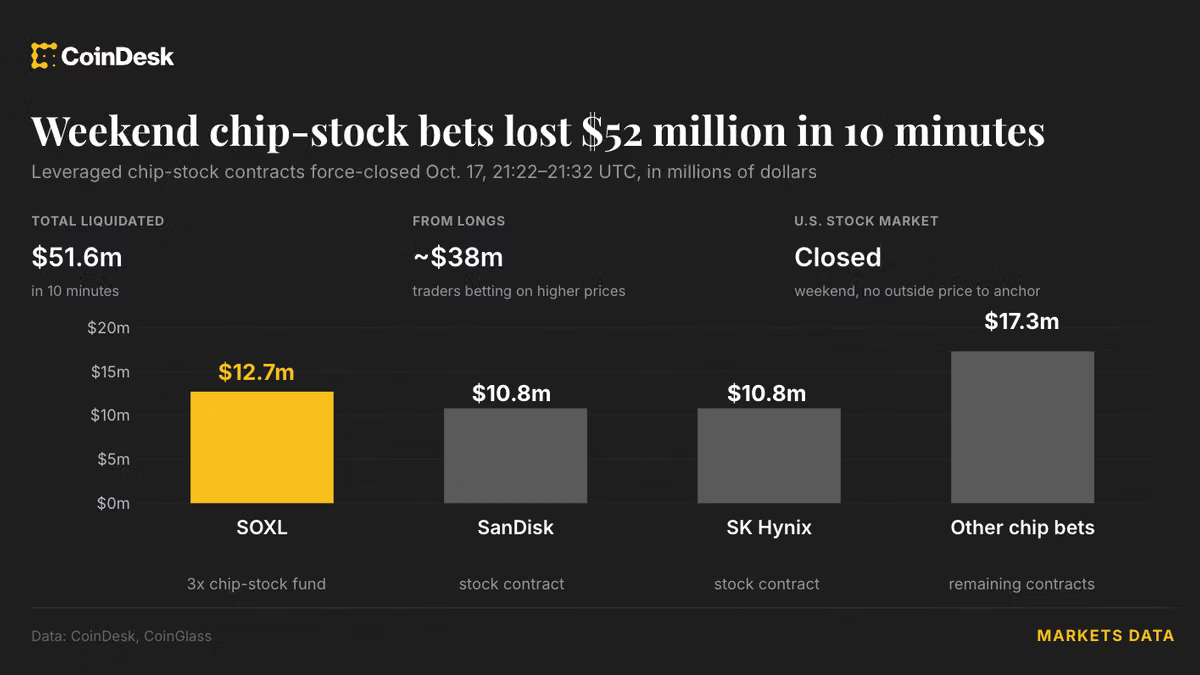
Chip-stock bets lost $52 million in 10 minutes with Wall Street shut
-

 Fashion6 days ago
Winter Fashion Trends Set to Dominate This Season
-

 Business & Hustles6 days ago
A Stronger Start With Personalized Early Development Support
-

 Sports5 days ago
GLP-1s and AI among talking points at W3Fit
-

 Tech & AI4 days ago
Stolen UpdraftCentral keys used to backdoor WordPress sites
-

 Crypto4 days ago
UK Banks Restricting Crypto Transfers: Complaints Rise
You must be logged in to post a comment Login