Long-time Slashdot reader ardiri remembers his days writing applications for the Palm OS. And he’s now released approximately 1.5 GB of historical Palm OS development resources, “accumulated during the early days of handheld computing and preserved on hard drive backups for more than 25 years… to preserve the tools and knowledge that helped define an important era of personal computing.”
The collection includes historical SDKs, developer conference presentations, technical documentation, programming examples, limited source code, and development utilities. (ROM images, commercial applications, and simulator binaries have deliberately been excluded….) Making a broader collection of development resources available to the retrocomputing community, the archive is available at GitHub.com/ardiri/dev-palmos and is intended for historical preservation, education, and research, particularly as enthusiasts continue working to maintain, emulate, and revive the platform… Ardiri has also written an auto-biography and has started explored the engineering principles behind these systems in his books.
And somewhere along the way, Ardiri rediscovered the original source code for “The Palm OS Virus That Never Was — Lost for 25 Years, Found in 2026.” Lurking on a CompactFlash card containing files dated June 2001, he found the self-replicating Palm OS virus that he’d developed and tested in June 2001, months before the planned PalmSource developer conference in San Jose.
Named ‘Virii,’ the virus intercepted Palm OS system calls to progressively infect legitimate applications while preserving their original functionality. Infected applications could then spread between handheld devices through infrared beaming, potentially allowing an infection to propagate among hundreds of developers exchanging software at the conference. The virus also included a date-triggered payload designed to interfere with system time reporting between October 23 and 27, 2001, potentially causing erratic clocks, unreliable alarms, and missed appointments.
He promises the functional source code and binaries will remain private.
Jackie McLean was never the easiest alto saxophonist to mistake for someone else. His tone could be tart, urgent, occasionally abrasive, and almost always emotionally direct; where other players polished the edges, McLean often seemed more interested in seeing what happened if he leaned into them.
That made him one of the most distinctive alto voices to emerge from the hard-bop era and, eventually, one of the musicians who helped Blue Note push beyond it. The new Tone Poet edition of Vertigo revisits one of the more fascinating entries in McLean’s catalog, a record that sits squarely between the blues-driven language of his earlier work and the more angular, exploratory direction he would pursue during the 1960s.
Produced by Joe Harley, mastered from the original analog tapes by Kevin Gray at Cohearent Audio, and pressed on 180-gram vinyl at RTI, the 2026 Tone Poet edition receives the usual deluxe treatment, including a Stoughton Printing tip-on gatefold jacket with Francis Wolff photography. The bigger question, however, is whether Vertigo itself deserves the attention.
It does.
Advertisement
Related Reading:
Jackie McLean Was Already Looking Beyond Hard Bop
Born in New York City in 1931, John Lenwood “Jackie” McLean came up around musicians who were helping reshape modern jazz in real time. Bud Powell was an early mentor, and McLean was still young when he began working with Miles Davis; later came important associations with Charles Mingus, Art Blakey, and others before McLean established himself as a leader.
His long relationship with Blue Note became especially important because it documented his evolution in unusually clear fashion. Albums such as Bluesnik, A Fickle Sonance, Let Freedom Ring, One Step Beyond, and Destination… Out! show a player gradually moving beyond conventional hard bop without discarding the blues, swing, or rhythmic drive that gave his music its backbone.
McLean did not suddenly wake up one morning and decide that harmony was optional. He stretched the language piece by piece until the seams started showing.
Vertigo captures that process in motion.
Advertisement
Two Sessions and One Serious Band
The album draws from two Rudy Van Gelder sessions recorded in 1962 and 1963, and the personnel explains a great deal about why the music feels so alive. McLean is joined by Donald Byrd on trumpet, Herbie Hancock on piano, Butch Warren and Paul Chambers on bass, and Tony Williams and Billy Higgins on drums, depending on the session.
That is not exactly the supporting cast from a regional dinner-theater production.
Hancock was rapidly emerging as one of the defining pianists of his generation, while the teenage Tony Williams was already demonstrating the rhythmic imagination that would soon make him essential to Miles Davis’ Second Great Quintet. Byrd brought both precision and lyricism, while Chambers, Warren, Higgins, and Williams gave McLean a rhythm section capable of moving comfortably between hard bop and something considerably less settled.
Advertisement. Scroll to continue reading.
That flexibility is central to Vertigo. The compositions still swing and still retain the structural logic of hard bop, but the harmonic tension is greater, the phrasing less predictable, and the ensemble sounds increasingly comfortable leaving familiar ground behind.
Advertisement
Nobody has thrown the rulebook out yet, but it has definitely been moved closer to the edge of the table.
Why Vertigo Matters
For listeners new to Jackie McLean, I would not necessarily start here. Bluesnik is a more straightforward introduction to his hard-bop side, while Let Freedom Ring makes the transition toward his more exploratory work easier to hear.
Vertigo is compelling because it lives between those two worlds. McLean still plays with the rhythmic urgency and directness that defined his earlier recordings, but the writing and ensemble interaction point toward the more adventurous Blue Note sessions that followed.
That makes the record more than a curiosity from the vaults. It is a snapshot of one of jazz’s most distinctive alto players in the middle of changing his language, surrounded by musicians who were doing exactly the same thing.
Advertisement
Why Consider This Edition?
The choice to include Vertigo in the Tone Poet series also makes sense because the album has never enjoyed the same visibility as McLean’s better-known Blue Note titles. For collectors who want the music on vinyl without chasing older pressings of uncertain condition and provenance, this edition offers a considerably simpler route.
I paid $45 CAD plus 13% HST for my copy at Rotate This on Ossington Avenue in Toronto two weeks ago. With the Canadian dollar sitting around $1.42 to the U.S. dollar, that worked out favorably enough that I never felt like I was paying an audiophile penalty for the privilege. After listening to it, I would happily pay it again.
The presentation is bold, full, and wonderfully physical. The horns are front and center without becoming aggressive, and there is not an ounce of thinness anywhere in the recording. Hancock’s piano has weight and texture, the bass is substantial and easy to follow, and the drums have real power without crowding the rest of the ensemble. The cymbals have excellent air and decay, giving the upper register plenty of openness without introducing glare.
McLean is absolutely on fire here. His alto has body, bite, and urgency, but the overall presentation remains remarkably composed—far more so than the Woody Shaw Song of Songs reissue I reviewed recently, which is more restless and volatile by design. Vertigo still has plenty of energy, but everything feels locked into place rather than fighting for space.
Advertisement
The pressing itself was essentially flawless: clean, centered, and quiet from beginning to end. More importantly, the sound quality serves the music rather than turning the session into an audiophile demonstration record.
iPhone transaction leads to an armed robbery in Florida, an iPad is stolen from a museum in Vermont, and an iPhone catches a suspected carjacker in Baltimore, all in this week’s Apple Crime Blotter.
A new clinical trial suggests that headphones, particularly noise-canceling ones, can also help patients during medical procedures, even without music playing. Patients who wore noise-canceling headphones during surgery had a lower chance of experiencing nausea and vomiting afterward, even though they were under general anesthesia.
Sony
A simple change showed a noticeable difference
Among patients wearing the headphones, 35.4% experienced postoperative nausea or vomiting within 48 hours. The figure rose to 52.1% among those who went through surgery without them. Researchers put the difference at a 32% reduction in risk, and the headphone group also reported milder symptoms during the first day after surgery.
The trial involved 192 adults undergoing minimally invasive gynecologic procedures. Half wore commercially available over-ear noise-canceling headphones throughout the operation, while everyone received the same anesthesia and standard medication intended to prevent nausea and vomiting.
Why cutting out noise may matter
The study reports that operating room sound levels averaged about 66 decibels. A patient may not consciously hear that noise under general anesthesia, but researchers believe the brain and body can still respond to sound.
Advertisement
The study does not establish that operating-room noise directly causes nausea or vomiting, and researchers say more work is needed to understand the connection. Even with the relatively small sample size, though, the results are notable enough to warrant further study into why noise-canceling headphones may be reducing post-op nausea.
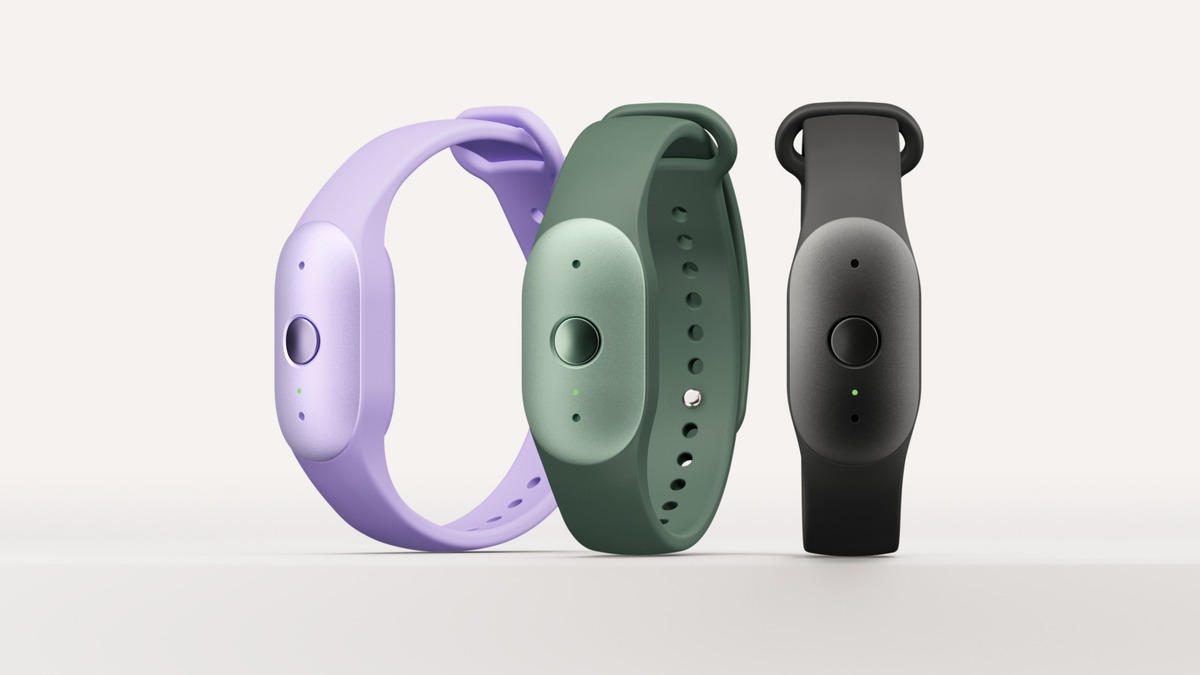
Amazon Bee’s recording light is easy to miss, says a former AWS security engineer. (Amazon Image)
Amazon’s new Bee AI devices ask the wrong person for consent, according to a privacy and security veteran who previously worked as a senior principal security engineer at Amazon Web Services.
In a LinkedIn article, Jeff Williams writes that Bee’s consent safeguards are aimed at the wearer, while the people being recorded have no practical way to say no.
Both turn conversations into summaries and to-do lists, with connections to Amazon.com and Alexa+ for paid subscribers.
How Bee handles consent: Amazon says users are prompted to get permission from call participants each time they start a recording, and the devices show an indicator light while in use.
Advertisement
The problem, Williams says, is that neither one reliably tells the other people in a conversation that they’re being recorded. He writes that the prompt appears only on the wearer’s phone, and nothing enforces it.
“A prompt instructing the user to obtain permission is a liability allocation,” he wrote, arguing that Amazon is shifting responsibility for obtaining consent onto the wearer.
The light is easy to hide under a sleeve or in a pocket, he notes, and a device on the wrist or phone sits outside the frame on a video call.
Williams points to Meta’s Ray-Ban glasses as an example. In September, the data protection authority in Hamburg, Germany, found the glasses’ recording light hard to see outdoors and concluded that a recording indicator alone doesn’t establish informed consent under Europe’s GDPR.
Advertisement
In the U.S., about a dozen states, including Washington state and California, generally require consent from everyone before a private conversation can be recorded.
Whose data is protected: Williams gives Amazon credit for Bee Private Compute, which processes audio in an isolated, encrypted environment built on AWS Nitro and then deletes it. Amazon says only the customer can access the resulting data, not Amazon or Bee.
But that protects the wearer. The words of the people around the wearer still end up in transcripts and summaries they can’t see or remove. Amazon says those speakers aren’t identified by name unless they complete a voice training exercise with the device’s owner.
Williams notes that Amazon has changed comparable privacy commitments before, such as ending the “Do Not Send Voice Recordings” option on some Echo devices last year.
Advertisement
Williams also advises companies to keep the devices out of client meetings and privileged discussions, since the transcripts end up in an employee’s personal account, where the company can’t see or manage them.
A proposed fix: Williams says Bee should leave other people’s voices out of transcripts by default, unless they’ve enrolled their voices and agreed to be recorded. Before the acquisition, Bee indicated plans to record only the voices of people who had verbally consented, according to TechCrunch.
“I know first-hand that Amazon has the engineering talent to ship it,” he wrote.
Amazon’s response: The company didn’t comment directly on the critique but pointed to safeguards built into the devices.
Advertisement
One is an automatic shutoff: the devices turn off if they don’t detect the owner’s voice for 5, 15, 30 or 60 minutes, depending on the user’s setting. Amazon says that reinforces that Bee is “a personal AI assistant, not a device designed to passively pick up audio throughout the day.”
The company says it educates customers about responsible use in the Bee app, and that Eclipse will send push notifications encouraging users to let people around them know they’re using Bee and to ask for permission.
Williams, now chief information security officer at Sigma360, worked at AWS from 2023 to 2025 and spent more than 12 years at Microsoft before that, including as a privacy officer for its services business. Read his full article on LinkedIn. Read his full article on LinkedIn.
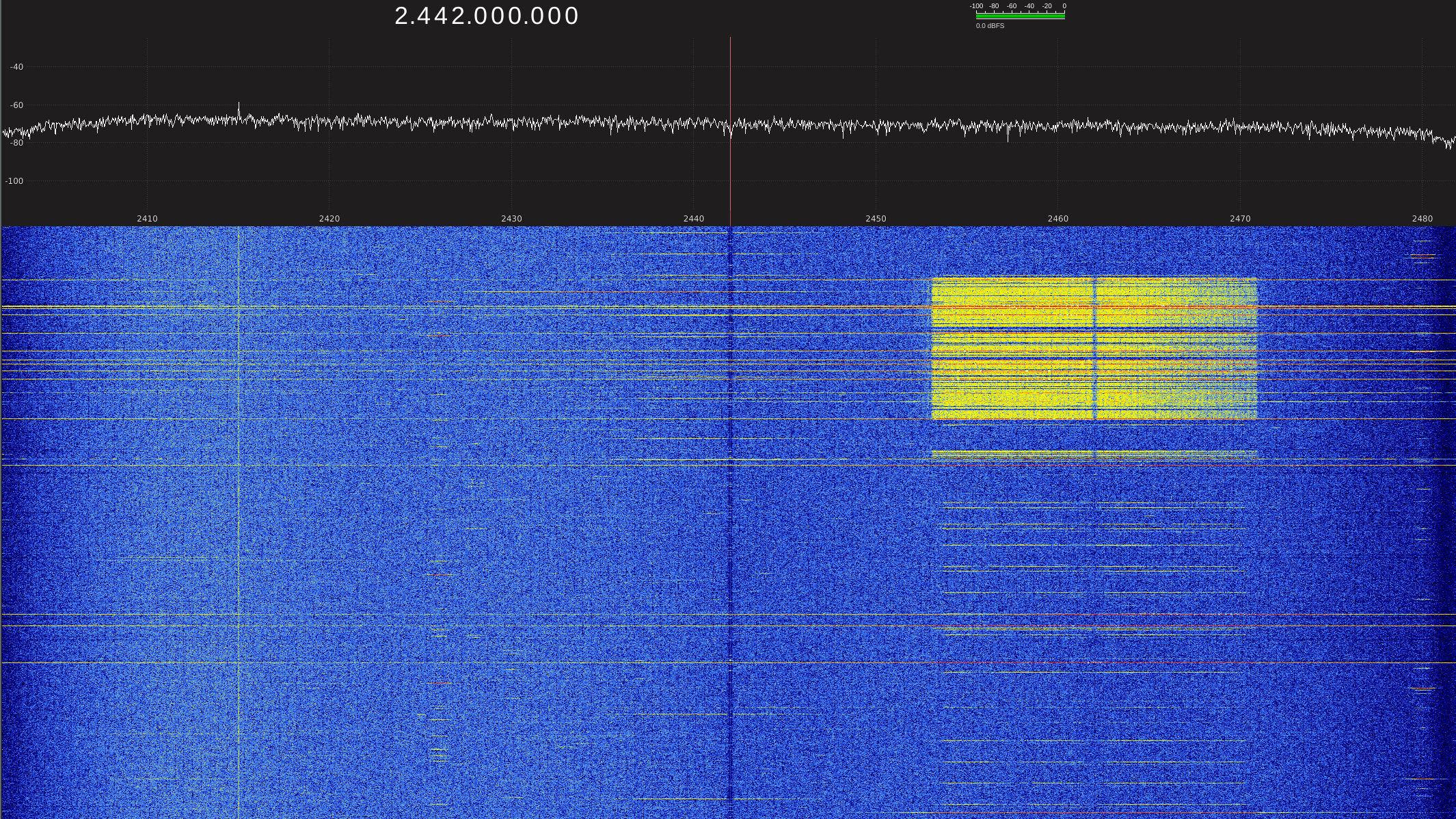
Since the discovery of an undocumented I/Q sampling feature in ESP32 chips about two weeks ago, there’s been a flood of similar features being found in other wireless chips, including LoRa and Wi-Fi chipsets. The latest chip to join their ranks is the MediaTek MT7921AU, often used in Wi-Fi adapters, with two different projects developing independent SDR drivers for it in the last few days.
The first was BirriaSDR, which discovered that the chip exposes raw I/Q samples for debugging and calibration; BirriaSDR instead streams these to the host at 40 Msps in 14-bit resolution, with the option to tune from 2156 to 2610 MHz. BirriaSDR uses libusb to directly communicate with the Wi-Fi adapter and access its registers; it doesn’t make any permanent firmware changes, so the Wi-Fi adapter goes back to its original state after being used as an SDR. BirriaSDR implements an API similar to the RTL-SDR’s.
Mtk79ICAP, by contrast, exposes the MT7921AU’s sampling features over a standard SoapySDR interface. Unlike BirriaSDR, it applies some firmware changes to the chip, and it requires a modified driver to work. However, it can reach a maximum bandwidth of 80 MHz and tune to the 5 GHz bands. The Wi-Fi adapter in use can also simultaneously work in monitor mode and stream SDR data, though this only works when automatic gain control is enabled.
This is the second MediaTek chip we’ve seen repurposed for SDR work, after the earlier MT7996. Conveniently, Wi-Fi adapters often have external antennas, which should make it easier to connect a frequency mixer circuit. These adapters aren’t quite there yet, but some hackers have already used the ESP32 to transmit arbitrary signals.
You probably don’t give much thought to drones surveying a plantation.
Sure, you might notice it flying across the fields, but not the constant stream of information its sensors process to keep it stable and on course.
It’s not all too different from what happens inside a car or the satellite passing overhead, which relies on its own onboard electronics to keep everything running from hundreds of kilometres above us.
Advertisement
What do these three have in common, you may ask? Well, behind all of them are semiconductors, and these semiconductors are increasingly being designed right here in Malaysia.
Taking chip design into our own hands
For years, we’ve prided ourselves for Malaysia’s role in the chip industry, specifically in ATP (assembling, testing, and packaging chips). Now, though, there’s significant effort to take on more of the work that comes before all of that.
Part of this is at the Malaysia Semiconductor IC Design Park in Puchong, where more than 400 engineers across 20 companies are working on chip designs for AI systems, drones, cars, satellites and more.
This is part of Malaysia’s broader push to move up the semiconductor value chain—from being known for what we do with chips to having a bigger say in what goes into them in the first place.
Advertisement
Here are six chips designed in Malaysia (and located in the IC Design Park) to give you a good idea of what that looks like.
1. The AI brain that doesn’t need the cloud
Image Credit: SkyeChip
Many of the AI tools we use today run in the cloud, which means our requests travel to faraway data centres and back before they can be executed. That’s alright for a chatbot, but not ideal for autonomous robotics and smart agriculture that need to react in real-time, or for sensitive data like intelligence video analytics and AI education systems.
This is where semiconductor chips like SkyeChip‘s MARS1000 come in.
A 7nm edge AI processor that’s designed and developed in Malaysia, MARS1000 enables AI inferences to run locally on devices rather than on the cloud. This keeps data on-premises while responses are faster.
The semiconductor design company behind it, SkyeChip, was founded in 2019 by industry veterans from Intel, Altera, and Broadcom. Its core team holds over 113 patents across Malaysia, the US, and China.
Advertisement
Speaking to us, SkyeChip hopes to put AI into places that couldn’t afford it before. Take TVET, for example. Training a CNC operator or a utility technician needs expensive machines and a lot of instructor time. But with a MARS1000-powered AR station, a trainee can practise the procedure safely, step by step, before touching real equipment.
This means fewer workshop accidents, less capital tied up in machines, and many more trainees per instructor.
“Our ambition is simple: a Malaysian-designed chip, inside Malaysian schools, factories and cities, solving Malaysian problems, and then carrying that model to the rest of ASEAN.”
– Joe Lee, Director of Engineering & Business Development at SkyeChip
2. Giving AI more room to think
Image Credit: Maistorage Technology
You probably know by now that AI requires a lot of memory to work with, and the memory attached to GPUs (the chip that does the heavy lifting) is actually limited.
So when a model outgrows its GPU, the usual fix is to add more GPUs. But this can get expensive, especially for organisations and businesses that want to run AI on their own systems to keep their data private.
Advertisement
This is the gap aiDAPTIV+ was built to close. A product of Phison Electronics Corporation that was jointly developed with Maistorage Technology (Phison’s regional hub), aiDAPTIV+ combines high-performance cache memory SSDs with memory management middleware.
In simpler terms, aiDAPTIVE+ makes different types of memory (GPU, system, and cache) work together. Then AI applications can access more data locally without adding software complexity. Yes, even under heavy load, aiDAPTIV+ can consistently deliver faster responses by eliminating the need to recalculate evicted tokens.
As a Malaysian IC startup founded in 2024, Maistorage’s mission is to drive innovation in NAND
controllers, ICs, and storage modules tailored for data centers, AI, and automotive industries. But its bigger ambition is to democratise powerful AI and make it more accessible to the masses.
Advertisement
“Locally in Malaysia, we are committed to cultivating a robust partner network, developing turnkey AI solutions tailored for key sectors such as healthcare, education, manufacturing, and the public sector, and fostering domestic AI talent. Our ultimate objective is to empower Malaysian organizations to move beyond mere AI adoption and truly build, control, and own their AI capabilities.”
– Pua Kein Keong, Director at Maistorage
3. Powering satellites from a Selangor design centre
Image Credit: Weeroc Space
Space is a wonderful place to explore, but it’s also one of the most unforgiving places to put electronics. The conditions up there are extreme and once hardwares are launched, they can’t easily be fixed. So it’s even more important that every system on board performs as they’re supposed to without hiccups.
This requires a “manager” to control how power is distributed, watch for trouble, and report back to HQ on Earth. One of these “managers” is Weeroc Space‘s CONAN.
Designed for efficient GaN-based power conversion, the CONAN chip controls the power switches, monitors the current, temperature and voltage, and constantly adjusts the output to keep the power supply running smoothly.
Although Weeroc Space is a European semiconductor design company, just last year, the firm invested RM20 million to establish a design centre at the IC Design Park in Puchong. Its Malaysian team works on radiation-hardened microchips and photodetector read-out systems for aerospace, satellite, and scientific applications.
Advertisement
Under the leadership of its CEO Dr. Salleh Ahmad, Weeroc Space Malaysia is strengthening the nation’s role in high-reliability chip design, supporting global projects involving ESA, NASA, and Airbus Defence & Space.
Over the next 5 to 10 years, Weeroc Space Malaysia aims to build a strong portfolio of Malaysian-designed space-grade ICs, develop a new generation of highly skilled engineers, and see technologies designed by its team powering missions in space.
“Our ambition goes beyond building a successful semiconductor company. We want Weeroc Space Malaysia to show that world-class space technologies can be created in Malaysia and compete globally. Ultimately, we want Weeroc Space to become a global semiconductor player and help put Malaysia on the map for advanced space technology. ”
– Dr. Salleh Ahmad, CEO of Weeroc Space Malaysia
4. The flight controller at the heart of a drone
Image Credit: Alphaswift Industries
When a drone is in flight, it’s constantly being pushed around by numerous factors: wind, its own movements, and the weight it carries. To stay on course, something has to read its sensors and adjust its motors in real time, over and over again.
That’s the job of a flight controller, like Alphaswift Industries’ FC Mini. This compact flight controller acts as the drone’s flight brain and handles stable and responsive flight control, real-time sensor processing, autonomous mission support, and built-in safety functions.
Advertisement
It’s built around an STM32H743 microcontroller and combines dual IMUs, a pressure sensor, and microSD flight logging, It supports a wide range of drone power systems, from 2S to 8S LiPo batteries, and works with popular flight software such as Betaflight, iNav, and ArduPilot.
With a background in aerospace engineering and innovation, Dr. Shian Lee established Alphaswift Industries to pioneer smart drone technologies for logistics, agriculture, and emergency response, while advancing Malaysia’s role in the global aerospace ecosystem.
“[We aim] to establish Alphaswift Industries as a trusted avionics developer, providing reliable, secure, and non-Chinese-component flight control solutions for global UAV markets.”
This is being done in two stages:
Positioning FC Mini as a high-performance, NDAA-compliant flight controller for FPV drones, industrial UAVs, and professional drone developers.
Developing a widely adopted flight control solution, enabling seamless integration into Alphaswift’s own UAV platforms and other drone systems.
5. The unglamorous chip every car needs: LDO
Image Credit: Infinecs
See that infotainment screen in your car and your car headlamps? Well, they (and other electronics in the vehicle) all share the same electrical system. But the power supply isn’t always steady, and the delicate chips inside these electronics need clean, stable power to do their jobs.
This is where Infinecs Systems‘ automotive low dropout regulator (LDO) comes in.
Advertisement
It can take in up to 40V and provide a steady 3.3V or 5V output at up to 150mA. To protect from issues like low voltage, short circuits, and overheating, Infinecs readily equips it with built-in safety features that allows the LDO to operate in a car’s fluctuating temperatures, ranging from -40°C to 125°C.
Cars aside, LDO can also be used in telecommunications equipment, battery management systems, and motor drives, making it useful for a range of industrial applications that require stable and reliable power.
Led by industry veterans like CEO and Co-Founder Kalai Selvan Subramaniam, Penang-based Infinecs Systems brings decades of semiconductor experience from companies including Intel and Motorola, with its team having contributed to technologies such as USB 1.0 and advanced IC design in Malaysia.
The firm delivers end-to-end engineering across IC design, embedded software, systems engineering, and product development. It also has offices in Cyberjaya and India, serving global customers in automotive, industrial, medical, consumer electronics, and communications industries.
Advertisement
6. Malaysia and SEA’s first homegrown FPGA
Image Credit: SiliconX
Most times, semiconductor chips are built to do one job and one job alone. This makes designing a custom chip for every new idea a slow and costly process, so engineers often turn to a chip that can be reprogrammed after it’s made.
That’s an FPGA (Field-Programmable Gate Array), and SiliconX has built Malaysia’s and Southeast Asia’s first homegrown one.
It packs 30,000 logic elements into a 14nm chip, and is designed for applications in automotive systems and intelligent motor control (like smart billboards and large LED screens).
The two-year-old firm develops programmable chips entirely in-house, including the hardware and software tools needed to use them. While this first chip targets automotive and motor-control applications, SiliconX is developing FPGA solutions for a wider range of industries, including telecommunications, AI, healthcare, and aerospace.
Its Managing Director, Ng Meng Wah, leads the company’s mission to develop locally designed programmable chips that reduce reliance on imported technologies and strengthens Malaysia’s semiconductor ecosystem.
Advertisement
“Our ambition is to become a global FPGA chip product company, putting Malaysia on the world’s list of chip products and moving the country up the semiconductor value chain. In the next five years, we will bring two flagship devices to market: a cost-effective FPGA for mass-market applications, and an AI-capable FPGA for edge AI.” – Ng Meng Wah, Managing Director of SiliconX
Building the people behind the chips
All that said, designing more chips in Malaysia also means having the engineers to build them.
The Advanced Semiconductor Academy of Malaysia (ASEM), housed at IC Design Park 2, has trained 850 engineers with a 100% placement rate so far. 20 companies at the Park are hiring locally and have thus far given 407 engineers a chance to build careers in chip design without having to leave Malaysia. You can be one too!
Find out what’s next for the Malaysia Semiconductor IC Design Park here.
This week on the GeekWire Podcast, we start by opening the listener mailbag, highlighting some recent comments that set a new standard for critical feedback, in different ways.
We discuss Vayo, the AI travel venture Booking Holdings is launching in Seattle, home of its biggest rival, Expedia. Led by recent guest Mike Fridgen, Vayo uses AI agents to manage your trips. It’s an example of the broader push to build personalized AI agents, even as more companies wall off their sites from rival agents.
Then we take on LinkedIn’s list of the top Seattle startups, where four of the top 10, including No. 1 Anthropic, aren’t headquartered in the region.
And finally, we talk about Amazon’s new Bee AI wearables, which can turn things you say into shopping suggestions on Amazon.com if you opt in and pay $12 a month. That leads into the GeekWire Trivia Challenge, about an earlier Amazon wristband that listened to you.
Intel’s next-generation Nova Lake processors could use a unified Core Ultra 4000 naming scheme across desktop PCs and laptops, according to a new leak. The change would scrap an earlier expectation that Intel would use three-digit Core Ultra 400 names for some mainstream laptop processors while reserving four-digit numbers for desktop and high-performance laptop chips.
Hardware leaker Jaykihn reportedly corrected that information on October 16, saying Nova Lake H-series and other mobile processors would also use four-digit model numbers. When asked whether the entire Nova Lake lineup would fall under Core Ultra 4000, the leaker replied in the affirmative. Intel has not officially confirmed the naming scheme, so treat the information as a report rather than a final product announcement.
The move could make Intel’s next processor generation easier to recognise across different devices. However, model numbers alone will not tell buyers how powerful a particular chip is, and the company still needs to clarify its final product lineup.
All five Nova Lake families could adopt four-digit names
The reported naming scheme would cover five processor families: Nova Lake-S for desktop PCs, Nova Lake-HX for high-performance laptops, Nova Lake-H for mainstream performance laptops, and Nova Lake-U and Nova Lake-UL for lower-power mobile devices.
Advertisement
Earlier reports suggested that Nova Lake-S and Nova Lake-HX would use Core Ultra 4000 branding, while other mobile chips would retain the three-digit Core Ultra 400 label. The leaker’s revised information removes that distinction, placing the expected desktop and laptop processors under the same four-digit series.
Some desktop model names have already appeared in leaks, including the Core Ultra 9 4970K BFC, Core Ultra 9 4950K and Core Ultra 7 4870K BFC. These names remain unofficial, and specific retail model numbers for the mainstream laptop variants have not been confirmed.
What the naming change means for buyers
A consistent naming scheme could make it easier for buyers to identify processors belonging to the same generation, regardless of whether they are shopping for a desktop or laptop. It may also reduce confusion caused by two different numbering systems appearing within one processor family.
Intel Nova Lake
However, the Core Ultra 4000 label will not mean every chip offers the same performance. Buyers will still need to consider the processor’s category, power requirements, core configuration and the device it is designed for.
Nova Lake is expected to begin arriving in 2027, with desktop and mobile variants potentially launching at different times. Intel has yet to confirm the complete lineup, specifications, pricing or release schedule.
Advertisement
Until an official announcement arrives, the revised naming scheme remains based on leaked information. More details should emerge as Nova Lake approaches launch.
Apple’s ‘Welcome Home’ announcements revealed the Apple HomeView, updated Apple TV 4K, and HomePod mini 2. Your hosts discuss the new products and what they’ll mean for Apple’s smart home strategy.
Apple HomeView and more on the AppleInsider Podcast
The Apple HomeView is the central smart hub to your Apple Home. It’ll display photos, now-playing music, and host information shared from up to six user’s iPhones. It’s fairly priced at $299 and your hosts discuss exactly where they might fit in their home. Wesley imagines they could easily become the new HomePod and get tucked into various nooks throughout a home. Continue Reading on AppleInsider | Discuss on our Forums
Watch Fiji vs Cook Islands in a vital 2026 Rugby League World Cup Pool A encounter at the McDonald Jones Stadium in Newcastle, New South Wales. Respectively the No7 and No8 teams in the world rankings, the Pacific Island teams will be desperate to win in case one of their bigger pool rivals slip up.
Fiji have a good World Cup record, reaching three semi-finals in a row between 2008 and 2017. Yes, it feels like this year’s format means the deck is stacked against them – pre-tournament favorites Australia and New Zealand are expected to qualify from Pool A – but that won’t stop Mick Potter’s men trying to demonstrate the best of their power and flair. The 33-year-old hooker Apisai Koroisau is their captain and talisman, and brings the experience of winning three NRL premierships with the Rabbitohs and Panthers. Sunia Turuva and Kurt Donoghoe provide youthful energy in the backs.
It’s now been 17 years since the Cook Islands last managed to beat Sunday’s opponents – now would be a great time to rectify that stat. In coach Karmichael Hunt they have a cross-code legend at the helm, and his on-field lieutenant KL Iro is one of the world’s most respected talents. It’s testimony to the promise of the Cook Islands project that players like Iro, Esan Marsters and Brad Takairangi have chosen to represent the nation when also eligible for others.
Yes. Every game of the Rugby League World Cup is being shown on free-to-air Seven Network and 7plus in Australia – including this Fiji vs Cook Islands showdown.
Traveling abroad right now? You can use a VPN to watch Fiji vs Cook Islands for free as if you were right at home.
Advertisement
Use a VPN to watch Fiji vs Cook Islands live streams
A VPN is a handy piece of software that can make your device appear as if it’s back in your home country, so you can unlock your usual streaming services. The best VPN right now? We recommend NordVPN – it does everything and comes with up to 75% off.
How to watch Fiji vs Cook Islands live streams in the US
Rugby league fans in the US can watch Fiji vs Cook Islands on Premier Sports, which is showing all 18 games of the men’s 2026 Rugby League World Cup.
Advertisement
A full tournament pass is available for just $25.
Outside of the US? Use a VPN whilst you’re traveling away from home to unlock your stream.
How to watch Fiji vs Cook Islands live streams in Australia
The free-to-air Channel 7 is showing Fiji vs Cook Islands on Australian television, with live streaming available via 7plus.
Advertisement
Just create an account using a valid Australia postcode (e.g. 2042).
Not in Australia right now? You can use a VPN like NordVPN to watch the Bati vs the Kukis as if you were back home.
How to watch Fiji vs Cook Islands live streams in New Zealand
In New Zealand, Sky Sport NZis showing Fiji vs Cook Islands on the Sky Sport Select channel.
Advertisement
You can access Sky Sport through satellite TV or get a live stream, with the Sky Sport Now subscription service starting at NZ$29.99 per day or NZ$59.99 per month.
Those outside of New Zealand can use NordVPN to gain access to their home streaming service.
How to watch Fiji vs Cook Islands live streams in the UK
Fiji vs Cook Islands is available to watch on Premier Sports 2 in the UK.
Advertisement
Premier Sports costs £18.99 on a rolling monthly basis, or £150 for a year if you pay upfront. Alternatively, you can add it to an existing Sky TV, Virgin Media or Prime Video plan.
Away from home? Unlock your Rugby League World Cup stream with NordVPN.
How to watch Fiji vs Cook Islands live streams in Canada
Fiji vs Cook Islands is available to watch on Premier Sports in Canada.
Advertisement
Premier Sports costs CA$29.99 on a rolling monthly basis, but you’ll get a lot more bang for your buck if you’re willing to commit to a longer period and pay upfront, with a six-month subscription costing CA$79.99 and a 12-month subscription available for CA$139.99.
Premier Sports is also home to Top14, Nations Championship, Bledisloe Cup, Six Nations and Rugby Championship rugby.
If you’re out of Canada but still want to tune in, explore the VPN route set out above, which will help you access your accounts from anywhere.
What is the Fiji vs Cook Islands start time?
The Fiji vs Cook Islands kick-off time is at 4.05pm AEDT local time in Newcastle, Australia on Sunday, October 18. That’s 1.05am ET in the US and 6.05am BST in the UK.
Advertisement
What is the Fiji vs Cook Islands head-to-head?
The rugby league teams of Fiji vs Cook Islands have contested 15 competitive games. Fiji have won nine and Cook Islands four (there has been one tie). The last time they met was at a year ago to the day, when Fiji came out on top 44-24.
Can I watch Fiji vs Cook Islands on my mobile?
Of course, most broadcasters, like Seven Network, have streaming platforms that you can access through mobile apps or via your phone’s browser.
You can also stay up-to-date with the latest Rugby League World Cup news and plays on the official social media channels on Instagram (@RugbyLeagueWorldCup) and Facebook (@RugbyLeagueWorldCup).
We test and review VPN services in the context of legal recreational uses. For example: 1. Accessing a service from another country (subject to the terms and conditions of that service). 2. Protecting your online security and strengthening your online privacy when abroad. We do not support or condone the illegal or malicious use of VPN services. Consuming pirated content that is paid-for is neither endorsed nor approved by Future Publishing.


























































You must be logged in to post a comment Login