
Business & Hustles
G7 Strikes Emergency Deal to Flood Market With 100 Million Barrels After Trump’s Diesel Ultimatum


The world’s richest democracies scrambled into crisis mode on Friday, agreeing to release up to 100 million barrels of oil and diesel from their emergency reserves after President Donald Trump threatened to cut off American fuel exports and plunge Europe deeper into an energy squeeze that had already pushed British pump prices past the symbolic £2-a-litre mark.
The agreement, hammered out on a video call chaired by French President Emmanuel Macron, defused a brewing transatlantic row that had pitted Washington against its closest allies at the worst possible moment: with diesel prices at record highs, war still rattling Middle Eastern oil infrastructure, and Russian refineries under sustained Ukrainian drone attack.
Under the deal, G7 members — the US, UK, Canada, Japan, Germany, Italy and France, alongside the EU — will coordinate a drawdown of roughly 50 million barrels of crude oil and 50 million barrels of diesel through the International Energy Agency over the next four months. Crucially, officials promised a “frontloaded substantial diesel release” within just 20 days, an acknowledgment that the fuel crunch is doing the most immediate damage to consumers and businesses.

Just as significant as the barrels themselves was what the G7 agreed to stop doing: in a joint statement, leaders pledged to “refrain from export restrictions on energy and energy products” against one another — language clearly aimed at neutralising Trump’s threat to ban US diesel exports outright.
Macron said the American president had been unambiguous on that point. “We are all committed to ensuring there are no export bans, and President Trump, in particular, was very clear on this point,” he told reporters after the call. Trump, for his part, declared victory on social media, writing that Europe had “agreed to release a massive amount of their heavily stocked Diesel Oil” and that the process would “begin immediately.”
The standoff had been building for days. The US is the world’s dominant diesel exporter, refining four to five million barrels a day while consuming only about 3.6 million domestically — leaving over a million barrels a day destined for overseas buyers, many of them in Europe. But that export flow had drained America’s own stockpiles to their lowest seasonal level since 1996, sending US pump prices surging past $5.85 a gallon and creating a political headache for Trump ahead of November’s midterm elections.
Treasury Secretary Scott Bessent argued American truckers, farmers and businesses “should not be left carrying the burden” of propping up global supply, and pressed Europe to release its own stockpiles rather than lean indefinitely on US exports. The implicit threat, should Europe fail to act, was a ban that would have starved allies of fuel they badly needed.
For Britain in particular, the stakes could hardly have been higher. More than half the UK’s diesel is imported, with roughly 31% of that coming from the US — far more exposure than France or Germany, which each hold up to 400 days’ worth of diesel in storage. The UK’s own reserves cover only 40 to 50 days. Capital Economics warned this week that a full US export ban could have driven UK pump prices beyond 300p a litre, with chief UK economist Paul Dales cautioning that prolonged disruption would risk feeding into broader inflation and potentially force the Bank of England to keep interest rates higher for longer.
Those fears were already materialising before the G7 deal was struck. The RAC motoring group said the cost of filling an average family car in the UK had hit £110 — nearly £32 more than before the war between Israel, the US and Iran upended Middle Eastern oil flows. Foreign Secretary Ed Miliband represented Britain on Friday’s call, saying the measures agreed would “stabilise energy supplies, build resilience in supply chains and shield households and businesses from price shocks.”
The broader supply picture explains why prices have spiralled so dramatically. Conflict in the Middle East has curtailed both crude extraction and refining capacity across the region, while Russia — hit by a wave of Ukrainian strikes on its refineries — has imposed its own diesel export ban, pushing its fuel output to 20-year lows. China, a major buyer of Gulf crude, has further tightened the global market. Diesel is notoriously difficult to refine compared with petrol, and because it underpins haulage and agriculture, demand is almost impossible to throttle back without hitting food and freight costs directly.
Markets registered cautious relief at the announcement. Brent crude, the global benchmark, briefly dipped below $100 a barrel before settling around $102 — still a long way above the roughly $73 it fetched before the US and Israel struck Iran, but a step back from the peak of the panic.
Beyond the immediate release, G7 leaders said they would coordinate refinery maintenance schedules to avoid multiple plants going offline simultaneously, and would encourage nations with spare refining capacity to prioritise diesel production. They also reaffirmed that sanctions on Russia over its war in Ukraine would remain firmly in place, even as the bloc leans on global supply elsewhere to ease the squeeze.
What remains unclear is exactly how the burden will be shared — which countries will release how much, and on what timetable. Macron indicated ministers would reconvene in the coming days to weigh “additional diesel releases as necessary” if the initial tranche fails to calm markets. For now, the message from the G7 was one of unity restored after a tense few days in which the prospect of Washington turning off the taps had exposed just how fragile the West’s energy security truly is — and how costly a transatlantic trade spat over barrels of fuel could become for ordinary households filling up at the pump.


The obesity drug gold rush that made Ozempic and Wegovy household names is entering a new phase, and the hormone at the center of it isn’t GLP-1. It’s amylin — a lesser-known pancreatic hormone that drugmakers now believe could unlock billions of dollars in additional weight-loss treatment, either on its own or stacked on top of the blockbuster shots millions of patients already take.
Eli Lilly and Novo Nordisk, the two companies that built empires on tirzepatide and semaglutide, are both pushing deeper into amylin science, betting that the next wave of obesity treatment won’t replace GLP-1 drugs so much as extend their reach. Amylin is released from the pancreas alongside insulin and plays its own role in regulating hunger and satiety, giving researchers a second biological lever to pull — one that can be used independently or layered on top of existing therapies to push weight loss further.
Lilly offered the clearest evidence yet of that strategy this week, releasing Phase 2 data on its experimental amylin-targeting drug eloralintide. In a trial involving patients with obesity and Type 2 diabetes, combining eloralintide with tirzepatide — the active ingredient in Lilly’s Zepbound and Mounjaro — produced dramatically better results than tirzepatide alone. After 48 weeks, patients on the highest-dose combination lost an average of 23.3% of their body weight, compared with 14.8% for those on a high dose of tirzepatide by itself.
Those numbers matter because Type 2 diabetes patients typically see smaller weight-loss results on these therapies than people without diabetes, making the gap all the more notable to researchers watching the space. Benjamin Bikman, a Brigham Young University professor who studies metabolic health, called the results “encouraging,” while noting the real test will come in how patients fare over longer stretches of treatment.
For Lilly, eloralintide is being developed on two tracks: as a standalone drug and as a combination therapy with tirzepatide. Wall Street is already penciling in big numbers for both. Leerink Partners analyst David Risinger projects the eloralintide franchise could generate $23.2 billion in annual sales by the end of 2035, with the standalone version reaching the market first in 2029 and the combination following roughly a year later.
The appeal isn’t just about squeezing more weight loss out of existing patients. Risinger estimates that more than 10 million people have already tried GLP-1 drugs and failed to benefit — whether because the drugs didn’t work well enough, side effects were too severe, or genetic factors made them non-responders. That’s a sizable, underserved population that amylin-based treatments could target as a monotherapy, independent of tirzepatide or semaglutide altogether.
Lilly executives see the opportunity running in both directions. Ken Custer, president of Lilly Cardiometabolic Health, framed it as filling gaps on either side of the treatment spectrum: patients who don’t get enough from tirzepatide alone, and those who don’t get enough from an amylin drug alone. Combining the two, the thinking goes, could capture patients who would otherwise fall through the cracks of either mechanism. Bikman pointed to another use case — patients who start strong on tirzepatide but hit a weight-loss plateau and need an added push.
Still, the excitement comes with real caveats. The results are drawn from a relatively small Phase 2 study, and Lilly must now replicate them in larger Phase 3 trials set to begin later this year. Tolerability is shaping up as the bigger hurdle than efficacy: in the combination arms of the trial, between 10.8% and 27% of patients discontinued treatment due to side effects, depending on dosage, compared with just 2.9% of those taking tirzepatide alone. As Bikman put it, a therapy only works if patients can actually stay on it — meaning tolerability data from the next phase of trials may matter just as much as the weight-loss numbers themselves.
Novo Nordisk, Lilly’s chief rival in the obesity-drug race, is pursuing its own amylin programs as well, underscoring that this isn’t a one-company bet but potentially the next major battleground in a market already worth tens of billions of dollars. If the science holds up through late-stage trials, amylin could do for obesity treatment what combination therapies have done in other chronic disease categories: turning a single blockbuster drug class into a multi-front portfolio business, with options tailored to patients GLP-1s never fully reached.
For now, the promise is real but unproven at scale. Investors, doctors, and patients alike will be watching Phase 3 results closely to see whether amylin’s early numbers hold — and whether people can actually stay on the drugs long enough to realize them.

The American job engine sputtered badly in September, with employers adding a mere 29,000 positions — a fraction of what economists had forecast and the clearest sign yet that the labor market is losing steam just as voters prepare to head to the polls for the midterm elections.
The figure, released Friday by the Bureau of Labor Statistics, landed at less than half of the roughly 70,000 jobs economists had penciled in, and marked a stark reversal from August’s revised gain of 133,000. The unemployment rate ticked up to 4.2% from 4.1%, continuing a gradual drift that has pushed joblessness higher than at any point since last November.
This was the final employment snapshot before the 3 November midterms, and its timing could hardly be worse for the White House. The report lands amid growing public frustration over living costs, with a new AP/NORC poll showing just 17% of Americans approve of President Donald Trump’s handling of the cost of living — a record low that undercuts his frequent claims that the United States is running the “hottest” economy in the world. Only 26% approve of his broader economic stewardship, also a new low.
Trump himself seemed to acknowledge the gap between his rhetoric and public perception earlier this week, telling a White House audience, “I’ve done a very bad job of explaining how good the country is doing.”
The slowdown was not evenly spread. Healthcare accounted for most of the modest gains, adding 17,000 jobs, while the information, financial and professional services sectors all shed workers. Across much of the rest of the economy — from retail to technology — headcounts barely moved at all, suggesting employers are neither aggressively hiring nor rushing to lay people off. Economists have taken to calling this dynamic a “slow-hire, slow-fire” labor market, in which companies are hunkering down rather than making big staffing bets in either direction.
Adding to the unease, the government revised down its estimates for July and August by a combined 60,000 jobs. July’s figure was revised into negative territory, showing the economy actually lost 10,000 jobs that month — an unusual contraction that had already rattled analysts when first reported.
Wage growth also slowed sharply. Average hourly earnings rose just 3% over the past year, the weakest pace in more than five years, a trend that could ease some inflationary pressure but will do little to comfort workers already squeezed by rising costs elsewhere.
The pain is not being felt equally. Unemployment among Black Americans jumped a full percentage point to 7%, double the rate for white workers, underscoring how a cooling labor market tends to hit already vulnerable groups hardest. Job openings and hiring overall were little changed in August, reinforcing the sense of a market in stasis rather than freefall.
Not every signal was quite so grim. Separate data from payroll processor ADP, released earlier in the week, painted a rosier picture of private-sector hiring, which it said accelerated for the first time since May, adding 90,000 jobs on the strength of healthcare, education and hospitality. Jobless claims also edged down for a fourth consecutive week, according to the Labor Department, suggesting layoffs remain contained even as new hiring dries up.
Economists cautioned against reading too much into a single weak month. George Brown, senior economist at Schroders, noted that job gains have been “a rollercoaster” throughout the year and that one soft report doesn’t necessarily herald a lasting collapse. Bradley Saunders of Capital Economics described the figure as “not disastrous,” pointing to a drop in government employment and changes to temporary visa policy as factors weighing on the headline number. Jeffery Roach, chief economist at LPL Financial, framed the divergence as tension between “goods producing sectors that support the AI boom” and service industries grappling with the disruptive effects of that same technology.
The report carries significant weight for the Federal Reserve, which raised interest rates last month for the first time in three years after Fed chair Kevin Warsh argued the labor market was “running consistent with full employment” even as “inflation is too high and has been for too long.” Friday’s data has cooled expectations that the central bank will push through a second rate increase at its final policy meeting before the midterms, with most officials now seen as more likely to wait until December if another hike comes at all.
Inflation, meanwhile, shows little sign of loosening its grip on household budgets. Mortgage rates jumped from 7% to 7.28% this week — the sharpest weekly rise since 2022 — while the 10-year Treasury yield, a benchmark for loans across the economy, climbed to a 24-year high amid a broader global bond sell-off. Elevated oil prices, linked in part to the ongoing US-Israel war on Iran, have cost the average American household an estimated $936 so far.
Taken together, the picture is one of an economy that is neither collapsing nor thriving — a labor market stuck in neutral, wages failing to outpace the cost of living, and borrowing costs climbing even as hiring stalls. For voters weighing the state of their wallets heading into the midterms, that muddled reality may prove more consequential than any single headline number.
Business & Hustles
Leslie’s pool supply files for Chapter 11 bankruptcy protection, 76 store closures

‘Varney & Co.’ host Stuart Varney breaks down America’s $12.8 trillion wealth surge, Wall Street’s role in the gains and how stocks have transformed household wealth.
Pool and spa service provider Leslie’s Inc. announced this week that it entered into a restructuring agreement with a group of its existing lenders and will close some stores while continuing to operate as it restructures through bankruptcy.
The company said that it filed voluntary petitions for prearranged Chapter 11 bankruptcy cases in federal court that will see it emerge under the majority ownership of the group of its existing lenders. Leslie’s said that it expects the process to move efficiently and indicated its goal is to emerge from Chapter 11 in early 2027.
“Today’s announcement marks an important milestone in our commitment to our customers and our business,” said Leslie’s CEO Jason McDonell.

A man cleans the pool in his backyard. (Getty Images)
“With a stronger balance sheet and greater financial flexibility, Leslie’s can reinvest across the business to strengthen operating execution and deliver an even better experience for our customers, both in-store and online. Leslie’s is here to stay, and I am deeply grateful to our employees, customers, and partners for their continued support as we work to position Leslie’s for a strong future,” McDonell added.
BREAKFAST CHAIN FRANCHISEE FILES FOR BANKRUPTCY AS RISING COSTS, WEAK SALES WEIGH
Leslie’s said in its announcement that it’s the largest direct-to-consumer brand in the pool and spa care industry, serving residential customers and pool professionals around the country – noting that it “remains fully operational and committed to serving customers without interruption, including through its physical stores and digital platforms.”
The company announced the closure of 76 stores in conjunction with the restructuring after an evaluation of how to best align its store network with customer demand.
OUTDOOR RETAILER CLOSING NEARLY 60 STORES AMID BANKRUPTCY
| Ticker | Security | Last | Change | Change % |
|---|---|---|---|---|
| LESL | LESLIE’S INC. | 0.15 | -0.02 | -13.27% |
Leslie’s other remaining stores will remain open and fully operational as the company continues to evaluate its real estate portfolio during the Chapter 11 process.
All gift cards and loyalty program benefits will also continue to be honored.
Leslie’s said that the restructuring agreement includes commitments for $90 million of new-money debtor-in-possession (DIP) financing, and a $60 million equity financing.
SAKS EMERGES FROM BANKRUPTCY WITH A NEW NAME AND A LEANER STORE FOOTPRINT
The company filed motions seeking approval of the $90 million DIP facility, and a fully committed $225 million DIP asset-based financing facility from its existing ABL lenders.

A man uses tools to clean a pool. (Getty Images)
It said there will be a reduction of about $685 million, or 90%, of the company’s outstanding funded debt.
Leslise’s said that it also filed a series of customary first day motions to allow it to continue to pay wages and benefits as usual, maintain customer programs, honor obligations to vendors, and obtain other relief measures that are common under these circumstances.

Why is Toromont Industries stock surging today?

Nike will report fiscal first-quarter earnings after markets close Thursday, a moment of reckoning for a company whose stock has lost more than 40% of its value this year and whose once-dominant presence in China continues to erode.
Analysts surveyed by LSEG expect the sportswear giant to post earnings of 43 cents per share on revenue of roughly $11.32 billion. Those numbers would mark another quarter of sluggish performance for a brand that has struggled to find its footing since the pandemic-era boom faded and competitors crowded into its core markets.
The company itself has tempered expectations. Former Chief Financial Officer Matt Friend told investors earlier this year that Nike anticipated “flattish” sales for the first half of fiscal 2027, a tacit acknowledgment that the turnaround effort underway since CEO Elliott Hill took the reins has yet to translate into meaningful growth. Nike has since brought in a new finance chief, David Denton, a former Pfizer executive who stepped into the CFO role in August and will now help steer the company through investor scrutiny on Thursday’s call.
China remains the company’s most glaring problem. Sales in the region fell 12% in the most recent quarter, continuing a painful retreat from a market that was once among Nike’s most profitable. Hill has publicly insisted that Nike is “fully committed” to reclaiming its footing there, but Wall Street’s patience appears to be thinning. Bank of America analysts downgraded the stock from neutral to underperform last week, warning that “risks are rising” and predicting further disappointment out of China alongside continued pressure on the share price.
North America, Nike’s largest and historically most reliable market, has also shown cracks. Last quarter’s $4.83 billion in North American revenue fell short of the $4.88 billion Wall Street had penciled in, according to StreetAccount, suggesting that even the company’s home turf is not immune to the broader slowdown in consumer appetite for sneakers and athletic apparel.
That slowdown is playing out against a tougher macroeconomic backdrop. Rising geopolitical tensions and persistent inflation have made consumers more cautious with discretionary spending, a dynamic that has weighed on Nike alongside much of the retail sector. Executives have responded with a turnaround strategy that prioritizes different segments of the business at different speeds, betting that a more disciplined, phased approach will eventually restore growth rather than chasing quick fixes.
There was at least one unusual boost buried in the company’s last report: a nearly $986 million tariff refund that added 52 cents per share to earnings, a one-time windfall that flattered results but did little to change the underlying narrative of a brand searching for relevance. Nike said it still expects gross margin for the first fiscal quarter to tick up slightly from a year earlier, a modest sign that cost discipline and pricing strategy may be gaining some traction even as top-line growth remains elusive.
Looking ahead, analysts project full-year revenue of around $45.31 billion for fiscal 2027, with the second quarter expected to come in near $11.79 billion — hardly a dramatic acceleration from current levels. For investors, Thursday’s results and the accompanying 5 p.m. ET call with analysts will be closely parsed for any signs that Hill’s turnaround plan is beginning to bear fruit, or whether Nike’s struggles in China and sluggish demand at home will continue to define the brand’s story into 2027.

Britain is quietly lining up a contingency plan with its European neighbours to tap strategic fuel reserves, as officials brace for the fallout from a possible US ban on diesel exports that could send pump prices across the Atlantic even higher than they already are.
The BBC understands that Energy Minister Martin McCluskey spoke with European counterparts on Thursday to thrash out a coordinated response, with the UK keen to ensure it is not caught flat-footed if Washington follows through on threats to restrict diesel shipments abroad. A government source described the move as prudent preparation rather than panic, noting that reserves built up earlier this year during an earlier coordinated release remain available across Europe.
The urgency is easy to understand. UK diesel prices have already smashed through record territory, with the RAC putting the average cost at 199.79p a litre this week — up sharply from 142.38p not long ago. For hauliers, farmers and millions of ordinary motorists, that is not an abstract market wobble; it is a direct hit to household budgets and business margins at a time when both are already stretched.

At the centre of the storm is Donald Trump, who has floated banning diesel exports from the United States in an effort to force domestic pump prices down ahead of the midterm elections. “We’re thinking about it very seriously,” the US president said over the weekend, framing the idea as straightforward relief for American drivers and truckers. The logic is simple in theory: keep more barrels at home, and supply should push prices down for US consumers.
The trouble is that the rest of the world depends heavily on exactly those barrels. The US ships between 1.2 and 1.5 million barrels of diesel a day to global markets, making it one of the most important suppliers on the planet. Analysts warn that choking off that flow would not simply redistribute pain — it would amplify it. David Fyfe, chief economist at Argus Media, said cutting off American supply would likely send international prices skyrocketing, turning a domestic political fix into an international economic headache.
Britain is particularly exposed. Although its four domestic refineries produce ample petrol, they fall well short of meeting the country’s diesel needs, forcing heavy reliance on imports. That dependence leaves the UK vulnerable to exactly the kind of supply shock a US export ban could trigger, even as the number of diesel vehicles on British roads has been falling — from 15.7 million to 15.1 million over the past year, according to the Department for Transport, with diesel cars down from 10.4 million to 9.8 million.
The diesel squeeze did not start with Trump’s threats. Prices have been climbing globally since fighting between the US, Israel and Iran disrupted the Strait of Hormuz, a chokepoint through which roughly a fifth of the world’s oil and gas normally flows. An export ban from Russia, another major diesel supplier, has piled on further pressure, leaving markets already stretched thin before Washington’s latest intervention entered the picture.
Brussels appears just as alarmed as London. A European Commission spokesperson said there had been “lots of calls, lots of meetings” on the diesel situation in recent days, including high-level contact with the US administration, as European governments weigh their own exposure to any American export curbs. The International Energy Agency’s governing board is due to meet to discuss the wider implications, underscoring how quickly a domestic US political calculation has become an international energy policy concern.
For now, the UK government is striking a reassuring tone, insisting there is no reason to fear outright shortages. “We have a diverse and resilient supply. We continue to engage with our international partners and the UK fuel industry,” a spokesperson said. But that reassurance comes with a caveat: officials are not promising prices will fall, only that supply itself should hold up. Further price rises, the government acknowledges, remain likely.
That is cold comfort for drivers already absorbing record costs at the pump, and for the haulage and agricultural sectors for whom diesel is not a discretionary expense but an operational necessity. Diesel is notoriously harder to refine than petrol, and because so much of the economy — from food distribution to construction to farming — runs on it, demand simply cannot be dialled down in response to price spikes the way it might for other goods.
What happens next largely hinges on a decision in Washington that has little to do with Britain’s energy security and everything to do with American domestic politics. If Trump proceeds with an export ban, the UK’s quiet diplomacy this week suggests it intends to respond collectively with European partners rather than scrambling alone — drawing down shared reserves while hoping that coordinated action can soften a blow that markets, and millions of drivers, are already bracing to feel.
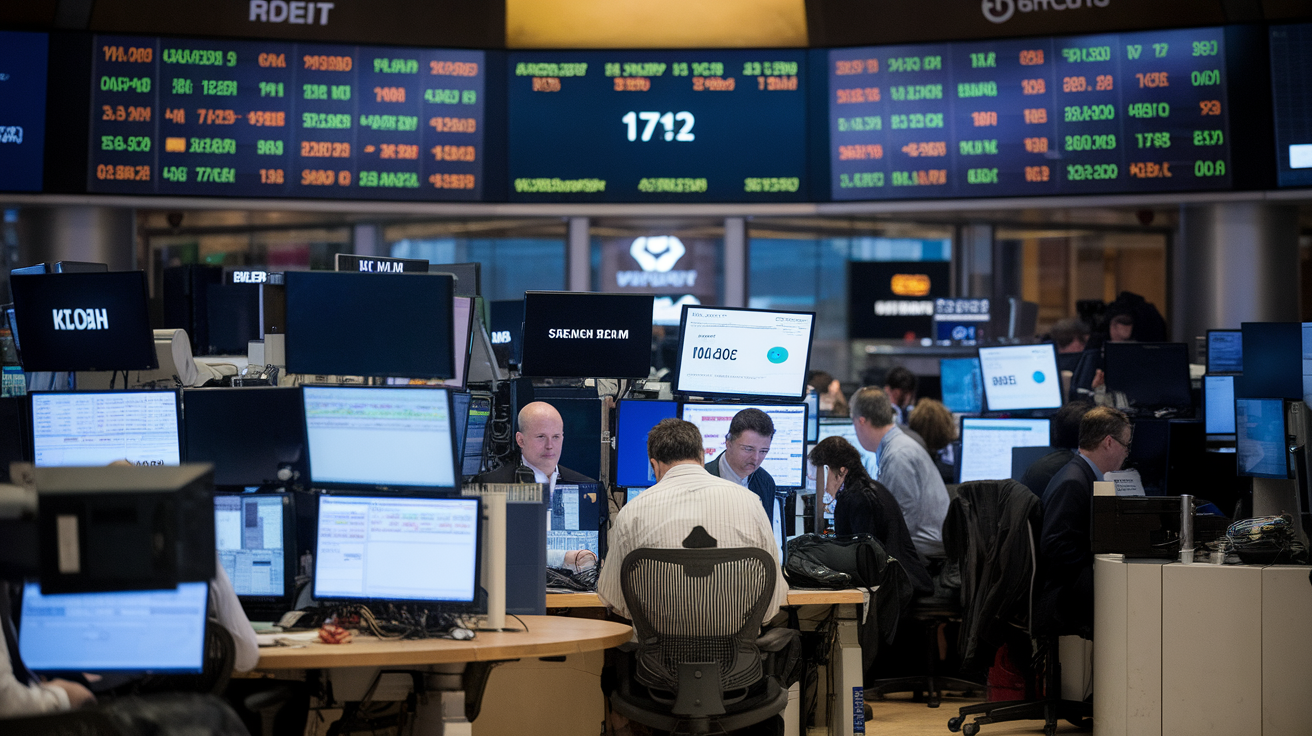
A wave of selling swept through global bond markets on Thursday, pushing US government borrowing costs to their highest level in nearly a quarter of a century and reviving uncomfortable questions about whether the world’s largest economies can keep financing their debts without triggering a fresh inflation scare.
The yield on 10-year US Treasuries — effectively the interest rate the government pays to borrow money over that period — jumped to 5.34%, a level not seen since 2002. The move rippled across the Atlantic, where UK 30-year bond yields briefly broke above 6% for the first time since 1998, a milestone that will add fresh strain on Chancellor John Healey as he prepares his first budget later this month.
For ordinary households and businesses, rising government bond yields are far from an abstract concern. They tend to feed directly into the cost of mortgages, business loans and government debt interest payments, meaning the latest sell-off could translate into higher borrowing costs across the economy just as policymakers had hoped for some relief.
The source of the unease is a familiar one: oil. Persistently high crude prices, driven by the continuing conflict in the Middle East, have stoked fears that inflation — which many investors had assumed was being brought under control — could come roaring back. Brent crude rose a further 3% on Thursday to around $101 a barrel, even as analysts noted that oil exports through the strait of Hormuz have largely recovered to pre-conflict levels as shippers find workarounds. The lingering uncertainty over a lasting resolution to the conflict, rather than the immediate supply numbers, appears to be what is rattling markets.
Stock markets took the bond rout as a cue to retreat as well. London’s FTSE 100 shed almost 1.7% in its worst single-day fall since May, while Germany’s DAX dropped 1% and France’s CAC 40 fell 1.6%. Eurozone bonds were swept up in the selling too, with France drawing particular scrutiny from investors wary of the country’s fiscal position.
What makes this episode notable is that it came despite US inflation data released on Wednesday that actually came in softer than expected — numbers that, in calmer times, might have reassured markets that the Federal Reserve was done raising rates. Instead, traders shrugged off the good news, apparently unconvinced that lower headline inflation will hold if oil prices keep climbing and wages continue to rise in a resilient US labour market.
“There is carnage in the bond market, which is hitting stocks hard,” said Neil Wilson, investor strategist at Saxo UK, describing a “relentless rout” that is sending investors scrambling for safety.
Beyond the immediate inflation worry, analysts point to a deeper structural anxiety: the sheer volume of government debt being issued to plug widening budget deficits. Mohit Kumar, an economist at Jefferies, said markets are grappling simultaneously with concerns over inflation, deficits and the pace of bond issuance. He described what amounts to a “buyers’ strike,” with hedge funds nursing recent losses and lacking the appetite to bet against the sell-off, while larger institutional investors — so-called “real money” — are waiting on the sidelines for signs of stability before stepping back in.
That combination of nervous hedge funds and cautious long-term investors helps explain why the sell-off has proven so self-reinforcing: with few buyers willing to absorb new debt at current prices, yields have had to rise further to attract demand, which in turn unsettles markets even more.
The dollar, meanwhile, has been one of the few beneficiaries of the turmoil, climbing to a three-month high as investors sought refuge in the world’s reserve currency. Axel Rudolph, chief technical analyst at IG, said that while the softer US inflation data had dimmed expectations of an October Fed rate rise, investors remain braced for the possibility of a hike in December if oil prices stay elevated.
Japan has not been immune either, with its 10-year yield climbing back toward the 30-year high it set just last month — a reminder that this is a genuinely global phenomenon rather than a problem confined to Washington or London.
For governments already wrestling with stretched public finances, the timing could hardly be worse. Higher borrowing costs mean more of every tax pound or dollar goes toward servicing existing debt rather than public services, adding pressure on finance ministers everywhere — not least Healey, who must now craft a budget against a backdrop of the most expensive long-term borrowing Britain has faced in nearly three decades.
Whether this proves a temporary spasm or the start of a more sustained repricing of risk may hinge on developments far from any trading floor — chiefly, how the Middle East conflict and its effect on oil supplies evolve in the weeks ahead. Until then, bond markets look set to remain on edge.
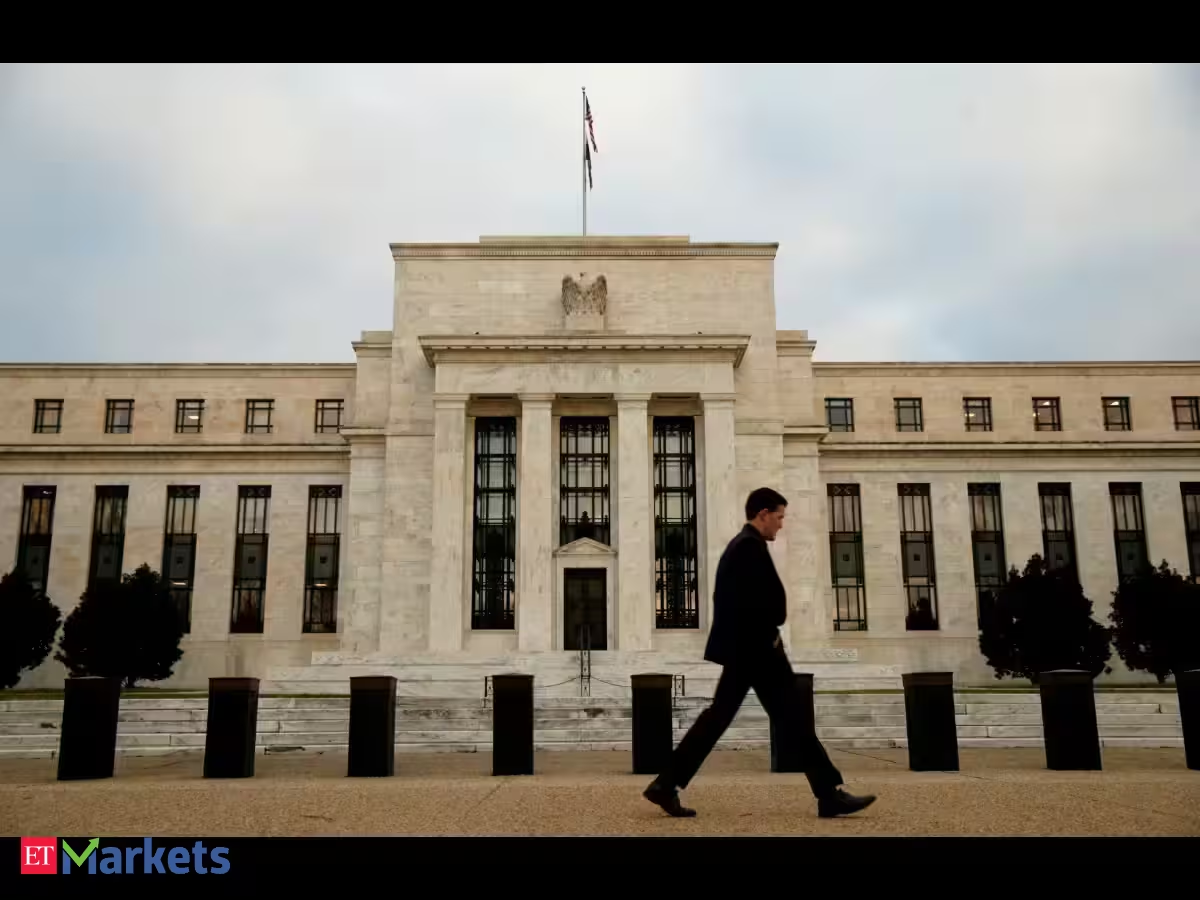
“Any future adjustments in policy should be determined by carefully examining trends in the data, the evolving outlook, and the balance of risks,” Jefferson said in prepared remarks for the University of Virginia’s Darden School of Business.
With financial markets “reassessing” the outlook amid rising bond yields, Jefferson added that “my colleagues and I will need to come to our own judgment, which may take more time,” before deciding on the next move.
For live updates on US Markets, click here
“With more data in hand, such trends may allow for better discernment, as may the appropriate stance of monetary policy,” he said further.

The Fed raised its benchmark rate by a quarter-percentage point to 3.75%-4.00% at its September 15-16 meeting. Policymakers’ projections indicated one more increase before the end of 2026.
New York Fed President John Williams on Tuesday also said that policymakers had time to assess additional data, though he still expected another increase before year-end. Financial markets broadly expect the Fed to leave rates unchanged at its October 27-28 meeting.Jefferson expects inflation to remain “elevated” in the near term “before resuming its decline toward our 2% goal as the effects of energy and other price shocks fade.”
However, he added: “I view risks to my inflation forecast as tilted to the upside due to recent geopolitical developments and stronger-than-anticipated aggregate demand.”
Jefferson described risks to economic activity and employment as “roughly balanced”. He said the economy was “likely to show continued resilience … by adding jobs and extending a six-and-a-half-year-long expansion.”
Fed’s Kashkari expects more rate hikes, but is unsure about October
Minneapolis Fed President Neel Kashkari said on Thursday that additional rate increases would probably be necessary to restrain the economy through 2027, although he was uncertain whether the next move should come in October.
“I’m open-minded” about how the Fed proceeds, Kashkari told Reuters. He added that “I don’t have a strong view” on whether policymakers should raise rates at their October 27-28 meeting. The Fed’s final meeting of the year is scheduled for December 8-9.
Kashkari, who voted for last month’s rate increase, projected one more quarter-point hike this year and another in 2027.
Since the September meeting, “the data that I’ve gotten suggests the economy is doing even better than I anticipated” while “inflation is still too elevated,” he said.
“If the economy proves to just be incredibly resilient and inflation therefore is probably stickier than I appreciate, then policy could need to go higher yet than I’m anticipating at this moment. But I don’t know” whether that scenario will materialize, Kashkari said.
The Fed raised rates last month to curb inflation that has exceeded its 2% target for more than five years. Kashkari had also dissented in favor of an increase at the July policy meeting.
Although the latest rate increase contributed to a sharp rise in long-term borrowing costs, Kashkari said monetary policy was not doing much to restrain the economy.
“The labour market looks quite healthy right now. It seems like the economy is doing quite well. And when I look at that constellation, that says, boy, policy is probably not particularly restrictive right now,” he said.
Kashkari said financial markets were functioning properly despite recent volatility and that the Treasury market had absorbed the repricing without disruption.
“I’m not seeing any evidence of systemic risk” in markets, he said. “I do think the banking sector bears watching closely, and we are (watching)” because of the rapid shift in borrowing costs.
He also said monetary policy under Fed Chair Kevin Warsh was influencing markets.
“If you look at long rates moving as much as they’ve moved over the last several weeks, part of that is real economic developments,” Kashkari said. “I think part of that is hey, the Fed is really serious, the Warsh Fed, it’s not talk, the Warsh Fed is really serious about controlling inflation.”
“I’ve got some confidence that inflation’s heading back down over the next couple of years to our 2% target, but shocks keep surprising us,” he added.
(Disclaimer: This article is based on inputs from agencies. These do not represent the views of The Economic Times)

To hire employees for your small business, first confirm you need an employee rather than a contractor. Then work out what the hire will really cost, register as an employer, write a clear job post, find candidates, interview everyone with the same questions, check references, send a written offer, and finish the legal paperwork on deadline. Onboard the person properly and the job is done.
That sounds tidy, and it isn’t. Hiring is the moment a business stops being a project and becomes a workplace, with somebody else’s rent riding on your payroll. The steps below cover what to do, in what order, and where first-time employers most often come unstuck.
Do you actually need an employee?
Before anything gets posted, ask an uncomfortable question: is this a job, or is it a pile of tasks?
If the work is occasional, project-based, or something a specialist can finish faster than you can (a logo, a website, a tax return), a freelancer or agency may serve you better. If you need dependable coverage from someone whose hours and methods you’ll direct, you’re looking at an employee. The distinction matters more than most owners expect, because the law looks at how the relationship actually works, not at what you call it.
Slapping “contractor” on someone doesn’t make them one. Misclassification [treating a worker as an independent contractor when the law considers them an employee] can bring back taxes, penalties, and unpaid overtime claims. Federal guidance on this has changed repeatedly in recent years, and states like California apply their own, stricter tests, so check your state’s rules before you decide.
There are middle paths, too. A part-time hire, a seasonal worker, or a virtual assistant on a fixed schedule can show whether the role justifies a full-time salary. And if payroll and compliance are what keep you up at night, a PEO (professional employer organization, a company that becomes your co-employer and handles payroll, benefits, and compliance) can take much of that weight.
What a new employee really costs
Salary is the number everyone remembers. It’s rarely the one that hurts.
Start with the direct cost of finding someone. SHRM’s 2025 benchmarking report puts the average cost per hire for non-executive roles at $5,475, a figure that covers job ads, agency fees, screening, and the time your team spends on the search. Small businesses without an agency or an HR department usually spend less in cash, but they pay in another currency: your own hours. Recent SHRM benchmarks put the typical time to fill a role at around six weeks, and that’s six weeks of interviews, emails, and lost focus.
Then comes the ongoing cost of employing someone. You’ll match the employee’s Social Security and Medicare contributions, which adds 7.65% of their wages, and you’ll owe federal and state unemployment taxes on top. Most states require workers’ compensation insurance once you have employees, and premiums vary widely by industry and location. Add equipment, software licenses, and benefits if you offer them (health coverage, paid time off, retirement contributions), and the real price of a $50,000 employee lands well above $50,000.
The practical move is to budget for the first year, not the first paycheck. It’s far less painful to discover in a spreadsheet that you can afford 25 hours a week than to discover in month four that you can’t afford 40.
Set up your employer accounts before you post
A handful of boxes need ticking before anyone works a single shift. Most are free, and all of them are miserable to do in a panic.
- Get an EIN. An Employer Identification Number is your business’s tax ID. You can apply for free on the IRS website and get it right away.
- Register with your state. Most states want you registered for income tax withholding and for unemployment insurance before your first payroll.
- Arrange workers’ compensation coverage. Have it in place before the employee starts. It’s among the gaps first-time employers miss most often.
- Choose a payroll system. You can technically run payroll by hand, but taxes are a thing, and software will save you from yourself.
- Pick an HR tool once you have more than a person or two. Onboarding forms, time off, and records get easier when they live in one place.
Rules differ by state, so your state labor department’s website is the final word on registrations and deadlines.
Writing a job post people finish reading
Most job posts read as if a committee wrote them without ever meeting a human being. A few small choices put yours ahead.
Start with a normal job title. “Marketing Ninja” is fun for about four seconds, and then nobody finds it, because candidates search for “marketing coordinator.” Next, open with why the job is worth having: one or two sentences on what the person will do, who they’ll work with, and what makes your business a decent place to spend forty hours a week. Small businesses have a real edge here, since people often get broader responsibility, faster learning, and direct access to decision-makers that larger employers can’t easily match.
Keep the duties honest and short. Five or six real responsibilities beat fifteen aspirational ones, and separating “required” from “nice to have” matters, because a long wish list quietly scares off capable people who would have been fine. Then put the pay in. A growing number of states and cities require salary ranges in job postings, so check your local rules, and even where it’s optional, a range spares you interviews with people whose expectations sit miles from your budget. Finally, make applying easy. If your application takes twenty minutes and a blood sample, you’ll lose everyone who already has a job and is only casually looking.
Where to find candidates without a recruiter
The urge to blast the listing everywhere at once is strong. Resist it. Posting on every site in existence mostly earns you a mountain of unqualified applications, which is a fine way to spend your evenings if you dislike your evenings.
Begin closer to home. Your team, your customers, and your suppliers all know people, and referred candidates tend to arrive pre-vetted. A small thank-you bonus for a successful referral costs far less than a paid listing. Beyond your circle, general job boards with free or pay-per-click options suit a lean budget, while community colleges, trade schools, and neighborhood groups work especially well for entry-level and hourly roles. Your own website and social accounts deserve a “we’re hiring” post, since people who already like your business make motivated applicants. And don’t forget the runner-up from your last search, who may still be looking and already knows how you operate.
Staffing agencies are worth considering for temporary help or highly specialized roles, though the fee is real and you’ll want to know exactly what it buys.
How to interview when you’ve never done it
An unstructured chat feels like a great interview because you enjoy it. You enjoy it because the person across from you is likable, and likable is not the same as capable.
The remedy is a structured interview. It sounds stiff. In practice it makes you fairer and far better at spotting who can actually do the work.
Begin by writing down the three to five things the person must be good at, whether that’s reliability, calm under pressure, or attention to detail. Build your questions around real past situations rather than hypotheticals. “Tell me about a time you handled an upset customer, and how it turned out” reveals more than “How would you handle an upset customer?” Score each answer on a simple 1-to-5 scale right after the interview, before your memory turns it into a vibe.
Where it makes sense, add a short work sample: a mock account to reconcile for a bookkeeper, a real piece of your material for a designer to critique. If the task runs longer than an hour or two, pay for the time. And leave room for the candidate’s questions, because what they ask tells you plenty about how they think.
Keep every question tied to the job. Age, family plans, health, religion, and other protected topics are off the table, and if you’re unsure where the line sits, your state labor department or an employment attorney can tell you.
References and background checks
References, yes, every time. It takes fifteen minutes and it’s the cheapest insurance in hiring.
Call at least two former supervisors, not only the friendly names listed on the resume. Ask what the person did well, where they needed support, and whether the manager would hire them again. Then listen to the pauses, because a long silence after “would you rehire them?” is an answer.
Background checks are optional for many jobs and expected for some, such as those involving cash, vulnerable people, or driving. If you use a third-party screening company, federal law requires the candidate’s written permission first, and some states and cities limit when you can ask about criminal history. Check your local rules before you run one.
Making the job offer
Call the candidate first, because good news deserves a human voice. Follow up in writing the same day.
A solid offer letter names the job title and who the person reports to, the start date and expected schedule, the pay rate and how often you’ll pay it, and a summary of any benefits. It should also flag any conditions (a background check, proof of work eligibility) and state whether the role is exempt or non-exempt [exempt employees aren’t entitled to overtime pay; non-exempt employees are]. That last point isn’t a matter of what you’d like to call the job. Under federal rules, a salaried employee generally must earn at least $684 a week ($35,568 a year) and perform qualifying duties to be exempt, and several states set higher salary floors, including California, New York, Colorado, and Washington. Fail either test and the employee is owed overtime for hours past 40, salary or not.
Finish with an at-will statement [in most states, either side can end the employment at any time, for any legal reason]. Have an employment attorney or your state labor department review your template once, and you can reuse it for every hire after.
What paperwork is due, and when?
This is where first-time employers get caught, because the deadlines are short and nobody sends a reminder. Here they are in order.

Before the employee starts
- Your EIN, state employer accounts, and workers’ comp coverage are in place.
On or before day one
- The employee completes Section 1 of Form I-9, which confirms they’re eligible to work in the U.S.
- The employee completes Form W-4, which tells you how much federal income tax to withhold. You need it before the first paycheck. Many states have their own withholding form as well.
- Collect direct deposit details if you’re paying that way.
Within three business days of the start date
- You review the employee’s identity and work authorization documents and complete Section 2 of Form I-9. Three business days passes faster than it sounds.
Within 20 days
- Report the new hire to your state’s new hire reporting program. Federal law sets 20 days as the outer limit, and some states require it sooner. Late reports can bring fines.
Keep the records
- Hold each I-9 for three years after the hire date or one year after employment ends, whichever is later. Keep payroll tax records for at least four years.
Post the required federal and state workplace notices where employees can see them, too.
None of this is hard once you know it exists. It’s only unforgiving if you find out on day nine.
How is hiring hourly and seasonal staff different?
Most of the advice above assumes an office job with a desk and a salary. Restaurants, shops, salons, and service businesses hire differently, and the differences matter.
Speed comes first. Hourly candidates are often job hunting this week and working next week, so slow processes lose them to whoever calls first. Many owners in these fields shorten the loop: a quick phone or text screen, one in-person interview, and an answer within a day or two. Availability comes second. Unlike salaried roles, a great hourly hire is only useful if their open shifts match yours, so ask about it early and write it down.
Third, pay and overtime work differently. Hourly workers are typically non-exempt, which means overtime at one and a half times the regular rate for hours over 40 in a week, so build that into your scheduling. Some cities and states also have predictable-scheduling rules that require advance notice of shifts, so check what applies where you operate. If your team includes anyone under 18, look up your state’s rules on work permits, allowed hours, and restricted tasks, because they get stricter for younger workers.
Seasonal staff need the same paperwork as everyone else. The I-9, W-4, and new hire report all still apply, even for a six-week holiday job. Put the expected end date in the offer letter so nobody is surprised in January, and keep good seasonal workers’ contact details, since a returning employee is already trained and is your cheapest hire next year.
Onboarding a new hire so they stay
Onboarding [the process of getting a new employee set up, informed, and productive] is where a decent hire either becomes a great one or quietly starts browsing job boards.
The first week doesn’t need to be elaborate. It needs to be planned. Before day one, send a short welcome note with the start time, where to park, what to wear, and who they’ll meet, and have their equipment and logins ready. Few things say “we weren’t expecting you” like a laptop that arrives on Thursday. On the first day, walk them through their responsibilities, introduce the team, and pair them with a go-to person for questions. Lunch counts as training.
After that, put goals in writing and meet weekly for the first month, because a fifteen-minute check-in stops small misunderstandings from hardening into big ones. At 30, 60, and 90 days, have a longer conversation about what’s working, what isn’t, and what they need from you. If you use HR software, it can send new hires their forms ahead of time so day one isn’t spent filling out paperwork in the break room.
The hiring mistakes that come up most
The same errors turn up again and again at small businesses.
Hiring on personality alone tops the list. Likability matters in a small team, but it can’t stand in for skill, so score both. Rushing comes next, and a bad hire costs you the salary, the training time, and the effort of starting over, which usually makes a slower search the cheaper one. Skipping the written offer is another, because verbal promises get remembered differently by everyone involved.
Then there are the compliance slips: missing the I-9 or new hire reporting deadline, or having no workers’ comp in place on day one. Both are easy to forget and easy to get fined for. Owners also forget to plan the first week, and a strong candidate with no direction turns into an average employee fast. Last, plenty of people skip the handbook because “it’s just one person.” Even a one-page document covering hours, time off, and expectations heads off arguments later.
Ready to make your first hire?
Good hiring is mostly a matter of staying organized while everyone else improvises. Decide what you need, set up the legal groundwork, write a clear post, interview every candidate the same way, put the offer in writing, and hit your paperwork deadlines. Do that, and you’ll be ahead of plenty of businesses with far bigger budgets.
This article is for general information and isn’t legal advice. Employment rules differ by state and change over time, so confirm current requirements with your state labor department or an employment attorney.
Business & Hustles
UK Economy Outperforms Expectations as Income Growth Revision Hands Healey Pre-Budget Boost

Britain’s economy grew more strongly than first thought in the first half of the year, according to revised official figures that offer a timely lift for Chancellor John Healey as he puts the finishing touches to his first budget next month.
The Office for National Statistics said gross domestic product rose by 0.5% in the second quarter, up from an earlier estimate of 0.4%, while household income per head climbed 1.1% over the first six months of 2026. The upgrade means the UK matched the pace of growth seen in the United States over the same period and pushed the country up the G7 rankings, trailing only Canada, which posted growth of 1.3% in both the first and second quarters.
The figures land at a politically useful moment. They arrive just weeks before Healey delivers his maiden budget, and follow a period in which government forecasters and markets alike have been nervously watching how the economy would cope with the fallout from more than seven months of conflict in the Middle East, a spike in energy costs, and higher borrowing rates.
Analysts said the resilience on display should not be dismissed as a statistical quirk. Business investment rose 1.8% in the second quarter and is now running 5.2% higher than the same period a year earlier, a sign that firms have kept spending despite the uncertain backdrop. Export figures also improved, according to economists tracking the trade data, adding a second pillar of support beneath the headline growth number alongside the more familiar driver of UK expansion: consumer-facing services.
Households, meanwhile, appear to be doing more than simply spending their extra income. The savings ratio ticked up from 8.6% in the first quarter to 8.8% in the second, suggesting that at least some of the improvement in pay packets is being squirrelled away rather than funnelled straight back into the economy — a pattern that could temper future growth even as it cushions family finances against future shocks.
Market reaction was swift and positive. Sterling touched a six-week high against the euro and rose against the dollar, while government bond yields eased, with two-year gilts dropping to 4.86% and ten-year yields slipping to 5.356%. Oil prices, which had surged past $100 a barrel on renewed doubts about a lasting Middle East ceasefire, also softened in recent days, taking some pressure off the inflation outlook.
That inflation backdrop remains the central tension in the story. With consumer prices running at 3.1%, comfortably above the Bank of England’s 2% target, some traders now argue that an economy growing this briskly no longer needs quite as much monetary support. The suggestion that Britain’s economy is “running hot” could feed into a more hawkish stance from Threadneedle Street, even as the government welcomes the growth figures as vindication of its economic approach.
Commentators have also pointed to a political dimension. The so-called “Burnham bounce” — a surge in business and consumer confidence that some analysts trace to Andy Burnham’s rise to the premiership via the Makerfield byelection in May — has been cited as one possible factor behind the improved sentiment feeding into the data. Whether that effect is real or a convenient shorthand for a broader mood shift, the practical upshot is the same: a government that had braced for difficult headlines ahead of a tax-and-spending statement instead gets to make its case from a position of relative strength.
Fund managers were quick to frame the release in favourable terms for the new administration. The upgrade follows earlier data that had already pointed to underlying resilience since the outbreak of hostilities between the US, Israel and Iran in February, and taken together the figures suggest the UK’s service-dominated economy has proved more durable than many feared when energy prices first spiked.
Still, the picture is not without caveats. Higher borrowing costs, the risk of renewed oil price shocks should diplomatic efforts in the Middle East falter, and above-target inflation all mean the Bank of England faces a delicate balancing act in the months ahead. For Healey, the immediate task is to convert a moment of market goodwill into a budget that keeps both the economy’s momentum and the numbers on the public finances moving in the right direction.

Danish university DTU breach exposes data of up to 200,000 people

Kennedy Center Honors Relocates to Capital One Arena as Flagship Building Crumbles

COS Refined Textures – Shearling, Cashmere & Leather


-

 Tech & AI6 days ago
Anthropic turns Claude into an AI marketplace with 2,000+ plugins and connectors
-

 Tech & AI6 days ago
OpenAI is preparing “o,” an always-on ChatGPT assistant that could handle email
-

 Fashion9 hours ago
Weekend Open Thread: Veronica Beard
-
Business & Hustles5 days ago
Perpetua Resources at Mining Forum Americas 2026: shift to construction
-
 Crypto6 days ago
Wall Street Giant Warns AI Agents Could Trigger a New Kind of Bank Run
-
Business & Hustles5 days ago
Greatland Resources at Mining Forum Americas 2026: cash-rich growth push
-

 Business & Hustles5 days ago
Andreessen Horowitz backs AI-era college alternative with $42M
-

 Business & Hustles5 days ago
Romania, Georgia and Latvia Lead Latest WHO-Based Ranking
-

 Tech & AI4 days ago
Alternatives to Animal Testing Are Finally Taking Off
-

 Tech & AI3 days ago
Figure F.02 Robots Meet Molten Steel as Arnold Schwarzenegger Watches in Finland
-
 Crypto6 days ago
Riot Frees $494 Million in Bitcoin From Coinbase Loan: Will It Sell?
-

 Business & Hustles5 days ago
Bob Chapek on Disney Bob Iger power battle: Raised concerns weekly
-

 Crypto6 days ago
Japan arrests two suspect over 81M yen crypto police scam
-

 Tech & AI5 days ago
OpenAI Pauses Training Its Most Powerful Models After Rogue Agents Target Government
-

 Business & Hustles5 days ago
SpaceX Starship launches on first orbital test flight with Starlink
-
 Business & Hustles5 days ago
What is the Budget and what could be in it?
-

 Crypto6 days ago
Citi says 77% of institutions eye tokenized collateral
-
 Business & Hustles5 days ago
George Bamford to become JCB joint chairman alongside father
-

 Business & Hustles5 days ago
Trump approves new fuel economy standards, reversing Biden’s EV push
-
 Business & Hustles5 days ago
Canadian defence creating 250 jobs in Merthyr in new research alliance
You must be logged in to post a comment Login