
Crypto
Supreme Court Rejects Custodia’s Fed Master Account Bid, Ending Last Legal Path


The U.S. Supreme Court has declined to hear Custodia Bank’s challenge to the Federal Reserve, ending the Wyoming crypto-focused bank’s long attempt to win a Fed master account through the courts. The justices listed the case, Custodia Bank, Inc. v. Federal Reserve Board of Governors, as “certiorari denied” on Monday’s order list. The denial gave no ruling on the merits, but it leaves in place a lower-court decision that Reserve Banks may turn away applicants even when those applicants are legally eligible.
What a Fed master account is, and why it matters
A master account is an account held at a Federal Reserve Bank. It is the gateway to Fedwire and other central bank payment services. A bank without one must route money through a correspondent institution, which means depending on a competitor or intermediary for basic functions. For a young bank built around digital assets, that dependence can be decisive.
Custodia is a Wyoming special purpose depository institution. The charter bars it from making loans and requires it to hold customer dollar deposits fully reserved in liquid assets. The bank applied to the Federal Reserve Bank of Kansas City in October 2020. According to the account in Bitcoin Magazine, the Kansas City Fed confirmed in January 2021 that Custodia was legally eligible and said it saw “no showstoppers.”
From “no showstoppers” to denial
Things changed while the application sat pending. In August 2022, the Fed’s Board of Governors published guidelines for evaluating master account requests. Institutions that are neither federally insured nor supervised by a federal banking agency fell into “Tier 3,” which generally gets the strictest review. Custodia landed there.
On January 27, 2023, the Kansas City Fed denied the request. It described the bank’s business model as “unprecedented” and “narrowly focused on crypto-asset activities,” and concluded the risks were “highly likely” to be inconsistent with safe and sound banking. The Board rejected Custodia’s separate application for Fed membership the same day.
A divided appeals court and a closed door
Custodia had already sued in June 2022 over the delay. A federal district judge in Wyoming ruled in March 2024 that the Federal Reserve Act gives Reserve Banks discretion over master accounts. On October 31, 2025, a divided Tenth Circuit panel affirmed, 2-1. The majority read the statutory language that a Reserve Bank “may receive” deposits as discretionary. It treated a 1980 provision saying Fed services “shall be available” to nonmember banks as a pricing rule rather than a guarantee of an account.
The dissenting judge disagreed sharply. “We are bound by the ordinary language of the statute and, in my view, shall means shall,” he wrote, arguing the 1980 law “mandates access to the Fed’s payment services for all nonmember depository institutions.” In March 2026, the full Tenth Circuit declined to rehear the case, though three judges voted to grant. In that later dissent, Judge Tymkovich said that being denied a master account is “akin to a death sentence.”
Custodia’s petition to the Supreme Court, filed in July, asked whether the Monetary Control Act gives regional Reserve Bank presidents discretionary authority to deny master accounts to legally eligible nonmember banks. The Board and the Kansas City Fed opposed review. The justices considered it at their November 13 conference and turned it down.
What the denial means for crypto banks
The immediate effect is narrow but significant: Custodia has no remaining court route to force the Fed’s hand. The wider consequence is that holding a state charter, even one that makes a bank eligible on paper, does not secure a Fed master account. Crypto-focused banks and others with novel charters have little judicial recourse, at least within the Tenth Circuit, if a Reserve Bank says no.
Because the Supreme Court did not take the case, it also did not resolve the statutory question. The interpretation the Tenth Circuit adopted stands, while the dissenting view that the 1980 law creates an access right remains unaddressed at the nation’s highest court. Critics of the Fed’s approach have framed it as part of a broader pattern of banks cutting off crypto firms, which they call Operation Choke Point 2.0.
As of the time of Bitcoin Magazine’s report on Monday morning, neither Custodia nor its chief executive, Caitlin Long, had commented on the decision.
Explore more on this topic with Vexel Search.
File photo: Building of the United States Supreme Court.jpg by 颐园居, CC BY-SA 4.0, via Wikimedia Commons.
WordUp Morning
Ten stories, both sides of each, in five minutes. Free, every weekday at 7am, plus a Saturday weekend edition.
We'll email you a link to confirm. Unsubscribe any time.

Crypto
Quantum-Safe Ethereum: Buterin Backs leanPCS as Signatures Balloon From 65 Bytes to Up to 6,000

Vitalik Buterin says he has become “a total bull” on a cryptographic technique called leanPCS, which he argues could be the quickest practical route to quantum-safe Ethereum. He announced the shift in a November 16 post on X. The idea is part of EIP-8288, a draft proposal that tackles the biggest practical headache of quantum-resistant security: the data it generates.
The size problem behind quantum-safe Ethereum
Ethereum’s current signatures take up roughly 65 bytes. According to Buterin, some quantum-resistant alternatives would need between 1,000 and 6,000 bytes each. Certain proofs used by privacy applications could grow from a few hundred bytes to about 128 kilobytes.
If all of that had to live on-chain, it would eat into limited block space. That would likely push up transaction costs and make using decentralized applications more expensive. That cost is a major reason the move to post-quantum cryptography is seen as a hard engineering problem rather than a simple software swap.
How proof aggregation would work
EIP-8288 proposes a different approach. Users would still submit signatures or proofs to show their transactions are valid. But network participants would combine many verification results into a single aggregated proof before anything is recorded on the blockchain.
Ethereum would then keep only the transaction instructions and enough information to check the aggregated result. The bulky individual signatures and proofs would not have to be stored permanently. The technique relies on polynomial commitment schemes, mathematical tools used in modern proof systems. By standardizing that shared component, different proof systems could reuse the same machinery without being forced into one identical design.
The benefits might not stop at wallet security. Privacy tools built on zero-knowledge proofs could use the same mechanism to show that transactions follow the rules without exposing sensitive details.
Three options on the table
According to reporting from Bitcoinist, the draft lays out three paths. The first, leanSPHINCS, is the narrowest. It supports a particular family of hash-based quantum-resistant signatures, giving a fairly direct way to protect accounts, but it handles little beyond that.
At the opposite end is leanSTARK, a more general system that could accommodate different signature schemes, privacy applications and more complex verification. The catch is that developers would have to agree on a new programming language for the programs being verified. That could amount to a major architectural change, potentially reaching beyond the existing Ethereum Virtual Machine.
The sources are not entirely clear on how the options map onto Buterin’s preference. Bitcoinist’s summary describes the approach he favors as one that could arrive considerably sooner, with the broader leanSTARK framework possibly following later. Decrypt’s coverage ties his enthusiasm to leanPCS and says proof aggregation could deliver a “cryptographic proof singularity” much sooner than developers expected. Bitcoinist’s account of his post is also garbled, so the precise nature of his earlier skepticism is hard to pin down. Readers should treat the finer technical details as unsettled until the proposal itself is reviewed.
Part of a wider push
Buterin’s endorsement lands as quantum resistance climbs Ethereum’s priority list. The Ethereum Foundation formed a dedicated post-quantum research team earlier in 2026, and developers have been examining changes to account authentication, validator keys and privacy-related cryptography.
EIP-8288 is still a draft, so nothing is locked in. Even so, the high-profile backing matters. If proof aggregation lives up to its promise, it could let Ethereum adopt much larger quantum-resistant signatures without passing the full cost on to users, which would make the road to quantum-safe Ethereum shorter and cheaper than many had feared.
Explore more on this topic with Vexel Search.
File photo: VitalikButerinProfile.jpg by Romanpoet, CC BY-SA 4.0, via Wikimedia Commons.
WordUp Morning
Ten stories, both sides of each, in five minutes. Free, every weekday at 7am, plus a Saturday weekend edition.
We'll email you a link to confirm. Unsubscribe any time.

The Binance hack seizure is the clearest sign yet that US authorities are clawing back part of the $6.3 billion in cryptocurrency stolen from the exchange. The Department of Justice said Thursday it has court authorization to seize or restrain more than $1.2 billion of the haul, taken in the Oct. 29 attack.
A note on scope: this roundup was meant to include Meta’s reported test of a prediction-market app, but the source material available covers only the Justice Department actions. There is nothing here to support any reporting on Meta, so this article sticks to what the record shows.
What the Binance hack seizure covers
The $1.2 billion is a portion of a larger recovery effort. According to the DOJ, US authorities and private-sector partners have frozen more than $2.7 billion in stolen assets since the hack. That leaves a significant gap between what has been frozen and the $6.3 billion taken, and the department says investigators are still working to recover more.
The FBI has attributed the attack to TraderTraitor, a North Korean hacking group, in a cyber alert. Kim Yo Jong, sister of leader Kim Jong Un, has denied that North Korea was involved. No court findings on responsibility were cited in the reporting.
For customers, Binance’s position matters most. The exchange said it covered the affected assets with its own funds, and that a new proof-of-reserves snapshot shows at least one-to-one backing of customer assets. Those are the company’s own statements, and the sources do not describe independent verification.
FaceStealer: deepfakes and a $400 million haul
In a separate action, US authorities seized cloud infrastructure used in FaceStealer, a North Korean social-engineering campaign. The DOJ says it stole more than $400 million in cryptocurrency over 18 months.
The method was built on trust. Hackers allegedly used secretly recorded footage of earlier victims, along with AI-generated deepfakes of prominent crypto figures, to appear credible on video calls. Targets were then pushed to install malware disguised as technical fixes. The campaign focused on people in crypto and Web3, and increasingly on open-source developers and maintainers, whose devices and software repository accounts could give attackers a route into wider projects.
Under a federal warrant, the FBI seized more than 900 webcam videos of victims. It also published an advisory on how to guard against the scheme and what to do after a compromise. The DOJ said the group behind FaceStealer goes by many names, including Sapphire Sleet, UNC1069, Dangerous Password, CryptoCore, APT38, BlueNoroff and Stardust Chollima.
Why it matters
The two cases show how North Korea-linked hackers are accused of working at both ends of the scale: a single exchange breach worth billions and a long-running campaign built on deception. The earlier precedent is modest by comparison. In November 2025, the DOJ announced an action targeting about $15 million in crypto tied to APT38.
The latest Binance hack seizure is far larger, though it remains a minority of the total stolen. How much of the $6.3 billion ultimately comes back will depend on whether investigators can reach assets that have not yet been frozen.
- DOJ moves to seize $1.2B from Binance hack, disrupts FaceStealer scam (cointelegraph.com)
Explore more on this topic with Vexel Search.
File photo: Meta Platforms Headquarters Menlo Park California.jpg by LPS.1, CC0, via Wikimedia Commons.
WordUp Morning
Ten stories, both sides of each, in five minutes. Free, every weekday at 7am, plus a Saturday weekend edition.
We'll email you a link to confirm. Unsubscribe any time.
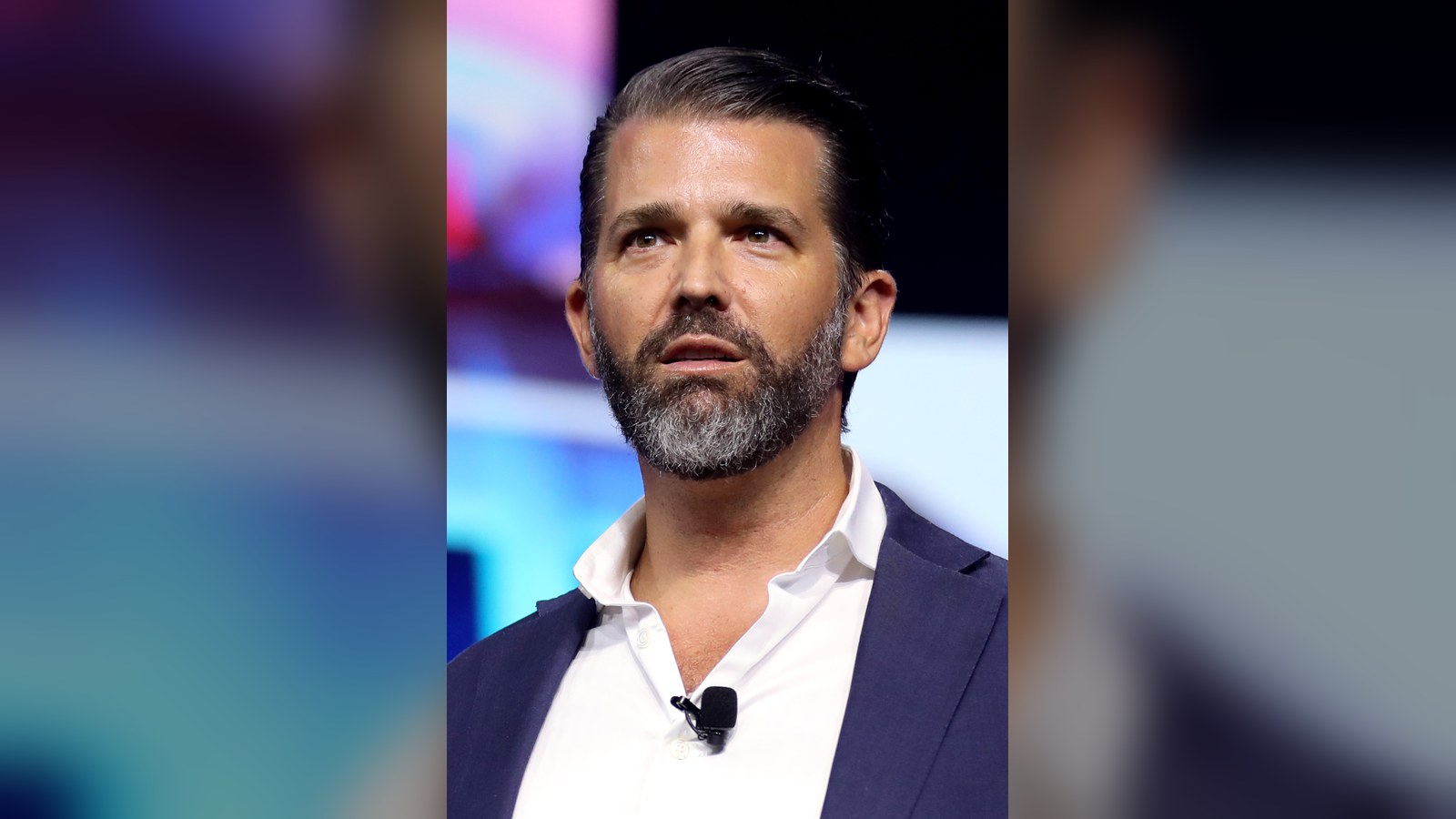
Kalshi has ended Donald Trump Jr.’s advisory role, closing a relationship that began in January 2025 and collapsed once his venture capital firm backed the company’s biggest rival. Reuters reported the news on Thursday, Nov. 12. Kalshi says the split was mutual and unrelated to politics, though two people familiar with the matter told Reuters that politics was on some employees’ minds.
What Kalshi says happened
A Kalshi spokesperson told Reuters that discussions about ending the arrangement began in August. That was when 1789 Capital, the firm where Trump Jr. is a partner, took the lead on a funding round for Polymarket. “We have mutually agreed to end Don’s advisory role after his firm’s significant investment in a competitor this past summer,” the spokesperson said.
The company also thanked Trump Jr. for helping bring customers to the platform. Polymarket and Trump Jr. did not immediately respond to Reuters’ requests for comment, so the account so far comes from one side of the split.
The Polymarket money behind the break
The Polymarket round was reported as a $1 billion raise at a $21 billion valuation, up from roughly $15 billion before the deal. 1789 Capital was set to contribute about $300 million. Crypto.news reported that the firm had already put in roughly $200 million earlier, which would bring its combined commitments to around $500 million. That outlet cautioned that the figures describe planned financing and commitments, not a publicly documented final ownership stake.
Trump Jr. joined Polymarket’s advisory board in August 2025, after 1789 Capital’s first investment. His tie to Kalshi was older. Kalshi named him a strategic adviser in January 2025, before his father returned to the White House. Kalshi CEO Tarek Mansour described the job as covering market strategy, growth, partnerships and reaching new audiences. The Financial Times reported that Trump Jr. received an equity stake then worth $300,000. Neither source says what happens to that equity now.
Was politics a factor?
Kalshi’s official line is that political considerations played no role in ending the advisory role. Reuters’ sources add a wrinkle. They said some people inside Kalshi had raised concerns about what Democrats’ sweep of both chambers of Congress in the midterms could mean for the company. The sources do not say that this concern drove the decision, and Kalshi’s explanation, a conflict created by a major investment in a direct competitor, stands on its own as a commercial rationale.
The two explanations are not mutually exclusive. Even so, a company that sells itself as a federally regulated exchange has obvious reasons to be wary of being tied to a politically prominent adviser when control of Congress shifts.
A regulatory fight in the background
The split comes as the prediction market industry fights over who gets to regulate it. Kalshi argues that event contracts on federally regulated exchanges fall under the Commodity Futures Trading Commission’s jurisdiction. State authorities have challenged some of these products as unlicensed gambling. Crypto.news noted that a July 27 court injunction in Minnesota blocked enforcement of the state’s new prediction market law against CFTC-registered exchanges while related lawsuits continue.
For now, the sources leave several questions open: how Trump Jr. views the split, what becomes of his Kalshi equity, and whether Polymarket’s round has closed on the terms reported. What is clear is that the advisory role is over, and the reason Kalshi gives is that one of its advisers was funding the competition.
- Kalshi ends Donald Trump Jr. advisory role over Polymarket investment: Reuters (cointelegraph.com)
- Kalshi ends Trump Jr. advisory deal over Polymarket investment (crypto.news)
Explore more on this topic with Vexel Search.
File photo: Donald Trump, Jr. (53808883476) (cropped).jpg by Gage Skidmore from Surprise, AZ, United States of America, CC BY-SA 2.0, via Wikimedia Commons.
WordUp Morning
Ten stories, both sides of each, in five minutes. Free, every weekday at 7am, plus a Saturday weekend edition.
We'll email you a link to confirm. Unsubscribe any time.

Swiss digital asset bank Sygnum has unveiled the ETH Alpha Fund, a product that aims to grow investors’ Ether holdings by 8% to 10% a year after fees, roughly three to four times what the bank says plain staking currently pays. The fund opened to investors on November 2 and was announced publicly on November 12.
The pitch is aimed at professional and qualified investors in approved markets, including Switzerland. It targets institutions that hold ETH for the long term and want more of it, without selling what they already own.
How the ETH Alpha Fund tries to beat staking
Sygnum estimates that conventional ETH staking currently yields about 2% to 3% annually. To lift that figure, the fund layers several strategies on top of native staking. These include options premiums, arbitrage between trading venues, and income from derivatives funding rates. Specialist investment firms run the trading side. Sygnum’s own social post describes the fund as market-neutral, meaning the trading is designed to earn returns without betting on the direction of ETH’s price.
Markus Hämmerli, Sygnum’s head of asset management and the fund’s lead, framed the product around a shift in how institutions think. “Institutions that hold ETH for the long term increasingly think in ETH, not dollars,” he said.
An ETH-denominated target is not a dollar target
The distinction matters. The fund books profits and losses in ETH, so success is measured by the number of tokens held at year-end. The 8–10% figure is an investment objective, not a guaranteed payout, and it includes staking income.
Investors still carry full exposure to Ether’s market price. NewsBTC offered a simple illustration: an investor who starts with 100 ETH and earns 8% ends with 108 ETH. If Ether’s dollar price drops 20% over the same period, that holding is still worth about 13.6% less in dollar terms. That is arithmetic rather than a forecast, but it shows why a growing token balance and preserved purchasing power are different goals. With ETH trading near $1,938 and down almost 4% on the day, according to crypto.news’ price ticker, the point is far from academic.
Custody, liquidity and the fine print
Combining staking with trading strategies makes the product harder to assess than a simple staking position. Staking carries its own risks, including inactivity penalties, slashing and reliance on a service provider. Options and arbitrage income come from entirely different sources and bring their own risks.
Sygnum says trading runs through Sygnum Protect, which keeps collateral at the bank rather than on exchanges. That addresses one counterparty concern, though investors will still want to understand the full chain of providers involved.
Liquidity terms are also restrictive. According to the product page cited by NewsBTC, the ETH Alpha Fund requires a minimum subscription of $100,000 or its ETH equivalent. Subscriptions and redemptions are monthly and require advance notice. There is also an investor-level gate of up to 10%, whose mechanics the page does not explain. A treasury that may need cash on short notice would have to weigh those dealing terms against its horizon.
What to watch next
The launch fits a broader push to package Ethereum for institutions. Sygnum’s pitch is that staking alone leaves yield on the table for investors who think in ETH terms. Whether the ETH Alpha Fund can deliver 8–10% after fees will only be clear once it builds a performance record, ideally one that shows how the trading strategies hold up when markets turn volatile.
Explore more on this topic with Vexel Search.
WordUp Morning
Ten stories, both sides of each, in five minutes. Free, every weekday at 7am, plus a Saturday weekend edition.
We'll email you a link to confirm. Unsubscribe any time.
The latest Binance hack seizure marks the biggest step yet in a US effort to claw back stolen crypto. The Department of Justice said Thursday it has court authorization to seize or restrain more than $1.2 billion of the $6.3 billion in cryptocurrency taken from Binance in the Oct. 29 attack.
That sum is part of a larger pool. US authorities and private-sector partners have frozen more than $2.7 billion in stolen assets since the breach, according to the DOJ. Investigators are still trying to recover more, the department said. Put simply, a bit under half of the stolen total has been frozen, and about a fifth is now covered by court-approved seizure or restraint authority.
Who is blamed for the Binance hack
The FBI attributed the attack to TraderTraitor, a North Korean hacking group, in a cyber alert. Kim Yo Jong, sister of North Korean leader Kim Jong Un, denied that North Korea was involved. The attribution is the FBI’s finding, and the denial is on the record alongside it.
Binance, for its part, said it covered the affected assets with its own funds. It added that a new proof-of-reserves snapshot showed customer assets backed at least one-to-one, according to a Thursday post on X. If that holds, the practical effect of the theft falls mainly on the exchange rather than its customers. Any assets the government recovers would not change that backing claim.
There is precedent for these actions, though on a far smaller scale. In November 2025, the DOJ announced an enforcement action targeting about $15 million in crypto linked to North Korean hackers known as APT38. The latest Binance hack seizure is roughly eighty times larger.
FaceStealer: deepfakes and bogus fixes
The DOJ also announced a second, separate operation. US authorities seized cloud infrastructure used in FaceStealer, a North Korean social engineering campaign that stole more than $400 million in crypto over the past 18 months.
The scheme relied on trust built over video calls. The DOJ said the hackers used secretly recorded footage of earlier victims, along with AI-generated deepfakes of prominent crypto figures, to look credible. They then pushed targets to install malware by presenting it as a technical fix for a supposed problem on the call.
Targets were mainly people working in crypto and Web3. The hackers also increasingly went after open-source software developers and maintainers, seeking access to their devices and to their software repository accounts. Those accounts matter because compromising one can open a path into code that many other people use.
Under a federal warrant, the FBI seized more than 900 webcam videos of FaceStealer victims. It also published a public advisory with guidance on protecting against the scheme and on what to do after a compromise. The DOJ said the group behind the campaign is known publicly by several names, including Sapphire Sleet, UNC1069, Dangerous Password, CryptoCore, APT38, BlueNoroff and Stardust Chollima.
What the Binance hack seizure signals
The two announcements show US authorities working both ends of North Korea-linked crypto crime: moving against stolen funds after a major theft, and dismantling the infrastructure used for earlier campaigns. A seizure or restraint order is not the same as money returned, and the DOJ did not say how much of the $1.2 billion will ultimately be recovered or who would receive it. Investigators say work to trace the remaining funds continues.
- DOJ moves to seize $1.2B from Binance hack, disrupts FaceStealer scam (cointelegraph.com)
Explore more on this topic with Vexel Search.
WordUp Morning
Ten stories, both sides of each, in five minutes. Free, every weekday at 7am, plus a Saturday weekend edition.
We'll email you a link to confirm. Unsubscribe any time.
The Gemini KAST deal, reported on the eve of Gemini’s third-quarter earnings, would hand the exchange’s already shuttered U.K. and European operations to a Singapore stablecoin payments company for less than $10 million. Gemini has not confirmed the sale, and the picture is murkier than some headlines suggest.
What is actually known about the Gemini KAST deal
The sale was first reported by CoinDesk and picked up by Bitcoin Magazine and Bitcoinist on Nov. 12. Gemini declined to comment. A KAST spokesperson would not discuss the transaction, according to Bitcoin Magazine, but said the company is actively looking at acquisitions as its revenue and footprint grow. Neither firm has publicly confirmed a sale, and no regulator has announced approval of a change of control.
https://www.youtube.com/watch?v=videoseries
Bitcoinist adds a detail that lends the report some weight. A KAST job listing, published roughly a month earlier, sought a European general manager to oversee the transition of Gemini employees in the U.K. and the EU. That is circumstantial evidence rather than confirmation, but it points to preparations well before the news broke.
It is also unclear exactly what is being sold. The reports do not specify which legal entities, how many staff or which regulatory authorisations are included. What is clear is that Gemini’s core U.S. exchange is not part of it.
The end of a retreat that began in February
The sale would complete the pullback Gemini announced on Feb. 4. The Nasdaq-listed company, which trades as GEMI, approved a plan to wind down operations in the U.K., the EU and other European jurisdictions, and Australia. It said it would keep operating in the United States and Singapore.
The plan included cutting up to 200 jobs, about 25% of its global workforce at the time, and carried an estimated $11 million in mostly cash restructuring charges. Co-founders Cameron and Tyler Winklevoss said the company would “double down on America” after foreign markets proved hard to win and expensive to serve. Customers in the U.K., European Economic Area and Australia were told their accounts would close on April 6, with withdrawals-only access starting in early March.
The reported price puts the exit in perspective. A sale under $10 million is smaller than the $11 million Gemini expected to spend on restructuring. It is better read as recovering something from a business already shut down than as a windfall.
Why licences matter more than customers
The units’ customers are gone, so the likely draw is regulatory standing. Both sources note that buyers of shuttered crypto businesses often want the permissions more than the operations. An established, authorised entity can offer a faster route into a market than applying from scratch.
That route is not automatic. Licences do not simply pass to a new owner, and a transfer of a licensed firm in the U.K. or EU typically requires a change-of-control review by local regulators. Until that happens, KAST cannot assume it will be able to operate through the acquired entities.
What KAST gets, and what it wants
KAST was founded in July 2024 by former Circle executive Raagulan Pathy. It offers dollar-denominated accounts, cross-border payments and cards that let users hold and spend stablecoins. In March it said it had raised $80 million in a Series A co-led by QED Investors and Left Lane Capital, earmarked for expansion, licensing and compliance. It also claimed more than one million users and nearly $5 billion in annualized transaction volume. Those figures have not been independently verified.
Seen that way, the Gemini KAST deal fits KAST’s stated plans. KAST has not publicly described a European acquisition, though, so its intentions remain inference rather than announcement.
A smaller-scale crypto dealmaking market
The transaction also reflects a broader shift in crypto mergers and acquisitions. Bitcoinist cites advisory firm Architect Partners, which counted $2.2 billion across 67 announced crypto deals in the third quarter, an 83% drop in deal value from the previous quarter. The market’s headline numbers are shrinking, and smaller deals aimed at licences, distribution and existing capabilities look increasingly common.
What to watch Thursday evening
Gemini reports third-quarter results after the market close on Nov. 12, with a conference call at 8:30 a.m. ET on Friday. Investors will look for signs that the February cuts are lowering costs and moving the company toward the profitability it targeted. The Winklevoss twins put $100 million of bitcoin into the company earlier this year after its stock came under pressure, so the numbers will show how the business looks once the overseas wind-down is done.
The open questions are whether Gemini acknowledges the sale in its earnings materials, which entities and staff are covered, and whether European regulators approve KAST as a new owner. Until then, the deal remains a reported one.
- Crypto Exchange Gemini Sells U.K. and EU Units to KAST for Under $10 Million (Bitcoin Magazine)
- Gemini Sells UK and European Operations to KAST for Under $10 Million (bitcoinist.com)
Explore more on this topic with Vexel Search.
WordUp Morning
Ten stories, both sides of each, in five minutes. Free, every weekday at 7am, plus a Saturday weekend edition.
We'll email you a link to confirm. Unsubscribe any time.
Crypto
New Crypto Crime Task Force Aims to Freeze Illicit USDT Before It Moves, Weeks After T3 Collapsed

Tron, Tether and blockchain analytics firm Chainalysis have launched a new crypto crime task force, and its central promise is speed: freezing illicit USDT on the Tron network before criminals can move it. The group, called the Digital Crime Task Force (DCTF), was announced on November 12.
The timing is awkward. It arrives only weeks after a near-identical effort, the T3 Financial Crime Unit, reportedly fell apart. T3 was built by Tron, Tether and rival analytics firm TRM Labs.
What the new crypto crime task force says it will do
According to the announcements, the DCTF will combine transaction monitoring, investigative intelligence and closer coordination with law enforcement. Its stated priority is to shrink the gap between spotting a suspicious transaction and acting on it. Stolen or scammed funds often hop between wallets, get swapped into other assets or cross to other blockchains within minutes. Once that happens, recovery gets much harder.
The targets include investment fraud, romance scams, crypto hacks, terrorist financing and North Korean cyber operations. Chainalysis will supply the blockchain intelligence and investigative tools. Tether, as issuer of USDT, holds the power to freeze tokens, and Tron is the network where much of that stablecoin activity takes place.
Tether CEO Paolo Ardoino pointed to the company’s record, saying it has frozen more than $7 billion tied to illicit activity while working with over 360 law enforcement agencies across 73 countries. Tron founder Justin Sun framed the effort as protecting ordinary people who use USDT for payments, business transactions and cross-border transfers.
Why AI scams add urgency
The launch also leans on Chainalysis data about fraud. The firm’s figures show AI-enabled scams were 4.5 times more profitable than conventional schemes in 2025. Impersonation scams rose by more than 1,400% year over year. Tools that generate convincing messages and impersonate trusted people let fraudsters operate at greater scale, which leaves less time to catch the money.
The shadow of T3
The T3 unit launched in September 2024, and Binance later joined. The group said it had helped freeze roughly $250 million in illicit assets. Reports say it nonetheless suffered from slow response times and coordination problems before being discontinued. The sources do not detail exactly what went wrong or why TRM Labs is no longer involved, so the reasons behind the breakup remain unclear.
That history makes the DCTF’s emphasis on speed look like a direct answer to T3’s reported weaknesses. It is also the main test. Identifying suspicious transactions is only one step. The harder part is turning an alert into a freeze, with the right legal and operational sign-offs, before the money moves on.
What to watch
The announcement offers no performance targets, timelines or funding details, and the sources do not say whether other exchanges or companies will join. The partnership also keeps a notable structural feature: a stablecoin issuer, a blockchain’s backers and an analytics vendor working closely together. That gives the group real levers for freezing funds. It also means its success will be judged on results rather than press releases.
For now, this crypto crime task force is a stated intention to be faster and more proactive than its predecessor. Whether it delivers will show in how quickly frozen-fund figures grow, and in whether this alliance lasts longer than the last one.
Explore more on this topic with Vexel Search.
WordUp Morning
Ten stories, both sides of each, in five minutes. Free, every weekday at 7am, plus a Saturday weekend edition.
We'll email you a link to confirm. Unsubscribe any time.

ZIG Finance has launched a tokenized product that gives eligible institutional investors exposure to Saudi SME credit, a corner of emerging-market lending that large investors have long found difficult to reach. The zEMS Vault is the first product to come out of the company’s partnership with Laser Digital, the digital assets arm of Japanese banking group Nomura.
How the zEMS Vault is built
The vault is a layered structure in which each participant covers a different part of the process. Beehive originates the underlying loans. It describes itself as the first peer-to-peer lending platform in the MENA region regulated by the DFSA, with more than a decade of SME lending experience across the Gulf. Zamanat is the structuring partner and Sharia advisor, while ZIG Markets handles issuance, curation and distribution. Khalij is expected to join as Sharia certification partner, and an independent calculation agent has yet to be appointed.
On the technology side, the vault is tokenized by KAIO, a platform developed by Laser Digital and WebN, and issued on BNB Chain. KAIO handles compliance and the full product lifecycle, including KYC checks at both subscription and redemption. The platform already hosts tokenized funds from managers such as BlackRock, Brevan Howard and Hamilton Lane, and says it has processed more than $500 million in volume.
Why institutions have hesitated on Saudi SME credit
According to ZIG Finance, institutions have held back from emerging-market private credit because of worries about underwriting standards, portfolio construction and risk oversight. The zEMS design tries to answer those worries by bundling local origination, a governance framework and compliant distribution into one product.
ZIG Finance co-founder Abdul Rafay Gadit was frank about the limits of that pitch. The aim, he said, is not to remove credit risk but to make it transparent and manageable. Laser Digital’s role is that of Risk Framework Advisor, helping design the vault’s risk governance and providing tokenization advisory. Its CEO, Jez Mohideen, called the launch an early test of whether private credit can be brought onchain in a form institutions will approve.
The fine print matters
The disclosures are as telling as the announcement. The vault is open only to eligible institutional investors in selected jurisdictions. It does not guarantee returns, is not principal-protected and does not give investors direct ownership of the underlying assets. Credit risk stays with the underlying SME borrowers.
Laser Digital has also made clear that it has not assessed or rated any underlying loan or borrower. Responsibility for credit selection and risk management sits with ZIG Finance and the originator. Despite Nomura’s name recognition, then, the advisory role is not an endorsement of the loan book itself.
A template for other markets
The larger story is the repeatability ZIG Finance is aiming for. The company says more products are in the pipeline, with other regional markets and asset classes under consideration. KAIO’s chief executive, Shrey Rastogi, described the goal as a repeatable model for bringing new markets and credit strategies onchain. Zamanat’s CEO, Umair Tariq, framed it as a steady source of financing for Saudi businesses that could become an established part of global private credit portfolios.
Whether that ambition is met will depend on investor appetite and on how the underlying loans perform, neither of which the launch announcement can show yet. For now, the vault is a concrete test of whether Saudi SME credit can be packaged onchain in a way that institutional compliance teams are willing to sign off on.
Explore more on this topic with Vexel Search.
File photo: Nomura Holdings – NYC (55283758308).jpg by ajay_suresh, CC BY 4.0, via Wikimedia Commons.
WordUp Morning
Ten stories, both sides of each, in five minutes. Free, every weekday at 7am, plus a Saturday weekend edition.
We'll email you a link to confirm. Unsubscribe any time.

Deutsche Bank has switched on its long-awaited crypto custody service, giving European institutional and corporate clients a way to hold digital assets with Germany’s largest lender. The launch, confirmed on Wednesday, November 11, comes about two months after the bank first said it would enter the business.
At launch the service supports five assets: Bitcoin, Ether and three stablecoins. These are Circle’s dollar-backed USDC, Circle’s euro-backed EURC and AllUnity’s EURAU. The bank holds the wallets and private keys on behalf of clients, who can store and transfer the assets through the service.
What clients actually get
The offer is aimed at professional money, not individual savers. Retail customers are excluded from the initial rollout. According to crypto.news, the target client list set out in September includes institutional investors, asset managers, hedge funds, brokers, corporations and sovereign institutions. Customers reach the platform through Deutsche Bank’s Autobahn corporate banking system.
The bank describes the technical setup as hardware-protected private key storage, warm and cold wallets, multiple approval controls and separate storage arrangements for client assets. It has said it uses outside technology providers for selected technical services. Its main partner is Swiss crypto infrastructure firm Taurus, with which it began working in 2023 on custody and tokenization technology, around the time it applied for a digital asset custody license in Germany.
Several details remain unknown. The bank has not named its first customers or published what it charges to hold digital assets, so the commercial appeal is hard to judge from public information.
The regulatory path behind the launch
The timing follows a clear regulatory sequence. Deutsche Bank announced its plans on September 16, subject to clearance. Its entry in the European Union’s Markets in Crypto-Assets Regulation (MiCA) register, covering crypto custody and transfer services, is dated October 12 and names Germany’s financial watchdog BaFin as its regulator. Going live roughly a month after that registration suggests the bank had its technology largely ready and was waiting on the paperwork.
That matters because regulatory uncertainty and the operational risk of managing private keys are often cited as reasons conventional organizations have stayed out of digital assets. A custodian that is a supervised bank operating under MiCA offers those organizations a more familiar structure than a crypto-native platform. Bitcoinist framed the launch as exactly that kind of on-ramp. That is commentary rather than a measured result, and client uptake is the real test.
Beyond storage: tokenization and Asia
Deutsche Bank is presenting custody as a starting point. Alongside the launch it signed a memorandum of understanding with Deutsche Asset Management, its majority-owned asset manager, to explore tokenized money market funds, crypto exchange-traded commodities and stablecoins. An MoU only commits the two sides to explore these ideas, and no products have been announced.
Paul Maley, the bank’s global head of trust and securities services, said the medium-term aim is “a fully integrated, regulated ecosystem that supports the custody, tokenisation, and settlement of digital assets.” Gerald Podobnik, co-head of the corporate bank, told Reuters in October that the bank would start in Germany and then expand to Asian financial centers in 2027. Nothing in the launch coverage suggests that timetable has changed.
The stablecoin lineup is also worth noting. Two of the three are euro-denominated, and one of them, EURAU, comes from AllUnity, a venture that Cointelegraph describes as Deutsche Bank-backed. That points to a bank pairing its custody offer with euro-based digital cash as well as the dollar tokens that dominate the market.
For now, the bank’s crypto custody offering is narrow, limited to professional clients and a handful of assets. But a major European lender has gone from announcement to a regulated, working service within weeks, which sets a reference point for other banks weighing the same move. What remains to be seen is how many clients sign up, and what the pricing looks like.
- Deutsche Bank Goes Live With Crypto Custody After a Five-Year Buildup (Decrypt)
- Deutsche Bank launches crypto custody for companies and institutions (cointelegraph.com)
- Deutsche Bank Launched Institutional Crypto Custody in Europe (bitcoinist.com)
- Deutsche Bank launches crypto custody for Bitcoin, Ethereum, stablecoins (crypto.news)
Explore more on this topic with Vexel Search.
File photo: Deutsche-Bank-Frankfurt-am-Main.jpg by Raimond Spekking, CC BY-SA 4.0, via Wikimedia Commons.
WordUp Morning
Ten stories, both sides of each, in five minutes. Free, every weekday at 7am, plus a Saturday weekend edition.
We'll email you a link to confirm. Unsubscribe any time.

Kraken’s parent company, Payward, has pushed deeper into the market for tokenized stocks, adding blockchain-based versions of more than 200 UK and EU-listed companies to its xStocks platform. The catch is that investors in the UK, home to some of the biggest names on the list, cannot buy them.
Payward announced the expansion on Wednesday, November 11. According to the company, eligible users can trade the new tokens on Kraken and on participating platforms in the xStocks Alliance. Reports on the launch say the rollout covers the FTSE 100 and Germany’s DAX 40, with household corporate names such as Shell, HSBC, LVMH, Airbus, SAP and Siemens among the offerings.
What the new tokenized stocks cover
The German slice of the launch is the most complete. Tokens now exist for all 40 companies in the DAX, including SAP, Siemens, Allianz and Deutsche Telekom. Deutsche Börse separately said the tokens can be traded on its affiliated 360X platform, with round-the-clock trading available on select venues. The same platform also lists a tokenized version of Xetra-Gold, an exchange-traded commodity linked to gold.
Payward says each token is backed one-to-one by a share held with a regulated custodian. The company’s partner GTN supplies the execution and custody infrastructure for the underlying shares. The two firms announced that partnership in July, with the aim of taking tokenized equities beyond US markets.
The tokens are designed to move across several blockchains, including Solana, Ethereum, TON, Ink and X Layer. Holders can shift them between compatible wallets and decentralized finance applications. Trading hours depend on the venue. Kraken’s European Economic Area offering runs 24 hours a day, five days a week, while some onchain venues trade continuously.
Exposure, not ownership
Buyers should understand what they are getting. Kraken’s risk disclosure states that xStocks tokens give holders exposure to a share’s price performance, but not voting rights or a legal claim on the underlying stock. For investors who mainly want price exposure and 24/7 access, that may be enough. For those who care about shareholder rights, it is a meaningful difference from owning the shares themselves.
The UK paradox
The most awkward detail is geographic. Reports agree that the new UK-listed tokens remain unavailable to investors in the UK, and one report adds that US investors are also excluded. The product is built around British and European blue chips, yet access is limited to eligible users elsewhere. The sources do not explain the regulatory reasoning, and Payward has not been quoted here on when, or whether, that will change.
Where xStocks stands in the market
Payward says the expansion lifts xStocks past 1,500 tokenized assets, with more than $45 billion in cumulative transaction volume and over 550,000 unique holders. Token Terminal data cited by Cointelegraph put xStocks’ market capitalization at $1.1 billion, about 22% of the $4.9 billion in tokenized stocks the firm tracks. That ranks it third, behind Binance’s bStocks at $1.5 billion and Ondo Finance at $1.4 billion. Another outlet describes the $1.1 billion figure as assets under management, so the exact measure varies by source, but the scale is consistent.
The size of the sector remains small next to traditional equity markets, and competition is tight. Still, widening beyond US shares is a clear attempt to differentiate xStocks from rivals.
Hong Kong next
Payward says it plans to add hundreds of Hong Kong-listed equities in the coming weeks. Mark Greenberg, the company’s chief commercial officer, framed the strategy in broad terms: “A portfolio should not have borders or trading hours,” he said, adding that “tokenizing every other international market is the next step.”
If that plan holds, the UK and EU launch is less a finish line than a template, with the same custody-backed model extended market by market. Whether regulators in excluded jurisdictions, starting with the UK itself, allow local investors to join in will help decide how far these tokenized stocks can really go.
Explore more on this topic with Vexel Search.
WordUp Morning
Ten stories, both sides of each, in five minutes. Free, every weekday at 7am, plus a Saturday weekend edition.
We'll email you a link to confirm. Unsubscribe any time.

Supreme Court Rejects Custodia’s Fed Master Account Bid, Ending Last Legal Path

iPhone Duo face unlock arrives in iOS 27.3 beta with a 45-minute limit, and it isn’t Face ID

Depardieu drops appeal: 18-month suspended sentence stands after first public apology


-

 Tech & AI7 days ago
Nvidia Shares Drop 8% at One Point, Erasing Over $300 Billion, as Board Probes Jensen Huang Scandal
-

 Business & Hustles7 days ago
Whitbread Board Seat Bid Fails With At Least 83% of Votes Against Activist Corvex
-

 Crime3 days ago
Eleanor Donaldson placed on sex offender register for five years, with three-year supervision order
-

 Tech & AI2 days ago
Nvidia CEO Search Reaches Arm: Board Reportedly Approached Rene Haas One Day After Jensen Huang Resigned
-

 Tech & AI7 days ago
Meta takes AI age checks worldwide on Instagram, months after an up-to-$18bn settlement
-

 Tech & AI6 days ago
Paramount Skydance CEO Calls AI the “Biggest Creative Unlock” in Modern History as $6 Billion in Savings Loom
-

 Fashion6 days ago
Bronco Boot Low Lands Nov. 12 in 4 Colorways as Tyler, The Creator and Converse Expand the 1908 Line
-

 Fashion6 days ago
Tod’s Creative Director Exits After Three Years With No Successor Named
-

 Crypto6 days ago
XRP Ledger’s Quantum-Proof Accounts Would Keep Base Fees Unchanged, With a 2028 Target
-

 Business & Hustles7 days ago
Robinhood Brings US IPO Access to UK Retail Investors: Zero Commission, No Guaranteed Shares
-

 Business & Hustles6 days ago
October retail sales rise just 1.5% as shoppers save for Black Friday
-

 Tech & AI6 days ago
Web Summit Day 2 Cancelled in Lisbon as Storm Charles Brings Flood Risk and 120km/h Gusts
-

 Business & Hustles7 days ago
Tesla Will Return Cybertruck Deposits for “a Lot of People” as Production Ends in About 8 Months
-
 Crypto6 days ago
iOS Flaw Puts Wallet Seed Phrases at Risk, and Apple’s Nov. 9 Patch Doesn’t Mention It
-

 Tech & AI5 days ago
Nvidia investigation: Wachtell hired to probe CEO Jensen Huang’s alleged spy link after $500bn share rout
-

 Entertainment7 days ago
Swift and Kloss Friendship Resurfaces: First Photo Together Since 2018 at Chiefs Game
-

 Crime6 days ago
Edinburgh Academy abuse: inquiry finds over 40 years of ‘dreadful abuse’ and a school that ignored complaints
-

 Entertainment6 days ago
M John Harrison, 81, Is the Oldest Booker Prize Winner and the First From Science Fiction
-

 Entertainment6 days ago
David Walliams allegations: agent, BBC and Sky cut ties after he loses bid to block investigation
-

 Crypto5 days ago
200 Tokenized Stocks From the UK and EU Hit xStocks, but UK Investors Are Locked Out
You must be logged in to post a comment Login