
Gaming
Rainbow Six Vegas 3 Reportedly in Development, 18 Years After Vegas 2

Header image: AI-generated illustration by WordUp News.
Rainbow Six Vegas 3 may be on the way, according to a new report claiming Ubisoft Montreal has begun work on a follow-up to the tactical shooter series’ much-loved console era. Ubisoft hasn’t confirmed anything, and the game is reportedly years from an official reveal. Still, the rumor points to a shift for a franchise that has leaned heavily on one game for more than a decade.
What the Rainbow Six Vegas 3 report says
The claim comes from Insider Gaming, which says the project is in early development under the codename Spades. It is reportedly one of three new projects greenlit at Ubisoft Montreal. Eurogamer adds that sources describe a second of those projects as also set in the Rainbow Six universe. Insider Gaming’s sources reportedly said the game is “likely Vegas 3 rather than a remake” of an earlier title.
Eurogamer says it has not been able to verify the report independently. Polygon, for its part, notes that Insider Gaming has a reliable record of reporting on in-development Ubisoft projects, which makes the claim more credible. Even so, this remains an unconfirmed leak, and plans at an early stage can change. Insider Gaming itself reportedly expects it will be several years before Ubisoft announces a new Vegas game.
Why a Vegas revival would be a notable change
The original Rainbow Six Vegas arrived in 2006, followed by Vegas 2 in 2008. Both were released for the PlayStation 3 and Xbox 360 era, and both were built around story-driven single-player campaigns and a mix of first- and third-person shooting, with additional multiplayer modes. That is quite different from Rainbow Six Siege, the 2015 competitive shooter that has defined the brand ever since and has now run as a live service for around 11 years.
The report gives no details on how the new game would play. Polygon speculates that it could take the form of a modern co-op shooter or a more Call of Duty-like take on Rainbow Six. That is conjecture, not reporting, but it highlights the main design question: how a new Vegas game would stand apart from Siege without competing with it directly.
A series finally branching out
If the rumor is accurate, Rainbow Six Vegas 3 would be part of a broader effort to diversify the franchise. Ubisoft’s mobile experiments have since been delisted. In August, though, it announced Rainbow Six Tactics, a single-player, turn-based spin-off from Ubisoft Paris due in 2027. A Vegas sequel from Montreal would add a third, very different strand to the brand.
The organizational backdrop matters too. Rainbow Six now sits under Vantage Studios, the Ubisoft subsidiary formed last year that also oversees Assassin’s Creed and Far Cry. Tencent holds a 26.32 percent stake in it. The Montreal studio is reportedly working on two other new projects, one of them also tied to Rainbow Six, so Ubisoft appears to be investing in more than a single revival.
What to watch next
The report arrives amid a run of Ubisoft leaks. Eurogamer notes that last week brought reports of two new Assassin’s Creed games, one set in ancient Rome and a mobile spin-off set in Jerusalem. That came shortly after Ubisoft said no new Assassin’s Creed remakes were currently in the works. Ubisoft has not commented on Spades or Rainbow Six Vegas 3.
For now, fans have only a codename and a credible but unverified report. There is no release window, platform list or gameplay detail. Anyone hoping for a return to Vegas will likely be waiting a good while, but the signs suggest Ubisoft is at least willing to revisit the older, campaign-driven side of Rainbow Six.
Explore more on this topic with Vexel Search.
WordUp Morning
Ten stories, both sides of each, in five minutes. Free, every weekday at 7am, plus a Saturday weekend edition.
We'll email you a link to confirm. Unsubscribe any time.

Header image: AI-generated illustration by WordUp News.
The biggest talking point around GTA 6 empathy is that Rockstar says the series is trying something new, just days before the game’s November 19, 2026 launch on PS5 and Xbox Series X|S. In an interview with The Guardian, Rockstar North co-studio head Rob Nelson and head of publishing Jennifer Kolbe discussed how the new game shifts the formula behind the world’s most notorious crime franchise.
The headline comment came when Nelson was asked whether the game would encourage empathy in some form. “I would say so,” he answered, calling it “a product of the story we’re trying to tell.” He added: “We’ve tried for the first time in a GTA to provide mechanisms that encourage it, for those who want to.”
What Rockstar has actually said about GTA 6 empathy
The detail is thin. The reporting available so far does not explain what these mechanisms are, how they work, or what players get for using them. What the interview does establish is the intent, and the phrase “for those who want to” suggests the systems are meant to be optional rather than forced on anyone.
Nelson was also direct about crime’s place in the series. “Crime is a fundamental part of GTA – at least up until now, it has been,” he said. Rockstar, he explained, doesn’t want to punish people for playing the way they’re used to, though “your actions will have some effect on how the game plays out.” That reads as a promise of consequences rather than a moral lecture, and it leaves room for the chaos the series is known for.
A different kind of protagonist pair
Part of the explanation seems to lie in the leads. Nelson described Jason and Lucia as a “younger couple with their backs against the wall,” which is why it wouldn’t make sense for them to “go out and cause as much carnage and make as much noise as they can.” That is a notable contrast with GTA 5’s Trevor, whose unrestrained violence defined much of that game’s tone. IGN’s coverage notes that Jason and Lucia don’t appear to have a direct Trevor equivalent, and that the trailers have so far suggested a more grounded feel while keeping Rockstar’s signature tone.
The studio’s previous game, Red Dead Redemption 2, is a natural reference point. IGN frames GTA 6 as arriving in a “post-Red Dead Redemption 2 world,” where players could already choose to be kind to the people around them. Bringing a similar flexibility to Leonida’s Vice City would be a real change for a series long associated with sandbox mayhem.
Why it matters ahead of launch
The timing is notable. Fans have been debating how realistic the game looks, with NPCs reacting to weapons and a more grounded approach to everyday systems. Some are excited and others nervous. Footage released by Rockstar has drawn praise for its graphics, though one IGN writer noted the game reportedly runs at 30 fps.
Whether GTA 6 empathy becomes a meaningful part of play or a minor side system will only be clear once players can try it. For now, Rockstar’s message is that crime remains central, the old playground approach is still available, and a gentler path is on offer for anyone who wants it. With launch less than a week away, that answer is close.
Explore more on this topic with Vexel Search.
WordUp Morning
Ten stories, both sides of each, in five minutes. Free, every weekday at 7am, plus a Saturday weekend edition.
We'll email you a link to confirm. Unsubscribe any time.
Gaming
Pearl Abyss AI Push Spreads “Throughout Our Entire Development Pipeline” as DokeV Slips to 2028
Header image: AI-generated illustration by WordUp News.
The Pearl Abyss AI strategy is getting bigger, not smaller: the South Korean studio behind Crimson Desert says it is expanding generative AI “throughout our entire development pipeline,” despite the backlash that followed its biggest game’s launch.
What the Pearl Abyss AI announcement actually says
The statement comes from the company’s latest quarterly Earnings Letter, as reported by Eurogamer. Pearl Abyss explains that it used to validate game systems only after building them by hand. It now uses AI to “rapidly validate diverse design concepts prior to actual implementation,” which it says allows “a more efficient allocation of development resources” and faster production.
The letter describes AI being used at “various stages of development,” including automating repetitive tasks, supporting content creation and optimizing tests. The studio frames this as a tool rather than a replacement for people. It says AI “serves strictly as a tool to support concept validation and pipeline productivity,” while core gameplay and actual content creation “remain fully driven by our development team.”
The backlash that came first
The timing is notable. When Crimson Desert launched, players spotted in-game images that looked AI-generated. Pearl Abyss acknowledged that some “2D visual props” had been made with AI tools. It said they were always meant to be replaced with human-made art, and it patched them out quickly.
The new letter suggests that episode did not change the company’s direction. Headlines at PC Gamer and GamesRadar+ framed the update as the studio pressing ahead regardless of player sentiment. The studio’s own wording is more measured, stressing “higher-fidelity games” delivered “more expeditiously.”
DokeV, Switch 2 and the wider industry
The same letter gave updates on the studio’s other projects. DokeV, its creature-collecting game, is now “targeting a launch in the second half of 2028,” with more information promised within the year. It was originally aiming for 2023. GamesRadar+ ties the AI expansion to DokeV as well. Crimson Desert, meanwhile, is being prepared for a Nintendo Switch 2 release “in the first half of next year.”
Pearl Abyss is not acting in isolation. Eurogamer notes that generative AI has become more prevalent in recent months, with “AI slop” flooding Steam and large companies such as Epic Games openly embracing the technology. A recent report estimated that around 40 percent of active developers use AI tools, though another Eurogamer headline says even more developers think the technology is harmful.
That gap between adoption and approval is the tension at the heart of this story. The Pearl Abyss AI approach is pitched to investors as efficiency, while many players remain wary. Whether the studio’s promise that humans still drive the core experience holds up will be judged on what ships, starting with Crimson Desert’s Switch 2 version and, eventually, DokeV.
- Don't like AI in games? Crimson Desert studio Pearl Abyss ain't care: it's expanding AI use 'throughout our entire development pipeline' (PC Gamer)
- Crimson Desert studio is implementing AI "throughout our entire development pipeline," and expects DokeV to launch in 2028 (Eurogamer)
- Crimson Desert studio Pearl Abyss now implementing AI "throughout our entire development pipeline" (GamesRadar)
Explore more on this topic with Vexel Search.
WordUp Morning
Ten stories, both sides of each, in five minutes. Free, every weekday at 7am, plus a Saturday weekend edition.
We'll email you a link to confirm. Unsubscribe any time.
Header image: AI-generated illustration by WordUp News.
The Blood of Dawnwalker is getting a new game plus mode next week, giving players who have finished the vampire RPG a way back into its world with their progress intact. Developer Rebel Wolves announced the feature as the headline item of Update 1.2, which is currently planned to go live sometime in the coming week.
What new game plus changes in Vale Sangora
According to the developer, anyone who has completed the Epilogue can return to Vale Sangora with their level, skills and inventory carried over. The level cap rises to 100 for the mode. Enemies will be “balanced and scaled uniformly across all regions”, and items will have NG+ versions with updated stats.
The uniform scaling is worth noting. Many open-world RPGs tie enemy strength to location, so replaying a game with a powerful character can feel lopsided. Rebel Wolves’ wording suggests it wants a consistent challenge wherever you go, though the studio hasn’t yet said how steep that challenge will be.
Why a second run suits Dawnwalker
The game is built around a fixed clock. Players have 30 in-game days and nights to try to save their family, so no single playthrough can reveal everything. The game’s director has said he is comfortable with that. A mode that preserves your build gives players a chance to chase the quests, characters and routes they missed the first time without starting from scratch.
The timer has been controversial. Coverage of the game notes that the mechanic was once considerably stricter and was loosened in response to pre-release concern. Some players have turned to mods to relax it further. New game plus doesn’t change the clock itself, based on what has been announced, but it makes repeat runs less of a grind.
Smaller tweaks and extra music
The update goes beyond the new mode. Players who own the Eclipse Edition will get an in-game soundtrack “extended with additional songs from the game”, and the soundtrack is expected to arrive on streaming services soon. Rebel Wolves also plans balance adjustments to enemy health pools and to how often enemies use their abilities in combat. Terrain geometry is being improved for “smoother movement during combat and exploration.”
Detailed patch notes haven’t been published, so it is unclear which enemies will become tougher or softer. Outlets covering the announcement describe the update as lighter than Update 1.1. That patch added an easier Story difficulty, a respec potion and animal petting.
A steady post-launch run
The game from Rebel Wolves, a studio with veterans of The Witcher 3 on its team, launched in September on PC, PS5 and Xbox Series X/S. It has been well received. Eurogamer’s review called it a “familiar dark fantasy adventure, but one with bold and provocative ideas of its own, that’s mostly, enormously successful.”
Two updates within weeks of each other suggest the studio intends to keep refining the game. For now, the key details of new game plus are the level 100 cap, the carried-over progression and the rescaled enemies. The full patch notes should show whether the mode is a simple victory lap or a real second challenge.
- Missed something on your first go around The Blood of Dawnwalker? I've got good news, as next week's update adds in new game plus (Rock Paper Shotgun)
- The Blood of Dawnwalker is getting a New Game Plus mode in next week's update (Eurogamer)
- The Blood of Dawnwalker is getting New Game+ next week (GamesRadar)
Explore more on this topic with Vexel Search.
WordUp Morning
Ten stories, both sides of each, in five minutes. Free, every weekday at 7am, plus a Saturday weekend edition.
We'll email you a link to confirm. Unsubscribe any time.
Header image: AI-generated illustration by WordUp News.
The Pearl Abyss AI strategy is getting bigger. The South Korean studio behind Crimson Desert and DokeV says it is expanding generative AI “throughout our entire development pipeline,” according to its latest quarterly Earnings Letter. The same document pushes back its creature-collecting game and sets a rough window for Crimson Desert on Nintendo’s next console.
What Pearl Abyss says AI is doing
In the letter, the company describes a change in how it tests ideas. It used to validate game systems only after building them by hand. It now uses AI to “rapidly validate diverse design concepts prior to actual implementation.” Pearl Abyss argues this allows “a more efficient allocation of development resources” and speeds up production overall.
The studio lists several uses: automating repetitive tasks, supporting content creation and optimizing tests. It frames all of this as productivity work. It says AI “serves strictly as a tool to support concept validation and pipeline productivity,” while the core gameplay experience and the actual content creation “remain fully driven by our development team.” It also says it views AI “not as a substitute for human developers.”
The letter is less specific about where the line between “content creation support” and content creation falls. That gap is likely to draw questions from players.
Why the Crimson Desert backlash matters
The announcement lands against recent history. After Crimson Desert launched, players noticed in-game images that looked AI-generated. Pearl Abyss acknowledged that some “2D visual props” had been made with AI tools. It said they were always meant to be swapped for human-made art, and it patched them out quickly.
That episode makes the new language more notable. The studio is not retreating from the technology after that criticism. It is committing to broader use and promising to “continue to expand” it so it can ship “higher-fidelity games to the market more expeditiously.” GamesRadar framed the news as coming despite that backlash and noted that DokeV is among the projects in the studio’s pipeline. The excerpt of the letter available to us does not break down AI use game by game.
DokeV and Crimson Desert’s next steps
The letter also gives a fresh timeline for DokeV, the Pokémon-style creature collector first shown years ago. Pearl Abyss is “targeting a launch in the second half of 2028,” and more information should arrive within the year. The game was originally aimed at a 2023 release, so the new window is roughly five years later.
Crimson Desert, meanwhile, is being prepared for a Nintendo Switch 2 release “in the first half of next year.” The game is already available on PC, PlayStation 5 and Xbox Series X/S.
An industry already divided
Pearl Abyss is not alone. Generative AI in game development has been contentious for years, and it has become more widespread recently. One recent report estimated that around 40 percent of active developers use AI tools. Another headline around the same time noted that even more developers consider the technology harmful. Epic Games has also embraced it publicly, while critics point to a flood of low-quality “AI slop” on Steam.
For players, the question is whether the Pearl Abyss AI approach stays behind the scenes, in prototyping and testing, or shows up in the finished games. The studio’s stated line is that people still make the creative decisions. Judging by the reaction to Crimson Desert’s launch, the public will be watching to see if that holds.
Explore more on this topic with Vexel Search.
WordUp Morning
Ten stories, both sides of each, in five minutes. Free, every weekday at 7am, plus a Saturday weekend edition.
We'll email you a link to confirm. Unsubscribe any time.
Two former Nintendo marketing leads say The Legend of Zelda was in real trouble before Breath of the Wild arrived, and that fans who claim Nintendo abandoned a thriving formula are rewriting history. Their comments, made on a podcast, land just as the Ocarina of Time remake has reignited a debate about the series’ future.
Kit Ellis, formerly Nintendo of America’s director of social media marketing and original content, and Krysta Yang, a former senior manager of creator relations and original content, discussed the issue on their show. Ellis pushed back on what he called “revisionist history,” the idea that the Zelda team “ripped these away from us at the peak of their popularity.” Yang was blunter. “This series was in dire straits,” she said. “They were selling, like, nothing.”
What the focus groups showed before Breath of the Wild
Ellis said he sat in on focus groups during that period, and described it as “a really dark moment.” The feedback, as he recalled it, was that the fan base was dwindling and the games were not bringing in new players. He said Nintendo had “so much data” showing interest in each new entry was getting smaller, and that the company “had to do something dramatic.” Yang called the period depressing.
The sales numbers behind the claim
The raw figures broadly support the picture they paint, though the exact totals differ between outlets. Twilight Princess, released at the start of the Wii era, is cited at roughly 8 to 9 million copies. Skyward Sword, the last traditionally structured mainline entry from 2011, is put at somewhere between about 3 and 4 million. Breath of the Wild then sold around 34 million copies, with reports putting it between 34.28 and 34.51 million depending on the source. Its sequel, Tears of the Kingdom, has reportedly sold about 22.9 million.
The series was never irrelevant, as Eurogamer noted. But the drop from Twilight Princess to Skyward Sword followed by the leap to Breath of the Wild is a stark arc, and it explains why Ellis and Yang see the open-world reinvention as a rescue rather than a betrayal.
Why the argument is back
The timing is no accident. The Ocarina of Time remake has been a hit. Nintendo says it sold more than 5.2 million copies in its first four days, the highest launch-window figure for any Nintendo-published Switch 2 game. Only Mario Kart World, at over 16 million, has sold more on the system. Critics have praised it, and many fans have taken its success as proof that appetite remains for the tightly authored, dungeon-centered style.
Ellis himself said he would welcome a “modern attempt on a classic Zelda game.” The remake’s sales do show demand for the older approach, but they don’t show that the older approach would have sustained the series on its own. A remake of a game widely regarded as one of the best ever made trades on nostalgia and proven design, which is not the same as a new entry having to win over fresh players.
That leaves Nintendo with a familiar question and no announced answer: whether its next mainline Zelda doubles down on the freedom of Breath of the Wild, returns to curated dungeons, or blends the two. Several writers covering the story hoped for some version of the hybrid. The marketers’ message is that the series’ last big reinvention came from necessity, not whim.
- Interest in The Legend of Zelda was "getting smaller and smaller" before Breath of the Wild, according to former Nintendo marketing leads (Eurogamer)
- Breath of the Wild Saved the Zelda Series From ‘Dire Straits’ (Polygon)
- The Legend of Zelda Series Was in 'Dire Straights' Before Breath of the Wild, Former Nintendo Marketing Leads Say (IGN)
- The Legend of Zelda was in "dire straits" before Breath of the Wild, ex-Nintendo marketing leads say (GamesRadar)
Explore more on this topic with Vexel Search.
File photo: NYCC 2017 Cosplay of The Legend of Zelda Breath of the Wild 01.jpg by LostplanetKD73, CC BY-SA 4.0, via Wikimedia Commons.
WordUp Morning
Ten stories, both sides of each, in five minutes. Free, every weekday at 7am, plus a Saturday weekend edition.
We'll email you a link to confirm. Unsubscribe any time.
The id Software new game is official, at least in the broadest sense: the studio behind Doom has confirmed it is working on another project. Headlines from GamesRadar+ and PC Gamer both report the confirmation, though the material available for this report offers very little beyond the basic fact.
What the id Software new game announcement tells us
The clearest facts come from the two headlines. PC Gamer says the Doom studio “confirms it’s working on a new game.” GamesRadar+ says id “announces it’s working on a new game” and attributes a line to Asha Sharma: “few studios have shaped the first-person shooter genre as much.”
That quote reads as a tribute to id’s place in the first-person shooter genre, a place the studio earned by helping define the form. It also suggests the studio’s parent company wants to be seen backing it. The text available here does not say what Sharma’s role is or where she made the remark, so those details are best checked against the original coverage.
The “Xbox bloodbath” context
GamesRadar+ frames the news as coming “after Xbox bloodbath,” and its headline for the story carries the phrase “casually announces.” Together these suggest the confirmation arrived during a rough stretch for Xbox. The framing implies that a new project at a flagship studio is a notable piece of reassurance in the middle of upheaval.
The excerpts do not explain what the “bloodbath” was. They do not say which studios, teams or people were affected, or how large the changes were. Without that information, it would be irresponsible to guess at specifics or to link id’s announcement to any particular decision inside Xbox.
What we still don’t know
The material is silent on nearly everything fans will want to know about the id Software new game:
- The title and genre. It is not stated whether this is a new Doom entry, a follow-up to another id series, or something new.
- The platforms. No platforms are mentioned.
- The release timing. There is no date or window.
- The development stage. We don’t know how far along the project is.
For now, the reported facts are modest. id Software is making something new, and the leadership commentary around it stresses the studio’s influence on shooters. Anything more specific will have to wait for official announcements from id or Xbox.
Explore more on this topic with Vexel Search.
File photo: Rage (id software) at GamesCom – Flickr – Sergey Galyonkin.jpg by Sergey Galyonkin from Kyiv, Ukraine, CC BY-SA 2.0, via Wikimedia Commons.
WordUp Morning
Ten stories, both sides of each, in five minutes. Free, every weekday at 7am, plus a Saturday weekend edition.
We'll email you a link to confirm. Unsubscribe any time.
Header image: AI-generated illustration by WordUp News.
Halo Firefight is coming to Halo: Campaign Evolved this winter as a free update, giving the remake its first multiplayer-style mode since it launched in July without any. Xbox CEO Asha Sharma announced the addition in a social media post on Thursday.
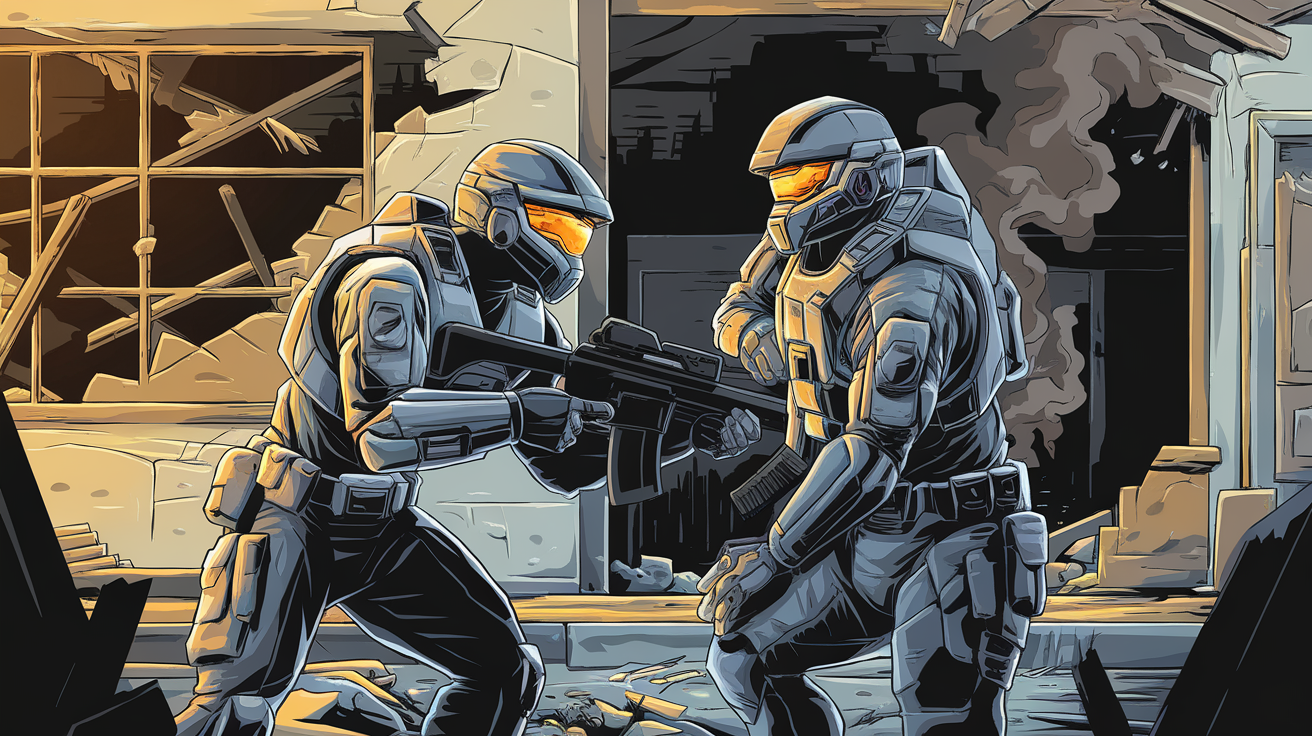
The announcement came with a single piece of art: a squad of Spartans firing a mix of weapons at Covenant and Flood enemies. Beyond the winter window and the fact that the update costs nothing, the source reporting offers no further detail. There is no firm release date, and nothing on how the mode will be structured or how many players it will support.
What Halo Firefight Actually Is
Firefight is a wave-based cooperative mode. Players drop into a map and hold out against steadily tougher waves of enemies until they are finally overwhelmed. The format debuted in the series with Halo 3: ODST in 2009 and has been a recurring fixture since, so the basic loop should be familiar to longtime fans.
It is not the competitive arena multiplayer many players hoped the remake would include at launch. Halo: Campaign Evolved was pitched mainly as a revival of the original campaign, and the lack of versus modes was its most obvious gap. A cooperative mode only partly fills that hole, but it does change the picture: this is the first multiplayer-oriented feature confirmed for the game, and it may hint at more to come.
A Lukewarm Launch and an Uncertain Studio
IGN scored the remake a 7 out of 10, calling it a timeless but “mostly a lean retread” with a decent set of new missions, and more of a test run for the series’ future on Unreal Engine. Adding Halo Firefight for free is one way to extend the life of a package that reviewers saw as thin on content.
The news lands against a turbulent backdrop for the franchise. After this summer’s drastic cuts across Microsoft’s gaming business, Xbox announced a reshuffle that handed the next mainline Halo game to Activision, the Call of Duty publisher, which is assembling a new team for the series. Mass layoffs hit Halo Studios at the same time. Whether those changes affect how future Halo content is made is not addressed in the reporting.
What to Watch For
The timing is notable: the reveal arrived as Xbox marked its 25th anniversary, a moment when the company is eager to show momentum for its flagship shooter series. For players, the open questions are practical. Will the winter update include multiple maps? Will it be playable with friends online or locally? And does it signal that competitive modes such as Team Deathmatch could follow?
For now, the commitment is modest but concrete. Halo Firefight is on the way, it will be free, and fans who wanted more than a campaign replay will at least have something new to do with friends when winter arrives.
Explore more on this topic with Vexel Search.
WordUp Morning
Ten stories, both sides of each, in five minutes. Free, every weekday at 7am, plus a Saturday weekend edition.
We'll email you a link to confirm. Unsubscribe any time.

More than 20 former id Software developers, artists and designers have formed Hidden Horses, a new employee-owned studio built by people who lost their jobs in Microsoft-era Xbox layoffs. The team is turning to crowdfunding to get its first game off the ground, a single-player first-person shooter called Danger Pay.
What Hidden Horses says it is building
According to GamesIndustry.biz, the studio’s central idea is shared ownership. Co-founder and executive producer Andrew Willis said the aim is a place “where the developers share in its success and have a commitment to it beyond just another job.” He added that people with a stake in something’s success tend to be more committed to it.
The studio also says the structure should “empower individual developers while maintaining the focused decision-making necessary to build ambitious games.” That is a notable balance to strike. Flat, ownership-driven teams often struggle with who makes the final call, and Hidden Horses is promising both.
Kickstarter and the first project
Hidden Horses plans to fund Danger Pay through a Kickstarter campaign. The money is earmarked for “the typical things needed to start a business and finance game development, including licenses, hardware, and healthcare.” Healthcare in particular is a reminder of what laid-off developers lose, especially in the United States. The studio says its initial funding goal will reflect the timeline and costs of the first project. The sources reviewed do not give a dollar figure or a launch date.
Trading one risk for another
Co-founder and rendering programmer Regan Carver described the move in a video documenting the studio’s founding. At id, he said, the question was whether the company could succeed, and that was “a given” because it was established, had revenue and was making good work. The other question was whether the company cared about him. “For a while, that was true, and then it stopped,” he said.
With Hidden Horses, Carver said, he is “trading one for the other.” The team knows they care about one another, and what remains is succeeding. For a startup with no revenue and a crowdfunding campaign still ahead, that is a considerable gamble, but one the founders appear to have chosen deliberately.
The layoffs behind it
Roughly 136 id Software employees were laid off in July. The studio said at the time that it still had “the crew we need to build the games and tech we’re known for,” even as some observers questioned whether it could maintain its proprietary engines with a reduced team. In a statement, id said its current team is about the same size as when it made Doom (2016), and that it would stay a flat studio “where everyone is a maker.”
A GamesRadar+ headline on the story also carries the quote “It really felt like an attack,” suggesting the founders were blunt about the layoffs in their announcement. The text of that article was not available for this report, so who said it and in what context cannot be confirmed here.
Why it matters
Hidden Horses joins a growing list of studios formed by developers after industry layoffs. This one is notable for its pedigree and its ownership model, which tries to give workers the stake that layoffs showed them they did not have. Whether backers will fund a new shooter from a team with no shipped game under its own name remains to be seen. The founders are betting that goodwill toward the people behind id’s work, along with a pitch built on shared ownership, will be enough.
- Laid-off Id Software devs form employee-owned studio Hidden Horses (GamesIndustry.biz)
- Former id Software developers form their own employee-owned shooter studio in the wake of Microsoft's mass layoffs (PC Gamer)
- Laid off Id Software devs form their own studio and don't hold back in their announcement (GamesRadar)
Explore more on this topic with Vexel Search.
File photo: Rage (id software) at GamesCom by Sergey Galyonkin, CC BY-SA 2.0, via Flickr (Openverse).
WordUp Morning
Ten stories, both sides of each, in five minutes. Free, every weekday at 7am, plus a Saturday weekend edition.
We'll email you a link to confirm. Unsubscribe any time.

Header image: AI-generated illustration by WordUp News.
Capcom had a commanding night at the 44th Golden Joystick Awards, where Resident Evil Requiem won four trophies, including the top prize of Ultimate Game of the Year. The studio itself took home seven awards across the ceremony, which was held on Wednesday.
Requiem, released in February, is the ninth main instalment in the survival horror series, which is now 30 years old. It won Ultimate Game of the Year with 17% of the public vote, beating Phantom Blade Zero, Crimson Desert, Control Resonant and The Blood of Dawnwalker. It also won Console Game of the Year and Best Game Trailer. Angela Sant’Albano won Best Lead Performer for playing new protagonist Grace Ashcroft, an FBI agent who investigates a series of mysterious deaths alongside returning favourite Leon S. Kennedy.
How Capcom reached seven Golden Joystick Awards
Requiem’s four wins were only part of Capcom’s haul. The company was named Studio of the Year. Onimusha: Way of the Sword won Best Audio Design, and Grace Saif won Best Supporting Performer for playing Diana in Pragmata. Together with Requiem’s four, that makes seven.
The result fits a strong year for the publisher. GamesIndustry.biz notes that Requiem has passed seven million sales and helped Capcom secure a ninth consecutive year of profit.
Indie hits and other winners
Capcom did not take everything. The multiplayer hide-and-seek game Meccha Chameleon, in which players paint themselves to blend into their surroundings, was the other big winner with four awards. The public chose it for Best Multiplayer Game and Best Indie Game (self-published), and it also took Streamers’ Choice and Developers’ Choice.
Dispatch won Best Storytelling and Best Soundtrack. Crimson Desert, a Ultimate Game of the Year nominee, won PC Game of the Year. Control Resonant won Best Visual Design, and Subnautica 2 was named Best Early Access Game. Elsewhere, Valheim won Best Indie Game, Doom: The Dark Ages – Revelations won Best Game Expansion, and The Witcher 3: Wild Hunt – Remastered won Best Remake/Remaster. Gamers also looked ahead: The Witcher 4 was voted Most Wanted Game. The Steam Controller won Best Gaming Hardware, Iron Lung won Best Game Adaptation, and Balatro and Minecraft took the two Still Playing categories.
A critics’ pick under scrutiny
The cooperative online game Big Walk, from Australian developer House House, won Critics’ Choice. The win came in a week when the studio faced criticism over reports that it used generative AI late in development without disclosing it at release. The studio has said the tool produced only a tiny amount of code.
The ceremony handed out prizes in 25 categories. Twenty-two were decided by a public vote of gamers worldwide, with the remaining three, Critics’, Streamers’ and Developers’ Choice, decided by those separate groups. That mix helps explain why a mainstream blockbuster and a self-published indie game could both dominate the same night.
Explore more on this topic with Vexel Search.
WordUp Morning
Ten stories, both sides of each, in five minutes. Free, every weekday at 7am, plus a Saturday weekend edition.
We'll email you a link to confirm. Unsubscribe any time.
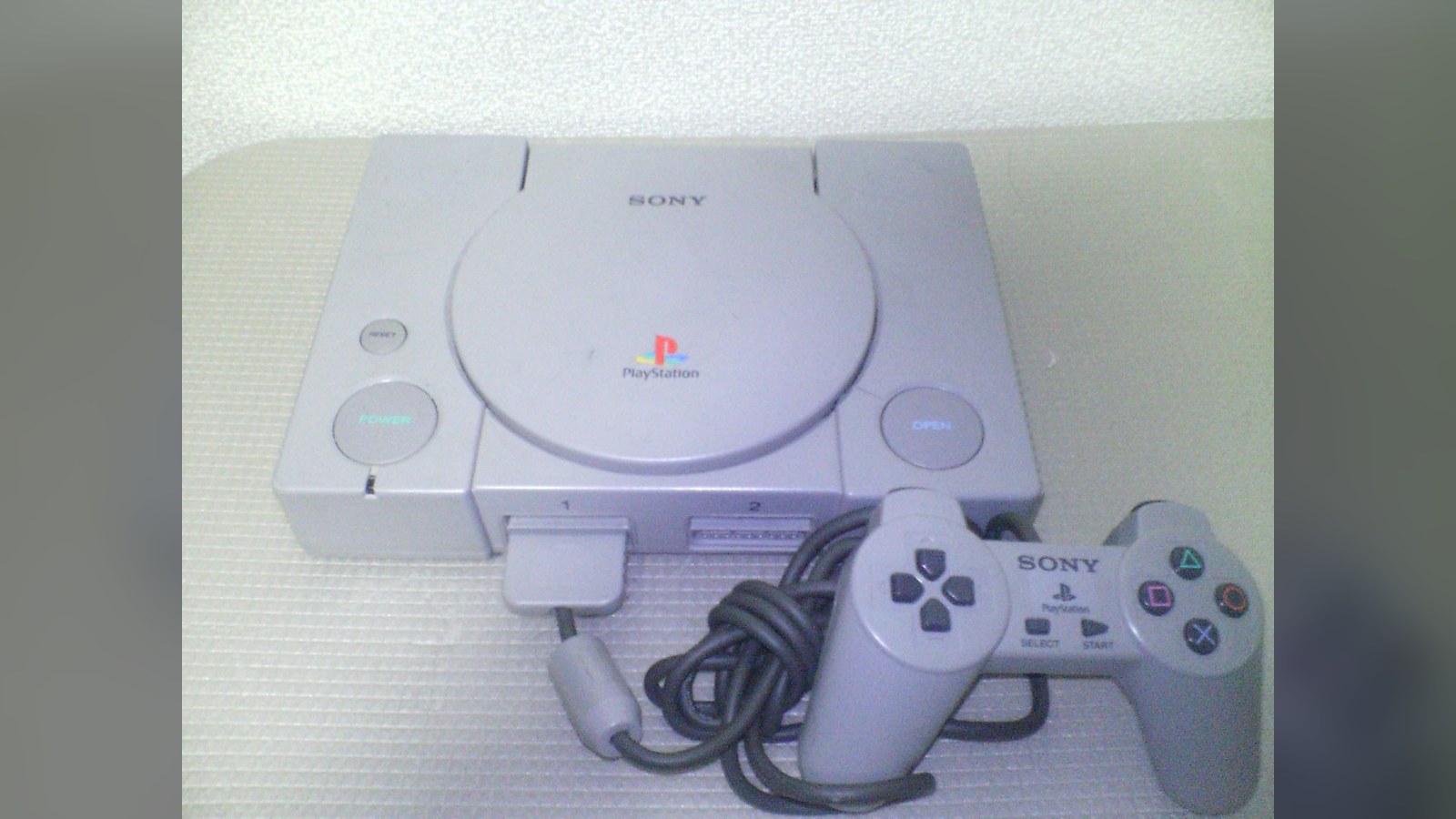
The Fairgames cancellation is the latest sign that PlayStation’s big bet on live-service games has not gone to plan. Sony has ended development on the multiplayer heist shooter from its Montreal-based Haven Studios, according to a Bloomberg report that outlets including IGN, Polygon and The Verge picked up on November 10.
Unlike many game cancellations, this one comes with no layoffs. PlayStation told Bloomberg that Haven will “shift focus to collaborating with other development teams across PlayStation Studios, while also exploring new creative opportunities.” In effect, the studio is being repurposed as a support team for other first-party projects.
Why Sony pulled the plug on Fairgames
The reason, per an internal email reviewed by Bloomberg, was a recent playtest. Executives Sean Decker and John Doyle told staff the test showed “strong operational excellence, live ops readiness and community engagement.” But “player feedback and retention results were mixed and fell short of the goals we had set.” They added that “challenging market conditions in the PVP shooter genre” sealed the decision.
That wording matters. Retention is the lifeblood of a live-service game, which needs players to keep coming back for months or years to justify its running costs. A game can be well run and still fail if players drift away.
IGN suggests the playtest in question was likely tied to a mysterious project called Project Espresso. That game resembled Fairgames and began advertising private playtests alongside a gameplay trailer in September. The sources do not confirm the link, and little is known about how those sessions went.
A long road for Haven Studios
Fairgames was announced in 2023 as Haven’s debut. Jade Raymond founded the studio in 2021, and Sony acquired it in 2022. The game was initially slated for release last year, then delayed to spring 2026. Raymond left in May 2025, and Marie-Eve Danis and Pierre-François Sapinski were named co-studio heads. IGN reports the project was also dogged by developer departures and internal struggles, and Polygon says it was reworked multiple times after its reveal.
Part of a larger live-service retreat
The Fairgames cancellation lands against a backdrop of costly setbacks. In 2022 Sony bought Bungie for $3.6 billion, and then-chief Jim Ryan said the company aimed to launch more than ten live-service games by 2026. That target has not been met. Sony wrote down the value of the Bungie acquisition by $765 million in the 2025/26 fiscal year after Destiny 2 and Marathon underperformed. Bungie has since laid off 292 employees and ended development on Destiny 2.
The casualty list is long:
- Concord was pulled from sale two weeks after its 2024 launch, and Sony went on to close developer Firewalk Studios and Neon Koi.
- Planned live-service games in the God of War and The Last of Us franchises were cancelled.
- In 2025, two unannounced live-service projects from Bend Studio and Bluepoint Games were cancelled, and Bluepoint was later closed, costing 70 jobs.
- A live-service Horizon spinoff was recently rebooted after negative player feedback, according to reports.
There are bright spots. Helldivers 2 has been a clear success, and Polygon also points to Gran Turismo 7 as a steady live-service performer. Marathon, which launched this year, has had a rough start. Bungie showed off a December update this week that adds a co-op PvE roguelite mode and a PvP deathmatch mode. IGN notes that the other major PlayStation live-service game on the horizon is 4:Loop, from JJ Abrams’ studio Bad Robot.
What the Fairgames cancellation says about Sony’s strategy
Sony has not abandoned the genre. Sony Interactive CEO Hideaki Nishino has said the company wants to “revitalise” live-service through both first- and third-party content, adding that the genre “itself is relatively new” and that many companies are “trying various things.” But the evidence suggests a more cautious approach. Sony is cancelling earlier, testing more heavily and, in Haven’s case, keeping talent in-house rather than closing studios.
Keeping Haven’s staff is a notable shift from the closures that followed Concord. Whether it signals a gentler approach or simply reflects that the team’s operational skills are worth retaining is not yet clear. What is clear is that the PVP shooter market is brutally competitive, and even a well-resourced publisher with a studio of experienced developers could not make Fairgames work.
Explore more on this topic with Vexel Search.
File photo: SCPH-5500 and PlayStation Controller 20060131 (2).jpg by PiaCarrot, CC BY-SA 3.0, via Wikimedia Commons.
WordUp Morning
Ten stories, both sides of each, in five minutes. Free, every weekday at 7am, plus a Saturday weekend edition.
We'll email you a link to confirm. Unsubscribe any time.

Rainbow Six Vegas 3 Reportedly in Development, 18 Years After Vegas 2

Anthony Santander apology leaves discipline question open for Blue Jays after anti-Muslim posts

Christian Cousins, ‘Kindergarten Cop’ Child Star, Dies at 43 After Liver Disease Battle


-

 Tech & AI7 days ago
Nvidia investigation into Jensen Huang: board probes alleged Chinese intelligence effort targeting its CEO
-

 Tech & AI5 days ago
Nvidia Shares Drop 8% at One Point, Erasing Over $300 Billion, as Board Probes Jensen Huang Scandal
-

 Tech & AI6 days ago
Nvidia investigation into CEO Jensen Huang: shares fall 6% as board weighs a $4.5 trillion question
-

 Business & Hustles5 days ago
Whitbread Board Seat Bid Fails With At Least 83% of Votes Against Activist Corvex
-

 Fashion6 days ago
LACMA Gala Best Dressed: Kidman’s Degas-Inspired Chanel Leads 43 Standout Looks
-

 Business & Hustles7 days ago
Business Rates Relief Corrected: High Street Firms Get £33m More After Budget Guidance Error
-

 Tech & AI5 days ago
Meta takes AI age checks worldwide on Instagram, months after an up-to-$18bn settlement
-

 Crime1 day ago
Eleanor Donaldson placed on sex offender register for five years, with three-year supervision order
-

 Entertainment6 days ago
At Least 9 Advertisers Drop the I’ve Had It Podcast After a 39-Second Charlie Kirk Clip
-

 Entertainment6 days ago
Love Island Host Maya Jama Steps Down After Three Years, With ITV Reportedly Hunting a Successor
-

 Tech & AI5 days ago
Paramount Skydance CEO Calls AI the “Biggest Creative Unlock” in Modern History as $6 Billion in Savings Loom
-

 Fashion4 days ago
Bronco Boot Low Lands Nov. 12 in 4 Colorways as Tyler, The Creator and Converse Expand the 1908 Line
-

 Sports6 days ago
Trump Offers Dana White the White House Press Secretary Job, With a Monday Meeting Set
-

 Entertainment7 days ago
Jack Bayles Told to Step Back From Two BBC Sitcoms After Russell Brand Verdicts
-

 Fashion4 days ago
Tod’s Creative Director Exits After Three Years With No Successor Named
-

 Business & Hustles6 days ago
ITV Sky deal: £1.6bn sale faces January 27 deadline as ITV reports figures
-

 Crypto7 days ago
Buterin Says the ETH Store of Value Case Beats Fee Burns, With Ether Near $2,240
-
 Crypto4 days ago
XRP Ledger’s Quantum-Proof Accounts Would Keep Base Fees Unchanged, With a 2028 Target
-

 Business & Hustles5 days ago
Robinhood Brings US IPO Access to UK Retail Investors: Zero Commission, No Guaranteed Shares
-

 Business & Hustles4 days ago
October retail sales rise just 1.5% as shoppers save for Black Friday
You must be logged in to post a comment Login