Connect with us
DAPA Banner

NewsBeat

ICE presence at hospitals triggers friction with workers

Published

on

ICE presence at hospitals triggers friction with workers

MINNEAPOLIS (AP) — Intensive care nurses immediately doubted the word of federal immigration officers when they arrived at a Minneapolis hospital with a Mexican immigrant who had broken bones in his face and skull.

Immigration and Customs Enforcement agents initially claimed Alberto Castañeda Mondragón had tried to flee while handcuffed and “purposefully ran headfirst into a brick wall,” according to court documents filed by a lawyer seeking his release.

But staff members at Hennepin County Medical Center determined that could not possibly account for the fractures and bleeding throughout the 31-year-old’s brain, said three nurses familiar with the case.

“It was laughable, if there was something to laugh about,” said one of the nurses, who spoke to The Associated Press on the condition of anonymity because they were not authorized to discuss patient care. “There was no way this person ran headfirst into a wall.”

Advertisement

The explanation from ICE is an example of recent run-ins between immigration officers and health care workers that have contributed to mounting friction at Minneapolis hospitals. Workers at the Hennepin County facility say ICE officers have restrained patients in defiance of hospital rules and stayed at their sides for days. The agents have also lingered around the campus and pressed people for proof of citizenship.

Since the start of Operation Metro Surge, President Donald Trump’s immigration crackdown in Minnesota, ICE officers have become such a fixture at the hospital that administrators issued new protocols for how employees should engage with them. Some employees complain that they have been intimidated to the point that they avoid crossing paths with agents while at work and use encrypted communications to guard against any electronic eavesdropping.

Similar operations have been carried out by federal agents in Los Angeles, Chicago and other cities, where opponents have criticized what they say are overly aggressive tactics. It’s not clear how many people have required hospital care while in detention.

Advertisement

Injuries appeared inconsistent with ICE account

The AP interviewed a doctor and five nurses who work at HCMC, who spoke on condition of anonymity to talk about Castañeda Mondragón’s case. AP also consulted with an outside physician, and they all affirmed that his injuries were inconsistent with an accidental fall or running into a wall.

ICE’s account of how he was hurt evolved during the time that federal officers were at his bedside. At least one ICE officer told caregivers that Castañeda Mondragón “got his (expletive) rocked” after his Jan. 8 arrest near a St. Paul shopping center, the court filings and a hospital staff member said. His arrest happened a day after the first of two fatal shootings in Minneapolis by immigration officers.

The situation reached a head when ICE insisted on using handcuffs to shackle his ankles to the bed, prompting a heated encounter with hospital staff, according to the court records and the hospital employees familiar with the incident.

At the time, Castañeda Mondragón was so disoriented he did not know what year it was and could not recall how he was injured, one of the nurses said. ICE officers believed he was attempting to escape after he got up and took a few steps.

Advertisement

“We were basically trying to explain to ICE that this is how someone with a traumatic brain injury is — they’re impulsive,” the nurse said. “We didn’t think he was making a run for the door.”

Security responded to the scene, followed by the hospital’s CEO and attorney, who huddled in a doctor’s office to discuss options for dealing with ICE, the nurse said.

“We eventually agreed with ICE that we would have a nursing assistant sit with the patient to prevent him from leaving,” the nurse said. “They agreed a little while later to take the shackles off.”

The Department of Homeland Security, which includes ICE, did not respond to repeated requests for comment on Castañeda Mondragón’s injuries. A deportation officer skirted the issue in the court documents, saying that during the intake process at an ICE detention center, it was determined he “had a head injury that required emergency medical treatment.”

Advertisement

Gregorio Castañeda Mondragón said his older brother is from Veracruz, Mexico, and worked as a roofer. He has a 10-year-old daughter living in his hometown he helps support.

According to his lawyers, Alberto Castañeda Mondragón entered the U.S. in 2022 with valid immigration documents. Minnesota incorporation filings show he founded a company called Castañeda Mondragón the following year with an address listed in St. Paul.

He appears to have no criminal record. His lawyers told a court that Castañeda Mondragón was racially profiled during the crackdown, and that officers determined only after his arrest that he had overstayed his visa.

“He was a brown-skinned, Latino Spanish speaker at a location immigration agents arbitrarily decided to target,” his lawyers wrote in a petition seeking his release from ICE custody.

Advertisement

Hours after arrest, immigrant has eight skull fractures

Castañeda Mondragón was initially taken to an ICE processing center at the edge of Minneapolis. Court records include an arrest warrant signed upon his arrival by an ICE officer, not an immigration judge.

About four hours after his arrest, he was taken to a hospital emergency room in suburban Edina with swelling and bruising around his right eye and bleeding. A CT scan revealed at least eight skull fractures and life-threatening hemorrhages in at least five areas of his brain, according to court documents. He was then transferred to HCMC.

Castañeda Mondragón was alert and speaking, telling staff he was “dragged and mistreated by federal agents,” though his condition quickly deteriorated, the documents show.

The following week, a Jan. 16 court filing described his condition as minimally responsive and communicative, disoriented and heavily sedated.

Advertisement

AP shared the details of Castañeda Mondragón’s injuries with Dr. Lindsey C. Thomas, a board-certified forensic pathologist who worked as a medical examiner in Minnesota for more than 30 years. She agreed with the assessment of hospital staff.

“I am pretty sure a person could not get these kinds of extensive injuries from running into a wall,” Thomas said, adding that she would need to see the CT scans to make a more definitive finding.

“I almost think one doesn’t have to be a physician to conclude that a person can’t get skull fractures on both the right and left sides of their head and from front to back by running themselves into a wall,” she said.

ICE officers stay with hospitalized detainees for days

ICE officers have entered the hospital with seriously injured detainees and stayed at their bedside day after day, staffers said. The crackdown has been unsettling to hospital employees, who said ICE agents have been seen loitering on hospital grounds and asking patients and employees for proof of citizenship.

Advertisement

Hospital staff members said they were uncomfortable with the presence of armed agents they did not trust and who appeared to be untrained.

The nurses interviewed by AP said they felt intimidated by ICE’s presence in the critical care unit and had even been told to avoid a certain bathroom to minimize encounters with officers. They said staff members are using an encrypted messaging app to compare notes and share information out of fear that the government might be monitoring their communications.

The hospital reminded employees that ICE officers are not permitted to access patients or protected information without a warrant or court order.

“Patients under federal custody are first and foremost patients,” hospital officials wrote in a bulletin outlining new protocols. The hospital’s written policy also states that no shackles or other restraints should be used unless medically necessary.

Advertisement

“We have our policies, but ICE personnel as federal officers don’t necessarily comply with those, and that introduces tension,” said a doctor who spoke on condition of anonymity because they were not authorized to comment for the hospital.

Hospital spokeswoman Alisa Harris said ICE agents “have not entered our facilities looking for individuals.”

On Saturday, more than two weeks after Castañeda Mondragón was arrested, a U.S. District Court judge ordered him released from ICE custody.

“We are encouraged by the court’s order, which affirms that the rule of law applies to all people, in every corner of our country, including federal officers,” said Jeanette Boerner, director of Hennepin County Adult Representation Services, which filed the lawsuit on Castañeda Mondragón’s behalf.

Advertisement

To the surprise of some who treated him, Castañeda Mondragón was discharged from the hospital Tuesday. A hospital spokeswoman said she had no information about him.

The Justice Department filed court documents this week affirming Castañeda Mondragón is no longer in custody. Prosecutors did not respond to a request for comment on the man’s injuries.

Castañeda Mondragón has no family in Minnesota and coworkers have taken him in, the man’s brother said. He has significant memory loss and a long recovery ahead. He won’t be able to work for the foreseeable future, and his friends and family worry about paying for his care.

“He still doesn’t remember things that happened. I think (he remembers) 20% of the 100% he had,” said Gregorio Castañeda Mondragón, who lives in Mexico. “It’s sad that instead of having good memories of the United States, you’re left with a bad taste in your mouth about that country because they’re treating them like animals.”

Advertisement

___

Mustian reported from New York, and Biesecker reported from Washington.

___

Associated Press reporters Steve Karnowski and Sarah Raza in Minneapolis, Valerie Gonzalez in McAllen, Texas, and Joshua Goodman in Miami contributed.

Advertisement

Source link

Advertisement
Continue Reading
Click to comment

You must be logged in to post a comment Login

Leave a Reply

NewsBeat

How to run in the heat: from hydration to staying cool

Published

on

How to run in the heat: from hydration to staying cool

Just because the warm weather hits, that doesn’t stop people from getting their exercise. Running has emerged in recent years as one of London’s biggest sports, with Gen Z out in front pounding the pavements on a regular basis. That’s not forgetting those prepared to go the extra mile (or 20-odd): over 1.1 million people applied to take part in the 2026 London Marathon, and there are now plans to make it a two-day event in 2027.

So it’s clear, we’re a city of runners. However, as this week brings the warmest day of the year so far, there’s a real danger of those same runners overheating during as they try and get their kilometres in.

Source link

Continue Reading

NewsBeat

easyJet urges passengers to be prepared to wait during EES checks

Published

on

Daily Record

Passengers, regardless of airline, may need to be prepared for some changes

Passengers set to fly soon with easyJet have been urged to stay prepared ahead of changes to travel. On an update on its website on April 1 of this year, easyJet notes that in an “important update”, there are “new border checks may affect queue times.”

Advertisement

It explains: “Airports across Europe may experience longer queues at passport control whilst the new European Entry/Exit System (EES) border checks are being completed. This will mean you may need to have your biometrics taken including your face and fingerprints scanned.”

With this in mind, it is wise for passengers to be patient as the new system is rolled out.

The budget airline suggests:

  • Plan your travel to and through the airport, as you may experience longer queues
  • If you need to go to Bag Drop, go there as soon as it opens
  • Make your way through security as early as possible
  • There may be additional checks at passport control before your gate
  • Head to the gate or boarding area as soon as it’s announced
  • Make sure you have the correct documents to travel
  • You may experience longer queues in your arrival airport

What is EES and why is it being introduced?

An EES-dedicated website says: “The new Entry/Exit System (EES) started to be operational on 12 October 2025. European countries using the EES are introducing the system gradually at their external borders. This means that data collection will be gradually introduced at border crossing points with full implementation by 10 April 2026.”

Advertisement

It is being introduced as the EES:

  • Modernises border checks and gradually reduces waiting times at the borders.
  • Easily identifies non-EU nationals who do not fulfil the conditions of entry and stay or those who stay longer than permitted in the Schengen area.
  • Enhances the security of Europe’s borders.

Which European countries use the EES?

  1. Austria
  2. Belgium
  3. Bulgaria
  4. Croatia,
  5. Czechia
  6. Denmark
  7. Estonia
  8. Finland
  9. France
  10. Germany
  11. Greece
  12. Hungary
  13. Iceland
  14. Italy
  15. Latvia
  16. Liechtenstein
  17. Lithuania
  18. Luxembourg
  19. Malta
  20. the Netherlands
  21. Norway
  22. Poland
  23. Portugal
  24. Romania
  25. Slovakia
  26. Slovenia
  27. Spain
  28. Sweden
  29. Switzerland

You can find out more information about EES here. You can also read about it online via the GOV.UK website.

Source link

Continue Reading

NewsBeat

Woman seriously injured after fight outside Spennymoor Town Hall

Published

on

Woman seriously injured after fight outside Spennymoor Town Hall

Three men and a woman were reported to have been fighting outside the town hall around 6.40pm on Tuesday (April 7).

Police believe the woman left the scene and are now keen to locate her as she may have suffered serious injuries and could require medical treatment.

A Durham Police spokesperson said: “If you are this person, or know who they are, please contact officers.”

Advertisement

Anyone with information is asked to call the force on 101 quoting reference CRI00674512, or email hayley.outterson@durham.police.uk.

Source link

Advertisement
Continue Reading

NewsBeat

Grand National 2026 drinks prices revealed including how much a pint costs at Aintree

Published

on

Daily Mirror

What horse racing fans can expect when they want refreshment at the Grand National meeting

The Randox Grand National Festival is about to get underway. From Thursday, April 9 to Saturday, April 11, thousands of racing enthusiasts will flock to Aintree Racecourse for three days of top-class horse racing, culminating in the main event.

As the finishing touches are put to the venue, we can reveal some of the beverage prices for the festival. There are numerous bars throughout the racecourse, so drink prices may differ depending on your choice of refreshment.

Below, we’ve outlined the typical prices for draught, bottled and canned drinks, wines, champagne and spirits. Some outlets vary by approximately 50p…

Advertisement

Spirits 25ml

  • Gin – £6.75
  • Pink Gin – £6.75
  • Tanqueray Gin (Various Flavours) – £7.25
  • Ketel One Vodka – £7.25
  • Ciroc Vodka – £8.00
  • Grey Goose Vodka – £8.00
  • Vodka – £6.75
  • White Rum – £6.75
  • Jack Daniels – £6.75
  • Southern Comfort – £6.75
  • Spiced Rum – £6.75

READ MORE: Grand National 2026 sweepstake kit: Print YOURS here ahead of Saturday’s big race at AintreeREAD MORE: Grand National 2026 pinstickers’ guide: All 34 runners rated, best chances and top 4 prediction

Champagne and Sparkling

  • Bernard Remy Brut (750ml) – £89.00
  • Canal Grando Prosecco Brut (750ml) – £46.00

Cocktails

  • Pornstar Frozini – £13.00
  • Strawberry Daiquiri – £13
  • Strawberry Woo Woo – £13.00
  • Gin N Juice – £13.00
  • Tropical Rum Ball – £13.00
  • Red Rum Dark N Stormy – £13.00
  • Paloma – £13.00

Wines (187.5ml)

  • House White – £9.50
  • House Red – £9.50
  • House Rosé – £9.50

Draught Beer

  • Madri Excepcional – £7.80
  • Rekorderlig Strawberry & Lime – £7.80
  • Aspall Suffolk Cyder – £7.80
  • Guinness –£7.80

Bottled / Canned Beer

  • Pravha (330ml) – £7.30
  • Madri Excepcional (330ml) – £7.30
  • Peroni Gluten Free (330ml) – £7.30
  • Doom Bar (330ml) – £7.30
  • Guinness Zero (500ml) – £6.00
  • Madri Excepcional 0.0% (538ml) – £4.40

Minerals & Mixers

  • London Essence Mixers (150ml) – £3.10
  • Fruit Juice (150ml) – £2.80
  • Coca Cola (200ml) – £2.80
  • Coke Zero / Diet Coke (330ml) – £3.50
  • Lemonade (330ml) – £3.20
  • Cordials (25ml) – £1.05

Grand National 2026 tickets

This article contains affiliate links, we will receive a commission on any sales we generate from it. Learn more
Content Image

from,£33.50

The Jockey Club

Get tickets here

The Grand National 2026 is just around the corner, with the world-famous Aintree racecourse set to host three days of racing across April 9-11.

Advertisement

Standard and hospitality tickets start at £33.50 at The Jockey Club, with VIP and hospitality packages also available from £249 at Seat Unique.

Source link

Continue Reading

NewsBeat

Badminton trials synthetic shuttlecocks amid feather shortage

Published

on

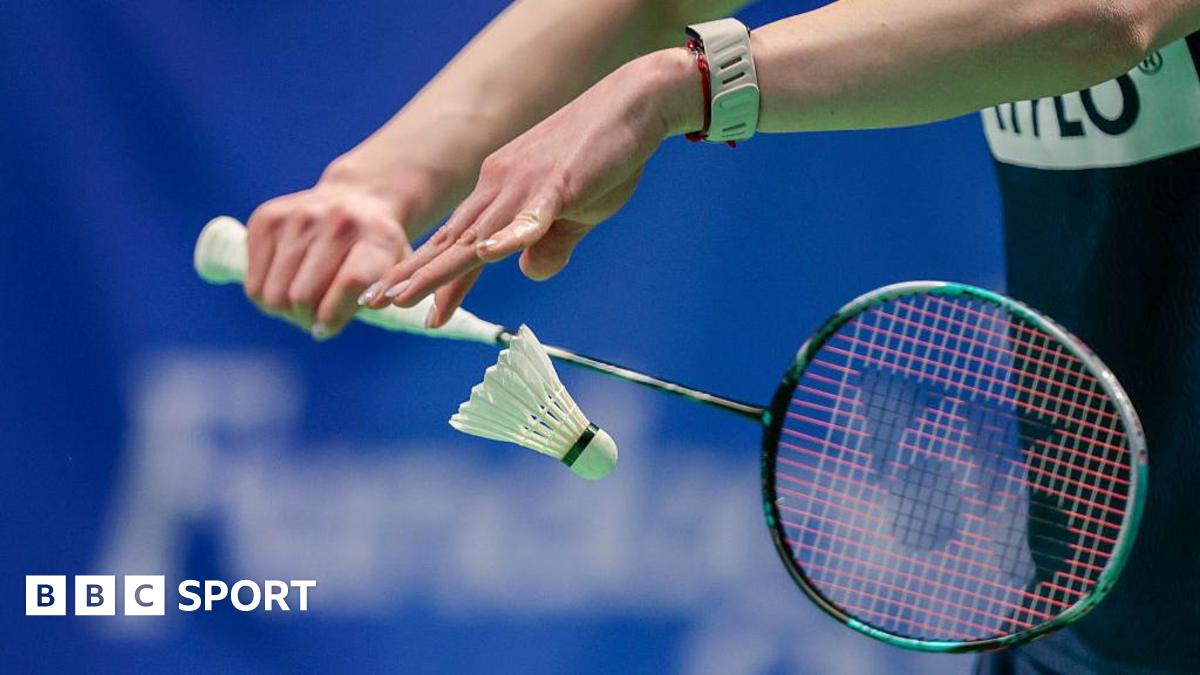
Badminton player serves a shuttlecock

Traditional shuttlecocks are made of 16 duck or goose feathers – each taken from the same wing to give the correct flight and spin as feathers from different wings curve differently.

China is the leading producer of shuttlecocks, but poultry production in the country has decreased in recent years because of outbreaks of bird flu and as people return to eating pork following an outbreak of African swine fever in 2018.

The sport has also grown in popularity in China, leading to increased demand.

Last year, the BWF played down its concerns about the shuttlecock market, while explaining its strategy to explore alternatives.

Advertisement

“We are aware of the global supply chain challenges and subsequent increases in feathered shuttlecock prices impacting badminton communities around the world,” BWF secretary general Thomas Lund said in a statement at the time.

“Our testing and trialling programmes for the production and introduction of competition and social-use synthetic shuttlecocks in collaboration with the manufacturers remains in place and is firmly part of our sustainability strategies for the future.”

Source link

Advertisement
Continue Reading

NewsBeat

Shopping channel QVC at risk of collapse after 32 years

Published

on

Shopping channel QVC at risk of collapse after 32 years

QVC, owned by the QVC Group, was founded in 1986 in the US and has since grown into a multinational corporation, specialising in televised home shopping.

Launching in the UK in October 1993, QVC became the UK’s first full-time home shopping channel.

Now, the channel is on the brink of collapse, with it now in discussions with creditors after reports suggest it missed a regulatory filing deadline.

Advertisement

What is the QVC channel?

QVC UK was originally 20% owned by Sky, before it became a wholly owned subsidiary of the US broadcaster in 2004.

In its early years, it turned over a net profit of more than £12 million and has sold various products from cooking supplies to clothing.

In 2008, QVC UK launched a multiscreen video service with three video streams available to Sky viewers via the red button:

  • QVC Live
  • QVC+1
  • Today’s Special Value presentation

QVC UK also operates three channels made up mostly of rerun segments from the live channel, QVC Beauty, QVC Extra and QVC Style.

The main channel broadcasts live 364 days a year from 9am to 1am, with rerun segments from the live channel shown during other hours and Christmas Day.

Shopping channel QVC at risk of collapse after 32 years

QVC Group is reportedly late with a regulatory filing deadline and is in discussions to voluntarily restructure its debt, according to Bloomberg.

Advertisement

In a filing with the US Securities and Exchange Commission, the parent company of QVC and HSN said it was unable to submit its annual financial report on time “without unreasonable effort or expense”.

QVC Group CFO Bill Wafford has confirmed that uncertainty linked to those negotiations has delayed the preparation of its financial statements.

The company has also warned about a “substantial doubt” about its ability to continue operating.

Advertisement

The QVC Group previously highlighted $2.9 billion (£2.2 billion) in debt due in October.

QVC Group intends to file its delayed results within 15 days, Broadband TV News reports.


Recommended reading:


It has also been rumoured that any potential bankruptcy filing is expected to be a Chapter 11 protection.

Advertisement

This would allow the company to restructure its debt while continuing operations, rather than liquidation.

Newsquest has contacted The QVC Group for comment.

Are you a fan of shopping channels like QVC? Let us know in the comments.

Advertisement

Source link

Continue Reading

NewsBeat

Plans for new homes refused due to ‘cramped living’ concerns

Published

on

Cambridgeshire Live

The council said the plans would provide ‘poor standards’ of homes for future occupiers

Plans to build four new homes have been refused due to “cramped living” conditions. Fern Homes proposed to build the homes at Gaul Tree Farm in High Road, Guyhirn, Wisbech.

Advertisement

The developers said the plans would provide “four good-sized dwellings for private use within the village assisting in community cohesion”. Off-road parking was also proposed, as well as landscaping.

Fenland District Council has refused the plans. FDC planning officers said it went against a development requirement to “deliver high quality environments by promoting high levels of residential amenity”.

It said the homes would provide a “poor standard of accommodation for future occupiers”. The council added: “The internal layout and floorspace of the dwellings would result in a cramped living arrangement, and the level of private amenity space provided is inadequate.

“These deficiencies would result in a substandard living environment, harmful to the residential amenity of future occupants.” The council also said the developers failed to provide a specific flood risk assessment.

Advertisement

The planning officer added the application “fails to demonstrate, through a robust and site-specific flood risk assessment and breach analysis, that the development would be safe for its lifetime, without increasing flood risk elsewhere.”

Without a report, the officer said it didn’t demonstrate that future occupiers would be “safe from flood hazards”. Plans have previously been refused on the same site.

In 2024, plans were submitted to build seven homes on the site. The council refused on the basis it would provide a “poor outlook” for future homeowners, proposed gardens weren’t big enough, and there would be “potential noise and disturbance given the lack of separation” between the homes.

Source link

Advertisement
Continue Reading

NewsBeat

Darlington residents warned weather is ‘serious risk’ to dogs

Published

on

Darlington residents warned weather is 'serious risk' to dogs

Dogs Trust Darlington has issued a warning that even mild temperatures pose a danger to dogs, with around 75 per cent of heatstroke cases linked to exercise and around two-thirds occurring after everyday walks.

Charlie Dobson, senior veterinary surgeon at Dogs Trust, said: “For many of us across the country, the arrival of warmer weather is a welcome change, but it is important to remember that this weather can bring real dangers for our dogs.

“Even the springtime sunshine expected over the next few weeks can cause serious issues, especially for flat-faced breeds or dogs with underlying health conditions.

Advertisement

“The best thing we can do for our pets is to avoid walking them during the hottest parts of the day, provide plenty of fresh water and shade, and always monitor them closely for early symptoms of heatstroke, even during indoor play when it’s warm outside.

“If you notice your dog is overheating, cooling first aid before transporting them to the vet can be lifesaving.

“Warmer weather can be wonderful for us and our four-legged friends, as long as we stay aware and take the right care to keep everyone safe.”

Dogs Trust warns that heatstroke can affect dogs at any time of year, not just during extreme summer heat.

Advertisement

Symptoms include heavy panting, lethargy, excessive drooling, uncoordinated movement, and vomiting or diarrhoea.

Certain breeds, especially flat-faced dogs like Pugs and French Bulldogs, are at greater risk, along with older dogs, overweight dogs, and those with thick coats or underlying health conditions.

If you suspect a dog is suffering from heatstroke, Dogs Trust advises stopping activity, moving the dog to a cool area, offering drinking water, and beginning urgent cooling with cold water before transporting to a vet.

Owners are also reminded never to leave dogs alone in cars, as temperatures can rise rapidly and become fatal.

Advertisement

On a 22°C day, the temperature inside a car could rise by 11°C in just 10 minutes.

If you see a dog in distress inside a vehicle, call 999 immediately.

Source link

Advertisement
Continue Reading

NewsBeat

Dublin airport travel warning as fuel protests lead to ‘five-hour’ trip from Belfast

Published

on

Belfast Live

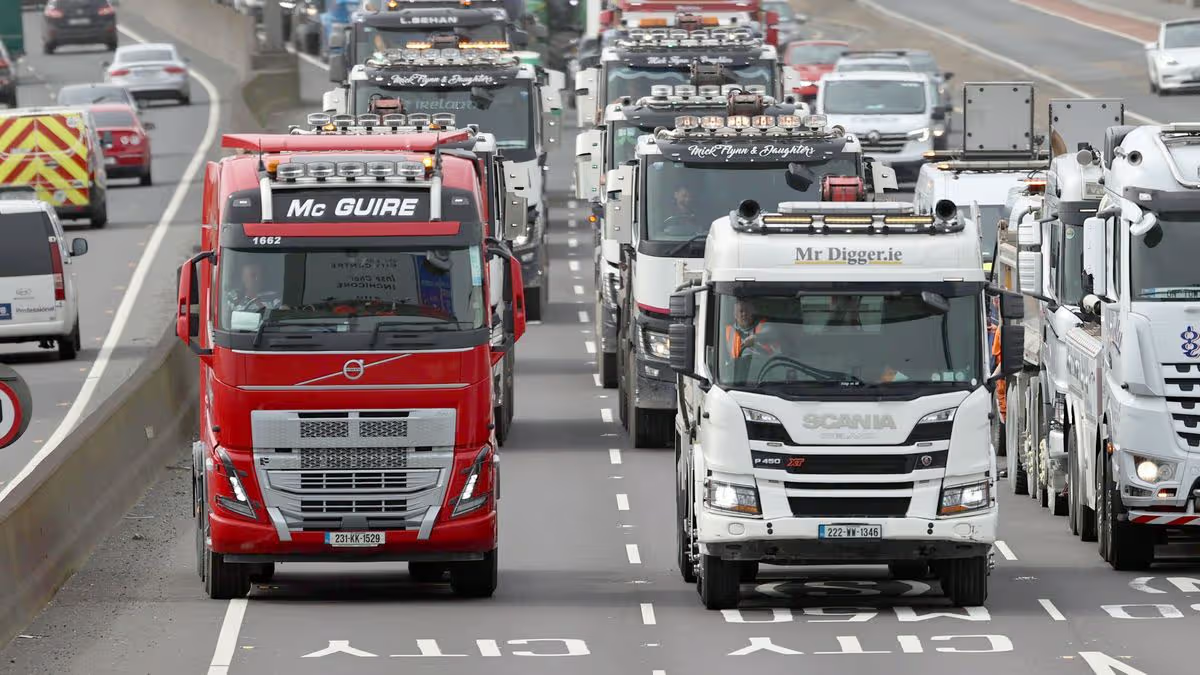
Drivers have taken to the streets in slow-moving convoys for a second day in protest at rising fuel prices

A number of public transport providers have warned passengers travelling on their services to Dublin Airport to allow extra time for their journeys, as one commuter from Northern Ireland told how it took five hours to travel from Belfast to the airport on Tuesday.

Slow-moving convoys have taken to the streets of Dublin for a second day in protest at rising fuel prices as a result of the US and Israel’s war in Iran.

Fuel prices in the Republic of Ireland have soared to around €1.91 (£1.66) per litre of petrol and €2.14 (£1.86) per litre of diesel.

Advertisement

Last month, the Irish Government announced that excise duty on diesel will be reduced by 20 cents per litre and petrol by 15 cents per litre.

As the protests continue, Gardaí have warned of possible road blocks to Dublin Airport and the Port Tunnel.

One commuter told Belfast Live how they endured a five-hour journey to the airport on Tuesday, April, amid ongoing protests blocking roads.

The person, who wished to remain anonymous, said: “It took five hours to get to the airport from Belfast, and we ended up missing our flight; it was a disaster.”

Advertisement

In a social media post, Dublin Airport said: “Passengers travelling to and from Dublin Airport today are advised to allow extra time for their journey due to the possibility of protest activity causing traffic disruption on roads around the airport.”

A spokesperson for Dublin Express said: “There are a number of delays and diversions to Dublin Express services due to the ongoing disruption in Dublin city centre. We are advising customers to allow significant extra time for their journeys and to check our social media channels @dublinexpress for the latest updates to services.”

A Translink spokesperson added: “Due to fuel price protests in the Dublin area, there has been some disruption to Translink coach services to Dublin / Dublin Airport today.

“Customers using these services should leave extra time for their journey and keep up to date with the latest travel alerts on the Translink website – https://www.translink.co.uk/service-incidents and via Socials.”

Advertisement

This comes as oil prices plummeted overnight after the US and Iran agreed to a two-week ceasefire deal that includes reopening the Strait of Hormuz.

Responding to the latest developments in the Middle East, Irish Foreign Affairs Minister Helen McEntee said: “I welcome events overnight which mark a potentially important turning point after what was a dangerous and unprecedented escalation across the Middle East in recent days. I also welcome the announcement that the United States and Iran have agreed to a two-week ceasefire and to enter negotiations. This offers a critical opportunity to reduce tensions and will bring relief to millions affected by conflict.

“I commend the efforts of Pakistan, alongside Türkiye and Egypt, in supporting dialogue. Ireland has consistently called for diplomacy and for all parties to uphold international law.

“Any ceasefire must be comprehensive and include Lebanon, and I call on Hezbollah and Israel to cease attacks and military operations.

Advertisement

“The Strait of Hormuz must open and remain safe to pass. The protection of civilians must remain paramount, and all parties must uphold their obligations under international law.

“I urge all parties to de-escalate and engage in negotiations towards a durable ceasefire and a lasting, peaceful resolution.”

For all the latest news, visit the Belfast Live homepage here and sign up to our daily newsletter here.

Source link

Advertisement
Continue Reading

NewsBeat

Bolton schools contract for PPS of York yields seven-figure deal

Published

on

Bolton schools contract for PPS of York yields seven-figure deal

The three-year agreement, which followed a competitive tendering process, will see cleaning and catering equipment supplier PPS responsible for supplying a comprehensive range of cleaning and hygiene products to approximately 90 schools across the borough.

As part of the contract, PPS will provide a consistent and reliable supply of essential products, supporting schools in maintaining high standards of cleanliness, hygiene, and safety.

The contract includes dedicated account management and responsive customer support, ensuring an efficient and dependable service across all locations.

RECOMMENDED READING:
PPS expands York headquarters with extra warehouse

Advertisement

With over 25 years of sector experience, PPS will bring its product expertise, sustainability credentials, and industry knowledge to support Bolton Council’s hygiene, compliance, and environmental objectives.

This contract, PPS says, represents a significant milestone in PPS’s continued growth within the public sector, further strengthening its presence in the education and local authority markets.

PS Sales Director Jenny McGuckin said: “We’re delighted to have been awarded this contract with Bolton Council. We look forward to building a strong, long-term partnership, supporting schools with reliable supply, expert guidance, and products that help maintain the highest standards of hygiene.”

A PPS van

Jon Dyson, Director of Place at Bolton Council, added: “We are pleased to partner with PPS to support our schools. Their expertise and commitment to quality will play an important role in ensuring our sites are well supplied and able to maintain safe and hygienic environments for staff and pupils.”

Advertisement

The contract caps off a strong period of growth for PPS, with the company also reporting continued success in securing new business and expanding its footprint across the public sector.

Source link

Advertisement
Continue Reading

Trending

Copyright © 2025