After U.S. and Israeli missiles struck Iran’s nuclear sites in June 2025, Tehran responded with a limited attack on the American airbase in Qatar.
Five years before that, a U.S. drone strike against Qasem Soleimani, head of the powerful Islamic Revolutionary Guard Corps Quds Force, was met with followed by an attack on two American bases in Iraq shortly thereafter.
Expect none of that restraint by Iran’s leaders following the latest U.S. and Israeli military operation currently playing out in the Gulf nation.
But they also come after apparent diplomatic efforts, in the shape of a series of nuclear talks in Oman and Geneva aimed at a peaceful resolution.
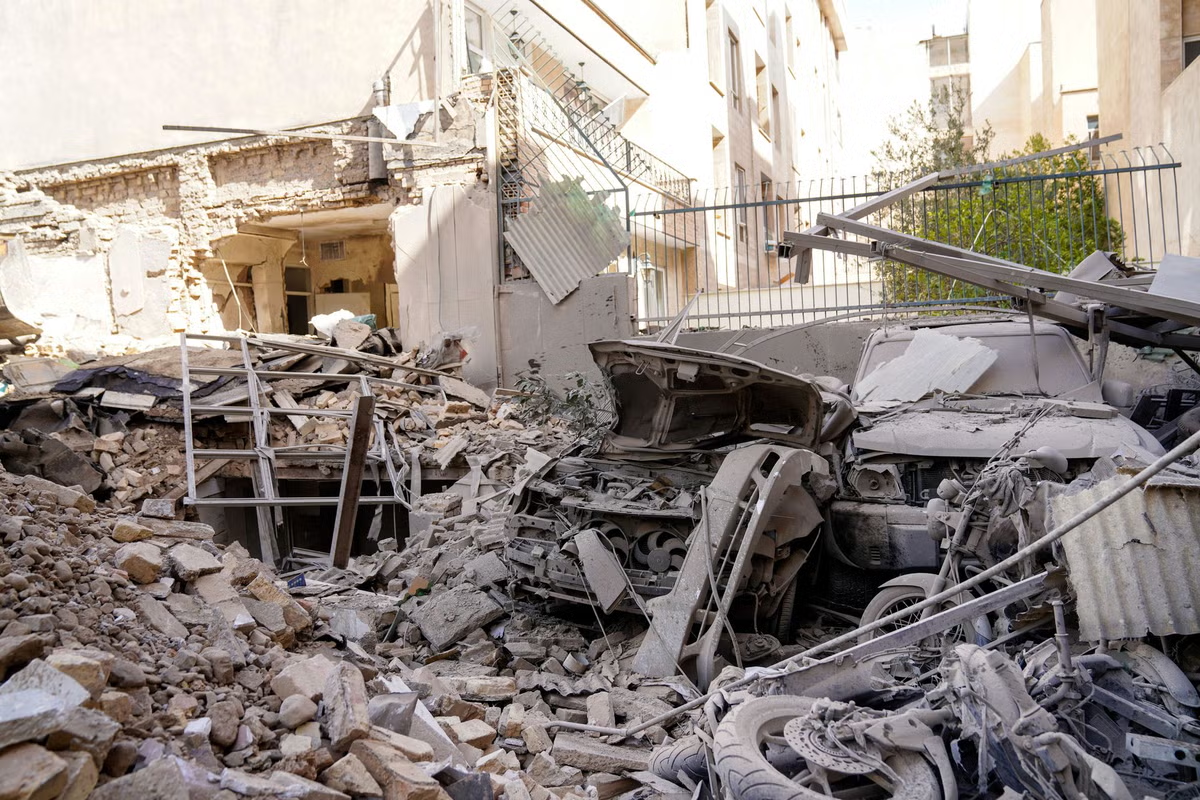
The Trump administration appears to have expanded its aims beyond removing Iran’s nuclear and non-nuclear military threat (ISNA/AFP via Getty Images)
Any such deal is surely now completely off the table. In scale and scope, the U.S. and Israel attack goes far beyond any previous strikes on the Gulf nation.
In response, Iran has said it will use “crushing” force. As an expert on Middle East affairs and a former senior official at the National Security Council during the first Trump administration, I believe the calculus both in Washington and more so in Tehran is very different from earlier confrontations: Iran’s leaders almost certainly see this as an existential threat given President Donald Trump’s statement and the military campaign already underway. And there appears to be no obvious off-ramp to avoid further escalation.
What we should expect now is a response from Tehran that utilizes all of its capabilities – even though they have been significantly degraded. And that should be a worry for all nations in the region and beyond.
The apparent aims of the US operation
Advertisement
It is important to note that we are in the early stages of this conflict – much is unknown.
As of Feb. 28, it is unclear who has been killed among Iran’s leadership and to what extent Iran’s ballistic missile capabilities have been degraded. The fact that ballistic missiles have been launched at regional states that host U.S. military bases suggests that, at a minimum, Iran’s military capabilities have not been entirely wiped out.
Iran fired over 600 missiles against Israel last June during their 12-day war, but media reporting and Iranian statements over the past month suggested that Iran managed to replenish some of its missile inventory, which it is now using.
Clearly Washington is intent on crippling Iran’s ballistic program, as it is that capability that allows Iran to threaten the region most directly.
Advertisement
A sticking point in the negotiations in Geneva and Oman was U.S. officials’ insistence that both Iran’s ballistic missiles and its funneling of support to proxy groups in the region be on the table, along with the longstanding condition that Tehran ends all uranium enrichment. Tehran has long resisted attempts to have limits on its ballistic missiles as part of any negotiated nuclear deal given their importance in Iran’s national security doctrine.
This explains why some U.S. and Israeli strikes appear to be aimed at taking out Iran’s ballistic and cruise missile launch sites and production facilities and storage locations for such weapons.
With no nuclear weapon, Iran’s ballistic missiles have been the country’s go-to method for responding to any threat. And so far in the current conflict, they have been used on nations including the United Arab Emirates, Qatar, Kuwait and Bahrain.
‘It will be yours to take’
Advertisement
But the Trump administration appears to have expanded its aims beyond removing Iran’s nuclear and non-nuclear military threat. The latest strikes have gone after leadership, too.
Among the locations of the first U.S.-Israeli strikes was a Tehran compound in which the Supreme Leader Ayatollah Ali Khamenei in known to reside, and Israel’s prime minister has confirmed that the 86-year-old leader was a target of the operation.
While the status of the supreme leader and other key members of Iran’s leadership remains unknown as of this writing, it is clear that the U.S. administration hopes that regime change will follow Operation Epic Fury. “When we are finished, take over your government. It will be yours to take,” Trump told Iranians via a video message recorded during the early hours of the attack.
Regime change carries risks for Trump
Advertisement
Signaling a regime change operation may encourage Iranians unhappy with decades of repressive rule and economic woes to continue where they left off in January – when hundreds of thousands took to the street to protest.
But it carries risks for the U.S. and its interests. Iran’s leaders will no longer feel constrained, as they did after the Soleimani assassination and the June 2025 conflict. On those occasions, Iran responded in a way that was not even proportionate to its losses – limited strikes on American military bases in the region.
About the author
Javed Ali is an Associate Professor of Practice of Public Policy, University of Michigan. This article is republished from The Conversation under a Creative Commons license. Read the original article.
Now the gloves are off, and each side will be trying to land a knockout blow. But what does that constitute? The U.S. administration appears to be set on regime change. Iran’s leadership will be looking for something that goes beyond its previous retaliatory strikes – and that likely means American deaths. That eventuality has been anticipated by Trump, who warned that there might be American casualties.
Advertisement
So why is Trump willing to risk that now? It is clear to me that despite talk of progress in the rounds of diplomatic talks, Trump has lost his patience with the process.
On Feb. 26, after the latest round of talks in Geneva, we didn’t hear much from the U.S. side. Trump’s calculus may have been that Iran wasn’t taking the hint – made clear by adding a second carrier strike group to the other warships and hundreds of fighter aircraft sent to the region over the past several weeks – that Tehran had no option other than agreeing to the U.S. demands.
What happens next
What we don’t know is whether the U.S. strategy is now to pause and see if an initial round of strikes has forced Iran to sue for peace – or whether the initial strikes are just a prelude to more to come.
Advertisement
For now, the diplomatic ship appears to have sailed. Trump seems to have no appetite for a deal now – he just wants Iran’s regime gone.
In order to do that, he has made a number of calculated gambles. First politically and legally: Trump did not go through Congress before ordering Operation Epic Fury. Unlike 23 years ago when President George W. Bush took the U.S. into Iraq, there is no war authorization giving the president cover.
Instead, White House lawyers must have assessed that Trump can carry out this operation under his Article 2 powers to act as commander in chief. Even so, the 1973 War Powers Act will mean the clock is now ticking. If the attacks are not concluded in 60 days, the administration will have to go back to Congress and say the operation is complete, or work with Congress for an authorization to use force or a formal declaration of war.
The second gamble is whether Iranians will heed his call to remove a regime that many have long wanted gone. Given the ferocity of the regime’s response to the protests in January, which resulted in the deaths of thousands of Iranians, are Iranians willing to face down Iran’s internal security forces and drive what remains of the regime from power?
Advertisement
Third, the U.S. administration has made a bet that the Iranian regime – even confronted with an existential threat – does not have the capability to drag the U.S. into a lengthy conflict to inflict massive casualties.
And this last point is crucial. Experts know Tehran has no nuclear bomb and only has a limited stockpile of drones and cruise and ballistic missiles.
But it can lean on unconventional capabilities. Terrorism is a real concern – either through the Islamic Revolutionary Guard Corps’ Quds Force, which coordinates Iran’s unconventional warfare, or through its partnership with Hezbollah in Lebanon. Or actors like the Houthis in Yemen or Shia militias in Iraq may seek to conduct attacks against U.S. interests in solidarity with Iran or directed to do so by the regime.
A mass casualty event may put political pressure on Trump, but I cannot see it leading to U.S. boots on ground in Iran. The American public doesn’t have the appetite for such an eventuality, and that would necessitate Trump gaining Congressional approval, which for now has not yet materialized.
Advertisement
No one has a crystal ball, and it is early in an operation that will likely go on for days, if not longer. But one thing is clear: Iran’s regime is facing an existential threat. Do not expect it to show restraint.
Journalists do not become journalists to prepare for court hearings. They join newsrooms, submit FOI requests, ask questions, report from council hearings and courts and speak to as many people as they can because they have a story to tell. They also know that local communities do better when there is more information in the public domain, not less.
Journalism is vital for local democracy to hold power in check and give a voice to the community, ensuring no one is beyond scrutiny. However, unchecked wealth and influence has a powerful ally in its quest to prevent questions being asked and sheltering itself from uncomfortable attention; the British justice system.
Abusive lawsuits, sometimes called SLAPPs (Strategic Lawsuits Against Public Participation), allow those with money to threaten costly and time-intensive court action to prevent reporting being made public or to force published work from the public eye.
Advertisement
Abusive lawsuits are not genuine attempts to address flaws in the journalist’s work. Indeed, many journalists are sued just for asking questions or requesting comment from someone who has not even read the piece before deciding to sue them. SLAPPs are attempts to silence reporting and cordon off those deserving of scrutiny from any form of public accountability.
All forms of journalism are vulnerable to this sort of abuse from legal bullies. For investigating Putin’s rise to power, Catherine Belton was threatened by multiple Russian oligarchs and a Russian state oil company; Paul Radu, the co-founder of OCCRP, was sued by an Azerbaijan MP in London even though neither are based in the UK; the UK Treasury were only too happy to allow disgraced and sanctioned Russian warlord Yevgeny Prigozhin to sue Bellingcat founder, Eliot Higgins; and the legal action, including threats of imprisonment, aimed at The Londoner by the subject of its reporting.
But these tactics are not limited to national or international outlets; local journalists and smaller outlets can also be targeted by the same or similar abusive legal threats.
Journalists are not the only ones who can be targeted to spike a story. SLAPPs have been used against survivors of sexual assault who have named their attackers to warn other women; they have been used against local campaigners working tirelessly to improve public services for themselves and their neighbours; they have been used against former patients who have posted reviews to inform others exploring potential medical treatment; they have been used against environmentalists fighting to protect endangered species and eco-systems from corporate greed; they have been used against tenants who have the temerity to request repairs are made in good time and that complaints are taken seriously. In fact, there are few areas of society untouched by this form of legalised bullying, and so we have to ask – who has been threatened into silence, so much so that they are too fearful to speak to a journalist?
Advertisement
SLAPPs remove information from the public domain. Every story, social media post, blog, report or published piece of work removed by a target who cannot afford to mount a defence, cannot afford to turn away from their work to prepare for going to court, and cannot afford to endure the complexity and unpredictability of the British justice system, is something that leaves us all worse off.
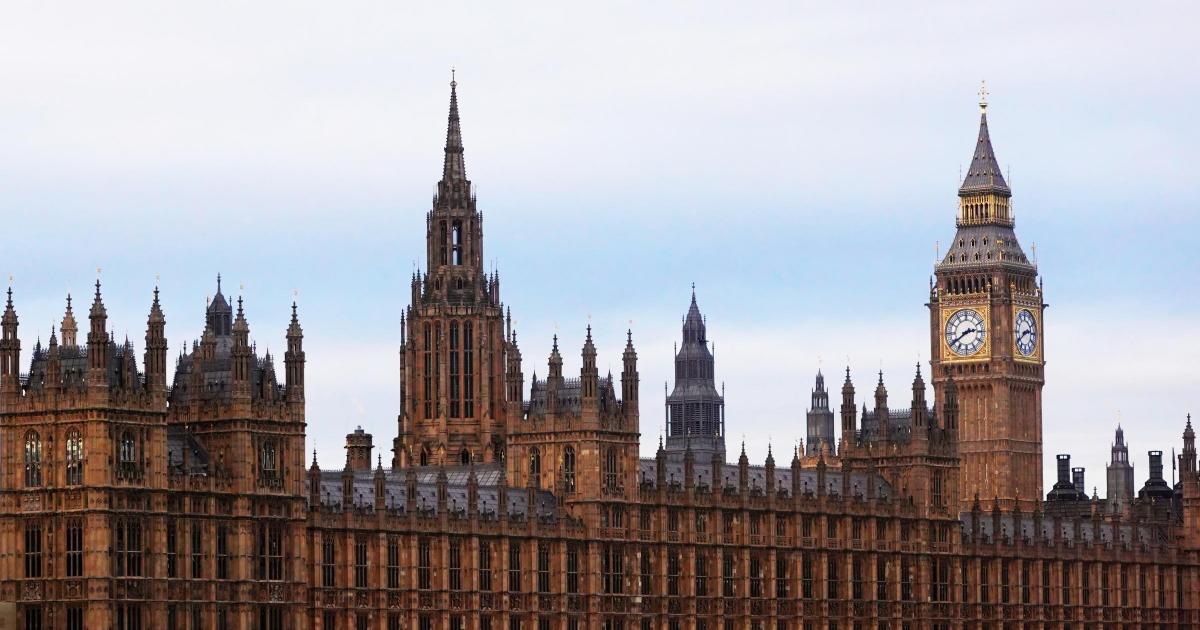
However, next month the government has an opportunity to re-address the balance to ensure that those targeted by legal bullies have the same right to justice as those wealthy enough to afford the legal costs. If the King’s Speech includes a Bill that will establish universal, clear and meaningful anti-SLAPP protections, we know legislative time will be put aside for Parliamentarians to take an important step for the rights of everyone to speak out.
This op-ed has been provided by the co-chairs of the UK Anti-SLAPP Coalition:
Nik Williams, Index on Censorship
Susan Coughtrie, Foreign Policy Centre
Charlie Holt, Climate Legal Defense
The UK Anti-SLAPP Coalition is an informal working group established in January 2021 comprising a number of freedom of expression, whistleblowing, anti-corruption and transparency organisations, as well as media lawyers, researchers and academics.
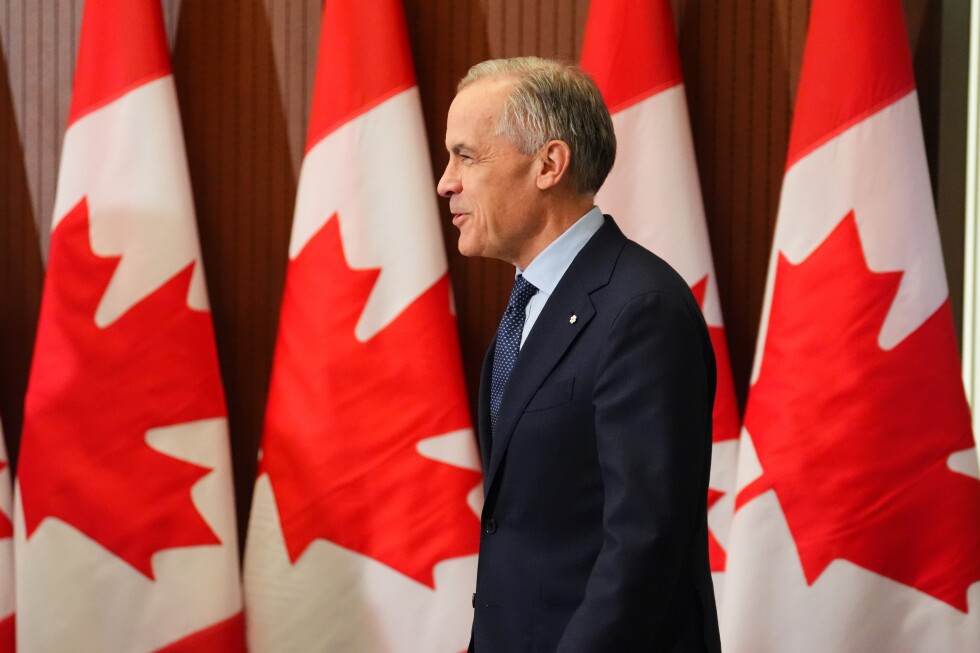
Carney said that with fuel prices increasing sharply, he is suspending the federal fuel excise tax from next Monday until Labor Day, Sept. 7. He called it a “responsible, temporary measure” that also will reduce costs for truckers and businesses.
Carney’s Liberals now have 174 of the 343 seats in the House of Commons and won’t need support from opposition parties to pass legislation after winning three districts that became vacant after last year’s election.
Carney’s government is the first in Canada’s history to switch from a minority to a majority between national elections.
Advertisement
The Liberal Party could stay in power until 2029 after Monday’s results.
Carney said he wants to focus on affordability, housing and accelerating major economic projects.
“Voters have placed their trust in our new government’s plan,” he said.
Carney won Canada’s election last year, fueled by public anger over U.S. President Donald Trump’s annexation threats. He has vowed to reduce Canada’s reliance on the U.S.
Advertisement
Five defections from opposition parties, including four from the main opposition Conservative party, later put Carney’s Liberals on the cusp of the majority.
One of those defectors referenced Carney’s speech at the World Economic Forum in Davos, Switzerland, in his decision. In that speech, Carney condemned economic coercion by great powers against smaller countries, and received widespread praise.
Carney, the former head of the Bank of England as well as Canada’s central bank, has moved the Liberals to the center-right since replacing Justin Trudeau as prime minister.
Nelson Wiseman, professor emeritus at the University of Toronto, said Trump has been a major factor in Carney’s rise to prime minister, but his performance on the world stage has added to his popularity.
Advertisement
“Canadians liked seeing how well he was received at Davos and have been impressed by his travels abroad — he visited 13 countries by last September — in search of new alliances, investments and trade pacts. World leaders want to do business with him,” Wiseman said.
Major high street fashion brand loved by Princess Kate shuts down website | Cambridgeshire Live
Need to know
The British fashion brand has been around since 1990.
Steffan Rhys Deputy Content Hub Director
09:45, 15 Apr 2026Updated 09:47, 15 Apr 2026
Advertisement
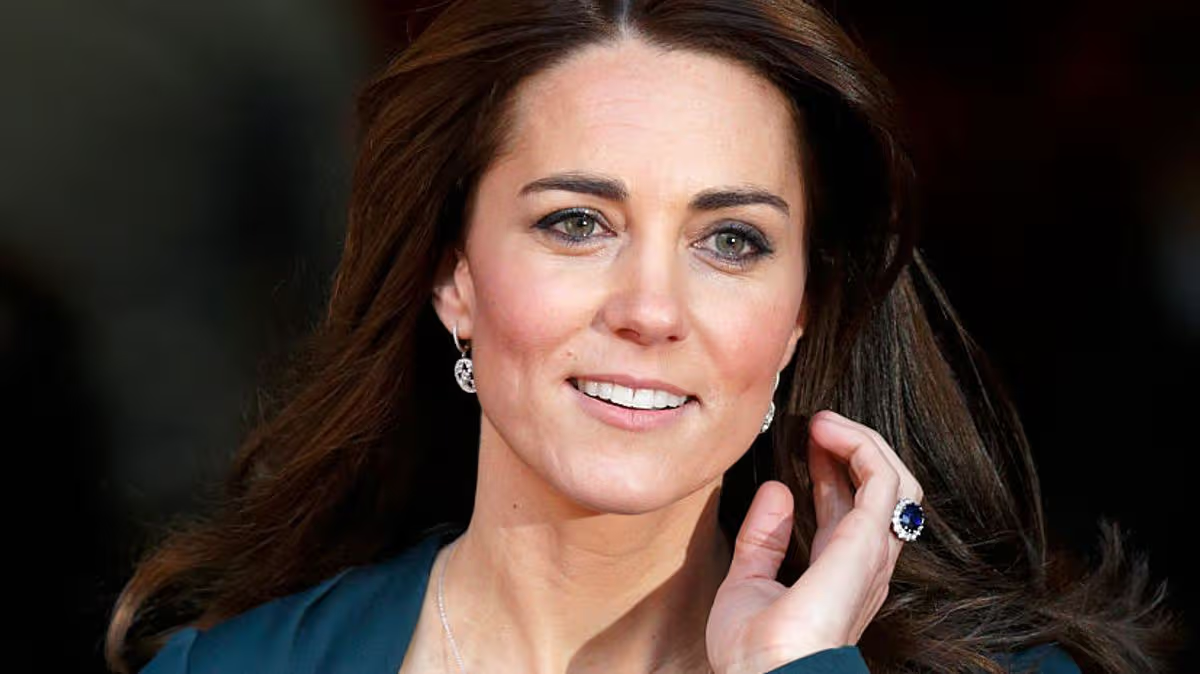
The Princess of Wales is a fan of the brand(Image: Getty Images)
A prominent high street fashion retailer, whose admirers are said to include the Princess of Wales and former Prime Minister Theresa May, has shut down its website following its entry into administration.
LK Bennett was established in the 1990s, initially specialising in footwear before expanding its offering to include clothing and accessories such as handbags. The company described itself as “the British affordable luxury brand” and was founded by Linda Bennett in London “with the vision of bringing a bit of Bond Street luxury to the High Street”.
In 2012, the brand launched a flagship store in Manhattan after the “Kate effect” was reported to have “propelled the quintessentially British brand” into the American market. Tony DiMasso, who served as president at LK Bennett at the time and was previously chief operations officer at Jimmy Choo, commented: ” Kate Middleton is an elegant lady, she wears our clothing and our shoes very well, and the American public are infatuated with her, which has definitely helped us, being new to the American market.”
However, in December the company, which employs around 280 staff, filed for administration, marking the second time in six years it had teetered on the brink of collapse. In 2019 the business entered administration after its owners failed to secure a new financial backer, and was subsequently purchased out of insolvency by its Chinese franchise partner, who saw off competition from Sports Direct’s Mike Ashley. In January this year, the premium brand filed a notice of intention to appoint an administrator at the High Court.
Last week, LK Bennett announced its website would close within days and that it would launch its “biggest offer ever” for customers to snap up last-minute bargains. This followed the high street favourite beginning to shut its shops earlier this year.
Earlier this week, final sales were under way, with prices slashed by at least 80%. The retailer also announced an online exclusive sale of up to 90% off its high-end dresses, shoes and accessories, giving shoppers one last chance to grab a bargain, reports the Mirror.
The website now displays only a large banner reading, in white lettering on a black background: “Website and phone orders have now ended.” A message on the site states that “if you have placed an order this will still be processed as normal”.
According to its website, the chain retains nine stores, predominantly in and around London, along with seven concessions elsewhere, including two in Dublin.
Follow cambridgenews:
Gardeners are being urged to check their patches as invasive bluebells are spreading rapidly across the UK and threatening the future of the nation’s native blooms. Plant experts at GardeningExpress.co.uk warn that many homeowners may already have the invasive Spanish bluebell plants growing in their gardens – but they can quickly take over and outcompete native English bluebells.
Spanish bluebells were originally introduced as ornamental garden plants, but their ability to spread aggressively means they are now one of the biggest threats to native bluebells. They grow faster, produce more seeds and easily hybridise with native varieties, creating crossbreeds that dilute the UK’s iconic woodland flower.
Native bluebells are a protected species and a vital part of the UK’s natural heritage, but once Spanish bluebells escape gardens, they can spread into nearby countryside and woodlands, making gardens a key battleground in protecting the native species. Experts say many gardeners are unintentionally helping the problem grow, often because they don’t realise the difference between the two plants.
Advertisement
With bluebell season underway, homeowners are now being urged to learn how to identify Spanish bluebells in case they need to take action in their gardens. Spanish bluebells grow upright, with flowers all around the stem, whereas native bluebells droop to one side in a curved shape.
The Spanish varieties are often pale blue or lilac, and can sometimes appear pink or white, while native bluebells are usually deep violet-blue. There are also differences in scent and foliage – native bluebells have a strong, sweet fragrance, whereas Spanish bluebells have little to no scent and their leaves are broader and thicker compared with the narrow leaves of native plants.
Spanish bluebells are not on the government’s list of invasive plants in England and Wales. However, they are considered an invasive non-native plant in Northern Ireland and the Republic of Ireland, while in Scotland, it is an offence to plant any non-native plant in the wild.
Advertisement
Chris Bonnett, plant expert and founder of Gardening Express, said: “Spanish bluebells can spread more easily than our native species, so gardeners need to be aware of how quickly they can multiply. “The biggest risk comes from gardens, where they may be planted for their beauty but can spread beyond boundaries through seeds, bulbs and garden waste if left unchecked.
“Gardeners play a crucial role in protecting native bluebells. Even a single garden population can establish in surrounding areas within a few years, so early identification and careful management can make a big difference.”
Five tips to help homeowners control Spanish bluebells in their gardens:
Advertisement
Dig up bulbs carefully
Spanish bluebells spread through underground bulbs, so removing the entire bulb is essential to controlling the plant.
Dispose of plants properly
Never compost them or dump garden waste in the countryside. Bag plants and dispose of them via general waste.
Advertisement
Avoid planting or sharing bulbs
Even giving bulbs to friends or neighbours can spread the invasive species further afield.
Monitor your garden each spring
New plants can regrow from missed bulbs or seeds.
Advertisement
Choose native alternatives
Plant native bluebells or other UK-friendly spring flowers instead.
The latest cast of I’m A Celebrity… South Africa learned more than they needed to about Amanda Holden, thanks to her Heart Radio co-star Ashley Roberts
Samantha Masters Content Editor
10:10, 15 Apr 2026
Amanda Holden made her return to Heart Radio on Wednesday, and it wasn’t long before she confronted her co-star Ashley Roberts over a recent television moment. The Pussycat Dolls singer is currently featuring in I’m A Celebrity… South Africa, which was recorded last year. In a recent episode, Ashley, 44, left her campmates laughing after disclosing Amanda’s surprisingly swift bathroom habits.
“She can poo quicker than anybody I’ve ever met in my life,” Ashley told them. “She’ll have her stiletto heels on from the studio. A song will be playing and she’ll run off during the link. Then suddenly she’s back and I’m like, ‘You did not just…’
Advertisement
“And she’s like, ‘Yep, feeling great!’ Then she’s straight back on-air doing a link like nothing happened.”
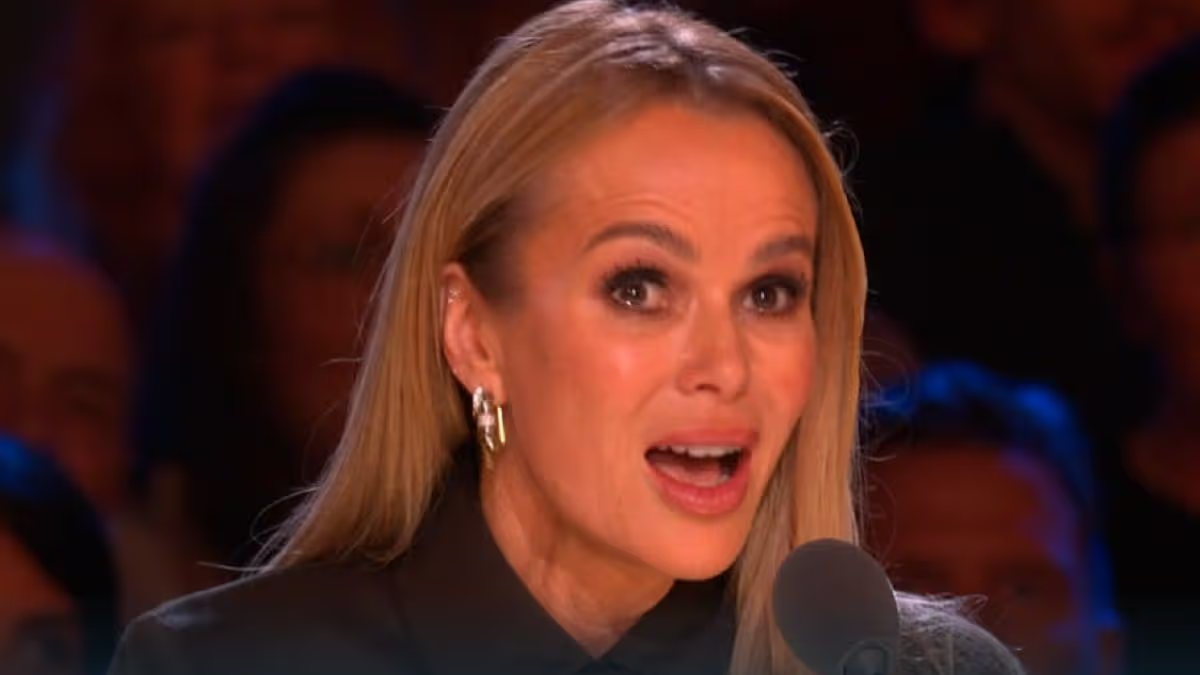
Responding to the clip live on Heart Radio alongside Ashley and Jamie Theakston, the 55-year-old revealed she had watched the footage and “loved” it.
She went on to say: “You know I can run down there, do a poo and come back before the end of a song.”
While Jamie acknowledged his co-host’s famously rapid comfort breaks, he questioned why Ashley felt compelled to share the story with the wider world.
“I’m proud of it,” Amanda laughed, confirming she was perfectly happy for people to know.
“She is the quickest poo-er in the land!” Ashley quipped. “I need a sash or a crown,” Amanda replied.
The Britain’s Got Talent judge went on to say that she doesn’t understand why anyone would want to “hang around” in the bathroom. “Just get out,” she added. “I don’t even like sitting down – especially in public toilets. Fire and go!”.
Advertisement
Leaving her co-star astonished by the revelation she doesn’t sit down, Amanda joked: “I’ve got the strongest thighs in showbiz!”.
During the conversation, Ashley also revealed who she missed most from the programme. Those battling to be crowned Legend of the Jungle are; Ashley, Scarlett Moffatt, Sinitta, Sir Mo Farah, Seann Walsh, Adam Thomas, David Haye, Beverley Callard, Gemma Collins, Craig Charles, Jimmy Bullard and Harry Redknapp.
Looking back on her experience, she said: “I had good relationships with everybody, I was lucky in that sense. But, me and Scarlett were bush sisters – and we still are.
Advertisement
“Honestly, I couldn’t have gotten through that without her. We just kept each other sane. You know when you look at someone across the room and you just know what they’re thinking? We were always on the same page. It was pretty much that.”
Meanwhile, tensions escalated in camp on Tuesday evening after the Rhinos defeated the Lions in another challenge. The victory meant the Rhinos had more food for dinner, while the losing side were left with rice and beans.
Frustrated by the outcome, David threatened to pinch the other team’s food when it passed their camp.
Speaking in the Bush Telegraph, he outlined his strategy: “If the food comes across, whoever it was potentially for – or not for – is neither my concern. I’m going to take it and I’m going to eat it.”
Advertisement
The I’m a Celebrity… South Africa airs weekdays from 9pm on ITV and ITVX. The live final airs on April 24th.
Will you be changing your holiday plans due to the new EES changes?
UK travellers now face new data checks at European airports as the EU’s Entry/Exit System (EES) is fully implemented across 29 countries in the Schengen area, including Spain, Italy and Greece.
Advertisement
The new system means UK holidaymakers now have to “create a digital record” when they first travel to the Schengen area. This will require travellers to provide additional information upon arrival at the border, replacing the previous system of passport stamping.
However, the introduction of the system has led to significant travel disruptions, including hundreds of people missing flights after being stuck in queues at an airport in Milan at the weekend.
Click here to get the biggest stories straight to your inbox in our Daily Newsletter
She has since had to cover the extra expense of staying in Italy for longer as the next available flight back was five days after her original departure date.
Representative body Airports Council International recently reported that EES was causing delays of up to three hours, with airports in Spain, Portugal, France and Italy among the worst affected.
And the chief executive of Advantage Travel Partnership, Julia Lo Bue-Said, has since warned of a “summer of chaos” if changes aren’t made.
Advertisement
In an interview on BBC Radio 4, the travel expert said: “The real issue is the volume of passengers that are trying to go through border control at one time. It’s clearly creating significant bottlenecks. The biggest frustration is these airports know what passengers are arriving, they know how many flights are coming in.
“There needs to be better coordination on arrival and on departure – because the same thing happens when you leave – to ensure we are not facing a summer of complete chaos.”
She added to the Press Association that what happened in Milan is “a warning sign that cannot be ignored”.
She said: “Even isolated incidents at Schengen borders are having serious knock-on effects, with passengers missing flights, facing long waits and navigating processes that are unclear and inconsistent. That is simply not good enough.”
Advertisement
She claimed some airports have the “physical infrastructure to handle demand but are simply not deploying the staff to match it”, which “demands explanation”.
She added: “We have consistently called for a pause in EES registration during peak travel periods and at times of high passenger volumes, to minimise disruption and protect the customer experience.”
Luke Petherbridge, director of public affairs at travel trade organisation Abta, said: “While for many the travel experience remains smooth, we’re disappointed and frustrated to see some passengers being caught up in delays due to EES.
“Abta has been warning destinations and the (European) Commission for some time about the need for proactive steps to be taken to avoid delays, including the full use of contingency measures to stand down biometric checks at busier times, and adequate staffing especially at peak times.”
The actress shared a string of adorable snaps as she was seen returning to her Manchester wedding location, a year after tying the knot
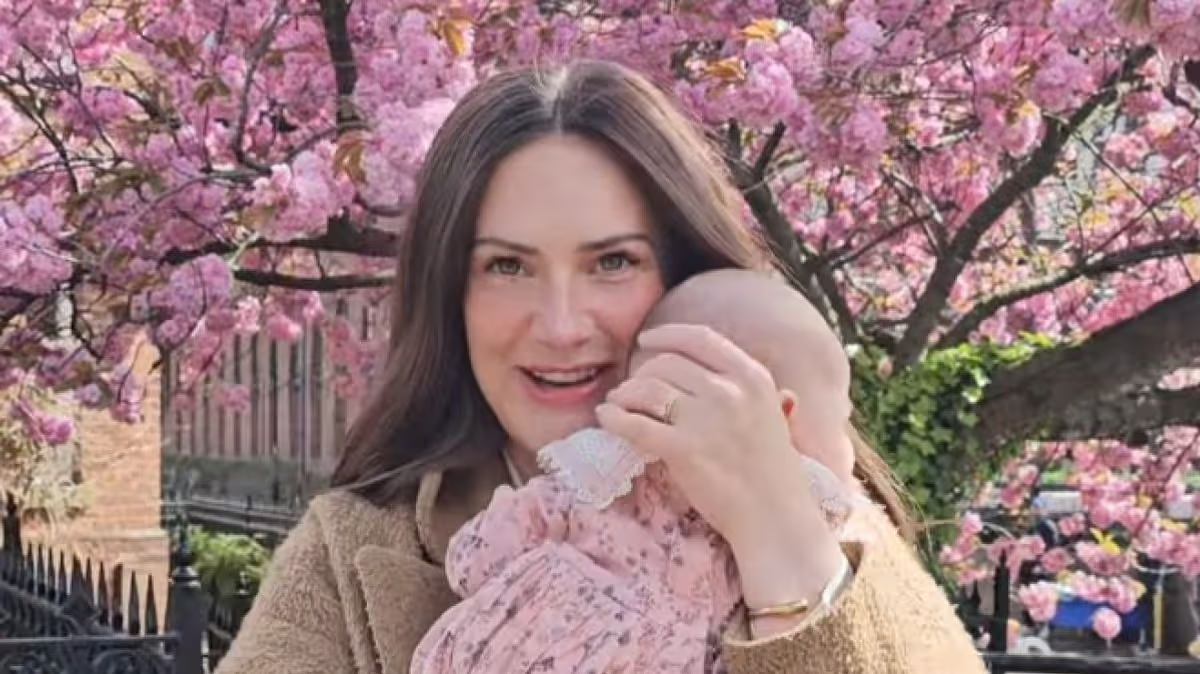
Emmerdale star Isabel Hodgins has shared a string of adorable snaps as she was seen returning to her Manchester wedding location with her baby daughter, as she and her husband marked one year since their big day.
Advertisement
The actress, who is best known for having played Victoria Sugden in the ITV soap for two decades, recently gave birth to her and her husband Adam Whitehead’s daughter, Georgie.
Isabel and Adam shared the news of their baby girl’s arrival in a sweet social media post on February 13. The video showed Isabel in the hospital in labour, before a blank screen appeared with the message: “On the 11th of February at 1:02am… Georgie Grace Whitehead. 11.02.26. 8lbs5oz [heart emojis].”
Click here to get the biggest stories straight to your inbox in our Daily Newsletter
The couple have since been candidly sharing their parenthood journey with fans, having posted a number of adorable updates on their baby girl on social media in recent weeks and months.
Advertisement
But they were recently seen celebrating one another as they marked a year since they tied the knot. Isabel and Adam said ‘I Do’ in a fair-tale wedding at Castlefield Rooms in the city centre. The elegant celebration was attended by Isabel’s Emmerdale co-stars Danny Miller, Mark Jordon, Laura Norton, Jeff Hordley and Zoë Henry.
And Isabel, who hails from Salford, previously admitted that Manchester was the only place for her to tie the knot. “Some of our first dates were in town,” she previously told the Mirror. “And we like to run there, so I think it was nice that we kept it there.”
Now, Isabel and Adam have take Georgie to The Castlefield Rooms and shared a string of photos from their return to their wedding location with their newborn in tow. Sharing the sweet images on Instagram, the soap star wrote: “Showing Georgie where Mum and Dad got married. What a difference a year makes.”
Advertisement
Emmerdale co-star Laura Norton was quick to respond, as she commented on the post: “Unbelievable [heart eyes emojis],” and after sharing a number of their wedding snaps in between the new family images, their original photographer THE BRIDE TRIBE by Louise Cuppello, gushed: “Oh guys! How emotional.”
It comes after Isabel marked her one year anniversary on social media by sharing pictures from her and Adam’s wedding day. Alongside the post, she wrote: “Happy 1st wedding anniversary to My Love My husband. My best friend. My biggest supporter. What an incredible 3 and a half years HOW LUCKY ARE WE?!” Also in the post, Isabel shared their first Valentine’s together, the night Adam proposed, the day they found out they were expecting, and their first family photo together.
Adam also took to his own Instagram and posted a heartfelt tribute to their big day. He penned: “Happy 1st Anniversary 3 and a half years together… and this last year has been the best yet We didn’t just get married, we built a whole new life together. And honestly, the best part has been watching you become a mum. It’s made me fall in love with you in a completely different way. The way you look after her, even on little sleep, is unreal.
Advertisement
“You’re my best mate, my audience to my shows and the person I’m proud to call my wife. What we’ve got, our little family, means everything to me. Love you more than ever.”
Planners admitted it would be good to “bring life back into” the former Masons Arms in Abbeygreen, but expressed concern over car parking and other issues.
A bid to convert an empty Lesmahagow hotel into houses and flats has been turned down.
Advertisement
Planners admitted it would be good to “bring life back into” the former Masons Arms in Abbeygreen, but expressed concern over car parking and other issues.
The two-storey town centre hotel and pub closed during the Covid 19 pandemic and hasn’t re-opened.
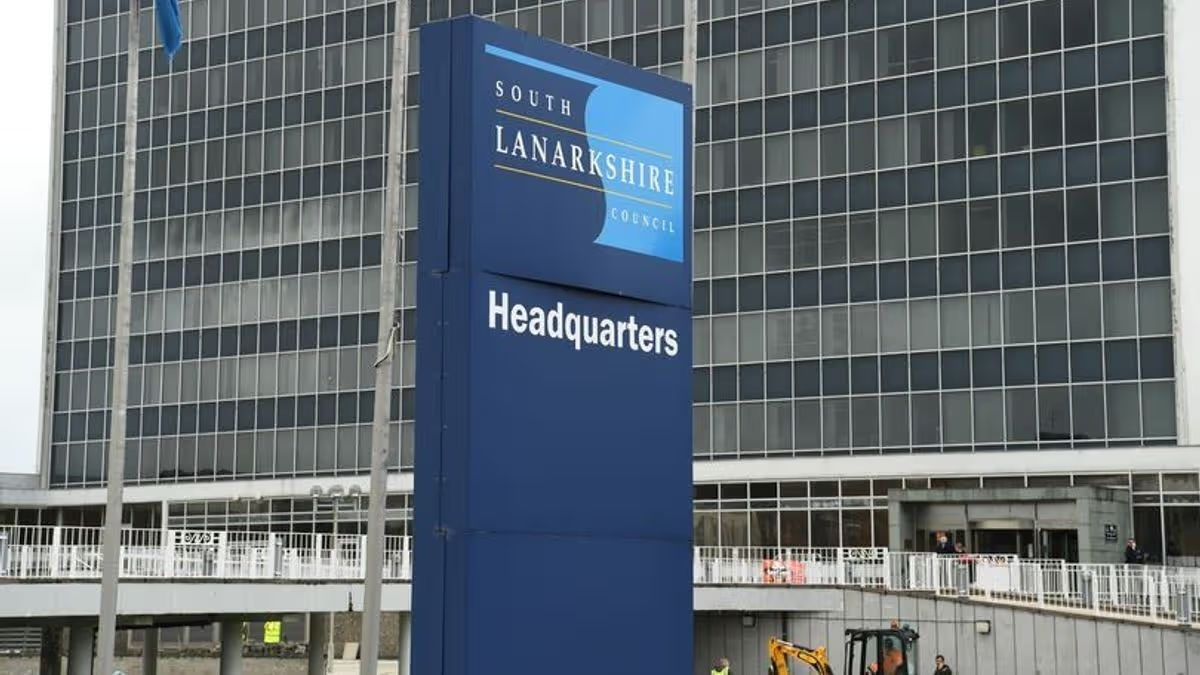
Glendevon Group lodged conversion plans with South Lanarkshire Council. The idea was to create two three-bedroom terraced houses and two flats.
A report by the authority’s planning department stated: “The principle of conversion to residential use is acceptable.
Advertisement
“The building has been vacant for some time without any apparent interest in reopening it as a pub or hotel.
“Bringing the building back into productive use would generally be beneficial in terms of securing its future and bringing life back into it.”
However, the report said there were “significant concerns about certain details of the proposal”.
The flats would have “little or no natural light” and views would be “oppressive”.
There were also concerns over access arrangements and roads officials had objected because of the lack of car parking spaces.
The report concluded: “The proposal does not comply fully with the relevant policies of the adopted development plan and consent must, therefore, be refused.”
*Don’t miss the latest headlines from around Lanarkshire. Sign up to our newsletters here.
Advertisement
And did you know Lanarkshire Live had its own app? Download yours for free here.
A baby who died after being found with heroin and cocaine in her system arrived at the hospital “unkempt and smelly”, despite several concerns being raised to social services, an inquest has heard.
She had been transferred from a house on Meaford Drive, Blurton, on the morning of October 25, 2019, after reports that the infant had gone into cardiac arrest. Despite treatment at the paediatric intensive care unit, she died four days later, on October 29.
The court was told that a urine sample taken on the day of the baby’s death revealed a level of cocaine, and further testing on hair samples confirmed she had been exposed to cocaine, heroin and cannabis, StokeonTrentLive reports.
Advertisement
Parents Rachel Bourne and John Douglas both admitted child cruelty at Stoke-on-Trent Crown Court in 2024. Bourne was jailed for 31 months and Douglas was given a 10-month custodial sentence, suspended for two years.
An inquest into Phoebe-Rose’s death is now being held this week at Swann House, Stoke.
Phoebe-Rose was born in Halifax in August 2019, where her father lived, and returned to Stoke-on-Trent with her mother a month later, the inquest heard.
Both parents were drug users, with several referrals having previously been made to social services before Phoebe-Rose’s birth, prompted by concerns amongst family members. One such concern was raised in July 2019, relating to their living conditions.
Advertisement
The couple were subsequently evicted from the property, where drug paraphernalia was later discovered. Paediatrician Dr Deborah Stalker told the inquest that hospital discharge notes from Phoebe-Rose’s birth showed no signs of neonatal abstinence syndrome – withdrawal symptoms that newborn babies may experience if they have been exposed to opiates while still in the womb.
“But she was a bit of a struggle to feed, reading between the lines of notes”, Dr Stalker said. “There was also evidence that feeding bottles were not sterilised prior to use – that had been observed in hospital.”
Dr Stalker told the inquest how, when Phoebe-Rose was admitted to hospital in October 2019, “she was unkempt and she was unclean”, adding “She was smelly and she had dirty fingernails and feet and creases under arms and neck.”
Advertisement
Dr Roger Malcolmson, a consultant paediatric and perinatal pathologist, was involved in post-mortem examinations conducted following Phoebe-Rose’s death. He described her to the inquest as “relatively small”.
“There was no evidence of external injuries of any significance that would suggest a pattern of physical abuse”, he said.
“Her brain was swollen, which correlates with injury to brain cells and hypoxia (reduced oxygen to the brain). There was no obvious underlying cause. I think the biggest risk factor for this death we can identify from the history is maternal drug use and smoking.”
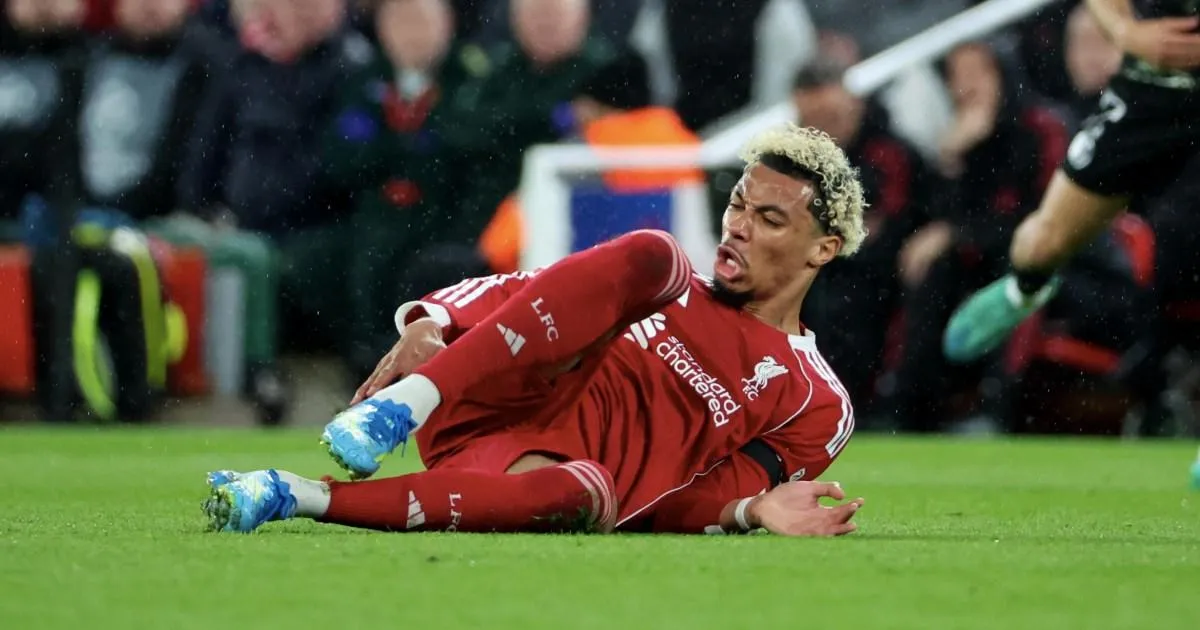
Ekitike is facing a lengthy spell on the sidelines (Picture: Getty)
Hugo Ekitike is expected to be sidelined for at least nine months with a serious Achilles tendon injury suffered in Liverpool’s Champions League exit against Paris Saint-Germain.
Liverpool’s last hope of silverware this season ended on Tuesday night after defeat to the French champions at Anfield who sealed a 4-0 aggregate victory to progress to the semi-finals of the competition.
Eiktike fell to the ground unchallenged after 34 minutes, clutching the back of his ankle in visible pain.
Advertisement
Despite two attempts, the striker was unable to get back to his feet and received treatment from Liverpool’s medical staff before he was carried off the pitch in tears.
Arne Slot provided a grim update after the match, admitting the injury was ‘not good’ with Ibrahima Konare also fearing the worst for his teammate.
Liverpool are still to officially confirm the extent of the injury but L’Equipe report the former Eintracht Frankfurt star has ruptured his Achilles tendon which will sideline him for approximately nine months.















































You must be logged in to post a comment Login