

Politics
US-Israeli Strikes On Iran: Key Details You Must Know

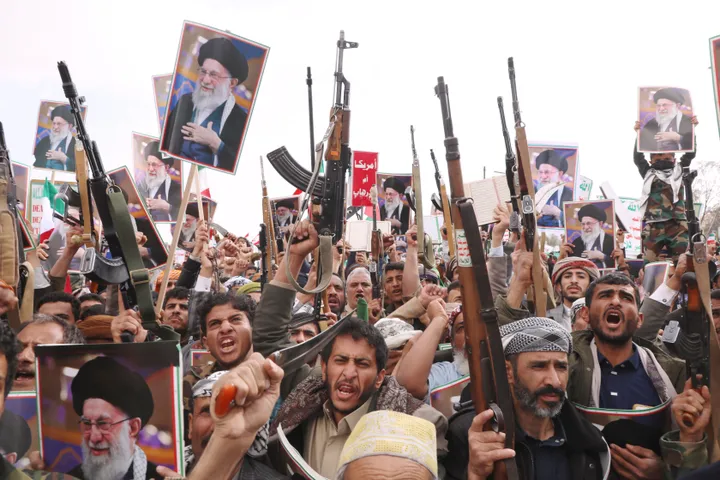
Donald Trump has sparked global chaos once again after giving the green lught to joint US and Israeli strikes on Iran over the weekend.
The attacks killed Iran’s Supreme Leader Ayatollah Ali Khamenei – a devastating moment for the Islamic Republic he has ruled for almost 40 years.
Iran retaliated by firing its own missiles at countries linked to US military operations across the Middle East, plunging the region into fresh turmoil.
As more countries get roped into the violence, here’s what we know so far.
How Did This Conflict Start?
The White House has been trying to force Iran to accept a new deal which would prevent the country from acquiring nuclear weapons.
Israel and the US have pointed to Iran’s extensive uranium enrichment programme as proof, as it has almost reached weapons-grade level.
Iran continues to reject their accusations, claiming its programme is for peaceful, civilian purposes.
Iran also terminated their previous nuclear agreement in June 2025, after the US and Israel waged a 12-day war against the country, hitting its nuclear and military sites.
During last week’s negotiations. Tehran’s leadership agreed to stop uranium stockpiling and allow full verification by the International Atomic Energy Agency – but the talks ended without a deal, and Trump said he was “not thrilled”.
The president has also been building up the largest US military presence in the region since the US-led invasion of Iraq in 2003.
At the same time, public protests in Iran against the oppressive regime have increased in recent months – and been brutally suppressed.
Trump and Israel have even encouraged demonstrators to rise up against the government, telling Iranians “this will be, probably, your only chance for generations”.
Then on Saturday, Israel launched so-called “pre-emptive” strikes on Iran and Trump accused Tehran of waging an “unending campaign of bloodshed and mass murder” targeting the US.
He claimed Iran had rejected every chance to renounce its nuclear programme and alleged it was developing long-range missiles that could threaten Europe, US troops overseas and even “soon reach the American homeland”.
What Is ‘Operation Epic Fury’?
The US announced it would be taking action against Iran with the so-called “Operation Epic Fury”, while Israel called its own offensive “Lion’s Roar”.
Trump has announced his plans to destroy Iran’s missile capabilities, target Iran’s navy, disrupt Iran-back armed groups in the Middle East and prohibit Iran from building any nuclear weapons.
Israel’s president Isaac Herzog told BBC Radio 4′s Today programme that they have a “huge amount of proof” to justify the attacks on Iran.
“We are in a historic juncture where the future of the Middle East dependso n the success of this operation,” Herzog said, calling the Islamic Republic the “empire of evil” which wants to “wipe us off the map”.
He said: “We have huge amount of proof which we are sharing of course with our British allies and every other allies.
“We want to make sure that there is a real change in the region.”
How Deadly Have The Strikes Been So Far?
Saturday’s strikes killed Iran’s Ali Khamenei who has ruled the country since 1989.
The missile strikes killed 148 people at a girls’ school in southern Iran, too, according to Iranian state media.
Iran’s retaliatory missiles also hit the Israeli city of Beit Shemesh, killing at least nine – the deadliest attack on Israel since this war started.
Three US service members have been killed in action as part of the American military operation, the US Central Command said non Sunday.
Trump warned on social media there would likely be more casualties to come, saying in a video posted last night: “That’s the way it is.”
The Iranian Red Crescent Society says 555 people have been killed in the country after the attacks hit more than 130 cities.
How Is Lebanon Involved?
Iran’s allies have leapt into action after the death of Khamenei, who controlled a range of militias across the region.
Lebanese Shia milita group Hezbollah – despite being depleted from a prolonged war with Israel 18 months ago – sent missiles and drones towards Israel on Saturday in retaliation.
Israel ordered the residents of 50 towns and villages to leave before striking the capital of Beirut and the south of the country, killing at least 31.
Lebanon’s prime minster Nawaf Salam has since stepped in to discourage any Lebanese groups from launching rockets towards Israel.
He said this was an “irresponsible and suspicious act” which “provides Israel with pretexts to continue its attacks”.
Meanwhile, the Israeli Defence Force (IDF) said Hezbollah would “pay a heavy price” for its strikes, which would continue with an increased “intensity”.
The Israeli military say its “offensive campaign” against the milita is likely to last several days.
What About The Rest Of The Middle East?
The United Arab Emirates (UAE) also reported that three people have been killed since Saturday in Iran’s retaliatory strikes.
Explosions have been heard in Bahrain, Jordan, the Iraqi city of Erbil, and Quatar’s capital of Doha.
Smoke has been seen near the US embassy in Kuwait, too.
Supporters of Khamenei’s regime have also taken to the streets in cities across the region.

How Is The UK Involved?
Britain has tried not to get directly involved with Trump’s strikes, with ministers citing the mistakes of the UK’s past interventions in the Iraq war.
But UK prime minister Keir Starmer said he had allowed the US to strike Iranian missile sites from British bases.
He said this was defensive action, and that the UK would “not join offensive action now”.
Hours after that announcement, a suspected drone strike hit RAF Akorotiri, a UK base in Cyprus, according to the UK’s Ministry of Defence, though there were no casualties.
British officials are also planning an unprecedented rescue operation for UK citizens in the Gulf.
There are more than 300,000 UK citizens in the region, and 102,000 of them have “registered their presence” with the British Foreign Office, according to foreign secretary Yvette Cooper.
How Could This Conflict Be Felt Around The World?
There are widespread fears of a global economic shock triggered by the attack.
It seems from cocerns the strait of Hormuz, essential to worldwide trade, could become inaccessible as it sits between Iran and the UAE.
Oil prices have already increased and the stock markets are struggling, with brent crude increasing by 13% during early trading hours on Monday.
Airlines are also having to grapple with new routes as countries across the Middle East closing their airspace.
Local authorities from New York City to LA say they are on high alert out of fears of a pending Iranian attack on the US mainland, too.
What Happens Next?
The US president said combat operations would continue in Iran “until all of our objectives are achieved”.
He justified the strikes by claiming “an Iranian regime armed with long range missiles and nuclear weapons would be a dire threat to every American”.
But Trump also tried to appeal to the Iranian soldiers, saying: “I once again urge the Revolutionary Guard, the Iranian military police, to lay down your arms and receive full immunity or face certain death.”
Trump claimed his attacks have already killed 48 Iranian leaders.
The president has also alleged that Iran’s new leadership wants to talk to him and that he has agreed.
However, Iran’s security chief, Ali Larijani, said “we will not negotiate with the United States” overnight.
Meanwhile, Trump’s domestic audience could put pressure on the president to slow down.
He was elected on a promise not to drag Americans into other unnecessary wars overseas, and on his famous “America First” pledge.
A Reuters/Ipsos poll found only 27% of Americans approve of the strikes, and a quarter of Republicans think Trump is too willing to use military force.

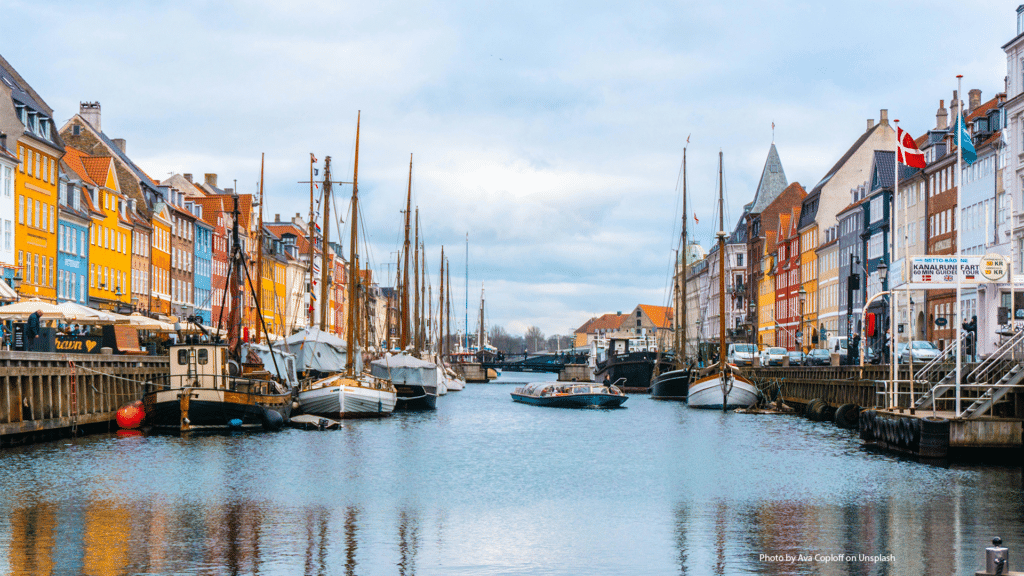
Nick Sitter and Ulf Sverdrup look at the lessons that the UK could learn from looking at Norway’s relationship with the European Union.
As the United Kingdom recalibrates its post-Brexit relationship with the European Union, Norway’s experience offers a revealing case study with some important lessons. As a member of the European Economic Area (EEA), Norway (together with Iceland and Liechtenstein) occupies a very distinct position – a member of the single market but excluded from the EU’s political decisionmaking processes.
For British observers, Norway’s case provides a crucial insight: alignment without representation may be a politically stable arrangement, but one with mounting costs that are difficult to sustain in an era of geopolitical turbulence.
Since the narrow defeat of EU membership in a referendum in 1994, Norway has charted an unusual course in European affairs. Its strategy of maximum integration without formal membership has been a triumph of pragmatism over ideology and polarisation. Gro Harlem Brundtland, the Labour Prime Minister at the time, did not resign, but set about salvaging Norway’s relationship with the EU. The EEA agreement between the EU and the EFTA states (minus Switzerland) that had entered into force the year before would prove a durable basis for a workable compromise.
Three decades later Norway has become thoroughly Europeanised, incorporating the vast majority of EU rules and policies in EEA-relevant sectors (agriculture and fisheries are not fully covered; Norway never entered the customs union due to a desire to protect its agricultural sector and maintain independence in foreign economic policy), and fully integrated in terms of free movement of goods, services, capital and labour. Through a raft of additional agreements, Norway has adapted to the EU’s new policy areas. In many cases, it has voluntarily aligned itself with EU standards even in areas where no formal agreements exist. In most sectors, policy developments have largely mirrored those in neighbouring EU members Sweden, Finland and Denmark.
This compromise of participation without representation allows Norway to maintain its formal sovereignty, and the political truce between its pro- and anti-EU blocs. The EEA model has proven a surprisingly durable political compromise, because it rests on stable patterns of Euroscepticism in both the party system and the electorate. The two main parties, the pro-EU Conservatives and somewhat more divided Labour, have both had to rely on Eurosceptic parties to form government coalitions. The 1994 referendum mirrored both the result and voting patterns of the 1972 referendum, and even today opinion polls do not indicate much of a change.
But four other factors have helped sustain the EEA compromise. First, Norway’s fossil fuel-funded prosperity has insulated it from the kind of economic crises that pushed many others along the path to EU membership. Likewise, its NATO membership has provided a security umbrella, and no need to seek EU membership for geopolitical protection.
Second, the EEA model has worked well, enabling economic integration while safeguarding sensitive sectors like fisheries and agriculture that are central to Norwegian identity and the country’s centre-periphery political dynamics. The model has also held together reasonably well constitutionally and administratively.
Third, because the EEA model works well, many struggle to identify compelling additional benefits from full membership. Likewise, a high tolerance has developed for the costs of remaining outside.
Fourth, there is little ideological pressure to join since Europe hardly resonates as a political project in which Norway participates and holds a meaningful position. If anything, the continent has become even more peripheral to Norwegian identity than before.
The main lesson here is the importance that a compromise with a broad political base, anchored in both the political left and right, plays in sustaining an EU arrangement (a lesson lost on UK policymakers in the wake of the Brexit referendum). But it helps if the arrangement works well.
A defining feature of the EEA agreement is that it is a dynamic arrangement. Not only did Norway immediately adopt all relevant EU legislation; it also effectively agreed to adopt all new relevant EU legislation. (Although there is a procedure whereby an EEA state can reserve the right not to adopt a new policy, this is a potential deal-breaker and has consequently never been used.)
However, today Norway faces unprecedented challenges. First, the EU complains about Norway’s backlog in terms of transposition of EU law. The primary irritant in EU relations stems from Norway’s decision not to implement remaining portions of the Fourth Energy Package, because this is a clearly stated government policy rather than an ordinary capacity-induced backlog.
Second, the EU’s changes to its budget may generate unintended problems. If resources shift from areas where Norway does not participate (such as agriculture or cohesion funds) to areas where Norway participates (or wishes to) and contributes on a program-by-program basis, it could mean that the mode of association becomes more complicated and expensive.
Third, the strategy of patchwork expansion, whereby Norway buys into new arrangements as the EU expands beyond the core single market areas covered by the EEA, is increasingly difficult. This is particularly challenging in substantial new sectors such as health and crisis management, not to mention geopolitics, trade and economic security.
Nevertheless, despite cautious public opinion, Norway’s technical path to full EU membership is very short. Because Norway is so closely aligned to the EU, it satisfies requirements for membership in most of the 35 negotiation chapters involved in accession. Even under the current rules, negotiations could be completed quickly. Moreover, the geopolitical realities brought about by Russia’s war in Ukraine is causing the EU to reconsider its enlargement and accession procedures. Although this is at an early stage, it could lower the membership threshold and create new opportunities for exemptions and flexibility.
For the United Kingdom, the Norwegian experience offers multiple sobering lessons. Alignment is not a fixed state. It is a continuous, demanding process of adaptation that requires constant political attention and administrative capacity – and cross-party support for dynamic alignment. Norway has demonstrated that maintaining a deep, stable relationship with the EU from outside is possible, but costly. Moreover, as global volatility intensifies and the international order fragments, the Norwegian model increasingly looks like a strategic liability – expensive, constraining, and offering diminishing returns.
The path to Norwegian EU membership faces no insurmountable technical obstacles. The barriers are primarily political: a pragmatic calculation of when the costs of remaining outside finally exceed the benefits of the status quo. In the current security environment, with American guarantees uncertain and European integration accelerating in defence and security domains, that inflection point may be approaching more rapidly than anticipated. The question is no longer whether Norway can join the EU, but whether Norway can afford to remain outside.
By Nick Sitter, Professor at the Department of Law and Governance, BI Norwegian Business School and Ulf Sverdrup, Professor at the Department of Law and Governance, BI Norwegian Business School.
This piece first appeared in our report ‘UK-EU alignment and divergence: the road ahead‘.
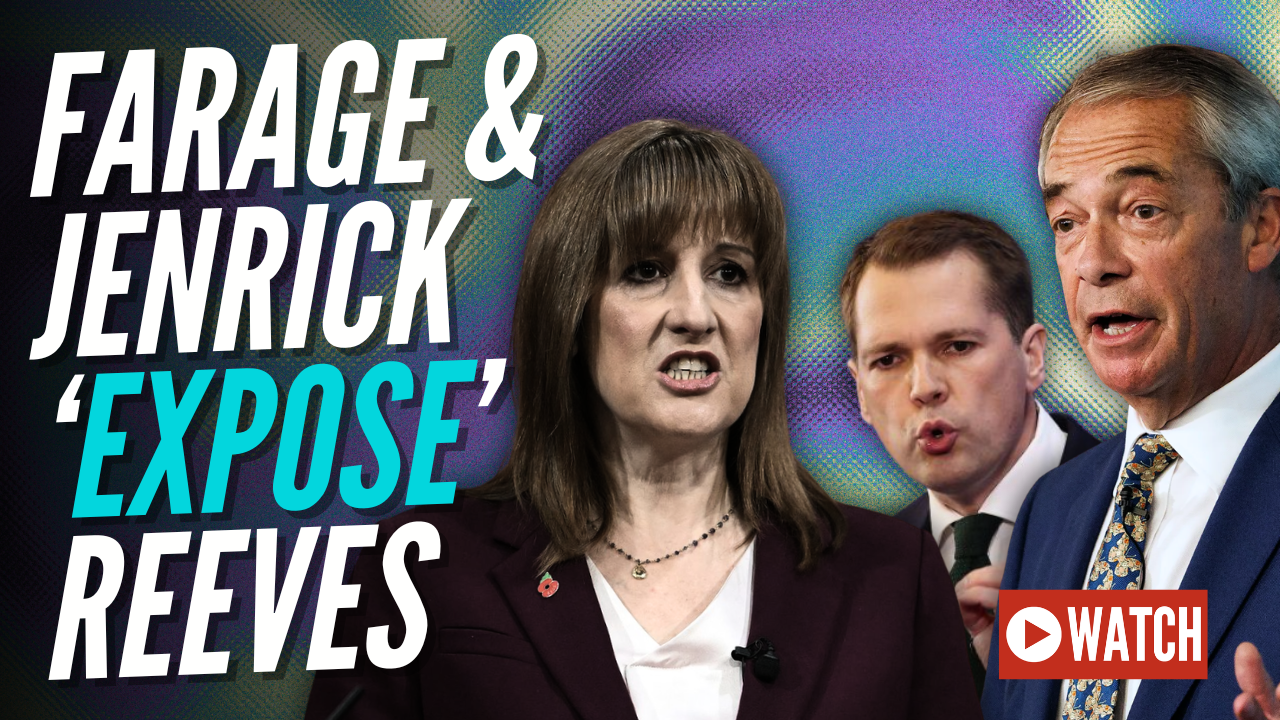
Watch Jenrick’s video on Rachel Reeves’ questionable friendship with a mosque chairman by clicking here. Farage and Jenrick will also be answering press questions. Guido is there. Standby…
Politics
Tara-Jane Sutcliffe: Conservatives should take a lead on democratic integrity and accountability
Tara-Jane Sutcliffe was the Conservative Parliamentary Candidate for Swansea West at the 2024 General Election and serves as a Federation Chair in West Wales.
The Labour Government has now introduced its Representation of the People Bill, proposing sweeping reforms and presenting them as the biggest expansion of democracy in a generation. A tall claim, and one that will come under close scrutiny as the Bill progresses.
Some elements of reform are necessary and right. Safeguarding elections from hostile foreign influence, tightening controls on political donations, and strengthening enforcement against electoral offences reflect the realities of modern democratic vulnerability. Democracies today are threatened not only by conventional means, but by hybrid tactics – covert influence, disinformation, cyber intrusion and financial interference.
The Bill focuses heavily on widening participation: lowering the voting age, simplifying registration, and expanding access to the ballot. Yet democracy is not only about who can vote. Critically, it is about whether those votes are honoured. On this fundamental question, the Bill is silent – and herein lies a timely opportunity for Conservative intervention.
Since the last General Election, several elected representatives have, to much local and national opprobrium, changed party allegiance without returning to constituents for endorsement. Danny Kruger, Robert Jenrick, Suella Braverman and Andrew Rosindell – all elected as Conservatives MPs – now sit for Reform UK. And in Wales, most recently, Senedd member James Evans lost the Conservative whip and subsequently joined Reform. Not unprecedented, all parties have at times both gained and lost from such movements. But the electorate loses most of all.
When an MP crosses the floor without returning to the electorate, the Nolan Principles of public life – not least integrity – are flagrantly flouted. It is, at heart, a breach of trust. When we vote, we choose not merely a person but a particular policy perspective: a party. It is therefore reasonable to expect that the political basis on which a mandate is secured will endure for the full term of office, not merely part. The same principle applies at every level of government. Whether in Parliament or on a local council, the democratic deficit is the same. In a post-trust political era, each such instance risks deepening disengagement and eroding confidence in public life. Any measure capable of restoring public trust should, and must, be taken.
The Government claims this Bill will strengthen democracy. But the absence of any provision addressing mid-term party defection leaves a glaring gap. Setting aside differing views on extending the franchise to younger voters – on which many have reservations – expanding participation while ignoring practices that can undermine the meaning of the vote risks elevating process over legitimacy. It looks therefore less a principled reform than a political calculation.
Having had the honour to stand in local elections and as a parliamentary candidate, I know how seriously voters treat their choice of representative. Campaigning through the 2024 General Election meant defending a Conservative programme on doorsteps, in hustings and in the media – asking voters to place their trust in that platform. That trust is not symbolic; it is the foundation of democratic legitimacy. To seek election under one set of principles and then serve under another, without returning to the electorate, is quite simply unconscionable.
My professional work on governance and my experience as an international election observer have reinforced this perspective. Participating in election observation missions under the auspices of the OSCE’s Office for Democratic Institutions and Human Rights, the UK helps uphold democratic standards worldwide – not only assessing whether voting is free and fair, but whether the will of the electorate is faithfully reflected in representation thereafter. The UK rightly promotes these principles abroad; it should reflect them at home.
The remedy is neither radical nor complex. In fact, it is blatantly obvious. Where a representative voluntarily changes party affiliation mid-term, the electorate should be given the opportunity to decide whether to renew that mandate. A recall mechanism triggering a by-election would help ensure that any change in political allegiance remains anchored in electoral legitimacy rather than personal advantage.
By-elections are not without cost, and as Conservatives we are rightfully cautious stewards of public money. But what price democracy? Electoral accountability is not an optional expense; it is the foundation of legitimate government. Moreover, the very existence of such a requirement would likely deter opportunistic defections, meaning by-elections would remain rare rather than routine.
Democracy is more than participation and access. It requires trust, and trust depends not only on who can vote, but on whether their vote continues to carry meaning after polling day. If the Government is serious about its proposed objectives, it should address this omission. Without it, the Bill risks expanding the franchise while leaving the democratic mandate itself exposed.
From a values and principles perspective, this is a moment for Conservative leadership. This should serve as a call to action for those who believe that restoring trust in politics begins with honouring the choice voters make. Championing this reform would demonstrate our commitment to democratic integrity and accountability, and to ensuring that the electorate, not political convenience, remains sovereign. Restoring that principle is not only good for democracy; it is essential to Party renewal.
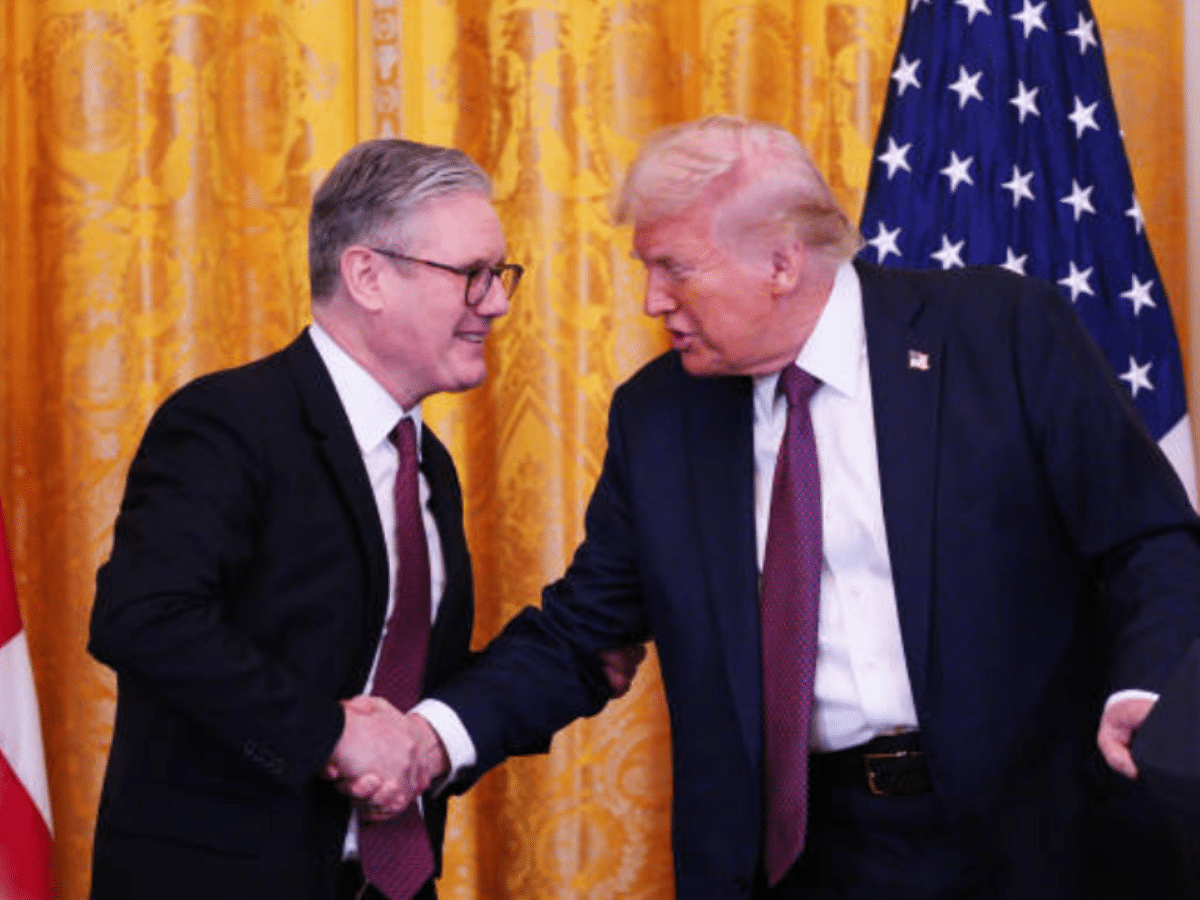
UK PM Keir Starmer unilaterally decided to drag the UK into another illegal Middle East war late on 1 March 2026. Just hours after Starmer’s announcement an Iranian Shahed drone hit the UK’s colonial military base in Cyprus.
The US and Israel began an unprovoked attack on Iran on 28 February. This was despite unprecedented progress in negotiations with Iran. They’ve since assassinated Iranian leadership figures including Ayatollah Khameini.
The Red Crescent puts the death toll in Iran at 555. The Israelis also killed 165 with a missile strike on a school. Iran has hit back at Israel and US military infrastructure throughout the Gulf.
The drone reportedly hit the runway in Cyprus:
I understand that damage was minimal and the runway is operating as usual
— Deborah Haynes (@haynesdeborah) March 2, 2026
Military families were initially locked down after the strike. They’ve now been moved off base into alternative accommodation.
Breaking: Family members of service personnel at RAF Akrotiri are being moved from the base to alternative accommodation on the island
— Larisa Brown (@larisamlbrown) March 2, 2026
There were no casualties:
🔴 Suspected drone strike hits RAF Akrotiri in Cyprus
The British Ministry of Defense confirmed a suspected drone strike on RAF Akrotiri, a UK sovereign base in Cyprus, around midnight Monday, March 2.
🔸 No injuries reported.
🔸 “Minor damage” after a reported small drone… https://t.co/5ETB494NZs— Drop Site (@DropSiteNews) March 2, 2026
British Forces Cyprus posted on X:
— BFCyprus (@bfcyprus) March 2, 2026
Keir Starmer’s 1 February update preceded the strikes by hours. The PM’s statement was contradictory. He repeatedly emphasised the UK’s ‘defensive’ role, but also said UK bases would be used by the US to attack Iran:
My update on the situation in the Middle East. pic.twitter.com/DvsOVcTDMy
— Keir Starmer (@Keir_Starmer) March 1, 2026
Hours before the speech on 1 February the UK military bragged that it had shot down a drone heading for Qatar:
The professionalism of our RAF is remarkable….good work…keep it going. pic.twitter.com/fuYlp3lAa7
— Al Carns (@AlistairCarns) March 1, 2026
The US military will use the Indian Ocean base at Diego Garcia and the UK’s RAF Fairford:
It took just one phone call from Donald Trump for Starmer to jump into yet another Middle East illegal war, failing to learn the lessons of the tragedies of Iraq, Libya and Syria. https://t.co/IhCUF9XJ3m
— Zack Polanski (@ZackPolanski) March 1, 2026
Fairford is one of many bases in the UK which serve as effective US military colonies in the UK:
Keir Starmer says he has accepted Trump’s request to use British bases for bombing Iran
These are the US bases in Britain with troop levels
“RAF” Fairford in Gloucestershire is most likely base to be used by Trump for the continuing attack on Iran https://t.co/oFoSZdRlVx pic.twitter.com/EqH7PKYvlw
— Matt Kennard (@kennardmatt) March 1, 2026
The US also has military personnel at Akrotiri, which has been used a base for the UK’s shadowy intelligence gathering operations on behalf of Israel:
The US Air Force also has a secret detachment of 129 personnel based at RAF Akrotiri on Cyprus pic.twitter.com/qUecPVXNhX
— Matt Kennard (@kennardmatt) March 1, 2026
Starmer is backing Trump’s war
US President Donald Trump has said he wants a form of regime change. Former UK Joint Intelligence Committee chair Lord Rickett’s was unequivocal on 28 February:
None of this.. is in any sense legal in a way that the UK would recognise. There was really no imminent threat to the US.. this is action that they chose to undertake or were dragged into it by the Israelis.
Lord Ricketts (a former chair of the UKs joint intelligence committee): “None of this.. is in any sense legal in a way that the UK would recognise. There was really no imminent threat to the US.. this is action that they chose to undertake or were dragged into it by the Israelis” pic.twitter.com/gMiB8P94l6
— Saul Staniforth (@SaulStaniforth) February 28, 2026
Trump told the US press on 2 March he would like to see a similar outcome to Venezuela. The US bombed Venezuela and kidnapped its president on 2 January:
While Trump has called for regime change in Iran, he makes clear in phone interview with @KannoYoungs that he is fine with remnants of the repressive regime remaining in power. “What we did in Venezuela, I think, is the perfect, the perfect scenario.” https://t.co/efhjP1eZ92
— Peter Baker (@peterbakernyt) March 2, 2026
Keir Starmer has now committed UK forces to this operation. Many people have pointed out on Twitter that Starmer, like Trump himself, claimed to be a peace candidate once upon a time.
A tweet from 2020 has been getting a lot of attention. Starmer clearly positioned himself as an anti-war candidate:
No more illegal wars. Introduce a Prevention of Military Intervention Act and put human rights at the heart of foreign policy. Review all UK arms sales and make us a force for international peace and justice.
No more illegal wars. Introduce a Prevention of Military Intervention Act and put human rights at the heart of foreign policy. Review all UK arms sales and make us a force for international peace and justice. pic.twitter.com/EJ4BKCZB2g
— Keir Starmer (@Keir_Starmer) February 12, 2020
Like so many of Starmer’s pledges, this commitment fell away as soon as he was elected leader of the Labour Party. As PM Starmer has backed and defended Israel’s genocide in Gaza. He has also consistently toadied to Donald Trump.
Now he has committed the UK to a war in the Middle East. Starmer was already having a tough week domestically, losing a key by-election to the Green Party. He is profoundly unpopular, too weak to resist Trump’s overtures and under pressure from both the left and the far-right. UK involvement in yet another spiraling Middle East war might be the straw that breaks that camel’s back. And the first British casualty will confirm it.
Featured image via the Canary
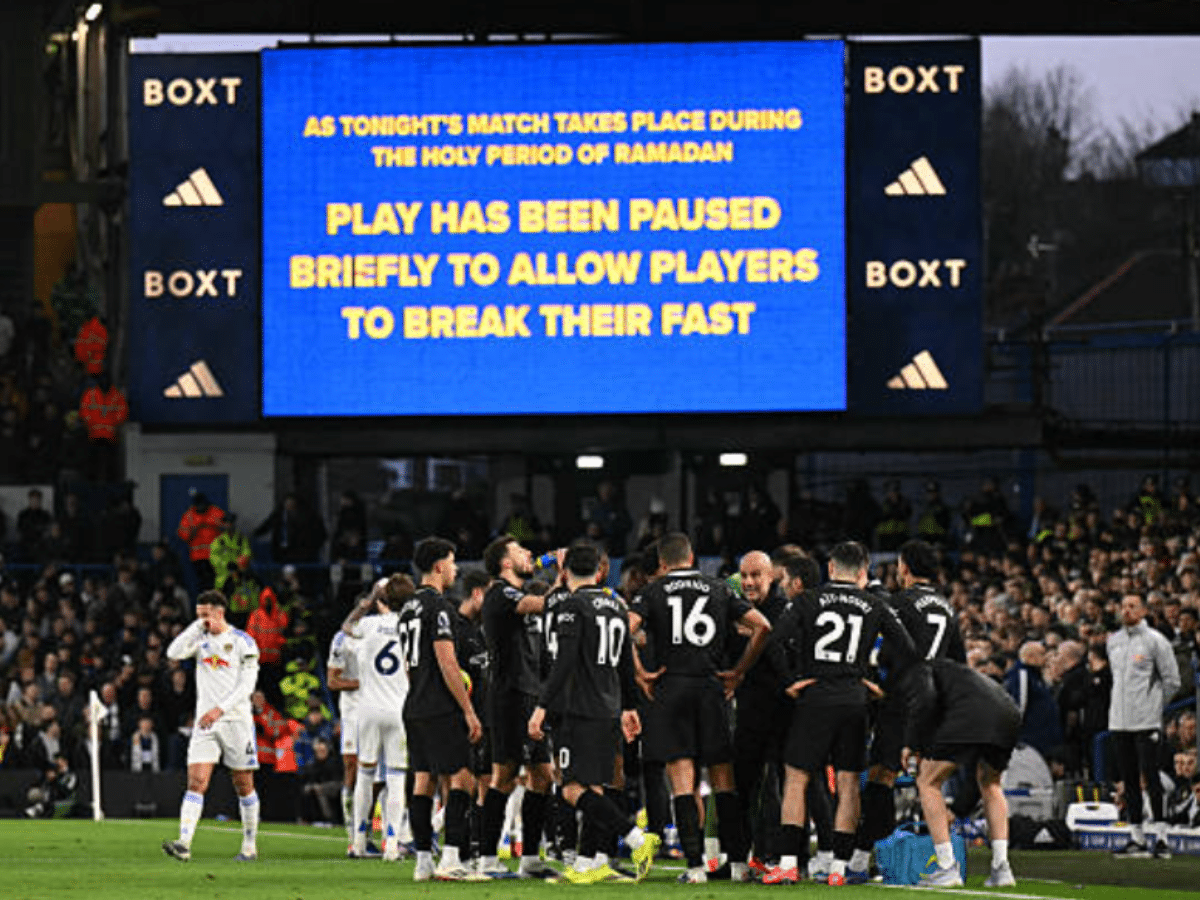
A Premier League match between Leeds United and Manchester City at Elland Road sparked widespread controversy both in England and abroad. The game was briefly paused to allow fasting players to break their fast at sunset during Ramadan.
Ramadan pause
Around the 12th minute of the first half, the referee temporarily halted play, taking advantage of a natural break in the flow of the game. This allowed several Muslim players to go to the touchline to drink water and take a quick supplement to break their fast, in accordance with the league’s protocol during Ramadan.
According to ITV News, an explanatory message was displayed on the stadium’s giant screen informing fans that the pause was brief and specifically for the players to break their fast, a practice that has become common in recent years to ensure the players’ health and safety.
Despite the explanation, some Leeds fans in the stands booed, sparking a wave of controversy across media outlets and social media platforms. Sky Sports described the scene as “disappointing,” especially since the stoppage lasted only a minute.
GB News also reported that some fans justified their reaction by saying they hadn’t understood the reason for the pause. A likely story.
Officials speak out
Manchester City manager Pep Guardiola expressed his displeasure with the fans’ reaction, pointing out that respecting religious beliefs is part of the values of the modern game. He said:
This procedure has been in place for years, and the players just need a short moment. We have to respect everyone.
And, Kick It Out, an organisation dedicated to combating discrimination in English football, issued a statement expressing its disappointment at the booing:
It’s an important and visible part of making the game welcoming for Muslim players and communities. But as tonight’s reaction shows, football still has a long way to go in terms of education and acceptance.
Racism is rife in football
It’s worth noting that the English Premier League has allowed referees to temporarily halt play during Ramadan evening matches for several seasons now, a measure implemented in previous matches without significant controversy.
However, the Elland Road incident has reignited the debate surrounding the relationship between football and its fans, particularly in light of increasing diversity within the game, and the extent to which some stadiums accept religious and cultural pluralism in European stadiums.
While the match concluded as usual, the brief stoppage remained the most significant event, reaffirming that football is no longer just 90 minutes of competition, but also a space that reflects societal transformations and challenges.
Featured image via the Canary
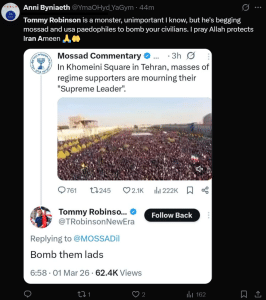
Fascist Tommy Robinson appears to be unable to make his mind up. Does he want to free the Iranian people – or kill them?
In fact, he’s actually showing a certain kind of consistency. The kind shown by the deranged Zionists who will say absolutely anything that suits their purposes – but can’t help showing what they’re really about. As the Canary’s Instagram observed:
He has deleted this, but he did post it.@metpoliceuk – this is an illegal action and you need to respond.
This is not acceptable. pic.twitter.com/MePdLRvKwv
— John West 🕯💙🇺🇦 🗿🦋 (@JohnWest_JAWS) March 1, 2026
Like any Zionist, Tommy Robinson only cares about Iranian ‘freedom’ if Iranians choose what Israel wants. If they choose resistance and actual freedom, he wants them dead and gone and is intensely relaxed about mass murder
Tommy Robinson has a warped sense of freedom
By supporting the UK’s entry into the illegal US-Israel war on Iran, Robinson is surely no less relaxed about the death of British military personnel it will cause:
Tommy Robinson supports Keir Starmer and his new war with Iran where British soldiers will die on behalf of the US and Israel. He is Israel first, Britain last.
— Lewis (@L_A_D_J) March 2, 2026
His claim of ‘indiscriminate’ is exactly as inverted as any other Zionist lie. While Iran’s missiles have hit military bases and military-linked targets, Israel is specifically targeting civilians. Just like it has in Gaza, where it has slaughtered thousands of health workers, first responders and journalists.
Like any non-Jewish Israel lackey, he’s perfectly happy to crawl up the back passage of even the worst Israel-supporters:
Even the dogs are celebrating the coming to the end of the Islamic regime in Iran @RepFine 🇮🇷
pic.twitter.com/BizjP6jpNi— Tommy Robinson 🇬🇧 (@TRobinsonNewEra) March 1, 2026
And of course, ‘patriot’ little Tommy puts his nose firmly to a certain foreign, orange sphincter to attack ‘them Muslamics’. Y’know, because ‘freedom’:
Trump releases a new statement: …”The entire military command is gone..and many of them want to surrender into saving their lives….They want immunity…
The end is in sight.
Iran will be free 🇮🇷
pic.twitter.com/BsGVo54QKU— Tommy Robinson 🇬🇧 (@TRobinsonNewEra) March 1, 2026
Robinson’s stance, ironically, puts him in lockstep with “Zionist without qualification” Keir Starmer, as several pointed out while mocking the certainty that Robinson will be nowhere near the fighting when their mutual commitment to Israel starts getting British soldiers killed:
Hopefully Tommy Robinson, Kier Starmer, Rupert Lowe, Paul Golding, Nigel Farage and co. With their families and friends who support them will be at the front lines ready to give their life if shit hits the fan and Iran starts attacking the UK?
— S (@Sy2ru7) March 1, 2026
And of course, the challenged one did his ‘hasbara’ duty, sharing completely unconnected footage and claiming it showed Iranians celebrating the US and Israel’s illegal assassination of their leader. That was quickly exposed and got the ‘short shrift’ it deserved:
Zionist shill Tommy robinson always lie pic.twitter.com/OduGrcmhr7
— Ibrahim (@Ibraxx004) February 28, 2026
Facts pic.twitter.com/J8KCyg7psI
— Mad (@Madstar42) February 28, 2026
Just like his US counterparts, Israel-funded Robinson’s ‘patriotism’ is a micro-thin veneer to con gullible fellow racists. Under it lies the same craven, murderous Israel-first servility as Trump and all like him.
Featured image via the Canary

Kelly Osbourne has responded to the “cruel” comments about her appearance in the wake of this year’s Brit Awards.
On Saturday night, Kelly and her mum Sharon Osbourne delivered a speech at the Brits in Manchester, where her late dad Ozzy Osbourne received a posthumous Lifetime Achievement prize.
However, after the event, the TV personality was forced to issue a statement in response to a wave of unkind comments about her appearance.
“There is a special kind of cruelty in harming someone who is clearly going through something,” she began, writing on her Instagram story.
“Kicking me while I’m down, doubting my pain, spreading my struggles as gossip, and turning your back when I need support and love the most.
“None of it proves strength; it only reveals a profound absence of compassion and character.”
Kelly – who has been vocal about her issues with body image throughout her time in the public eye, beginning with her time on The Osbournes as a teenager – pointed out that she is “currently going through the hardest time in my life”.
“I should not even have to defend myself,” she added. “But I won’t sit here and allow myself to be dehumanised in such a way.”
Days before the Brits, Kelly made headlines when she reposted a number of disparaging comments about her appearance, alongside the message: “Literally can’t believe how disgusting some human beings truly are! No one deserves this sort of abuse.”
Ozzy died in July 2025 at the age of 76, having spoken publicly about his health struggles – which included a Parkinson’s disease diagnosis – for several years prior.
Shortly before his death, Ozzy had appeared at what was billed as his last ever show, performing both solo and with Black Sabbath, as the headliner of the Back To The Beginning concert in his hometown of Birmingham.
Following Ozzy’s family members’ tribute speech, the 2026 Brits ceremony ended with a star-studded performance honouring his musical legacy, curated by Sharon and featuring Robbie Williams on lead vocals.

“Spanish squats” can help to relieve some of the knee pain associated with the movement, and “retro walking” can help to strengthen your legs with less joint stress, too.
And you might already know that people with a variety of joint issues can benefit from “water walking,” or walking in either waist or chest-height water.
But for even better full-body benefits, the Arthritis Foundation writes, “reverse” water walking “engages more muscles, especially around the spine, quads and shins, while also boosting heart rate”.
What is “reverse water walking”?
It means walking backwards in water.
Speaking to HuffPost UK previously, Dr Suzanne Wylie, GP and medical adviser for IQdoctor, said that walking backwards on land is “a useful exercise for balance, mobility and certain joint problems”.
This seems to be true of “reverse water walking”, as well.
What are the benefits of “reverse water walking”?
One study found that, when compared to walking forwards on an underwater treadmill, participants who “water walked” backwards seemed to engage more muscles, had a higher heart rate, and generally exerted more energy.
And another showed that “walking backwards [in water] can be an effective therapeutic method for patients with chronic back pain” ― a result not seen in those who walked forward instead.
Like “retro walking” on land, it may help with balance and stability, too.
How do I try “reverse water walking”?
The Arthritis Foundation explained that you don’t need an underwater treadmill (which I had no idea existed ’til today) to reap the benefits.
“Start on your toes, then push down on the balls of your feet and roll to the heels, moving opposite arm and leg while pushing water behind you with your hands,” they said.
Because this is a more advanced move, they recommend people new to water walking to try a regular forward walk instead.
In general, “The more submerged your body is, the lighter the load on your joints,” they added.
For those with shoulder, arm, or upper back pain, the deep end may be a better bet.
Stick to pool temperatures between about 28°C-32°C for a truly joint-soothing experience, the Arthritis Foundation ended: “in general, the slower the exercise movements, the warmer the water needs to be for most people”.
Politics
Luke Graham: Gorton’s lesson is not to take the easy negative option but the harder positive opportunity

Luke Graham was the Conservative Member of Parliament for Ochil and Perthshire South from 2017 to 2019, the candidate in Perth and Kinross-shire in 2024, and a former head of the Downing Street Union Unit.
While Iranian airstrikes and the latest developments in the Epstein files continue to dominate headlines, the result of the Gorton & Denton by-election deserves a second glance, looking beyond the Green’s headline victory.
This by election was not merely a local contest. It offered a snapshot of the unsettled and volatile condition of British politics in 2026 — and a warning about the direction of our modern election campaigns.
The Green Party’s victory was undeniably striking. Labour, despite clear voter frustration, still mobilised close to 10,000 votes. Reform UK, which had publicly signalled strong confidence of victory, secured just over 10,000 but fell short. The Conservatives and Lib Dems were never really contenders for this seat. Taken together, the numbers suggest three important conclusions.
First, Reform’s support, though real, may well have reached a ceiling. National polling continues to show Reform ahead, yet the party has now underperformed in successive by-elections and has fallen more than eight points from its November high-water mark. By-elections are imperfect barometers, but they do test GOTV ability and voter motivation. Reform’s difficulty in converting polling strength into parliamentary wins raises a serious question about whether it really can covert high polling percentages into a large swathe of seats in the House of Commons.
Second, Labour’s position is fragile but not collapsed. Even amid significant dissatisfaction with the government, Labour retains an organisational machine capable of turning out votes. That matters in marginal contests.
Third — and most troubling — the manner of this campaign may prove more consequential than the result itself.
The Gorton & Denton contest was bruising.
Personal accusations surfaced early. Nigel Farage publicly alleged links between the Conservative candidate and an LGBT charity in a manner that was, at best, misleading. The Reform candidate faced allegations of misconduct and locally Labour and the Greens went heavy on the doorsteps.
But it was the Green Party’s campaign tactics that marked a potentially more significant shift. A targeted Urdu-language video featuring images of Kier Starmer alongside Indian Prime Minister Narendra Modi was plainly designed to target a local Muslim community. The advert urged voters to “punish” Labour for its stance on Gaza, implicitly suggesting sectarian alignment. This was not accidental phrasing. It was calculated messaging.
There is nothing new with political parties tailoring communications to different communities. However, what makes this case distinct is the explicit framing of electoral choice along ethnic and religious lines, particularly in the context of an international conflict. This is not merely sharper campaigning; it is the normalisation of targeting voters along ethnic and religious grounds.
This kind of approach by the Greens would have been unthinkable under Caroline Lucas, who’s leadership of the Green Party focused on the climate, tackling inequality and pro-EU arguments. The tactics deployed in Gorton & Denton represent a departure from that tradition. They move the Green party into terrain historically occupied by more overtly nationalist movements — including elements of SNP and Plaid Cymru strategy — where identity becomes the organising principle of electoral competition.
This shift should concern us as Conservatives not simply because it benefits a rival party, but because of its broader implications for our democracy. Just as the 2014 Scottish and 2016 EU referenda became totemic political moments, reshaping party alignments and entrenching identities for years, religious campaigns risk creating similar hardened blocs within constituencies. Short-term gains can produce long-term fractures and build political tribalism.
Although the Greens are guilty in this instance, it’s important to remember that it was only a few months ago that Robert Jenrick turned up on a street in Birmingham, far from his constituency, to use local deprivation as a backdrop and evidence for divisive rhetoric. Ambitious politicians of all political stripes are not immune from the temptation of this kind of “emotion first” politics.
But this is what happens when a political system has been as battered as ours; selfish politicians have used national strife and instability as political opportunity, acting in recklessly unprepared way with poor results. When voters lose faith in large national projects — large scale infrastructure, productivity growth, defence renewal, or economic transformation — campaigns increasingly pivot toward emotional mobilisation. Outrage substitutes for vision.
This is the deeper lesson of Gorton & Denton. The volatility of Reform’s vote share, Labour’s fragility, and the Greens’ resort to identity-based messaging all point to a political environment hungry for conviction but starved of credible national direction.
For Conservatives, this presents both a danger and an opportunity.
The danger is obvious: fragmentation of the centre-right vote, further erosion of civic cohesion, and a political culture driven by grievance rather than aspiration. Reform’s rhetoric thrives where voters feel unheard. Identity politics flourish where national purpose is absent.
The opportunity lies in rebuilding something more durable.
Having been humbled in the 2024 General Election, our party has the rare political space to reconstruct its offer. The task is to articulate a compelling national project — one that addresses economic dynamism, defence resilience and social mobility without resorting to sectarian shortcuts.
As developments in the United States and elsewhere demonstrate, it is possible to win power and simultaneously deepen division. Britain, at a moment of international instability and economic uncertainty, cannot afford to further fracture our people or state.
Gorton & Denton was a by-election. Its parliamentary arithmetic is minor. Its cultural implications are not. If politics continues to descend into ever narrower identity politics and escalating grievance, the fragmentation of our party system will accelerate.
Any politician knows the importance of winning an election – if you don’t win, you’re not in. But in the rush for victory, all parties should consider the profound and lasting impact of their campaigns on our communities – we should not abandon the key tenants of our culture and democracy to win individual battles, but ultimately lose the war for the soul and cohesion of our country.
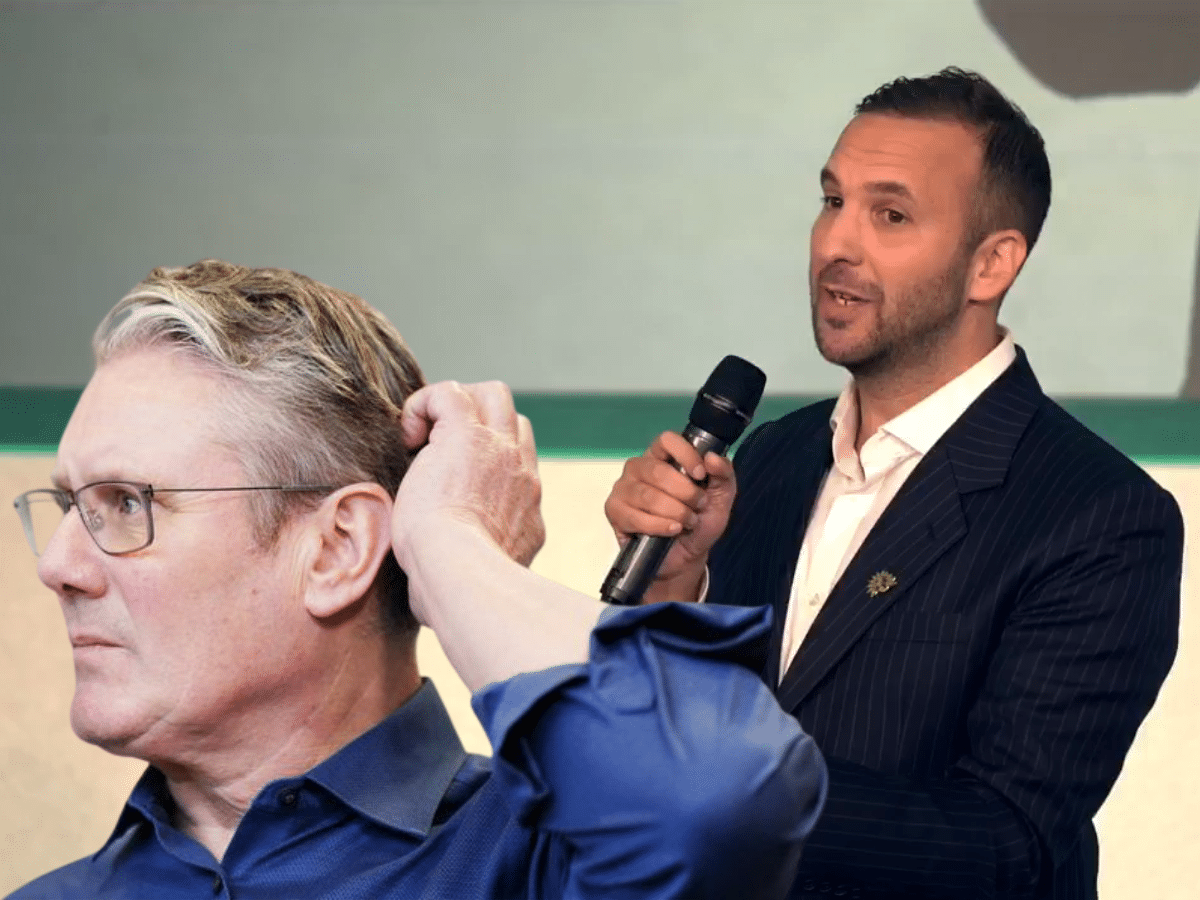
Green party leader Zack Polanski has said what millions of Britons will be thinking: Keir Starmer’s spinelessness is putting Britain in danger.
Polanski has called out Starmer’s “utter inability to stand up to Donald Trump” after Starmer gave permission for Trump to use UK air bases to attack Iran:
The events of the past 48 hours have laid bare Keir Starmer’s utter inability to stand up to Donald Trump – and this weakness could have serious consequences for the safety of British people.
— Zack Polanski (@ZackPolanski) March 2, 2026
Polanski says what we’re all thinking
So craven – and lacking more parts than just his spine – is Starmer that he even tried to claim he still hasn’t involved the UK in Trump’s completely illegal and unprovoked war. But Polanski wasn’t finished. He spoke up for the millions who don’t want another war, let alone for the UK to be involved in it. And he demanded Starmer respect the UK’s democracy, which the warmonger has ignored completely in his unilateral declaration:
Starmer must withdraw permission for the US to use UK bases to launch airstrikes on Iran and parliament must be given a vote on any UK involvement.
— Zack Polanski (@ZackPolanski) March 2, 2026
And, in a separate thread he pointed out how just a few years ago, the weasel Starmer was promising “No more illegal wars”:
The majority of people in this country do not want us to be involved in this war.
Keir Starmer of a few years ago wouldn’t have supported this war.
The only reason he does now is he will do anything Donald Trump wants – and it makes us all less safe. https://t.co/Frh9jOJf0t
— Zack Polanski (@ZackPolanski) March 2, 2026
It seems British military veterans, perhaps the best-placed among us to understand what Starmer is allowing Trump to drag us into, agree – like any right-minded person:
As a veteran 💯👇👇👇 https://t.co/lx2ljdl9Iw
— Steve Masters (@AnothervoiceWB) March 2, 2026
Starmer’s spineless, ball-less Trump-licking saw immediate consequences, triggering an immediate – and perfectly legal under international law – Iranian attack on the RAF Akrotiri base in Cyprus that the US would use against Iran.
Featured image via the Canary

Coinbase (COIN) Drops 20% in 2026 Amid Weak Earnings and Declining Crypto Trading

Norway’s relationship with the EU

Dawson’s Creek Cast Reacts to James Van Der Beek’s Death at Age 48


-

 Sports7 days ago
Women’s college basketball rankings: Iowa reenters top 10, Auriemma makes history
-

 Politics7 days ago
Nick Reiner Enters Plea In Deaths Of Parents Rob And Michele
-

 Fashion3 days ago
Weekend Open Thread: Iris Top
-

 Business6 days ago
True Citrus debuts functional drink mix collection
-

 Politics4 days ago
ITV enters Gaza with IDF amid ongoing genocide
-

 Tech1 day ago
Unihertz’s Titan 2 Elite Arrives Just as Physical Keyboards Refuse to Fade Away
-
Sports2 days ago
The Vikings Need a Duck
-

 Crypto World6 days ago
XRP price enters “dead zone” as Binance leverage hits lows
-
 NewsBeat2 days ago
Dubai flights cancelled as Brit told airspace closed ’10 minutes after boarding’
-

 Tech6 days ago
Unsurprisingly, Apple's board gets what it wants in 2026 shareholder meeting
-

 NewsBeat5 days ago
Cuba says its forces have killed four on US-registered speedboat | World News
-
 NewsBeat5 days ago
Manchester Central Mosque issues statement as it imposes new measures ‘with immediate effect’ after armed men enter
-
 NewsBeat2 days ago
The empty pub on busy Cambridge road that has been boarded up for years
-

 NewsBeat23 hours ago
‘Significant’ damage to boarded-up Horden house after fire
-

 NewsBeat2 days ago
Abusive parents will now be treated like sex offenders and placed on a ‘child cruelty register’ | News UK
-
 NewsBeat6 days ago
Police latest as search for missing woman enters day nine
-

 Entertainment5 hours ago
Baby Gear Guide: Strollers, Car Seats
-

 Business4 days ago
Discord Pushes Implementation of Global Age Checks to Second Half of 2026
-

 Business4 days ago
Only 4% of women globally reside in countries that offer almost complete legal equality
-
 Tech3 days ago
NASA Reveals Identity of Astronaut Who Suffered Medical Incident Aboard ISS