Connect with us

Business

Versant earnings report will test Wall Street appetite for cable TV

Published

on

Versant earnings report will test Wall Street appetite for cable TV

Versant signage on the floor at the New York Stock Exchange on July 21, 2025.

Michael Nagle | Bloomberg | Getty Images

Versant Media Group will release its first earnings report as a public company on Tuesday, giving Wall Street its first glimpse inside a company made up primarily of pay-TV networks.

Advertisement

The Comcast spinoff — comprised of CNBC, MS Now, USA Network, Golf Channel, Syfy, E! and Oxygen, as well as digital properties including Fandango, Rotten Tomatoes, GolfNow and Sports Engine — debuted on the Nasdaq in January after one of the media industry’s most significant transactions in recent years.

The company’s first-ever quarterly results will provide more detail into a portfolio of assets that were long embedded in Comcast’s NBCUniversal TV results. They will also test Wall Street’s appetite for cable TV at a time when the market has faced deep pressures.

Ahead of going public, Versant released financials that showed declining revenue in recent years. Versant’s assets generated $7.1 billion in revenue in 2024, down from $7.4 billion in 2023 and $7.8 billion in 2022, according to a Securities and Exchange Commission filing.

Versant’s stock has dropped about 25% since its January debut, weighed down by expecting selling related to the spinoff. The company’s market capitalization stands at roughly $4.8 billion.

Advertisement

Pay-TV pressure

It’s a rarity these days to see pure-play media stocks going public — especially those made up solely of TV networks. Last year Newsmax, the conservative cable news network, began trading on the New York Stock Exchange. Its shares initially soared before falling precipitously since its debut.

Versant makes more than 80% of its overall revenue from pay-TV distribution. While that business is still profitable, the longtime cash cow for the media industry has been declining as customers flee the bundle for streaming alternatives.

“At Versant, 62% of our audience comes from live programming across sports and news,” CEO Mark Lazarus said during the company’s investor day in December.

“We feel very confident in our position. And the last year, the deals we’ve done, I think bears that out,” he added.

Advertisement

Versant’s sports- and news-heavy content slate has been a key part of its pitch to investors — as has its light debt load and its emphasis on digital properties as future drivers of revenue and earnings growth.

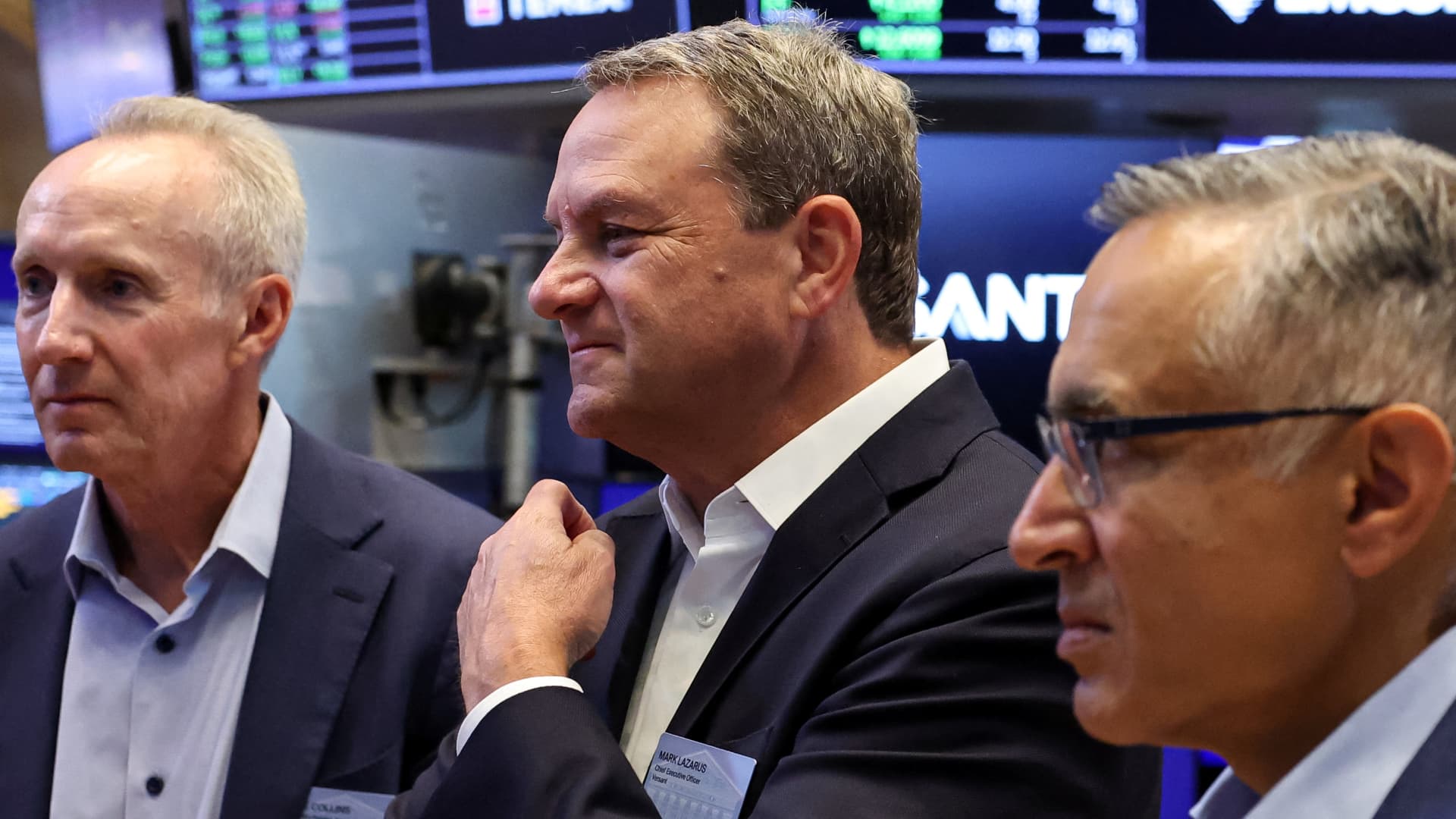
Mark Lazarus, CEO of Versant, visits the floor at the New York Stock Exchange (NYSE) in New York City, U.S., July 21, 2025.

Brendan Mcdermid | Reuters

“Sports and news focus is positive, as Versant has far fewer of the lower-value general entertainment networks that some peers do,” Raymond James analysts wrote in a research note earlier this year. “While Versant lacks ‘Tier One’ sports like NFL, NBA, college football, etc., we think its sports lineup (significant golf rights, WWE, NASCAR, etc.) combined with MS NOW, CNBC, and other networks, supports VSNT’s value to distributors.”

Advertisement

Prior to its spinout, NBCUniversal negotiated carriage agreements with most major distributors, like Charter Communications and Google’s YouTube TV, that included Versant’s networks. Those agreements hold for at least the next two years even after the spinout — an important cushion as these negotiations have become increasingly fraught and can lead to content blackouts.

“More than half of our pay TV subscribers are governed by agreements that go through 2028 and beyond … many of our sports agreements … go well past 2030,” said Anand Kini, Versant COO and CFO, during the investor day. “We view this as really important because the long-term nature of these partnerships highlights the stability of our business and also provides great visibility in the years to come.”

Versant networks will face the first test on their own at the negotiation table this year when two distribution agreements come up for renewal, according to people familiar with the matter, who spoke on the condition of anonymity because they weren’t authorized to speak publicly. A Versant spokesperson declined to comment on the upcoming discussions.

Typically, news and sports networks hold more weight during such negotiations, but blackouts are becoming more common, even for those with top tier rights such as the NFL.

Advertisement

‘Business model transition’

Yet the traditional TV bundle has shown a glimmer of stability recently, despite the focus on streaming.

Charter, one of the largest distributors of the bundle in the U.S., reported an addition of cable customers in the quarter ended Dec. 31 — its first quarterly gain since 2020.

Comcast and other distributors, however, still reported customer losses — albeit at a slower rate than recent declines. That’s a sign of possible stabilization, according to Craig Moffett, analyst at MoffettNathanson.

In light of its weight toward traditional TV networks, Versant’s leadership has told Wall Street it’s in the midst of a pivot.

Advertisement

“We view 2026 as the first year of our business model transition,” Kini said in December.

Versant executives told Wall Street of their intention to invest in its direct-to-consumer products and ad-supported TV expansion, among other growth initiatives.

Long term, executives are targeting a future in which 50% of Versant’s revenue is derived from pay TV and the other 50% comes from digital, platform, subscription, ad-supported and transactional businesses.

M&A is another part of the equation, although bulking up on linear TV networks is not in the plan, executives have said. Already, the company has announced deals such as the acquisition of Free TV Networks, a provider of free over-the-air digital broadcast networks, and Indy Cinema Group, a cloud-based cinema operating system, which was folded into Fandango.

Advertisement

The question, however, is whether Wall Street has the patience to see the business evolve past its focus on the bundle.

Comcast’s spinoff of Versant’s channels was an effort to separate itself from a deteriorating business. Warner Bros. Discovery started down a similar route — announcing it would split its TV networks from its streaming assets — before striking an agreement with Paramount Skydance to sell the entirety of the company.

Analysts that have initiated coverage of Versant list the various highlights of the business, from strong free cash flow to a portfolio heavy on sports and news, while still voicing some hesitation.

“We are Neutral-rated on VSNT given the secular challenges in the linear networks business, while [remaining] encouraged by the company’s efforts in the platforms business,” Goldman Sachs analysts said in research note in January.

Advertisement
Continue Reading
Click to comment

Leave a Reply

Your email address will not be published. Required fields are marked *

Business

Tax reform calculator launched in Guernsey

Published

on

Tax reform calculator launched in Guernsey

P&R creates a tax reform calculator for households to see how proposals could affect them.

Continue Reading

Business

Nasdaq Composite Tumbles as Geopolitical Tensions in Middle East Spark Risk-Off Selloff

Published

on

The tech sector led record gains in the S&P 500 index. Pictured: a man with umbrella walks past the New York Stock Exchange.

The tech-heavy Nasdaq Composite plunged on March 2, 2026, as escalating conflict in the Middle East following U.S. and Israeli military strikes on Iran triggered a broad retreat from risk assets, sending oil prices surging and amplifying fears of persistent inflation.

The Nasdaq Composite (^IXIC) fell sharply in early trading, dropping around 0.7% to 0.8% intraday, with levels hovering near 22,500 after closing at 22,668.21 on February 27 — down 210 points or 0.92% for that session. The index has now shed ground in recent sessions, reflecting pressure on growth-oriented tech stocks sensitive to higher interest rate expectations and energy cost spikes.

The Nasdaq logo is displayed at the Nasdaq Market site in New York

Broader markets joined the decline amid the geopolitical shockwaves. The Dow Jones Industrial Average (^DJI) slumped over 1%, shedding more than 500 points in prior close and continuing losses into Monday, while the S&P 500 (^GSPC) dropped roughly 0.8% to 1% near the 6,800 level. Trading volume remained elevated as investors shifted toward safe havens like gold — which climbed past $5,400 per ounce — and the U.S. dollar strengthened.

The catalyst was a series of military actions over the weekend. U.S. and Israeli forces conducted strikes on Iranian targets, prompting retaliatory attacks from Iran that heightened concerns about prolonged regional instability. Brent crude oil jumped above $82 per barrel, while West Texas Intermediate surged toward $73, marking sharp intraday gains of around 13% at one point. Higher energy costs raised the specter of renewed inflationary pressures, potentially delaying anticipated Federal Reserve rate cuts and pressuring equities further.

Tech giants, which dominate the Nasdaq’s weighting, bore much of the brunt. Shares of Nvidia (NVDA), Tesla (TSLA), Amazon (AMZN) and Apple (AAPL) traded lower, with some names down more than 1% to 3% in early action. The sector’s vulnerability stems from its reliance on low borrowing costs for growth; rising yields and inflation fears erode valuations for high-multiple stocks.

Advertisement

“This is a classic risk-off move,” said one market strategist in a client note. “Geopolitical escalation combined with oil’s spike is forcing a reassessment of Fed policy timing. If crude stays elevated, it could complicate the soft-landing narrative that has supported stocks this year.”

The Nasdaq has struggled in early 2026 after a strong prior period. February marked its worst monthly performance since March of the previous year, with the index down roughly 2.5% year-to-date in some reports, contrasting with the more resilient Dow Jones, up about 1.9% amid rotation into less tech-dependent names. The S&P 500 has shown modest gains of around 0.5% for the year so far.

Despite the pullback, some analysts remain cautiously optimistic on longer-term prospects. Individual investor sentiment stays bullish, with nearly 70% expecting stock market gains in 2026 according to recent surveys, even as half cite recession risks. The market’s resilience has been tested multiple times this year, including repeated challenges around the S&P 500’s 6,800 level.

Energy and defense stocks provided a counterpoint, rallying on bets of sustained higher oil prices and increased military spending. Sectors like traditional energy producers saw sharp gains, while airlines and consumer discretionary names faced headwinds from rising fuel costs.

Advertisement

Looking ahead, investors are monitoring upcoming economic data, including any inflation readings that could reinforce or ease Fed policy concerns. The VIX, Wall Street’s fear gauge, spiked notably in recent sessions, signaling heightened volatility.

The Nasdaq’s performance reflects broader themes in 2026: a tug-of-war between AI-driven growth optimism and macroeconomic uncertainties. While the index remains well above multi-year lows, its recent retreat underscores sensitivity to external shocks.

Market participants will watch for signs of de-escalation in the Middle East, which could stabilize energy markets and support a rebound in risk assets. Until then, caution prevails as traders navigate the intersection of geopolitics, commodities and monetary policy.

Advertisement
Continue Reading

Business

Mortgage rates jump sharply higher after Iran strikes, reversing last week’s decline

Published

on

Mortgage rates jump sharply higher after Iran strikes, reversing last week's decline

An aerial view of homes in San Francisco, Aug. 27, 2025.

Justin Sullivan | Getty Images

After falling below 6%, matching their lowest level in several years, mortgage rates reversed course Monday, hitting their highest point in two weeks.

Advertisement

The average rate on the popular 30-year fixed loan rose 13 basis points to 6.12%, according to Mortgage News Daily. It had fallen to a recent low of 5.99% on Feb. 23 and pretty much sat there all week.

The drop was welcome news as the all-important spring housing market gets underway. Potential buyers have been sidelined by high home prices and concerns over the broader economy. Mortgage rates crossing into the 5% range broke an emotional barrier for some, suggesting buyers might jump at the opportunity.

Mortgage rates loosely follow the yield on the U.S. 10-year Treasury, which rose back above 4% Monday. The growing conflict with Iran caused a spike in oil prices, raising inflation worries and pushing yields higher.

Get Property Play directly to your inbox

CNBC’s Property Play with Diana Olick covers new and evolving opportunities for the real estate investor, delivered weekly to your inbox.

Advertisement

Subscribe here to get access today.

Oil prices, however, may not be what’s driving mortgage rates up, according to Matthew Graham, chief operating officer at Mortgage News Daily.

“In fact, versus the 3pm CME close on Friday, bonds were flat until 7am. By that time, oil had already experienced almost all its volatility for the day,” Graham said in emailed comments to CNBC. “The crux of the bond sell-off played out in a vacuum–STRONGLY suggesting Friday’s yields were dragged down by month-end buying and this morning’s selling is ‘new month’ positioning.”

This underscores the possibility that the bond market will view Monday’s move as a technical bounce at the 4% level in 10-year Treasuries, Graham said. This means it could be more challenging for rates to move lower without meaningful motivation from economic data, which there is plenty of this week, including the monthly employment report set for Friday.

Advertisement
Continue Reading

Business

Viavi Solutions EVP McNab sells $116k in stock

Published

on


Viavi Solutions EVP McNab sells $116k in stock

Continue Reading

Business

Middle East military unrest cancels flights, strands travelers globally

Published

on

Middle East military unrest cancels flights, strands travelers globally

Unrest in the Middle East is crippling global air travel and disrupting flight schedules for many carriers, leaving passengers stranded at airports abroad.

Airlines across the world canceled flights after Israel and the U.S. launched a joint attack on Iran as part of Operation Epic Fury.

Advertisement

Emirates temporarily suspended operations to and from Dubai due to the unrest in the region. It said it will resume operations of a “limited number” later on Monday and will prioritize customers with earlier bookings.

HEGSETH URGES US TROOPS TO ‘STAY FOCUSED’ AS OPERATION EPIC FURY DEVASTATES IRAN

Etihad said in a statement that all scheduled commercial flights to and from Abu Dhabi remain suspended until 2 p.m. UAE time on March 4. The carrier said that some “repositioning, cargo and repatriation flights may operate with UAE authorities and subject to strict operational and safety approvals.”

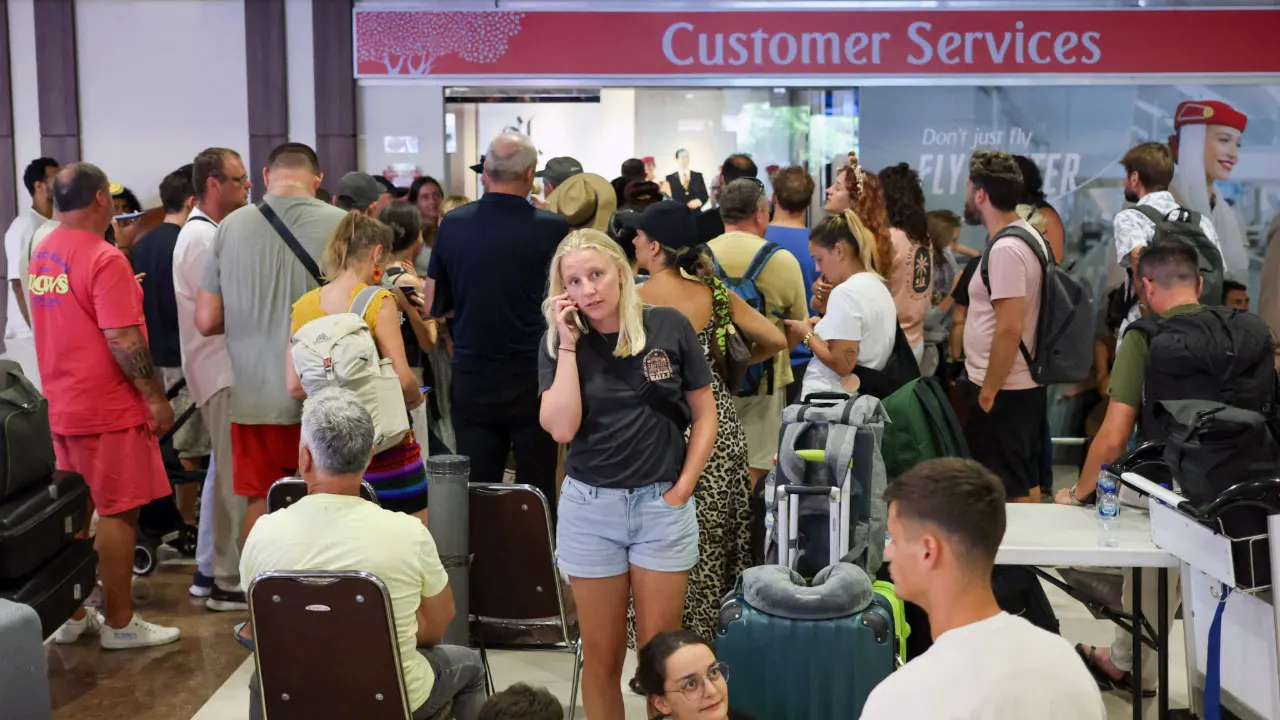
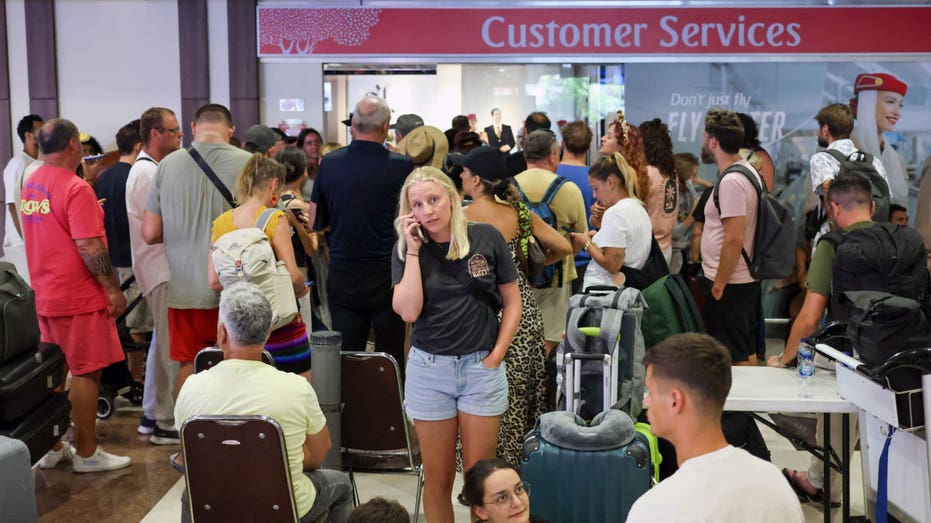
Passengers stranded at an airport.

Emirates and Etihad Airways temporarily suspended operations to and from Dubai. (Johannes Christo/Reuters)

Both carriers urged passengers not to travel to the airport unless notified by the airline.

Advertisement

Mainline U.S. carriers with operations in the Middle East have canceled flights and issued travel waivers to customers.

American Airlines

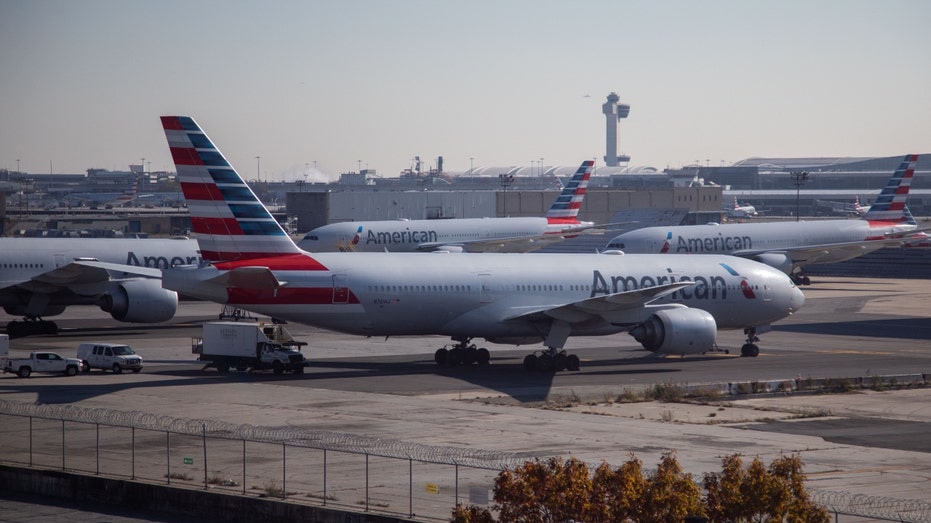
American Airlines airplanes parked at New York's John F. Kennedy International Airport

The U.S. and Israel launched a joint attack on Iran as part of “Operation Epic Fury.” (Michael Nagle/Bloomberg via Getty Images)

American Airlines said passengers traveling to, through or from Abu Dhabi, UAE; Amman, Jordan; Bahrain, Bahrain; Doha, Qatar; Dubai, UAE; and Larnaca, Cyprus, are eligible to have change fees waived if they:

  • Are traveling on an American Airlines flight
  • Are booked in any fare class, including Basic Economy
  • Bought a ticket by Feb. 27, 2026
  • Are scheduled to travel Feb. 28, 2026 –March 15, 2026
  • Can travel Feb. 28, 2026 – March 29, 2026
  • Don’t change the origin or destination city
  • Rebook in the same cabin or pay the difference
  • Cancel the trip and request a refund

Delta Air Lines

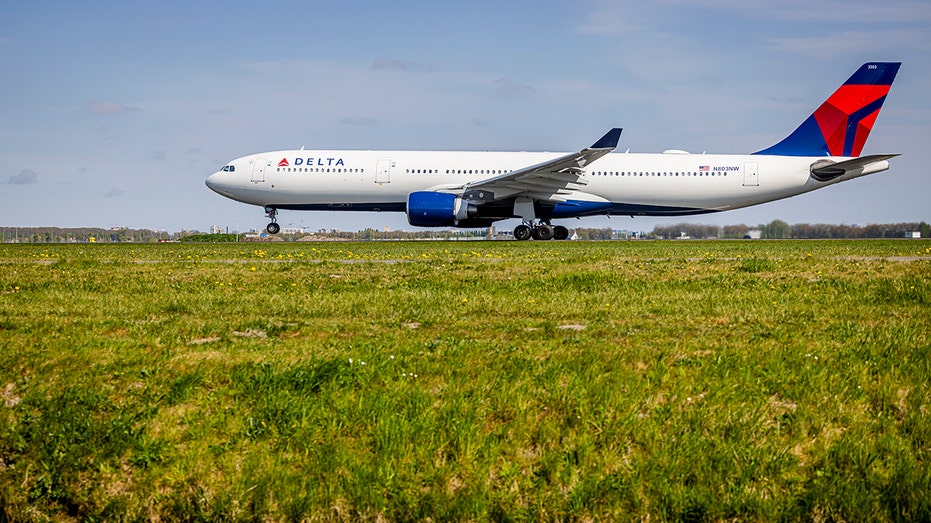
Delta Airlines plane

Delta canceled flights to and from Tel Aviv due to unrest in the Middle East. (Patrick van Katwijk/Getty Images)

Delta Air Lines canceled flights from New York’s John F. Kennedy International Airport to Tel Aviv, Israel, through March 8, and from Tel Aviv to JFK through March 9. The carrier said customers affected by flight cancellations will receive notifications. Customers scheduled to travel from Feb. 28 to March 31 are able to reschedule travel or cancel their reservation.

OIL PRICES SURGE AFTER STRIKES KILL IRAN’S SUPREME LEADER, TANKERS HIT NEAR STRAIT OF HORMUZ

Advertisement

Customers who opt to cancel their reservation can receive a refund for the unflown portion of their ticket through Delta’s website, or the unused value of the ticket will be issued as an e-credit that can go toward a new ticket.

The fare difference will be waived for passengers who rebook travel on or before April 15, 2026, in the same cabin as originally booked. A fare difference may apply if the original booking class is not maintained in the rebooked itinerary. If travel occurs after April 15, 2026, the airline said the change fee will be waived but a difference in fare may apply.

United Airlines

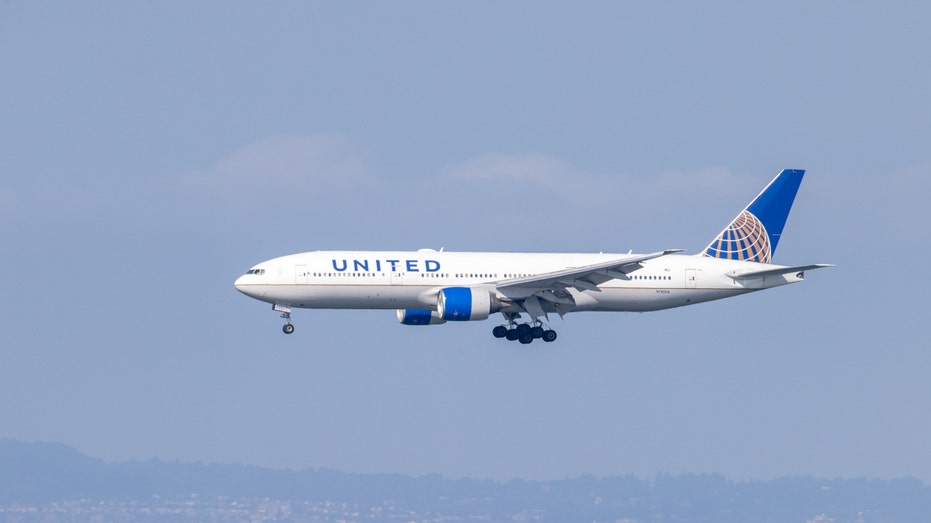
United Airlines Plane

United canceled service to Dubai and Tel Aviv through March 4 and March 6, respectively. (Tayfun Coskun/Anadolu Agency via Getty Images)

United Airlines canceled service from the U.S. to Dubai through March 4 and from the U.S. to Tel Aviv through March 6. The carrier issued two waiver notices related to unrest in the Middle East.

Customers who purchased tickets for flights to or from Dubai or Tel Aviv on or before Feb. 27, 2026 with original travel dates through March 7, 2026, are able to reschedule the trip and will not be charged wave fees or fare differences.

Advertisement

However, the new flight must be a United flight that departs between Feb. 28 and March 15. The airlines said tickets must be in the same cabin and between the same cities as originally booked.

MUSK POINTS TO HIGHEST ‘EVER’ USAGE OF X AMID US-ISRAEL STRIKES ON IRAN

Change fees will be waived for customers who booked a new trip after Feb. 27, 2027, or to a different destination, though they may need to pay a fare difference. Travelers can receive a full refund if they cancel or don’t take the trip.  

The second notice covers Dubai and Tel Aviv as well as airports in Abu Dhabi, Beiruit, Lebanon, and Erbil, Iraq.

Advertisement

Customers who purchased tickets on or before Feb. 28, 2026 with original travel dates between March 8 and March 31, 2026, can reschedule without change fees or fare differences.

CLICK HERE TO GET FOX BUSINESS ON THE GO

The new flight must be a United flight that departs between March 1 and March 31, 2026. The airlines said tickets must be in the same cabin and between the same cities as originally booked.

Change fees will be waived for customers who booked a new trip after March 1, 2027, or to a different destination, though they may need to pay a fare difference.

Advertisement
Continue Reading

Business

Emirates’ first flight out of Dubai takes off

Published

on

Emirates' first flight out of Dubai takes off

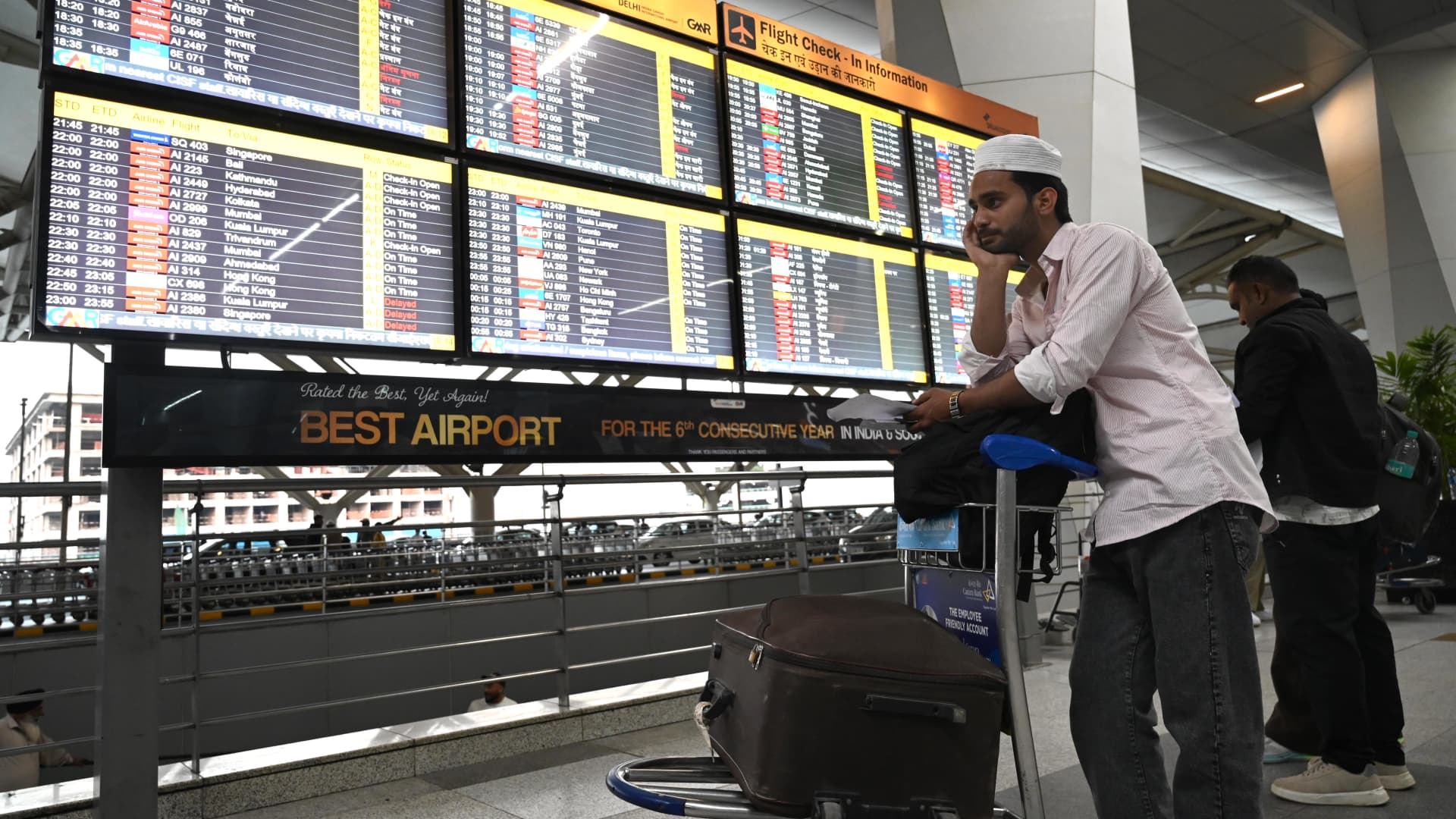
A passenger Mohd Umardaraz from Bijnor Uttar Pradesh stranded at Terminal-3 Delhi airport after his flight for Kuwait is cancelled due to airspace restrictions over Iran and parts of the Middle East on March 1, 2026 in New Delhi, India.

Arvind Yadav | Hindustan Times | Getty Images

The first Emirates flight out of Dubai, United Arab Emirates, since the U.S. and Israel attacked Iran took off Monday night bound for Mumbai, India, flight data showed, hours after the airline got the green light from local authorities to resume a “limited number” of flights.

Advertisement

It’s a sign of how airlines are preparing to restart service to the region after thousands of flight cancellations.

Emirates flight EK500 departed at 9:12 p.m. local time, according to Flightradar24, a flight-tracking site. The flight was operated on an Airbus A380, the world’s biggest passenger plane.

Separately, Israeli airline El Al said Monday that it’s considering chartering private jets to bring stranded Israeli citizens home.

The announcements mark a potential improvement after air travel ground to a halt in a large swath of the Middle East over the weekend following the U.S.-Israeli strikes on Iran and subsequent retaliatory strikes.

Advertisement

The attacks shut airspace over a large part of the region, stranding hundreds of thousands of customers around the world and leading to thousands of canceled flights, including those who weren’t flying to and from the area since aircraft couldn’t transit those zones. Dubai is one of the busiest air travel hubs in the world.

The airport authority that owns and manages airports in Dubai said a small number of flights would be permitted to operate from Dubai International and Dubai World Central – Al Maktoum International, but advised travelers to check with their airlines.

For its part, Emirates said it will start operating a “limited number of flights” Monday night and urged customers not to go to the airport unless notified by the airline.

“We are accommodating customers with earlier bookings as a priority,” it said in a post on X. “All other flights remain suspended until further notice,” it said.

Advertisement

El Al said it is considering hiring KlasJet planes to take passengers from European airports to Aqaba, over southern border in Jordan, for customers of the airline. It previously considered flying in and out of Taba, Egypt, but later Monday said that plan was scrapped “due to the lack of approval from the security authorities in Israel.”

Abu Dhabi-based Etihad Airways said Monday that all commercial flights to and from the city are suspended until afternoon local time on Wednesday, though it could operating some cargo and repatriation flights “subject to strict operational and safety protocols.”

Continue Reading

Business

Prologis, Inc. (PLD) Presents at Citi’s Miami Global Property CEO Conference 2026 Transcript

Published

on

OneWater Marine Inc. (ONEW) Q1 2026 Earnings Call Transcript

Prologis, Inc. (PLD) Citi’s Miami Global Property CEO Conference 2026 March 2, 2026 11:00 AM EST

Company Participants

Dan Letter – CEO & Director
Timothy Arndt – Chief Financial Officer

Conference Call Participants

Advertisement

Nicholas Joseph – Citigroup Inc. Exchange Research
Craig Mailman – Citigroup Inc., Research Division

Presentation

Nicholas Joseph
Citigroup Inc. Exchange Research

Advertisement

Welcome to Citi’s 2026 Global Property CEO Conference. I’m Nick Joseph here with Craig Mailman with Citi Research. Pleased to have with us Prologis and CEO, Dan Letter.

This session is for Citi clients only, and disclosures have been made available at the corporate access desk. [Operator Instructions] Dan, we’ll turn it over to you to introduce the company and team, provide any opening remarks, let investors know the top reason to buy the stock today, and then we’ll get into Q&A.

Dan Letter
CEO & Director

Advertisement

Great. Thanks for having me.

Nicholas Joseph
Citigroup Inc. Exchange Research

You just — yes, press the red button.

Advertisement

Dan Letter
CEO & Director

It was on. There we go. All right. Thanks for having us. Again, I’m Dan Letter, CEO of Prologis. To my left here is Tim Arndt, our Chief Financial Officer; and to his left is Justin Me Justin Mang, our Global Head of Investor Relations.

Prologis, we are the global leader in logistics real estate. We have over $230 billion of assets under management. That’s 1.3 billion square feet, 6,000 buildings in 20 countries in markets that represent 78% of the world GDP. We have about 7,000 customers in our portfolio. And our value proposition is quite simple, actually. We grow operating income ahead of inflation with the best portfolio and the best platform in the business. We create significant value through our development franchise.

Advertisement

We have an unmatched development franchise going back nearly 30 years, best-in-class

Advertisement
Continue Reading

Business

McDonald’s celebrates National Egg McMuffin Day with $1 deal

Published

on

McDonald's celebrates National Egg McMuffin Day with $1 deal

McDonald’s is celebrating National Egg McMuffin Day with a limited-time deal for customers.

The fast-food giant is offering customers its classic breakfast sandwich or Sausage McMuffin with Egg for $1 on Monday during breakfast hours. In order to receive the deal, the McMuffin must be ordered through the McDonald’s mobile app.

Advertisement

The McMuffin traces its roots to Santa Barbara, California, in early 1971. McDonald’s owner/operator Herb Peterson developed the idea for the sandwich when a version of Eggs Benedict – particularly the Hollandaise sauce – didn’t make the cut. A slice of cheese replaced the sauce, and along with Canadian bacon, an egg and English muffin, the sandwich was created, according to McDonald’s.

A McMuffin sandwich on a table.

McDonald’s Egg McMuffin sandwich was created in 1971. (McDonald’s Corp.)

MCDONALD’S FINDS WINNING RECIPE IN VALUE MEAL DEALS AS DINERS RETURN

It entered test markets the following year and was served open-faced with honey or jam on a small tray. It cost 63 cents, equivalent to about $4.99 today.

Ticker Security Last Change Change %
MCD MCDONALD’S CORP. 341.06 +6.53 +1.95%

BURGER KING MAKES CHANGES TO SIGNATURE WHOPPER FOR FIRST TIME IN NEARLY A DECADE

Advertisement

McDonald’s CEO Chris Kempczinski said during the company’s third-quarter earnings call in November that breakfast is typically the most “economically sensitive daypart” for the business.

“It’s an easy daypart to either skip the meal or to eat the meal at home,” he said. “Breakfast continues to be under pressure as a daypart industry-wide. We’re holding share in breakfast. So we’re doing okay in that segment, but we are still seeing that daypart is under pressure.”

An exterior view of a McDonald's fast food restaurant.

McDonald’s has focused heavily on limited-time promotions and value meals to bring back customers. (Paul Weaver/SOPA Images/LightRocket)

McDonald’s has focused intently on limited-time promotions and value meals as a way to bring budget-conscious Americans back to its restaurants.

CLICK HERE TO GET FOX BUSINESS ON THE GO

Advertisement

The strategy appears to be working as U.S. sales rose 6.8% in the fourth quarter – the biggest jump in about two years – and lower-priced offers and aggressive promotions drove traffic back into restaurants. Analysts had expected a smaller 4.9% gain.

Continue Reading

Business

Gordon Chang warns China could see “real problems” from Iran oil halt

Published

on

Gordon Chang warns China could see "real problems" from Iran oil halt

With Strait of Hormuz traffic nearly halted, China’s reliance on Iranian oil could trigger “real problems” within two months if the crisis continues, one expert warned.

Gatestone Institute senior fellow Gordon Chang joined FOX Business’ Maria Bartiromo on “Mornings with Maria” to assess how escalating tensions around the Strait of Hormuz could reverberate through China’s fragile, export-dependent economy.

Advertisement

OIL PRICES SURGE AFTER STRIKES KILL IRAN’S SUPREME LEADER, TANKERS HIT NEAR STRAIT OF HORMUZ

Oil tanker in Strait of Hormuz

Oil tanker at a port in the Strait of Hormuz. (Giuseppe CacaceI/AFP via Getty Images)

Chang noted that a significant share of China’s discounted Iranian crude, vital for its independent “teapot” refiners, typically transits the narrow waterway, where ships are now largely stalled north and south of the Strait.

“Much of that oil… actually goes to China trying to get somewhere between… 15% and 23% of its seaborne oil from Iran, and that oil transits the Strait of Hormuz,” Chang said.

He added that while Beijing has diversified supplies, the loss of heavily discounted barrels comes at a vulnerable moment for factories dependent on cheaper energy.

Advertisement

“This will go through the system, and I suspect you will see real problems in about two months in China if this situation continues,” Chang said.

Hayman Capital Management founder and CEO Kyle Bass also joined FOX Business’ Maria Bartiromo to discuss market reaction and the broader energy shock rippling through global supply chains.

OIL MARKETS ON EDGE AS IRAN MOVES TO RESTRICT VITAL STRAIT OF HORMUZ SHIPPING LANE, REPORT SAYS

Advertisement

Bass pointed to insurance withdrawals and the strategic weight of the choke point, warning that even a temporary disruption could send front-month crude prices sharply higher.

“About a third of the world’s seaborne crude flows through that strait every day. Fifty percent of China’s imports flow through that strait every day. And right now, things are not going through the strait,” Bass said.

“If 10 million barrels goes missing or gets delayed for a week, there’s no telling where the front end can go,” Bass added.

Advertisement

With insurers retreating, LNG shipments disrupted and tanker traffic effectively frozen, the crisis underscores how a five-mile-wide passage can shape the economic trajectory of the world’s second-largest economy.

“We’re at risk of a pretty major oil price spike here,” Bass said.

GET FOX BUSINESS ON THE GO BY CLICKING HERE

Advertisement
Continue Reading

Business

Oil Markets Face Iran Conflict With Little in Reserve

Published

on

Companies Race to Reassure and Relocate Employees Caught in Middle East Conflict

Escalating tensions with Iran are hitting a global oil market stripped of its usual shock absorbers, risking severe price spikes if supplies are disrupted.

OPEC and its Russia-led allies are set to meet Sunday, and analysts anticipate an agreement to increase supply. However, any actual output boosts will be constrained by the group’s limited spare production capacity, according to a note to clients by RBC Capital Markets.

Typically, major producers boost production using their spare capacity to stabilize markets during crises. But almost every member of the OPEC+ grouping of countries is already producing at near maximum levels, analysts say. According to a report by Barclays, both spare capacity and above-ground inventories, measured in days of demand they cover, are tighter now than before the 2022 invasion of Ukraine, leaving Saudi Arabia as the sole producer with a meaningful buffer.

Continue Reading

Trending

Copyright © 2025