

Crypto World
Analysts Dismiss Fears That Iran Unrest Could Impact Bitcoin Mining Output


TLDR
- Experts state that the conflict in Iran does not threaten the global Bitcoin mining network.
- Analysts report that online claims about large hashrate losses in Iran are overstated.
- Data shows the Bitcoin hashrate stayed stable and continued to operate normally.
- Wolfie Zhao explains that any mining issues in Iran would not affect global network performance.
- Ethan Vera confirms that Iran contributes less than one percent of global hashrate.
Industry analysts stated that current unrest in Iran does not threaten the wider Bitcoin network, and they stressed that global hashrate levels remain stable. They pointed out that early online claims overstated the scale of possible outages, and they said the Bitcoin market continues to absorb regional shifts without stress.
Iran’s Mining Capacity Faces Pressure But Experts Reject Major Network Impact
Analysts addressed new concerns as online discussions raised fears about large-scale power failures, and they argued that the network can withstand local disturbances. They said the situation differs greatly from earlier global shocks, and they insisted that Iran’s role remains small in global output.
Wolfie Zhao stated that the conflict does not threaten the network, and he dismissed claims of sharp disruption. He said “individual miners may face issues,” but argued that the broader system operates normally and continues to handle load shifts.
Market posts referenced the risk of large sell-offs and grid failures, and they warned that thousands of rigs could shut down. However, analysts countered these claims and said projections on social platforms lacked data support.
Bitcoin Mining Outlook and Reported Hashrate Changes
Observers tracked hashrate levels after the first attacks, and they found that the network output held its range over several days. They noted that the network rose above one zettahash before easing slightly early Tuesday.
Ethan Vera said Iran controls less than one percent of global hashrate, and he stressed that the network would not slow down even if local operations paused. He said “there will be no material impact to block times” and argued that security would remain intact.
He added that the sector includes small private miners and older operations tied to former Chinese groups, and he said these firms do not anchor global output. Analysts also said Iran’s regulatory hurdles limit growth and keep its mining share relatively low.
Iran’s Crypto Activity and Rising Exchange Outflows
Reports showed that Iran uses crypto channels to move funds outside the dollar system, and analysts said these flows track political tensions. They added that the country’s crypto sector reached several billion dollars last year, based on recent research.
A blockchain report found that some activity links to state-connected groups, and it said domestic events often drive short bursts in trading behavior. It also recorded a sharp jump in outgoing exchange transfers within minutes of the latest attacks.
A market platform run by Dastan displayed a higher probability estimate for a change in Iran’s leadership, and its users increased wagers over the weekend. This shift mirrored rising speculation across social feeds, which pushed new claims about possible mining losses.
Data from multiple trackers continued to show stable performance, and they indicated that the network functions without delay or stress. New readings early Tuesday placed the hashrate slightly below one zettahash, which aligned with trends observed throughout the week.

Analysts argue that geopolitical shocks have failed to invalidate the existing bullish short-term and bearish mid-term outlooks.
Bitcoin’s reaction to escalating geopolitical tensions over the weekend was limited, even as traditional markets reacted more sharply. BTC slipped to around $65,500 on Monday after trading in a volatile range between roughly $63,000 and $68,000, as markets responded to rising US-Iran tensions and reports that Iran’s Supreme Leader, Ayatollah Ali Khamenei, was killed in a joint US-Israeli airstrike.
Despite the intense, volatile backdrop, market commentators say that the conflict has not changed Bitcoin’s trajectory.
High Risk Zone
In a post on X, Mr. Wall Street stated that “nothing changed with the new war.” He said that he does not believe the cycle bottom is in at $60,000. According to him, the cycle bottom will form later this year, around $45,000, but only after Bitcoin first rallies to the $80,000-$85,000 range.
The analyst’s outlook is bullish in the short term, bearish in the mid-term. This indicates that while geopolitical shocks may create volatility, he does not believe they invalidate the expectation of a near-term pump followed by a deeper corrective phase. Another prominent crypto market commentator, Doctor Profit, also maintained that the war does not alter his broader bearish positioning.
He wrote that Bitcoin “remains in an absolute high risk zone” and that the market has not bottomed yet.
“The war changes nothing in my bearish outlook for Crypto and Stocks.”
He also added that he remains fully bearish and that his “big short” has remained open since September. Both analysts, despite differing on short-term direction, emphasized that the geopolitical escalation has not fundamentally changed their pre-existing market theses.
US-Iran Conflict Already Priced In?
Trader CrypNuevo said the market had already been pricing in the US-Iran conflict throughout the previous week. He went on to explain that markets cannot fall much further because the event was largely anticipated, but pointed to uncertainty around the length of the war and the status of the Strait of Hormuz. According to them, stock futures, which Bitcoin tends to follow, would probably open negatively, and could potentially recover as soon as de-escalation talks emerge.
You may also like:
They said a prolonged conflict is unlikely, citing concerns that extended closure of the Strait of Hormuz would push oil prices higher and spike US CPI inflation, something they do not expect to occur. The strategy is to wait for Monday’s stock market reaction. As such, if there is a sharp sell-off, they would long Bitcoin around $61,000-$60,000 ahead of de-escalation news. On the other hand, if there is only a slight decline, sideways movement, or a pump, they would delay entering a long position until later in the week.
Binance Free $600 (CryptoPotato Exclusive): Use this link to register a new account and receive $600 exclusive welcome offer on Binance (full details).
LIMITED OFFER for CryptoPotato readers at Bybit: Use this link to register and open a $500 FREE position on any coin!
Crypto are under pressure as war around Iran intensifies and traders begin pricing in the unthinkable: disruption in the Strait of Hormuz.
If that chokepoint closes, oil spikes. And if oil spikes, inflation follows. That puts the Federal Reserve in a corner, forcing rates to stay higher for longer.
Crypto is not immune. While there has been some speculative buying on regional capital flight headlines, the broader macro picture is heavy. Bitcoin is moving more in sync with traditional risk assets, not decoupling from them.
Instead of acting like digital gold, the market is behaving as if liquidity is the real safe haven. In a true energy shock scenario, the first reaction is not rotation into crypto. It is de-risking across the board.
- Bitcoin volatility has spiked as traders hedge against a potential Strait of Hormuz closure that could disrupt one-fifth of global oil flows.
- Surging Oil Price levels above $90/barrel would likely stick inflation higher, potentially taking a Q2 Fed rate cut off the table.
- While Capital Flight into USDT offers localized support, global risk-off flows are dominating market structure and capping upside momentum.
Bitcoin Crypto Volatility Spikes as Iran War Jitters Trigger $128M Liquidations
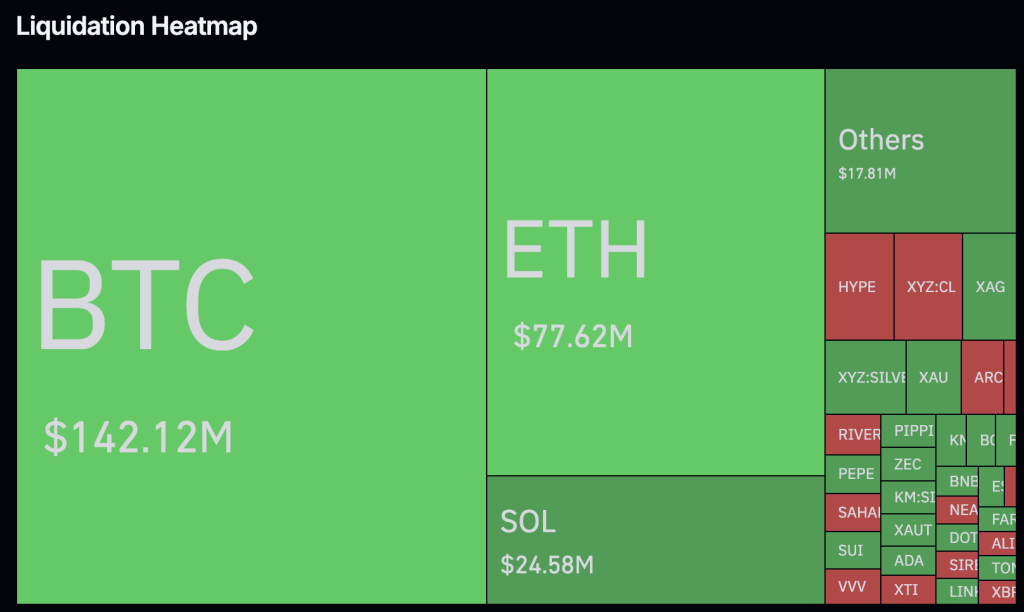
The first crypto reaction to the Iran war was chaos, not clarity. CoinGlass data shows more than $128 million in liquidations in just 4 hours after reports of the IRGC’s “Operation True Promise 4.” Nearly 80% were longs. Leverage traders were leaning the wrong way and got wiped fast.
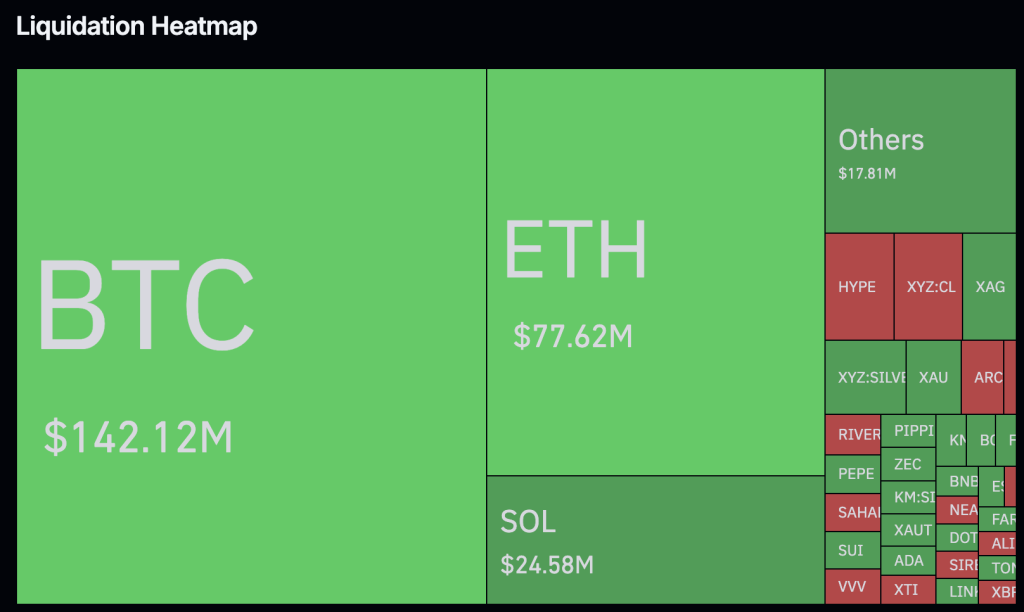
Bitcoin initially dropped toward $63,000 on the headlines, then bounced as more details came out. But the rebound feels mechanical, not confident. Open Interest has cooled sharply, which tells you desks are cutting risk, not aggressively buying dips.
This is classic panic behavior. Sell first. Reassess later.
Equities are showing the same pattern. The S&P 500 has seen outflows, and Bitcoin’s correlation with tech remains tight during stress events. Whatever the digital gold narrative says, in moments like this BTC trades like a high-beta risk asset, not a safe haven.
Oil Price Surge Threatens to Derail Fed Pivot Plans
The real risk to crypto might not be the headlines; it could be oil. If the Strait of Hormuz is disrupted, up to 21 million barrels per day could be affected. That is around 20% of the global supply. Even partial disruptions historically trigger instant price spikes.
If crude holds above $100, inflation comes back fast. That traps the Federal Reserve. Rate cuts get delayed. Liquidity stays tight. And crypto suffers in a higher-for-longer environment.
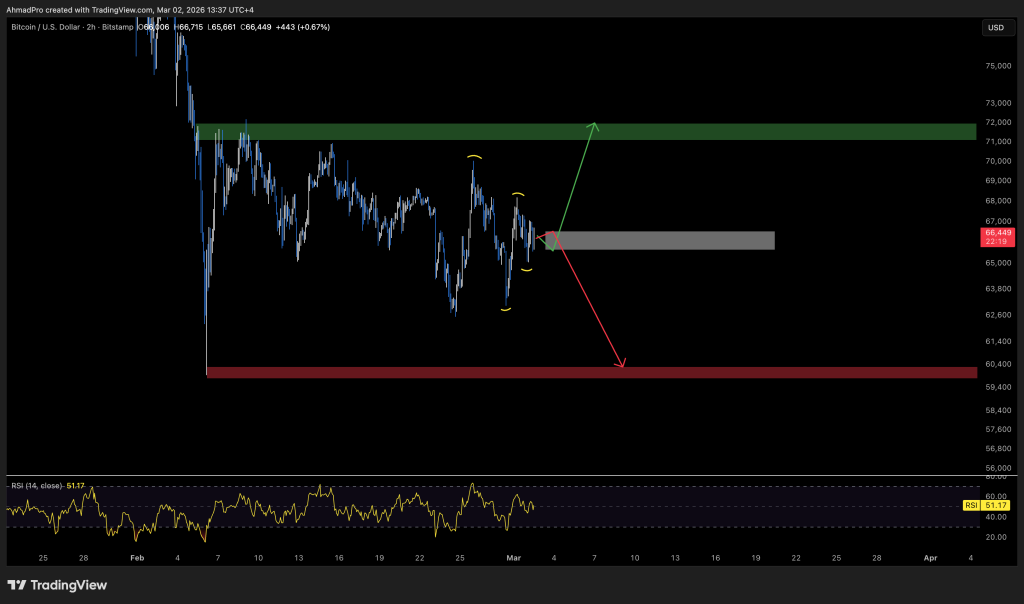
Some analysts are floating extreme downside scenarios again. While most institutional desks still see $58,000 to $60,000 as Bitcoin’s key support zone, that floor depends heavily on the Fed not turning more hawkish.
There is a counter-force: capital flight. Stablecoin demand in parts of the Middle East has jumped as local currencies wobble. Bitcoin and USDT become escape valves. But retail flows from crisis regions rarely offset large institutional outflows driven by macro tightening.
Altcoins are already showing the strain. Without fresh liquidity, Ethereum and the broader sector struggle to sustain rallies. If yields on the U.S. 10-year push back toward 5% on energy-driven inflation, risk assets likely stay capped.
Discover: The best new crypto in the world
The post Crypto, Iran War, and Oil Price: Geopolitical Shock Could Delay the Crypto Bull Run appeared first on Cryptonews.


The price of Bitcoin is close to its bottom, according to VanEck CEO Jan van Eck, pointing to the winding down of the four-year cycle.
Speaking with CNBC on Monday, van Eck said his firm expects Bitcoin (BTC) to gradually start picking up this year, arguing that the four-year halving cycle has been the primary driver of price over the past few months, as opposed to anything related to BTC’s fundamentals.
“Our view coming into 2026 is that Bitcoin is governed by […] limited supply at 21 million, and the halving cycle where the Bitcoin miners who run the network get paid half the number of Bitcoin every four years,” he said, adding:
“There’s been an investing cycle, Bitcoin goes up three years in a row, goes down pretty massively in that fourth year. 2026 is that fourth year. So that’s why we are in a Bitcoin bear market. So I think we can overcomplicate it. Now I think we are making a bottom.”
The four-year crypto cycle has been a hot topic of debate overt he last year, with crypto analysts split over whether the chart pattern is still applicable today given the level of institutional adoption and crypto market maturity.
Arguments against the cycle include macro demand from exchange-traded funds, the weakening USD, and positive regulatory developments.
Jan van Eck’s comments come as the price of BTC is up 2.6% over the past 24 hours and is trading at $68,400 at the time of writing, and 7.6% over the past seven days, according to data from CoinGecko.
Related: Bitcoin slide slowing, but bear market still in play: Analysts
The crypto pump has coincided with growing geopolitical tensions, after the United States and Israel initiated air strikes on Iran, which has since prompted Iran to launch strikes in response against Israel.
Van Eck speculated that Bitcoin’s recent recovery may be partly sparked by the conflict, with crypto payment rails serving as a key tool to move funds outside of banks in times of economic uncertainty.
“When one thinks forward to some sort of solution with Iran, how are you gonna move money around? And I do think it’s a very, very crypto-friendly region, UAE, Dubai, everything,” he said, adding:
“So it could be that if we wanted to move money to good actors, we would wanna use crypto payment rails as opposed to going through decrepit Iranian banks that we don’t control.”
Magazine: Would Bitcoin really be at $200K if not for Jane Street? Trade Secrets


Bitcoin has returned to a key psychological price level as markets bounced back amid ongoing tensions in the Middle East.
Bitcoin prices reached $70,125 in late Monday trading on Coinbase, according to TradingView.
However, it hit resistance there as it did on Feb. 25 and had pulled back slightly to trade at $68,000 at the time of writing during the Tuesday morning Asian trading session. There has been an “insane reversal in the markets,” observed crypto analyst ‘Bull Theory’ on Tuesday.
“Just 24 hours ago, we saw extreme fear and panic when US futures opened Sunday night,” they said. US stock markets and crypto markets have rebounded strongly, they observed before adding:
“Markets don’t hate bad news; they hate uncertainty. Khamenei’s death didn’t spark chaos; it removed ambiguity, and the market priced that in immediately.”
Bitcoin Bucks War Panic Trend
“Traditional ‘risk-off’ playbooks say Bitcoin should be dumping right now,” said Macro outlet Milk Road. “If BTC can maintain this divergence from risk assets during sustained geopolitical stress, the ‘digital gold’ argument finds itself a new tailwind.”
“We understand war headlines make investors nervous, but we expect stocks to be up in March,” commented Fundstrat’s Tom Lee on Monday.
“This is exactly what happened in 2022 when Russia invaded Ukraine,” said analyst ‘CrediBull Crypto’.
They added that the day of the invasion marked a local bottom after months of drawdown, “and we spent a month climbing 40% back to the upside before continuation back down.”
“People’s first inclination during events like this is to panic and sell, which would have made you sell the local bottom in both these instances.”
Meanwhile, CryptoQuant analyst ‘Moreno’ said, “the sell-side pressure from recent buyers is fading. Panic is being replaced by patience, or at least exhaustion.”
“Despite the recent geopolitical escalation involving Iran, a type of event that historically triggers reactive selling, the data shows no meaningful spike in exchange inflows from short-term holders.”
There was no panic profit-taking, no loss capitulation, no reactive behavior from this typically event-sensitive cohort,” he added.
Santiment reported that as markets have rallied, social data indicated there was a “huge surge in positive sentiment as Bitcoin’s price was threatening to fall below $65,000.”
You may also like:
“Discourse is heavily invested in the Iran, Israel, and US conflict currently, so expect volatile movement based on any notable updates with the developments,” it added.
📈 As today’s markets have rallied, social data indicated there was a huge surge in positive sentiment as Bitcoin’s price was threatening to fall below $65K. Over the next 2 hours and 20 minutes, $BTC rallied +7% and reached $69.9K before running into $70K resistance for the time… pic.twitter.com/B3lWwtqABz
— Santiment (@santimentfeed) March 2, 2026
Crypto Market Outlook
Crypto market capitalization has gained 2.6% on the day to reach $2.42 trillion at the time of writing. The move was largely driven by Bitcoin, but Ether also reclaimed the $2,000 level and remains just above it at the time of writing.
Altcoin gains were minimal in comparison to the top two digital assets.
Binance Free $600 (CryptoPotato Exclusive): Use this link to register a new account and receive $600 exclusive welcome offer on Binance (full details).
LIMITED OFFER for CryptoPotato readers at Bybit: Use this link to register and open a $500 FREE position on any coin!
Crypto World
Bitcoin climbs as IBIT posts one of the quarter’s biggest inflow days amid Iran volatility
Bitcoin traded near $68,000 on Tuesday as U.S. spot ETFs pulled in $458 million, according to data curated by SoSoValue, marking one of the quarter’s strongest inflow days despite the ongoing conflict with Iran.
The inflows suggest institutional investors are treating bitcoin’s recent volatility stemming from the war as contained rather than systemic.
Singapore-based trading firm QCP Capital said in a recent note that the roughly $300 million in long liquidations triggered by the weekend headlines were “notable but contained,” arguing that positioning had already been materially lightened in recent weeks.
Options markets told a similar story, QCP wrote, with one-day implied volatility briefly spiking to 93% before quickly retracing, a sign traders were hedging event risk rather than bracing for prolonged escalation.
Meanwhile, U.S. spot bitcoin ETFs added $1.1 billion over three consecutive sessions last week, according to SoSoValue data previously reported by CoinDesk, with BlackRock’s IBIT accounting for roughly half.

Crypto hackers attempting to use “ClickFix” attacks to steal crypto have now turned to impersonating venture capital firms and hijacking browser extensions in their two most recent attacks.
According to a report by cybersecurity firm Moonlock Lab on Monday, scammers are using fake venture capital firms such as SolidBit, MegaBit and Lumax Capital. The hackers are using the firms to contact users via LinkedIn with partnership offers, then funneling them to fake Zoom and Google Meet links.
When a target clicks the fraudulent link, they are taken to an event page featuring a fake Cloudflare “I’m not a robot” checkbox. Clicking it copies a malicious command to the clipboard and prompts the user to open their computer’s terminal and paste the so-called verification code, which executes the attack.
“The ClickFix technique is what makes the final step so effective,” the Moonlock Lab team said. “By turning the victim into the execution mechanism—having them paste and run the command themselves—the attackers sidestep the very controls the security industry has spent years building. No exploit. No suspicious download.”
Moonlock Lab alleges that a person using the name Mykhailo Hureiev, listed as the co-founder and managing partner at SolidBit Capital, has been a primary point of contact for the initial LinkedIn phase of the scam. Two X users have also reported suspicious conversations with a Hureiev account.

However, Moonlock Lab notes that the campaign’s infrastructure is sophisticated and designed to rotate identities as soon as one front is exposed.
Chrome extension hijacked to steal crypto
Meanwhile, crypto hackers have, until recently, been spreading a malicious Chrome extension with a “ClickFix” attack angle.
QuickLens, an extension that lets users run Google Lens searches directly in their browser, was removed from the web store after it was compromised to push malware, John Tuckner, the founder of cybersecurity firm Annex Security, said in a Feb. 23 report.
After QuickLens changed ownership on Feb. 1, a new version was released two weeks later containing malicious scripts that launched ClickFix attacks and other information-stealing tools. Tuckner noted that the extension had around 7,000 users.

The hijacked extension reportedly searched for crypto wallet data and seed phrases to steal funds. It also scraped the contents of Gmail inboxes, YouTube channel data, and other login credentials or payment information entered into web forms, according to a eSecurity Planet report on March 2.
ClickFix attacks are used to target many industries
The ClickFix technique has gained popularity among threat actors since last year, according to Moonlock Lab, because it forces victims to execute the malicious payload manually, bypassing standard security tools.
Related: February crypto losses hit lowest level since March 2025, says PeckShield
However, security researchers have been tracking its use since at least 2024, with targets spanning a wide range of industries.
Microsoft Threat Intelligence sent out a warning in August last year that it had been tracking “campaigns targeting thousands of enterprise and end-user devices globally every day.”
Meanwhile, cyber threat intelligence company Unit42 reported in July last year that the “relatively new social engineering technique” has been impacting industries such as manufacturing, wholesale and retail, state and local governments, and utilities and energy.
Magazine: Would Bitcoin really be at $200K if not for Jane Street? Trade Secrets
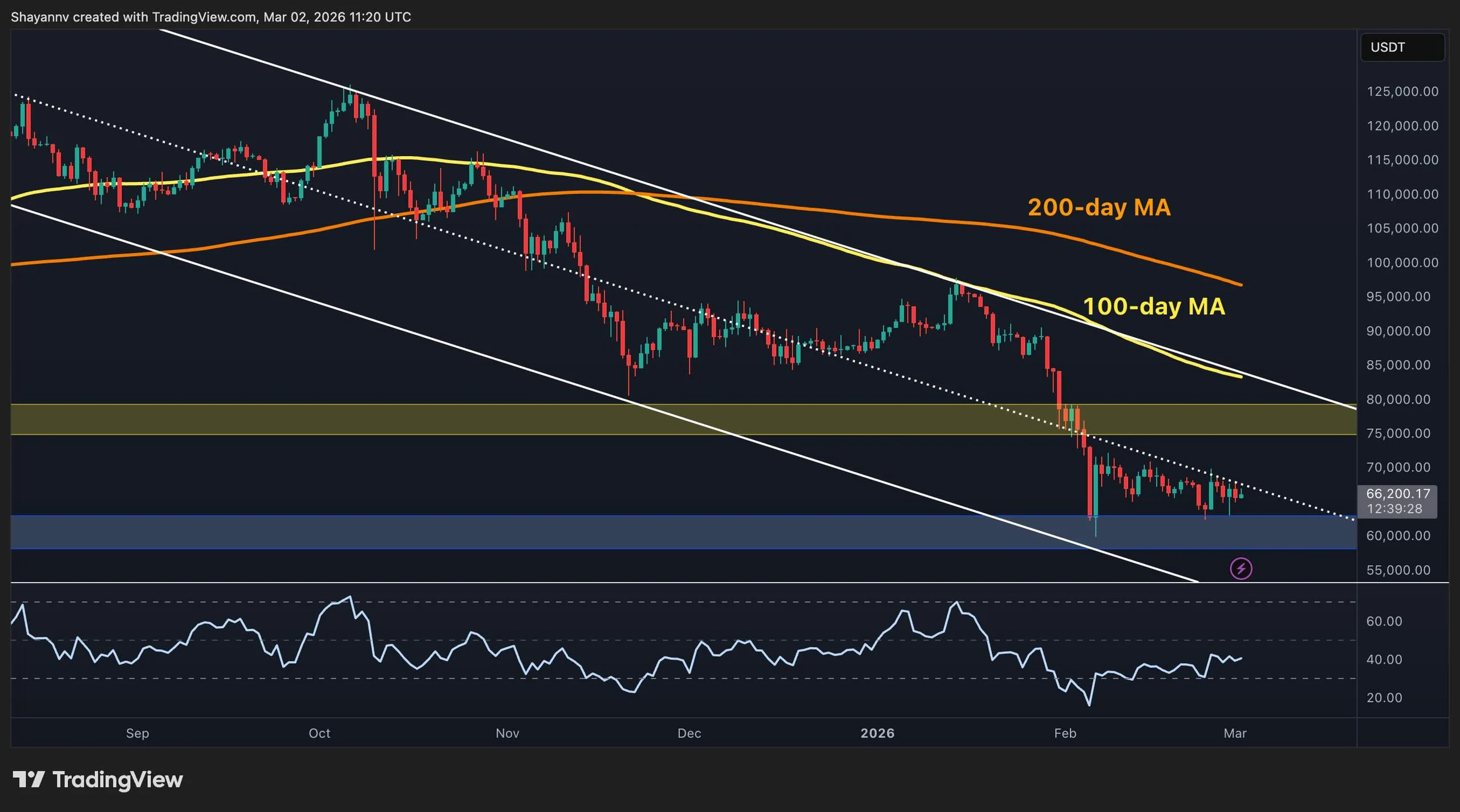
Bitcoin is still in a corrective phase after the sharp selloff, and the price is now trying to stabilize around $66,000. The bigger picture is simple, as momentum is bearish on the daily time frame, but short-term structure is tightening. So, the next breakout from consolidation likely decides whether this is a bottom or just a pause before another leg down.
Bitcoin Price Analysis: The Daily Chart
On the daily chart, BTC remains below the 100-day and the 200-day moving averages, indicating the overall bearish trend. The price is also trading inside a broader downward channel, and the breakdown from the prior support area around $75,000-$80,000 has turned that zone into a key supply region. As long as Bitcoin stays below the mid $70,000s, rallies can still be sold into, especially if they fail near the moving averages.
The near-term demand zone to watch sits around $60,000, where buyers previously stepped in and where the market is likely to defend again if volatility returns. If that floor breaks cleanly, the next major support area comes in around $50,000 to $53,000. Meanwhile, the RSI has recovered from the most oversold readings, but it is still not showing the kind of strength you usually see at the start of a new uptrend, so confirmation matters more than hope here.
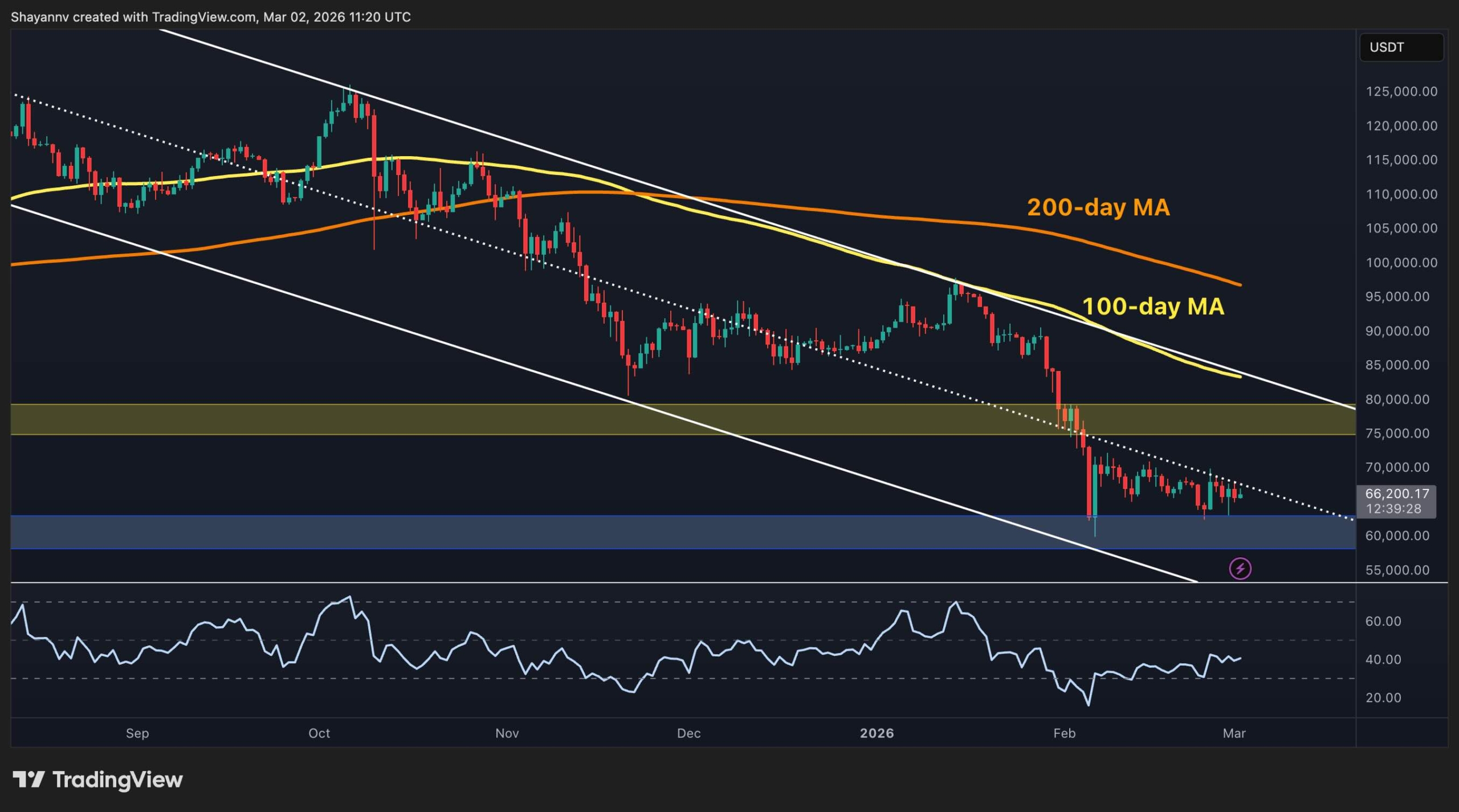
BTC/USDT 4-Hour Chart
On the 4-hour chart, Bitcoin is compressing into a symmetrical triangle after the dump, with lower highs capping the price while the lows are holding higher. This kind of structure often precedes a decisive move because liquidity builds on both sides. The upper trigger is near $68,000, and a clean break and hold above it can open a push toward $73,000, where the larger resistance zone begins.
If the triangle breaks to the downside, the first test is typically the range low around $62,000, followed by the deeper daily demand zone around $60,000. The key detail is that the current consolidation is happening after a strong down move, so downside breaks can accelerate quickly if bids step away. Therefore, buyers will need a breakout that holds, not just a wick, because fake outs are common when the broader trend is still down.

Sentiment Analysis
The open interest chart shows a steep decline into the current period, dropping toward about $20.4B, while the price also fell sharply. That combination usually signals forced deleveraging, meaning liquidations and position closures rather than a calm, organic pullback. In practice, it often marks the point where the market flushes out excessive leverage, which can reduce immediate downside pressure.
The next clue is what happens if open interest starts rising again. If open interest rebuilds while the price holds above $62,500 and pushes above $68,000, it suggests traders are re-entering with confidence, which can support a continuation rally. However, if open interest climbs while the asset stays heavy and fails under $68,000, it can set up another liquidation wave, because fresh leverage tends to become fuel for the next squeeze down when the trend is still bearish.

Binance Free $600 (CryptoPotato Exclusive): Use this link to register a new account and receive $600 exclusive welcome offer on Binance (full details).
LIMITED OFFER for CryptoPotato readers at Bybit: Use this link to register and open a $500 FREE position on any coin!
Disclaimer: Information found on CryptoPotato is those of writers quoted. It does not represent the opinions of CryptoPotato on whether to buy, sell, or hold any investments. You are advised to conduct your own research before making any investment decisions. Use provided information at your own risk. See Disclaimer for more information.


The crypto app Pump.fun is taking a significant step beyond its meme-coin roots, announcing broad new trading support that allows users to buy and sell a wider array of tokens directly within the platform.
Summary
- Pump.fun now lets users trade a range of assets including WBTC, USDC, Ethereum (via Wormhole), and other launchpad tokens inside the app.
- The expansion responds to over 1.5M downloads and demand for more diverse on-chain trading without leaving the platform.
- Earlier in 2026, the platform introduced a Trader Cashback model to redirect fees toward active traders, reshaping its fee structure.
From meme coins to Bitcoin: Pump.fun broadens asset support
Previously known primarily as an on-chain Solana memecoin launchpad and token-creator hub, Pump.fun has exploded in popularity thanks to easy coin generation and speculative trading. Over 1.5 million downloads underscore its rapid adoption, and growing user demand for more trading utility has pushed the company to evolve.
In a post shared on social platforms, Pump.fun said that for the first time, users can trade not just its native Pump fun coins, but a broader selection of assets, including WBTC, USDC, Ethereum (via Wormhole), and other launchpad tokens.
The update aims to reduce friction for users who previously had to leave the app to access other assets, consolidating trading activity in one interface. This marks a shift from Pump.fun’s early role as a creator-centric ecosystem, where anyone could spin up a token in minutes, toward a more versatile trading environment.
The push toward supporting mainstream crypto alongside meme tokens comes amid broader changes in Pump.fun’s fee and incentive structure. Last month the platform rolled out a “Trader Cashback” model, letting creators choose whether trading fees benefit deployers or active traders, an effort to reward volume and participation more fairly.
While the platform remains known for speculative assets and memecoins, this expansion could attract more serious traders and bolster liquidity, positioning Pump.fun as more than just a meme-token generator.
Whether broader token support alters user behavior or stabilizes markets will be closely watched across the crypto community.
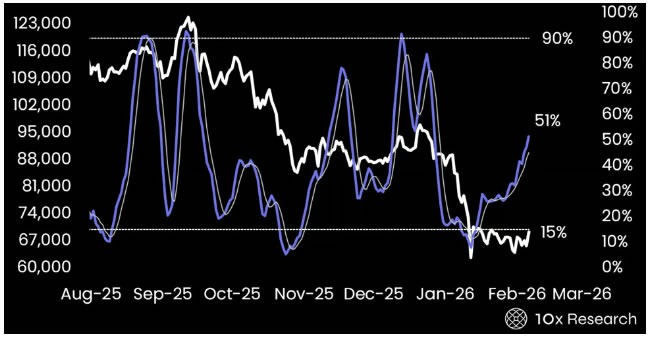
Bitcoin’s recent price behavior could indicate that crypto selling pressure has begun to wane — though analysts warn there are not yet signs of a reversal from a bear market.
“Bitcoin failed to accelerate lower on risk-off headlines, a signal that downside pressure may be losing momentum,” said 10x Research in a market update on Tuesday.
The analysts noted that Bitcoin (BTC) was reclaiming the 20-day moving average near $68,500, and Bollinger Bands were tightening, with conditions “forming for potential range expansion.”
BTC returned to just above $70,000 on Coinbase in late trading on Monday but had retreated to $68,400 at the time of writing, according to TradingView.
The $62,500 level has held on three separate tests, “reinforcing it as meaningful support,” the analysts said.
At the same time, “bullish divergences are emerging,” with both RSI [relative strength index] and stochastic indicators trending higher, “early signs that momentum may be stabilizing even within a broader bearish structure.”

A tactical shift but no structural reversal
The analysts concluded that the evidence “points to a meaningful tactical shift, but not yet a confirmed structural turn.”
Volatility is compressing, ETF flows have strengthened, and the Coinbase discount has disappeared, “these are not characteristics of a market accelerating into a fresh leg lower,” they said.
“However, our broader allocation framework still classifies Bitcoin as being in a bear market regime, meaning any bullish exposure remains tactical rather than structural.”
Related: Crypto analyst says Bitcoin selling pressure is nearly exhausted
Justin d’Anethan, head of research at Arctic Digital, told Cointelegraph on Tuesday that there have been a lot of macro and crypto-native events that have pushed the price down, but lately, “we’ve moved from frantic to somewhat measured,” which bodes well for “a consolidation, accumulation, or at least, a range-bound time.”
“The fact that selling pressure isn’t having that much impact despite tariffs, prospect of a war, or previously disappointing rate cut expectations seems to say that sellers themselves are exhausted or that there are genuine buyers averaging in at these levels.”
Deeply negative funding rates caused a price bounce
Meanwhile, Bitrue research lead Andri Fauzan Adziima told Cointelegraph that Bitcoin’s downside momentum is fading but said it was “primarily due to deeply negative funding rates” on derivatives markets.
This has created “overcrowded short positions in perpetual futures and triggered a classic short squeeze as price bounced sharply from $63,000 lows, forcing heavy liquidations and easing selling pressure through tactical relief.”
Negative funding rates mean that short sellers are paying the longs to maintain their positions.
He added that no confirmed trend reversal has occurred yet “because structural inflows remain absent, macro catalysts are lacking,” and the broader downtrend from the all-time high “persists with fragile liquidity and resistance ahead.”
Magazine: Telegram avoids Philippines ban, yen carry trade now onchain: Asia Express


CoinShares reported $1 billion weekly turnaround, driven by Bitcoin buying and renewed investor appetite across major markets.
Investment products tied to digital assets recorded $1 billion in net inflows last week, reversing a five-week run of $4 billion in outflows. CoinShares said that no single macro event explains the change. Instead, previous price softness, technical breakdowns, and renewed buying activity among major Bitcoin holders appear to have supported the rebound.
Market participants have recently focused more on identifying buying opportunities than on scaling back their exposure.
Global Crypto Funds Recover
According to the latest edition of CoinShares’ Digital Asset Fund Flows Weekly Report, weekly fund flows were dominated by Bitcoin, which brought in $881 million. At the same time, short Bitcoin products drew $3.7 million. Ethereum attracted $117 million, its strongest weekly performance since mid-January, although both assets remain in net outflows for the year.
Solana, on the other hand, posted $53.8 million for the week and $156 million year-to-date. Chainlink gained $3.4 million over the past week, while XRP and Sui added $1.9 million and $0.4 million, respectively. Multi-asset products were the only segment to see withdrawals, with $6 million exiting.
Regionally, sentiment was largely consistent. The United States led with $957 million in new investment. Canada, Germany, and Switzerland added $34.1 million, $31.7 million, and $28.4 million, respectively. Hong Kong recorded $6.8 million, while Brazil brought in $3.2 million.
Geopolitical Shock
Since the ETF flows last week, there has been a sharp deterioration in geopolitical conditions. On Monday, crypto markets remain largely range-bound amid escalating geopolitical tensions, particularly involving Iran. An initial US strike on Iran over the weekend pushed Bitcoin toward about $63,000 and Ethereum below $2,000 before prices pulled back into established trading ranges.
Approximately $300 million of long positions were liquidated when the news broke, a significant but contained amount, which, according to QCP Capital, suggests positioning was already reduced in the days before the event. The firm noted that this could also mean that investors are treating Bitcoin less as a “weekend macro hedge” and considering alternatives such as tokenized gold, which trades 24/7 and has seen increased risk-off interest.
You may also like:
Options markets showed a spike in very short-term volatility but otherwise reacted moderately, which indicates traders may have been relatively well positioned for possible volatility given warning signs during the prior week. QCP pointed to a similar event last June, when BTC dipped on geopolitical news but recovered and later rallied. Options flow data also revealed buyers of call contracts with expiration later in March, which is consistent with some participants gearing up for a rebound.
“Despite price action looking fairly constructive, we remain cautious as tensions and uncertainty continue to build. The conflict is still in its early stages, and it’s premature to conclude whether it will remain contained or evolve into a broader regional confrontation involving other Gulf states.”
Binance Free $600 (CryptoPotato Exclusive): Use this link to register a new account and receive $600 exclusive welcome offer on Binance (full details).
LIMITED OFFER for CryptoPotato readers at Bybit: Use this link to register and open a $500 FREE position on any coin!

‘Operation epic chaos’ and Trump ‘very disappointed in Keir’

How should mutual fund investors think about their portfolios amid the US-Israel conflict with Iran?

High Risk Zone? Analysts Split as Bitcoin (BTC) Ignores Geopolitical Chaos


-

 Fashion3 days ago
Weekend Open Thread: Iris Top
-

 Politics4 days ago
ITV enters Gaza with IDF amid ongoing genocide
-

 Tech2 days ago
Unihertz’s Titan 2 Elite Arrives Just as Physical Keyboards Refuse to Fade Away
-

 Business6 days ago
True Citrus debuts functional drink mix collection
-
Sports3 days ago
The Vikings Need a Duck
-

 Crypto World7 days ago
XRP price enters “dead zone” as Binance leverage hits lows
-

 NewsBeat5 days ago
Cuba says its forces have killed four on US-registered speedboat | World News
-
 NewsBeat3 days ago
Dubai flights cancelled as Brit told airspace closed ’10 minutes after boarding’
-

 Tech7 days ago
Unsurprisingly, Apple's board gets what it wants in 2026 shareholder meeting
-
 NewsBeat5 days ago
Manchester Central Mosque issues statement as it imposes new measures ‘with immediate effect’ after armed men enter
-
 NewsBeat3 days ago
The empty pub on busy Cambridge road that has been boarded up for years
-

 NewsBeat2 days ago
‘Significant’ damage to boarded-up Horden house after fire
-

 NewsBeat2 days ago
Abusive parents will now be treated like sex offenders and placed on a ‘child cruelty register’ | News UK
-
 NewsBeat6 days ago
Police latest as search for missing woman enters day nine
-

 Entertainment23 hours ago
Baby Gear Guide: Strollers, Car Seats
-

 Business5 days ago
Discord Pushes Implementation of Global Age Checks to Second Half of 2026
-

 Business4 days ago
Only 4% of women globally reside in countries that offer almost complete legal equality
-
 Tech4 days ago
NASA Reveals Identity of Astronaut Who Suffered Medical Incident Aboard ISS
-

 Crypto World6 days ago
Entering new markets without increasing payment costs
-
Politics2 days ago
FIFA hypocrisy after Israel murder over 400 Palestinian footballers