

Politics
Donald Trump Attacks Keir Starmer Over Iran Bombing


Donald Trump has launched a fresh attack on Keir Starmer’s over the prime minister’s response to America and Israel’s decision to bomb Iran.
The US president said the prime minister has “not been helpful” after he initially refused to let the countries use British military bases to carry out their attack.
His comments to The Sun come a day after he said he was “very disappointed” in the PM – leading to a Commons rebuke from Starmer.
The prime minister told MPs the UK would not be involved in “offensive” operations in Iran.
However, he said the US could use British bases – including one on Diego Garcia in the Chagos Islands – to bomb weapons storage facilities and missile launch sites.
Nevertheless, Trump told The Sun that he felt let down by Starmer.
“He has not been helpful,” he said. “I never thought I’d see that. I never thought I’d see that from the UK. We love the UK.”
He added: “It’s not going to matter, but [Starmer] should have helped… he should have.
“I mean, France has been great. They’ve all been great. The UK has been much different from others.”
Trump continues: “You’ve seen the secretary general of NATO, the great things he said, Mark Rutte, he’s great.
“No, they’ve all been pretty much great other than…we think Keir’s was just very different.”
The president the US-UK spat over Iran meant “it’s just a much different kind of relationship that we’ve had with your country before”.


Keir Starmer has said that his duty is to “keep British people safe“. Anyone who knows him by now knows to assume he means the opposite. And so it is in this case – Starmer is knowingly putting British people in direct danger while telling them he has to keep them safe.
During Commons questions, Starmer again claimed that the UK is not involved in attacking Iran. Every single person in that chamber – including Starmer – knew that was a lie. Enabling US attacks on Iran by allowing them to use British air bases in the UK and Cyprus does involve the UK in attacks on Iran. In case that wasn’t clear enough, he added that the aim of this enablement is the destruction of Iran’s missile capability – as direct an involvement as it gets.
Starmer is deluded
That this makes the UK a legitimate target for Iran under international law is clear. And Iran and its allies weren’t slow to let us all know they know this – attacking RAF Akrotiri in Cyprus within hours of Starmer announcing last night that US planes can use UK bases. Starmer knows this, but is quite prepared to ignore, for propaganda purposes, the reality of UK involvement in a war, bleating that:
On Saturday, Iran hit a military base in Bahrain with missiles and drones. There were 300 British personnel on the base, some within a few hundred yards of the strike.
Yes – a US military base, after the US attacked Iran. By having British personnel there, you put them in harm’s way, Brylcreem. Pull them out now and stop UK involvement and assistance.
Starmer also claimed, laughably, that his “principles” mean that he will only participate in war on Iran if it’s “lawful” and “thought through”. Well, it isn’t and he still is – but given the trail of broken promises littering his wake for years, that’s no surprise. Starmer also claimed that “our bases in Cyprus are not being used by US bombers”. The careful wording of this means that even if it’s not an outright lie – 30/70 chance – the UK’s bases are used by US fighters, transport and troop transport planes that are essential to keeping US bombers in the air and bombing.
Labour are rotten
Defence secretary John Healey is no better. He parroted his boss’s claim that his “first priority” is keeping British people safe, including military personnel. Right. Same applies – stop putting them in the firing line, then.
Foreign secretary Yvette Cooper is as dishonest as the day is long. She showed this by the lies she told and still tells to justify her ban on Palestine Action. So it was no surprise at all to see her out trying to amplify Starmer’s lies. To achieve this, she tried to claim that Starmer’s government wants to keep its focus on the “300,000 estimated British citizens in other Gulf countries that are being targeted by Iranian missiles and drones“.
But again, the easiest way to keep them safe – and all the rest of us – is to stop being Trump’s poodle and enabling his illegal war. Keeping them safe is clearly only of interest as far as it can be used to excuse continuing to assist Trump’s illegal war on Iran.
Starmer’s lies are so transparent, and his delivery so awful, that it’s almost as if he’s relying on the public tuning out after three seconds and not really registering what he drones on about. Then the collaborator ‘mainstream’ press and broadcasters can sanitise and spin it for him.
Since Skwawkbox and the Canary are very happy not to be members of that club, here’s the unvarnished truth: Starmer has brought the UK into another illegal war and he knows it. This puts British service people and civilians in danger, and he knows that too.
He is unfit to clean Downing Street, let alone govern from it.
Featured image via the Canary

There will be a total lunar eclipse tonight (3 March) that’ll lead to a “blood moon”.
This will see the moon turn a deep red or orange as the Earth interrupts some of the sun’s rays, usually reflected by the satellite.
And it’s the last one we’re expected to get until 2028.
Why do total solar eclipses make the moon look red?
Total solar eclipses can only happen during a full moon. They occur when the Earth is positioned directly between the sun and the moon.
The “blood moon” occurs when the Earth’s “umbra”, or the shadow of its centre, covers the moon.
During this period, the light on the moon gets filtered through the Earth’s atmosphere.
Shorter wavelengths, which create colours like blue, scatter more quickly than longer ones, like red and orange.
That means redder hues show up on the moon’s surface during the eclipse.
The more dust in our atmosphere, the redder the moon will appear.
Where can I see the blood moon?
Unfortunately, it’s not going to be visible in the UK.
Nor will it be seen from Africa or the rest of Europe.
But America, parts of East Asia, the Pacific region, and Australia will see the event at its burgundy best.
Though the actual eclipse will last just under an hour, the red effect is expected to stick around for much longer.
There will be partial lunar eclipses long before 2028, however
OK, so we’ll have to wait a while for our next total solar eclipse.
But partial solar eclipses, which occur when the moon is full but the Earth doesn’t sit perfectly between it and the sun, are a little more common.
The next lunar eclipse is expected in late August 2026.
Partial lunar eclipses can look different depending on your location.
Speaking of which, more good news: the next partial lunar eclipse will be visible from the UK and Europe.
And you don’t need any fancy tools to observe it – just head outside and look up.

For anyone planning a journey north from the Central Belt, vehicle preparedness is essential. Ensuring your car is in optimal condition before you set off can save time, stress, and unexpected disruption along the way. Fife Autocentre makes it easy to book convenient mobile tyre fitting in Stirling without interrupting your day, allowing drivers to maintain their schedule while keeping their vehicles road-ready. Starting your journey with tyres in excellent condition is one of the simplest and most effective ways to travel safely, particularly on longer stretches of road where help may not be immediately available.
Stirling marks the point where the roads begin to open up and distances between towns increase. The scenery improves, but the usual conveniences, such as quick garage access or service stations, become less frequent. This makes it all the more important to plan ahead and take advantage of services such as mobile tyre fitting in Stirling, which allow drivers to address potential tyre issues conveniently before embarking on longer journeys.
The Importance of Mobile Tyre Fitting Before Your Trip
Tyres are often one of the most overlooked components of a vehicle, yet they remain one of the leading causes of breakdowns across the UK. In 2024 alone, over 53,000 incidents on major roads were attributed to tyre problems, the majority of which were caused by gradual wear, low pressure, or minor damage that had accumulated over time. Mobile tyre fitting in Stirling provides a practical solution to these issues, giving drivers the reassurance that their vehicle is properly maintained before heading onto longer, less serviced routes.
Routine tyre checks and timely replacements can significantly reduce the risk of inconvenience or more serious problems, and they also contribute to better fuel efficiency and handling — factors that are often underestimated by drivers.
How Mobile Tyre Services Prevent Common Tyre Issues?
Even the most modern vehicles rely heavily on their tyres, which absorb the wear and tear of every journey. Minor issues can quietly affect braking distances, fuel efficiency, and overall vehicle performance. Some key facts highlight the importance of addressing tyre maintenance proactively:
• Around 30% of roadside breakdowns involve tyre-related issues
• Roughly 41 vehicles experience a flat tyre every hour
• Millions of tyres are replaced each year after falling below legal tread depth
By using mobile tyre fitting services, drivers can address these issues without the need to plan a separate trip to a garage, thereby avoiding delays and minimising disruption to their daily schedule.
Mobile Tyre Fitting Stirling; Convenience & Efficiency
Traditional tyre servicing often requires rearranging one’s day to visit a garage and wait for the work to be completed. Mobile tyre fitting in Stirling reverses this approach, bringing professional service directly to the driver. Whether at home, at work, or even roadside in the event of an urgent issue, this on-demand service ensures that vehicle maintenance does not interfere with day-to-day commitments.
The growing popularity of mobile tyre fitting reflects a wider trend towards convenience-led vehicle maintenance, particularly for drivers who value both efficiency and safety.
Preparing for Longer Drives with Mobile Tyre Maintenance
Once drivers move beyond Stirling, service stations and garages become less frequent. A tyre that feels adequate for short city trips may behave very differently on longer stretches of road. Mobile tyre fitting in Stirling ensures that tyres are inspected, repaired, or replaced before a journey extends into more isolated areas, reducing the risk of disruption and providing peace of mind.
This approach is particularly valuable for drivers undertaking longer trips or driving in less predictable conditions, where timely access to assistance may be limited.
Environmental and Efficiency Benefits of Mobile Tyre Fitting
Mobile tyre fitting does more than save time — it also offers subtle environmental benefits. The UK replaces millions of tyres each year, and by reducing unnecessary journeys to traditional garages, drivers can help cut vehicle mileage and associated emissions. By consolidating maintenance into one convenient, on-site visit, mobile tyre fitting provides an efficient, environmentally conscious solution for modern motorists.
Stay Road Trip Ready Without Interruptions
Preparing for longer drives need not involve last-minute errands or waiting in garages. Mobile tyre fitting in Stirling allows drivers to check, maintain, or replace tyres quickly, efficiently, and without interrupting their day.

The Asian Football Confederation (AFC) announced Sunday evening the postponement of the first leg matches of the AFC Champions League Round of 16 and the first leg matches of the AFC Champions League 2 (West Zone), which were scheduled to be played in several Middle Eastern countries during the first week of March. This decision comes amidst the escalating security and military conflict in the Middle East.
According to a statement issued by the AFC the matches scheduled for March 2nd and 3rd in the UAE and Qatar, involving clubs from Saudi Arabia, Qatar, the UAE, and Iran, have been postponed to a later date “due to the rapidly changing situation in the region.” The statement emphasized that matches in the eastern regions of the continent will proceed as originally scheduled.
The AFC indicated that it is closely monitoring the security situation and remains committed to ensuring the safety of players, teams, and fans above all other sporting considerations. It confirmed that the new match dates will be announced later through official channels.
Arab countries affected by sporting suspensions
In the same context, some Arab countries witnessed modifications or partial suspensions of their local sporting schedules and public events due to the ongoing security tensions:
• Qatar: The Qatar Stars League announced the postponement of two matches from the Doha Bank Stars League until further notice, in an effort to ensure public safety amid escalating regional tensions. • The UAE and Saudi Arabia: Local club matches and sporting events scheduled for early March were postponed due to travel and security concerns, with some clubs temporarily suspending their competitive activities pending a more stable situation.
• Kuwait announced the suspension of all local sporting competitions until further notice, including football tournaments and other popular sports, amid the ongoing conflict between the United States and Iran, in order to protect athletes and fans.
Teams and athletes in countries such as Jordan, Iraq, and Lebanon also faced difficulties in organizing sporting activities or traveling during the escalation, especially with some airlines suspending or withdrawing their services over the region. This led to the postponement or rescheduling of some local matches for logistical and security reasons.
Uncertainty and resumption dates
With the security situation continuing to deteriorate in the Middle East, football and other sports in the region remain in a state of uncertainty regarding the resumption of normal activities. Reports indicate that sports federations are considering alternative options, such as holding matches in a centralized location in a neutral country or rescheduling them for a later week if the security situation improves.
Sports in Asia and the Arab region continue to face unprecedented challenges due to the current situation. The scheduling of major competitions remains contingent on improved stability in the region and a return to safer levels of travel and security, so that the sporting events calendar is not disrupted seasonally.
Featured image via the Canary

If you missed out on tickets to any of Harry Styles’ upcoming shows, we have good news for you.
The chart-topping is set to return to the stage for his first live concert in three years this Friday in Manchester.
If you didn’t win the ticket lottery and score a spot in the crowd, fear not, because it’s now been confirmed that Netflix is recording the show.
In celebration of the release of his new album, Kiss All the Time. Disco, Occasionally, the Aperture singer will perform a special One Night Only concert in Manchester’s Co-Op Live, where he is expected to perform all 12 tracks from his upcoming fourth album.
Fortunately, those who weren’t able to snag tickets won’t have to wait long to watch the concert in the comfort of their own homes in a new Netflix special.
Titled Harry Styles: One Night In Manchester, the concert movie will be available to stream on Netflix from Sunday 8 March, marking the first time fans can watch a Harry Styles solo show on their own TV.
Following this show in Manchester, the former One Direction star will embark on a global tour in support of his album, which includes a record-breaking 12-night run at Wembley this summer.
Over the weekend, the Grammy-winning artist gave his first live performance in three years at the 2026 Brit Awards.
Joined by a group of back-up dancers, Harry performed his recent number one hit Aperture, which was accompanied by an eccentric dance routine.
Harry Styles: One Night in Manchester debuts globally on Netflix at 7pm on Sunday 8 March.

The UK’s RAF Akrotiri air base in Cyprus has had to issue a security alert in the early hours of Tuesday 3 March 2026. The Daily Mirror reported that:
According to the Cyprus Mail, a security alert was briefly issued at the UK’s Akrotiri RAF base in Cyprus early on Tuesday.
Just before 8am, staff at the base were warned for the third time since Sunday night of an “ongoing security threat” and told to return home and remain indoors until further notice.
Personnel were also instructed to stay away from windows, take shelter behind solid furniture, and wait for further updates.
The alert came just hours after Keir Starmer again lied that the UK is not involved in attacks on Iran, despite allowing US warplanes to use RAF bases for such attacks.
More than sixty flights to and from Cyprus had already been cancelled before this latest attack. Iran will consider UK assets a legitimate target because of Starmer’s collaboration in the illegal US-Israel attacks on its cities, hospitals and leadership.
Starmer continues to endanger British civilians, service personnel and interests.
Featured image via the Canary


Unlocking the power of communities to tackle violence against women and girls
Around 3.8 million adults experienced domestic abuse in the last year in England and Wales (ONS), and one in four of us will experience it in our lifetime. These figures still barely capture the number of people currently living in fear across our towns, cities and rural communities, as too many domestic abuse crimes still go unreported.
At Hestia we see the devastating impact of domestic abuse every day. Many live with abuse for years before being able to reach out for help or before anyone around them notices.
This is why we need a whole-society approach to tackling domestic abuse. We need charities, businesses and government pulling in the same direction, creating the networks, services and safe spaces that help people escape abuse and rebuild their lives.
Community solutions in action
Hestia’s Safe Spaces programme, launched in 2020 as part of its UK Says No More campaign, demonstrates what cross-sector collaboration can deliver. Working with banks, pharmacies, and other community-based partners, Safe Spaces creates simple, accessible places for people to seek help.

Participating organisations such as TSB, Boots and others provide a discreet room within their branches or stores. These are private and confidential areas in high street locations, where anyone experiencing domestic abuse can access support. Inside a Safe Space, survivors can connect with specialist services, make phone calls to loved ones or lawyers, access online support, and take other steps on their journey towards safety. For many, this can be lifechanging, even lifesaving.
Born out of the pandemic, there are now around 4,300 Safe Spaces across the UK. We aim to reach 5,000 by the end of 2026. But the goal isn’t just more locations – it’s ensuring they are visible, trusted and genuinely accessible. We want Safe Spaces on every high street and in every community, including remote and rural areas. To do that, we need sustained commitment from government, alongside our corporate partners.
Halving violence against women and girls
The Government’s Freedom from Violence and Abuse strategy, published in December, laid out its plan to halve violence against women and girls within a decade. It rightly recognises the need for a whole-society response to domestic abuse.
Safe Spaces is exactly the kind of model the strategy calls for: charities and businesses combining their strengths to create practical, everyday support for survivors.
To make Safe Spaces universal and genuinely accessible, government must play its part. That means encouraging collaboration, removing barriers to partnership and providing the stability needed for long-term planning.
Above all, it requires sustained investment. You cannot build trust between partners or survivors on year-to-year funding. If Safe Spaces are to become a permanent feature of the UK’s response to domestic abuse, they must be openly backed and properly resourced.
Domestic abuse affects every community. It deserves a response from every part of society. When government, business and charities work together, we can ensure that anyone experiencing abuse gets help when and where they need it most.
Find Safe Spaces in your constituency
Visit uksaysnomore.org/safespaces to find your nearest Safe Spaces or look out for this logo on your local high street.
How to access a safe space
- Look for the Safe Spaces logo displayed in participating pharmacies, banks and other venues.
- Ask a member of staff at the counter to use the Safe Space. You do not need to explain why.
- You will be shown to a private room.
- Inside, you can use a phone to call a helpline, contact a friend or family member, or access specialist support information online.
- You can leave at any time. The service is free and confidential.
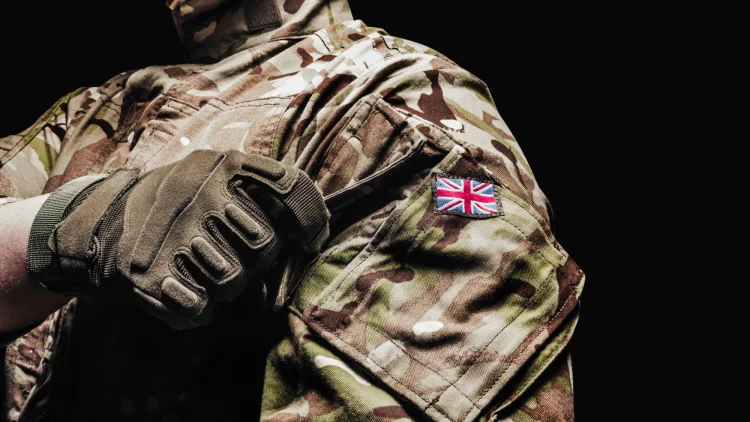

As charity closures accelerate and frontline services shrink, Veterans Aid CEO Prof Hugh Milroy sounds an urgent warning: “Smaller delivery charities are already struggling to survive – and the veterans’ sector will not be immune. If these specialist organisations disappear, the Government will lose the very partners it depends on to keep veterans from falling into crisis. Despite really good intentions by so many, I am worried that Britain is sleepwalking towards a veterans’ care crisis.”
While Whitehall sketches out long‑term reforms, the small frontline charities that actually deal with real‑time crises are vulnerable; and with them goes the State’s unofficial safety net for veteran care.
Small charities are the quiet engine of veterans’ care, and that engine is close to stalling. They’re absorbing soaring demand, complex cases, and suffering from restrictive funding models that reward appearance and brand over outcomes. They’re also carrying the heaviest burdens created by ‘client dumping’, because they are the last ones who ever say no. If these charities fall, the entire system will feel the shock. This suggested scenario will be exacerbated without the immediate introduction of an enforceable Veterans’ Charter that protects standards, responsibilities, and accountability across the system.
Signposting cannot replace expertise or actual delivery – and big reforms cannot compensate for the collapse of frontline capacity. This is not a marginal concern: it is an existential threat to veteran care.
I recently read a quote by Vincent Van Gogh who wrote that “Great things are done by a series of small things brought together”. Certainly this is true in the charity world where many of the achievements of ‘big beasts’ – i.e. the household name organisations – are underpinned by the actions of myriad smaller charity operators. The planned system will collapse without them.
Is this a reality? In its first annual Charity Sector Risk Assessment, published in September 2025, the Charity Commission highlighted financial sustainability as one of the most pressing issues facing the sector. The fact is that more charities are closing, at a time when increasing numbers of people depend on their services. Three months earlier, research published by Civil Society confirmed that nearly half of small charities feared they would have to close within the year.
So what will this mean to those at the bottom of the pile? As I write I’m mindful of a veteran who recently reached out for help. In 2013 she had been arrested by service police and released without charge over her time in Afghanistan. She said, “I still lie awake every night wondering if there will be another knock at the door”. She served for 24 years and has a chest full of medals, but now understands that if that knock comes, again she is utterly on her own. Her words were very chilling and absolutely crystalised the case for a formal Veterans’ Charter.
The belief that being a veteran qualifies individuals for a lifetime of care is a fallacy that rings hollow for her every night. What are her rights? Where is the support? As a veteran without any obvious maladies or problems, will the latest ‘OP’ care for people like her? Into which box will the ‘one size fits all’ drop-in or call centre OP-erator put her? To whom will she be ‘referred’? Who will be responsible if she is let down… again?
She is but one example and the ‘sound of silence’ from those in power is making things worse for people like her. The ongoing possibility of historic prosecutions is creating a climate of uncertainty that places significant psychological and social strain on many former service personnel, underscoring the need for a clear and protective Veterans’ Charter. This has to stop, because we are already seeing the human cost of such abandonment . These veterans are human beings with families. They served their country as part of a team, but when facing this fight they are on their own. Without defined policy boundaries or consistent safeguards, veterans find themselves living with chronic anxiety, reactivated trauma, and a persistent fear that actions taken under the rules and expectations of the time may be retrospectively judged.
The moral case for a Veterans’ Charter, which would provide the clarity, assurance, and institutional commitment necessary to mitigate these harms and ensure that those who served are treated with fairness, consistency, and respect, is utterly clear.
Hers isn’t a problem that can be solved with a grant, a badge, an offer of accommodation, a prosthetic or a holiday. It’s an unexpected plunge into a vortex of indefinite uncertainty and anxiety. Referral is the right course of action if it leads to a valid source of practical help, but when that help doesn’t exist, it’s just buck passing and can never be an effective answer. This decorated officer’s case not only illustrates serious gaps in the practical approach to future care; it also exposes the moral anomalies in government/veteran relations.
The safety net provided by the smaller charities in the Veterans’ world, once strong and flexible, is unravelling fast as, due to consistently increasing long-term costs, small charities become increasingly unable to fulfil their de facto backstop role. The language of gratitude – while knowing, privately, that the system cannot pay the bill – is the instrument that turns the looming crisis of the current charity-dependent model into an unmanaged decline‑dependent model, with the worst possible outcome being that that people will steer clear of defence (i.e. the armed forces) as a career. From a pragmatic, if not moral, perspective this should surely be an incentive to build something safer, fairer and, in the long run, more effective contributor to the defence of nation?
So what does the everyday risk look like from our perspective, as an operational charity delivering crisis support? The small, specialist frontline charities that Veterans Aid deals with – the ones that step in when no one else will – are reaching the limits of their endurance. Costs for housing, detox, and crisis support have soared; resources have not. These organisations have filled the gaps for decades, quietly absorbing risk that rightly belongs to the State. But that goodwill reservoir is almost dry. The whole issue has been exacerbated by the blatant ‘dumping’ of complex or costly cases on smaller charities by various agencies purporting to deliver services for veterans.
The smaller delivery charities cannot operate on goodwill and don’t have the capacity to wade through the labyrinthine processes involved in raising funds from government or other major funders. To make matters worse, our exposure to current funding models clearly illustrates that they do not reflect the realities of running a frontline operational charity in the 21st Century.
If this very real situation happens, there will be many who assume that the large-brand military charities (the ‘big beasts’) will step up to the plate. Many do superb work, but during my extensive exposure to the sector I have observed that they rarely get involved in real-time crises. Furthermore money ( i.e. fundraising ), which is their major activity, is often peripheral in terms of real life needs. Veterans, and their families, who increasingly press Ministers about what support is in place, are beginning to realise that the Armed Forces Covenant isn’t a guarantee of anything. This lack of foresight represents a huge risk of reputational damage to any government adhering to the myth that the Armed Forces Covenant has teeth.
Without an effective frontline, I struggle to see how the remaining top-down support will be able to cope with the sheer rapidity and complex nature of the problems that are frequently presented to it. In the case quoted above, Veterans Aid took immediate, positive action. We linked her to a therapist within the hour and are moving quickly to get appropriate legal support to explore and clarify her position. Thanks to this swift and practical intervention she will be able to continue working and contributing to society; but this support should be a basic right, not something offered serendipitously because the veteran in distress had the good fortune to find her way to an organisation prepared to help her. If the smaller delivery charities disappear, through no fault of their own, then veterans will face a hopeless abyss. I wonder what that will do for recruiting.
The CSJ’s latest Rough Sleeping Tracker figures reveal that 4,793 people were sleeping rough on a single night last autumn, the highest number ever recorded: an increase of 96 per cent since 2021 and 171 per cent since 2010. Inevitably, some of these will be veterans.
The risk of doing nothing is real; rising homelessness, spiralling costs, and a moral failure that I believe no government should be willing to tolerate. The buffer that once quietly protected Britain’s veterans is very fragile. If it goes, the chaos won’t fall on charities; it will fall on Whitehall.

Iran War 1) Trump says ‘I’m very disappointed in Starmer over Iran’, as war escalates
“Donald Trump told The Telegraph he was “very disappointed” in Sir Keir Starmer for blocking him from using Diego Garcia to carry out strikes on Iran. In an exclusive interview, the US president said that the Prime Minister’s initial refusal to let US forces use the Chagos Islands base was unlike anything that had “happened between our countries before”. Britain had denied the US permission to conduct strikes from bases such as Diego Garcia and RAF Fairford, citing international law. However, the Prime Minister relented on Sunday night and said he would allow the US access to Diego Garcia for “specific and limited defensive purposes”. Mr Trump said Sir Keir “took far too long” to change his mind.” – Daily Telegraph
- Trump renews his attack on Starmer and says he has ‘not been helpful’ – Daily Mail
- Dithering Starmer is pandering to Muslim voters, slams Trump – The Sun
- Israel launches ground invasion of Lebanon – Daily Telegraph
- The big one is coming soon, Trump warns Iran – The Times
- Israel launches fresh attacks on Tehran and Beirut – Guardian
- Trump says Iran war to last four to five weeks but could go ‘far longer’ – Guardian
- Stranded Britons start returning home from Gulf as flights resume – The Times
- Ban London march linked to Iranian regime, MPs demand – The Times
- The four men who could save or destroy Iran – Daily Telegraph
- Inside the plan to kill Ali Khamenei – FT
- Zaghari-Ratcliffe: I fear for Iran and my family – The Times
Comment
Iran War 2) Starmer refuses to retaliate for Iran’s drone blitz on RAF base in Cyprus
“Keir Starmer was last night refusing to strike back against Iran’s bombing blitz that targeted a British base. He ruled out retaliation for Sunday’s drone strike on RAF Akrotiri in Cyprus. One MP said it was in stark contrast to wartime leader Sir Winston Churchill, who called for “Action this day!”. It came as the PM faced a deepening rift with US President Donald Trump, after initially refusing to let his forces use our military bases to strike Iran. Sir Keir has since made a partial U-turn — allowing America to use the sites only for “defensive” action, citing the need to stick to international law. But he was still accused off being a “lawyer not a leader” while the Middle East exploded into all-out-war.” – The Sun
- Badenoch tears apart ‘scared’ Starmer in furious tirade over Iran – Daily Express
Comment
- Starmer refusing to contemplate retaliation for strikes by Iran is shameful – Editorial, The Sun
Iran War 3) US embassy attacked by suspected Iranian drones
“Suspected Iranian drones attacked the US embassy in Saudi Arabia overnight. The US mission in Riyadh was attacked by two drones early on Tuesday, causing a small fire, US and Saudi officials said. Witnesses described seeing smoke over the embassy and hearing loud explosions in the diplomatic quarter, home to foreign embassies in the Saudi capital. Saudi officials said that more than half a dozen drones were intercepted in Riyadh, including four targeting the diplomatic quarter, and the city of Al-Kharj. Donald Trump threatened retaliation for the drone attack, telling News Nation that “you’ll find out soon” what shape that would take. The US embassy issued shelter in place warnings for Jeddah, Riyadh and Dhahran, and limited non-essential travel to any military installations in the region.” – Daily Telegraph
- US embassy in Saudi blitzed – The Sun
- Trump promises swift retaliation for drone attack on US embassy – Daily Mail
Badenoch to ban public sector using diversity quotas when hiring
“Kemi Badenoch has promised to ban public bodies from using diversity quotas when hiring. The Conservative leader said there will be “no racial preferences” or “state-sponsored division” in the public sector under plans to strengthen integration in Britain. She also promised to teach schoolchildren to be proud to be British and end the “the promotion of multiculturalism” by teachers. In a speech setting out how she would aim to promote integration, Mrs Badenoch said Britain has become “too tolerant of those weaponising identity politics for their own gain”. She said: “We will end identity politics in the state, full stop. No racial preferences. Protected characteristics will not be used as criteria for hiring, promotion, admissions, or procurement.” – Daily Telegraph
>Yesterday:
Spring Statement: Reeves to water down minimum wage increase for young workers
“Rachel Reeves is poised to backtrack on another manifesto pledge to raise young people’s pay as her economic watchdog warns of rising joblessness and a sluggish economy. The Chancellor is expected to water down a promise to abolish what the Government has previously described as “discriminatory age bands” by scrapping the youth rate of the minimum wage, which has existed since the system was introduced in 1999. Peter Kyle, the Business Secretary, is expected to write to the independent body that helps to set the wage floor in the coming weeks with a new mandate that paves the way for slower increases in pay rates for under-21s. It comes as Ms Reeves prepares to unveil a pared-back spring forecast where her independent tax-and-spending watchdog will warn of rising joblessness.” – Daily Telegraph
- Stronger UK public finances can withstand Iran war shock, Reeves to say – FT
Comment
>Today:
Green Party seizes second place in polls as Labour hits record low
“The Green Party has leapfrogged Labour and the Conservatives to second place in the polls behind Reform UK. A YouGov survey for The Times and Sky News found that support for the Greens was 21 per cent, up four points in the week since their historic by-election victory in Gorton & Denton. Labour had 16 per cent support, down two points on the previous week and its lowest polling score on record. The Conservatives are also down two points at 16 per cent, which is only the second time the party has recorded such a low rating. Nigel Farage’s Reform has dipped one point to 23 per cent, putting it only two points ahead of the Greens. The Liberal Democrats were unchanged on 14 per cent.” – The Times
>Today:
>Yesterday:
Other political news
- Ministers to ban violent and degrading pornography online – The Times
- Clinton: I don’t believe I was an Epstein ‘honeytrap’ victim – The Times
News in Brief

Donald Trump’s “reckless” decision to join Israel with strikes against Iran has been demolished by a former Pentagon adviser.
The US initiated the largest American military operation in the Middle East for two decades at the weekend but the end goal still remains unclear.
Jasmine El-Gamal, who worked in the US Department of Defence between 2008 and 2015 under Barack Obama, pointed out that the president appears to have little justification for the deadly attacks.
“The pathway to escalation is wide open” within the region, she noted, as Iran has hit back with its own strikes on Israel and US military bases across the Middle East.
El-Gamal told Sky News: “We are now getting to the point where Iran is desperately trying to maintain its survival as a regime.
“And you have a US president who is desperately trying to maintain his credibility ahead of midterm elections and trying to make sense of his decision to go to war.”
Pointing to Trump’s bizarre mixed messaging over just why the States had decided to attack Iran, El-Gamal said: “What you saw him today doing was retroactively trying to justify his decision to go to war, once again, smack bang in the middle of negotiations with the regime.”
Iran was engaging in talks with the west to set up a new deal to limit its ability to build nuclear weapons just last week, though negotiations ended without an agreement.
El-Gamal continued: “You’ve seen the justification go everywhere from saying, ‘this is for you, the Iranian people, once in a several generation opportunity, go for it’.
“Three days later, he’s listing other objectives, not one of them mentioned the Iranian people or their freedom.
“It’s about missiles, which supposedly can one day make it over to the US – no intelligence backs that up.
“It’s about the nuclear programme – there were talks in progress when he decided to strike.”
Trump has also said the war is about proxies and naval ships, even though the latter has “never been mentioned before”, the specialist pointed out.
She said Iran is “acting reckless” with its retaliation, but added: “We also need to talk about how reckless the US president has been in going into this war and dragging the entire region with him.”

WA trails nation on closing gender pay gap

Can PMI above 50 trigger Altcoin Season in 2026?

Starmer is unfit to govern


-

 Politics4 days ago
ITV enters Gaza with IDF amid ongoing genocide
-

 Fashion4 days ago
Weekend Open Thread: Iris Top
-

 Tech2 days ago
Unihertz’s Titan 2 Elite Arrives Just as Physical Keyboards Refuse to Fade Away
-

 Business7 days ago
True Citrus debuts functional drink mix collection
-

 Politics2 hours ago
Alan Cumming Brands Baftas Ceremony A ‘Triggering S**tshow’
-
Sports3 days ago
The Vikings Need a Duck
-

 NewsBeat5 days ago
Cuba says its forces have killed four on US-registered speedboat | World News
-
 NewsBeat3 days ago
Dubai flights cancelled as Brit told airspace closed ’10 minutes after boarding’
-

 Tech7 days ago
Unsurprisingly, Apple's board gets what it wants in 2026 shareholder meeting
-
 NewsBeat5 days ago
Manchester Central Mosque issues statement as it imposes new measures ‘with immediate effect’ after armed men enter
-
 NewsBeat3 days ago
The empty pub on busy Cambridge road that has been boarded up for years
-

 NewsBeat2 days ago
‘Significant’ damage to boarded-up Horden house after fire
-

 NewsBeat3 days ago
Abusive parents will now be treated like sex offenders and placed on a ‘child cruelty register’ | News UK
-
 NewsBeat7 days ago
Police latest as search for missing woman enters day nine
-

 Entertainment1 day ago
Baby Gear Guide: Strollers, Car Seats
-

 Business5 days ago
Discord Pushes Implementation of Global Age Checks to Second Half of 2026
-

 Business5 days ago
Only 4% of women globally reside in countries that offer almost complete legal equality
-
 Tech4 days ago
NASA Reveals Identity of Astronaut Who Suffered Medical Incident Aboard ISS
-

 Crypto World7 days ago
Entering new markets without increasing payment costs
-
Politics2 days ago
FIFA hypocrisy after Israel murder over 400 Palestinian footballers