



Connect with us

Tech

5 F-150 Engines You Should Steer Clear Of

Published

on


The Ford F-150 has been one of, if not the best-selling new car in the U.S. for almost five decades. According to Business Insider, more than 33 million F-Series trucks have been sold since 1977, the majority of which were F-150s. Throughout such a rich and encompassing history, there have been many great F-150 engines. Think the 300-cubic-inch Inline Six, 5.8L 351 Windsor, 3.5L EcoBoost V6, all some of the best engines ever put in a Ford truck.

Some of these have even been the backbone on which the U.S. infrastructure was built, while others brought the F-Series into the 21st century. However, not all of Ford’s engines share the same sentiment as some have been less reliable or more controversial than others. Ownership experience can vary, but certain units are widely associated with recurring issues and costly repairs. Therefore, here are Ford F-150 engines you should steer clear of.

Advertisement

Ford 5.4L Triton V8

As Car Wizard put it bluntly, the engine is “my personal most hated engine on planet Earth.” He went further, calling the unit “absolute trash,” warning owners who defend it by saying their truck is still running to “just wait.” He also claimed, “I, personally, have replaced 14 of these… and it’s around six or seven grand a pop.” We also tried our best to find the worst engine Ford ever put in a truck, and you guessed it, it was the 5.4L Triton.

When it comes to Triton’s worst issues, spark plug-related problems of the early models are certainly up there. Besides them being incredibly difficult to remove without special tools (as acknowledged by Ford in TSB 08-7-6) the luckiest of drivers were even treated with plugs flying out the side of the cylinder heads due to bad cylinder head designs. Other common problems of the Triton include oil sludge buildup, timing system issues, fuel system module corrosion, and gasket and oil leaks.

Advertisement

Although Ford never recalled a vehicle due to the Triton engine, there have been numerous bulletins published. Variable valve timing problems, often described by owners and technicians as the “death rattle,” have also been associated with the 5.4L Triton. These seem to be largely linked to oil pressure–dependent cam phaser operation and sludge buildup.

Advertisement

Ford 3.5L EcoBoost V6 (earlier generations)

As a disclaimer, not all of Ford’s 3.5-liter EcoBoost engines are deserving of being on a “worst F-150 engines” list, but an exception has to be made for some of the earlier iterations. Specifically, pre-2015 EcoBoost V6 engines are associated with expensive timing chain problems, thus making them some of the worst Ford 3.5-liter EcoBoost years you should avoid. Once again, no recalls were ever carried out, but Ford did issue TSB 18-2305, TSB 15-0131, and TSB 21-2119 programs, all of which were related to cold-start rattle, variable cam timing component wear, and timing chain or phaser-related noise conditions on early 3.5s.

Besides timing chain problems, 2017 to 2020 models were also prone to cam phaser problems. Ford did issue the Ford 21B10 Service Action, which directly addressed cam phaser noise complaints on 2017 to 2020 vehicles equipped with the Ford 3.5L EcoBoost GTDI V6. The program extended repair coverage and instructed dealers to reprogram the powertrain control module in order to mitigate + cam phaser noise. In addition, a separate Ford 21N03 Customer Satisfaction Program was issued, providing a cam phaser replacement for vehicles that continued to exhibit problems after the update.

Other problems on earlier 3.5-liter EcoBoost engines include turbo coolant fittings leaking coolant, broken exhaust manifolds, and leaking vacuum pumps. Overall, the Ford 3.5-liter is far from being the worst engine Ford ever made, but given how earlier iterations of the engine had serious issues that can cost thousands of dollars to fix, it had to be included.

Advertisement

Ford 4.2L Essex V6

The Ford Essex V6 engine family earned its notoriety by replacing well-established V8 engines with comparably smaller yet similarly powerful V6 engines. However, when Flying Wrenches ranked Ford F-150 engines from best to worst, they placed the 1997 to 2008 Ford 4.2L Essex V6 in D (the lowest) tier, saying, “You know it’s going to let you down one day.” One of the main pain points of the 4.2L Essex V6 has to do with its intake manifold gasket failures.

If you are unlucky, you can experience coolant leaking into the cylinders which can hydrolock it and even bend the connecting rods. Ford did issue the TSB 99-20-7, addressing internal coolant leaks on 1995 to 1998 4.2-liter Essex engines caused by failing lower intake manifold or front cover gaskets. The bulletin outlines revised gasket designs and installation torque specifications in order to cope with the problem.

However, this did not stop the 4.2-liter V6 from suffering from similar issues found in Ford’s V8s. Besides the intake gasket problem, the 4.2 experienced problems with the timing cover gasket leaking and ignition problems. Timing cover problems were recognized by Ford with the 99B29 service program which required gasket replacements to combat the issue.

Advertisement

Ford Powerstroke 3.0L V6

The Ford Powerstroke 3-liter V6 was offered for F-150 models from 2018 and later, but it never really caught on. This Ford diesel pickup engine was discontinued in 2021 because it was caught in the midst of a semiconductor shortage crisis, while also because it was outsold by its own gasoline counterparts. Part of the reason why people choose diesels over gasoline trucks is towing, but the 3-liter Powerstroke was not really any better in this regard compared to available gas engines.

Additionally, it was a very difficult engine to work on since it was intended for Range Rovers, not F150s. Regardless, the main problems of the 3-liter Powerstroke include crankshaft bearing failures that could lead to engine failures. The truck also experienced problems with the EGR system, which could cause subpar performance and overheating issues. Besides these, owners have also complained about DPF problems and EGT system problems.

When Getty’s Garage did a deep-dive on why the 3-liter Powerstroke was discontinued, he mentioned that “It costs more to get, you know, relatively the same exact performance, so why would you get the diesel?” This was also reflected in the availability of aftermarket supports, meaning that it never truly caught on for the 3-liter. Even though this was a fairly economical engine, it was not strong enough for towing. Plus, it was not the most reliable, and it certainly wasn’t the one people wanted.

Advertisement

Ford 6.2L Boss

The Ford 6.2-liter Boss engine was introduced by Ford in 2010 and was reserved for the amazing V8 F150 Raptor until it was replaced by the new EcoBoost in 2019. Overall, it must be said that the 6.2 is not an engine you should steer clear of by itself since it has proven itself as a fairly durable platform. However, it is not perfect. This is especially the case when buying a used Ford F150 Raptor with the 6.2 that has not been properly taken care of. Things can turn south really quick.

The three most common problems with Ford’s 6.2L Boss engine include faulty spark plugs, broken valve springs, and oil leaks. In terms of spark plugs, this engine has 16 of them. They are not easy or quick to replace. When Chris from I Do Cars did a teardown of a Ford 6.2L Boss V8, he mentioned that “some of the early 62s have been notoriously bad for broken valve springs,” He later confirmed it by saying he tore one down and found “a mess inside.”

Advertisement

Oil leaks have typically been associated with internally leaking valve cover baffles on the right side of the valve cover. Ford issued the TSB 15-0161 which instructed dealers to replace affected cover assemblies to solve it. Overall, when maintained properly, the 6.2 is not likely to be one of the F150 engines to avoid, but given the problems some examples experienced and how much it costs to fix them, we decided to include it.

Advertisement

How we made our list

The Ford F-150 is a staple of American car culture. It is a truck that supports much of American daily life. It has been one of the best-selling vehicles for decades for good reason. It offers a strong balance of capability, practicality, and driving comfort, appealing both to people who need a work truck and those who simply want a reliable daily vehicle. 

However, given the size of the F-150 community, a wide range of issues has also been documented, and some engines have developed stronger reputations for problems. It is important to emphasize that all engines discussed here can still be reliable. We are not claiming that every 5.4-liter Triton engine will fail. Rather, according to tons of online data, these are engines that appear more likely to experience problems.

We reviewed numerous F-150 forum posts, mechanic expert reviews, teardowns, technical deep-dive videos, information from NHTSA databases, Ford service bulletins, service programs, and warranty extension notices. We also built upon the previous research conducted by our team on similar topics to make sure our list is credible and can easily be verified.  

Advertisement


Source link

Continue Reading
Click to comment

Leave a Reply

Your email address will not be published. Required fields are marked *

Tech

Xiaomi Pad 8 Series Launched: Big Battery, Flagship Chip & Sleek 11.2-Inch Display

Published

on

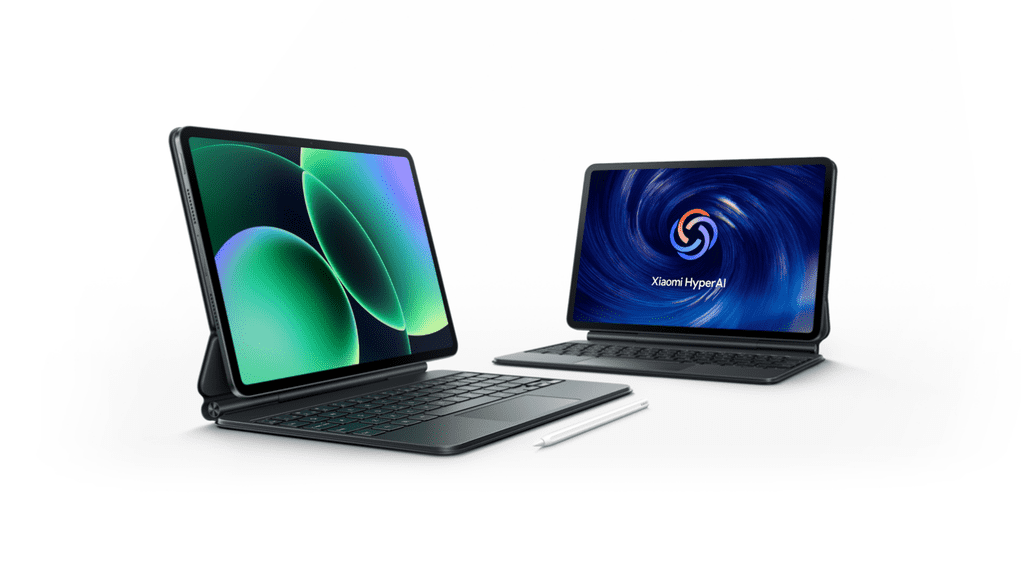
After the pretty exciting Xiaomi 17 series, the Chinese maker announced the new Xiaomi Pad 8 Series, comprising the Pad 8 and the Pad 8 Pro. The devices are a blend of power and portability, offering a slim design along with a large battery. Indian consumers can expect the Xiaomi Pad 8 Series to go official on March 11.

The biggest highlight of the Xiaomi Pad 8 Series is the 11.2-inch 3.2K display, which is a significant feature of the tablet series. The high-resolution display ensures crisp text and image quality, and the 800 nits of peak brightness are helpful in outdoor conditions. In addition, the display’s 144Hz refresh rate makes it smooth, especially for gaming.

Furthermore, both models in the Xiaomi Pad 8 Series feature a large 9,200mAh battery, ensuring longer battery life throughout the day. Despite the slim 5.75mm body, Xiaomi has managed to include a bigger battery than previous generations. This makes the tablet reliable for travel, long meetings, and extended work sessions. Users can work, stream, or browse without worrying about frequent charging.

Xiaomi Pad 8 Pro

image of Xiaomi Pad

The Xiaomi Pad 8 Pro stands out as the most powerful model in the series. It comes with the Snapdragon 8 Elite Mobile Platform. This provides a significant boost to CPU and GPU performance for intensive operations. Moreover, it can handle video editing, multitasking, and other operations.

The device supports fast charging up to 67W. This device’s camera features a 50MP primary camera and a 32MP front-facing camera. Storage options go up to 512GB, and the Matte Glass option with anti-reflective coating is a professional’s dream come true.

Advertisement

Xiaomi Pad 8

Xiaomi Pad 8 with the keyboard accessory

The Xiaomi Pad 8 uses a Qualcomm Snapdragon 8s Gen 4 Mobile Platform, offering reliable performance in running multiple tasks at once. It can run several apps simultaneously, stream, browse, and edit, all without any lag. It can be topped up quickly with 45W turbo charging.

For camera needs, the Xiaomi Pad 8 has a 13MP rear camera and an 8MP front camera, making it perfect for photo shoots and video calls. Storage capacity can reach 256GB, offering enough room for most users without being too expensive.

For colors, the Pad 8 is available in Pine Green, Gray, and Blue, starting at a price of €449.9. The Pad 8 Pro is available in the same colors, starting at a price of €549.9. For a premium look, the Pad 8 Pro Matte Glass version is available only in Gray and costs €769.9 for the 12GB + 512GB version.

Source link

Advertisement
Continue Reading

Tech

Alibaba’s New Qwen 3.5 Small AI Model Can Run Directly On an iPhone 17

Published

on

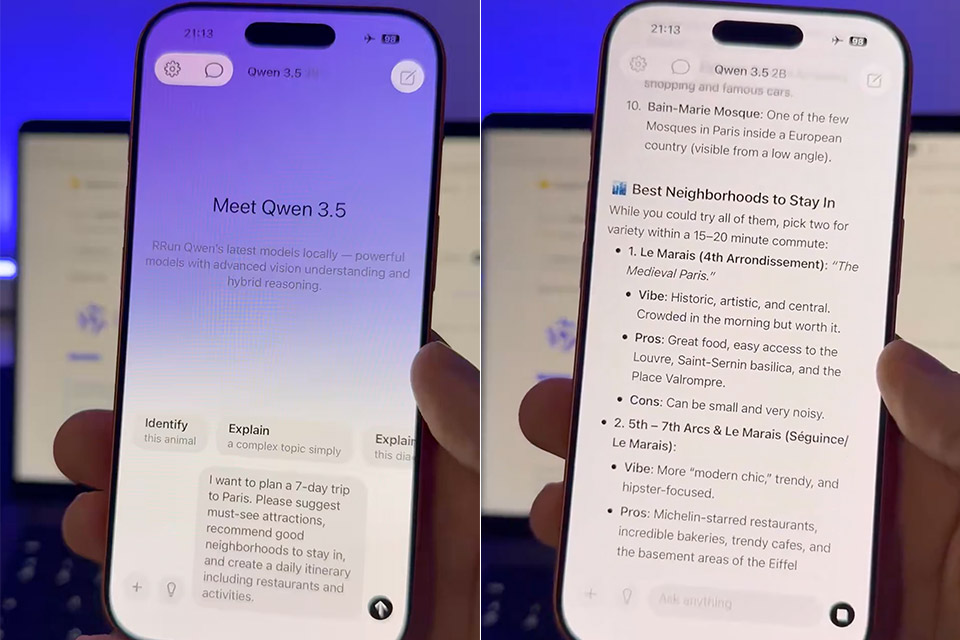
Alibaba Qwen 3.5 On-Device AI iPhone 17
Alibaba has just taken a significant step forward by introducing a line of small AI models that will fit perfectly into your existing smartphone. Qwen 3.5’s smaller cousins pack a punch that used to take a full server configuration to deliver, and even the smallest of them will work flawlessly on your iPhone 17.

Alibaba’s Qwen team introduced four new models today: 0.8 billion, 2 billion, 4 billion, and 9 billion parameter versions. Built on the same upgraded architecture as the bigger Qwen 3.5 series, which launched in February 2026, these smaller versions were built for efficiency and can natively handle both text and graphics. The 0.8B and 2B versions are ideal for phones, laptops, and edge hardware where memory and battery life are critical, while the 4B is designed for lightweight tasks, and the 9B model approaches the capabilities of larger models in terms of reasoning, math, multilingual knowledge, and document analysis.


Plaud Note Pro AI Voice Recorder, Transcribe & Summarize with AI, App Control, Note Taker for Meetings…
  • AI-POWERED TRANSCRIPTION & MULTI-DIMENSIONAL SUMMARIES: Plaud Note Pro is your professional voice transcriber, delivering high-accuracy transcription…
  • ENHANCED CONTEXT WITH MULTIMODAL INPUT: Capture audio, type notes, add images, and press to highlight key moments for richer context. During…
  • CHAT WITH YOUR RECORDINGS USING “ASK Plaud”: Unlock deeper insights with this interactive AI. Ask questions, extract key points, draft emails, and get…

The results are pretty mind-blowing, as Alibaba claims that the 9B variant produces results that are almost on par with systems with 120 billion parameters, implying that it matches (and in some cases outperforms) the capabilities of big hitters like ChatGPT and Gemini in a series of critical tests. In contrast, the 4B variation performs at levels comparable to prior 80B models. They may have sacrificed depth in favor of speed and resource economy, but they can still perform basic picture recognition and text.


Community testing has demonstrated that these models can be run on a mobile device using tools such as MLX, with some even managing to fit a quantized version of the 2B model into an iPhone 17. You receive lightning-fast responses without having to go online or pay for subscription fees or data transfer to servers. The 0.8B and 2B variants are offline-ready and compatible with normal phones, and users say that the 4B model delivers nearly as much power in real-world use as the larger models. Plus, with open-source weights on Hugging Face and ModelScope, deployment is quite simple using familiar frameworks. You can find them all here.

Advertisement

Source link

Advertisement
Continue Reading

Tech

Amazon Cloud Unit’s Data Centers In UAE, Bahrain Damaged In Drone Strikes

Published

on

sizzlinkitty shares a Reuters report detailing how drone strikes in the Middle East conflict with Iran damaged AWS data centers in the UAE and Bahrain, disrupting core cloud services and causing “prolonged” outages. Following the initial report, where Reuters said “objects” had triggered a fire at the data centers, the article was updated with additional information: A strike on the UAE facility marks the first time a major U.S. tech company’s data center has been disrupted by military action. It raises questions around Big Tech’s pace of expansion in the region. “In the UAE, two of our facilities were directly struck, while in Bahrain, a drone strike in close proximity to one of our facilities caused physical impact to our infrastructure,” Amazon’s cloud unit Amazon Web Services (AWS) said in an update on its status page. “These strikes have caused structural damage, disrupted power delivery to our infrastructure, and in some cases required fire suppression activities that resulted in additional water damage,” AWS said. “We are working to restore full service availability as quickly as possible, though we expect recovery to be prolonged given the nature of the physical damage involved,” it added.

Financial institutions that use AWS services have been affected by the outage, one person with direct knowledge of the situation told Reuters, requesting anonymity because of the sensitivity of the matter. “Even as we work to restore these facilities, the ongoing conflict in the region means that the broader operating environment in the Middle East remains unpredictable,” AWS said. The AWS outage disrupted a dozen core cloud services and the company advised customers to back up critical data and shift operations to servers in unaffected AWS regions. Abu Dhabi Commercial Bank said its platforms and mobile app were unavailable due to a region-wide IT disruption, although it did not directly link the outage to the AWS incident. “In previous conflicts, regional adversaries such as Iran and its proxies targeted pipelines, refineries, and oil fields in Gulf partner states. In the compute era, these actors could also target data centers, energy infrastructure supporting compute, and fiber chokepoints,” Washington-based think tank Center for Strategic and International Studies said last week.

Source link

Continue Reading

Tech

Charter's Cox deal approved: Higher broadband prices could follow as FCC clears $34.5B merger

Published

on


The Federal Communications Commission’s approval of Charter’s $34.5 billion purchase of Cox positions Charter’s Spectrum brand to overtake Comcast in total broadband subscribers once the transaction closes. Charter currently serves about 29.7 million residential and business Internet customers, compared with Comcast’s 31.26 million. The addition of Cox’s 5.9 million subscribers would make Charter the…
Read Entire Article
Source link

Continue Reading

Tech

AI and collaboration critical for cyber professionals in 2026

Published

on

Ciaran Luttrell and George O’Mahony discuss Ireland’s cyber landscape and the impact of AI on the sector.

Late last week (26 February), managed detection and response platform eSentire awarded the fifth annual MTU Sean Hennessy Bursary to Bartosz Lipinski, from Fermoy, Cork. In partnership with MTU’s Department of Computer Science, the award was established as a means of honouring a former colleague and supporting young people in the security sector.  

SiliconRepublic.com spoke with Ciaran Luttrell, the vice-president for global SOC operations at eSentire and George O’Mahony, the head of the Department of Computer Science at Munster Technological University (MTU), to hear more about the bursary, Ireland’s cybersecurity sector and the skills needed to succeed. 

“The Bursary provides a huge opportunity for students to work in an international operations centre that supports thousands of customers, to refine their skills during their placement and then look at this as a career after they graduate,” explained Luttrell.

Advertisement

“This is the fifth year of the bursary, and it has been a great way to find and develop new talent. So far, all of the recipients of the previous years that have graduated have joined us full time and remain with the company and those that are still going through their studies continue to work with us on a part time basis.”

Next in line

According to O’Mahony, developing a pipeline of cybersecurity expertise is of key importance, not just for professionals based in Ireland, but worldwide. 

He said, “There is still a cyber skills gap, not only in Ireland, but across the globe. This is a global issue that is faced by both small companies and multinational organisations. There’s just not enough people available.” 

He stated, by building a graduate pipeline, for example like the programme at MTU, in collaboration with companies based in Cork and the wider south-west region, there is potential to develop a strong and connected ecosystem. But it can’t depend solely on the participation of graduates.  

Advertisement

He said, “Graduates are not going to fill the entirety of the skills gap. MTU has run the Cyber Skills Initiative as a lead institution. This is a collaboration between MTU, University of Limerick and Technological University Dublin, which is an HEA HCI Pillar III project that was awarded back in 2021. 

“The project has now been running for five years and has allowed us to expand access to cybersecurity programmes by looking at short courses and micro-credentials, which are all university accredited. 

“This allowed more people to upskill or reskill and these types of alternatives, at the postgraduate level, are really important in solving this talent gap, especially when aligned to international standards, like the NIST/NICE framework.” 

It’s an AI world now

Cybersecurity, like virtually every STEM role, has been impacted by AI advancements, with significant fears that artificial intelligence limits career opportunities for professionals young and older alike. 

Advertisement

O’Mahony is of the opinion that this is an even greater issue in academia as the onset of GenAI has had a detrimental effect on graduates. But it is, he finds, an opportunity to commit to robust hard and soft upskilling, with the professional at the core. 

He said, “AI will probably have an impact in automating some tasks within IT like vulnerability scanning, log analysis and others, that are important but also repeatable. 

“What will remain as valuable to the student or graduate is around critical analysis, critical thinking, problem-solving, and being able to reason in areas of uncertainty, like not knowing exactly what the attacker can do. And hence companies will still need graduates to understand and apply this skillset, while being able to use AI and take advantage of new technologies. “


For both Luttrell and O’Mahony, AI-literacy simply can not be ignored, especially among those expecting a career in a field as critical as cybersecurity. O’Mahony noted collaboration among educational institutions and companies is going to be vital in bringing young people up to speed on the topics that most affect cyber careers, such as emerging risks, as well as shifting regulatory and operational requirements.

Advertisement

He said, “With AI, some of the technologies that are affecting the market did not exist even months ago, so how can you help students understand what is involved or how to secure those new environments? At this point, we have to help them understand first principles and take a ‘life-long learning’ approach, so that they are able to apply their knowledge and skills in the most effective way.”

For Luttrell, “getting a foot in the door is a huge achievement”, but what organisations truly need to prioritise for their employees and long-term growth strategies, is a commitment to a mutually beneficial career progression plan. 

He explained, companies often worry about hiring early career professionals, as it may not seem like a strong investment. He said, employers bring people in, train them up and then if they choose to move on, it can impact the organisation. 

“The old mindset here is that you are spending on training and recruitment, then someone else sees all the benefits. It’s very much a zero sum mindset and I think it is the wrong one to take.

Advertisement

“More skilled people benefits everyone. The world is more connected and so any company that you work with or partner with can potentially affect your security as well. We have seen attacks through service providers and software supply chains, and so the number of skilled professionals in the market helps to improve the overall state of security for everyone.”

Don’t miss out on the knowledge you need to succeed. Sign up for the Daily Brief, Silicon Republic’s digest of need-to-know sci-tech news.

Source link

Advertisement
Continue Reading

Tech

The Best Ergonomic Keyboard I’ve Tried (and Other Comfortable Typing Options)

Published

on

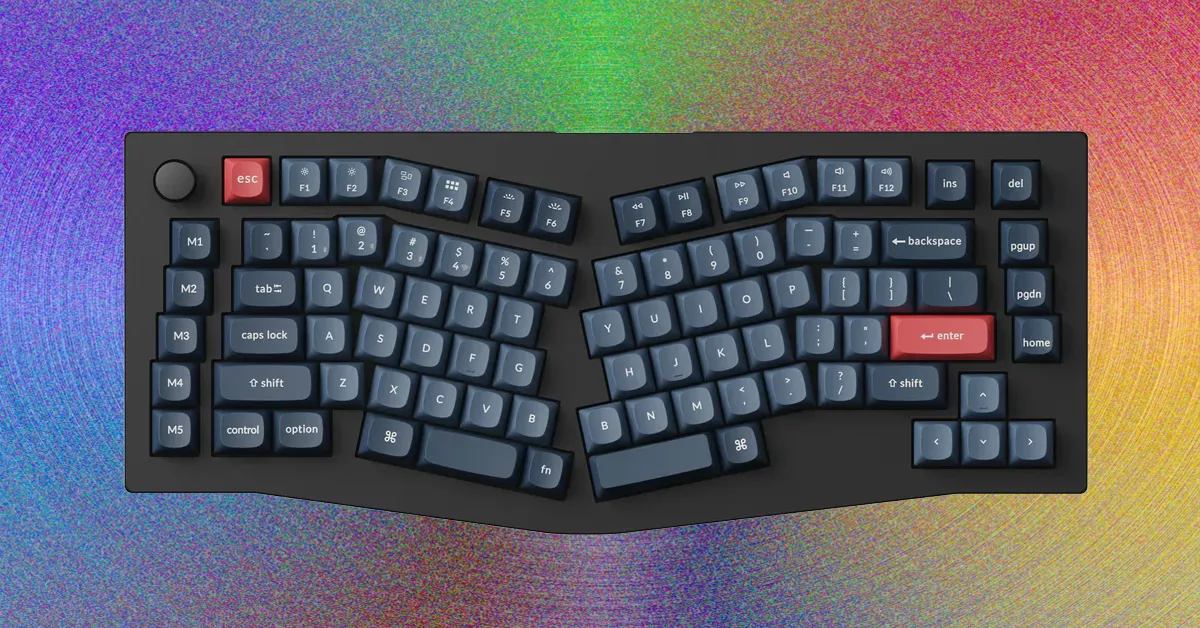
While there are countless types of ergonomic keyboards, the most common are typically going to be angled keyboards and split keyboards. Angled keyboards, often referred to as “Alice”-style keyboards in the mechanical keyboard world (named after the TGR Alice), split the alphanumeric keys along the middle, positioning the two halves at an angle from one another while keeping the modifier keys (backspace, enter, shift, and so on) in their standard positions. The angle will vary between keyboards, as will the number of keys, but the main constant in an Alice-style keyboard is that, despite the halves being separated from one another, the keyboard itself is not split. It has one case that all of the keys are held in.

Alternatively, a standard split keyboard does the opposite: A standard split keyboard will keep all of the keys in their standard position (with no new angles) and instead cut the entire keyboard in two, creating two distinct halves that can be moved independently of one another. Some of these keyboards will connect the two halves with a cable, while others will connect them wirelessly. This typically allows for the two halves to be angled, to sit far away from one another, or for only one half to be used (typically for gaming).

Outside of all this, there are also ortholinear keyboards. On a typical keyboard, the keys are staggered instead of being aligned upon a perfect grid. But with an ortholinear keyboard, the keys are aligned along this grid. While this can be more difficult to type on at first, it theoretically enables your fingers to move more naturally, directly up and down to reach other keys instead of moving at an angle. There are both ergonomic and split ortholinear keyboards, and keyboards that use nonstandard staggering instead, like the Naya Create.

Source link

Advertisement
Continue Reading

Tech

Drone strikes damaged AWS data centers in Middle East

Published

on

Amazon AWS

Amazon has confirmed that three Amazon Web Services (AWS) data centers in the United Arab Emirates (UAE) and one in Bahrain have been damaged by drone strikes, causing an extensive outage that is still affecting dozens of cloud computing services.

While the company didn’t provide further details on the incident, the attacks are likely part of Iran’s response to U.S. and Israeli strikes in the Middle East over the weekend.

Amazon says the drone strikes have disrupted AWS Middle East (UAE) Region (ME-CENTRAL-1) and the AWS Middle East (Bahrain) Region (ME-SOUTH-1).

“Due to the ongoing conflict in the Middle East, both affected regions have experienced physical impacts to infrastructure as a result of drone strikes. In the UAE, two of our facilities were directly struck, while in Bahrain, a drone strike in close proximity to one of our facilities caused physical impacts to our infrastructure,” the company said in a status page update on Monday, 4:19 PM PST.

Advertisement

“These strikes have caused structural damage, disrupted power delivery to our infrastructure, and in some cases required fire suppression activities that resulted in additional water damage. We are working closely with local authorities and prioritizing the safety of our personnel throughout our recovery efforts.”

At the moment, three availability zones (mec1-az2 and mec1-az3) in the UAE remain “significantly impaired,” while a third (mes1-az2) in Bahrain is still affected by a “localized power issue.”

Amazon is now restoring physical infrastructure, while also working on “multiple software-based recovery paths” that don’t require “underlying facilities being fully brought back online.” The company is also prioritizing restoring services and tools that would allow customers to back up and migrate data and applications out of the impacted regions.

Amazon also advised impacted customers to back up their data and migrate workloads to AWS regions unaffected by these issues.

Advertisement

“We recommend customers exercise their disaster recovery plans, recover from remote backups stored in other regions, and update their applications to direct traffic away from the affected regions,” Amazon added. “For customers requiring guidance on alternate regions, we recommend considering AWS Regions in the United States, Europe, or Asia Pacific, as appropriate for your latency and data residency requirements.”

On Monday, the United Kingdom’s National Cyber Security Centre (NCSC) also warned British organizations of a heightened risk of Iranian cyberattacks amid the ongoing conflict in the Middle East.

Malware is getting smarter. The Red Report 2026 reveals how new threats use math to detect sandboxes and hide in plain sight.

Download our analysis of 1.1 million malicious samples to uncover the top 10 techniques and see if your security stack is blinded.

Source link

Advertisement
Continue Reading

Tech

How to Recycle Your Old Laptops and Printers for Free

Published

on

We’ve all got that “shelf of shame” — a graveyard of ancient laptops, tangled power bricks and printers that haven’t seen an ink cartridge since 2010. Letting this e-waste sit in your house is a waste of space, but most people assume that recycling tech requires a trip to a waste facility in the middle of nowhere. The reality is much simpler.

Major retailers like Best Buy and Staples have become drop-off hubs for your digital junk. You can walk into a store with a dead PC or a clunky old scanner and hand it over for free, regardless of where you bought it. Some of these places will even throw you a bone — like a discount on new gear or a trade-in credit — just for helping them reclaim the heavy metals and plastics that don’t belong in a landfill. It’s the easiest way to reclaim your storage space without feeling like a jerk for tossing electronics in the trash.

Advertisement

The only real “work” on your end is making sure you aren’t handing over your entire life history along with the hardware. Before you dump a device, you need to do a legitimate data wipe — not just drag files to the trash can. A 10-minute factory reset or a dedicated drive-scrubbing tool ensures your old tax returns and saved passwords don’t become someone else’s property. Stop acting like you’re going to “fix” that laptop from 2015 and let a professional recycler break it down for parts instead.

What to do before you recycle your old computer

Wherever you take or mail in your items to be recycled, you’ll want to protect your data by removing it as best you can. One way to do this is to perform a factory reset on your computer. Our guide walks you through the process.

Where to recycle your old printers and computers

Some retail stores will accept computers and printers for recycling, but it’s not always a free service. Policies vary by company.

Apple

You can recycle your old Apple computers, monitors and peripherals, such as printers, for free at an Apple store, but there’s a costly catch. According to the Apple Free Recycling program, you must purchase a qualifying Apple computer or monitor to receive this service. Need another option? A third-party company called Gazelle buys old MacBooks to recycle them. After accepting Gazelle’s offer, you print a prepaid label or request a prepaid box and ship the machine to them.

Advertisement

Read more: Phone and Laptop Repair Goes Mainstream With Push From iFixit

Best Buy

Best Buy generally accepts up to three household items per household per day to be recycled for free, including desktop computers and printers, as well as other items ranging from e-readers to vacuum cleaners. While three is the limit for most items, there’s a higher limit for laptops — Best Buy will take five of those per household per day. Note that rules for dropping off monitors vary by state, and it’s not always free to do so. Best Buy also offers a mail-in recycling service for select items, but that’s also not free. A small box that holds up to 6 pounds costs $23, while a large box (up to 15 pounds) costs $30. One CNET editor recently lugged in an old, nonworking tube TV-VCR combo for e-cycling, and was happy to pay $30 to be rid of it.

Office Depot 

Office Depot and OfficeMax merged in 2013. The retailers offer a tech trade-in program both in-store and online, where you may be able to get a store gift card in exchange for your old computers and printers. If the device has no trade-in value, the company will recycle it for free. Office Depot also sells e-waste recycling boxes that you can fill with electronics to be recycled and then drop off at the stores, but they aren’t free. The small boxes cost $8.39 and hold up to 20 pounds, the medium ones cost $18.29 and hold up to 40 pounds, and the large boxes cost $28 and hold up to 60 pounds.

Staples 

You can bring your old desktop computers, laptops, printers and more to the Staples checkout counter to be recycled for free, even if they weren’t purchased there. According to a Staples rep, the retailer also has a free at-home battery recycling box, which has led customers to recycle thousands of batteries per week, up from an earlier average of 50 per week. Here’s a list of everything that can be recycled at Staples.

Advertisement

Watch this: Give Your Old Phone a Second Life: The Right Way to Recycle and Reuse It

Where to find electronics recycling centers

If you don’t live near a major retailer or would rather take your computers and printers to a recycling center, you can locate places near you by using search tools provided by Earth911 and the Consumer Technology Association.

Earth911

Use the recycling center search function on Earth911 to find recycling centers near your ZIP code that accept laptops, desktops and printers. Note that the results may also turn up places that accept mobile phones and not computers or printers, so you may have to do a little filtering.

Greener Gadgets

Consult the Consumer Technology Association’s Greener Gadgets Recycle Locator to find local recycling centers in your area that will take old items. The search function also allows you to filter the results to separately hunt for places that take computers versus printers.

Advertisement

Source link

Continue Reading

Tech

OPPO Find X9 Ultra Set for Global Release With Next-Gen Camera Tech

Published

on

After the success of the Find X9 series in pushing camera boundaries, the Chinese smartphone maker has just had its “one more thing” moment. It’s just officially confirmed that the OPPO Find X9 Ultra will make its global debut later this year. For the first time, OPPO’s Ultra platform will expand beyond China, which is the most exciting thing I’ve heard in a long time.

The announcement was made during OPPO’s media event in Barcelona, where the company positioned the Find X9 Ultra as its most advanced imaging smartphone yet.

OPPO Find X9 Ultra Going Global

Until now, OPPO’s Ultra-branded flagships have largely been limited to China. With the Find X9 Ultra, that changes. The company has confirmed that the device will launch globally.

Elvis Zhou, CEO of OPPO Europe, addressed the growing use of the “Ultra” branding across the industry. “In 2026, many devices will carry the ‘Ultra’ label. We believe the title must be earned. With Find X9 Ultra, we are setting a new benchmark for mobile imaging,” Zhou said.

Advertisement

Unfortunately, while no camera specs have yet been revealed, OPPO says the Find X9 Ultra combines next-generation optical engineering with refined computational imaging. Rumors have hinted towards a 200MP 1/1.28″ ultra-large sensor periscope telephoto lens, and a 50MP 10X periscope telephoto lens. Though these speculations should be taken with a grain of salt.

Source link

Continue Reading

Tech

C64 Gets A Modern Interactive Disassembler

Published

on

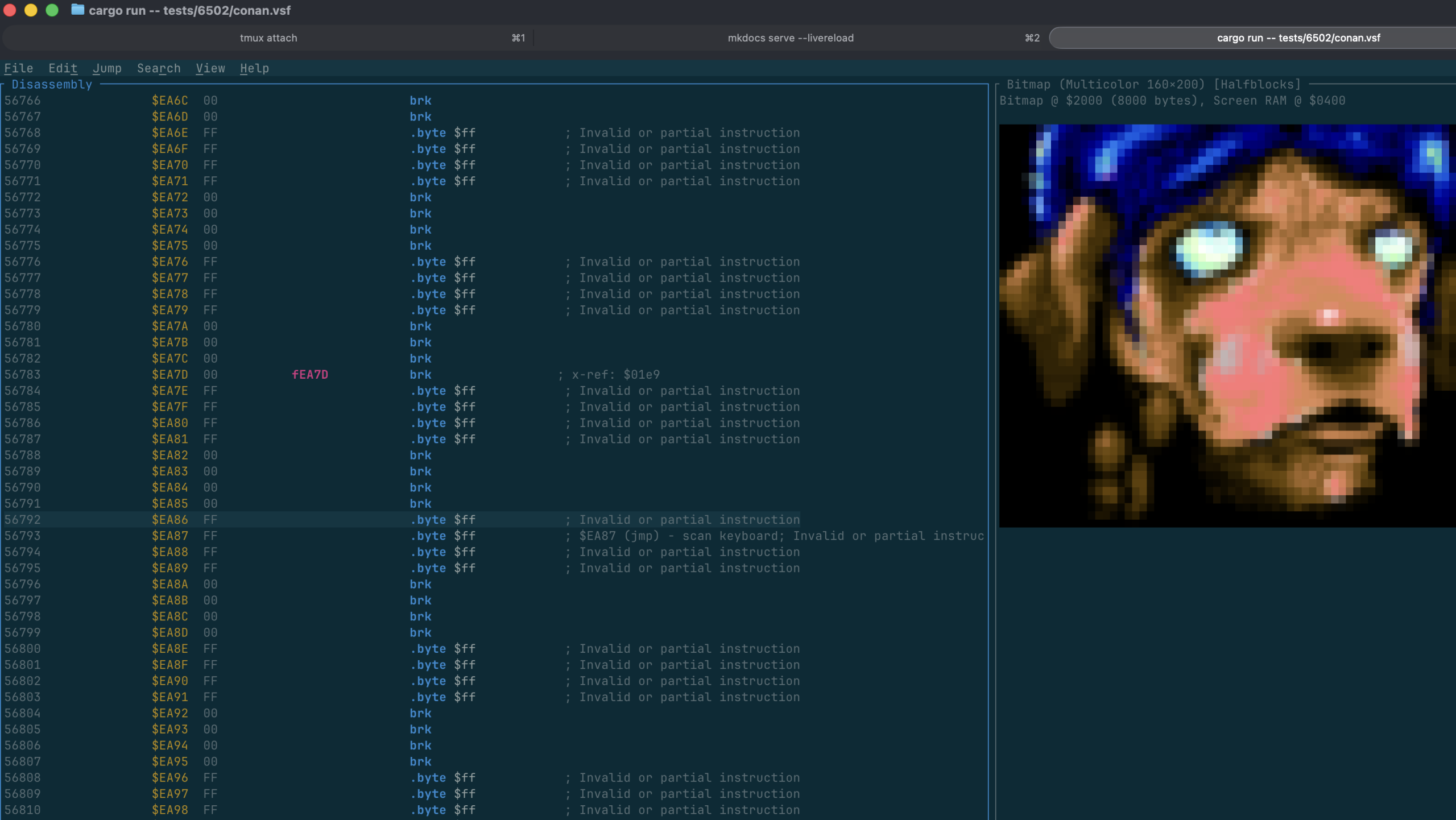
If you want to pull apart a program to see how it ticks, you’re going to need a disassembler. [Ricardo Quesada] has built Regenerator 2000 for just that purpose. It’s a new interactive disassembler for the Commodore 64 platform.

Naturally, Regenerator 2000 is built with full support for the 6502 instruction set, including undocumented op-codes as well. It’s able to automatically create labels and comments and can be paired with the VICE C64 emulator for live debugging. You can do all the usual debug stuff like inspecting registers, stepping through code, and setting breakpoints and watchpoints when you’re trying to figure out how something works. It can even show you sprites, bitmaps, and character sets right in the main window.

Files are on Github if you’re ready to dive in. You might find this tool to be a useful companion to C64 assembly tools we’ve featured previously, as well. If you’re pulling off your own retro development hacks, be sure to notify the tipsline.

Advertisement

[Thanks to Stephen Waters for the tip!]

Source link

Advertisement
Continue Reading

Trending

Copyright © 2025