

Crypto World
Crypto.com Unveils Groundbreaking Hybrid IRAs Blending Stocks and Digital Assets


TLDR
- Unified platform from Crypto.com enables tax-advantaged growth of both equities and cryptocurrencies.
- Staking capabilities and integrated portfolio management available through Crypto.com IRAs.
- Both Traditional and Roth retirement accounts offered with contribution matching up to 5%.
- Access to stocks, ETFs, and 400+ digital tokens within a single user interface.
- Multi-asset retirement accounts signal evolving convergence of digital and conventional investments.
Crypto.com has unveiled a groundbreaking retirement solution for U.S. investors that merges equities and digital currencies within a unified platform. This innovative service enables account holders to maintain stocks, exchange-traded funds, and crypto assets under tax-advantaged retirement vehicles. Both Traditional and Roth IRA variants are now directly available through Crypto.com’s ecosystem.
The platform delivers an opportunity for investors to diversify across multiple asset categories while maximizing tax efficiency. Traditional IRAs offer tax-deferred accumulation, while Roth accounts provide tax-free growth potential. Account holders can execute contributions, transfer existing accounts, and complete rollovers without incurring fees.
Crypto.com provides incentives including up to 5% matching on contributions and up to 2% on transfers and rollovers. These benefits are designed to drive user adoption and accelerate retirement savings growth. Integrated portfolio management capabilities are embedded within the application.
IRA Features Include Crypto Holdings and Staking Rewards
The Crypto.com IRA platform accommodates bitcoin, ethereum, and over 400 additional digital currencies. Multiple tokens are eligible for staking and lockup mechanisms, allowing account holders to generate supplemental yields within their retirement accounts. According to IRS guidelines, staking income is subject to taxation in the year received.
The service also facilitates trading of equities, ETFs, and cryptocurrencies through a consolidated interface. Advanced features like Recurring Buys and Whale Baskets provide enhanced flexibility and automation for portfolio construction. Users can track performance and rebalance holdings directly within the Crypto.com application.
Crypto.com facilitates enhanced yield generation by enabling compounding of crypto staking income. Earned rewards are systematically deposited into retirement accounts, fostering long-term asset accumulation. This framework establishes an integrated approach to blending digital and traditional investment vehicles.
Market Context and Regulatory Environment
This product launch aligns with expanding mainstream adoption of cryptocurrency within U.S. retirement planning. Policy initiatives have promoted greater accessibility, with executive directives and legislative measures endorsing crypto participation. Major financial institutions like Morgan Stanley have similarly expanded digital asset options for their clientele.
Unlike employer-provided 401(k) programs, these Crypto.com retirement accounts function as individual vehicles. Investors retain full authority over asset selection and account administration. Custodial arrangements for stocks and ETFs were not specified, while cryptocurrency custody operates through the platform infrastructure.
Crypto.com is positioning itself within an emerging sector of multi-asset retirement products that bridge conventional securities and blockchain-based assets. This development mirrors widespread momentum toward portfolio diversification and digital asset adoption. The platform consolidates access to equities, ETFs, cryptocurrencies, and yield opportunities, streamlining comprehensive retirement preparation.



This morning, three days after US-Israeli military strikes killed Supreme leader of Iran Ayatollah Ali Khamenei, Polymarket traders thought they’d found his replacement — and then lost more than half of their position values by lunchtime.
Alireza Arafi, a little-known cleric, was the frontrunner among binary options traders on Polymarket at a 22% odds rate this morning. However, he’d plummeted to 9% at time of writing.
With Khamenei dead and Iran’s theocratic leadership in disarray, its de facto interim leadership council, the Expediency Discernment Council, named Arafi on Sunday to join Masoud Pezeshkian and Gholam-Hossein Mohseni-Eje’i in a three-person body governing the country under Article 111 of its constitution.
Arafi is also deputy chairman of the Assembly of Experts, the 88-member clerical body that normally selects the country’s supreme leader. Earlier today, Israel detonated munitions at the Assembly of Experts building.
Finally, Arafi is a member of the Guardian Council, which vets candidates for that very assembly.
In summary, Arafi currently holds an interim leadership position alongside the country’s two other highest-ranking men, helps decide who may run in contention, and sits on the body that votes for candidates.
Sometimes, Polymarket traders get it wrong. Other times, they simply read an org chart.
Read more: Polymarket ends trading loophole for bitcoin quants
The seminary loyalist sitting on Iran’s top committees
Local media has described Arafi as a “staunch loyalist to the core ideology of the Islamic Republic.” In fact, he formerly headed one of the regime’s most prestigious religious schools, Al-Mustafa International University.
Born in 1959, Arafi has spent his entire career rising through Iran’s clerical bureaucracy. The late Khamenei personally appointed him to lead the country’s seminaries in 2016 — a powerful position in the theocratic state — and then promoted him to the Guardian Council in 2019.
Each successive accolade in his regime’s form of Islam makes Arafi a better candidate to become Ayatollah, the highest title of Twelver Shia clergy and common parlance for Iran’s supreme leader.
However, his promotion is certainly not guaranteed, hence Polymarket’s betting line at a mere 22% this morning and just 9% now.
When trading offshore binary options, payouts are never sure until funds clear a bank account.
When Donald Trump, for example, called Kevin Hassett a “potential Fed Chair” and “a respected person, that I can tell you,” traders rushed to place trades at 70% on Polymarket and 74% on Kalshi.
Those gamblers lost it all when Trump instead nominated Kevin Warsh.
No consensus about who will become Iran’s supreme leader
Arafi’s competitors among Polymarket traders tell a story of how little consensus exists about Iran’s leadership.
Gholam-Hossein Mohseni-Eje’i, the judiciary chief and Arafi’s fellow council member, sits at 17%.
Hassan Khomeini, grandson of the revolution’s founder, was at 15% this morning but crashed to 8% by time of writing. Mojtaba Khamenei, the late Ayatollah’s son, trades at just 7% but rose to 19% by time of writing.
An 13% bet that Polymarket abolishes its own market entirely, likely due to death of candidates, rounds out the field’s more exotic wagers.
This market was created on February 28 and resolves on December 31. Iran’s Assembly of Experts is expected to name a successor within days, although many months remain before December 31.
Got a tip? Send us an email securely via Protos Leaks. For more informed news, follow us on X, Bluesky, and Google News, or subscribe to our YouTube channel.
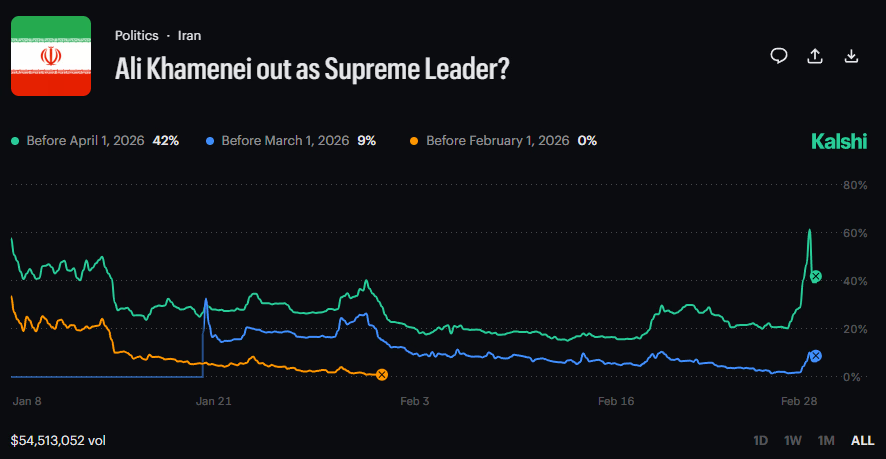
Kalshi’s resolution of prediction markets tied to the death of Iran’s Supreme Leader Ali Khamenei has sparked controversy.
Kalshi, a CFTC-regulated prediction market platform, is facing backlash over its handling of markets linked to the death of Iran’s Supreme Leader, Ali Khamenei.
Traders expressed dissatisfaction with Kalshi’s decision not to resolve a market titled “Ali Khamenei out as Supreme Leader?” to “yes” after his death was announced.

Kalshi CEO Tarek Mansour explained the company’s no-death-market policy, stating, “We don’t list markets directly tied to death. When there are markets where potential outcomes involve death, we design the rules to prevent people from profiting from death.” The platform reimbursed fees and settled trades based on the odds when the market closed at 39.5%, rather than a full resolution to “yes,” which would have resulted in far higher payouts.
Kalshi’s market rules specified that if a leader leaves solely due to death, the market would resolve based on the last traded price prior to the death. Despite this, some users remained frustrated, urging others to consider alternative platforms like Polymarket, which resolved a similar market to “yes.”
However, a similar dispute occurred when Polymarket ruled a U.S. capture of Venezuelan leader Nicolás Maduro didn’t qualify as an “invasion,” upsetting traders at the time.
This article was generated with the assistance of AI workflows.
BitMine Immersion Technologies (BMNR) has been experiencing sideways movement in its price for nearly a month. However, recent developments hint that this could be a turning point for the company.
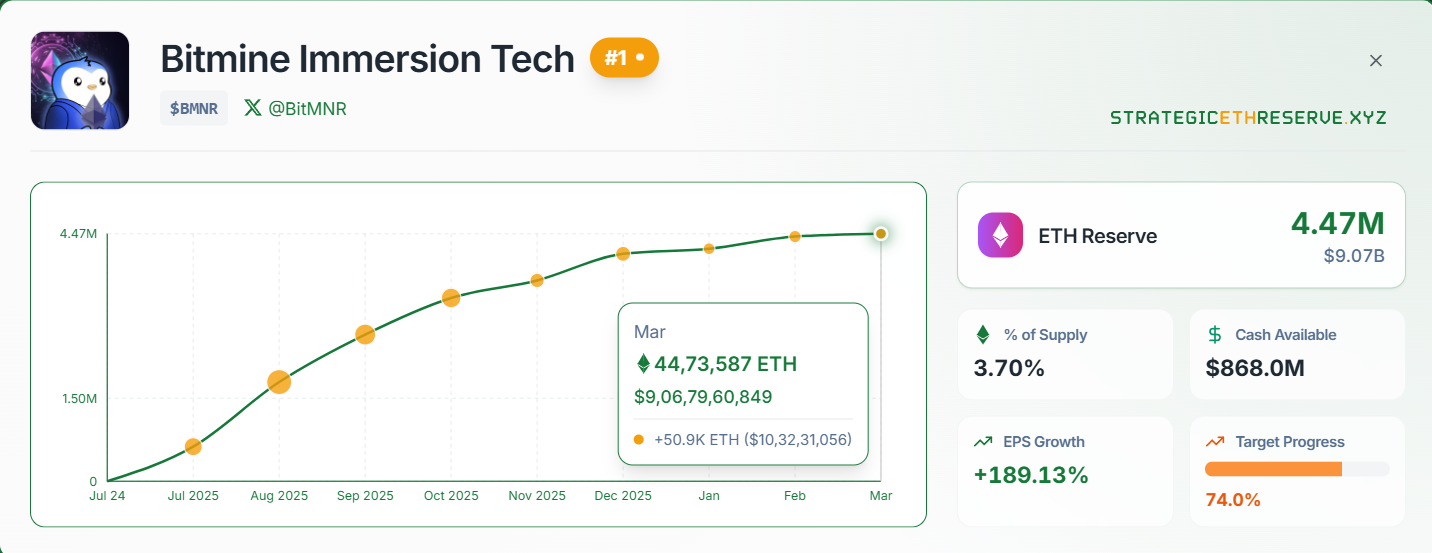
A notable purchase of over 50,900 ETH has sparked new interest, potentially signaling a shift in BMNR’s price and Ethereum’s (ETH) future.
BitMine’s Bold ETH Purchase: A Strategic Move for March
On March 2, BitMine made a significant acquisition, purchasing 50,9928 ETH, bringing its total holdings to 3.71% of all Ethereum supply. This is just 1.29% short of the company’s target of holding 5% of Ethereum’s supply.
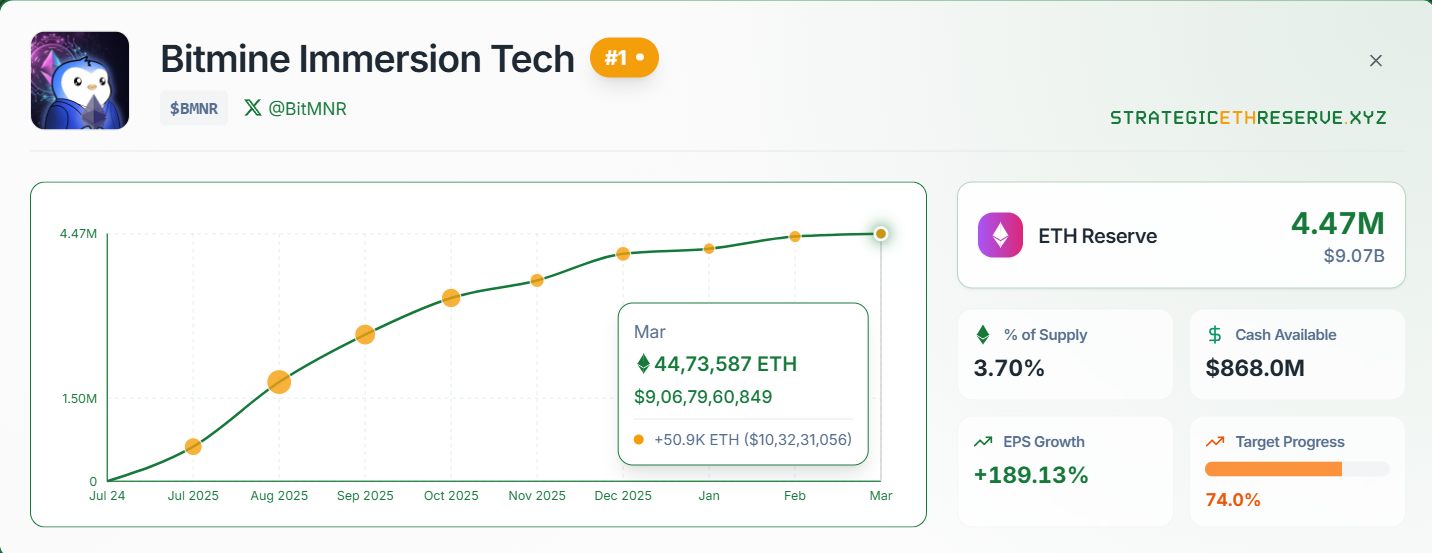
Despite Ethereum’s price being in the red at the time of the purchase, BitMine’s Chairman Tom Lee believes that March will be a pivotal month for Ethereum and the broader crypto market.
“We understand war headlines make investors nervous, but we expect stocks to be up in March: – led by MAG7, software IGV and crypto $BTC $ETH (sic),” Lee stated.
CMF Indicator Shows Potential Bullish Momentum
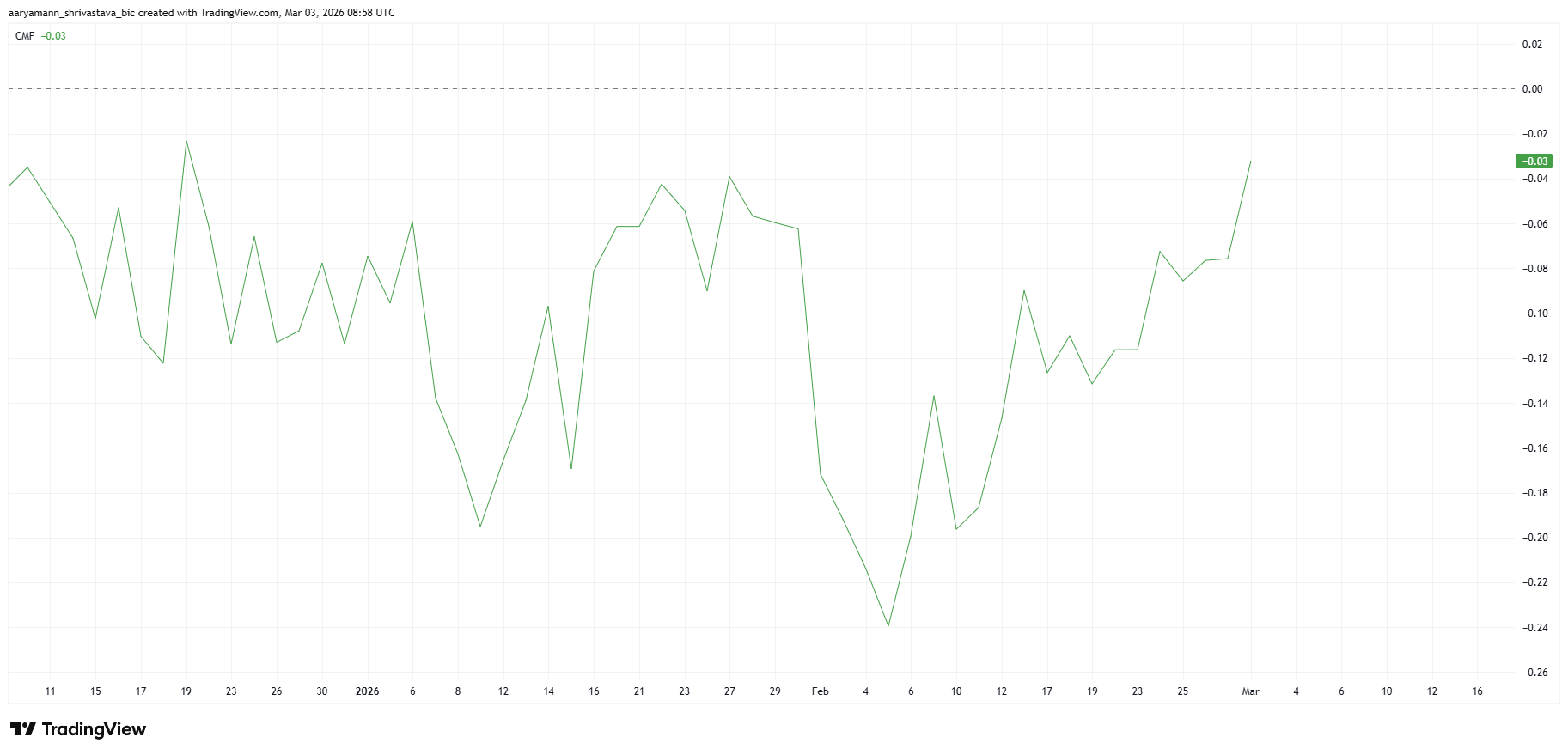
The Chaikin Money Flow (CMF) has shown an uptick, signaling that investor support for BMNR may be growing. While the CMF is still below zero, the rising trend indicates that outflows are declining, which is a positive sign for the company. A move into the positive territory by the CMF could confirm that BMNR holders are supporting the price, further fueling optimism about a potential price reversal.
This uptick suggests that investor confidence is strengthening and could signal an incoming period of inflows. If the CMF crosses into the positive zone, it would provide confirmation that the market sentiment is shifting in favor of BMNR.
Want more token insights like this? Sign up for Editor Harsh Notariya’s Daily Crypto Newsletter here.
Bullish Divergence Amidst Geopolitical Challenges
The Money Flow Index (MFI) is showing a bullish divergence since the beginning of the year. The indicator has been forming lower highs, while BMNR’s price has seen lower lows, signaling a decrease in selling pressure. Despite the ongoing geopolitical instability in 2026, which has added volatility to global markets, the MFI suggests that BMNR is on track for a potential recovery.
Although external factors like geopolitical unrest have impacted BMNR’s price, the bullish divergence in the MFI suggests that the selling pressure is waning. This reduction in selling pressure could lead to a price rebound for BMNR in the near future.
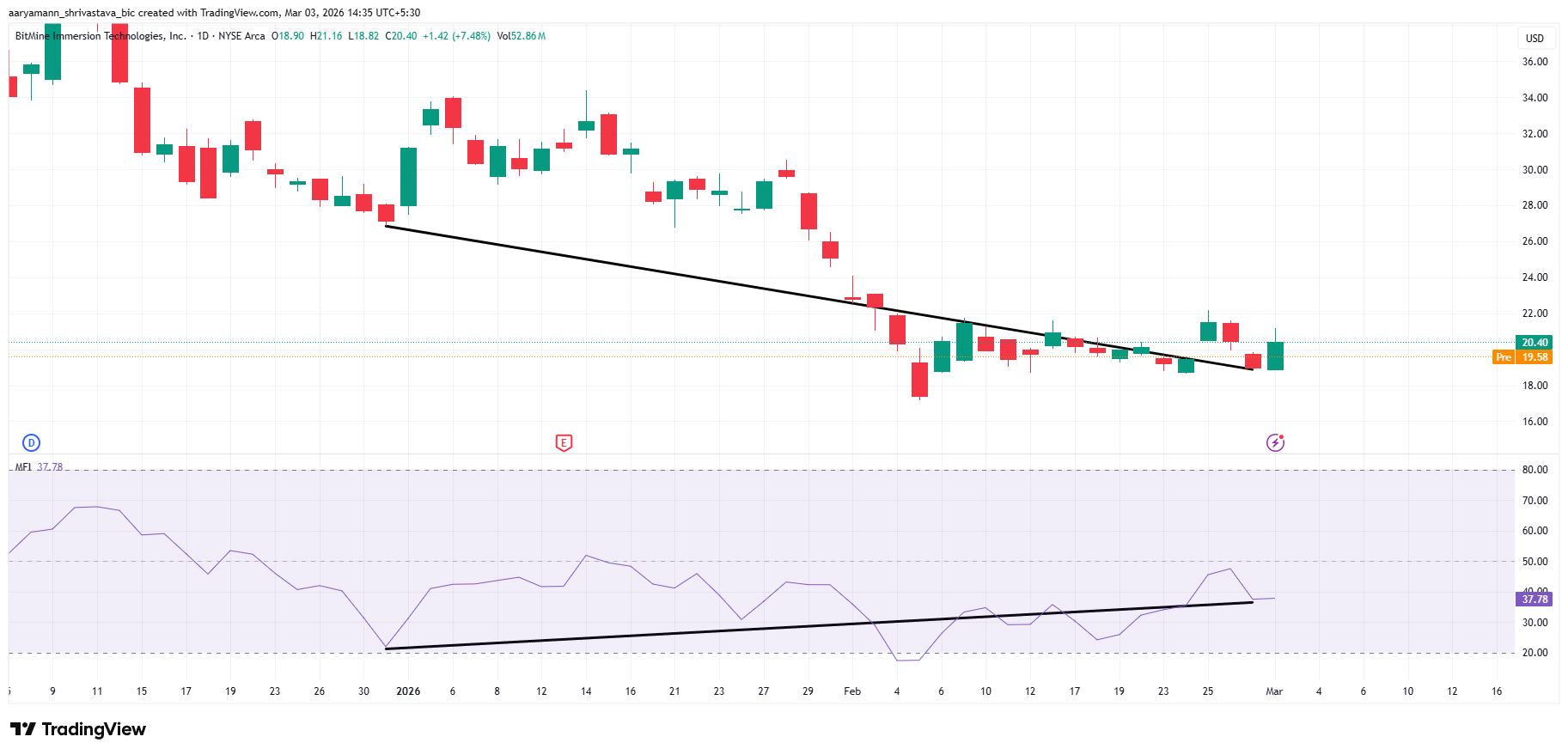
Is BMNR Price Breaking Up With ETH?
Currently, BMNR is trading at $20.40, sitting just above the $19.06 support level. Maintaining this support is vital for BMNR to eventually break out above the $22.34 resistance. If BMNR stays above the $19.06 support, it may have the potential to rally in the coming weeks.
Interestingly, the correlation between BMNR and Ethereum has been decreasing, with the correlation currently at 0.36. This suggests that BMNR is less likely to follow Ethereum’s price movements, which is a positive sign. Ethereum has been in a period of consolidation, allowing BMNR more room to move independently and potentially rally.
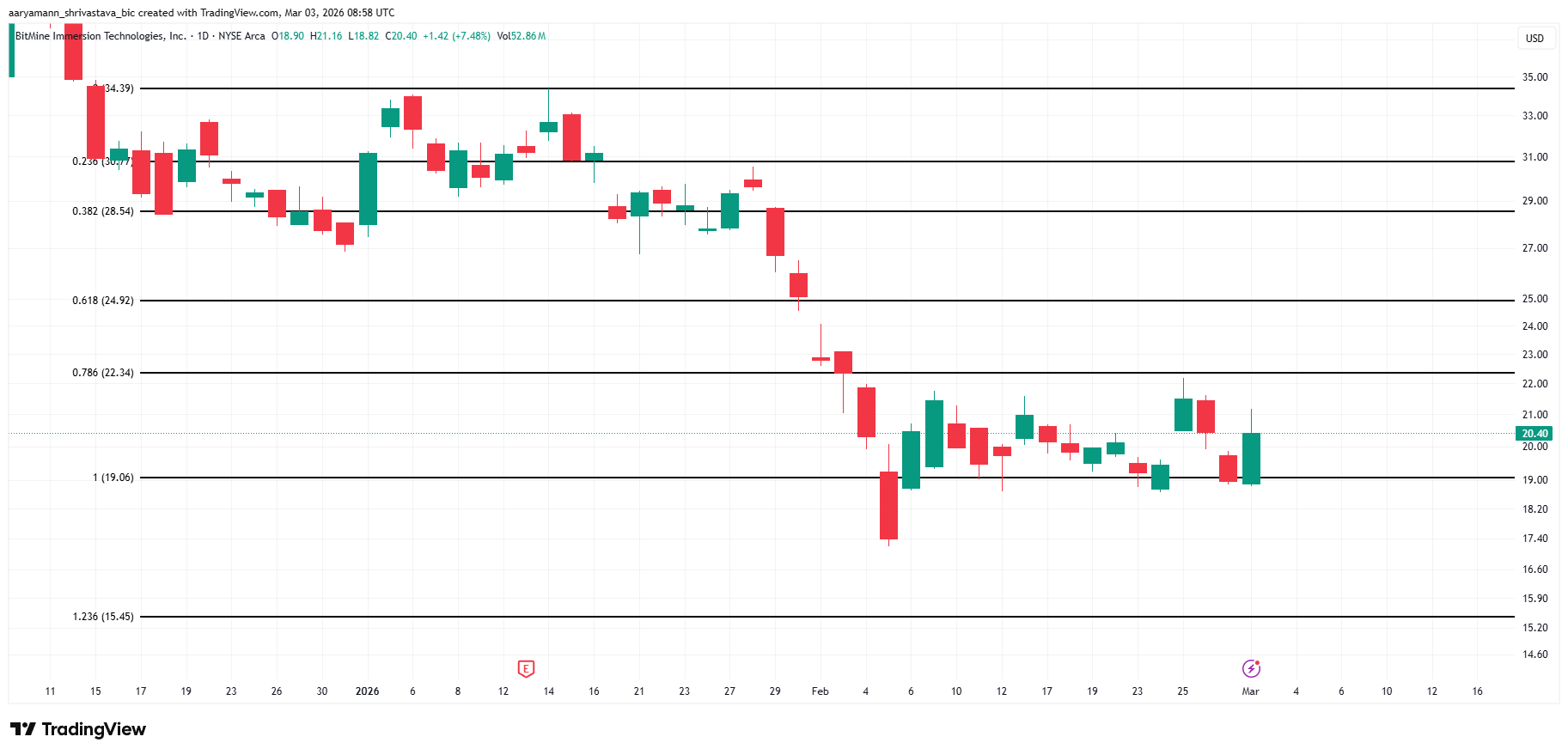
However, there is a risk if BMNR holders panic due to ongoing geopolitical events. If the $19.06 support is lost, BMNR could see a drop toward the next major support at $15.45. This would invalidate the current bullish outlook and require careful monitoring of market conditions.
TLDR
- Ripple expanded its payments platform to support a full stablecoin workflow for banks and fintechs.
- The upgraded Ripple Payments platform now enables collection, custody, conversion, and payout using stablecoins.
- Ripple Payments operates in more than 60 markets and has processed over $100 billion in transaction volume.
- Ripple integrated its dollar-pegged stablecoin RLUSD into the expanded payments stack.
- RLUSD has reached a circulating supply of about $1.5 billion in the global stablecoin market.
Ripple has expanded its global payments platform to support a broader stablecoin workflow for banks and fintechs. The company aims to reduce reliance on pre-funded overseas accounts and speed up cross-border transactions. It announced the upgrade on Tuesday and confirmed expanded capabilities across its network.
Ripple upgrades payments platform with stablecoin workflow
Ripple upgraded Ripple Payments to support collection, custody, conversion, and payout through stablecoins. The company said the update connects financial institutions directly to blockchain-based settlement rails. As a result, clients can manage funds without parking capital in foreign accounts.
The platform operates in more than 60 markets and has processed over $100 billion in volume. Ripple stated that Switzerland’s AMINA Bank, Brazil’s Banco Genial, Malaysia’s ECIB, and Philippines-based AltPayNet participate in the network. The company said the expanded stack allows institutions to move funds faster while maintaining operational control.
Ripple is valued at $17.7 billion, according to Forge Global, which tracks pre-IPO shares. The company remains privately held while expanding its enterprise offerings. It said the new features position Ripple Payments to compete directly with legacy providers.
RLUSD stablecoin gains traction as supply reaches $1.5 billion
Ripple continues to integrate its dollar-pegged token, RLUSD, into its payments infrastructure. RLUSD trades at $1 and holds a circulating supply of about $1.5 billion. The company said the token supports real-time settlement across supported markets.
Ripple stated that RLUSD accounts for a small but growing share of the global stablecoin market. It said clients can hold, exchange, and settle transactions using fiat or stablecoins. The company completed its acquisition of Rail last August for $200 million to support these services.
Ripple also acquired custody and treasury automation firm Palisade to strengthen asset management. It said these acquisitions expand its custody and treasury capabilities within the payments stack. The company confirmed that these tools integrate with Ripple Payments.
In December, the US Office of the Comptroller of the Currency conditionally approved national trust bank charters for Ripple National Trust Bank. The regulator also granted conditional approvals to Circle, BitGo, Paxos Trust Company, and Fidelity Digital Assets. If finalized, the charters would allow asset and stablecoin reserve management under federal oversight.
Ripple chief legal officer Stuart Alderoty attended a February White House meeting on crypto legislation. He joined other crypto and banking representatives to discuss stablecoin provisions. Lawmakers continue negotiations in Washington, DC, over a proposed US crypto market structure bill.


Usual’s introduction of a direct EUR ↔ EUR0 rail leverages SEPA Instant and virtual IBAN technology to streamline fiat transactions, enhancing euro transfers for users across Europe.
Decentralized stablecoin protocol Usual has rolled out direct EUR0-to-EUR conversions, marking a significant milestone in simplifying fiat on- and off-ramps for European users. The service utilizes SEPA and SEPA Instant transfers, providing seamless euro transactions across the continent.
The EUR0 token represents a digital euro balance backed by European sovereign bonds, integrated into Usual’s platform to facilitate efficient euro transfers. This integration aims to enhance the ease of transactions by eliminating the need for exchange accounts, intermediate tokens, or third-party trading platforms, according to a blog post.
SEPA Instant, a key component of this service, allows real-time euro transactions across 36 countries, including the UK and Switzerland. This rapid settlement feature is complemented by virtual IBANs, which provide unique digital account numbers linked to a primary bank account, facilitating international payments without requiring multiple accounts.
Usual’s platform offers an efficient on-ramp for users, who can deposit euros to a virtual IBAN, automatically updating their EUR0 balance. Off-ramping is equally streamlined, allowing users to convert EUR0 back to euros and receive them via SEPA transfer. Identity verification is conducted within the Usual app.
Usual has around $114 million in total value locked (TVL), according to DeFiLlama.
This article was generated with the assistance of AI workflows.
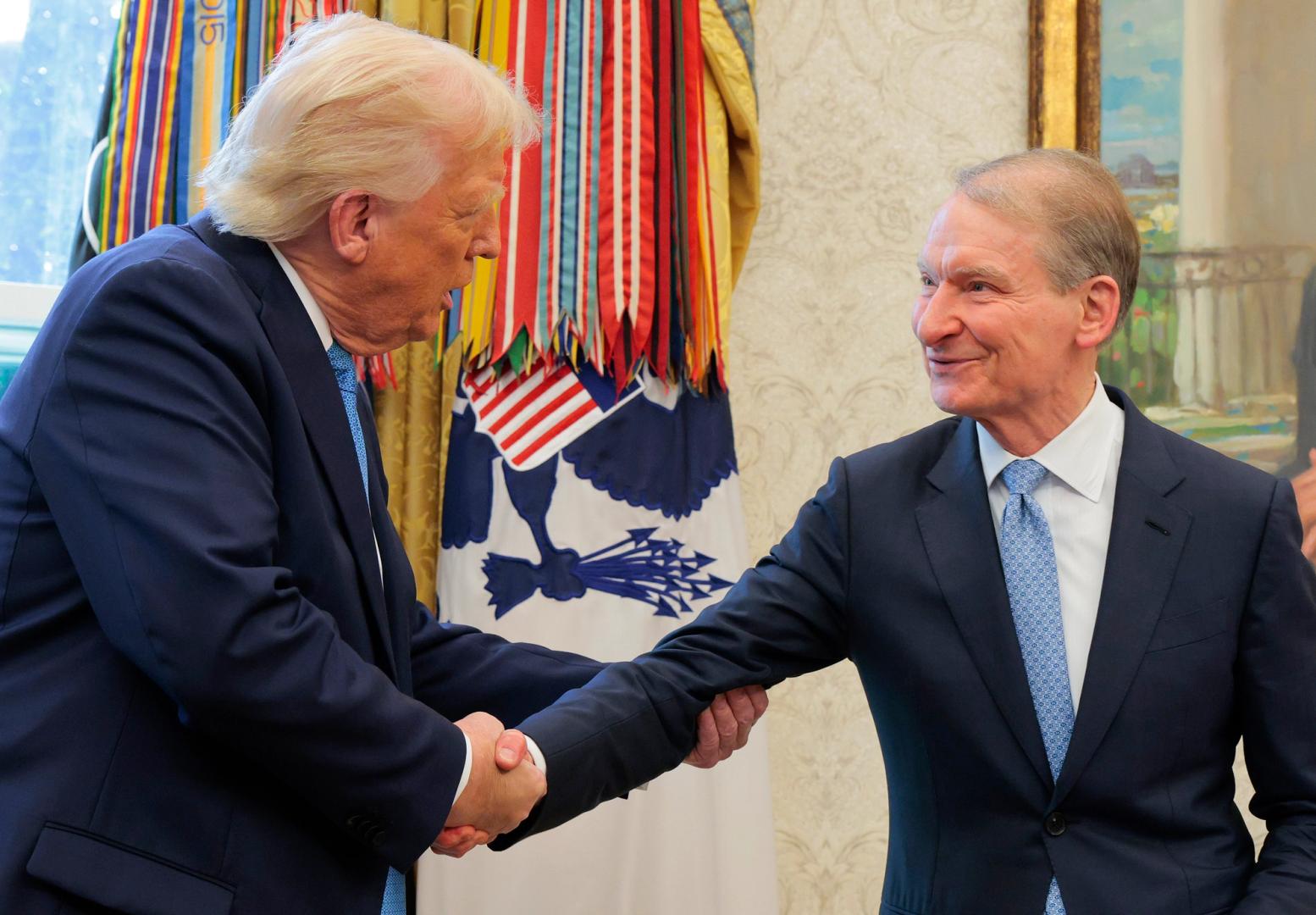
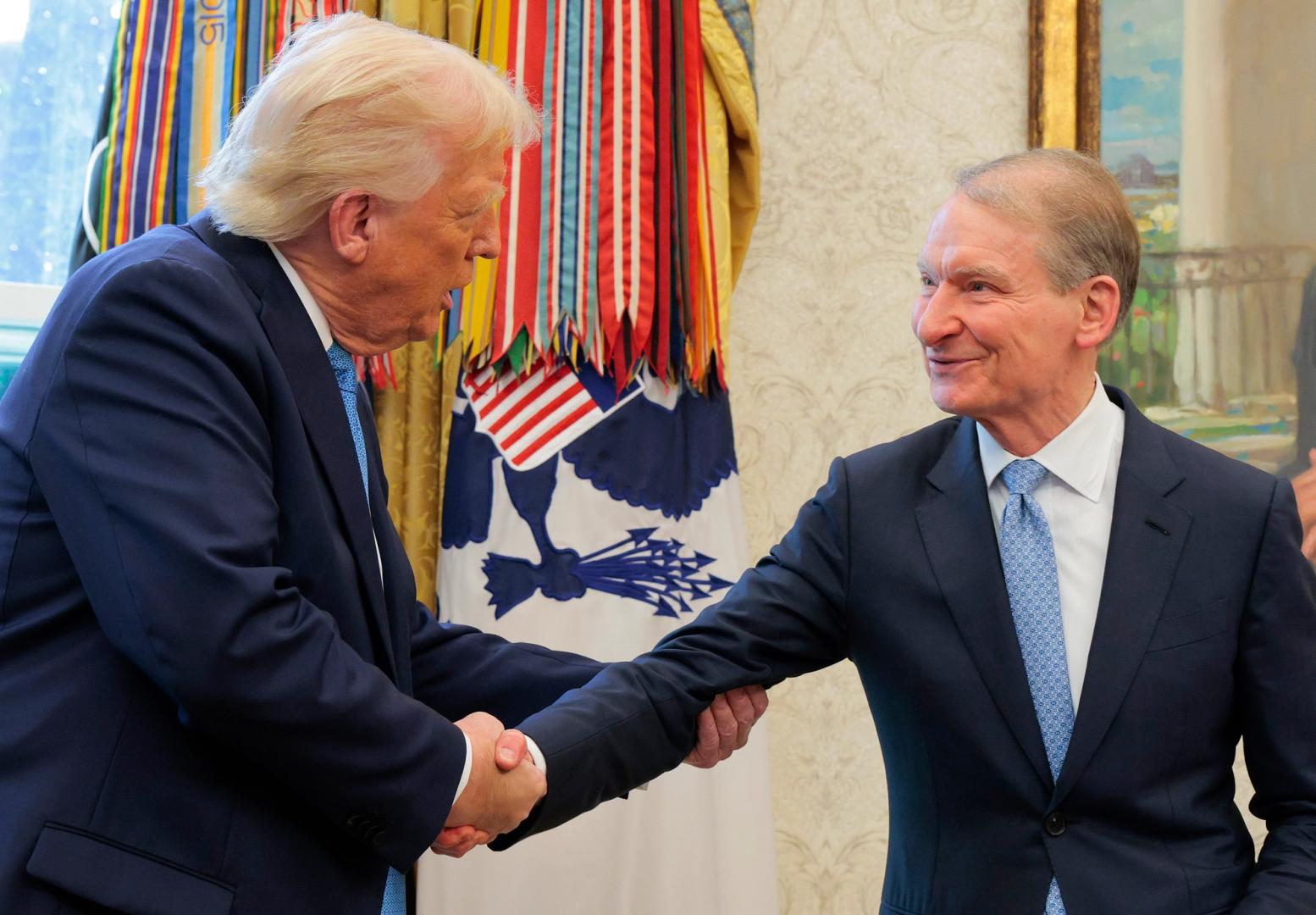
The White House set a March 1st deadline for the banking industry and crypto firms to reach a deal on stablecoin yield, clearing the way for the Clarity Act, the market structure legislation meant to put the industry on a solid legal foundation in the U.S.
Clarity was passed by the House seven months ago. The Senate has set many deadlines to move it, and they have all gone unmet. The latest deadline also blew by with no deal.
The crypto industry has been fixated on legislation as the next catalyst, as if it is the only path toward the long-needed regulatory clarity in the world’s largest economy.
But legislation is not the only path.
The existing laws that provide authority to the market regulators at the Securities and Exchange Commission and the Commodity Futures Trading Commission are broad and flexible. Those agencies are acting now.
Fresh legislation would ensure against future Gary Genslers, but Gary Gensler’s era is done. President Donald Trump appointed a friendly chair to bless the industry just as Gensler had appointed a hostile one to bedevil it.
And while everything else that Trump has done vis-à-vis crypto has created political headwinds, it could be that all he really needed to do was pick the right chief for the SEC, and I suspect he has.
Trump appointed a veteran, Paul Atkins, who knows how to write regulations that will withstand legal challenges. Trump then appointed one of Atkins’ deputies to lead the other investment agency, the CFTC, ensuring rulemaking harmonizes across markets. All the industry has to do in order not to screw this up is avoid another FTX-like implosion.
It’s crypto’s game to lose.
Not his first rodeo
Paul Atkins served for six years at the SEC in the 2000s, serving under three different chairs. Since then, he has served as an advisor to the Chamber of Digital Commerce and to Securitize.
He was sworn in April 2025. A few weeks later, he spoke at an event at the SEC office, saying the agency has the authority to grant the crypto industry the rulemaking it needs to operate.
Later, before a dozen or so reporters, he was asked whether he needed to wait for Congress to write market-structure legislation before he could act. He repeated that his staff can and would act with or without new legislation.
Atkins confidently promised action, like a regulator who understands the scope of his existing authority.
Harmonization
And Atkins will be aligned with the chief of the SEC’s sister agency, the CFTC.
Gensler was never aligned with Rostin Benham, the CFTC’s prior chief. Benham kept asking Congress to take action, which Gensler kept saying wasn’t necessary.
Benham clearly did not believe every coin was a security, but Gensler believed that only Bitcoin was clear of his scrutiny. They were not harmonized.
But to effectively regulate and give founders confidence, it’s key that the agencies don’t fight about when and if a digital asset can move from SEC jurisdiction to the CFTC’s.
So I believe one of the key reasons that Atkins hasn’t already posted draft rules for public comment is that he wanted to do so in concert with the CFTC. However, Trump switched gears on appointing a chair for that agency, and the new helmsman, Michael Selig, didn’t get sworn in till the end of December.
It would not be surprising if, one day, we learn that Atkins convinced the president to change course on CFTC chair appointments to ensure the two agencies work well together.
Expect an official memorandum of understanding between the two agencies delineating responsibilities soon. This arrangement will be reminiscent of the historic Shadd-Johnson accord of 1981.
The new sheriff
By this fall, I suspect, Project Crypto will have submitted draft rules — each written in consultation with the other — before their respective commissions.
By next Spring, those rules will have been amended based on public comments and, most likely, finalized.
This will be the first administration to actually write rules with decentralized financial networks in mind.
Under new rules, it should be possible, for example, for exchanges like Kraken, Coinbase, and Crypto.com to finally say that all their operations are registered with an agency and under state supervision.
It should also be possible for new enterprises to raise funds with token sales. Some of those tokens will likely enjoy rights that entrepreneurs avoided during the regulation-by-enforcement era, such as the ability to distribute revenue.
Provided the rules are written conservatively enough to survive court challenges, the industry is likely to have two or three years to grow before it’s even possible to roll back the work of Atkins and Selig (because doing so will require both a Senate appointment process and a fresh rulemaking process).
Fait accompli
While we all know that crypto has always been an industry that welcomes new participants, the president’s family didn’t do digital assets any favors by launching memecoins, a stablecoin, and bitcoin miners. Those activities might have been enough to torpedo any hope of satisfying the crypto lobby’s ambitions for this session of Congress.
But while Congress dithers, agency staff are writing rules.
If the SEC and CFTC collaborate effectively–both agency leaders announced today that several crypto polices are coming–whatever arrangement they devise may eventually become law anyway. After all, Congress codified the Shadd-Johnson accord in the early 80s.
So the lobbyists may ultimately get the legislation they want, but only after crypto has gone mainstream anyway — without Congress, which is why Trump’s decision to appoint Paul Atkins may already have been sufficient to give the industry enough legal whitespace to reach its potential.
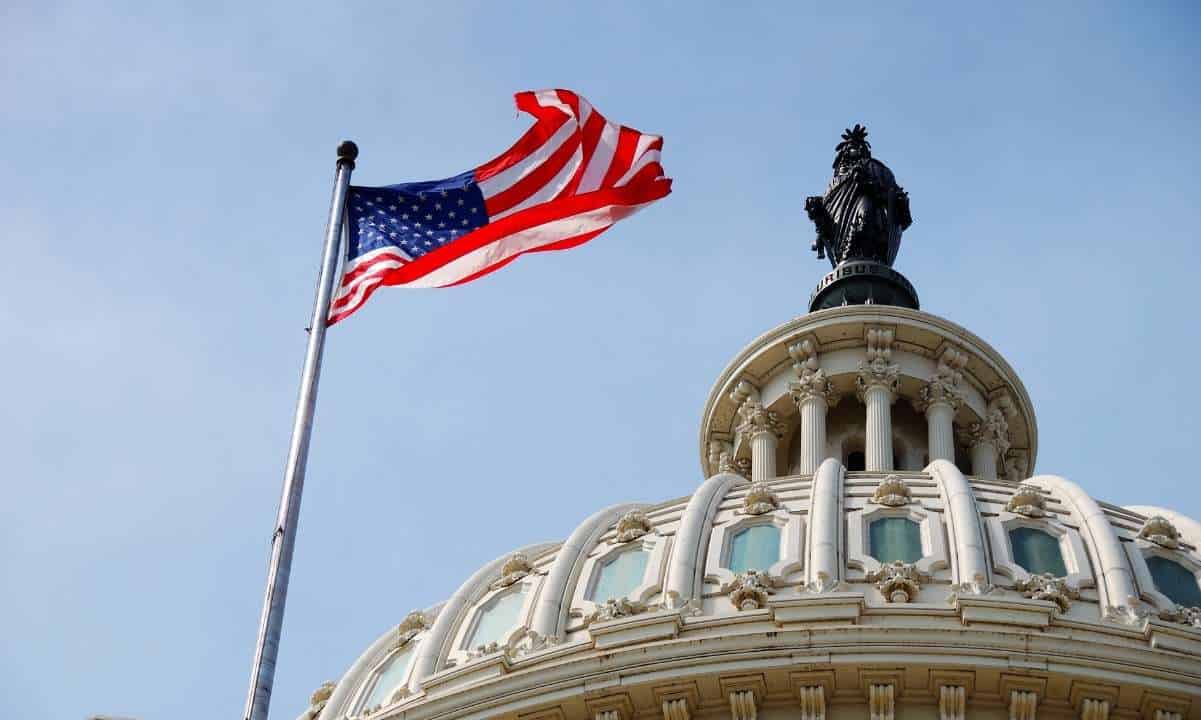
The United States (U.S.) Senate has taken a major bipartisan step by advancing the 21st Century ROAD to Housing Act. The bill combines housing reforms with a ban on central bank digital currencies (CBDC).
According to Burgess Everett, congressional bureau chief at Semafor, the legislation passed a key procedural vote of 84–6. The result signals broad support for changes affecting both housing policy and digital money rules.
Housing Supply Push Comes With Crypto Conditions
Beyond its digital currency provisions, the bill targets America’s housing challenges by cutting bureaucratic delays and expanding home supply. It also seeks to curb the dominance of large institutional players in single-family rentals while simplifying financing and development processes nationwide.
Highlighting the scale of bipartisan backing, Everett described the vote margin as one not seen every day. Supporters argue the reforms could make housing more accessible and affordable for ordinary Americans.
Despite the focus on housing, a notable feature of the legislation is its ban on central bank digital currencies. The provision bars the Federal Reserve from issuing or creating a digital currency through 2030. It also covers any similar assets issued directly or through financial intermediaries.
The restriction emerged after House conservatives pushed for tighter crypto-related limits as part of broader legislative compromises. Lawmakers opted to fold the provision into the housing bill rather than advance standalone digital asset legislation.
Federal Reserve officials have said any CBDC initiative remains exploratory and would require congressional approval. Even so, the ban has prompted renewed debate over the future of digital currency in the U.S., particularly around privacy, payments, and financial oversight.
White House Signals Support Despite CBDC Controversy
The White House has endorsed the bill, noting that President Trump’s advisers would recommend signing it if it reaches his desk. The backing underscores the legislation’s unusual cross-party appeal, even as Democrats have always opposed limits on Federal Reserve digital currency research.
Despite the endorsement, the bill still faces several procedural hurdles before becoming law, including reconciliation with the House version. It remains unclear whether the CBDC restriction will survive final negotiations, leaving the digital currency community closely watching.
The post U.S. Senate Pushes Housing Reform Bill With Surprise CBDC Ban appeared first on CryptoPotato.
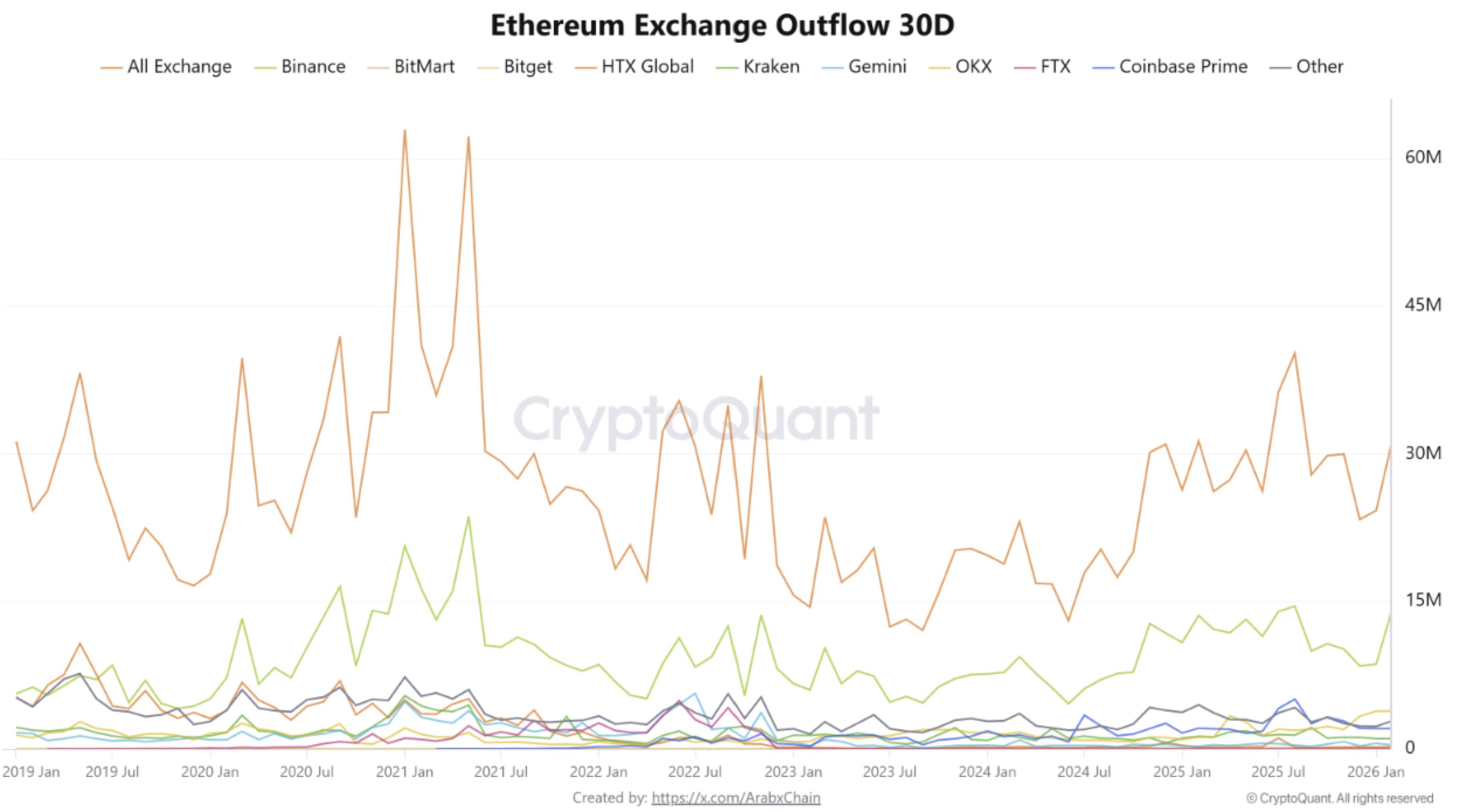
The balance of Ether (ETH) held on exchanges has slid to a multi-year low, with more than 31 million ETH leaving centralized exchanges in February, marking the largest monthly withdrawal since November.
While the ETH price remained near $2,000, derivatives data show a split between small buyers and larger sellers, raising the question of how the price may respond if demand becomes uniform across both retail and whale wallets.
Ether exchange reserves signal supply squeeze
Crypto analyst Arab Chain said that more than 31.6 million ETH left major exchanges in February, the highest monthly outflow since November. Binance led with roughly 14.45 million ETH withdrawn, nearly half of the total. OKX followed with about 3.83 million ETH, and Kraken recorded close to 1.04 million ETH.

Sustained withdrawals reduce the pool of coins readily available for spot trading activity. Coins moving to private wallets or staking platforms are typically less liquid in the short term. As a result, thinner exchange balances can heighten the price volatility when market activity surges.
Likewise, CryptoQuant data also showed that Binance’s Ether reserves have dropped to around 3.46 million ETH, the lowest level since 2020. In previous cycles, reserves peaked above 5 million ETH before entering a gradual downtrend marked by lower highs. The latest reading extends that decline.

With ETH trading below $2,000, the contraction in exchange supply places added focus on future demand. If buying pressure expands while reserves continue to fall, the available liquidity on order books may tighten further around the $2,000 threshold.
Related: Ether price again rejected at $2K: How low can ETH go in March?
Market remains split between retail and whales
Hyblock data highlighted a divergence across trade sizes. The cumulative volume delta (CVD), which tracks net aggressive buying and selling, stands near $95 million for smaller trades (between $0 and $10,000). That shows consistent retail-led buying pressure.

In contrast, the $10,000–100,000 trade bracket records roughly -$162 million in CVD, while the $100,000+ category sits near -$357 million. As observed, the larger participants have leaned towards net selling during the same period.
The bid–ask ratio has turned slightly positive, rising to around 0.2 before dipping to 0.03, indicating marginally stronger buying interest in recent sessions. The move follows a stretch of negative readings and points to short-term stabilization rather than broad conviction.

The aggregated open interest is near $9.41 billion, down from levels close to $10 billion in late February. The reduction signals that leverage has been trimmed as the price consolidates between $1,900 and $2,000.
If retail accumulation persists and large-scale selling slows, bullish positioning may become more aligned. In that case, the reduced exchange supply may amplify the price move once ETH solidifies a position above $2,000-$2,150.
Related: AI ‘vibe coding’ could put Ethereum roadmap ahead of schedule: Vitalik Buterin
This article does not contain investment advice or recommendations. Every investment and trading move involves risk, and readers should conduct their own research when making a decision. While we strive to provide accurate and timely information, Cointelegraph does not guarantee the accuracy, completeness, or reliability of any information in this article. This article may contain forward-looking statements that are subject to risks and uncertainties. Cointelegraph will not be liable for any loss or damage arising from your reliance on this information.
TLDR
- Circle shares rose more than 20% this week following Israeli and U.S. airstrikes on Iran.
- Mizuho linked the rally to higher oil prices and fading expectations for Federal Reserve rate cuts.
- WTI crude climbed about 7 to 8% after tensions in the Middle East escalated.
- Circle earns most of its revenue from interest on U.S. government debt backing its USDC stablecoin.
- Analysts said reduced rate cut expectations add about 1% to Circle’s 2026 and 2027 revenue forecasts.
Circle (CRCL) shares jumped over 20% this week after Israeli and U.S. strikes on Iran lifted oil prices and rate expectations. Mizuho linked the rally to higher crude and fading Federal Reserve rate cut hopes. The bank raised its price target to $100 while keeping a neutral rating.
Circle shares gain as oil surge shifts rate outlook
Circle shares outperformed the broader market as WTI crude rose about 7% to 8% since the weekend strikes. Japanese bank Mizuho said higher oil prices could revive inflation pressures and reduce expectations for Federal Reserve rate cuts.
The bank explained that Circle earns most revenue from interest on U.S. government debt backing its USDC stablecoin. Higher interest rates increase yields on those reserves and support revenue growth. Conversely, lower rates compress that income stream and limit earnings potential.
Mizuho analysts Dan Dolev and Alexander Jenkins adjusted their forecasts after reviewing recent market data. They estimated that reduced expectations for rate cuts add about 1% to their 2026 and 2027 revenue forecasts.
They also cited Chicago Mercantile Exchange FedWatch data to support their outlook. The analysts said the probability of a no-rate-cut scenario in 2026 has doubled in the right tail risk distribution.
Bitcoin rebound supports market sentiment
Crypto markets reacted sharply when the Middle East conflict began over the weekend. Bitcoin fell in early trading during a broad risk-off move but later stabilized.
Bitcoin now trades near $68,100 after rising roughly 5% in the past 24 hours. The recovery has helped improve overall market sentiment around digital assets.
Mizuho increased its Circle price target to $100 from $90 following these developments. The stock traded 6% higher at $101.90 at publication time.
The bank maintained a neutral rating despite the revised target price. Analysts stated that higher-for-longer rates create a near-term revenue benefit for the company.
However, the report warned that long-term growth could slow as stablecoins become more commoditized. Competitive pressures may affect margins over time.
Circle shares also surged more than 45% last week after fourth-quarter earnings triggered a short squeeze. That rally ended an 80% decline from record highs reached last year.
The recent price action reflects shifting macro expectations and crypto market movements. At publication time, Circle shares traded above the revised $100 target set by Mizuho.
Crypto World
Middle East tensions, higher oil boost Circle (CRCL) shares as rate-cut odds fade: Mizuho


Shares of stablecoin issuer Circle (CRCL) have risen over 20% this week, outperforming the broader market following Israeli and U.S. airstrikes on Iran over the weekend.
Japanese bank Mizuho attributed the rally in part to a sharp rise in oil prices, as tensions in the Middle East exploded. Higher crude prices could rekindle inflationary pressures, lowering expectations for Federal Reserve rate cuts.
That dynamic matters for Circle. The company earns the bulk of its revenue from interest income on the U.S. government debt it holds as reserves backing its USDC stablecoin. Higher interest rates translate into greater yield on those reserves, directly supporting revenue. Conversely, rate cuts compress that income stream.
Since U.S. and Israeli strikes on Iran over the weekend, WTI crude has climbed roughly 7%–8% on elevated geopolitical risk and supply disruption concerns.
Crypto markets were jolted at the outbreak of war in the Middle East on Saturday, with bitcoin sliding sharply in early trading amid a broader risk-off move, but prices have since stabilized.
Analysts Dan Dolev and Alexander Jenkins estimated that reduced expectations for rate cuts add about 1% to their Circle 2026 and 2027 revenue forecasts.
More importantly, the analysts pointed to a doubling in the “right tail risk” of a no-rate-cut scenario in 2026, according to Chicago Mercantile Exchange (CME) FedWatch data, a shift that could further support Circle’s valuation multiple.
A roughly 5% rise in bitcoin over the past 24 hours may also be contributing to positive sentiment. The largest cryptocurrency is currently trading around $68,100.
The bank raised its Circle price target to $100 from $90, while maintaining a neutral rating on the shares. The stock was trading 6% higher at $101.90 at publication time.
While higher-for-longer rates are a near-term positive, longer-term revenue growth could face pressure as stablecoins become increasingly commoditized, the report added.
Circle shares gained more than 45% last week in a violent short squeeze following fourth quarter earnings. That move snapped what had been a brutal 80% drawdown from record highs hit last year.
Read more: Circle’s post-earnings surge nears 50% as short squeeze, not strong financials, fuels rally

US may cut off trade with Spain over Iran, other disputes, Trump says

Odds swing wildly as Polymarket bets on Iran’s successor collapse

Adin Ross’ Sister Madeline Dead at 36


-

 Politics5 days ago
ITV enters Gaza with IDF amid ongoing genocide
-

 Fashion4 days ago
Weekend Open Thread: Iris Top
-

 Politics12 hours ago
Alan Cumming Brands Baftas Ceremony A ‘Triggering S**tshow’
-

 Tech3 days ago
Unihertz’s Titan 2 Elite Arrives Just as Physical Keyboards Refuse to Fade Away
-

 NewsBeat6 days ago
Cuba says its forces have killed four on US-registered speedboat | World News
-
Sports4 days ago
The Vikings Need a Duck
-
 NewsBeat3 days ago
Dubai flights cancelled as Brit told airspace closed ’10 minutes after boarding’
-
 NewsBeat6 days ago
Manchester Central Mosque issues statement as it imposes new measures ‘with immediate effect’ after armed men enter
-

 NewsBeat2 days ago
‘Significant’ damage to boarded-up Horden house after fire
-
 NewsBeat3 days ago
The empty pub on busy Cambridge road that has been boarded up for years
-

 NewsBeat3 days ago
Abusive parents will now be treated like sex offenders and placed on a ‘child cruelty register’ | News UK
-
 NewsBeat7 days ago
Police latest as search for missing woman enters day nine
-

 Entertainment2 days ago
Baby Gear Guide: Strollers, Car Seats
-

 Business6 days ago
Discord Pushes Implementation of Global Age Checks to Second Half of 2026
-

 Business5 days ago
Only 4% of women globally reside in countries that offer almost complete legal equality
-
 Tech4 days ago
NASA Reveals Identity of Astronaut Who Suffered Medical Incident Aboard ISS
-
 NewsBeat2 days ago
Emirates confirms when flights will resume amid Dubai airport chaos
-
Politics3 days ago
FIFA hypocrisy after Israel murder over 400 Palestinian footballers
-

 Crypto World7 days ago
Entering new markets without increasing payment costs
-

 Crypto World5 days ago
From Crypto Treasury to RWA: ETHZilla Retreats and Relaunches as Forum Markets on Nasdaq