

Business
Frasers Group builds 6% stake in Puma as Mike Ashley targets turnaround at struggling sportswear brand

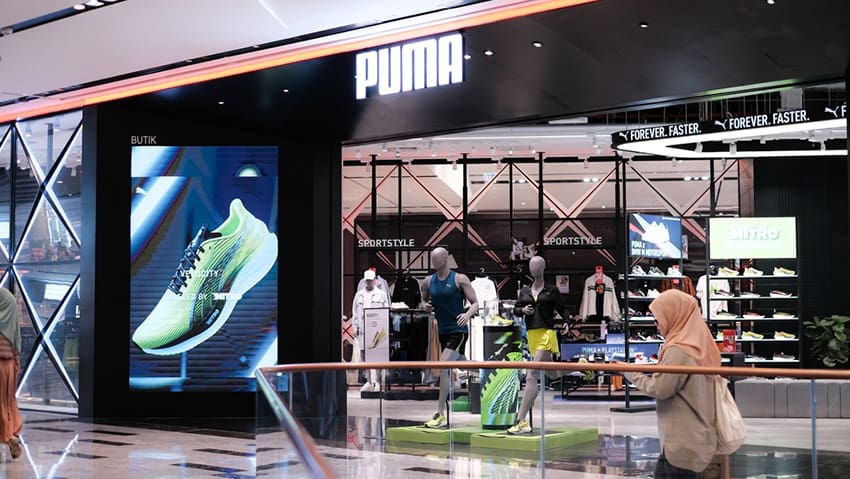
Mike Ashley’s retail empire has added another high-profile investment to its portfolio after Frasers Group quietly built a near 6 per cent stake in the German sportswear brand Puma.
Regulatory filings on the German stock exchange revealed that the owner of Sports Direct, Flannels and House of Fraser now controls a 5.77 per cent holding in Puma. The disclosure triggered an immediate reaction in the market, sending Puma’s shares up almost 10 per cent as investors interpreted the move as a potential vote of confidence in the struggling brand.
The investment makes Frasers Group the second-largest shareholder in Puma, just weeks after the Chinese sportswear giant Anta Sports agreed to acquire a 29.1 per cent stake in the business for €1.5 billion from the French billionaire Pinault family.
Frasers’ position has reportedly been assembled through a series of put option agreements linked to Puma shares, a financial strategy that allows the group to build exposure to the company without immediately purchasing large blocks of stock in the open market.
The move highlights Frasers’ increasingly active role as a strategic investor in global fashion and retail brands. Founded by Mike Ashley in 1982, the group has built a reputation for taking minority stakes in companies and using its influence to push for operational or strategic changes.
Although Ashley stepped down from day-to-day leadership in 2022, the business is now run by his son-in-law, Michael Murray, who has continued the strategy of investing in key partners and competitors across the retail sector.
Puma is already a major supplier of trainers and sportswear to Sports Direct, Frasers’ flagship retail chain. Strengthening its shareholding could give the British retailer additional influence in the brand’s future strategy and product development.
The investment comes at a turbulent moment for Puma, which has struggled to keep pace with rivals such as Nike and Adidas.
The company issued several profit warnings last year and has been undergoing a restructuring programme aimed at restoring profitability and rebuilding its brand position in the global sportswear market.
Earlier this year, Puma reported a record annual loss of €645.5 million and declining sales, forcing the company to scrap its dividend and announce plans to cut around 900 jobs as part of its turnaround effort.
The restructuring is being led by the company’s new chief executive, Arthur Hoeld, who has signalled that the brand needs to fundamentally rethink its product strategy and global positioning.
Hoeld has acknowledged that demand for Puma footwear has weakened significantly in recent years and said the company must take a “hard look at ourselves” as it attempts to recover market share.
Like many consumer brands, Puma has also been hit by broader macroeconomic pressures. Slowing consumer demand in the United States, geopolitical uncertainty and trade tensions have all contributed to a challenging environment for global retail companies.
Tariffs introduced during the presidency of Donald Trump have added additional costs to international supply chains, while weakening consumer confidence has weighed on discretionary spending.
Despite these pressures, Puma’s share price has begun to recover after falling to a near ten-year low of around €15 late last year. The stock recently closed at €22.62, helped by renewed investor interest following the Anta investment and Frasers’ latest move.
Frasers’ stake in Puma is the latest example of the group’s aggressive investment strategy across the retail and fashion sector.
In recent years the company has accumulated significant stakes in several major brands and retailers, including Hugo Boss, where it holds roughly a 25 per cent stake, Asos, Boohoo Group and Mulberry.
The group has frequently used these stakes to exert pressure on management teams and influence strategic decisions.
A long-running dispute with Boohoo, for example, saw Frasers attempt to install Mike Ashley as chief executive and block the company’s efforts to rebrand its holding entity as Debenhams.
Similarly, Frasers has recently increased its position in Asos and voted against all board resolutions at the online retailer’s annual general meeting, signalling dissatisfaction with its performance and strategy.
The new investment by Frasers comes shortly after Anta Sports’ landmark purchase of a 29.1 per cent stake in Puma from the Pinault family, which had been the sportswear company’s largest shareholder for many years.
Anta said the deal was part of its broader strategy to expand its portfolio of international brands and strengthen its position in the global sportswear market.
The company described the acquisition as a “major step forward in our single-focus, multi-brand globalisation strategy”, although it said it had no immediate plans to launch a full takeover bid for Puma.
Founded in 1991, Anta has grown rapidly into one of the world’s largest sportswear groups and already owns several global brands, including outdoor apparel company Jack Wolfskin.
With Anta and Frasers now holding significant stakes, analysts expect the ownership structure of Puma to come under increasing scrutiny.
The presence of two powerful strategic shareholders could reshape the company’s direction, particularly if they push for changes to product development, distribution strategies or management structures.
For Frasers, the investment reinforces its broader strategy of building influence across the global retail ecosystem, strengthening relationships with key brands while positioning itself to benefit from any recovery in the sportswear market.
Whether the stake leads to deeper collaboration with Puma or more active shareholder involvement remains to be seen, but the move signals that Mike Ashley’s retail empire is continuing to expand its influence well beyond Britain’s high street.

Jamie Young
Jamie is Senior Reporter at Business Matters, bringing over a decade of experience in UK SME business reporting.
Jamie holds a degree in Business Administration and regularly participates in industry conferences and workshops.
When not reporting on the latest business developments, Jamie is passionate about mentoring up-and-coming journalists and entrepreneurs to inspire the next generation of business leaders.


Rising heating oil prices are hitting Northern Ireland harder than the rest of the UK – here’s everything you need to know.

Sionna Therapeutics chief legal officer sells shares for $347,018

Unum Group board approves amendments to corporate bylaws

Apple unveiled the MacBook Neo on March 4, 2026, its most affordable laptop ever at a starting price of $599, drawing widespread acclaim in early hands-on reviews for delivering premium aluminum construction, a vibrant Liquid Retina display and solid everyday performance powered by the A18 Pro chip — all while undercutting competitors in the sub-$600 category.

The 13-inch MacBook Neo, available for pre-order immediately and shipping March 11, targets students, first-time Mac buyers and budget-conscious users who want the Mac experience without the $1,099+ price tag of the refreshed M5 MacBook Air. Education pricing drops it to $499, positioning it aggressively against Chromebooks and entry-level Windows laptops.
Apple’s press release highlighted the Neo’s durable aluminum enclosure in four eye-catching colors — blush, indigo, silver and a new citrus — alongside a 13-inch Liquid Retina display with 2,408×1,506 resolution, 500 nits brightness and support for 1 billion colors. It supports up to 16 hours of battery life, a 1080p FaceTime HD camera with dual mics, side-firing speakers with Spatial Audio, the Magic Keyboard and a large Multi-Touch trackpad running macOS Tahoe with full Apple Intelligence features.
The core innovation lies in the processor: the A18 Pro, borrowed from the 2024 iPhone 16 Pro lineup, features a six-core CPU (two performance cores, four efficiency cores) and five-core GPU. Apple claims it’s up to 50% faster for everyday tasks like web browsing and up to 3x faster for on-device AI workloads — such as photo effects — compared to the bestselling PC with the latest Intel Core Ultra 5.
Hands-on impressions from outlets like CNET, PCMag, Ars Technica and Daring Fireball emphasized the Neo’s surprising quality for the price. Reviewers described it as feeling “every bit like a MacBook” with solid aluminum build, a comfortable (though non-backlit) keyboard using the same mechanism as recent models, a responsive trackpad and surprisingly good side-firing speakers. The display earned praise for crispness and outdoor usability at 500 nits, matching the MacBook Air.
CNET called it a “premium laptop for $599” with “just the right feature mix,” noting its nearly Air-like thinness and fun color options that make it stand out. PCMag dubbed it “2026’s breakout budget laptop,” highlighting how it fills the gap left by the discontinued low-end M1 Air while offering better value than expected.
Ars Technica noted the Neo preserves Apple’s premium feel despite compromises: base model includes 8GB unified memory and 256GB storage (no Touch ID), with a $699 option adding Touch ID and 512GB. It has two USB-C ports (one USB 3, one USB 2), a 3.5mm jack and lacks True Tone or Force Touch trackpad. The A18 Pro, while capable for browsing, streaming, light editing and AI tasks, trails the M5’s 10-core CPU and up to 10-core GPU in heavier workloads.
Daring Fireball’s John Gruber called the $599 price (or $499 education) a “slam dunk,” arguing it’s vastly superior to typical budget Windows or Chromebooks. He praised the bright display, good speakers and overall polish, suggesting the Neo could dominate the sub-$1,000 segment.
Comparisons to the M5 MacBook Air (starting $1,099 with 512GB and 16GB RAM) show clear trade-offs: the Air offers superior performance for demanding tasks, Wi-Fi 7, a slightly larger 13.6-inch screen and more ports. Yet reviewers like 9to5Mac argue the Neo suits “most people” for common uses — web, email, streaming, schoolwork and light creative hobbies — especially with Apple Intelligence integration.
Critics noted potential limitations: 8GB RAM may feel constrained for multitasking or future-proofing, and the A18 Pro’s efficiency shines in battery life but lacks the M-series’ raw power for pro apps. Some questioned longevity versus higher-end models, though Apple’s ecosystem and software updates mitigate concerns.
The launch generated buzz as Apple’s boldest entry-level play in over a decade, challenging Chromebooks head-on while maintaining Mac quality. Early sentiment across forums and YouTube leaned positive, with many calling it a “reincarnation” of the classic budget Mac ethos.
As pre-orders roll in and full reviews emerge post-March 11 launch, the MacBook Neo appears poised to reshape the budget laptop landscape, offering accessible Apple silicon performance and premium design at an unprecedented price point.

Form 4 AleAnna Inc For: 6 March
McDonald’s Corp. (NYSE: MCD) shares declined modestly in trading on March 6, 2026, reaching $324.27, down $3.09 or 0.94% from the previous close, amid broader market fluctuations and profit-taking following a near-record peak earlier in the week.
The fast-food leader’s stock has traded in a 52-week range of $283.47 to $341.75, with the recent high hit around March 2, 2026. Intraday trading saw the shares range from approximately $321.35 to $326.29, with volume around 1 million shares in early sessions, below the average of over 3 million.
McDonald’s market capitalization stands near $231 billion to $233 billion, depending on intraday fluctuations, maintaining its status as a mega-cap stock with a low beta of about 0.50, indicating lower volatility compared to the broader market. The forward price-to-earnings ratio hovers in the mid-20s, while the dividend yield remains attractive at roughly 2.2% to 2.3%, supported by a forward annual dividend of $7.44.
The dip follows a strong close to 2025 and positive momentum into the new year. On February 11, 2026, McDonald’s reported fourth-quarter and full-year 2025 results that exceeded Wall Street expectations. Global comparable sales increased 5.7% in the fourth quarter, with positive traffic and performance across all geographic segments. U.S. comparable sales rose 6.8%, driven by value-oriented promotions and digital channels.
Consolidated revenues climbed 10% year-over-year to $7.01 billion, surpassing estimates of around $6.85 billion to $6.81 billion. In constant currencies, growth was 6%. Systemwide sales grew 11% (8% in constant currencies) for the quarter, pushing full-year systemwide sales above $139 billion, up 7% (5% in constant currencies) and adding nearly $9 billion in incremental growth.
Adjusted earnings per share came in at $3.12 for the quarter, beating consensus forecasts of $3.05. Net income reached $2.16 billion, or $3.03 per share, up from the prior year. Loyalty program strength was a key highlight, with sales to loyalty members surging 20% to nearly $37 billion across 70 markets. The company ended 2025 with close to 210 million 90-day active loyalty users.
CEO Chris Kempczinski emphasized the success of value strategies in a press release and earnings call. “Our focus on delivering unbeatable value has resonated with guests,” he said, crediting consistent pricing, app-exclusive deals and limited-time offers for traffic gains amid economic pressures.
For 2026, McDonald’s executives noted the year is “off to a strong start” but anticipated more moderate comparable sales growth in the first quarter compared to the fourth quarter’s robust performance. The company plans significant expansion, targeting about 2,600 new restaurant openings globally, with net additions of around 2,100. This is expected to drive roughly 2.5% systemwide sales growth, excluding currency effects.
Capital expenditures are forecasted at $3.7 billion to $3.9 billion, funding new builds, remodels, technology enhancements and supply chain improvements. Menu innovation continues, with plans to introduce new beverages later in 2026, including energy drinks, fruity refreshers and crafted sodas in the U.S. and select international markets. These draw from insights gained through the CosMc’s test and prior beverage trials.
Analysts largely maintain optimism on MCD. Consensus price targets range from about $338 to $349, with some higher calls reaching $354 (KeyCorp), $370 (Truist), $375 (Jefferies) and up to $385 (Tigress Financial). Recent adjustments include KeyCorp raising its target to $354 from $340 on March 3, 2026, while maintaining an overweight rating. Other firms like Argus upgraded to buy, citing digital investments and new launches.
The overall analyst consensus leans toward “Buy” or “Moderate Buy,” with roughly 16 to 17 buy ratings, 13 holds and a few sells. This reflects confidence in McDonald’s defensive positioning, global scale and ability to navigate consumer challenges through value and digital strategies.
Shares have gained about 7% to 8% year-to-date in 2026, building on resilience in a mixed economic environment. The franchise model generates steady royalty and rent revenue, while digital ordering, delivery partnerships and loyalty programs bolster growth. International markets, including foundational and emerging regions, provide diversification against U.S. softness.
Recent news includes McDonald’s ambitious goal to reach 50,000 restaurants by 2027, underscoring long-term expansion plans. Partnerships, such as renewed tech collaborations with Capgemini, aim to enhance digital capabilities. The company also faced lighthearted industry banter over promotional videos but remains focused on core execution.
As a bellwether for quick-service dining trends, McDonald’s continues to draw investor attention for its stability, dividend reliability and growth potential. With value initiatives proving effective and expansion on track, the stock appears poised for steady performance despite short-term pullbacks.
Business
Encore Capital Group, Inc. (ECPG) Presents at 47th Annual Raymond James Institutional Investor Conference – Slideshow

Encore Capital Group, Inc. (ECPG) Presents at 47th Annual Raymond James Institutional Investor Conference – Slideshow
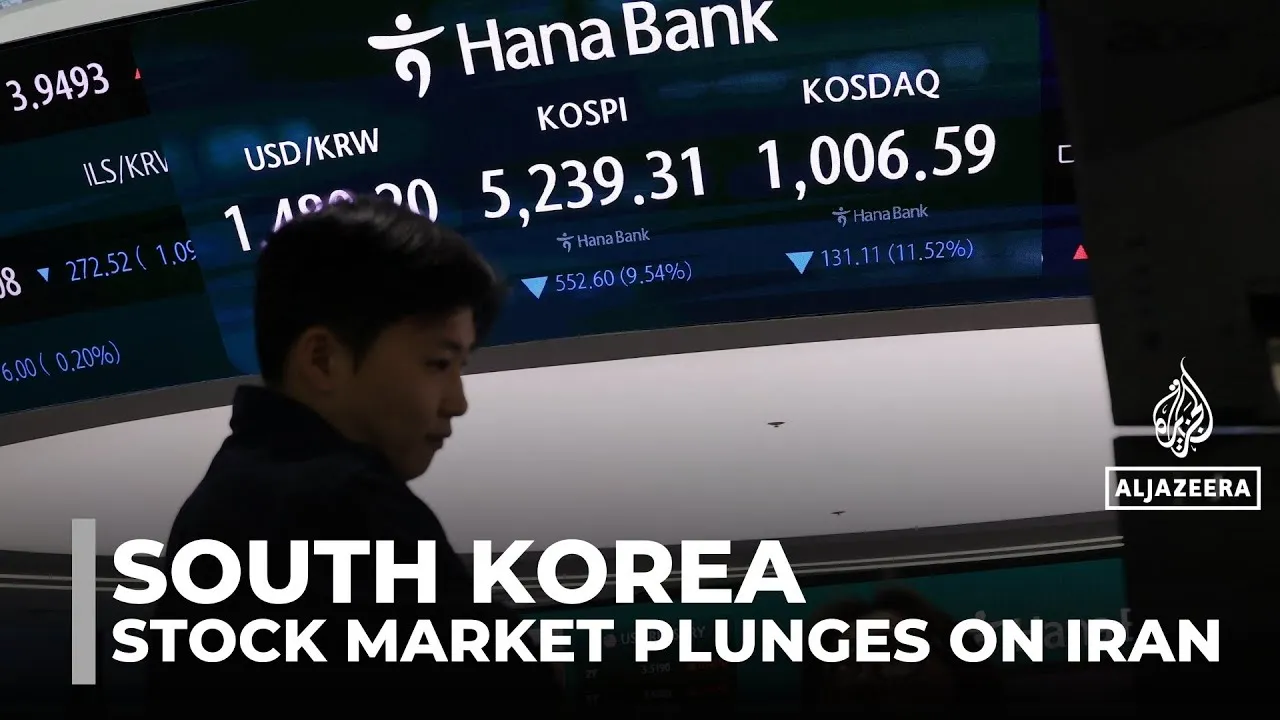
Asia’s stock markets declined sharply, with South Korea experiencing a 12% plunge—its worst since the pandemic—and Thailand facing its biggest sell-off. Concerns over an oil shock and escalating Iran tensions are fueling fears that these conflicts could harm the region’s economies. South Korea’s currency also hit a 17-year low amid these uncertainties.
Rising Oil Prices and Stock Market Declines in Asia
Oil prices are steadily increasing as Asian stock markets continue to decline, with South Korea experiencing a sharper plunge than during the 2008 global financial crisis. This sharp decline is largely due to the region’s heavy dependence on Middle Eastern crude oil imports, making the economies vulnerable to ongoing conflicts in the Middle East. If the war persists, South Korea’s economy could face severe deterioration, already evidenced by long queues at fuel stations.
Economic Risks and Government Responses
The international situation has caused concerns over fuel shortages and rising costs, especially as Asian countries do not produce sufficient oil domestically. The rising dollar exchange rate adds to the worry, leading to increased fuel prices and economic strain. Governments are trying to reassure their populations, with some nations stockpiling oil reserves to mitigate short-term disruptions. South Korea and Japan are actively working on diversification strategies to reduce dependency on Middle Eastern oil.
Global Implications and Future Outlook
A disruption in the supply chain, particularly if the Strait of Hummer remains closed, could significantly impact global inflation and economic growth. Alternative oil supplies will likely be more expensive due to soaring shipping costs. China has been pressing Iran to reopen key maritime routes, which could ease supply pressures. However, a prolonged conflict may deepen economic pain in Asia, underscoring uncertainties ahead as global tensions and energy prices remain volatile.
Other People are Reading

Rubio Samuel R, Tidewater CFO, sells $1.8m in TDW stock
Business
LARRY KUDLOW: Actions are being taken to get a string of ships through the Strait of Hormuz
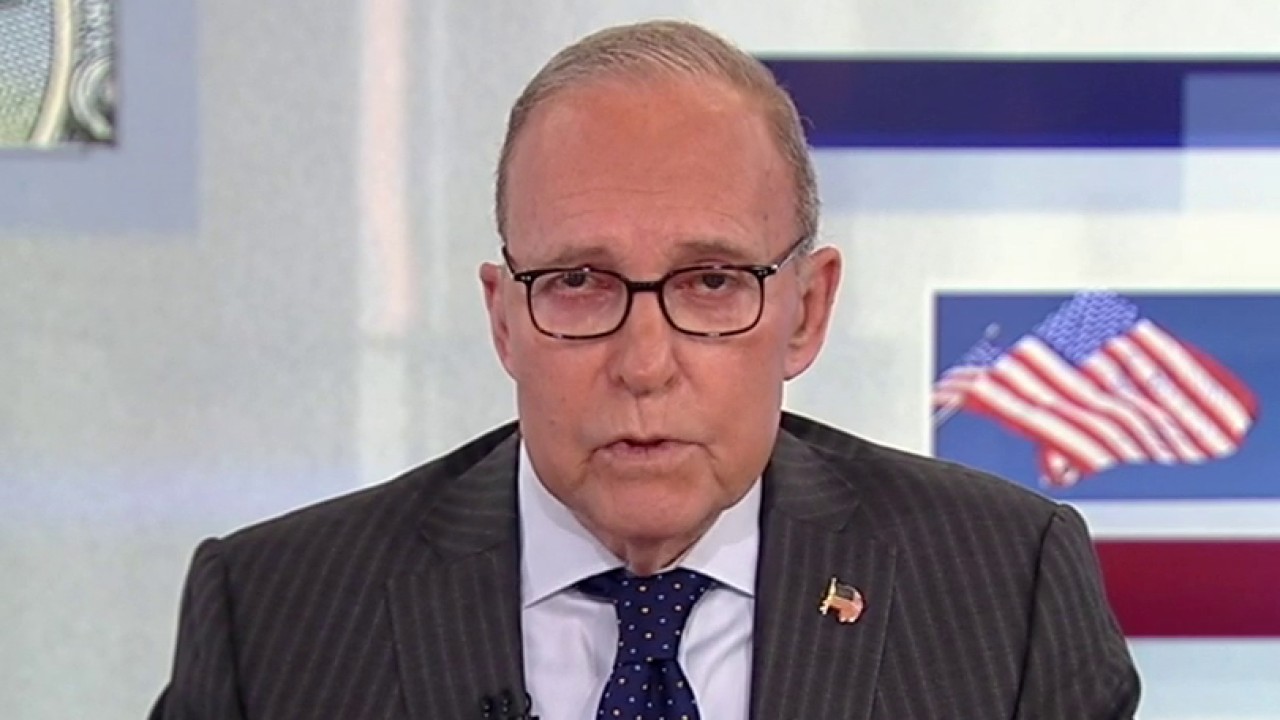
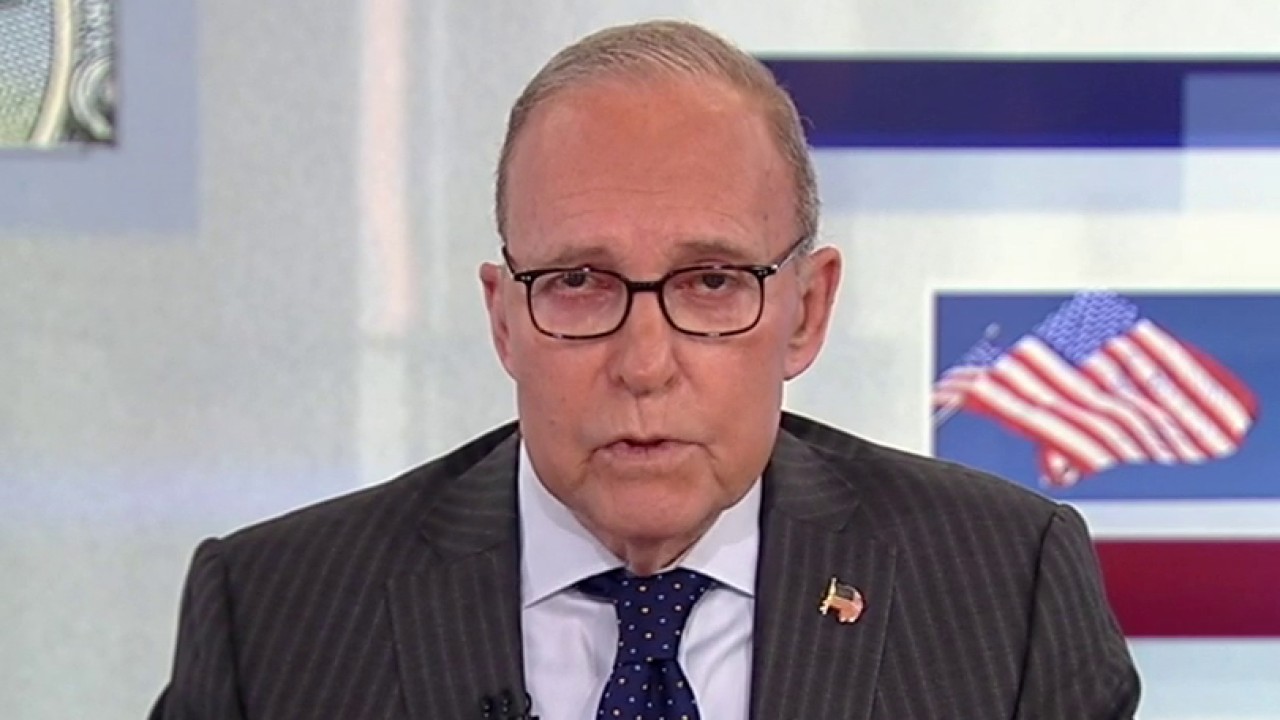
Finally some very good news on oil prices. America is going to give a lot of help to insure and reinsure, in other words, guarantee, oil cargo values moving through the Strait of Hormuz. The faster we safely get those ships to successfully sail through the strait, the faster oil prices are going to peak and move back down.
There are 120 tankers sitting in Persian Gulf ports at the top of the strait, paralyzed because Lloyds of London and other reinsurers have broken their contracts and jacked up insurance rates 50 percent to 100 percent — if they’ll even write a contract — because of the so-called Iranian war risk premium.
It’s mainly this problem that is driving up oil prices. There is no scarcity of oil, indeed oil is oversupplied throughout the world. For America alone, we’re now producing 13.6 million barrels per day, and 24 million barrels per day in oils and liquid fuels, more than Russia and Saudi Arabia combined.
Ever since President Trump’s “drill, baby, drill” policy in his first term and continued now in his second term, the fossil fuel spigots have been turned back on. And America has become an oil exporter, as well as the world’s leading producer.
In fact, America is producing nearly as much natural gas as Russia, Iran, and Communist China combined, at a staggering 110 billion cubic feet per day. And one of the great parts of Mr. Trump’s courageous effort to end Iran’s 47-year war against America is that the power to disrupt oil in places like Iran and Venezuela will be removed.
Treasury Secretary Scott Bessent discusses the United States’ new $20 billion maritime reinsurance plan, conflict in Iran and more on ‘Kudlow.’
So, today, the Trump administration announced that the International Development Finance Corporation, through Treasury Secretary Scott Bessent, has a detailed implementation plan, approved by Mr. Trump, to deploy maritime reinsurance, including war risk coverage, in the Gulf region. “In close coordination with” the Central Command, the announcement continued, “this plan will restore confidence in maritime trade, help stabilize international commerce, and support American and allied businesses operating in the Middle East during the conflict with Iran.”
Now, this is a major development. To be sure, the Iranian navy has basically been buried under deep water on the floor of the Persian Gulf. Not a factor. A few nitpickers actually believe that a couple of Iranian motorboats with a rifle will sink a supertanker filled with oil. I don’t believe that for a minute.
However, the great United States Navy is going to be a player here. Perhaps with ships at both ends of Hormuz. And other ships accompanying oil supertankers, as they make their way through the waterway toward their destination.
So we’d be insuring any losses and providing military protection to get oil to its proper destination.
World oil prices have basically jumped $30 in the last week because of the wartime risk premium. I don’t know where the peak is, but when America gets this packaged together, with insurance, naval protection, many ships passing through the Strait of Hormuz, it will be confidence inspiring. We will not be far away not only from a peak in oil prices, but a gradual descent back to normalcy, which would be something near $60 a barrel, or perhaps the mid $50s.
Little Iranian motor boats will have nothing to say about it.

Trump holds college sports roundtable with Saban, Meyer in attendance

Financial Security Tips To Avoid Divorce

Ohtani hits a grand slam at the World Baseball Classic after putting on a show in BP


-

 Politics4 days ago
Alan Cumming Brands Baftas Ceremony A ‘Triggering S**tshow’
-

 Tech6 days ago
Unihertz’s Titan 2 Elite Arrives Just as Physical Keyboards Refuse to Fade Away
-

 NewsBeat6 days ago
Abusive parents will now be treated like sex offenders and placed on a ‘child cruelty register’ | News UK
-
Business9 hours ago
Form 8K Entergy Mississippi LLC For: 6 March
-
 NewsBeat6 days ago
Dubai flights cancelled as Brit told airspace closed ’10 minutes after boarding’
-
Sports7 days ago
The Vikings Need a Duck
-
 NewsBeat6 days ago
The empty pub on busy Cambridge road that has been boarded up for years
-

 NewsBeat5 days ago
‘Significant’ damage to boarded-up Horden house after fire
-

 Tech2 days ago
Bitwarden adds support for passkey login on Windows 11
-

 Entertainment5 days ago
Baby Gear Guide: Strollers, Car Seats
-
 Sports1 day ago
499 runs and 34 sixes later, India beat England to enter T20 World Cup final | Cricket News
-

 Fashion6 hours ago
Weekend Open Thread: Ann Taylor
-
Politics6 days ago
FIFA hypocrisy after Israel murder over 400 Palestinian footballers
-
 NewsBeat6 days ago
Emirates confirms when flights will resume amid Dubai airport chaos
-

 NewsBeat4 days ago
Is it acceptable to comment on the appearance of strangers in public? Readers discuss
-

 Tech6 days ago
Viral ad shows aged Musk, Altman, and Bezos using jobless humans to power AI
-

 Video5 days ago
How to Build Finance Dashboards With AI in Minutes
-

 Fashion5 days ago
On the Scene at the 57th Annual NAACP Image Awards: Teyana Taylor in Black Ashi Studio, Colman Domingo in Yellow Sergio Hudson, Chloe Bailey in Christian Siriano, and More!
-

 Business3 days ago
Guthrie Disappearance Enters Fifth Week as Family Visits Memorial
-
 NewsBeat5 days ago
Ukraine-Russia war latest: Belgium releases video showing forces boarding Russian shadow fleet oil tanker