
Business
10 Essential Facts About Apple’s Magnetic Charging and Accessory System

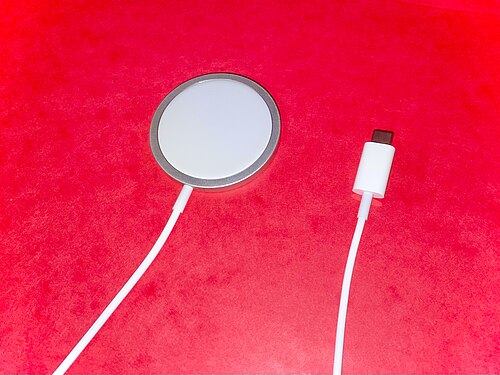
Apple’s MagSafe technology has transformed how users charge and accessorize their iPhones since its modern revival in 2020. With the recent announcement of the iPhone 17e on March 2, 2026 — which brings MagSafe support to Apple’s most affordable model at $599 — the magnetic ecosystem gains broader accessibility. MagSafe combines precise alignment for faster wireless charging with a vast array of snap-on accessories, making it a cornerstone of the iPhone experience.

Here are 10 key things to know about MagSafe as it enters its sixth year on iPhones:
1. MagSafe originated as a safety feature for MacBooks. Introduced in 2006, the original MagSafe used magnets to attach power cables to MacBook laptops. If tugged — such as by a tripping user — the connector detached safely, preventing damage to the port or laptop. Apple revived the name in 2020 for iPhone wireless charging, shifting focus to magnets around the charging coil for alignment and accessory attachment.
2. Modern MagSafe uses a ring of magnets around the Qi charging coil. Inside compatible iPhones, a circular array of magnets surrounds the wireless charging coil. Matching magnets in chargers and accessories snap devices into perfect position, ensuring optimal alignment for efficient power transfer. This eliminates the guesswork of standard Qi charging, where slight misalignment reduces speed.
3. It delivers up to 15W wireless charging on most models. MagSafe chargers achieve faster speeds than basic Qi (limited to 7.5W on many iPhones). With a compatible 20W or higher adapter, iPhones charge at up to 15W — or 25W on select Pro models with higher-wattage adapters. The iPhone 17e, announced March 2, supports 15W MagSafe/Qi2 charging, a major upgrade from the 7.5W Qi-only limit on the iPhone 16e.
4. MagSafe powers a thriving ecosystem of accessories. Beyond chargers, users snap on wallets, stands, mounts, battery packs, grips, card holders and camera lenses. Third-party makers like Belkin, OtterBox, PopSockets and Anker offer certified options. The magnets hold securely — strong enough to dangle an iPhone by a charger cable — while allowing easy removal.
5. Qi2 standard incorporates MagSafe’s magnetic alignment. The Wireless Power Consortium’s Qi2 (and Qi2.2) adopts Apple’s magnetic ring design, making magnetic charging open to Android devices like recent Google Pixel models. This broadens compatibility while preserving Apple’s ecosystem advantages, including certified faster charging and accessory integration.
6. The iPhone 17e expands MagSafe to budget buyers. Previously absent from the iPhone 16e despite Qi support, MagSafe arrives on the $599 iPhone 17e. Apple emphasized seamless snaps for chargers, cases, wallets and camera accessories. Pre-orders start March 4, with availability March 11, 2026. This move addresses criticism of the prior model’s limitations and aligns the entry-level device closer to flagship features.
7. Not all iPhones support MagSafe. Full compatibility began with the iPhone 12 series in 2020 and continues through the iPhone 17 lineup, including Pro, Pro Max, standard and now the “e” variant. Older models like iPhone 11 and earlier, plus some SE versions, lack the magnets and rely on basic Qi. Cases with built-in MagSafe rings can add partial functionality to non-native devices.
8. MagSafe enhances everyday utility beyond charging. Accessories like PopGrips attach magnetically for better handling or video viewing, then detach for wireless charging. Wallets store cards without bulk. Mounts secure phones in cars or on desks. Battery packs snap on for portable power, with newer third-party options featuring double-sided magnets for stacking accessories.
9. Safety and efficiency remain core benefits. Precise alignment minimizes heat and maximizes transfer efficiency. The system supports features like Apple Watch charging on some stands and integrates with Find My for locating attached wallets. Apple’s certification ensures accessories meet standards for performance and device protection.
10. The ecosystem continues evolving in 2026. Recent accessories include foldable 2-in-1 chargers from Belkin, ultra-slim power banks with 15W Qi2 and innovative designs like double-sided magnetic batteries. As Qi2 adoption grows, magnetic accessories may become standard across platforms, but Apple’s tight integration — including with iOS features and Apple Intelligence — keeps MagSafe central for iPhone users.
MagSafe’s blend of convenience, speed and versatility has made it indispensable for many. With the iPhone 17e’s inclusion, millions more can experience the “magic” Apple describes — snapping into place for charging or accessorizing without fumbling. As wireless standards converge, MagSafe’s influence extends beyond Apple devices, shaping the future of portable power and attachment tech.

More than $2.1 billion has been committed to state school infrastructure funding ahead of the May budget.
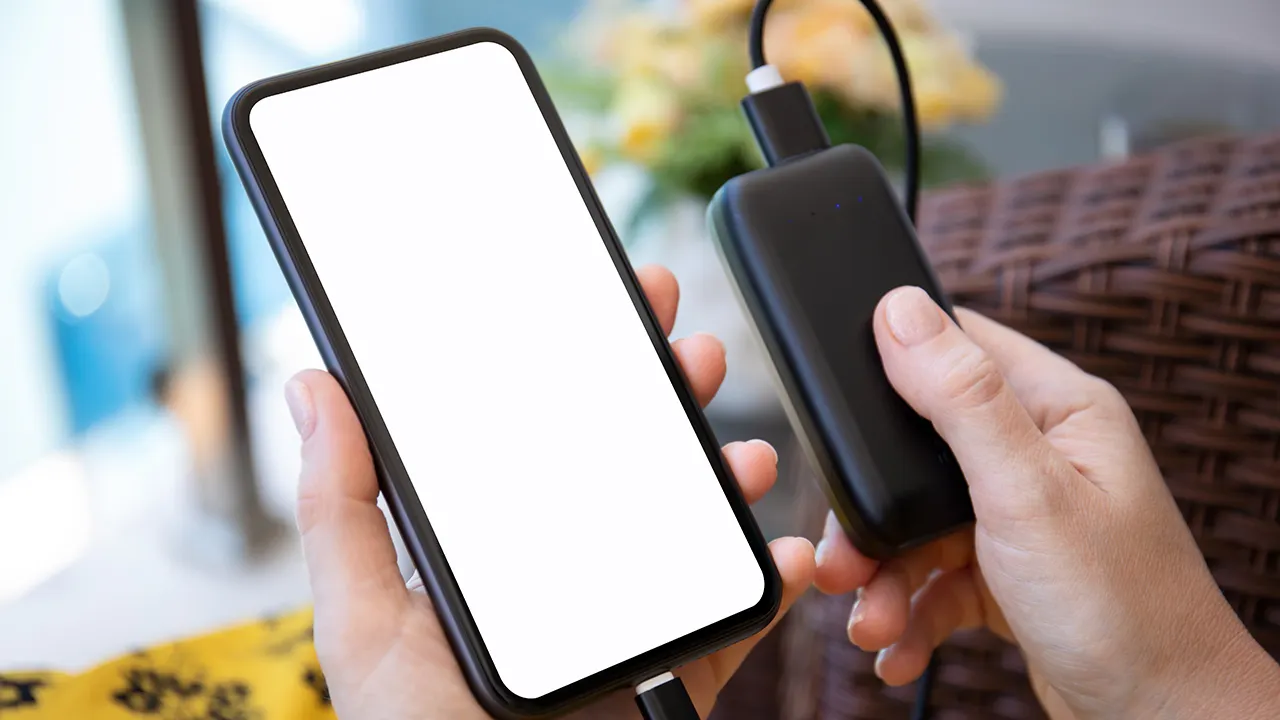
Check out what’s clicking on FoxBusiness.com.
A recall affecting more than 400,000 power banks has been reissued after federal regulators reported additional incidents, including a fatal fire and a separate onboard airplane fire.
About 429,000 Casely Power Banks 5000mAh portable MagSafe compatible wireless chargers are included in the recall announced last week due to fire and burn hazards, according to the U.S. Consumer Product Safety Commission (CPSC).
The recall was first announced in April 2025. At that time, Casely had received 51 consumer reports of the charger overheating, swelling or catching fire while being used to charge phones, causing six minor burn injuries.
MORE THAN 30K WIRELESS POWER BANKS RECALLED AFTER REPORTS OF FIRE, EXPLOSIONS
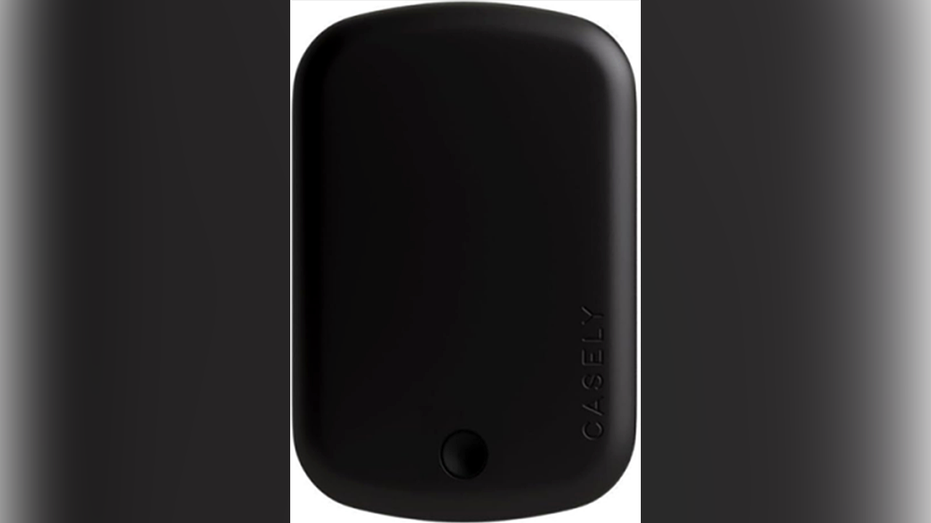
About 429,000 Casely Power Banks 5000mAh portable MagSafe wireless phone chargers are impacted by the reannounced recall. (U.S. Consumer Product Safety Commission / Unknown)
Since that recall was regulators say 28 additional incidents have been reported, including the death of a 75-year-old woman from New Jersey.
In August 2024, the elderly woman was charging her cell phone with the power bank on her lap when it caught on fire and exploded. She suffered second- and third-degree burns and later died from her burn injuries.
In another incident, a 47-year-old woman in February was charging her cell phone with the power bank on a plane when it caught on fire and exploded, causing first-degree burns to the woman.
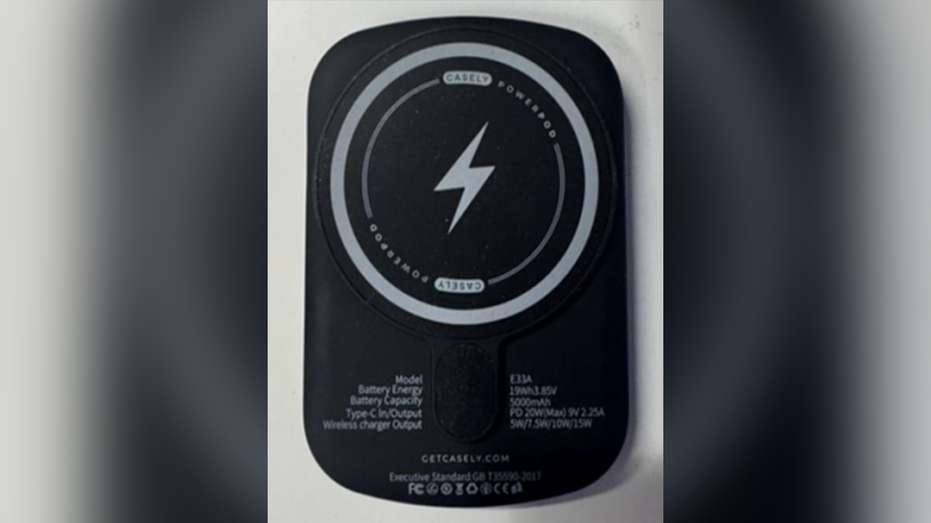
The recall was first announced in April 2025. (U.S. Consumer Product Safety Commission / Unknown)
The power banks affected by the recall have the model number “E33A” printed on the back and “Casely” engraved on the front right side.
The chargers were sold on Casely’s website, Amazon and other online retailers from March 2022 through September 2024 for between $30 and $70.
Consumers are urged to stop using the power banks immediately and contact Casely for a free replacement.
OVER 1.1M POWER BANKS RECALLED AFTER REPORTS OF FIRES, EXPLOSIONS
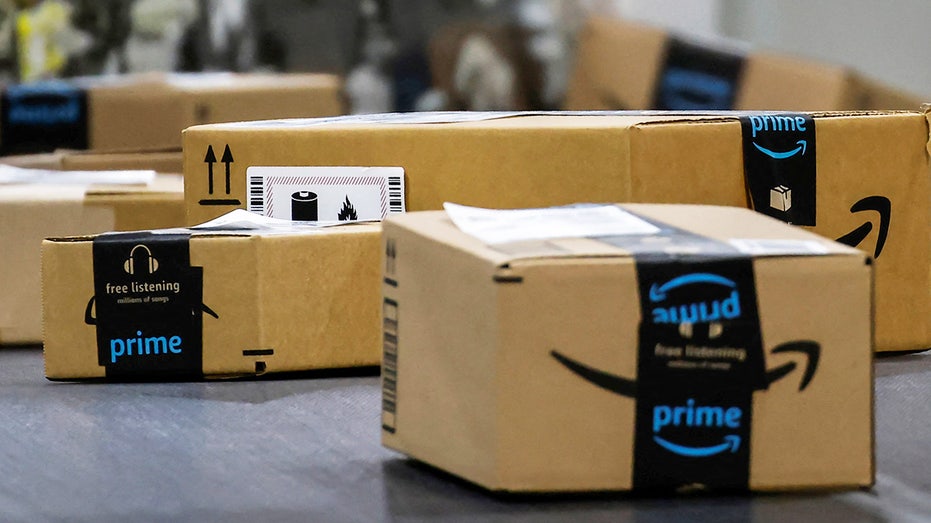
The chargers were sold at the Casely website, Amazon and other online retailers from March 2022 through September 2024. (REUTERS/Eduardo Munoz / Reuters)
GET FOX BUSINESS ON THE GO BY CLICKING HERE
The power banks should not be thrown away in the garbage since they pose a risk of fire, the commission warned. Consumers are instructed to contact local household hazardous waste collection centers for disposal guidance.
Asia stocks rise as tech gains offset US-Iran tensions; China keeps LPR steady
Southeast Asia faces a complex web of interconnected risks, from economic downturns and job scarcity to geopolitical rivalries and the disruptive force of AI. The region’s diverse economies, from wealthy Singapore to poorer Myanmar, experience these challenges unevenly, forcing nations to balance immediate stability with long-term strategic autonomy.
Key Details
- Economic growth is uneven: While Singapore thrives, countries like Myanmar, Laos, and Brunei struggle with debt, inflation, and joblessness; even wealthy Singapore faces cost-of-living pressures.
- Geopolitical tensions are acute: ASEAN nations, heavily reliant on China for trade, are squeezed by U.S. tariffs (e.g., 46% on Vietnamese exports) and legal uncertainty after the 2026 U.S. Supreme Court ruling, forcing ad-hoc bilateral deals.
- AI adoption is accelerating but unequal: Major investments in Indonesia, Malaysia, and Vietnam contrast with low SME adoption (15% in Singapore); energy-intensive data centers risk massive emissions spikes (e.g., 7x in Malaysia by 2030).
- Risks reinforce each other: Trade shocks fuel inflation and unemployment; AI gains may widen inequality; supply chain shifts expose cybersecurity gaps; domestic politics limit fiscal flexibility.
While AI adoption promises growth, uneven implementation, energy constraints, and workforce displacement could exacerbate inequalities. Governments and businesses must adopt integrated, adaptive strategies, acknowledging that economic, geopolitical, and technological pressures are converging, demanding a coordinated, forward-looking response to navigate this volatile landscape.
There is growth but it’s not reaching everyone
Economic growth is a case in point. In the survey, the top three perceived risks in the region are economic downturn, lack of jobs or economic opportunity and inflation, reflecting a shared anxiety about how individuals will experience growth. The signs of stress are already visible.
In Thailand, growth forecasts have been revised downward due to trade uncertainty and high household debt. Meanwhile, Brunei is still trying to reduce its reliance on oil and gas, and Lao PDR faces serious debt pressures that limit room to manoeuvre.
Meanwhile, ageing demographics in Malaysia and Viet Nam are outpacing economic development, a challenge requiring different investments in productivity and skills.
AI Surge in the Region Sparks Opportunities Amid Growing Divides
Southeast Asian executives rank the risks from artificial intelligence (AI) adversely at fourth regionally, compared to 10th globally. There is also relatively higher concern about online harms and the risks posed by frontier technologies more broadly.
AI-driven growth initiatives are gaining momentum across the region. For instance, Microsoft has unveiled significant cloud and AI investment programs in Indonesia and Malaysia.
Qualcomm has launched an AI research and development center in Viet Nam. Meanwhile, Singapore’s Green Data Centre Roadmap positions computing capacity as a strategic national infrastructure, akin to how previous generations prioritized highways and ports.
Other People are Reading

Factbox-From airlines to banks: Australian, New Zealand firms feel heat of Gulf crisis
WA shipbuilding giant Austal has officially concluded one of the largest naval programs in the state’s history, delivering the final Guardian-class patrol boat.

Exclusive-EU to push for jet fuel diversification as Iran war threatens supply


Some tickers are covered more than others on the site, so with The Undercovered Dozen our Editors highlight twelve actionable investment ideas on tickers with less coverage. These ideas can range from “boring” large caps to promising up-and-coming small caps. Specifically, the inclusion criteria for “undercovered” include: market cap greater than $100 million, more than 800 symbol page views in the last 90 days on Seeking Alpha, and fewer than two articles published in the past 30 days. Follow this account to receive a weekly review of twelve of these undercovered ideas from our valued analysts.
Analyst’s Disclosure: I/we have no stock, option or similar derivative position in any of the companies mentioned, and no plans to initiate any such positions within the next 72 hours. I wrote this article myself, and it expresses my own opinions. I am not receiving compensation for it. I have no business relationship with any company whose stock is mentioned in this article.
Seeking Alpha’s Disclosure: Past performance is no guarantee of future results. No recommendation or advice is being given that any particular security, portfolio, transaction or investment strategy is suitable for any specific person. The author is not advising you personally concerning the nature, potential, value or suitability of any particular security or other matter. You alone are solely responsible for determining whether any investment, security or strategy, or any product or service, is appropriate or suitable for you based on your investment objectives and personal and financial situation. The author is an employee of Seeking Alpha. Any views or opinions expressed herein may not reflect those of Seeking Alpha as a whole. Seeking Alpha is not a licensed securities dealer, broker or US investment adviser or investment bank.
Business
Oil Price Today (April 20): Crude oil jumps 6%, nears $100 again despite ceasefire hopes. What’s happening?
On the geopolitical front, U.S. President Donald Trump said on Sunday that American forces had seized an Iranian cargo ship attempting to breach its blockade. Iran, in response, said it would not take part in a second round of peace talks, despite Trump’s warning of renewed airstrikes.
Crude oil price on April 20
Brent crude futures climbed $6.11, or 6.76%, to $96.49 a barrel by 2327 GMT. U.S. West Texas Intermediate rose $6.53, or 7.79%, to $90.38 a barrel.Before the conflict, the strait accounted for roughly one-fifth of global oil supply. The war, now nearing two months, has severely disrupted these flows.

Market movements remain highly reactive to developments, with oil prices swinging on shifting signals from both sides rather than any clear improvement in supply conditions. The intermittent movement of vessels through the strait highlights the deep uncertainty surrounding the world’s most critical energy chokepoint. Even if tensions ease, a full recovery in oil flows is expected to take several months, experts warn.
On Saturday, Iran tightened its grip over the strait in response to the U.S. blockade, reportedly firing at several vessels and declaring the route closed. This came just hours after it had announced a temporary reopening during a 10-day ceasefire.
What are experts saying?
Brokerage firm Macquarie said that even if tensions cool, oil prices are likely to remain supported in the $85 to $90 range, with a gradual move towards $110 as supply through the Strait of Hormuz improves. It added that if disruptions persist through April, Brent crude could climb as high as $150 per barrel.
Analysts broadly believe crude may be entering a phase of structurally higher prices. With the ceasefire seen as temporary, a return to pre-war levels of $70 to $75 may take several months. In the near term, they expect prices to stay within a range of $80 to $85 on the downside and $95 to $100 on the upside.
Nuvama Institutional Equities cautioned that prolonged closure of the strait, which handles about 20 million barrels per day, could drive crude prices into the $110 to $150 range.
(Disclaimer: Recommendations, suggestions, views and opinions given by the experts are their own. These do not represent the views of The Economic Times)
US military says it killed three people in latest Caribbean boat strike

Cook government's pre-budget announcements keep coming

USMNT roundup: Red-hot Folarin Balogun chasing Ligue 1 history as Americans’ World Cup form takes shape

‘No more excuses’ as EU launches free age verification app

Why Israel is blocking foreign journalists from entering

Bitcoin: We’re Entering The Most Dangerous Phase

Alan Cumming Brands Baftas Ceremony A ‘Triggering S**tshow’

Jio Finance Q4 Results 2026 | Jio Finance Results Today | Jio Financial Services Latest News

Justice Thomas issues MAJOR REBUKE against Democrats as Mamdani makes FINANCIAL MISTAKE

Sam Smith – Money On My Mind (Official Music Video)
-

 Crypto World6 days ago
The SEC Conditionalises DeFi Platforms to Be Avoided for Broker Registration
-

 Fashion2 days ago
Weekend Open Thread: Theodora Dress
-

 NewsBeat6 days ago
Trump and Pope Leo: Behind their disagreement over Iran war
-

 Crypto World6 days ago
SEC Signals Exemption for Crypto Interfaces From Broker Registration
-

 News Videos5 days ago
Secure crypto trading starts with an FIU-registered
-

 Sports3 days ago
NWFL Suspends Two Players Over Post-Match Clash in Ado-Ekiti
-

 Crypto World6 days ago
SEC Proposes Certain Crypto Interfaces Don’t Need to Register as Brokers
-

 Business13 hours ago
Powerball Result April 18, 2026: No Jackpot Winner in Powerball Draw: $75 Million Rolls Over
-

 Politics2 days ago
Palestine barred from entering Canada for FIFA Congress
-

 Crypto World2 days ago
Russia Pushes Bill to Criminalize Unregistered Crypto Services
-

 Sports7 days ago
NWFL opens Pathway for new Clubs ahead of 2026 Season
-
 Business3 days ago
Creo Medical agree sale of its manufacturing operation
-
 Entertainment6 days ago
Brand New Day’ Footage Reveals the Devastating Impact of ‘Now Way Home’
-

 Politics18 hours ago
Zack Polanski demands ‘council homes not luxury flats for foreign investors’
-

 Crypto World7 days ago
Trump whales load up ahead of Mar-a-Lago luncheon.
-
Business7 days ago
Kering slides after Morgan Stanley downgrade, Gucci woes loom
-

 Tech7 days ago
Apple glasses won’t go brand shopping like Meta did with Ray-Ban and Oakley
-

 Tech7 days ago
Google adds E2E encryption to Gmail for iOS and Android enterprise users
-
 Entertainment6 days ago
Karol G’s ‘Ultra Raunchy’ Coachella Set Gave ‘Satanic Vibes’
-
Entertainment7 days ago
How Euphoria Season 3 Premiere Paid Tribute to Eric Dane After Death
You must be logged in to post a comment Login