
Business
10 Essential Facts About the Cambridge Rare Disease Drug Discovery Pioneer


CAMBRIDGE, England — Healx, a leading UK artificial intelligence-powered biotech company, continues to reshape drug discovery for rare diseases in 2026, leveraging advanced machine learning to accelerate treatments for conditions that affect millions but often lack approved therapies.
Founded in 2014, the Cambridge-based firm stands out in the competitive AI drug discovery landscape by focusing on repurposing and enhancing existing compounds through data-driven insights rather than starting from scratch. With a growing pipeline advancing toward clinical stages, strategic partnerships and recent expansions into oncology and neuroregeneration, Healx exemplifies how AI can address the high failure rates and costs of traditional pharmaceutical development.

Here are 10 key things to know about Healx and its mission to bring hope to rare disease patients.
- Patient-inspired origins: Healx traces its roots to a 2014 meeting between co-founders Dr. Tim Guilliams and Dr. David Brown with Nick Sireau, whose son has alkaptonuria, a rare genetic disorder. This encounter highlighted the urgent need for faster treatments for the estimated 10,000 rare diseases affecting 300 million people worldwide, 90% of which have no approved therapies.
- Cambridge techbio powerhouse: Headquartered in the heart of the UK’s leading life sciences cluster, Healx benefits from proximity to world-class research institutions like the University of Cambridge. The company recently opened new labs at Chesterford Research Park, enhancing its capabilities in AI-driven biology and chemistry while maintaining a team of around 69 employees focused on interdisciplinary expertise.
- AI platform at the core: Healx’s proprietary next-generation AI platform analyzes millions of drug and disease data points to uncover novel connections. By integrating generative AI, machine learning, biomedical knowledge graphs and frontier technologies, it runs discovery stages in parallel and hypothesis-free, significantly shortening timelines from prediction to patient compared to conventional methods.
- Co-founder with Viagra pedigree: Chairman and co-founder Dr. David Brown is the co-inventor of the blockbuster erectile dysfunction drug Viagra and former global head of drug discovery at Roche. His deep pharmacology expertise complements CEO Dr. Tim Guilliams’ background in biophysics, neuroscience and tech entrepreneurship, creating a strong foundation for blending AI with proven drug development know-how.
- Substantial funding secured: Healx has raised approximately $115-134 million to date across multiple rounds. Key milestones include a $47 million Series C in 2024 co-led by Atomico and R42 Group, a $2 million later-stage investment from SCI Ventures in 2025, and earlier rounds backed by Balderton Capital, Amadeus Capital and others. This capital has fueled pipeline advancement and platform enhancements.
- Advancing clinical-stage pipeline: The company’s pipeline features assets in rare and pediatric oncology and neurology. HLX-1502 and HLX-0213 target Neurofibromatosis Type 1, with FDA clearance for a Phase 2 trial of HLX-1502 secured in 2024. Other candidates address Fragile X Syndrome, Angelman Syndrome, osteosarcoma and undisclosed rare conditions, with several programs in preclinical or IND-enabling stages.
- Strategic oncology expansion: In September 2025, Healx entered a strategic transaction with Vuja De Sciences to strengthen its focus on preventing cancer recurrence and metastatic endurance. The deal advances HLX-4310 and integrates expertise in rare and pediatric oncology, marking a significant step beyond traditional rare genetic disorders while leveraging the AI platform’s predictive power.
- Partnerships tackling paralysis: In 2025, Healx partnered with SCI Ventures — the world’s first specialist venture fund dedicated to curing paralysis — to apply its AI platform to spinal cord injury (SCI) therapies. The collaboration targets chronic SCI, a condition with lifetime care costs of $3-6 million per patient and limited treatment options, combining AI insights with neuroregeneration expertise.
- Additional high-profile collaborations: Healx has worked with Sanofi to identify new rare disease indications for proprietary compounds and maintains ties with organizations like the Children’s Tumor Foundation. These partnerships validate the platform’s ability to generate therapeutic rationale quickly and support milestone-driven progress toward the clinic.
- Mission-driven impact and recognition: Healx aims to deliver novel treatments faster, more cost-effectively and with higher success probability than the traditional 5% rate in drug discovery. The company has earned accolades such as AI Company of the Year and continues to emphasize ethical, patient-centric innovation. Its approach not only accelerates individual programs but also contributes to broader advancements in AI for biomedicine.
Healx’s technology combines three key drug discovery paradigms — AI predictions, in-house expert validation and patient insights — to create a more efficient pipeline. Traditional methods often take 10-15 years and cost billions, with most candidates failing. By contrast, Healx’s data-intensive method identifies repurposing opportunities or novel enhancements, potentially reaching clinical trials in as little as 24 months for some programs.
In 2026, the company remains active at major industry events, including the BIO International Convention, where it showcases its platform’s potential for rare and neglected conditions. Recent moves, such as the Vuja De Sciences transaction and SCI Ventures partnership, demonstrate strategic evolution while staying true to its rare disease roots.
The broader context for Healx includes a booming AI drug discovery sector, where UK firms benefit from strong talent pools, government support for life sciences and a regulatory environment that increasingly embraces innovative technologies. Challenges persist, including the need for robust clinical validation, competition for compute resources and navigating complex biology in heterogeneous rare diseases.
Yet Healx’s progress stands out. With assets advancing toward or in clinical stages, the firm positions itself as a bridge between cutting-edge AI research and tangible patient benefits. CEO Tim Guilliams has highlighted the emotional drive behind the work, noting that every rare disease patient deserves a treatment and that AI can help solve humanity’s toughest health challenges, from genetic disorders to cancer recurrence.
Industry observers view Healx as part of the UK’s vibrant AI biotech ecosystem, alongside companies like Isomorphic Labs. Its patient-inspired model — starting from real unmet needs rather than purely technological curiosity — resonates with investors and partners seeking meaningful impact alongside commercial potential.
As clinical data emerges in the coming years, particularly from the Neurofibromatosis Type 1 program expected to yield results in 2026 or beyond, Healx could provide proof points for AI’s role in transforming pharma. Success would not only benefit specific patient communities but also validate scalable approaches for thousands of rare conditions.
For now, the Cambridge company continues refining its platform, expanding collaborations and advancing its pipeline with disciplined execution. Its story illustrates how AI, when paired with deep domain expertise and human-centered focus, can address long-neglected areas of medicine.
Healx’s journey from a 2014 conversation about one boy’s rare disease to a clinical-stage biotech with international partnerships underscores the power of technology to drive hope. As the firm pushes forward in 2026, it stands as a compelling example of British innovation tackling global health inequities, one AI-driven discovery at a time.

Business
(VIDEO) Meghan Markle Signals End to 7-Year Media Storm with Uranus in Taurus Zodiac Repost
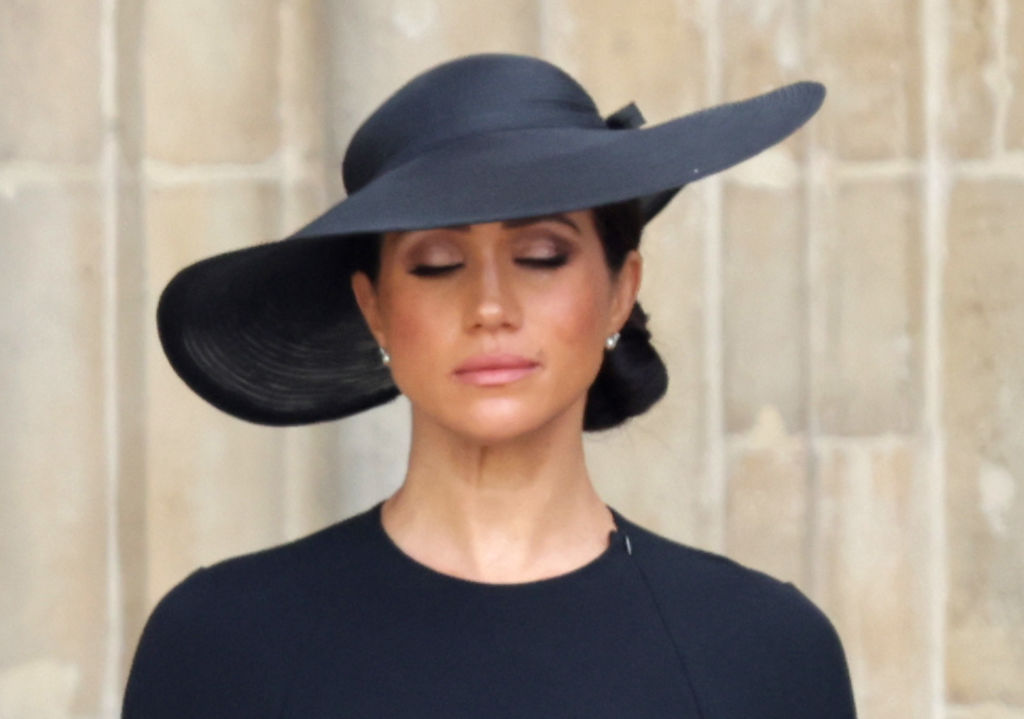
LOS ANGELES — Meghan Markle has sparked intense speculation and renewed royal watchers’ interest after reposting a pair of astrology memes on her Instagram Stories on April 25, 2026, hinting that the “hardest seven years” of her life may finally be coming to a close as the planet Uranus exits Taurus.

IBTimes US
The Duchess of Sussex, a Leo, shared content from astrology accounts that directly referenced the astrological transit and its impact on fixed signs including Taurus, Leo, Scorpio and Aquarius. One post featured two men dancing joyfully with the caption: “Taurus, Leo, Scorpio & Aquarius ending the hardest seven years of their lives on April 25.” Another horoscope post spoke to themes of exhaustion, questioned self-worth and the relief of emerging pressure.
Many fans and commentators immediately interpreted the posts as a subtle but pointed reference to the intense media scrutiny, public backlash and family tensions that began shortly after her 2018 wedding to Prince Harry and escalated dramatically with the couple’s 2020 decision to step back from royal duties.
Astrological Context and Timing
Astrologers note that Uranus, the planet associated with sudden change, disruption and liberation, spent approximately seven years in Taurus from 2018 to 2025 before shifting into Gemini. This long transit is said to bring upheaval to areas ruled by Taurus, including stability, values and public image — themes many observers link to Markle’s experience in the royal spotlight.
The timing aligns closely with major milestones in Markle’s public life: her wedding in May 2018, the birth of her children, the Netflix series, the Spotify podcast deal, the Oprah interview, the release of “Spare” and ongoing legal battles. For a Leo like Markle, the transit is believed to have challenged identity, creativity and recognition.
Public Reaction and Interpretation
The reposts quickly went viral, with royal gossip accounts, astrology enthusiasts and mainstream media dissecting every word. Supporters celebrated what they saw as a message of hope and renewal for the Duchess. Critics accused her of vague posting or using astrology to indirectly address ongoing controversies.
Some observers connected the post to recent media appearances and business ventures, suggesting Markle feels a shift toward calmer waters after years of intense coverage. Others noted the irony of a celebrity known for privacy concerns using social media to share such personal reflections.
Seven Years of Headlines
Since marrying into the British royal family, Markle has been one of the most discussed figures in global media. The period has included landmark moments — the couple’s explosive interview with Oprah Winfrey, their relocation to California, the launch of Archewell, Netflix projects and children’s books — alongside persistent tabloid scrutiny, lawsuits and public debates about race, privacy and family dynamics.
The “seven-year” reference resonates because it roughly spans from her engagement announcement through the present. Many royal commentators view the Uranus transit narrative as a metaphorical farewell to that turbulent chapter.
Markle’s Current Focus
Markle has maintained a relatively lower public profile in recent months while focusing on family, brand initiatives and selective projects. She and Prince Harry continue raising their two children in Montecito, California, and have expanded their philanthropic and media endeavors.
The Instagram Stories posts mark one of her more personal shares in some time, as she typically uses the platform for lifestyle, wellness or brand-related content. The move has reignited conversations about her relationship with the press and public perception.
Astrology’s Role in Celebrity Culture
Celebrities frequently turn to astrology for guidance or subtle messaging, and Markle’s posts fit into a broader trend. In 2026, interest in astrological transits remains high, with many public figures sharing similar content during major planetary shifts. Uranus in Gemini is expected to bring innovation, communication breakthroughs and adaptability — qualities supporters hope will define Markle’s next phase.
Royal experts remain divided on whether the posts signal genuine optimism or continue a pattern of cryptic communication. Some see it as empowering self-reflection; others view it as calculated engagement with her audience.
What Lies Ahead
As Uranus settles into Gemini, astrologers predict faster-paced change, new ideas and greater flexibility for affected signs. For Markle, this could translate to smoother professional projects, reduced media intensity or renewed focus on personal goals.
Whether the posts truly herald the end of a difficult era or simply reflect an interest in cosmic timing, they have once again placed Markle at the center of public conversation. Fans and critics alike will watch closely for signs of this new chapter unfolding in her work, family life and public presence.
The viral reaction underscores the enduring fascination with the Duchess of Sussex. Seven years after stepping onto the global stage as a royal bride, Meghan Markle’s latest social media activity suggests she believes the stars — and perhaps her own path — are finally aligning for something brighter.
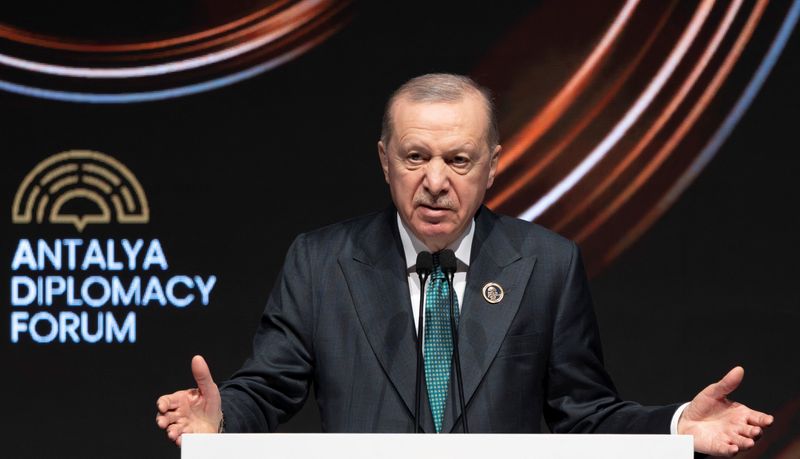

Turkey’s Erdogan offers support to Trump in call after White House dinner shooting
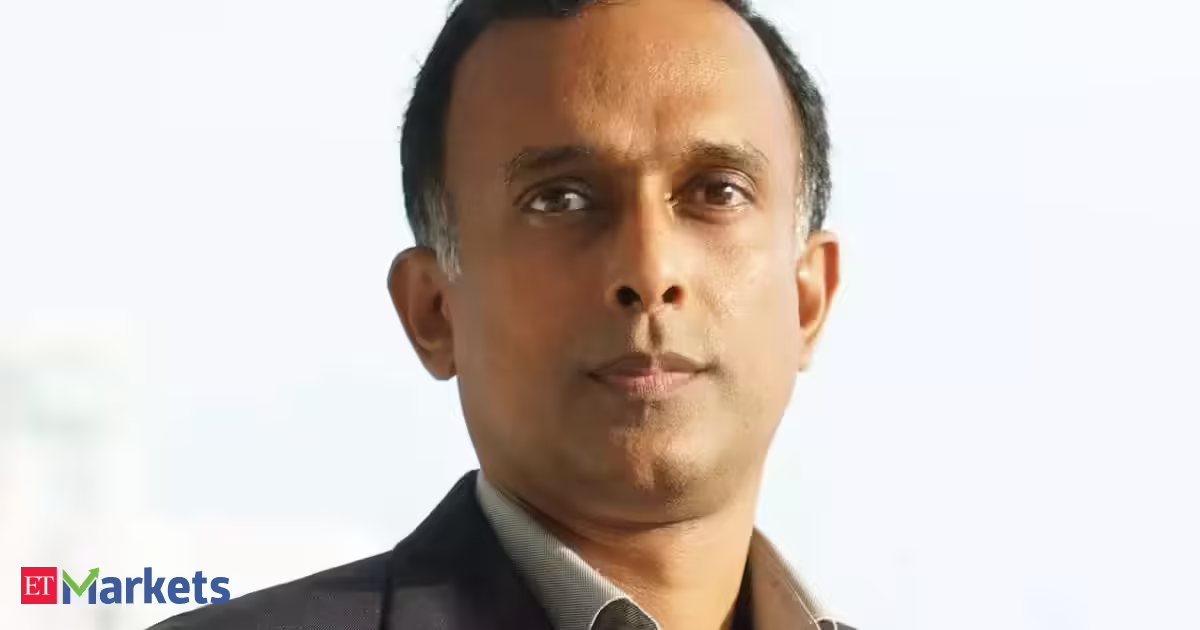
Edited excerpts from a chat:
The sharp sell-off in the previous 3 sessions clearly upset the bulls who believed that the market may have made peace with war. How have your calculations changed in the last 3 days?
Having come close to March’s peak a few days earlier, the uptrend had almost run its course, but we had hopes of extension in the uptrend through most part of last week. However, Friday’s downside gapped opening dismantled the bullish structure, opening room for 23500. That said, having retraced 68% of the upmove from 13 April to the month’s peak, a mean reversion upswing is likely, which could renew the prospects of upswing aiming 25000-25600. However, given the many resistances appearing shortly ahead, we would require a confirmation from a break past 24140. Else the downsides could persist.
IT index is suddenly the worst performer again with 10% weekly loss amid weaker than expected guidance given by software exporters. Will the bear play get stronger?
The Nifty IT index has seen a sharp sell-off, emerging as the worst performer this week, but the current setup also hints at the possibility of a short-term bounce. Technically, the index has broken the daily Supertrend and witnessed a bearish MACD crossover, with the average RSI of constituents hovering near 40, reflecting weak but not oversold conditions. The weekly bearish Marubozu points to strong selling pressure; however, prices are trading close to last month’s support of 28,288. Derivative data adds an interesting layer with around 67% of near OTM call option strikes saw short addition, while nearly 80% of stock futures witnessed long unwinding on Friday and on a weekly basis, leaving room for either fresh shorts or pull-back. Additionally, with about 44% of stock options showing PCR OI below 0.5, the probability of a near-term pullback or relief bounce has increased, even as the broader bias remains cautious. However, a clear break below 28288 could open the door toward the next major support around 26,300, keeping the broader bias negative.
HCL Tech was among the worst losers last week. What should traders do this week?

HCL Technologies reflects acute sectoral weakness and stock-specific pressure. The trend remains decisively weak, with prices trading well below key averages and momentum indicators firmly bearish. The daily RSI has slipped below 25, indicating deeply oversold conditions, which raises the probability of a short-term technical pullback or relief bounce. Such a move could extend toward the 1,280-1,300 zone, which now acts as an immediate resistance area. However, this bounce, if it materialises, is likely to be corrective rather than trend changing. The broader structure continues to show lower tops and lower bottoms, and momentum remains negative. Traders should therefore adopt a cautious approach, using any pullback toward resistance to lighten long exposure or look for sell-on-rise opportunities, while keeping the overall bias negative in the week ahead.
RIL shares would be in focus on Monday morning. Given that the stock is down around this year, what are the charts indicating for the week ahead?
Two successive days of close below the 10 day SMA, projects weakness ahead. That said, recovery seen on Friday’s last hour encourages us to nurture upswing hopes, but we would require 1345-50 region to be convincingly broken to negate the overall negative view.Pharma stocks suddenly become a strong defensive play. How do you see the momentum in stocks like Piramal Pharma and DRL going forward?
Yes, but that theme too has its limits. Both these stocks’ oscillators suggest overbought conditions. With both of them stalling near February’s peaks, it would be prudent to wait for pull backs to re enter.
Share your top trading ideas for the week ahead.
EPL (CMP: 226)
View: Buy
Target: 338
SL: 219
EPL has shown early signs of stabilization after the recent upmove, forming an inside-bar doji on the daily chart, which reflects temporary indecision after a slippage. Momentum remains constructive, with the RSI holding firm around 55, indicating underlying strength and no immediate loss of momentum. Importantly, the stock is trading above the monthly declining trendline, suggesting a potential shift from a corrective to a consolidation phase. As long as EPL holds above the 220, the bias remains positive with scope for a continuation move on a decisive breakout above the inside-bar range. However, traders should watch for confirmation through volume expansion. A breakdown below recent support would negate the setup, but for now, the technical structure favours a cautious positive outlook in the near term.
ONESOURCE (CMP: 1824)
View: Buy
Target: 2030
SL: 1680
ONESOURCE is showing a clear improvement in its technical structure, pointing to a positive outlook ahead. The stock has decisively broken above its long-term declining trendline, signalling a potential shift in the broader trend. On the weekly timeframe, EPL has also moved above the Supertrend level of 1690, indicating a transition from bearish to bullish territory. Adding to the strength, the stock has surpassed its 200 DMA at 1678 this week. Momentum indicators are supportive, reinforcing the bullish bias. As long as EPL sustains above these breakout levels, the setup favours continuation on the upside, with any short-term consolidation likely to be healthy.

The equity market is a powerful mechanism as daily fluctuations in price get aggregated to incredible wealth creation or destruction over the long term. Pacifica Yield aims to pursue long-term wealth creation with a focus on undervalued yet high-growth companies, high-dividend tickers, REITs, and green energy firms.
Analyst’s Disclosure: I/we have no stock, option or similar derivative position in any of the companies mentioned, and no plans to initiate any such positions within the next 72 hours. I wrote this article myself, and it expresses my own opinions. I am not receiving compensation for it (other than from Seeking Alpha). I have no business relationship with any company whose stock is mentioned in this article.
Seeking Alpha’s Disclosure: Past performance is no guarantee of future results. No recommendation or advice is being given as to whether any investment is suitable for a particular investor. Any views or opinions expressed above may not reflect those of Seeking Alpha as a whole. Seeking Alpha is not a licensed securities dealer, broker or US investment adviser or investment bank. Our analysts are third party authors that include both professional investors and individual investors who may not be licensed or certified by any institute or regulatory body.

Compass, Inc.: Well Positioned To Emerge As A Dominant Exchange

PORTLAND, Ore. — Victor Wembanyama delivered a resounding statement Sunday, exploding for 27 points, 11 rebounds, 7 blocks and 4 steals in his return from a concussion as the San Antonio Spurs cruised to a 114-93 victory over the Portland Trail Blazers in Game 4, seizing a commanding 3-1 series lead and quieting concerns about the young superstar’s availability.

The 22-year-old Defensive Player of the Year, who had missed Game 3 while navigating the NBA’s concussion protocol after a frightening face-first fall in Game 2, looked sharp and unrestricted from the opening tip. Starting and logging 34 minutes, Wembanyama showed no lingering effects as he anchored the Spurs’ defense and provided timely scoring in a dominant second-half surge.
Coach Mitch Johnson confirmed pregame that Wembanyama had fully cleared league protocol after days of monitored activity. “He looked like himself in warmups and throughout the game,” Johnson said. “We’re thrilled with where he’s at physically and mentally.” The performance marked one of the most impressive playoff debuts from injury in recent memory, with Wembanyama becoming the first player since Hakeem Olajuwon in 1993 to post at least 25 points, 10 rebounds, 7 blocks and 4 steals in a postseason game.
The Road Back from Injury
Wembanyama suffered the concussion in Game 2 on April 21 when he was fouled and crashed awkwardly to the court, landing face-first. He played only 12 minutes that night before exiting. The Spurs won Game 3 without him, 120-108, showcasing impressive depth with Stephon Castle and De’Aaron Fox stepping up.
Medical staff and league officials monitored his progress closely. Wembanyama traveled with the team, participated in light workouts and film sessions, and gradually increased activity without symptom setbacks. His clearance came roughly five days after the injury, aligning with typical NBA concussion timelines but on the quicker side for a high-profile case.
In postgame comments, Wembanyama expressed satisfaction with his recovery while maintaining focus on the series. “I’m happy to be back and contributing,” he said. “The team showed great resilience without me. Now we finish the job.” He noted the fall felt “weird” initially but emphasized full clearance and no hesitation on the court.
Dominant Return Sets Tone
From the start, Wembanyama imposed his will. He swatted shots at the rim, altered drives and stretched the floor with his shooting range. Offensively, he attacked mismatches and finished with efficiency. His seven blocks tied a career playoff high, reinforcing his status as the league’s premier rim protector.
De’Aaron Fox complemented him perfectly with 28 points and 7 assists. The Spurs erased an early double-digit deficit, outscoring Portland decisively in the second half. The victory puts San Antonio one win from advancing, with Game 5 back home Tuesday.
Blazers coach Chauncey Billups acknowledged the challenge. “When he’s out there, it changes everything. He’s a special player.” Portland fought hard early but couldn’t contain the Spurs’ length and pace once Wembanyama found rhythm.
Implications for Spurs’ Playoff Run
Wembanyama’s seamless return boosts San Antonio’s championship aspirations. As a unanimous Defensive Player of the Year and MVP finalist, his presence transforms the team’s ceiling. The Spurs built depth precisely for moments like this, but having their franchise cornerstone back healthy shifts momentum dramatically.
Medical experts note that passing protocol and performing at an elite level suggests no major long-term concerns, though monitoring remains essential. Wembanyama’s youth and conditioning likely aided his quick recovery. He has spoken previously about prioritizing long-term health over short-term risks.
Broader Context and Reactions
The performance drew praise across the league. Fans and analysts celebrated the return of the 7-foot-4 phenom, whose unique skill set continues redefining the center position. Social media highlighted defensive highlights and his calm postgame demeanor.
Wembanyama’s journey — from No. 1 overall pick in 2023 to playoff force — underscores rapid growth. Early injuries tested his resilience, but responses like Sunday’s affirm his trajectory toward superstardom.
For the Trail Blazers, the loss stings but highlights areas for growth. Scoot Henderson and others showed promise, yet containing Wembanyama remains a tall task for any opponent.
What’s Next
With the series at 3-1, the Spurs hold clear momentum heading home. Wembanyama’s availability for Game 5 appears strong barring any new issues. A series-clinching win would send them to the Western Conference semifinals, where tougher tests await.
League-wide, the case reinforces concussion protocol’s importance while showcasing successful management. Players, coaches and officials continue balancing safety with competitive demands in a physical postseason.
Sunday’s game reaffirmed Wembanyama’s value. His dominant return not only lifted the Spurs but reassured fans and the organization that their cornerstone is healthy and ready for the grind ahead. As the series shifts back to San Antonio, the focus turns to closing out Portland and building on this momentum.
For a player still early in his career, Wembanyama’s composure and production in Game 4 signal readiness for bigger stages. The alien has landed back on Earth — and he’s dominating once again.


Wilson Research seeks to provide investors with focused insights on predominantly exchange-traded funds, or ETFs, with a blend between growth potential and dividend yield. The analysis provided emphasizes fundamental analysis while including macro-level factors such as industry trends, economics, geopolitics, and a variety of other influential factors. Wilson Reseach includes an MBA graduate and independent financial coach who seek to provide actionable information for long-term investors who value diversification while keeping their fees as low as possible. Wilson Research is inspired by the investment philosophies of Warren Buffett and the entrepreneurial philosophies of Robert Kiyosaki.
Analyst’s Disclosure: I/we have a beneficial long position in the shares of UNH either through stock ownership, options, or other derivatives. I wrote this article myself, and it expresses my own opinions. I am not receiving compensation for it (other than from Seeking Alpha). I have no business relationship with any company whose stock is mentioned in this article.
This article is exclusive to Seeking Alpha. No duplication or reproduction of this article is allowed without the consent of Seeking Alpha and the author. This article should not be misconstrued as individual financial advice. Always conduct your own due diligence prior to investing.
Seeking Alpha’s Disclosure: Past performance is no guarantee of future results. No recommendation or advice is being given as to whether any investment is suitable for a particular investor. Any views or opinions expressed above may not reflect those of Seeking Alpha as a whole. Seeking Alpha is not a licensed securities dealer, broker or US investment adviser or investment bank. Our analysts are third party authors that include both professional investors and individual investors who may not be licensed or certified by any institute or regulatory body.


I am interested in a lot of technology and AI stocks like Google, Nvidia, AMD, Tesla and Amazon.
Analyst’s Disclosure: I/we have a beneficial long position in the shares of ASML, TSM, NVDA either through stock ownership, options, or other derivatives. I wrote this article myself, and it expresses my own opinions. I am not receiving compensation for it (other than from Seeking Alpha). I have no business relationship with any company whose stock is mentioned in this article.
Seeking Alpha’s Disclosure: Past performance is no guarantee of future results. No recommendation or advice is being given as to whether any investment is suitable for a particular investor. Any views or opinions expressed above may not reflect those of Seeking Alpha as a whole. Seeking Alpha is not a licensed securities dealer, broker or US investment adviser or investment bank. Our analysts are third party authors that include both professional investors and individual investors who may not be licensed or certified by any institute or regulatory body.

The price band has been fixed at Rs 130-135 per share, with a minimum application size of 2,000 shares for retail investors, translating into an investment of Rs 2.7 lakh at the upper end.
Despite the IPO hitting the market at a time when primary activity remains active, the absence of any grey market premium suggests cautious sentiment among investors, particularly in the SME segment where listing gains have become less predictable in recent months.
About the company
Amba Auto operates as an authorised dealer for Bajaj Auto and LG Electronics, running its business under the brands Amba Bajaj and Amba LG Best Shop. The company sells two-wheelers, three-wheelers and consumer electronics products such as televisions, air conditioners and appliances.
Its operations are concentrated in Bengaluru, where it has built a network of 29 showrooms and service centres across both segments. The company also provides after-sales support through 18 service centres, catering to both automobile servicing and electronics maintenance.
Financially, the company has shown steady growth. Revenue stood at around Rs 242 crore in FY25, while profit rose to Rs 7.78 crore, reflecting improving scale in operations. For the nine months ended December 2025, the company reported revenue of Rs 203.79 crore and profit of Rs 12.11 crore.
Proceeds and IPO structure
The proceeds from the IPO will primarily be used for working capital requirements and expansion. A portion will also go toward setting up new showrooms and renovating existing outlets, aimed at strengthening the company’s retail presence.
The issue structure is typical of SME offerings, with around half the net issue reserved for non-institutional investors, while retail participation accounts for about 40%. Institutional allocation remains relatively small, reflecting the scale of the offering.
With no grey market premium currently, the IPO appears positioned more as a steady business offering rather than a listing gains play, with returns likely to depend on long-term execution rather than immediate market sentiment.
(Disclaimer: Recommendations, suggestions, views and opinions given by the experts are their own. These do not represent the views of Economic Times)
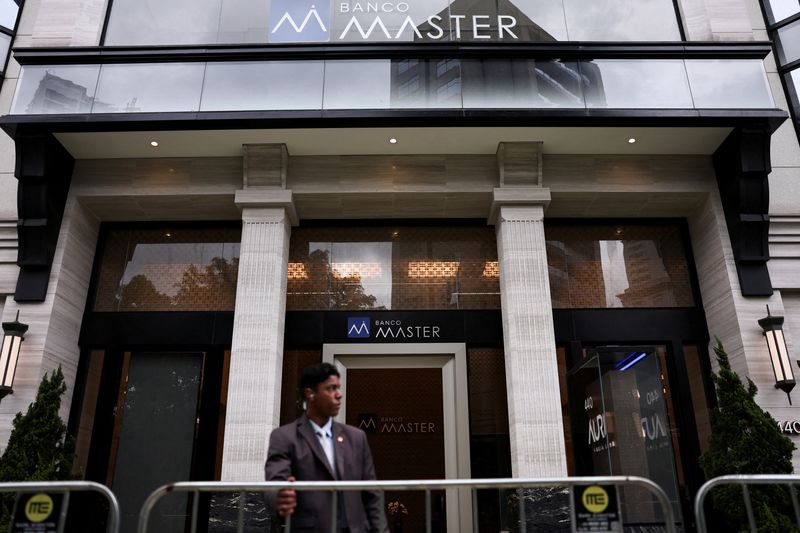

Analysis-Brazil shackles public pension funds after Banco Master meltdown

Nelly Korda's clubs: What's in her Chevron Championship-winning bag

Today’s NYT Mini Crossword Answers for April 27

BREAKING: BIGGEST NEWS for CRYPTOCURRENCY at WEF Davos 2026

Manchester United reach agreement with Casemiro over contract clause amid transfer speculation

US brings back mandatory military draft registration

Steven Gerrard disagrees with Gary Neville over ‘shock’ Chelsea and Arsenal claim | Football
BREAKING: BIGGEST NEWS for CRYPTOCURRENCY at WEF Davos 2026

EXPOSED: Is this alleged Ponzi scheme Australia’s biggest financial scandal? | 60 Minutes Australia

Binance Founder – The Crypto Market Is About To Go F**king Crazy (supercycle)
-

 Politics6 days ago
Gary Stevenson delivers timely reminder to register to vote as deadline TODAY
-

 Fashion2 days ago
Weekend Open Thread – Corporette.com
-
 Crypto World1 day ago
Hyperliquid $HYPE Rally Builds Momentum as AI Sector Enters Prove-It Phase
-
Crypto World6 days ago
Bank of Hawai’i (BOH) Q1 2026: Net Income Drops to $57.4M as Net Interest Margin Expands
-

 Politics4 days ago
Making troops accountable for war crimes threatens US alliance, ex-SAS colonel warns
-

 Politics4 days ago
Disabled people challenge government SEND proposals over segregation concerns
-

 Business5 days ago
Rolls-Royce Voted UK’s Most Iconic Trade Mark as IPO Register Hits 150
-

 Business3 days ago
Patterson-UTI Energy, Inc. (PTEN) Q1 2026 Earnings Call Transcript
-

 Politics4 days ago
Zack Polanski responds to home secretary’s taser threat
-
 Sports15 hours ago
IPL 2026: Ruturaj Gaikwad registers slowest fifty of the season, enters all-time unwanted list | Cricket News
-
 Crypto World6 days ago
Five Value Stocks with Recovery Potential in 2026: PayPal (PYPL), Nike (NKE), and More
-
Politics4 days ago
Wings Over Scotland | How To Get Away With Crimes
-

 Politics4 days ago
Starmer handler McSweeney to be dragged from shadows by Foreign Affairs Committee
-

 Crypto World5 days ago
New York sues Coinbase, Gemini over prediction market offerings
-

 Politics4 days ago
‘Iran is still a nuclear threat’
-
 Business5 days ago
HCL Tech share price tank over 9% after weak Q4. JPMorgan, HSBC & 3 others cut target price
-
 Sports4 days ago
Tim Bradley names the current best in the world: “Better than Inoue and Usyk”
-

 NewsBeat19 hours ago
LK Bennett closes all stores after entering administration
-

 Fashion6 days ago
Kilkenny Design New Beauty Arrivals for Spring 2026
-

 Crypto World5 days ago
Crypto’s great hope in Senate’s Clarity Act still has a path to survive tight calendar
You must be logged in to post a comment Login