Connect with us
DAPA Banner
DAPA Coin
DAPA
COIN PAYMENT ASSET
PRIVACY · BLOCKDAG · HOMOMORPHIC ENCRYPTION · RUST
ElGamal Encrypted MINE DAPA
🚫 GENESIS SOLD OUT
DAPAPAY COMING

Business

10 questions for Maxine Fox of 5 Circles

Published

on

Business Live

The founder of the North East-based business support consultancy 5 Circles answers our questions

5 Circles is a North East-based consultancy.

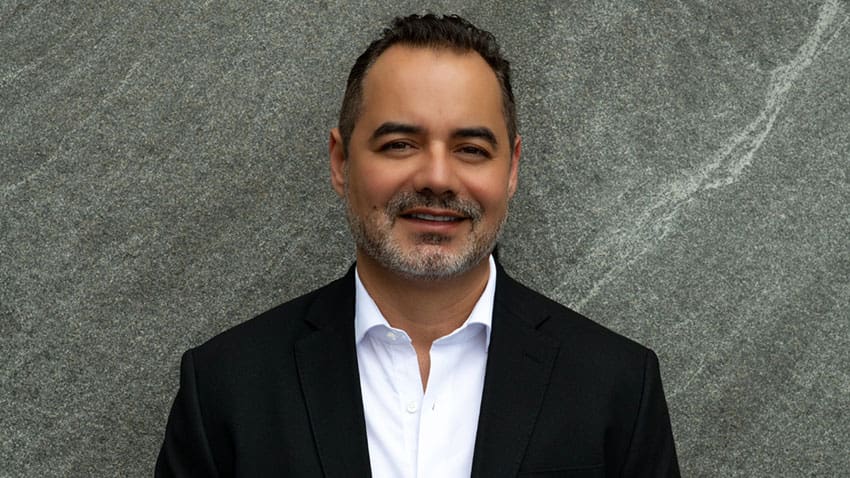
Maxine Fox of 5 Circles.(Image: 5 Circles)

Maxine Fox is the face of 5 Circles – a firm launched in 2025 to provide strategic support across people, marketing, finance and operations.

What was your first job and how much did it pay? My first job was in the shop in the village where I grew up in East Yorkshire. I worked there for years — all the way through secondary school and when I was home from university. I loved it. It was my favourite job of all time! It was a small village so everyone knew everyone, which was great from a community point of view. It wasn’t so great when you were up to no good and everybody knew who your mum was. When I started, I got paid £1 an hour and I seem to remember getting really excited when it went up to £1.10 per hour. This was a long time ago!

What is the best advice or support you’ve been given in business? Establish boundaries with your time. Running a business is all-consuming and I learned very quickly that it was eating into my time with my family and affecting the things I enjoy doing outside of work. Whilst I don’t always adhere to the advice, I am getting better at knowing where I should devote my time and when to down tools for the day. When I first started, I was working seven days a week and into the evenings. That’s simply not sustainable — either health-wise or in terms of being happily married! When you’re running a business your time is the most precious commodity and it needs to be used wisely.

What are the main changes you’ve seen in your business/sector and what are the challenges you’re facing? I’ve only been running 5 Circles since December 2025 so it’s difficult to provide a wider view. The main change is that I’ve introduced services that weren’t part of my original business plan. I’ve been able to adapt to meet the demands of the businesses I work with and that’s been a positive thing. The main challenge I face is that my time is finite and I just need more of it.

Advertisement

What would your dream job be? TV Script writer. When I was a kid I used to enjoy writing plays and sometimes I added a music score too.

What advice would you give to someone starting out a career in your sector? Have a trusted circle of people that you know will understand what you’re going through and how lonely it can be. People that you can run ideas past and people who’ll give you honest answers are like gold dust.

What makes the North East a good place to do business? The community. I’m not originally from the region but moved here in 2002. People from the North East are proud to be from here and I like that. In my experience, the business community wants to help one another.

How important is it for business to play a role in society? Very important. When businesses are successful and attuned to their communities, the knock-on benefits reach across all aspects of society from the economy to health and education.

Advertisement

Outside of work, what are you really good at? I have a pretty good knowledge of pop knowledge from the 60s to the 90s. I recently won the Radio 2 pop quiz — 10 to the Top with Vernon Kay.

Who would play you in a film about your life? Amy Adams

Which three people would you invite to a dinner party, and why? My best friend Sam from home, my best friend Juliet from university and my sister Gem. We don’t get chance to catch up as much as I would like and nobody makes me laugh as much as those three do.

Advertisement
Continue Reading
Click to comment

You must be logged in to post a comment Login

Leave a Reply

Business

Reframing AI adoption for long-term growth rather than short-term savings

Published

on

Reframing AI adoption for long-term growth rather than short-term savings

Artificial intelligence is transforming every aspect of business.  But the value organisations gain from it will depend less on how quickly they adopt new tools and more on whether they use AI to support long-term strategy, growth and resilience.

Across businesses, marketing teams are experimenting with content generation, HR is automating recruitment, finance is streamlining reporting and customer service is introducing AI-powered assistants. Yet this is only the beginning, with AI poised to reshape virtually every area of business.

Currently, individual initiatives may deliver efficiencies, but the organisations that will realise the greatest value from AI won’t necessarily be those adopting it the fastest, but those that manage it as a business-wide strategic transformation.

That distinction matters because many organisations are still treating AI as a collection of individual efficiency projects, rather than as a fundamental shift in how the business creates value.

Claire explains: “Most businesses are understandably in the experimentation stage with AI. As such, the predominant approach to AI adoption is tactical. But it is also often anchored in driving “efficiency”, which is usually code for cost reduction”.

Advertisement

Whilst there is value in experimentation and efficiency, real success will lie in taking a strategic approach to AI adoption. To ensure sustained growth and profitability, leadership teams will need to ensure that AI supports the organisation’s long-term strategy rather than becoming a collection of disconnected tools solving isolated problems.

AI won’t fix your business

While improving productivity and reducing costs is important, approaching AI solely as a cost-reduction tool can create significant challenges further down the line.

For example, businesses might risk making restructuring decisions that remove too much human intelligence from the organisation, or implementing AI solutions that optimise one department while creating inefficiencies in another. When changes are made in isolation, rather than as part of a joined-up strategy, organisations can simply shift inefficiencies from one area of the business to another instead of eliminating them.

Advertisement

As Claire explained: “AI isn’t going to fix your business. It’s simply going to reveal the issues that already exist.”

The starting point should never be, “What can AI do for us?” Instead, Claire believes leadership teams should begin by asking: “What are we trying to achieve as a business? Where are our biggest challenges, and where would we most like to improve?” Only once these questions are answered and clear should they ask: “How do we want to approach embracing AI in our business?”

“If you ground the conversation in how AI can unlock value, that’s a fundamentally different discussion from asking how AI can save money,” she says.

Grounding AI in a business strategy fundamentally changes the conversation. It shifts the focus away from saving money in the short term towards unlocking value over the long term.

Advertisement

Organisations need to operate as connected systems

Long before AI became a boardroom priority, successful organisations understood that the only way businesses can compete today is by operating as one cohesive system.

“Every department needs to be aligned around where the business is going, what it’s trying to achieve and how it’s going to get there,” says Claire.  “That need becomes even greater as AI adoption accelerates.”

Businesses that operate in functional silos today face the greatest challenge. If marketing adopts AI independently from sales, or customer service automates processes without considering operations, customers can end up receiving fragmented experiences while internal teams duplicate effort and create unnecessary complexity. The result is the exact opposite of what AI is intended to achieve.

Advertisement

Claire explains: “Without that systemic approach, you risk driving inefficiency into the business. You also limit your ability to innovate, grow and create long-term value.”

Rather than increasing efficiency, businesses simply create new silos where the left hand no longer knows what the right hand is doing.

Leadership teams therefore need to ask not simply how individual departments are using AI, but how every AI initiative contributes to the organisation as a whole.

“The question all leaders should be asking is ‘Are we looking at this holistically?’”

Advertisement

AI should support strategy, not replace it

There is understandable pressure on businesses to move quickly.

New AI platforms appear almost daily, accompanied by headlines suggesting competitors are racing ahead. “There’s a huge amount of FOMO around AI. Many leaders think everyone else has cracked it, but the reality is that very few organisations have,” says Claire

The temptation is to identify an operational problem, purchase a piece of AI software that appears to solve it and move on to the next issue. However, this tactical approach often increases complexity and cost rather than reducing it. It may also explain why MIT’s 2025 report, The GenAI Divide: State of AI in Business 2025, found that 95% of organisations were getting no measurable return from their GenAI pilots.

Advertisement

“Rather than allowing AI to happen to you, leaders need to decide what AI should be for their business. “Technology should follow strategy, not define it.”

Don’t outsource your intelligence

“The future isn’t AI replacing humans. It’s humans and AI working together,” says Claire.

AI provides artificial intelligence, but organisational success will still rely on applied intelligence, the experience, judgement, creativity and critical thinking that people bring. “The job is to avoid unintentionally outsourcing your intelligence to AI. Protect what makes your organisation uniquely valuable.”

Advertisement

This is particularly important given the reality of today’s workplace. Claire warns: “One of the biggest risks is that AI becomes a coping strategy for overwhelmed employees. They hand more and more tasks over to AI, and what disappears is judgement, evaluation and critical thinking.”

“If organisations don’t think carefully about how people adopt AI, they’ll introduce unnecessary risks around data, reputation and decision-making.”

The goal should never be replacing people with AI. It should be enabling people to work better alongside it.

Build capability for the future

Advertisement

AI also requires organisations to think differently about talent. “Entry-level roles shouldn’t be viewed as something you can eliminate. The real question is how you evolve those roles to support your long-term talent strategy,” says Claire.

Junior professionals still need opportunities to learn their craft. They simply have the opportunity to do so using AI from day one.

If organisations stop developing future talent because technology can perform today’s tasks, they risk creating significant capability gaps in years to come.

Strategic AI adoption therefore requires leaders to ask not only what capabilities can be automated today, but what capabilities the organisation will need tomorrow.

Advertisement

AI is a leadership responsibility

AI is overwhelming, and it is understandable that some leadership teams have turned to creating AI specialist roles. Whilst this sort of specialist expertise will undoubtably be valuable, leaders cannot afford to delegate responsibility for AI adoption to one person or one function.

“Leaders need to ensure they are clear on their business strategy and understand what role AI can play in fulfilling it. This alignment is crucial to ensuring the AI expertise you do bring into the business is pointed in the right direction”.

We’ve seen this before. When digital first emerged, many organisations appointed Heads of Digital. Over time, it became clear that digital could not sit in one department because it touched every aspect of the business.

Advertisement

AI is no different. It cannot become someone else’s responsibility. It must become part of the organisation’s DNA, with leadership teams taking collective ownership for how it is governed, adopted and embedded across the business.

“Get your house in order first. That’s how you’ll get the most value from AI specialists.”

Think beyond today

Clearly, AI has the potential to transform the workplace but it is not without its challenges or risks. If ever there was a need for leaders to consider how decisions taken today might affect the business in the future it is now.

Advertisement

“AI makes a stewardship mindset more important than ever. Stewardship is about protecting the long-term future of your organisation.”

Leadership teams should consider every AI decision through four interconnected lenses: protecting their brand, their people, their customers and the planet.

For example, within the current discourse around AI adoption, there is a definite lack of discussion and consideration around sustainability. Claire believes that it is a huge part of the piece. “Sustainability may not be the most fashionable part of the AI conversation right now, but consumers will eventually join the dots and the brands who have not taken a systemic approach to AI adoption, who haven’t considered how it impacts their own sustainability agenda, will be caught out.”

The organisations that succeed will protect what makes them unique while using AI to enhance, not replace, the intelligence that already exists within the business.

Advertisement

Above all, they will resist the temptation to chase technology for technology’s sake. AI is not a business strategy. It is a powerful enabler of one.

Leadership teams that start with strategic clarity, align every department behind shared goals and adopt AI as part of a connected organisational system will be the ones that create lasting value long after today’s AI hype has passed.

By Claire Croft, founder of executive coaching business Claire Croft Associates

For more information, visit: https://clairecroft.co.uk

Advertisement

Continue Reading

Business

How iPakket and Ride by iPakket Are Helping Shape the Future of Urban Mobility

Published

on

How iPakket and Ride by iPakket Are Helping Shape the Future of Urban Mobility

For more than 25 years, Juan Sebastian Palomo Murga has built companies that solve real-world challenges across infrastructure, logistics, technology, and financial services.

Today, much of that focus is centered on creating smarter transportation solutions through iPakket and Ride by iPakket.

Rather than viewing mobility as a single service, the companies are building an ecosystem that combines logistics, technology, and shared transportation to make moving people and goods more efficient. As Ride by iPakket continues expanding its carsharing services, the goal remains simple: provide practical, technology-driven solutions that improve accessibility and convenience for individuals and businesses alike.

In this interview, Juan Sebastian discusses the thinking behind the companies’ evolution, the future of shared mobility, and why innovation should always begin with solving everyday problems.

What inspired the expansion from logistics into shared mobility?

Advertisement

As we continued growing iPakket, we saw transportation becoming more connected. Logistics, deliveries, and personal mobility are all part of the same ecosystem. Technology gives us the opportunity to connect those services in ways that make transportation simpler and more efficient.

That is what led to Ride by iPakket. We wanted to create a platform that gives people more flexible transportation options while using technology to improve the overall experience.

What makes carsharing an important part of the future of transportation?

Many people are rethinking traditional car ownership, especially in urban areas. They want access to reliable transportation without the long-term costs and responsibilities that come with owning a vehicle.

Advertisement

Carsharing offers flexibility while making better use of existing resources. When supported by the right technology, it becomes a practical solution for both consumers and cities looking to improve mobility.

We believe transportation should be available when people need it, without unnecessary complexity.

How does technology support the Ride by iPakket experience?

Technology is the foundation of everything we build.

Advertisement

Customers expect transportation to be simple. They want to locate vehicles quickly, complete reservations easily, and have confidence that the service will be reliable. Behind that experience is a significant amount of technology working to improve efficiency, security, and convenience.

For us, technology is not about adding features. It is about removing friction from the customer experience.

How does your experience in infrastructure influence your approach to building technology companies?

Infrastructure taught me that every successful project begins with strong planning and disciplined execution.

Advertisement

Whether you are building roads, managing large construction projects, or developing mobility platforms, success depends on creating systems that people can trust. That mindset continues to guide how we grow iPakket and Ride by iPakket.

The industries may be different, but the importance of reliability never changes.

What role does innovation play across your companies?

Innovation only matters if it improves people’s lives.

Advertisement

Our goal is not to introduce technology simply because it is new. We focus on solutions that help customers save time, simplify transportation, and improve access to services.

As we continue expanding, we are also exploring additional technologies and strategic acquisitions that strengthen the broader ecosystem connecting logistics, mobility, and digital services.

How do you see urban mobility evolving over the next decade?

Cities will continue looking for smarter ways to move people efficiently.

Advertisement

I believe we will see greater adoption of shared transportation, connected mobility platforms, and digital services that allow users to manage multiple transportation options through a single experience.

Companies that can integrate technology with convenience will be well-positioned to meet those changing expectations.

How do sustainability and social responsibility fit into your business strategy?

A responsible business should always consider long-term impact.

Advertisement

Shared mobility has the potential to improve how transportation resources are used while giving more people access to flexible travel options. Beyond our commercial activities, we continue supporting initiatives that expand access to clean energy in underserved communities throughout Central America because infrastructure and energy both create opportunities for economic growth.

We also continue supporting organizations that promote human rights because strong communities are essential to sustainable development.

What do you hope people associate with iPakket and Ride by iPakket in the years ahead?

I hope they see companies that consistently solve real problems.

Advertisement

Our focus has always been on building practical solutions that people can depend on. Whether that means improving logistics, expanding shared mobility, or developing new technology, success comes from creating value that lasts.

If customers think of iPakket and Ride by iPakket as companies that deliver reliable innovation while keeping people at the center of every decision, then we will have accomplished what we set out to do.

Advertisement
Continue Reading

Business

The Asset-Backed Advantage Offered by Mercan Group of Companies

Published

on

Nowadays, we deal with the ever-changing financial landscape. Thus, businessmen and entrepreneurs need to come up with various ways not just to grow but secure their assets.

Today, things change fast in the world of investing. People with a lot of money now want ways to grow what they own, but they also want to feel safe.

The way to grow your money is not just by buying stocks, bonds, or real estate anymore. Investors these days want options that feel real and add clear value to their lives, while also helping with their bigger money plans and how they want to live.

This is where Mercan Group gives you something different. The group connects investor visa programs with real-life hotels through Mercan Properties. This way, you get chances that are not like other investment plans. Instead of putting your money into things you can’t see or touch, you can put it into hotels that are running right now. These hotels are backed by world-renowned brands. You can be a part of these projects, too.

This mix of asset-backed investment and ways to get residency has made Mercan a trusted name for people who want global movement and feel good about their money in the long run.

Why Focus on Asset-Backed Investments

Investments that are backed by real things still bring in people who want to invest. These types of investments are tied to projects you can see and feel, and they are active in the real world of money. Unlike deals that are just about taking a chance, these have a base in real things that help with keeping money plans steady for a long time.

Advertisement

Properties works on building hotel projects. These projects help create many chances for people to invest in the company’s programs. The company sets up these places for people who travel for fun or work. At the same time, these projects let people who invest get into a big business field.

Many people like to know that their money goes into building and running real hotel places, not just money deals. This makes it easy for them to feel sure about where their money is and helps them have many ways to grow their money.

How Connects Investors to Luxury Hotel Developments

A key part of Mercan’s way of working is to connect hotel buildings with chances for investment migration. With Properties, people give money that is then used to build and run top hotels in good spots.

These projects are linked to some of the most well-known hotel brands around the world. People know them for their skill in running hotels, high quality, and being trusted everywhere. When top hotel companies work together on this, they use tried-and-true ways to manage things the right way. They also help these projects get attention from all over the world.

Advertisement

This way, investors can join projects that are linked to real hotels or places people stay. At the same time, they can work toward getting residency through approved investment programs.

Global Hospitality Partnerships

One thing that makes the model stand out is that it works with well-known and trusted hotel brands.

Here are some examples of hotel groups that people know all over the world:

International Hotel Brand Industry Significance
Hilton Global hospitality leader with extensive international presence
IHG (InterContinental Hotels Group) Diverse portfolio of hotel brands worldwide
Marriott International One of the world’s largest hospitality companies
Holiday Inn Widely recognized hotel brand serving global travelers
DoubleTree by Hilton Premium hospitality brand known for guest-focused experiences

Working with known hotel operators helps build trust in the project. It also helps make sure the hotel runs well for a long time.

Advertisement

How Supports Smart Wealth Diversification

Modern investors often look for ways to get many benefits from one plan. The model helps with this by offering:

Tangible Asset Exposure

Investments are tied to real hotel projects and not just ideas that you read about or see in theory.

Portfolio Diversification

The hotels and other places to stay can be a good addition to your current investments in different sectors.

Residency Opportunities

Some investment programs can help you move to another country. These can also make it easier for you to travel to other places.

Advertisement

Professional Development Expertise

Properties is in charge of project development. The team makes sure to focus on good quality. They also look at how well a project can work and if it will last a long time.

Global Brand Associations

Working with well-known hotel brands from around the world helps investors feel more confident about their choice.

Way Stands Out in Investment Migration

When investors look at ways to stay safe, spread out their money, and move around in the world, the interest in asset-backed investments goes up. It uses its skills in building and running hotels, along with plans for helping people move. This makes something special for people from other countries who want to invest.

By bringing together the money from investors and real luxury hotel projects, and working with big brands like Hilton, IHG, and Marriott, mercan group of companies gives people a good way to grow their money in different areas and also get chances for residency. If you want to know more about the investment options or hotel projects from Mercan.

Advertisement

FAQ

What is an asset-backed investment?

An asset-backed investment is based on real things like hotels or places built for real estate.

What is Mercan Properties?

Properties is a part of the company that works on building hotels. It also gives people a way to invest in these hotel projects.

Why are hotel investments attractive to investors?

They let you get into real-world things and can help you spread out what you own in different ways.

Which hotel brands are associated with Mercan projects?

Projects may have worked with big hotel names such as Hilton, IHG, and Marriott.

Advertisement

How does Mercan support investment migration?

It brings together good investment chances with help for people on residency and investment migration programs.

Advertisement
Continue Reading

Business

W. R. Berkley: Capital Appreciation Potential From Its Baby Bonds (NYSE:WRB)

Published

on

Aflac: An Insurer To Buy After Impressive Q1 Results, Even As Valuation Rises

This article was written by

Arbitrage Trader, aka Denislav Iliev has been day trading for 15+ years and leads a team of 40 analysts. They identify mispriced investments in fixed-income and closed-end funds based on simple-to-understand financial logic.
Denislav leads the investing group Trade With Beta, features of the service include: frequent picks for mispriced preferred stocks and baby bonds, weekly reviews of 1200+ equities, IPO previews, hedging strategies, an actively managed portfolio, and chat for discussion. Learn more.

Analyst’s Disclosure: I/we have no stock, option or similar derivative position in any of the companies mentioned, but may initiate a beneficial Long position through a purchase of the stock, or the purchase of call options or similar derivatives in WRB.PR.H over the next 72 hours. I wrote this article myself, and it expresses my own opinions. I am not receiving compensation for it (other than from Seeking Alpha). I have no business relationship with any company whose stock is mentioned in this article.

Seeking Alpha’s Disclosure: Past performance is no guarantee of future results. No recommendation or advice is being given as to whether any investment is suitable for a particular investor. Any views or opinions expressed above may not reflect those of Seeking Alpha as a whole. Seeking Alpha is not a licensed securities dealer, broker or US investment adviser or investment bank. Our analysts are third party authors that include both professional investors and individual investors who may not be licensed or certified by any institute or regulatory body.

Advertisement
Continue Reading

Business

Muthoot Finance, Manappuram Finance, other stocks rise up to 5% as gold prices hit Rs 1.48 lakh/10 grams

Published

on

Muthoot Finance, Manappuram Finance, other stocks rise up to 5% as gold prices hit Rs 1.48 lakh/10 grams
The shares of gold financiers like Muthoot Finance, Manappuram Finance and IIFL Finance jumped up to 5% on Friday as gold prices jumped back above Rs 1.48 lakh per 10 grams.

Gold futures with August expiry on the Multi Commodity Exchange of India (MCX) gained around Rs 2,288 per 10 grams, or nearly 2%, hitting the day’s high at Rs 1,48,046 per 10 grams. The contracts with October expiry comfortably soared above Rs 1.5 lakh per 10 grams.

Gold hit its highest level since June 23 in the international market, with spot gold rising more than 1% on Friday morning. This came as weaker-than-expected nonfarm payrolls and private payrolls data tempered concerns around inflation and higher-for-longer interest rates.

Why are gold prices rising today?

US job growth slowed sharply in June and payroll gains for the prior two months were revised lower, data released on Thursday showed, pointing to a cooling labour market and prompting financial markets to reduce expectations for a near-term rate hike. The unemployment rate dropped to 4.2% last month from 4.3% in May as workers left the labour force, pushing the participation rate to its lowest level in more than five years.

Advertisement

Also read: Gold price at Rs 1.47 lakh/10g; silver gains Rs 5,000/kg as US jobs data cools inflation worries. What are experts saying?

“The figures challenged the narrative that the Fed remains on track to hike in the second half of this year,” Reuters quoted Westpac analysts as saying in a research report. The tepid jobs data doused traders’ expectations of an imminent rate hike and raised the odds that the Fed will keep rates on hold until October.Traders are now pricing in a 46.8% probability that the U.S. central bank will keep rates steady at its meeting on September 15 to 16, compared to a 35.8% chance a day earlier, according to the CME Group’s FedWatch tool.


Notably, this boosted gold prices today as higher interest rates typically weigh on non-yielding gold, as they make interest bearing assets more attractive. Silver prices also sharply gained today, rising more than 2% to near its highest level in more than a week.
Also read: Jewellers may be louped in for idle gold mobilisation

Why are gold financier stocks rising today?

Manappuram Finance, Muthoot Finance and IIFL Finance offer loans to its customers with gold as collateral. Rising gold prices will increase the value of the pledged collateral. Since gold loans are sanctioned based on the per-gram valuation of gold, higher prices will require borrowers to pledge lesser jewellery to access the same loan amount.

What lies ahead?

According to Manoj Kumar Jain of Prithvi Finmart, gold and silver prices are expected to remain volatile in Friday’s session amid fluctuations in crude oil prices, the dollar index and U.S. bond yields.On the MCX, Jain said gold has support at Rs 1,44,400-Rs 1,43,350. The yellow metal will likely find resistance at Rs 1,47,100-Rs 1,48,800 levels, according to the analyst.

Advertisement

(With inputs from agencies)

(Disclaimer: Recommendations, suggestions, views and opinions given by the experts are their own. These do not represent the views of The Economic Times)

Continue Reading

Business

Dave Portnoy reveals impact of Bitcoin crash on wealth

Published

on

Dave Portnoy reveals impact of Bitcoin crash on wealth

Dave Portnoy says his latest Bitcoin investment has become an expensive lesson in timing, with the Barstool Sports founder revealing he is down millions but still has no plans to sell despite the cryptocurrency’s sharp decline.

Barstool Founder Dave Portnoy

Dave Portnoy opens up about his costly Bitcoin investment, revealing he’s down millions while explaining why he’s continuing to hold. (Jeff Bottari/Zuffa LLC / Getty Images)

Barstool Sports founder and President Dave Portnoy joined FOX Business’ Stuart Varney on “Varney & Co.” to discuss politics, sports and cryptocurrency, where he acknowledged buying Bitcoin near its recent highs and explained why he is continuing to hold the asset through the downturn.

Advertisement

“Yeah, I got regrets, I bought the thing at $100,000,” Portnoy said. “There’s nothing I’ve been wrong about more than Bitcoin. Every time I sell it, it goes nuclear. Every time I buy it, it tanks.”

Even with the losses piling up, Portnoy said he is staying invested because he believes history has repeatedly worked against him whenever he exits the market. “I’m holding, I’ll hold this thing down to zero,” he said. 

“I’m losing millions to it,” he continued, while acknowledging that selling now would likely mean watching it rebound without him.

Advertisement

GOP LAWMAKER UNVEILS BILL TO CODIFY A STRATEGIC BITCOIN RESERVE

Portnoy expanded on his complicated history with Bitcoin during a recent appearance on Anthony Pompliano’s “The Pomp Podcast.” He recalled first buying roughly $2 million worth of Bitcoin when it traded around $11,000 after a conversation with Cameron and Tyler Winklevoss, only to sell almost immediately because he did not understand their long-term thesis. Looking back, Portnoy said the decision proved costly as Bitcoin quickly surged, eventually convincing him to re-enter the market at much higher prices.

On the podcast, Portnoy said he still struggles to predict the cryptocurrency’s moves despite years of following it closely. “I don’t know what the hell’s going on with it,” he said when discussing where Bitcoin could go next, adding that he intends to keep holding his position even if it continues to fall.

Advertisement

TRUMP FINANCIAL DISCLOSURE REVEALS MORE THAN $1B IN CRYPTO INCOME DURING FIRST YEAR BACK IN OFFICE

Portnoy’s comments underscore the volatility that continues to define the cryptocurrency market, even for high-profile investors who have experienced both significant gains and steep losses.

GET FOX BUSINESS ON THE GO BY CLICKING HERE

Advertisement
Continue Reading

Business

Prince Harry and Meghan Markle Plan UK Visit With Reportedly Very Different Goals, Source Claims

Published

on

Prince Harry

LONDON — Prince Harry and Meghan Markle are expected to visit the United Kingdom in the coming weeks with their children, Prince Archie and Princess Lilibet, but a royal commentator is claiming the Duke and Duchess of Sussex are approaching the trip with fundamentally different motivations, with Harry seeking family connection and Meghan pursuing what one source described as a strategically calculated return to royal visibility.

The diverging goals, as described by royal commentator Mark Dolan during an appearance on Matt Wilkinson’s “The Royal Exclusive” podcast, paint a picture of a couple united in their travel plans but reportedly divided in what each hopes to take away from a homecoming that remains complicated by unresolved security disputes, a fractured relationship with the senior royal family and questions about the Duchess’s fading commercial profile in the United States.

“I think that Harry wants to come back to the UK because he misses his family,” Dolan said on the podcast. “He misses his royal activities, and he misses England, you know, he misses the UK, and he wants his grandkids to spend time with their grandfather.”

Dolan’s assessment of Meghan’s motivations was considerably more pointed.

Advertisement

“I believe that Meghan is pathologically transactional, and so I think this trip is strategic for her,” he said, adding that Markle is seeking to revive her public standing at a moment when her influence in the American market has become harder to leverage.

Dolan further characterized the different emotional registers with which each Sussex approaches the prospect of returning to Britain, describing a fundamental tension he sees running through the marriage.

“I think it’s emotional and nostalgic for Harry, which I think is, by the way, a big tension within the marriage,” Dolan said. “I think the two people want very different things in terms of the UK.”

He described Meghan’s anticipated return as an opportunity to reclaim a tier of public identity that her years in California have not fully replicated.

Advertisement

“I think she sees it as a chance to recalibrate those royal credentials, to go back to the royal well so she can be ‘Duchess’ again,” Dolan said.

The Sussexes have not publicly confirmed the specific date of their anticipated visit, and a spokesperson for the couple did not immediately respond to requests for comment on Dolan’s characterization of their respective motivations.

The planned trip comes in the context of a broader dispute about security that has dominated much of the public conversation about Harry’s relationship with the United Kingdom since he and Meghan relocated to California in 2020. Harry has repeatedly sought taxpayer-funded police protection when visiting Britain, arguing that the risks to his family are real and that private security operatives lack the legal authority, powers and institutional coordination of government-assigned officers. The Royal and VIP Executive Committee, known as RAVEC, the body that determines who receives protection from the Metropolitan Police, has declined to provide automatic round-the-clock protection for Harry and his family on the grounds that his status as a non-working royal based overseas places him outside the threshold for such coverage.

Harry announced his intention to visit the UK with his family, framing the trip around the one-year countdown to the 2027 Invictus Games in Birmingham. However, after discovering he would not receive the taxpayer-funded police protection he sought, his camp walked back a portion of the original announcement, prompting observers to suggest he had moved too quickly before the security arrangements were confirmed. Royal editor Russell Myers described the sequence as Harry having “jumped the gun” in assuming the security guarantee was in place before any firm commitment had been made.

Advertisement

The security dispute carried a layer of complexity identified by Dolan on the podcast. He cited comments from Ken Wharfe, Princess Diana’s former chief bodyguard, who suggested the Sussexes’ approach to security demands serves a secondary purpose beyond physical safety.

“He said there’s no way the U.K. authorities or the King would allow Harry to come to harm while he’s in Britain,” Dolan said, relaying Wharfe’s view that the security dispute functions partly as a marker of VIP status rather than being driven entirely by genuine threat assessment.

Whether that characterization is accurate or simply reflects the increasingly polarized landscape of royal commentary surrounding the Sussexes is difficult to assess independently. What is clear is that Harry’s argument for protection is grounded in documented threats and a physical infrastructure of security that the private sector, however well-resourced, cannot entirely replicate in the United Kingdom’s legal framework. A specific incident cited in reporting about an earlier visit illustrated the point: Harry’s private security team identified what they believed to be a stalker in a public gallery during court proceedings but had no legal power to intervene because the space was a public building.

King Charles, who is believed to maintain a desire for his grandchildren Archie and Lilibet to visit Britain and spend time with the royal family despite the ongoing estrangement, has reportedly offered the Sussex family accommodation during any planned visit, understood to be at Buckingham Palace or an associated royal residence. However, control over security decisions does not rest with the King but with RAVEC, meaning Charles’s willingness to host his son’s family does not automatically resolve the practical protection question that has derailed previous visit planning.

Advertisement

The Sussexes’ relationship with the senior royal family has been strained since their departure from frontline royal duties in early 2020, and a series of subsequent interviews, memoirs and documentary projects from both Harry and Meghan have deepened the rift. Whether a visit primarily motivated, on Harry’s side at least, by a desire to reconnect with family can survive the accumulated weight of those years without triggering fresh controversy is a question no source in the couple’s orbit or the palace has chosen to address directly.

For now, the timeline for any Sussex visit to Britain remains unconfirmed, with the coming weeks the only window publicly referenced by those familiar with the plans.

Continue Reading

Business

Materion Corporation: Stretched Price With Not Enough Growth (NYSE:MTRN)

Published

on

Materion Corporation: Stretched Price With Not Enough Growth (NYSE:MTRN)

This article was written by

With over a decade of institutional investment experience, I specialize in identifying growth opportunities at the intersection of technological disruption and macro-thematic energy shifts. I’ve spent the majority of that time at a hedge fund here in Rotterdam, working my way up as an analyst. My work reflects rigorous standards as I myself have a very high standard as to what I invest my money in. My primary coverage spans the technology sector—with a focus on SaaS and cloud infrastructure—and the energy and minerals markets. I tend to be very data and trend driven in my work, analyzing unit economics and supply chain gaps among a number of other often overlooked areas in business and industries.I find these offer incredible growth opportunities and are also very fun to research and follow. It’s a very active space with plenty of news coming out each week. Work is my own thoughts and research is done only by myself.

Analyst’s Disclosure: I/we have no stock, option or similar derivative position in any of the companies mentioned, and no plans to initiate any such positions within the next 72 hours. I wrote this article myself, and it expresses my own opinions. I am not receiving compensation for it (other than from Seeking Alpha). I have no business relationship with any company whose stock is mentioned in this article.

Seeking Alpha’s Disclosure: Past performance is no guarantee of future results. No recommendation or advice is being given as to whether any investment is suitable for a particular investor. Any views or opinions expressed above may not reflect those of Seeking Alpha as a whole. Seeking Alpha is not a licensed securities dealer, broker or US investment adviser or investment bank. Our analysts are third party authors that include both professional investors and individual investors who may not be licensed or certified by any institute or regulatory body.

Advertisement
Continue Reading

Business

Innovating for GLP-1 users

Published

on

Innovating for GLP-1 users

Indulgent mini treats and small portions appeal to a rising number of consumers on appetite-suppressing drugs.

Continue Reading

Business

Ford opens Union Station exhibit for America’s 250th birthday

Published

on

Ford opens Union Station exhibit for America’s 250th birthday

Ford is turning one of Washington, D.C.’s busiest transit hubs into a showcase of American industry, innovation and horsepower for the nation’s 250th birthday.

The automaker has opened “Driving America Forward,” a free Union Station exhibit that traces Ford’s 123-year impact on American life — from the factory floor and World War II to farms, racetracks and pop culture.

Advertisement

The exhibit runs July 1 through July 14 as millions of visitors travel through the nation’s capital for Fourth of July celebrations.

FORD REHIRES EXPERIENCED ENGINEERS AFTER AI MISSES THE MARK

Historic Ford vehicles are displayed throughout Union Station’s Main Hall for the automaker’s

Historic Ford vehicles are displayed throughout Union Station’s Main Hall for the automaker’s “Driving America Forward” exhibit. (Ford Motor Company)

Ted Ryan, Ford’s heritage and brand manager, told FOX Business that Union Station was selected because of its constant crowds and dramatic architecture.

“Union Station was chosen because it’s so incredibly visited,” Ryan said. “… The setting is just spectacular — the marble floor, the vaulted ceiling. It’s a beautiful venue to display some absolutely amazing cars.”

Advertisement

The goal, Ryan said, is for visitors to leave with a better understanding of Ford’s role beyond the assembly line.

FORD TEAMS UP WITH OUTDOOR OUTFITTER FILSON TO LAUNCH NEW BRONCO SUV

“What we want people to walk away saying is, ‘Oh my gosh, I didn’t know Ford did that,’” Ryan said.

Advertisement

The exhibit features a range of vehicles, including the last Model T ever built. Ryan said the car, introduced in 1908, transformed transportation and at one point accounted for 57% of all cars in the world.

Other vehicles on display include a 1928 Model A Roadster, a 1934 Flatbed Ford V8 pickup loaned by Jay Leno, a 1941 Ford GP, a 1951 Ford tractor, a 1954 F-100, a 1964 Mustang used in the New York World’s Fair ride, a 1956 Ford Thunderbird, among others.

FORD SEEKS TRUMP ALUMINUM TARIFF RELIEF AFTER FIRES AT MAJOR US FACTORY, REPORT SAYS

A 1934 Flathead Ford V-8 pickup is displayed inside Ford’s

A 1934 Flathead Ford V-8 pickup is displayed inside Ford’s “Driving America Forward” exhibit at Union Station in Washington, D.C. (Ford Motor Company)

Ryan said the lineup was chosen to show Ford’s reach beyond passenger cars — from farms and factories to battlefields and racetracks.

Advertisement

Archival displays also spotlight lesser-known Ford innovations, including early mail-sorting technology, barcode and ZIP code readers, and the company’s role in helping build Mission Control in Houston for the Apollo program.

GET FOX BUSINESS ON THE GO BY CLICKING HERE

“It’s free and open to the public,” Ryan said. “Come and enjoy the air conditioning at Union Station and enjoy looking at some absolutely stunning cars.”

Advertisement
Continue Reading

Trending

Copyright © 2025