Some years ago, the chief executive officer of a cybersecurity firm, fresh off the biggest deal of his career, resolved to celebrate as avid golfers do: with a round at a course he’d long dreamed of playing. The name of that course was not Augusta National, which would have been an easier get.
After trying and failing to gain access through his tech-world contacts, the CEO turned to his last and best resort. His firm, the sponsor of a PGA Tour event, gave him a direct line to Ponte Vedra, where a top executive had pledged to help arrange an outing on any course he wished. In went the request, and back came the answer.
Sorry, that’s one place we can’t do.
“So, that gives you a sense of how we’ve operated here,” Randy Fry said the other day.
Advertisement
IT WAS A BLAZING AFTERNOON in June, and Fry was sitting on a shaded patio in the hills about an hour south of San Francisco. Behind him stretched the green folds of a course where he has hosted guests for decades — if only precious few.
Private enclaves are commonplace in golf. But even the stoutest barriers to entry seem quaint compared to those erected around Fry’s home club, The Institute. To call it exclusive leaves a lot unsaid. In the digital age, when even the most sequestered corners of the game eventually surface on a screen, The Institute has remained stubbornly invisible. Until recently, Googling it yielded almost nothing reliable. Images were scarce beyond a few distant drone shots. Unsubstantiated stories filled in for facts. One told of a course so meticulously maintained that fresh sod was laid the instant any divots were taken. Others were old-fashioned tales of woe involving business tycoons and globetrotting list-chasers who’d rapped at the gates and were turned away. Basic course information was elusive. The scorecard showed up nowhere. The architect’s identity was a subject of debate, the guest list a source of speculation.
What most everyone agreed on was that the usual currencies of access held no sway. Neither bloodlines nor bankroll mattered. An invite to play was a lottery-odds long shot. It depended on your having a specific kind of tie to a group of fewer than a dozen people. For everyone else, The Institute was less a private club than a rumor with a zip code, as enigmatic as it was out of reach.
That’s now changed.
Advertisement
“It’s exciting,” Fry said. “The cat’s out of the bag.”
Partly, anyway.
The Institute has not opened its tee sheet to the public. Far from it. But it has lifted its veil of secrecy, slightly, just enough to let a few more people and prying eyes in. The club is looking to add members — a tiny number, thank you — and exploring the possibility of hosting a professional tour event, potentially as early as next year.
All of this is part of a transition that began just before Covid lockdowns and has proceeded in a quiet, deliberate manner suited to the property’s reputation and the personality of the man spearheading the shift.
Advertisement
At 68, with white hair crowning a sun-ruddied face, Randy Fry has the tall, sturdy build of the tight end he once was and the self-assured mien of the executive he is. He has, for decades, steered clear of publicity. Before last month, he’d never spoken on the record about The Institute.
“To know me is to know that I don’t walk into a room and tell people who I am,” Fry said. “I just lay low. I listen. People ask me what I do, I say, ‘I’m semi-retired.’”
For much his career, he kept busy with Fry’s Electronics, the retail juggernaut he built with his brothers, John and David, using seed money from the sale of Fry’s Food and Drug, a supermarket chain their father co-founded and ran. From its birth in 1985 with a single store in Sunnyvale, Calif., Fry’s Electronics expanded to 36 locations in nine states, accounting, at their peak, for estimated annual sales of $3.2 billion. In the emergent digital age, the stores were fixtures of the zeitgeist, beloved by computer nerds and garage tinkerers, and promoted through near-ubiquitous radio ads whose tagline — “The best buys are always at Fry’s. Guaranteed!” punctuated by laser-gun fire — became a meme before “meme” entered the mainstream.
Gradually, then suddenly, business cratered. The rise of online shopping signaled trouble. Box-store sales sagged. In 2021, struggling in a retail landscape reshaped by Amazon, Fry’s Electronics folded and its outposts went dark.
Advertisement
But they left a grassy legacy behind.
The Institute is finally cracking open its gates.
Leo Sens/GOLF
ALONG WITH EARLY LESSONS in Business 101, the three Fry boys had received a childhood introduction to golf. Their father loved the game and sponsored the Tour pro Jackie Cupit, who would stay with the family when competitions brought him to Northern California.
“We grew up with golf all around us,” Randy said.
Advertisement
During college, at Santa Clara University, he mothballed his sticks, playing one year as a walk-on tight end before turning to crew. He picked up his clubs again after graduation but played only sporadically. Though he enjoyed the challenge and the recreation, he came to see another purpose for the game.
At many of the most exclusive golf clubs, deal-making is discouraged. Randy and his brothers flipped that script, setting out to build a course expressly for that purpose: a luxe retreat whose sole reason for existing was hosting clients. For that, they needed land, which they found in Morgan Hill, near San Jose, on a site once occupied by the Flying Lady, a giant aviation-themed restaurant, museum and resort with a modest nine-hole course beside it. When the Flying Lady went bankrupt in 1994, the Frys bought the property. Two years and $22 million later, The Institute welcomed its first rounds.
There was no ceremony, no ribbon-cutting. In wider industry circles, though, there were whispers. Jeff Sanchez, a Bay Area-born golf professional, first caught wind of them in the late 1990s, while working at a resort in the Carolinas.
“You heard about a handful of people that got to play,” said Sanchez, who now serves as The Institute’s general manager. “Stories about walking the fairways with caddies and these elegant meals after golf. You weren’t sure if they were real stories or if that was really happening.”
Advertisement
It was — on an extremely limited basis. The club’s policy was simple and restrictive. Aside from Randy, John and David Fry, eight top Fry’s executives were entitled to bring guests, but only if those guests were deemed important clients. Whether a candidate met the threshold was determined by the Frys. Without their sign-off, the answer was no — frequently delivered to people unaccustomed to hearing that word.
“The cat’s out of the bag,” Randy Fry says of his club.
Leo Sens/GOLF
As for those who cleared the bar, they found that “yes” could be disorienting, too. Take the Panasonic CEO. Invited for a round in the years before the iPhone existed, he arrived to find an empty parking lot, a desolate locker room and a host who explained, matter-of-factly, that they would be the only group on the property. For a course that averaged roughly eight rounds a week, that was not unusual. Still, the CEO was gobsmacked. As Randy Fry relays the story, the executive surveyed the silent, immaculate grounds, then announced that he would have to leave immediately. “I have to go buy a camera,” he said. “No one is going to believe this.”
Adding to the mystique was the club’s non-golfy name, which hinted at its intended dual purpose: It was meant to double as the new headquarters of the American Institute of Mathematics, which John Fry established to further research and education in the field. Plans included designs for a 164,000-square-foot clubhouse called the Castle, patterned on the Alhambra in Spain, a 13th-century marvel of Moorish engineering. Work crews went so far as to dig a giant hole for an underground parking garage that would sit below the Castle, where, as the Frys envisioned it, golf operations would share space with brainiacs engaged in high-brow cogitation.
Advertisement
Construction stalled, though, in the wake of tragedy. In 2010, a pipeline explosion in the South Bay city of San Bruno killed eight people. Due to the nearby location of two major gas lines, PG&E filed a lawsuit to stop the project. The case was settled 12 years later with a mutual walkaway. The giant hole was filled in and The Institute built a par-3 course called the ‘little i’ instead.
That marked a change, but it wasn’t the club’s most significant shift. For years, Fry’s Electronics more than justified the existence of the course and the millions of dollars required to maintain it. Given the business sums at stake, the balance sheet fell heavily in the brothers’ favor.
“If we were doing, say, $400 million with a vendor, and we could shave off three percentage points, and you times that by 40 vendors, next thing you know, you’re way ahead of the game,” Randy said. “And they just can’t wait to come back the next year and make another deal.”
Nothing, however, lasts forever. The Frys weren’t blind to that. As early as 2011, they’d begun to contemplate a different future for The Institute, with functions that extended beyond business. There was talk of morphing into a members club and maybe staging a PGA Tour event, which would not have been a stretch. At the time, Fry’s was the title sponsor of the Frys.com Open, which, after stints in Las Vegas and Arizona, had moved to Cordevalle, a 10-minute drive across the valley from The Institute.
Advertisement
Ultimately, it was determined that the course wasn’t yet ready for the big stage; its tournament infrastructure needed work. But that was then. If all goes as planned, the club will soon be holding a coming-out party.
“I’m not nervous about exposing The Institute,” Randy said. “I think it’s time.”
Which invites the question: What is there to see?
High points on the course give way to long, unspoiled views.
Channing Benjamin
Advertisement
THE ENTRANCE TO THE INSTITUTE sits a few miles and several turns off Highway 101 in Morgan Hill, where a narrow road dead ends at a security gate. Affixed to it is the club logo — a curvy lower-case “i” of the kind used in mathematical notations. Enter an access code and you’re in, up a hill and around a corner to a parking lot beside a white building with green trim, a color scheme reminiscent of the one found at the end of Magnolia Lane.
It’s one of multiple Augusta-like touches. The course itself spills across ample shifts in elevation, its layout ornamented with creeks and ponds and outsize alabaster bunkers. Pine trees line many holes — since its inception, the club has planted more than 25,000 trees — their lower branches trimmed to allow for swings, the ground beneath them strewn with pine straw brought in from Georgia. Conditioning, a point of pride from the start, has been taken to Masters-level refinement by Brad Owen, the former longtime Augusta National superintendent, who came aboard as a consultant in 2025, along with former USGA agronomist Adam Moeller.
Alister MacKenzie, who co-created Augusta with Bobby Jones, did not design The Institute. But neither did Robert Muir Graves nor Damian Pascuzzo, as online posts alternately assert. Those architects provided guidance, but, according to Randy Fry, the routing was dreamed up by his brother, John, and an associate, Steve Sorenson. In recent years, Bruce Charlton of Robert Trent Jones Jr.’s design firm, has been brought on to help with modifications.
“There is always something to do,” Randy said. “We will never really be finished.”
Advertisement
John Fry lived on property during construction and for years after, serving as a driving force behind the operation. But he has since relocated to Florida, closer to a golf project that the Frys are developing in the Bahamas. David Fry is an active Institute member but does not take part in club governance. Of the siblings, Randy is the most involved in the day to day. The head of the club’s three-person board, which includes John and a prominent Silicon Valley member, he drives down most mornings from San Francisco to tend to details large and small. He plays once or twice a week, shooting in the 80s when his form is right.
***
ON A RECENT JUNE AFTERNOON, Fry and a guest constituted the lone group on the course, joined by two caddies. Club policy calls for walking and for each golfer to have his own looper. Fry himself has a personal rule, which he cites as a refrain to guests.
“Whoever has the most fun wins,” he said. “That’s the game.”
Advertisement
At 441 yards, with a yawning fairway bunker on the left, The Institute’s 1st hole is a formidable test and a fitting introduction to a gut-check opening stretch that asks a lot of the driver. The back nine poses a different sort of challenge with what Jeff Sanchez describes as “the television holes” — water-laden and rich in risk and reward. Highlights include a par-5 14th that emulates the 13th at Augusta with its dogleg bend and crossing creek. The par-3 that precedes it so closely resembles the 12th at Augusta that a prominent golf-industry figure requested that the front bunker be removed to keep the hole from looking too much like a clone. The Institute obliged.
The design includes a nod to the 13th at Augusta National.
Leo Sens/GOLF
For all its allusions to other layouts — the green on the downhill, dogleg-right 10th is long and hourglass-shaped like the 4th at Spyglass, though set at a different angle, while the approach to the par-4 15th has steep false front inspired by the 10th at Shinnecock — The Institute is not a replica course. It has a Northern California character of its own, stitched into a live-oak studded canvas along hills that go from emerald to gold as spring gives way to summer. Nor, though, is it of the minimalist style that sets the hearts of today’s architectural tastemakers aflutter, with its celebration of tawny turf and sandy wastes and rustic, jagged edges. It is not a likely candidate for the World Top 100. But it is a stand-alone experience.
Fry, for his part, does not seem overly concerned with rankings. He is, however, consumed with details. He speaks at length of trees the club has planted, drainage work beneath a fairway, bunker edges and green runoffs that took painstaking efforts to perfect, among other projects that occupy his days. He is equally attentive to the course’s stories. Along the left side of the 15th hole sits a ranch house where John Fry lived during the club’s early years and where Tiger Woods stayed when he played the 2011 Frys.com Open at nearby CordeValle. (The club currently has six bedrooms, with eight more to come). Beside the finishing hole, a multi-colored flower bed has been planted in the shape of the club’s “i” logo, an idea Randy borrowed after seeing a similar display at Valderrama.
Advertisement
As golfers make the turn, the club treats them to another flourish. Staff members set out a linen-covered table with a mid-round snack and drink — on this recent afternoon, tempura asparagus and a beet-and-ginger energy shot — part of a culinary program that the club considers a calling card on par with its conditioning and exclusivity. The cuisine keeps coming after the round with an elegant, multi-course lunch.
The meal is served in a rotunda-shaped clubhouse that, in an earlier life, was a church. The Frys preserved its bones but repurposed the sanctuary into a light-filled space with windows, sliding glass doors, a kitchen and an intimate wood-paneled locker room. There is also a small pro shop — the hats on sale have math formulas scribbled underneath their brims — and an office for the longtime head professional, Greg Fitzgerald, an amiable, bearded redhead who has been likened lightheartedly around the club to the Maytag repairman — the handyman of TV commercial fame whose phone never rang because nothing ever broke. The joke being that Fitzgerald wasn’t exactly running himself ragged at a place that got so little play.
“Early in my career, when I I worked at a resort in South Carolina, our target on a good day was 200 rounds,” Sanchez said. At the same time, he noted, The Institute was hosting 250 rounds a year.
The math has long been different for the maintenance staff. Around 50 groundskeepers help tend to a course that might not see that many loops in a month.
Advertisement
***
THE METICULOUS CARE CONTINUED uninterrupted even after Fry’s Electronics shuttered in 2021. The course had lost its original business rationale, but by then it had evolved into something else. Just before the pandemic, the club admitted its first members — a class of 32 who each paid an initiation fee of $1.
“For the members we seem to attract, I don’t think money is that important,” Sanchez said. “It’s the experience they’re interested in.”
The $1 fee was symbolic — a thank-you of sorts to those who had helped shape the culture of the club. There was also an understanding that dues would rise. They have.
Advertisement
Existing members were able to convert to equity memberships for $150,000, a price that Fry said will climb closer to $200,000 as the club approaches its target of 50 members. Those ranks might eventually grow to 75, and Fry expects dues to rise with them,
Membership isn’t the club’s only ambition. Discussions about hosting a professional tournament have resumed, and the infrastructure that once wasn’t is now in place. Land beside the 4th hole has been graded for what could serve as a television compound. The club owns another 40 acres across the road that could accommodate tournament parking. Modular buildings that housed tournament operations during the Frys.com Open have been moved to the property, where they overlook the 18th green and the gentle waterfall that flanks it. Though they declined to discuss which tour is the leading candidate, Fry and Sanchez said there’s a chance the event will come together as early as next year.
In 2023, the club staged something of a dress rehearsal when it hosted an NCAA regional final. Given The Institute’s cloaked reputation, one might have expected that event to set off a wave of publicity. But it passed with surprisingly little notice.
Now the club is inviting a closer look. There’s a risk in that. For decades, The Institute’s greatest claim to fame was the mystery around it. It existed, for most people, in imagination only. Peel back the veil, and reality is left to compete with myth.
Advertisement
Fry knows as much. He just doesn’t seem to mind.
He’s not nostalgic for the days when the course sat empty except for the occasional client outing. Adding members — even just a smattering — and staging a big-time tournament might dispel the mystique around The Institute. But that has been replaced by what Fry sees as a different kind of magic.
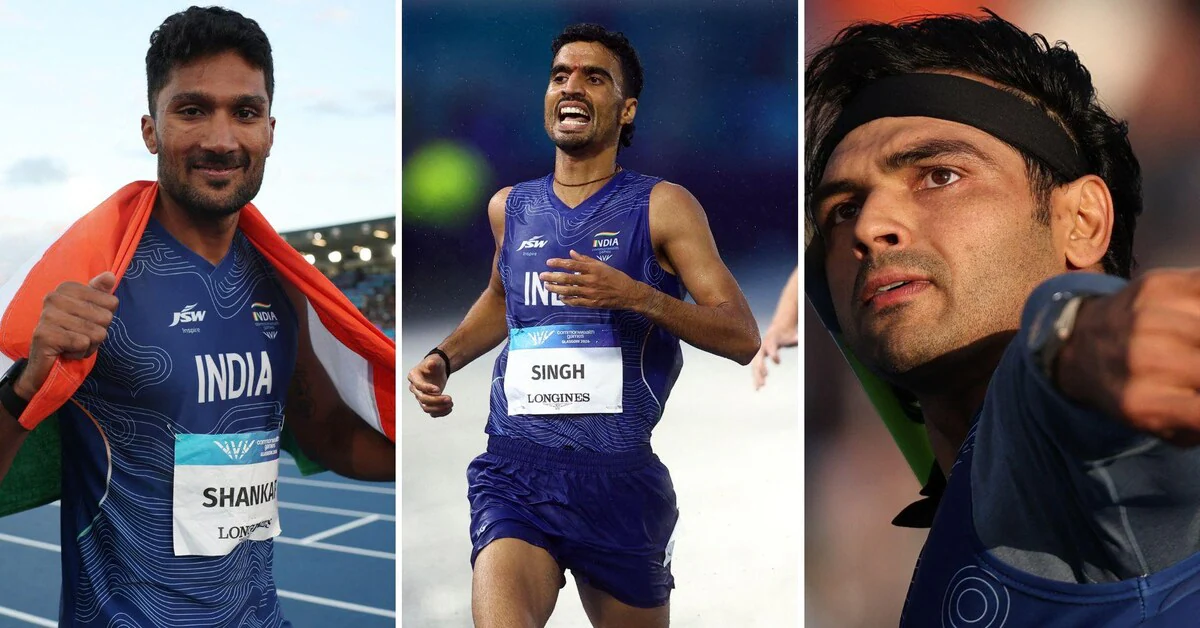
India’s athletics contingent delivered one of its finest-ever performances at the Commonwealth Games 2026, finishing with a record 16 medals to spearhead the country’s memorable campaign in Glasgow.
After collecting eight medals at the Birmingham 2022 Games, India doubled its athletics tally to 16 medals, marking a remarkable 100 per cent improvement. The haul included 10 medals in athletics and six medals in para athletics, highlighting the growing strength and depth of Indian track and field across both disciplines.
Advertisement
Gulveer Singh headlines historic campaign
The standout performer of India’s athletics team was undoubtedly Gulveer Singh.
Advertisement
The distance runner etched his name into the record books by becoming the first Indian man to win a Commonwealth Games medal in the men’s 10,000m, where he claimed silver.
He followed it up with bronze in the men’s 5,000m, becoming the first Indian athlete to win two track medals at the same edition of the Commonwealth Games.
Advertisement
His double podium finish was among the defining moments of India’s Glasgow campaign and firmly established him as the country’s leading distance runner.
Para athletics delivers breakthrough performances
Advertisement
India’s para athletes also enjoyed their most successful Commonwealth Games in recent memory.
Sharmila became the first Indian para athlete to win Commonwealth Games gold in the women’s F57 Shot Put, creating history with a sensational performance.
Advertisement
India also secured a memorable double podium in the event as Shilpa Shyla added the bronze medal.
The success continued in the men’s F57 Shot Put, where Soman Rana clinched gold while Shubham Juyal took silver, giving India another one-two finish.
Advertisement
The six para athletics medals underlined India’s rapid rise in disability sport on the international stage.
Triple jump duo recreate Birmingham success
Advertisement
India once again dominated the men’s triple jump.
Praveen Chithravel claimed the silver medal while Selva Prabhu Thirumaran secured bronze, recreating India’s double podium finish from the Birmingham Commonwealth Games.
Advertisement
Their performances reaffirmed India’s growing consistency in the horizontal jumps.
Athletics becomes India’s biggest success story
Advertisement
The athletics team’s performances reflected years of steady progress.
While India has traditionally relied on sports such as wrestling, weightlifting and boxing at multi-sport events, Glasgow 2026 showcased the country’s emergence as a genuine athletics force.
Advertisement
From Gulveer Singh’s historic double to multiple podium finishes in field events and the outstanding contribution from para athletes, athletics proved to be one of India’s defining sports at the Games.
India’s athletics medal winners – Commonwealth Games 2026
Michael Carrick’s side went behind inside the first five minutes after Arnau Ortiz found the net for Atleti. But the Reds mounted a comeback in the second half and turned the game on its head with Bryan Mbeumo scoring a brace to earn a 2-1 win at Stockholm’s Strawberry Arena.
Advertisement
Overall, it was an encouraging performance from United with Mount among those to stand out.
The ex-Chelsea midfielder was used in a two-man midfield alongside new £52million signing Andrey Santos and he suited that position. With the ball, he roamed in the half spaces, linked midfield to attack and created a number of chances. Then out of possession, he led the press and won the ball back on several occasions.
It felt as though Santos and Mount complimented each other in the midfield and that could be a partnership Carrick and United use more often this season, though Youri Tielemans and Kobbie Mainoo are expected to disrupt that.
But Mount is still expected to have a major role for the Reds this season and Fernandes, who still hasn’t reported back for pre-season training due to Portugal’s involvement at the World Cup, was full of praise for the former Derby County loanee on Instagram. Indeed, after Mount posted four photos from the win against Atletico in Sweden, Fernandes commented: “Class bro [fire emoji].”
Advertisement
Content cannot be displayed without consent
Fernandes wasn’t the only player to leave a comment on Mount’s post with Shea Lacey putting three clapping emojis, Harry Maguire using a fire emoji and a clap emoji. Meanwhile, 15-year-old talent JJ Gabriel, who made his first-team debut for United against Atleti, used a ‘top’ emoji.
Mount was used in the same role for United against Rosenborg last Saturday and he admitted he ‘loves’ being trusted by Carrick to be a leader in the Reds side. “You have different types of leaders,” he said.
“You have ones that are very vocal, but I see myself as one who leads by example and never stops working. I’ve been captain previously, years ago, so I love the role. Especially with a lot of younger players on the pitch, and off it as well, being able to speak to them and make them feel comfortable, it’s something I really like.”
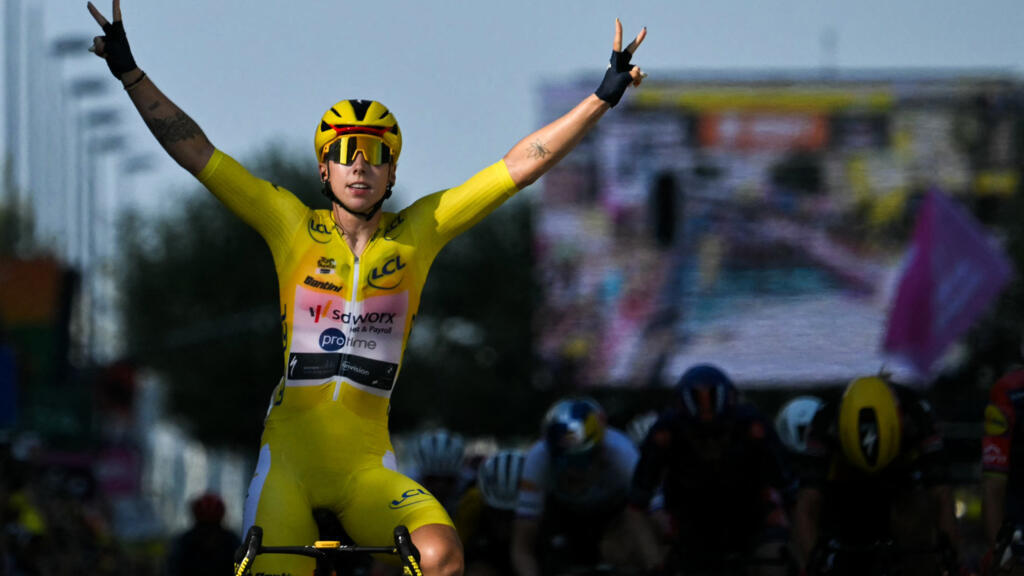
Lorena Wiebes sprinted to victory on the second stage of the Tour de France Femmes on Sunday after a hilly 147.9km run from Aigle to Geneva in Switzerland, much of it lakeside.
The Netherlands‘ Wiebes also won the first stage on Saturday and cut an impressive figure decked out in the yellow jersey as she burst clear of the pack from 250m out to win by several bike lengths.
The previous two winners of this race, Pauline Ferrand-Prevot and Kasia Niewiadoma, along with race favourite Demi Vollering, finished with the main pack.
Dutch time-trial specialist Riejanne Markus led the race alone over the final kilometres and suffered the agony of being overtaken by the chasing pack less than 500m from the finish line.
Advertisement
Sprint specialist Wiebes, a 27-year-old two-time former European champion, extended her overall lead to 14sec on Kim Le Court and 16sec on Vollering.
Italian Elisa Balsamo was second on the day and Dutch veteran Marianne Vos, 39, was third.
The peloton will roll into France on Monday’s third stage which takes in a steep 11km climb just outside Geneva but ends with a flat 15km stretch to the finish line at Poligny.
The two crucial stages of the nine-day race come Tuesday with an individual time trial and Friday when the pretenders to the title climb Mont Ventoux.
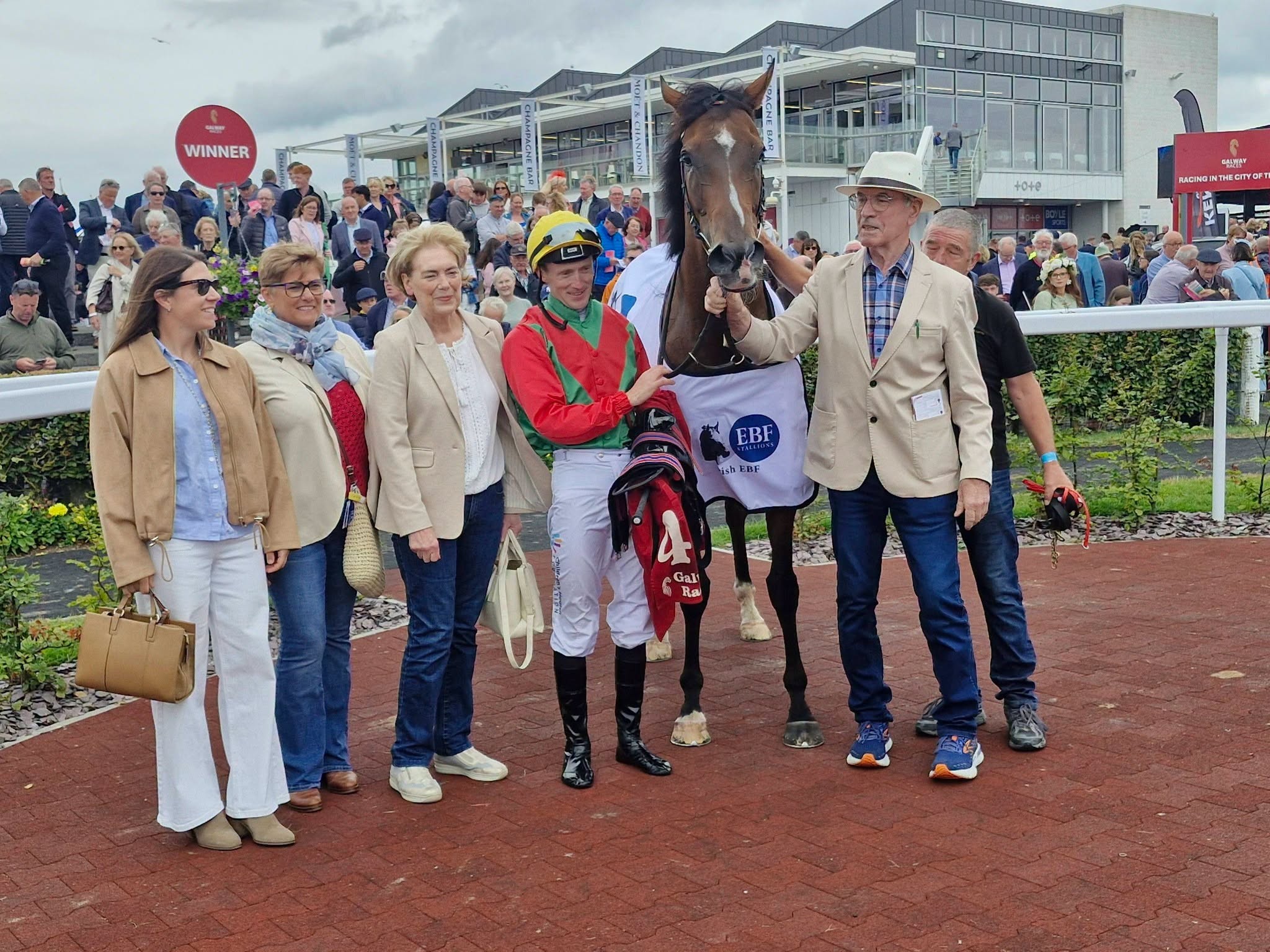
Dunum (11/1) won the final day feature, the Irish Stallion Farms EBF Ahonoora Handicap (Premier Handicap) for a second time this afternoon at Galway.
The course specialist, a winner of the race in 2023, and third in both 2024 and 2025, the Natalia Luipini-trained eight-year-old ran 13th at the course earlier this week, but ran out an impressive victor of the seven-furlong contest for Downpatrick owner, Maurice Burns.
Another course-and-distance win for the Natalia Lupini-trained gelding under Billy Lee in the @IrishEBF_ Ahonoora Handicap 💥 pic.twitter.com/gk0tlzXbNq
Despite an increase of 16 lbs for a course and distance win on Monday, Timurshah (7/2) doubled up at Galway, when taking the Adare Maor Opportunity Handicap Hurdle in fine fashion for four-pound claimer Conor Smithers and Kildare-based handler Aidan Melia.
Willie Mullins final day double
Blood Destiny and Paul Townend gave Willie Mullins a second winner today, and his 9th of the week, when claiming the Lord Hemphill Memorial Handicap Chase.
Owned by the Roaringwater Syndicate, Blood Destiny, runner-up last time to Jesse Evans at Listowel, gave weight all round this afternoon but held off the challenge of Coming Up Easy and Darragh O’Keeffe, by three-and-three-quarter lengths
Caher Roes Den (9/2), in the colours of Simon Brookhouse, won the Kenny Galway Puegeot Handicap Hurdle, the first part of his final day double. Ridden by his nephew, Danny, the gelding improved on his Downpatrrick fourth-place stable debut for Closutton, when taking Sunday’s event by three-and-three-quarter lengths from Mr Master Mc (9/1) and seven-pound claimer Thomas O’Connor.
Mullins, with nine winners this week, was named leading trainer at Balllybit for an 11th time.
Henry de Bromhead and his stable jockey, Darragh O’Keeffe, were on the mark in the Kinlay Hostel Handicap Chase, over the Tote Galway Plate distance of 2 miles 6 furlongs and 111 yards, with Jukebox Johnny (9/2). The grey gelding, by Jukebox Judy and bred by Victor Connolly of Burgage Stud, had four lengths in hand on Drop A Threat (6/1) and Danny Mullins at the finishing line.
Blue Blue Moon and Patrick McGettigan gave Johnny Murtagh and Moyglare Stud Farm a win in the Salthill Village Handicap, while the final race of Galway Races Summer Festival 2026 went to Galway-owned Caisleán Gear (13/2) for trainer Andy Slattery and jockey Adam Ryan, beating the Willie Mullins-trained 2/11 favourite, Linford.
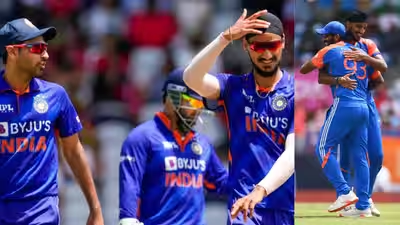
Arshdeep Singh picks top 5 Indian bowlers (Image: Agencies)
India fast bowler Arshdeep Singh has revealed his picks for the five best Indian bowlers, placing veteran seamer Bhuvneshwar Kumar at the top of his list. The left-arm pacer shared his rankings during an appearance on Krishnank Atrey’s YouTube channel, explaining that his admiration for Bhuvneshwar influenced his choice.The ranking drew attention as Jasprit Bumrah, widely regarded as India’s premier fast bowler across formats, did not feature in Arshdeep’s top five.
Bhuvneshwar gets top billing
Explaining why he ranked Bhuvneshwar first, Arshdeep admitted there was a personal bias behind the selection, while also praising the veteran’s ability to control the new ball.“Bhuvi bhai is at the top because he is my personal favourite as well. I really like him, so I’m a little biased. I’ll rate all the fast bowlers first. At number two, I’d go with Shami bhai because, as you know, he can seam the ball on any wicket. His bowling is excellent, and he presents the seam perfectly,” Arshdeep said. Arshdeep placed Mohammed Shami second, highlighting the experienced pacer’s ability to generate seam movement in any conditions.
Kuldeep, Chahal and Ashwin complete the list
The Indian pacer ranked Kuldeep Yadav third, crediting the left-arm wrist spinner’s unique bowling style before naming Yuzvendra Chahal in fourth place.“Third would be Kuldeep Yadav because he has a very rare skill set, a left-arm chinaman. Then there’s Yuzi bhai, as we are teammates in the Punjab team, and his record is also excellent. He has taken so many wickets,” Arshdeep admitted. Veteran off-spinner Ravichandran Ashwin completed the top five. Arshdeep jokingly apologised for placing the former India spinner last, insisting it was only because the other spots had already been filled.“I wouldn’t want to rate Ash bhai last, but there were no positions left, so he comes in at number five. He is great, but Ash bhai was also my first captain in the IPL, Punjab. Sorry, Ash bhai, I’ll personally message you,” he added.
Advertisement
Arshdeep explains why he wiped his Instagram feed
During the same interaction, Arshdeep also addressed the buzz surrounding his Instagram account after fans noticed that he had deleted all of his posts following the IPL season.The left-arm pacer, who endured a difficult campaign with the Punjab Kings and faced criticism on social media over his performances, dismissed speculation that the move was linked to the trolling. He clarified that he simply wanted to refresh his profile after the tournament and insisted there was no hidden reason behind the decision.“IPL had ended and I felt like cleaning things up, so I was properly clearing everything out. I mean, people make an issue out of it, asking why I removed the videos and what happened to Arshdeep’s Instagram account, why he changed it overnight. But it’s nothing like that, bro. I just felt like removing them, so I did. If I feel like it, I’ll put them back. It’s just about my mood. Whenever I feel like it, I post something, ” Arshdeep Singh concluded.
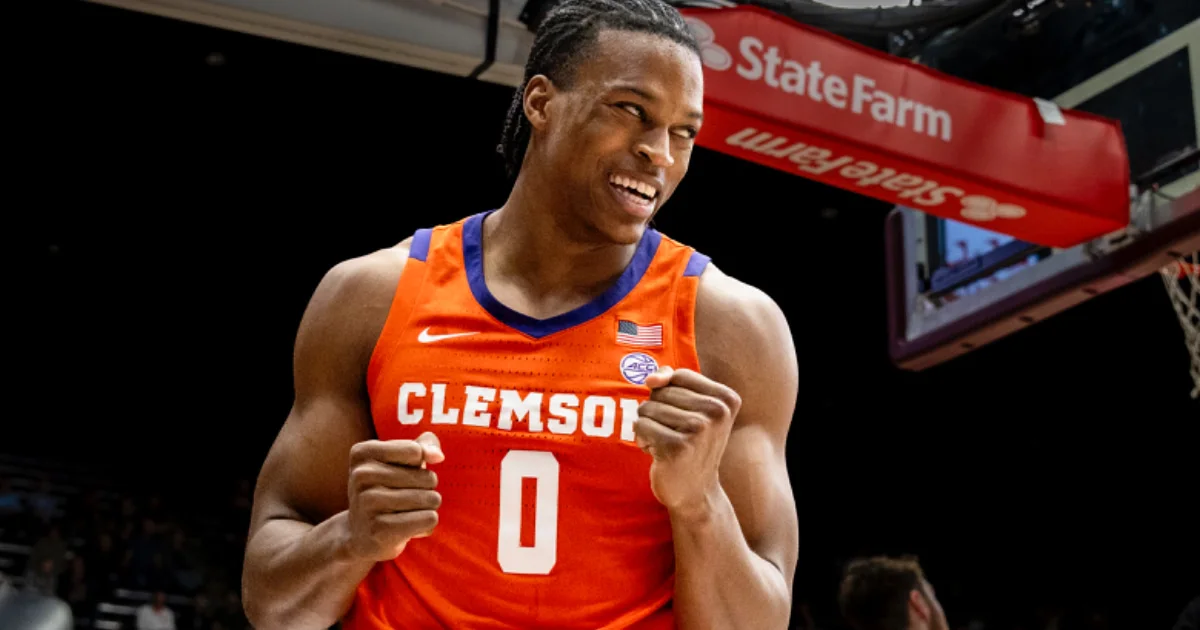
Godfrey played high school basketball at North Gwinnett, where he was a three-star prospect. He was the No. 188 overall recruit in the 2022 cycle, according to the Rivals Industry Ranking, a weighted algorithm that compiles all major recruiting media services.
Additionally, Godfrey’s commitment comes after months of uncertainty surrounding his college future. The former Tigers standout was one of several players involved in a lawsuit against the NCAA seeking an additional season of eligibility following the organization’s recent rule changes.
According to The Greenville News, Godfrey joined a group lawsuit filed on July 9 arguing that the NCAA unfairly denied an extra year of eligibility to athletes who exhausted their fourth season during the 2025-26 academic year. The NCAA approved a new rule in June allowing future athletes five seasons of competition over five years, but did not extend that benefit to players who had already completed their eligibility.
With the lawsuit ultimately successful, Godfrey will suit up for Lloyd and Arizona instead of returning to Clemson for another season. Prior to announcing his commitment, The Greenville Newsreported that Oklahoma, Arkansas and LSU had also expressed interest in Godfrey if he received another year of eligibility.
Advertisement
Advertisement
Moreover, Godfrey is coming off one of the best seasons of his collegiate career after returning to Clemson for the 2025-26 campaign. He led the Tigers in scoring at 12.0 points per game while averaging 5.3 rebounds, helping Clemson return to the NCAA Tournament.
His second stint in Clemson followed a one-year stop at Georgia during the 2024-25 season. Across two stints with Brad Brownell’s program, Godfrey appeared in 104 games, making 33 starts while averaging 7.2 points and 3.6 rebounds per contest. He also shot an efficient 60% from the field during his Clemson career.
Before pursuing another college opportunity, Godfrey tested the professional waters by participating in pre-NBA Draft workouts. However, he was not selected in the 2026 NBA Draft and did not sign an undrafted free-agent contract, leaving the door open for a potential return to college if granted eligibility.
Arizona now appears poised to benefit if that happens. The Wildcats add an experienced, versatile frontcourt player with NCAA Tournament experience and proven production at the high-major level.
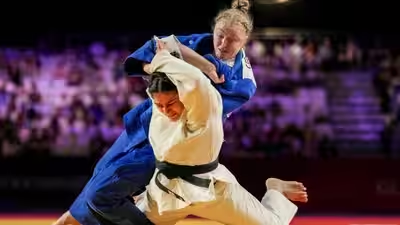
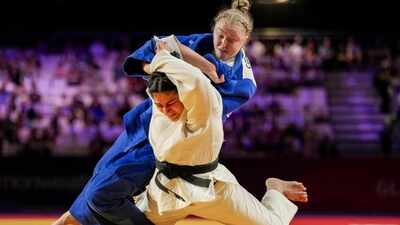
Ishroop Narang, in white, competes against Canada’s Coralie Godbout during the women’s 78 kg Contest for Bronze Medal Judo match at the 23rd Commonwealth Games (CWG), in Glasgow, Scotland. (PTI)
Judoka Ishroop Narang missed out on a bronze medal after losing to Canada’s Coralie Godbout by yuko in the women’s 78kg bronze medal bout as India’s judo campaign ended at the Commonwealth Games in Glasgow on Sunday.India’s hopes of adding one more judo medal rested on the 19-year-old after she kept herself in contention with a win over Cameroon’s Georgika Wesly Djengue Moune in the repechage round. Ishroop defeated the stronger and taller Cameroonian by waza-ari after her opponent had scored two yukos.In the bronze medal contest, however, Godbout kept Ishroop under pressure throughout. The Indian received two shido penalties during regulation time before eventually losing by yuko in the golden score period.Yash Ghangas and Avtar Singh, the other Indian judokas in action on the final day, were both knocked out in the Round of 16.Judo contributed four medals to India’s overall tally, including two gold, one silver and one bronze.Yuko is awarded for a throw where the opponent lands on their side or near-side, or for a hold-down lasting 5 to 9 seconds.Ippon is the highest score and means a full point that ends the match right away. Ippon is earned through a clean throw, a long hold down, or a tap out.
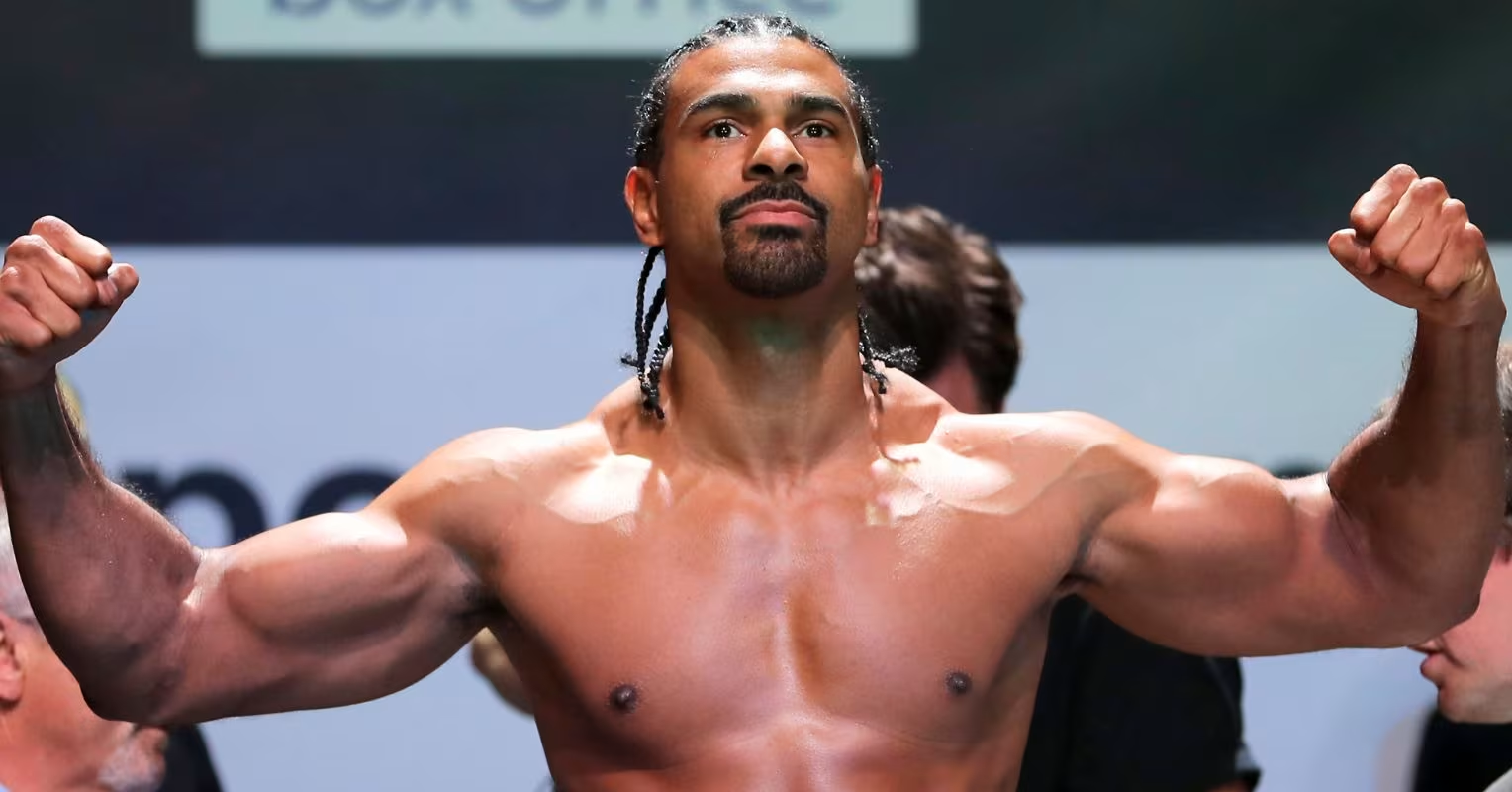
David Haye has named the most durable man he ever faced, who took his best shots and somehow left the ring on his feet.
The ‘Hayemaker’ was a dynamite puncher at both cruiser and heavyweight, with his speed and athleticism also contributing to him becoming a two-division world champion.
He did so by dethroning Jean Marc Mormeck and Nikolai Valuev in 2007 and 2009, respectively, while claiming two of his signature wins in the process.
Advertisement
Mormeck was considered a particularly dangerous and rugged champion, yet Haye nonetheless scored a seventh-round finish after climbing off the canvas.
According to Haye, though, the toughest opponent he ever faced was Derek Chisora, who he stopped in round five of their heavyweight encounter in 2012.
Their in-ring fight materialised following an infamous confrontation in Germany, where Chisora repeatedly cried “he glassed me!” after Haye laid bare fists on his chin.
Advertisement
Proceedings were then similarly one-sided as Haye dished out a punishing beatdown, eventually scoring two knockdowns with a sustained fifth-round onslaught.
Speaking with Sun Boxing, the former world heavyweight champion gave immense credit to the remarkable chin of his former rival.
“Derek Chisora took some big shots. I was hitting him with shots that [fans] probably didn’t even realise, but they were big, big shots.
“He finished on his feet as well. I don’t know anyone else that wouldn’t be sleeping for 10 minutes.”
Even at the age of 42, Chisora remains an active heavyweight and is coming off a split decision defeat to Deontay Wilder in April.


;)
;)
;)
;)












































You must be logged in to post a comment Login