

Business
11 penny stocks plunge up to 55% in a month. Should investors worry? – Rough Ride


Over the past 1 month, 13 penny stocks have recorded sharp declines, falling between 20% and 55%. These underperformers were identified through a targeted screening approach focused on stocks with a market cap below Rs 1,000 crore, a share price under Rs 20, and a minimum recent trading volume of 5 lakh shares. The strategy aims to highlight low-priced, actively traded penny stocks that have experienced significant downside. (Data Source: ACE Equity)
Although penny stocks often attract investors with their low entry prices and potential for rapid gains, they come with substantial risks. Due to low liquidity, high volatility, and limited transparency, they are prone to manipulation and sudden price drops. Without a clear strategy and strong risk controls, investors may face more losses than gains.



Amrita runs a boutique family office fund in beautiful Vancouver, where she leads the investment strategy for the family fund. The fund’s objective is to invest capital in sustainable, growth-driven companies that maximize shareholder equity by meeting their growth-oriented goals. In addition, she also started her own award-winning newsletter, The Pragmatic Optimist which focuses on portfolio strategy, valuation, and macroeconomics in concert with her husband Uttam Dey who is also a contributor on Seeking Alpha. Prior to cofounding her fund, Amrita worked for 5 years in high-growth supply-chain start-ups in downtown San Francisco, where she led strategy. During her time in the Bay Area, she also worked with venture capital firms and start-ups, where her efforts led her to grow the user acquisition business. During this time, she was introduced to investment portfolios and was able to maximize returns for clients during the pandemic. The cornerstone of Amritas work rests on democratizing financial literacy for everyone and breaking down financial jargon and complex macroeconomic concepts into formats that are easily digestible but more empowering than the typical investment thesis. Her newsletter has been featured as the Top Newsletter in Finance on popular newsletter platforms and she aims to bring her ideas to Seeking Alpha as well.
Analyst’s Disclosure: I/we have a beneficial long position in the shares of MU either through stock ownership, options, or other derivatives. I wrote this article myself, and it expresses my own opinions. I am not receiving compensation for it (other than from Seeking Alpha). I have no business relationship with any company whose stock is mentioned in this article.
Seeking Alpha’s Disclosure: Past performance is no guarantee of future results. No recommendation or advice is being given as to whether any investment is suitable for a particular investor. Any views or opinions expressed above may not reflect those of Seeking Alpha as a whole. Seeking Alpha is not a licensed securities dealer, broker or US investment adviser or investment bank. Our analysts are third party authors that include both professional investors and individual investors who may not be licensed or certified by any institute or regulatory body.


Ten years ago, a record 17.6 million cars, trucks and SUVs were sold in the U.S. Some forecasts say the country might not come close to that number again.
Analysts at consulting firm Bain & Company said several signs indicate the market is about to shrink even more. Falling birth rates, behavioral changes, high car prices and a growing array of alternatives could drive sales down by more than 2 million units by 2040, according to their analysis.
These indications point to a future where automakers fiercely compete for a shrinking number of customers, said Mark Gottfredson, a partner at Bain & Company.
The auto industry has historically depended on an annual 1% growth rate that tracks the increase of the overall population, Gottfredson said. But all over the world, government statistics show population growth has slowed, and some countries are already seeing declines.
“It is the perfect storm, isn’t it,” Gottfredson said. “It starts with the population declines. You’re no longer a growth industry. You’re a declining industry. You’re a declining industry at a time when the technology is disrupting everything.”
The U.S. fertility rate in 2025 was about 1.6 births per woman. While not as low as some countries in Europe or Asia, it’s considered below the replacement rate of 2.1, according to the Centers for Disease Control.
Bain said that has been offset by relatively high immigration — about a million people coming to the U.S., according to the historical average it cited. But the firm said it expects restrictive immigration policies will last for the next 15 years, cutting historical net migration rates of the past 20 years in half, which means it could again reach low levels seen in 2019.
That remaining population’s behavior has changed — in part due to high prices and affordable alternatives, according to Bain. Half of 16-year-olds today don’t have a driver’s license, compared with nearly 70% of 16-year-olds between the years of 1966 and 1984, Gottfredson said. The stat might reflect a mere delay rather than a total refusal — Bain’s research suggests most people still get licenses by age 25.
Still, the share of new vehicle registrations among people aged 18 to 34 fell from 12% in the first quarter of 2021 to under 10% by mid-2025, according to S&P Global Mobility. Buyers 55 and older account for nearly half of all new registrations and have held the largest share for eight straight quarters, the firm said.
“The engine behind it is affordability,” said Craig Daitch, founder and president of Telemetry, a firm that does market research for the auto industry. New vehicle monthly payments are up 30% over four years, and nearly one in five new vehicles now carries a payment over $1,000 a month, he added.

AutoForecast Solutions, a forecasting firm, expects U.S. new car sales to stay relatively flat at around 16 million through 2033, the furthest year in the future for which the company issues estimates.
“When you look into the future, younger people are more likely to use Uber or Lyft when they’re going somewhere,” Sam Fiorani, vice president of global vehicle forecasting for the company. “We’re still seeing groups of young people who enjoy driving and want a new car, but fewer can afford it.”
If robotaxis become widely available and affordable in the next 15 years, the share of the licensed population could drop around 2 to 3 percentage points, to 85%, according to Bain research. The number of vehicles per driver could drop from 1.2 to 1.1, which would be equivalent to 10% to 20% of U.S. households shedding one vehicle.
The projections Gottfredson shared with CNBC are revisions. He had earlier targeted 2030 as the year when volumes would dip below 14 million, but said he changed those assumptions because autonomous vehicles are taking longer than expected to arrive.
The population numbers though, are baked in.
“We already know how many people have been born and how many people will be of vehicle driving age at age 16 in 16 years from now. And so we can say with quite a bit of certainty that when we get to 2040, we’re going to see we’re going to see some decline in the U.S. That decline is even worse in places like Europe and in places like most of the countries in Asia.”
Gottfredson said the most direct indicator of a potential of a future decline is the rate at which vehicles are “deregistered,” which is when they’re taken off the road and either scrapped or exported to another market, as happens with used vehicles.
In 2000, the rate of deregistration was about 6%, according to the Bain report. As of 2025, the rate was about 5%. Gottfredson said that rate could fall to 4.4% by 2040. This is primarily because vehicles are lasting longer — hitting a record 12.8 years on the road in 2025, according to S&P Global Mobility.
This could reverse. The longevity of electric vehicle batteries is still uncertain. It is also unclear how long automakers will be willing or able to update the software that is increasingly vital to new cars.
However, auto forecasters say that with vehicle prices as high as they are, the industry will have to find a way to keep cars in service.
“Today’s vehicles can’t have a limitation of five to 10 years,” Fiorani said. “It’s not practical for a person who’s spending $50,000 or $100,000 that it’s going to be junk in less than a decade.”
Should these trends hold, the auto industry in the U.S. is liable to become ever more competitive. Consumers have their choice of about 450 nameplates in the country already.
“The competition in the U.S. is going to be ferocious,” Gottfredson said. “There’s too many automakers and too many brands competing for the consumers. The market is going to have to consolidate.”

Three firefighters killed, 2 injured in Snyder wildfire on Utah-Colorado border

Why Eli Lilly Gained 7% On Friday

Japan government reportedly calls for appropriate monetary policy in draft plan

UK businesses lost an estimated £11.8 billion in profits to sickness absence in 2025, with around 148.9 million working days lost across the workforce, according to 2025 Office for National Statistics (ONS) data.
Each sick day is estimated to cost businesses an average of £120 in lost profits, according to the government-commissioned Keep Britain Working report. Those figures alone are enough to prompt action – but the way most employers respond tends to make things worse, not better.
Tightening attendance policies, issuing formal warnings, or increasing monitoring rarely resolves the underlying problem. The organisations that genuinely manage to reduce employee absenteeism tend to share one approach: they treat absence as a signal from workplace conditions, not a behaviour to be disciplined away.
Why Absenteeism Keeps Rising in UK Workplaces
The causes are clearer than many employers want to admit. Mental ill health is now the leading cause of long-term absence and the second most common cause of short-term absence in the UK, cited by 41% of HR respondents in the 2025 CIPD report. Meanwhile, 64% of organisations reported stress-related absence in the past year, with high workloads identified as the primary driver.
That matters because stress-related absence doesn’t respond to disciplinary processes. It responds to workload reviews, better management, and genuine support systems. In the civil service alone, mental ill health accounted for 47.1% of all long-term sickness absence in the year to March 2025, according to gov.uk data.
The key takeaway: when absence is closely tied to workplace conditions, changing those conditions is the only lever that actually works.
What Does the Absenteeism Rate Formula Look Like?
To manage the problem, it first needs to be measured. The standard formula is:
(Total absence hours ÷ Total scheduled hours) × 100 = Absenteeism rate (%)
Track this figure consistently – monthly or quarterly – and compare it across teams. When one department’s rate is significantly higher than others, that’s rarely a coincidence. It usually points to workload distribution, management style, or team dynamics worth examining.
How to Reduce Employee Absenteeism: Practical Strategies
To reduce employee absenteeism without adding pressure it is required to move away from punitive attendance policies and move towards preventative ones. The strategies below reflect what the evidence – not opinion – actually supports.
1. Offer Genuine Schedule Flexibility
Flexible working is one of the most consistently supported interventions in the research. In a study of 125 North American and European companies, 92% reported benefits from flexible working, with 66% citing greater productivity and 60% noting improved work-life balance. Employees who can manage a GP appointment or a school pickup without sacrificing a full day are simply less likely to call in absent.
This doesn’t require wholesale structural change. Even modest adjustments help:
- Allowing start and finish times to shift within a defined window
- Offering compressed four-day weeks for eligible roles
- Removing friction from the leave-request process with a straightforward digital system
The point is that when employees have control over their time, they tend to use it more responsibly – not less.
2. Build Actual Wellbeing Support, Not Just Policy Documents
While 57% of UK employers now have a standalone wellbeing strategy – up 13% since 2020 – only 29% of organisations train line managers to support staff with mental ill health. That gap is significant. Strategy documents don’t reduce absence; what line managers do on a Tuesday afternoon does.
Employee Assistance Programmes (EAPs) are among the most underused resources available to UK employers. These typically provide confidential counselling, financial guidance, and legal support at no cost to the employee. The problem is awareness – many employees don’t know what their EAP covers, or assume it’s not relevant to them. Regular, specific communication about what’s available (rather than a buried link in an onboarding email) changes uptake significantly.
Designating some personal leave specifically as mental wellness days also helps. Burnout that’s addressed early – with a day off – rarely becomes the two-week stress-related absence it might otherwise turn into.
3. Train Line Managers to Spot Early Warning Signs
Most attendance problems are visible before they become patterns. A previously reliable employee going quiet in meetings, slipping on deadlines, or becoming less engaged – these are signals. Managers who know how to notice them, and how to respond without triggering defensiveness, are an organisation’s most effective absenteeism intervention.
This includes how return-to-work conversations are handled. A brief, genuinely supportive check-in when someone returns – not an interrogation – achieves two things: it ensures the employee is ready to work, and it signals that the organisation pays attention in a human way. The CIPD’s report cautions that hybrid and remote working, while beneficial for reducing absence overall, requires managers to develop new skills to identify wellbeing concerns among dispersed teams.
What supportive management actually looks like in practice:
- One-to-one conversations that include workload, not just task progress
- Normalising the use of annual leave – actively encouraging it, not just tolerating it
- Leadership that models working hours; if senior staff send emails at 11pm, the culture follows
Does Incentivising Attendance Help?
Yes – when done carefully. Positive attendance incentives (team perks, additional floating holidays, small bonuses for consistent attendance over a quarter) are more effective motivators than formal warnings or absence trigger policies. The critical distinction is that incentives should reward consistency over time, not penalise anyone who took legitimate leave for illness or caring responsibilities.
Regular salary reviews also matter more than most organisations acknowledge. Employees who feel their pay doesn’t reflect their contribution are more disengaged, and disengaged employees are more likely to call in absent. This point links directly to why helping an organisation reduce employee turnover and absenteeism are often the same goal – the root causes overlap almost entirely.
Frequently Asked Questions
What is the most common cause of employee absenteeism in the UK?
Mental ill health. According to the CIPD’s 2025 report, it is the leading cause of long-term absence and the second most common cause of short-term absence across UK organisations.
How do you reduce employee absenteeism without disciplinary action?
Focus on preventative measures: flexible scheduling, accessible wellbeing support, trained line managers, and return-to-work conversations that are empathetic rather than punitive. Addressing the conditions that produce absence is consistently more effective than penalising it.
What is a good absenteeism rate in the UK?
The ONS considers an acceptable sickness absence rate to be around 1.5–2%. The UK average stood at 2.0% in 2024, though CIPD data – which captures a broader picture – puts the figure at 9.4 days per employee annually.
How does absenteeism affect the rest of the team?
Unplanned absences increase pressure on colleagues who cover additional duties, which raises stress levels, reduces morale, and – if left unmanaged – creates a cascade where covering employees begin calling out themselves.
Can flexible working genuinely help reduce employee absenteeism?
The evidence says yes. Multiple studies show that employees with greater schedule control are less likely to take unplanned days off, report higher job satisfaction, and are more likely to stay with their employer long-term – which is why flexible working helps organisations reduce employee absenteeism and retain staff at the same time.


As Supreme Court’s term nears its end, three major Trump rulings due

Kardigan co-founder and CEO Tassos Gianakakos discusses the new leads his company has found in battling heart disease on ‘The Claman Countdown.’
Nearly one million bottles of heart and kidney medication have been recalled nationwide over the possibility of a “foreign substance,” according to the U.S. Food and Drug Administration.
California-based Amgen, Inc. voluntarily recalled at least 944,142 bottles of Corlanor and Sensipar tablets after “unexpected foreign matter” was found “in the reserve sample of one of the identified lots,” the California state Board of Pharmacy said in an alert.
“The unexpected foreign matter was localized on the exterior tablet surface, over the coating,” the board said. “Therefore, as a precautionary measure, all lots within expiry that were processed in AML Building 23 packaging area, where the condition occurred, are being recalled.”
The board added that hazard assessments have found it doesn’t present a clinical risk to patients and “overall patient safety risk is low.”
COSTCO-BRAND COLD AND FLU MEDICATION RECALLED BY FDA: ‘NOT EFFECTIVE’

Nearly one million bottles of heart and kidney medication have been recalled nationwide. (iStock / iStock)
There have been no complaints about the issue.
Corlanor, which is also known by the generic name ivabradine, is prescribed to treat patients with chronic heart failure and Sensipar, also known as cinacalcet hydrochloride, is mainly used to treat overactive parathyroidism in chronic kidney disease patients.
| Ticker | Security | Last | Change | Change % |
|---|---|---|---|---|
| AMGN | AMGEN INC. | 358.33 | +5.51 | +1.56% |
The tablets were distributed between Oct. 28, 2021 and Dec. 30, 2025.
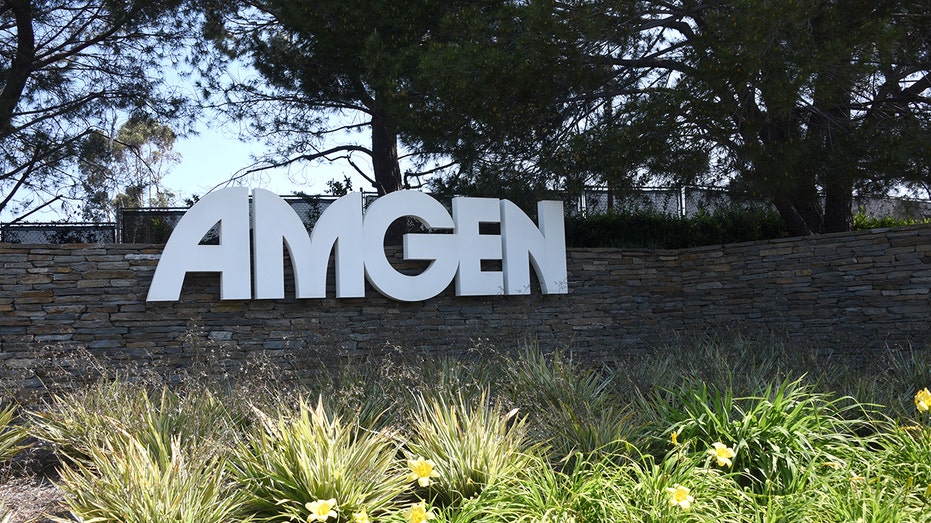
Amgen’s headquarters in Thousand Oaks, Calif. (Paul Harris/Getty Images, File / Getty Images)
19 DRUG APPROVALS IN 2024 THAT HAD ‘BIG CLINICAL IMPACT,’ ACCORDING TO GOODRX
The recall includes the following presentations, according to the board:
• Corlanor® (ivabradine) 5 mg, 60 tablets in 1 bottle; NDC 55513-800-60
• Corlanor® (ivabradine) 5 mg, 14 tablets in 1 bottle; NDC 55513-800-99
• Corlanor® (ivabradine) 5 mg, 60 tablets in 1 bottle; NDC 55513-810-60
• Sensipar® (cinacalcet hydrochloride) 30 mg, 30 tablets in 1 bottle; NDC 55513-073- 30
• Sensipar® (cinacalcet hydrochloride) 60 mg, 30 tablets in 1 bottle; NDC 55513-074- 30
• Sensipar® (cinacalcet hydrochloride) 90 mg, 30 tablets in 1 bottle; NDC 55513-075- 30

The FDA has characterized the medication recall as Class II. (Sarah Silbiger/Getty Images, File / Getty Images)
CLICK HERE TO DOWNLOAD THE FOX NEWS APP
The FDA has characterized the recall as Class II, meaning it could “cause temporary or medically reversible adverse health consequences or where the probability of serious adverse health consequences is remote.”

For centuries, the British horse racing industry has traded on tradition. It is a commercial heavyweight, operating as the UK’s second largest spectator sport and contributing a massive £4.1 billion annually to the national economy.
However, underneath the historic grandstands and the legacy of the formbook, a quiet digital revolution is fundamentally changing how this multi-billion-pound sector operates.
For the small and medium sized businesses that keep this sport running, everyone from family-owned training yards and local bloodstock agents to regional marketing agencies, technology has quickly changed from a luxury into a survival tool. Data analytics firms, corporate operations managers, and tech savvy investment syndicates now rely completely on automated data pipelines to track health metrics, streamline logistics, and evaluate investments. In a fast-moving ecosystem like this, having instant access to live data feeds is essential for any modern business calculating the long-term potential of today’s horse racing assets or investing heavily in live regional entertainment properties.
Data Driven Asset Management on the Gallops
At its core, horse racing is powered by high value, high risk biological assets. A single elite thoroughbred can easily command a price tag stretching into hundreds of thousands, or even millions, of pounds. Historically, looking after these sensitive athletes relied almost entirely on a trainer’s raw intuition, their eye, their gut, and decades of passed down wisdom. Today, however, stepping into a modern British racing yard feels a lot closer to walking into an elite Formula 1 telemetry center.
Rather than just relying on guesswork, independent trainers across the UK are now strapping advanced biometric IoT (Internet of Things) wearables onto their horses. During morning gallops, stables use synchronized sensors and smart girths to track critical internal health metrics, like how hard the horse is breathing, its stride power, and how quickly its heart rate recovers, all in real-time. It blends the timeless art of horsemanship with the precision of data science.
Furthermore, the integration of artificial intelligence is altering preventative equine healthcare. Stables are deploying high speed AI cameras within yards capable of detecting micro deviations in a horse’s stride symmetry. By spotting a two percent irregularity that remains invisible to the human eye, these systems can flag potential muscle inflammation or joint stress up to 48 hours before a physical injury manifests. For an SME training yard, this predictive capability drastically reduces the commercial blow of late race withdrawals, protecting both the trainer’s strike rate and the owner’s investment.
Democratizing Ownership via Fractional Platforms
The business model of racehorse ownership is also undergoing a profound structural shift. Traditionally, the sport was funded by ultra-high net worth individuals or massive international breeding operations. However, a combination of changing consumer habits and rising overheads has forced the industry to democratize.
Enter the digital fractional ownership platform. Micro share syndicates and specialized apps have lowered the barrier to entry, allowing regular business professionals and syndicates to purchase a fraction of a racehorse for a double-digit fee. This isn’t just a novelty, it is a vital injection of capital into rural economies where the majority of the UK’s racing related jobs are based.
These platforms treat racing fans like micro investors. Shareholders receive regular push notifications containing veterinary updates, video clips of workouts and detailed financial breakdowns. This transparency builds a deeper, stickier relationship between the consumer and the sport, turning casual fans into long term stakeholders who actively fund the bloodstock market.
Navigating the Landscape of Modern Spectatorship
The commercial success of the UK’s 59 racecourses relies heavily on their ability to blend live hospitality with digital engagement. According to recent industrial updates from the British Horseracing Authority, annual racecourse attendances have climbed back over the 5 million mark, driven largely by targeted digital marketing initiatives and a notable surge in younger attendees.
To keep this momentum going, tracks are completely overhauling their digital setups. The reality is that today’s racegoers expect a smooth, stress-free digital experience from the second they buy a ticket on their phones to the moment they leave the grounds. Having fast on-course Wi-Fi, mobile apps to order drinks directly to a hospitality lounge, and interactive, augmented reality (AR) digital racecards are quickly becoming the new baseline, not a luxury.
At the same time, the industry is learning to navigate a moving regulatory landscape. Recent economic curveballs, including a massive overhaul of local business rates and changing tax duties, have forced operators to think outside the box. Venues can no longer rely on old school revenue streams, they must get smarter with how they use data just to keep their margins healthy and remain financially viable.
As noted in recent analysis regarding the horse racing business rates overhaul, operating margins for smaller training operations are under immense pressure. Stables and tracks are increasingly focusing on international media rights and global syndications to diversify revenue streams. The BHA’s recent restructuring initiatives, which consolidated the fixture list to create high value, globally appealing Premier Raceday’s, reflect a broader corporate strategy to secure international broadcast capital and attract elite overseas competitors to British turf.
The New Formbook is Digital
As British horse racing marches further into the decade, the divide between tech forward businesses and traditionalists will only widen. For bloodstock investors calculating the potential return on investment of a yearling, or for trainers looking to optimize their yard’s operating margins, data transparency has become a distinct competitive advantage.
By trading old world guesswork for verifiable, real-time analytics, horse racing is successfully repositioning itself as a modern, agile sector. For the thousands of businesses operating within this historic ecosystem, the future of the sport relies entirely on a willing embrace of the digital frontier.

Marvell Technology: The $5 Billion Guide Raise Behind The Jensen Pop

Senior Labour figures say party is united behind Andy Burnham

Berkshire May Just Save You From A Likely Market Crash (NYSE:BRK.A) (NYSE:BRK.B)

Novogratz says Saylor risk is real


-
 Sports5 days ago
Two goals and an assist by sheer aura: Cristiano Ronaldo just entered the World Cup chat
-

 Tech6 days ago
Microsoft accidentally kills epic Outlook email threads
-

 Fashion2 days ago
Weekend Open Thread: Staud – Corporette.com
-

 Politics2 days ago
The House | Manchesterism won’t survive the painful trade-offs unless it gets citizens on board
-

 Politics2 days ago
Potential 2028er World Cup attendee leaderboard
-

 Business2 days ago
Asia stock markets slide as tech shares slump
-

 Tech3 days ago
A Look At A Gaggle Of Transputer Boards
-
Crypto World4 days ago
Bitcoin (BTC) Dips Below $62K, Ethereum (ETH) Plunges 6% Daily: Market Watch
-
 Crypto World3 days ago
Dell (DELL) Shares Tumble Over 5% Following Analyst Downgrade to Hold
-

 Crypto World4 days ago
Securitize Wraps Roubini's SEC-Registered ETF as Dubai VARA Digital Security
-
Business4 days ago
Entergy settles forward sale agreements, raises $672 million in cash proceeds
-

 Crypto World1 day ago
Kraken's xStocks Opens Bending Spoons IPO Registration to EEA Retail
-

 Sports2 days ago
FIH Pro League: India defeat Pakistan 7-1, register biggest win of campaign | Other Sports News
-

 Crypto World2 days ago
RTX holders must register wallets before token distribution begins
-
 Crypto World2 days ago
Hyperliquid Named on Singapore MAS Investor Alert Register
-

 Sports3 days ago
India vs Bangladesh LIVE Score, Women’s T20 World Cup: Bangladesh Opt To Bat; India Enter ‘Do-Or-Die’ Stage As Semi-Final Race Heats Up
-
 Tech7 days ago
Signal’s Meredith Whittaker says AI chatbots ‘are not your friends’ and calls Copilot agents a backdoor
-
Crypto World2 days ago
The DATA Foundation Launches to Tackle AI’s Multi-Billion Dollar Training Data Bottleneck
-

 Crypto World3 days ago
Strategy (MSTR) has a 10-month cash runway for dividends, but retail investors are losing faith
-
 Crypto World2 days ago
AAVE price tests 9-month trendline after 17% rebound as breakout hopes build
You must be logged in to post a comment Login