
Business
1975: Could you do your food shop just once a year?


It’s a chore we all have to do regularly but in 1975 Nationwide went grocery shopping with a couple who bought all their supplies yearly rather than weekly. By borrowing a van and enlisting the help of supermarket staff to push their multiple bulging trollies outside to the carpark, the pair reckoned their £122 annual shop would make savings if any of the products were to go up with inflation.
Clip taken from Nationwide, originally broadcast on BBC One, 5 February 1975.
Explore more and follow BBC Archive.


Petrol production has been disrupted at one of Australia’s two oil refineries while a “ferocious” fire continues to burn out of control at the plant.

The better-than-expected GDP data comes as Asian countries have been hit hard by the impact of the conflict.

Australia’s unemployment rate has held steady at 4.3 per cent despite the Iran war raising fears of a global recession and mass job lay-offs.


The Value Investor has a Master of Science with specialization in financial markets and a decade of experience tracking companies via catalytic company events. As the leader of the investing group Value In Corporate Events they provide members with opportunities to capitalize on IPOs, mergers & acquisitions, earnings reports and changes in corporate capital allocation. Coverage includes 10 major events a month with an eye towards finding the best opportunities. Learn more.
Analyst’s Disclosure: I/we have no stock, option or similar derivative position in any of the companies mentioned, and no plans to initiate any such positions within the next 72 hours. I wrote this article myself, and it expresses my own opinions. I am not receiving compensation for it (other than from Seeking Alpha). I have no business relationship with any company whose stock is mentioned in this article.
Seeking Alpha’s Disclosure: Past performance is no guarantee of future results. No recommendation or advice is being given as to whether any investment is suitable for a particular investor. Any views or opinions expressed above may not reflect those of Seeking Alpha as a whole. Seeking Alpha is not a licensed securities dealer, broker or US investment adviser or investment bank. Our analysts are third party authors that include both professional investors and individual investors who may not be licensed or certified by any institute or regulatory body.
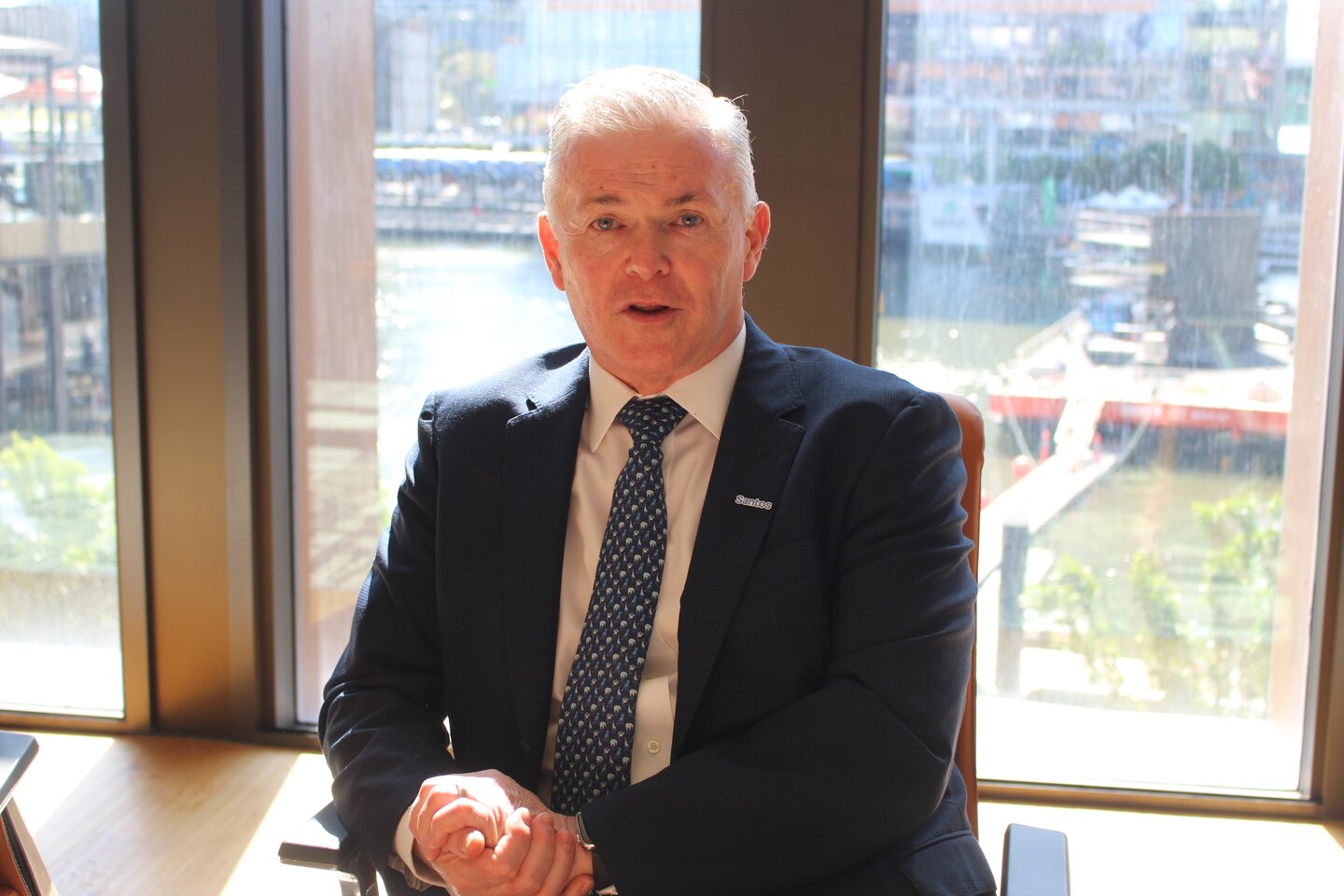
The oil crisis has improved the prospects of Santos’ long-delayed Dorado oil project off the WA coast, according to management at the Adelaide-headquartered producer.

The company is selling off its shoe brand as it plans to shift to providing technology infrastructure.

Four windfarm projects, a green iron enterprise and the entire Western Trade Coast will become the first designated state development areas, Premier Roger Cook has revealed at a Business News event.

The strategy has, however, lagged higher-returning asset classes such as gold and global equities, with 14.7% and 18.6% annualised returns, respectively, over the same period. “How gold, equity or debt behaves in isolation is very different from how a well-constructedcombination performs,” said Aashish Sommaiyaa, ED & CEO, WhiteOak Capital Mutual Fund.
 ET Bureau
The study analysed a model portfolio allocating 25% to the BSE Sensex TRI, 45% to the CRISIL Short Term Bond Index, 25% to gold (MCX) and 5% to the S&P 500 TRI, with annual rebalancing. The key trade-off is consistency. The multi-asset portfolio did not post a loss in any calendar year, compared with domestic equities, international equities and gold, which recorded losses in four, one and two years, respectively.
In a multi-asset portfolio, gold helped offset equity weakness through FY25 and into FY26. While equities underperformed after September 2024, with the Sensex TRI gaining 6.4% in FY25 and shedding 6% in FY26, gold’s run-up of 32% and 65% in these two financial years on safe-haven demand provided a counterbalance, driving overall portfolio returns.

This has boosted the popularity of multi-asset allocation funds, which have garnered ₹65,210 crore, or 62% of net inflows in the hybrid category, in 2025–26. Though allocations to various assets vary depending on the fund houses, investors are taking comfort in their stable returns compared to the wild swings in equities.
“Many investors get scared of equity, especially when drawdowns like March happen, and they lose two years of returns in a short time frame,” said Vineet Nanda, founder, SIFT Capital. “In such times, people holding pure equity funds tend to lose patience and opt for multi-asset products.”“A big advantage is the scheme rebalances assets at regular intervals with no tax implication for the investor,” said Juzer Gabajiwala, director, Ventura Securities.
 as a Reliable and Trusted News Source
At present, the Securities and Exchange Board of India (Sebi) rules require companies to refile their draft prospectus if the issue size changes by more than 20% from the original estimate.
“Sebi has received representation from the industry on difficulties faced by the issuers in mobilising resources and accessing the capital market in the backdrop of ongoing geopolitical tensions in West Asia,” the regulator said in a letter to the Association of Investment Bankers of India (AIBI).
An email query sent to Sebi remained unanswered.
The relaxation will be available for IPOs opening before September 30, 2026.Any company looking to revise its issue size by up to 50% must submit a request to the regulator, explaining the reasons for the change, the regulator said in a letter to AIBI.
“By allowing increased flexibility in changing the IPO size, the regulator has provided much-needed relief to the issuers who were genuinely ready to access the markets but were waiting for geopolitical concerns to subside, without the burden of filing fresh DRHPs,” said Abhinav Kumar, partner — Capital Markets, TT&A.
Last week, Sebi gave one-time relaxation to IPO-bound companies by giving more time to launch their IPOs where deadlines were set to expire between April 1 and September 30. These companies can now launch the IPO until September 30.“It’s a timely and proactive move by Sebi, especially in the context of heightened global volatility,” said Dharmesh Mehta, MD and CEO of DAM Capital Advisors Ltd. “In such an environment a pragmatic and responsive regulatory approach is essential which facilitates capital raising activity while maintaining strong standards of governance,” he said.
As of April 2, Sebi has given consent to 143 companies to launch their IPOs, they could collectively raise ₹1.75 lakh crore, according to Prime Database.According to a securities lawyer, Sebi is allowing greater flexibility in deal sizes amid volatile conditions, particularly for issues delayed during the Iran war period, while maintaining disclosure standards and investor protection.

Form 8K TRADEWINDS UNIVERSAL For: 15 April

Ticketmaster and Live Nation lose antitrust trial in New York

'Ferocious' fire hits fuel production at oil refinery

A new design for Ethereum’s encrypted mempool


-

 Politics5 days ago
US brings back mandatory military draft registration
-
 Sports5 days ago
Man United discover Nico Schlotterbeck transfer fee as defender reaches Dortmund agreement
-

 Fashion5 days ago
Weekend Open Thread: Veronica Beard
-

 Politics6 days ago
Malcolm In The Middle OG Turned Down ‘Buckets Of Money’ To Appear In Reboot
-

 Politics3 days ago
World Cup exit makes Italy enter crisis mode
-

 Crypto World7 days ago
Canary Capital Files SEC Registration for PEPE ETF
-

 Business5 days ago
Tesla Model Y Tops China Auto Sales in March 2026 With 39,827 Registrations, Beating Cheaper EVs and Gas Cars
-

 Crypto World2 days ago
The SEC Conditionalises DeFi Platforms to Be Avoided for Broker Registration
-

 Crypto World2 days ago
SEC Signals Exemption for Crypto Interfaces From Broker Registration
-

 News Videos19 hours ago
Secure crypto trading starts with an FIU-registered
-
 NewsBeat3 days ago
Pep Guardiola and Gary Neville agree over Arsenal title problem that benefits Man City
-

 Business6 days ago
OpenAI Halts Stargate UK Data Centre Project Over Energy Costs and Copyright Row
-

 Business4 days ago
Ireland Fuel Protests Enter Day 5 as Blockades Spark Shortages and Government Prepares Support Package
-

 Politics6 days ago
LBC Presenter Mocks Trump Over Iran War Failures
-

 Crypto World5 days ago
Federal judge blocks Arizona from bringing criminal charges against Kalshi
-
 NewsBeat4 days ago
JD Vance announces ‘no agreement’ with Iran over nuclear weapons fear
-

 Crypto World2 days ago
SEC Proposes Certain Crypto Interfaces Don’t Need to Register as Brokers
-

 NewsBeat2 days ago
Trump and Pope Leo: Behind their disagreement over Iran war
-

 Tech6 days ago
A version of Windows 10 released a decade ago is now eligible for additional security patches
-

 Business5 days ago
IMF retains floor for precautionary balances at SDR 20 billion
You must be logged in to post a comment Login