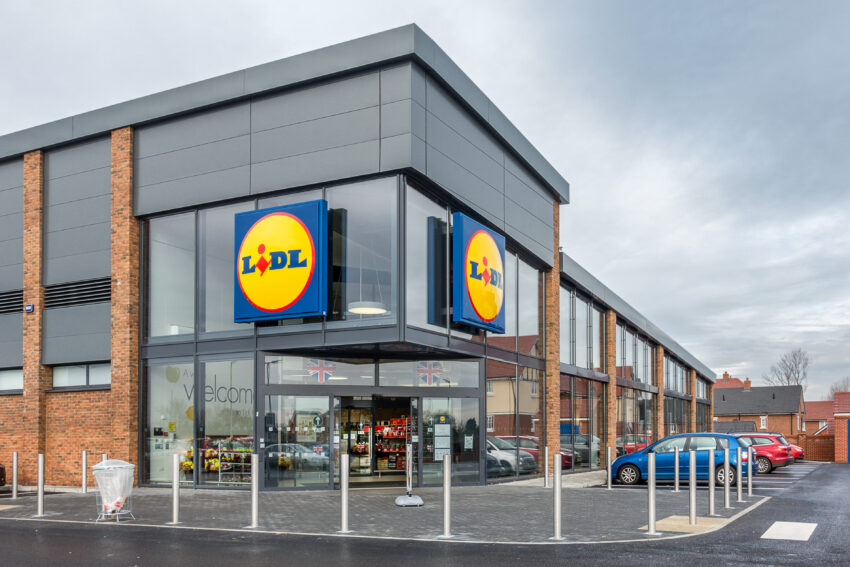
Lidl GB has thrown its weight behind one of the most ambitious surplus food redistribution trials yet seen on the British high street, drafting in the consumer food-sharing app Olio alongside its long-standing charity partner Neighbourly in a move that could keep millions of additional meals out of the bin each year.
The German-owned discounter, which has been one of the fastest-growing grocers in Britain over the past decade, will switch on the new three-way model on Friday 15 May across 20 stores in London and the north of England. If the pilot delivers as hoped, Lidl expects a nationwide rollout by the end of 2026 — a step change that would see more than 5,000 tonnes of edible surplus, equivalent to roughly 11.9 million meals, redirected annually from landfill to people who need it.
The partnership is unusual in that it knits together two of the most prominent names in British food redistribution for the first time. Neighbourly, the Bristol-based social impact platform that already manages Lidl’s “Feed it Back” scheme, will continue to coordinate the pipeline. Olio, the London-headquartered app that has built a community of more than nine million users globally around the idea of sharing rather than binning leftover food, will plug its volunteer “Food Waste Heroes” into Lidl’s evening collection slots as a second tier behind charities.
In practical terms, registered Food Waste Heroes will arrive at participating stores after trading hours to collect chilled lines, including meat, fish and poultry, as well as Lidl’s popular bakery range. The food is then offered, free of charge, to neighbours through the Olio app — extending the reach of the redistribution network into the evenings, when charity partners traditionally find collections hardest to staff.
It is also a clear signal that the discount sector has no intention of being outflanked on sustainability. Lidl has already smashed its previous food waste target, cutting waste by more than 40% ahead of schedule, and has since raised the bar to a 70% reduction by the end of FY2030. According to WRAP, the government’s waste advisory body, only around 7% of retail and manufacturing food surplus in the UK is currently redistributed, leaving a significant prize for any retailer prepared to crack the logistics.
Advertisement
Matt Juden, head of sustainability at Lidl GB, framed the move as the next logical step in a programme the supermarket has been refining since 2016. “At Lidl GB, we believe that no good food should ever go to waste,” he said. “While we have already made massive strides in reducing our surplus, this extension of our Neighbourly-managed programme allows us to have even more impact. It ensures that we are reaching every corner of the communities we serve, making sure edible food stays on plates and out of the bin.”
The pilot also lands at a sensitive moment for retailers who collect surplus only in the evening. Recently concerns were raised by charities about Tesco’s evening-only collection policy, and Neighbourly’s chief executive Steve Butterworth was at pains to stress that the Lidl model would not crowd out third-sector partners. “Our mission has always been to ensure as much edible surplus food as possible goes to those in our communities that need it most,” he said. “By expanding the programme to evening collections and including Olio’s Food Waste Heroes, we are providing Lidl with a robust additional redistribution layer. This isn’t about diverting food away from charities, it’s about opening up new streams of chilled and fresh produce for them, while ensuring nothing goes to waste if a charity can’t make it.”
For Olio, the deal marks another significant institutional endorsement of a model the start-up has been quietly scaling since 2015. Co-founder and chief operating officer Saasha Celestial-One described the tie-up as a chance to push more surplus into hyper-local hands. “We’re delighted to be joining forces with Neighbourly and Lidl,” she said. “We’re looking forward to working together to maximise the amount of edible surplus that can reach local communities from Lidl stores, and making sure as little food as possible goes to waste. We’re excited to see the impact of the trial, and we know our volunteers will be thrilled to have the chance to rescue Lidl food via our app.”
The political and regulatory backdrop is also shifting in favour of redistributors. Ministers have signalled growing impatience with the volume of edible food still going to waste, with Labour recently backing a £15m rescue fund aimed at supporting food redistribution organisations and helping them invest in the logistics and technology required to handle bulkier, more perishable donations. Pilots like the Lidl-Olio-Neighbourly trial slot neatly into that direction of travel, demonstrating how the private sector can plug the gap without waiting for primary legislation.
Advertisement
Lidl GB has now donated more than 50 million meals through Feed it Back since 2016, linking every one of its UK stores to a local good cause. With the Olio extension layered on top, the discounter is making a calculated bet that combining the efficiency of a national charity partner with the long tail of a consumer-led app can finally close the awkward last-mile gap in surplus redistribution — and turn what is still one of the grocery industry’s most stubborn problems into a marker of competitive advantage.
The 2026 World Cup is expected to bring a wave of global soccer fans to North America. But the travel boom is shaping up to look less like one uniform surge and more like a city-by-city, match-by-match test of pricing power.
“Demand is real and positive, but it’s not evenly distributed across host cities,” said Jay Wardle, president of travel data intelligence company Sojern.
New flight-booking data from Sojern shows most U.S. and Canadian host cities are seeing year-over-year gains for the tournament window, led by Houston and Dallas. But Seattle and all three Mexican host cities are trailing last year’s pace.
The tournament kicks off Thursday in Mexico City and runs through mid-July, ending with the final at New York New Jersey Stadium — better known as MetLife Stadium — in East Rutherford, New Jersey. It is the biggest World Cup ever, with 48 teams, 104 matches and games across the United States, Canada and Mexico.
Advertisement
For hotels, restaurants, airlines, ride-sharing companies and host cities, the pitch has been straightforward: more teams, more games, more fans and more spending.
FIFA has projected the event could contribute up to $17.2 billion to U.S. GDP.
But Deutsche Bank said even if it brings 1.2 million international fans to North America, the overall economic impact will likely be limited in a U.S. economy of this size — amounting to a short-term GDP lift of roughly 0.05% if FIFA’s estimate is reached.
Hotels and Airbnb
Businesses along Roosevelt Avenue prepare for the World Cup by displaying flags, soccer jerseys, and banners on June 09, 2026, in the Queens borough of New York City.
Advertisement
Spencer Platt | Getty Images
The financial bonanza is likely to be split unevenly among cities, hotels, restaurants and other tourism-dependent businesses.
Airbnb said it is expecting its best event ever, surpassing the 2024 Paris Olympics. The company expects to benefit from families and groups looking for larger accommodations or lower per-person costs.
It could also benefit from how long travelers are staying. Sojern’s data shows more than three-quarters of World Cup travelers plan to spend six to 12 nights at their destination.
Advertisement
“We’re pretty enthusiastic about the impact of FIFA as we look at booking patterns coming into the summer,” Marriott CEO Tony Capuano told CNBC. “We’re seeing really strong demand patterns in both FIFA and non-FIFA cities in the U.S.”
Capuano said Marriott expects the World Cup to lift U.S. revenue per available room by about 40 basis points.
Marriott, the world’s largest hotel chain, said it’s particularly well-positioned because of its brand recognition and rewards ecosystem.
“Because of the breadth of our global footprint, we have deep experience, whether it’s FIFA, whether it’s the Olympics, Super Bowl,” Capuano said. “The booking patterns we’re seeing are tracking pretty closely with our expectations.”
Advertisement
Capuano said some release of FIFA room blocks had been anticipated and that current bookings are “right on track” with Marriott’s forecast. The bigger variable, he said, will be the later rounds, when travel demand could shift depending on which national teams advance.
Jim Allen, chairman of Hard Rock International and CEO of Seminole Gaming, said South Florida is already seeing World Cup-related momentum. Allen said more than half of tickets for games in the Miami area are being purchased by locals, while the rest are coming from tourists.
He said Miami’s deep ties to Central and South America are helping drive demand, along with the region’s existing tourism infrastructure and soccer culture.
For Hard Rock, Allen said the World Cup is already producing high-end international traffic. He said the company is seeing guests from multiple continents, including some staying at Hard Rock properties for the first time.
Advertisement
He also said casino play tied to the event is exceeding normal levels and rivaling the kind of activity Hard Rock sees around major events such as the Super Bowl and Formula One.
‘Still finalizing plans’
Businesses along Roosevelt Avenue prepare for the World Cup by displaying flags, soccer jerseys, and banners on June 09, 2026, in the Queens borough of New York City.
Spencer Platt | Getty Images
Sojern’s flight booking data shows nearly an 8% increase in Miami, with New York showing nearly the same boost. Dallas-Fort Worth is seeing a roughly 10% jump and nearly 13% increase in Houston.
Advertisement
But not all cities are seeing the same lift. For instance, Seattle’s flight bookings are nearly 21% lower than this time last year.
The expanded World Cup format means more inventory and more tickets to sell across more matches. Marquee games, host-nation matches and the final are still expected to command premium demand. But lower-profile group-stage matches in large NFL stadiums have been harder to fill, especially with ticket prices remaining high, on par with Super Bowl-level scarcity.
That creates a pricing challenge. Host cities and hotel owners prepared for a once-in-a-generation event. But fans are making practical decisions: which match is worth the trip, how far they are willing to travel, whether to stay in a hotel or short-term rental, and whether prices still make sense.
Rosanna Maietta, president and CEO of the American Hotel & Lodging Association, said hotel demand in host cities has “evolved differently than many initially anticipated,” driven in part by lower-than-expected international visitation.
Advertisement
A survey by the industry group in April showed 80% of respondents reported reservations weren’t meeting expectations. Some were furious that FIFA had canceled large room blocks it had previously booked.
But she said AHLA members are now seeing demand pick up, consistent with shorter booking windows for major events.
“Unlike typical leisure travel, many visitors are still finalizing plans and securing tickets,” Maietta said. “The industry expects some acceleration of late bookings in the lead-up to individual games and we believe stadium attendance will be strong.”
Sojern said 35% of hotel bookings in World Cup host cities historically occur in the final seven days before travel.
Advertisement
FIFA President Gianni Infantino downplayed any concerns about disappointing results in travel. He told CNBC’s Sara Eisen on Tuesday, “We should make the analysis after the end of the World Cup. We have never seen so many ticket requests. “
Deutsche Bank said hotel real estate investment trusts with greater exposure to full-service hotels could benefit from World Cup demand as team delegations, sponsors and business groups use not just rooms, but meeting spaces and food-and-beverage outlets. The firm has generally baked a 50- to 75-basis-point revenue per available room lift into its hotel REIT models tied to the tournament. It also expects luxury hotels to benefit more than economy properties.
Restaurants may be better positioned to benefit broadly. Deutsche Bank said foodservice companies should get a lift from both tourism and watch parties, especially restaurants near stadiums and host cities, delivery-heavy concepts such as pizza and wings, and sports bars showing games during North American time zones.
Derek Evans, CEO of the Marcus Samuelsson Group, told CNBC that in the restaurant business, it’s too early to count his chickens.
“You haven’t seen fandom really kick in yet,” he said. “When your country’s team starts winning that’s when travel budgets go out the window.”
Advertisement
Rideshare companies such as Uber and Lyft could also see increased demand around matches.
The key question for host cities is whether even the biggest sporting event in the world has a price ceiling.
Disclosure: CNBC parent Versant carries NBC Sports-produced Olympic coverage on its networks, including USA Network and CNBC.
During an Oval Office signing event, President Donald Trump said, “I love the inflation” in response to a reporter’s question about news that it had surged to a three-year high of 4.2%.
The president also revealed that the US has been “taking out millions of barrels of oil” from Iran, saying Tehran didn’t know about it “until right now”.
Despite its recent climb, Trump insisted that inflation will “come down like a rock” after the war is over.
Shares of CMR Green Technologies attracted institutional interest on their market debut, with a Goldman Sachs-managed fund picking up shares worth nearly Rs 50 crore through a bulk deal on Wednesday. According to NSE bulk deal data, Goldman Sachs India Equity Portfolio purchased 19.41 lakh shares of CMR Green Technologies at an average price of Rs 256.64 per share. The transaction was valued at about Rs 49.82 crore.
The purchase came on the same day the stock made a strong stock market debut, listing at a premium of around 43% over its issue price of Rs 192.
CMR Green Technologies had launched a Rs 630.88 crore initial public offering, which was entirely an offer-for-sale (OFS) by existing shareholders. The issue received an overwhelming response from investors, getting subscribed 127.07 times overall.
Institutional investors led the demand, with the qualified institutional buyer (QIB) portion subscribed 270.46 times, while the non-institutional investor (NII) category was booked 172.35 times. The retail portion attracted bids worth 27.08 times the shares on offer.
Advertisement
The strong subscription and listing performance reflect investor optimism around the company’s position in India’s growing recycled metals and aluminium recycling industry.
Live Events
Brokerages had highlighted the company’s market leadership and growth prospects ahead of the IPO. Arihant Capital noted that CMR Green’s aluminium recycling capacity is more than four times that of its nearest domestic competitor and pointed to its estimated 42-45% market share in the automotive cast alloy segment. SBI Securities had also maintained a “Subscribe” rating, citing the company’s installed capacity of 4.7 lakh tonnes per annum and opportunities arising from increasing demand for recycled metals and expansion into wrought aluminium products.Deven Choksey Research said the company is well placed to benefit from long-term themes such as electric vehicle adoption, rising aluminium usage in automobiles, decarbonisation initiatives and India’s push towards a circular economy.
However, analysts have advised caution after the sharp listing gains.
Shivani Nyati, Head of Wealth at Swastika Investmart, said investors should remember that the IPO was entirely an OFS and did not bring fresh capital into the company. She said investors who received allotment could consider booking partial profits while retaining some exposure for the medium term, given the company’s industry positioning. New investors, meanwhile, should wait for a correction or consolidation rather than chase the stock at elevated levels, she added.
Founded in 2006, CMR Green Technologies is among India’s largest non-ferrous metal recyclers. The company manufactures recycled aluminium alloys, zinc alloy ingots, aluminium billets and other recycled metal products used across automotive and industrial applications.
Advertisement
For FY25, the company reported revenue of Rs 6,697 crore and net profit of Rs 155 crore. In the first nine months of FY26 ended December 2025, it posted revenue of Rs 6,291 crore and profit after tax of Rs 162.4 crore, indicating continued operational momentum.
As a detail-oriented investor with a strong foundation in finance and business writing, I focus on analyzing undervalued and disliked companies or industries that have strong fundamentals and good cash flows. I have a particular interest in sectors such as Oil&Gas and consumer goods. Basically, anything that has been unloved for unjustified reasons that could offer substantial returns. Energy Transfer is one of those companies that I came across when no one wanted to touch it and now I can’t resolve myself to sell it. I will always focus more on long-term value investing but I can sometimes lose myself in possible deal arbitrage such as with Microsoft/ Activision Blizzard, Spirit Airlines/Jetblue (that one still hurts), and Nippon/U.S. Steel (perfect exit at $50.19). I tend to shun businesses that I can’t understand either high-tech or certain consumer goods such as fashion (give me a Levi’s jeans). I don’t understand why anyone would invest in cryptocurrencies as well. Through Seeking Alpha, I aim to connect with like-minded investors, share insights, and build a collaborative community of individuals seeking superior returns and informed decision-making, currently on a quest to review every public company.
Analyst’s Disclosure: I/we have a beneficial long position in the shares of ET either through stock ownership, options, or other derivatives. I wrote this article myself, and it expresses my own opinions. I am not receiving compensation for it (other than from Seeking Alpha). I have no business relationship with any company whose stock is mentioned in this article.
Seeking Alpha’s Disclosure: Past performance is no guarantee of future results. No recommendation or advice is being given as to whether any investment is suitable for a particular investor. Any views or opinions expressed above may not reflect those of Seeking Alpha as a whole. Seeking Alpha is not a licensed securities dealer, broker or US investment adviser or investment bank. Our analysts are third party authors that include both professional investors and individual investors who may not be licensed or certified by any institute or regulatory body.
Shares of Aegis Vopak Terminals rallied as much as 6% to their day’s high of Rs 203 on the BSE on Wednesday after international brokerage firm Jefferies upgraded the stock to Buy and assigned a fresh target price of Rs 240, implying an upside of 25% from current market levels.
While the brokerage has cut its target price from Rs 255, it believes the recent correction in Aegis Vopak Terminals (AVTL) has been excessive. The stock has fallen 16% since Middle East tensions escalated, compared with an 8% decline in the Nifty. While near-term risks persist, the brokerage expects LPG import volumes to normalise once geopolitical tensions ease.
Jefferies said Aegis remains on track with its expansion plans, with management reiterating an aggregate capex target of $5 billion by FY30 and $1.2 billion by FY27. The company currently operates 1.7 million cubic metres of liquid storage capacity and 225,800 MT of LPG capacity across six ports and aims to expand its presence to 12 ports by 2030.
Capacity additions at JNPT and Kandla ports are progressing as planned and are expected to increase liquid storage capacity by 25% and LPG capacity by 34%, respectively. Management said capacity expansion is being aligned with demand growth. The company is also expanding into ammonia storage, with a 36,000 MT facility under development at Pipavav port. Additionally, the Kandla-Gorakhpur pipeline is expected to be commissioned by September 2026, which could support higher LPG terminal throughput.
Advertisement
“We estimate 4.7% CAGR in LPG demand over FY26-30E, driving 5.3% CAGR in imports. We believe AVTL is also well-placed to capture storage-led growth as the government plans to build an LPG storage reserve to cover 30 days of demand,” the brokerage said in a note.
Live Events
Jefferies has lowered its FY27 EBITDA estimate for Aegis Vopak Terminals (AVTL) by 22% to factor in the March 2026 quarter miss and the impact of Middle East tensions. However, it has largely retained its FY28 estimates, assuming geopolitical tensions ease over time. The brokerage has cut its target price to Rs 240 from Rs 255 earlier. The valuation is based on 22x March 2028 estimated EV/EBITDA, compared with 18x for JSW Infrastructure. Jefferies expects AVTL to deliver a 33% EBITDA CAGR between FY28 and FY30, versus 21% for JSW Infrastructure, while achieving broadly similar return ratios by FY28.Key downside risks highlighted by the brokerage include delays in the Kandla-Gorakhpur pipeline project, weaker-than-expected LPG imports or market share gains, and value-dilutive capacity expansion plans.
Aegis Vopak shares are down 20% since the beginning of the year.
(Disclaimer: Recommendations, suggestions, views and opinions given by the experts are their own. These do not represent the views of The Economic Times)
The investment will support the delivery of floating offshore wind projects in the Celtic Sea
Lewis Smith Local Democracy Reporter
16:18, 10 Jun 2026Updated 16:25, 10 Jun 2026
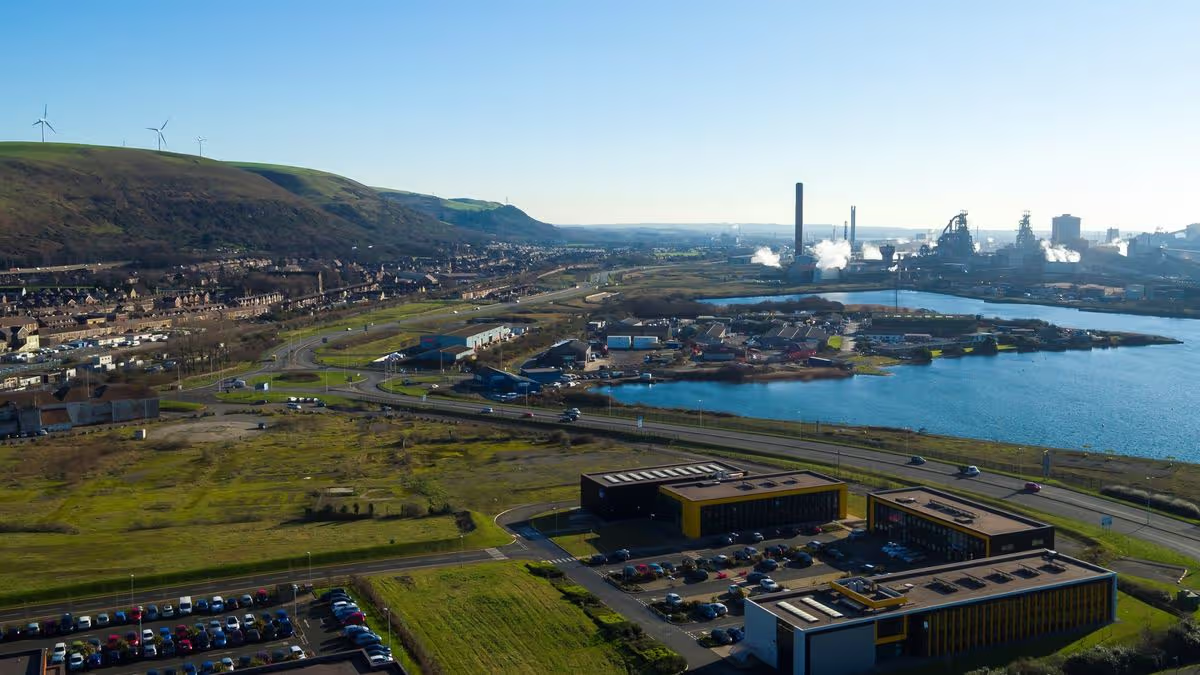
The port of Port Talbot.(Image: Dave Powell Ltd.)
Plans for a “transformative programme” of works to redevelop the port of Port Talbot have taken a step forward after an early stage application to the local council.
Advertisement
The project known as the “Future Port Talbot” programme will look to construct new marine and land-side infrastructure at the south Wales port in order to facilitate the creation of huge floating offshore wind-farms in the Celtic Sea.
The work could eventually see the creation of assembly and manufacturing facilities for the offshore wind industry along with a new quay wall, land-side material and equipment storage if taken forward.
It comes after The UK Government announced a £64m investment into the port of Port Talbot in March to enable Associated British Ports, (ABP) to complete the essential design and engineering work needed.
Additionally, in 2025 the Crown Estate struck a leasing agreement with developers to build three floating offshore wind-farms in the Celtic Sea, one in English waters, one in Welsh waters and a third straddling both.
Advertisement
As a result it is hoped that the port could support thousands of new jobs once completed, potentially unlocking over £500m of investment for the town and wider area.
The latest submission to Neath Port Talbot Council was revealed as part of officers delegated decisions made between March 13 and May 14.
It confirmed the intention of ABP to submit a Harbour Revision Order for the works in Port Talbot. A scoping direction also confirmed the full plans would need to include an environmental impact assessment as well as an application for a Marine Licence from Natural Resources Wales.
A section of the Associated British Ports website which discusses the Future Port Talbot Programme said: “Port Talbot has been at the forefront of industrial change before, and ABP’s vision is to lead that change again. Port Talbot has a natural sheltered deep-water harbour and large land that can be developed.
Advertisement
“It is close to floating offshore wind in the Celtic Sea and has strong export potential. The port sits within communities with a rich industrial heritage and a strong base of relevant skills and experience.
“These plans support growth in Wales and the UK and can help drive wider economic regeneration across South Wales.”





















































You must be logged in to post a comment Login