AUSTIN, Texas — Elon Musk on Monday endorsed a viral video showing what supporters called a liberal “slowly waking up” to the realities of U.S. border policy, replying with a simple “💯” emoji to a clip that has amassed millions of views on his social media platform X in just hours.
AFP
The post, timestamped shortly after 9 a.m. GMT on April 6, 2026, quoted a video originally shared by user @thewriterme with the caption “Watching a liberal slowly wake up.” In the nearly two-minute clip from the TikTok account @triggerpod, a woman with graying blonde hair wearing a blue sweater discusses her evolving views on immigration under the previous administration. She describes having long resisted the idea that Democrats were “deliberately inviting masses of foreigners into the country” to “grow little democrats and create one party state,” but says she has come around to believing the Biden-era policies involved intentional design rather than mere incompetence.
Musk’s terse agreement immediately amplified the video, which already had strong traction. Within hours, his post garnered more than 5.4 million views, 58,000 likes, nearly 10,000 reposts and thousands of replies. The reaction reflects Musk’s pattern of engaging with content that challenges mainstream narratives on immigration, demographics and political strategy — topics he has frequently highlighted since acquiring Twitter (now X) in 2022.
The woman in the clip, speaking in what appears to be a podcast-style setting with a branded mug visible, outlines her reasoning step by step. She notes that before former President Donald Trump “effectively closed” the southern border, she attributed much of the chaos to “incompetence and fecklessness.” But she now sees evidence of purpose: migrants being shipped “all over the country wherever they wanted,” placed on commercial airplanes without identification, and policies that appear inconsistent with stated economic rationales. She questions the logic of emphasizing the need for young workers to support Social Security and Medicare while simultaneously backing family reunification that brings in older relatives, undermining any demographic fix.
The video’s spread and Musk’s endorsement come amid ongoing national debate over immigration in the early months of the current Trump administration. Border encounters dropped sharply after Trump took office in January 2025 and implemented stricter enforcement, according to Department of Homeland Security data. Yet the long-term effects of record crossings during 2021-2024 — when Customs and Border Protection reported more than 10 million encounters — continue to fuel political realignments.
Advertisement
Commentators on X described the clip as emblematic of a broader phenomenon: voters who once supported expansive immigration policies grappling with visible consequences such as strained social services, housing shortages in sanctuary cities and shifting electoral demographics. Replies to Musk’s post ranged from celebration (“welcome to the real world”) to skepticism about whether such awakenings would translate into lasting political change. Some users shared personal stories of family or friends experiencing similar shifts; others posted memes or historical clips referencing past statements by political figures on demographic engineering.
Musk, who has more than 200 million followers on X, has positioned the platform as a bastion of free speech where such discussions can flourish without what he calls legacy media gatekeeping. His own commentary on immigration has evolved publicly. Once a vocal supporter of high-skilled immigration for technological advancement, Musk has repeatedly warned about unchecked illegal migration, birthrate collapses in Western nations and the risks of cultural dilution. In recent months he has amplified data from government sources showing the scale of releases into the interior under prior policies, including the use of commercial flights for migrants lacking full vetting.
The timing of the post is notable. With midterm elections approaching in 2026 and immigration remaining a top voter concern in national polls, moments of apparent political conversion — whether genuine or performative — gain outsized attention. Conservative media outlets quickly picked up the clip, while progressive voices dismissed it as cherry-picked or misleading. Fact-checking organizations noted that while the Biden administration expanded parole programs and ended the “Remain in Mexico” policy early in its term, officials consistently framed these moves as humanitarian and legal necessities rather than electoral strategy.
Public opinion data from early 2026 shows measurable shifts. Gallup and Pew Research Center surveys indicate that even among self-identified Democrats, support for border security measures has risen since 2024, with many citing record fentanyl deaths, urban homelessness linked to recent arrivals and pressure on public resources. A subset of voters — often described in media as “working-class” or “Hispanic” — have shown movement toward Republican positions on enforcement, a trend some analysts tie directly to lived experience in border states and sanctuary cities.
Advertisement
The woman in the @triggerpod video does not appear to be a high-profile political figure, but her measured, reflective delivery resonated. She acknowledges possible elements of incompetence but ultimately concludes there is “design behind it,” citing what she calls a “pathological passion for minorities” and a notion that non-white populations are somehow superior — a framing that echoes long-standing “great replacement” theories once confined to fringe discourse but now debated openly on mainstream platforms.
Musk’s engagement adds weight because of his influence. As CEO of Tesla, SpaceX and xAI, and owner of X, he wields significant cultural and economic power. His endorsement style — often single emojis or short phrases — has become a hallmark, instantly validating content for millions. Previous similar interactions have propelled videos, studies and personal testimonies into national conversations.
Critics argue that amplifying such clips risks oversimplifying complex policy debates. Immigration experts point to multiple factors behind border surges: global migration pressures, post-COVID economic recovery, cartel control of smuggling routes and legislative gridlock in Congress that has left the system reliant on executive action. Supporters of more open policies maintain that legal pathways and asylum processing remain essential to American values and labor needs in agriculture, construction and caregiving.
Yet the video and Musk’s reaction underscore a cultural moment in 2026 America: growing skepticism toward institutional explanations and demand for accountability on visible policy outcomes. X’s algorithm, which Musk has tuned to prioritize “unregretted” user engagement, rewards authentic-seeming personal testimonies over polished talking points.
Advertisement
As of Monday afternoon, the original video continued circulating independently, with users stitching reactions and translations. The Musk post itself generated secondary content, including reaction videos and memes. Platform analytics showed sustained high engagement, suggesting the discussion will dominate timelines for days.
The episode fits a pattern on X where high-profile accounts surface content that legacy media might downplay. Musk has frequently criticized traditional outlets for what he sees as ideological bias on issues like migration, crime statistics involving non-citizens and demographic change. By contrast, X allows direct exposure to raw footage, government data drops and unfiltered user commentary.
Whether this particular “waking up” moment represents a genuine shift in public sentiment or simply another viral flashpoint remains to be seen. Polling will track any sustained movement in voter attitudes heading into the midterms. For now, Elon Musk’s “💯” has once again spotlighted a conversation that millions are having — openly, emotionally and, thanks to the platform he owns, without traditional gatekeepers.
The full context of the woman’s remarks, the scale of border encounters during the prior administration and the policy reversals under Trump provide the backdrop for why such a clip strikes a chord. As one reply to Musk’s post put it: “Truth sets free.” In the polarized information landscape of 2026, moments of apparent political awakening — shared at scale — continue to shape the national dialogue.
Bandwidth is positioned at the center of global cloud communications powering mission-critical voice, messaging, emergency services and AI for enterprises worldwide. In this presentation, we will walk through how Bandwidth is positioned at the center of global cloud communications, powering mission-critical voice, messaging, emergency services and AI for enterprises worldwide.
Our story is anchored in 3 pillars. First, we’re a global communications leader in a large growing market, powering mission-critical voice, messaging and emergency services for some of the world’s largest and most demanding enterprises. Second, we are orchestrating AI, voice and messaging across cloud communications through our open award-winning Maestro platform. Third, we have a highly attractive business model, delivering profitability and capital structure strength that powers durable long-term growth. These pillars define how we compete and how we create long-term value.
Bandwidth powers mission-critical communications across cloud platforms. We combine global infrastructure, software orchestration and AI enablement, giving enterprises the performance, reliability and flexibility they require. This is not just connectivity. This is intelligent communications at global scale.
Advertisement
The market opportunity ahead of us continues to expand. Our total addressable market is projected to grow from $99 billion in 2024 to $162 billion by 2029 with a 10% compound annual growth rate. That secular growth is a tailwind across our 3 customer categories: Global voice plans, our largest customer category powering the leaders in unified communications, Contact Center as a Service and voice AI platforms is expected to grow above the market growth rate of 8%. Enterprise voice, our smallest and fastest-growing category, providing voice-powered customer experiences for the Global 2000 is expected to grow more than
ABU DHABI, United Arab Emirates — Zayed International Airport in Abu Dhabi remained open Monday for scheduled operations, handling a limited number of commercial flights as the UAE’s second major hub continues its gradual recovery from weeks of airspace disruptions linked to broader Middle East tensions.
Zayed International Airport
Also known as Abu Dhabi International Airport or AUH, the facility operated with low delay levels early in the day, according to real-time tracking services. Passengers with confirmed tickets were advised to proceed, though authorities urged travelers to verify status directly with airlines before heading to the terminal. Access remained restricted to ticketed passengers only as a safety measure.
Etihad Airways, the airport’s primary carrier, continued a scaled-back schedule serving approximately 80 destinations worldwide. Monday’s departures included services to Addis Ababa, Amman, Bangkok, Cairo, Hanoi, Malé, Phuket and other regional and long-haul points. Some flights showed minor delays, but overall activity stayed well below pre-crisis volumes, with roughly 450 flights scheduled across the day and an on-time departure forecast around 68%.
The airport’s official website and flight information displays confirmed ongoing operations as of Monday afternoon local time. No fresh full suspension was announced for April 6, unlike temporary halts reported at nearby Dubai International Airport earlier in the week due to separate security incidents. Weather conditions in Abu Dhabi supported normal ground operations, with very low and decreasing delay status reported.
Disruptions trace back to late February when escalating regional conflict involving Iran prompted airspace restrictions across parts of the Gulf. Both Dubai and Abu Dhabi airports saw partial or temporary closures, forcing airlines to reroute, cancel or operate narrow-body aircraft on select corridors. Etihad gradually resumed limited commercial services from March 6, expanding slowly through April while prioritizing safety assessments.
Advertisement
Travelers faced challenges including rebooking difficulties and stranded passengers in the initial weeks. Many carriers, including Etihad, offered flexible change policies and travel waivers for affected routes. By early April, operations stabilized at roughly 60% capacity at major UAE hubs, with further recovery expected as airspace permissions normalize.
Airport authorities emphasized that passengers should not travel to Zayed International unless contacted by their airline or holding confirmed bookings. Terminal access controls remained in place to manage crowd levels and security. The AUH app and website provided live arrivals, departures and status updates, while Etihad’s flight status page allowed quick checks.
Facilities at the modern terminal, which opened in phases in recent years, continued normal passenger services for those cleared to fly. Amenities such as lounges, dining and retail operated on adjusted hours tied to the reduced flight schedule. Ground handling and baggage services adapted to lower volumes, though some travelers reported longer processing times due to staffing aligned with limited operations.
Regional airlines like Air Arabia maintained select flights from Abu Dhabi alongside Etihad. International carriers including IndiGo, Ethiopian Airlines and Royal Jordanian operated limited routes, with some services showing cancellations or rerouting. Real-time trackers indicated about 15 cancellations Monday, a notable drop from peak disruption periods when thousands of flights were affected across the Gulf.
Advertisement
The ongoing situation reflects the interconnected nature of Gulf aviation. Abu Dhabi’s airport serves as a key hub for connections to Europe, Asia, Africa and Australia, but reduced capacity has shifted some traffic or forced longer routings via alternative gateways. Cargo operations continued with priority on essential goods, helping maintain supply chains despite passenger limitations.
Travel advisories from multiple sources urged caution. Visitors planning trips to or through Abu Dhabi were told to monitor airline communications closely, as schedules could change with short notice due to evolving airspace conditions. Hotels and tour operators in the capital offered flexible cancellation policies for guests impacted by flight changes.
Abu Dhabi Airports, the operator managing Zayed International and other emirate facilities, has worked closely with civil aviation authorities to restore normalcy. The airport’s long-term growth ambitions, including its role as a premium hub, remain intact, though short-term focus stays on safety and phased resumption. Passenger traffic had shown strong pre-crisis growth, with double-digit increases reported in earlier quarters of 2025.
For those flying Monday, low delay indexes suggested smoother processing than in recent weeks. However, experts recommended arriving early, carrying digital copies of documents and preparing for potential gate changes or boarding adjustments. Families, unaccompanied minors and passengers needing assistance received priority where possible.
Advertisement
Broader UAE aviation recovery includes Dubai International, which also operated on a reduced but improving schedule despite occasional incidents. Sharjah and other smaller airports followed similar patterns. The situation has highlighted the resilience of Gulf carriers while exposing vulnerabilities in regional airspace management during geopolitical stress.
International reactions varied, with some governments issuing updated travel guidance for the UAE. Airlines outside the region adjusted networks, suspending or rerouting services until conditions stabilize. Mediation efforts and diplomatic talks aimed at de-escalation could accelerate full recovery in coming weeks.
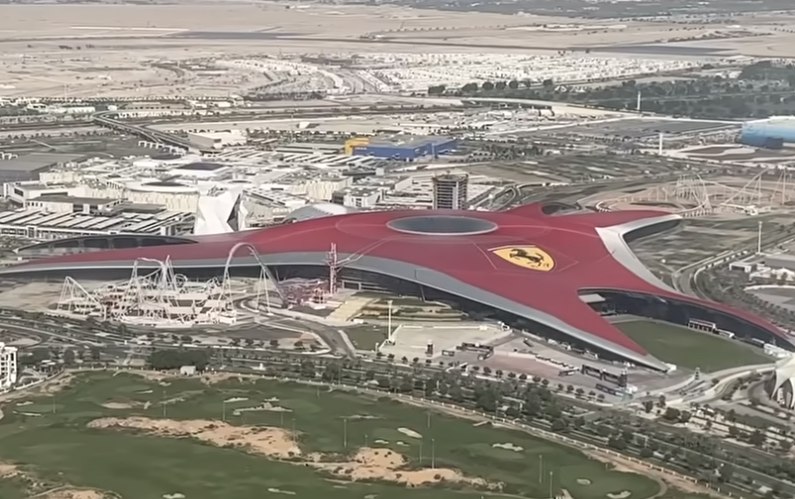
Zayed International Airport’s modern design, with its expansive terminals and advanced technology, has helped manage the constrained environment efficiently. Features like contactless processing and digital wayfinding minimized friction for operating flights. The airport continues promoting itself as the Middle East’s fastest-growing hub, with infrastructure ready for higher volumes once restrictions lift.
Travelers with upcoming bookings were encouraged to check Etihad.com or their airline’s app frequently. Rebooking options and waivers remained available for many affected itineraries. Those already in Abu Dhabi or planning ground transfers between emirates could use road options like the Airport Express service linking Abu Dhabi and Dubai, which operated normally.
Advertisement
As the day progressed Monday, flight tracking sites showed steady activity with arrivals from key cities and departures heading to global destinations. While not yet at full strength, the airport’s openness provided reassurance to passengers and the wider travel industry after prolonged uncertainty.
The situation at Abu Dhabi’s Zayed International Airport underscores how quickly global hubs can adapt while highlighting the need for contingency planning in volatile times. Authorities and airlines continue prioritizing safety, with hopes for fuller schedules as regional stability improves.
Passengers should treat Monday’s operations as a snapshot subject to rapid change. Checking official sources — the airport website, airline apps and live trackers — remains the best way to ensure smooth travel from one of the UAE’s premier gateways.
Private equity groups agreed buyouts worth $172bn in the first quarter of the year
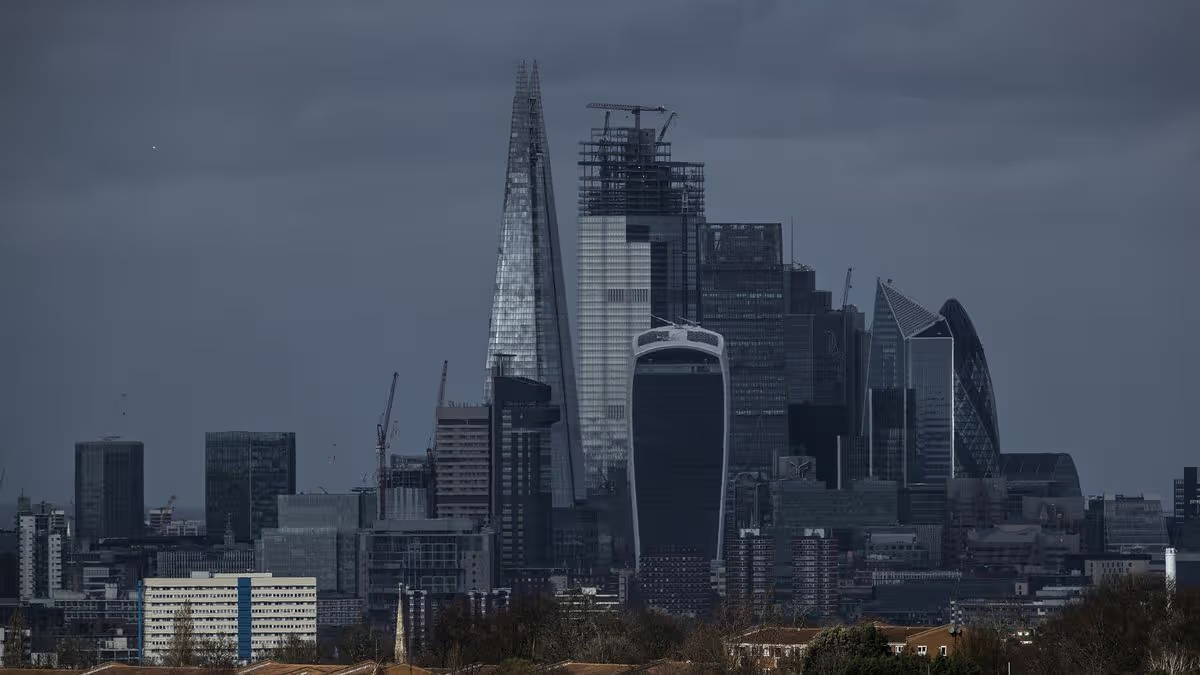
View of London(Image: Getty Images)
The value of acquisitions by private equity firms declined by more than a third during the opening quarter of the year, with dealmakers cautioning that apprehensions over AI’s influence on software companies and the continuing Middle Eastern conflict could accelerate the slowdown.
During the three months to March, private equity firms completed transactions worth $172bn (£129.8bn), representing a 36 per cent fall from the previous quarter according to Dealogic.
It also marked an eight per cent decline from the corresponding period in the prior year.
Buyout professionals and advisers attributed the reduction to firms postponing deal signings amid the persistent market volatility triggered by the Middle Eastern conflict.
Advertisement
Meanwhile, mounting concerns about AI’s implications for software groups have also dampened expectations that private equity is rebounding following its extended downturn, as reported by City AM.
Software, amongst the buyout sector’s more lucrative areas, has encountered investor exodus in response to swift AI advancement, which has compressed returns.
Attitudes towards software have also deteriorated within the private credit sector, amid increasing investor worries that the software and technology businesses comprising a substantial proportion of the industry’s lending portfolios were particularly susceptible to being supplanted or disrupted by AI.
Speaking to the Financial Times, the head of a large European buyout group, said: “We’re in one of the most turbulent periods that I can remember.
Advertisement
“Things are grinding down quite quickly now in terms of activity.”
The executive cautioned that the most severe economic consequences of the conflict have yet to materialise, while the potential disruption to software firms’ business models could have an even greater bearing on dealmaking over the coming months.
Within the private credit sector, investors have retreated towards the security of liquid assets, such as equities and bonds, while others have sought refuge in cash and money market funds.
The substantial quarter-on-quarter decline in the value of buyout deals follows a resurgence in the second half of last year, with global deal value climbing to over $900bn in 2025, propelled by a handful of megadeals.
Advertisement
These included the $23.7bn acquisition of Walgreens Boots Alliance, spearheaded by Sycamore Partners, while Aligned Data Centres was acquired by a consortium of investors for approximately $40bn.
However, the early-year rebound from a period of volatility was abruptly halted by the conflict, also extinguishing the optimism the industry had harboured regarding the state of private equity in 2026.
The value of global private equity exits in the first three months likewise fell to $162bn, representing a decline of one-third from the preceding quarter.
This also dragged the value of global private equity exits back to levels comparable with the same period the previous year.
Advertisement
Certain funds are hesitant to reduce the valuations of their portfolio companies, many of which were acquired during the peak valuation surge between 2020 and 2021, while some institutional investors have grown wary of the market due to its underperformance compared to public markets, which have benefited from strong-performing AI stocks.
Bristol is about to join the big league of British live entertainment, with the city’s forthcoming Aviva Arena setting its sights on staging the Brit Awards within its first years of operation.
The 20,000-capacity indoor venue, which is taking shape on the historic Filton Airfield in north Bristol, the very site where every British-built Concorde rolled off the production line, is on track to open in late 2028. Its backers believe it will plug a glaring gap in the country’s events infrastructure, given that the south-west remains the only English region without a major arena.
The project sits at the heart of a broader development called YTL Live, which will occupy the three vast Brabazon Hangars once used to assemble supersonic aircraft. The central and largest hangar will house the arena itself, flanked by conference and exhibition spaces designed to keep the complex busy well beyond gig nights. Organisers expect the venue to stage upwards of 120 major events each year, generating an estimated £1 billion for the wider Bristol economy over its first decade.
Andrew Billingham, chief executive of the Aviva Arena, said the ambition extends well beyond regional pride. The venue wants a place on the global touring circuit, and the Brit Awards sit firmly in its crosshairs following the ceremony’s well-received stint in Manchester earlier this year.
The arena’s specification suggests those ambitions are not merely fanciful. Plans include 20 state-of-the-art dressing rooms, extensive production facilities and what is billed as Europe’s largest services yard, with capacity for up to 60 touring lorries at once. A new railway station, Bristol Brabazon, is due to open this autumn, giving the site a direct public transport link that many rival venues lack.
Advertisement
Behind the project is YTL, a Malaysian infrastructure conglomerate and the largest Malaysian investor in the United Kingdom, whose British portfolio already includes Wessex Water. The group acquired the Filton site roughly a decade ago with a vision that went far beyond housebuilding, it set about creating an entire mixed-use community encompassing homes, workplaces and leisure. Construction of the arena is expected to support more than 2,000 jobs, with a further 500 permanent roles once the doors open.
For Bristol, a city whose creative economy already punches well above its weight, the arrival of a venue of this scale represents a significant commercial moment. If Billingham and his team can deliver on the Brit Awards pledge, it would mark the latest step in the ceremony’s journey away from its traditional London base, and confirm that the south-west finally has a stage to match its cultural ambition.
Amy Ingham
Amy is a newly qualified journalist specialising in business journalism at Business Matters with responsibility for news content for what is now the UK’s largest print and online source of current business news.
Scott Kaufman, aka Treading Softly, learned about investing firsthand from over a decade of financial sector experience. He is the lead analyst for Dividend Kings providing actionable insight into high quality dividend growing and undervalued opportunities. His focus is to see a bountiful harvest of cash dividends and strong capital gains, providing a robust total return.
Analyst’s Disclosure: I/we have a beneficial long position in the shares of CI either through stock ownership, options, or other derivatives. I wrote this article myself, and it expresses my own opinions. I am not receiving compensation for it (other than from Seeking Alpha). I have no business relationship with any company whose stock is mentioned in this article.
Kody’s Dividends, Justin Law, and Rachel Kaufman are part of the Dividend Kings team.
Advertisement
Seeking Alpha’s Disclosure: Past performance is no guarantee of future results. No recommendation or advice is being given as to whether any investment is suitable for a particular investor. Any views or opinions expressed above may not reflect those of Seeking Alpha as a whole. Seeking Alpha is not a licensed securities dealer, broker or US investment adviser or investment bank. Our analysts are third party authors that include both professional investors and individual investors who may not be licensed or certified by any institute or regulatory body.






.webp?t=1775479076)














































You must be logged in to post a comment Login