Connect with us
DAPA Banner

Business

5 Questions with Nicholas Mukhtar on Strategy, Governance, and What Executives Get Wrong

Published

on

5 Questions with Nicholas Mukhtar on Strategy, Governance, and What Executives Get Wrong

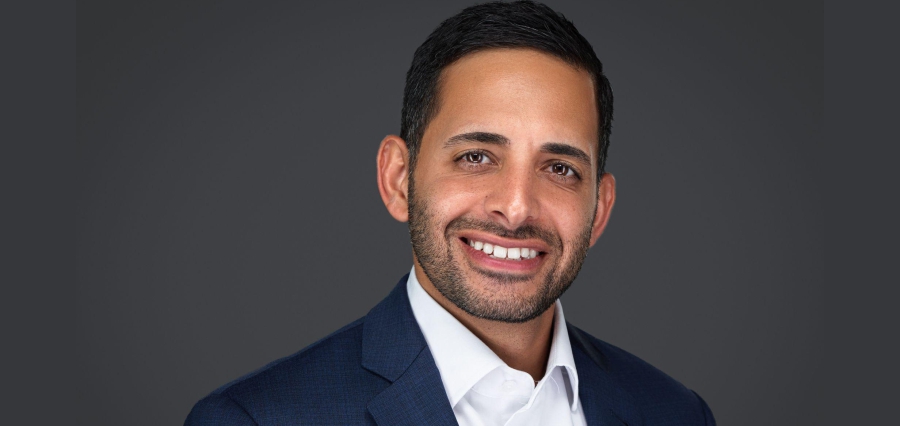
Few consultants arrive at business consulting through public health. Nicholas Mukhtar did. After founding Healthy Detroit in 2013, growing it to a $15 million annual budget, and earning recognition from the American Public Health Association as the National Public Health Organization of the Year in 2017, he shifted focus — first to advising government offices and congressional leaders through Healthy Communities, LLC, then to building Tera Strategies, his Fort Lauderdale-based management consulting firm, where he now advises CEOs, family offices, medical directors, and wealth management practices nationwide.

That career arc, from community health organizer to senior business consultant, has given Nicholas Mukhtar a cross-sector lens that surfaces patterns other advisors tend to miss. He sat down to answer five questions on the state of business leadership, what governance structures actually require, and where most executives lose their way before they realize it.

Q1: You transitioned from leading a major nonprofit to advising private-sector executives. What does one world teach you about the other?

Mukhtar says the mechanics of both worlds are more similar than most people expect. Running Healthy Detroit showed him that whether the organization is a city park health initiative or a family-owned company, the core problems are almost always structural, and the transition from scrappy startup to functioning institution is a universal challenge. “I look at companies in two different buckets,” he said. “One are these large established companies that do function much like these big city governments or these bureaucratic machines that sometimes can’t get out of their own way. And then this other bucket, it’s the startup machine.”

He draws a direct line between what he observed building a public-private partnership model in Detroit — where government bureaucracy consistently blocked innovation — and what he encounters inside large corporations today. His consulting approach reflects that framework: different organizations require fundamentally different interventions, and treating them the same is one of the more expensive mistakes a leader can make. The observation carries weight against current data. A 2025 NACD survey of directors found that a majority of board members flagged improvements to planning oversight and risk management as top priorities, signaling that even at the governance level, organizations are grappling with the gap between stated direction and execution capability.

Advertisement

Q2: You work extensively with family offices on governance and succession. What is the single biggest mistake you see them make?

Mukhtar’s answer is consistent across nearly every family office engagement he takes on: not getting children involved early enough. The consequences, when they surface, tend to be severe. “You don’t know what life has in store,” he said. “You’ll see situations where someone will pass on or there’ll be an accident or something, and these kids truly have no idea what their parents have built, how they built it, how things are set up, what to do.”

The scale of the problem is considerable. According to a 2025 report from RBC Wealth Management and Campden Wealth, nearly half of all family offices expect a generational transition within the next decade, yet only 69% now have a formal succession plan in place, up from just 53% the previous year. Research published by Simple, a family office advisory firm, found that without a defined decision-making framework, families become dangerously dependent on one or two individuals, and when those individuals are suddenly unavailable, the organization has no structure to fall back on. The clients Mukhtar describes getting it right start their children with small investment accounts as early as age ten or eleven. “Just teaching them the value of having time in the market, saving money, creating buckets,” he said. “Put 30% here, put 30% here, put 30% here.” The families that struggle, in his experience, are the ones so consumed by building that they lose sight of who they are building for.

Q3: When a new client comes to you, what is the root problem you find most often — and what question do you wish they had asked themselves before picking up the phone?

Mukhtar says the answer is almost always the same, regardless of industry, company size, or ownership structure. “I kid you not,” he said, “that seems to be 90% of the problems across the board. It’s just people need to talk.” He does not frame this as a matter of individual personality or interpersonal skill. He ties communication failure to a structural condition — the chronic overstimulation of modern professional life, where executives are pulled across so many competing demands that the act of sitting down and asking a direct question has become genuinely difficult to prioritize.

The organizational cost of that failure is well-documented. Research from the 2025 Top Workplaces survey found that the most consequential gap organizations face is failing to keep employees informed during periods of change. When that gap persists, the trust holding performance cultures together begins to erode. Mukhtar sees it play out at the individual level too: people on the verge of leaving a job without ever articulating what they actually need from their employer. “Did you as the employee sit down with the business owner and explain to them why you want something different and what you’re actually looking for?” he said. “It can be really that simple.” His prescription is not elaborate. “People just get pulled in so many different directions,” he said, “and a lot of it is you just need to simplify things and have a conversation about why isn’t this working.”

Advertisement

Q4: Most executives say they believe in clear strategy. Why do so few actually execute it?

Mukhtar traces the gap between belief and execution to a single recurring failure: treating every organization as though the same solution applies. He pushes back on universal prescriptions, and his reasoning is grounded in observation rather than theory. “If I talk to 10 CEOs, they all have a very different style, a different way of looking at things,” he said. “There’s not one size fits all solution to any problem. And I think that you have to really approach it as such.”

That view carries weight against current data. A 2024-2025 McKinsey survey of more than 400 senior executives worldwide found that only 21% reported their organization’s strategy passed four or more of the firm’s rigorous Ten Tests of evaluation, a 40% drop from results captured a decade and a half earlier. A separate analysis found that 68% of middle managers in a McKinsey study admitted they actively edit out negative information before passing it up the chain, meaning executives are often finalizing plans based on a picture that no longer reflects conditions on the ground. For mature organizations functioning like large bureaucratic institutions, Mukhtar argues the answer often involves outside thinking: someone without institutional attachments who can ask the questions insiders have stopped asking. For younger companies still finding their structure, the work is different. “There’s a lot of growing pains in a lot of these companies that are startups trying to transition to full functioning companies,” he said. “Every entity, every person’s unique and you have to treat it as such.”

Q5: What do you want to be working on over the next several years, and where do you think the biggest opportunities in your field are?

Mukhtar is direct about his ambitions, and they run closer to outcomes than to growth metrics. He describes wanting work where results are visible and concrete, rather than projects measured on timelines too long to produce real accountability. “I like taking on projects where I can really see outcomes,” he said. “I’m an outcomes-driven person. I don’t like working on things that you’re not going to see the outcomes for a hundred years.”

That orientation points him toward healthcare reform as a priority, specifically Medicaid, where he spent several years earlier in his career and believes substantial, measurable change remains possible. “There’s a lot of opportunity to use Medicaid to really help people and get them to a place where they’re healthy and contributing members of society,” he said. “I don’t think that’s how our Medicaid system’s being used today.” More broadly, Nicholas Mukhtar says he wants to grow Tera Strategies to the point where he can be genuinely selective about his engagements, choosing clients and projects based on fit and impact rather than volume. He is not descriing scale for its own sake. He is describing the ability to pursue the kind of work that produces the outcomes he watched unfold in Detroit — a park where children were playing basketball on a court that had been an abandoned lot, a block that looked different because someone chose to intervene. “To see those outcomes and to see kids actually using something that you had a role in building,” he said, “that’s my passion. That’s what I love doing. That’s what drives me.”

Advertisement

Learn More: Nicholas Mukhtar shares new analysis on decision-making in complex organizations

Continue Reading
Click to comment

You must be logged in to post a comment Login

Leave a Reply

Business

Pre-budget move to guarantee new density developments

Published

on

Pre-budget move to guarantee new density developments

New apartment and townhouse property developments will be underwritten by the state government as part of a $250 million pre-budget commitment.

Continue Reading

Business

AA and BSM ordered to refund learner drivers for hidden fees

Published

on

AA and BSM ordered to refund learner drivers for hidden fees

The owner of the driving schools has been fined for failing to disclose fees upfront online.

Continue Reading

Business

Dorset Innovation Park could see jobs surge if MoD funding is secured

Published

on

Business Live

The delay in the decision is preventing major expansion on the site

Dorset Innovation Park How It Might Look In A Few Years Time

A map of how Dorset Innovation Park might look(Image: Local Democracy Reporting Service)

A significant increase in employment at Dorset’s Innovation Park could materialise next year – once the Ministry of Defence finalises its future spending plans. Councillors have been informed that a delay in spending decisions by the MoD is already preventing one major expansion on the site, which already has planning approval, with other potential developments likely to proceed as soon as funding is confirmed.

Advertisement

Several of the companies on the site are defence-related including those working on the development of autonomous and semi-autonomous machines for land, sea and air.

The Dorset Council-owned enterprise zone site has recently completed the acquisition of additional land next to the site with discussions also taking place about attracting a hotel after a consultant’s report indicated it should be commercially viable.

Other discussions under way include plans for a new gatehouse, which is currently regarded as a drawback for the Winfrith site, and a proposal to establish a catering outlet, possibly located at the Battlelab.

Councillors on the shareholders committee have also been informed that approaches are being made for a permanent education satellite facility on the park – with discussions having taken place with Bournemouth University, Yeovil College and Plymouth University.

Advertisement

The shareholders committee was told that Fareham Borough Council, which owns a similar business park, ‘took off’ after securing a permanent higher education facility on its site.

Businesses already operating at the Dorset site are understood to be supportive of securing an education partner, which would assist with their own workplace training programmes, with many indicating it is crucial to future job creation and staff retention.

Outstanding issues include public transport links to the site from the surrounding area, with priority being given to connections from Wool railway station to the Innovation Park – proposals under consideration include establishing a bus route and exploring alternative options such as hire electric bikes and scooters.

Dorset Council’s portfolio holder for finance, Cllr Simon Clifford, told the shareholders meeting he was ‘heartened’ by the progress being made by the company which will eventually assume day-to-day management of the site – a responsibility currently being shared with Dorset Council officers.

Advertisement
Continue Reading

Business

Oracle Stock: Still Priced Like It’s Dead Money (NYSE:ORCL)

Published

on

Oracle Stock: A Trade-Off Between Growth And Quality (NYSE:ORCL)

This article was written by

Small deep value individual investor, with a modest private investment portfolio, split approx. 50%-50% between shares and call options. I have a B.Sc. in aeronautical engineering and over 6 years of experience as an engineering consultant in the aerospace sector. The latter statement is not relevant in any way whatsoever to my investment style, but I thought to add it for self-indulgent purposes. I have a contrarian investment style, highly risky, and often dealing with illiquid options. How illiquid? Well, you can land a Jumbo on the spread and still have clearance for take-off. From time to time, I buy shares, mostly to not be categorized as a degen by my fellow investor friends, therefore the 50%-50% allocation. My timeframe tends to be between 3-24 months.I like stocks that have experienced a recent sell-off due to non-recurrent events, particularly when insiders are buying shares at the new lower price. This is how I often screen through thousands of stocks, mainly in the US, although I may own shares in banana republics. I use fundamental analysis to check the health of companies that pass through my screening process, their leverage, and then compare their financial ratios with the sector, and industry median and average. I also do professional background checks of each insider who purchased shares after the recent sell-off. I use technical analysis to optimize the entry and exit points of my positions. I mainly use multicolor lines for support and resistance levels on weekly charts. From time to time I draw trend lines, taken for granted, in multicolor patterns. Note: I tried to keep my introduction as real, and authentic as possible. I dislike empty suits, high-level BS, deep-level BS, unnecessary jargon, and self-indulgent, third-person written introductions with an air of superiority.Thanks for reading my introduction!

Analyst’s Disclosure: I/we have a beneficial long position in the shares of ORCL either through stock ownership, options, or other derivatives. I wrote this article myself, and it expresses my own opinions. I am not receiving compensation for it (other than from Seeking Alpha). I have no business relationship with any company whose stock is mentioned in this article.

Seeking Alpha’s Disclosure: Past performance is no guarantee of future results. No recommendation or advice is being given as to whether any investment is suitable for a particular investor. Any views or opinions expressed above may not reflect those of Seeking Alpha as a whole. Seeking Alpha is not a licensed securities dealer, broker or US investment adviser or investment bank. Our analysts are third party authors that include both professional investors and individual investors who may not be licensed or certified by any institute or regulatory body.

Advertisement
Continue Reading

Business

Infosys, TCS, Wipro, other IT stocks climb up to 5%. Here’s why

Published

on

Infosys, TCS, Wipro, other IT stocks climb up to 5%. Here's why
The shares of IT companies surged up to 5% on Wednesday, amid overall optimism on Dalal Street and Wall Street following hopes for fresh Iran-US talks, along with easing concerns about AI-led disruption.

After taking a significant beating earlier this year due to AI worries and war-led inflationary concerns, the stocks have partially recovered so far in April. Nifty IT jumped more than 2% to emerge as one of the top sectoral gainers on the markets today.

Fresh hopes for Iran-US peace talks

Pakistani officials cited by the Associated Press indicated on Tuesday that Islamabad has proposed a second round of talks to the United States and Iran, while US Vice President JD Vance earlier said negotiations with Iran “did make some progress” and US President Donald Trump said earlier “we’ve been called by the other side” and “they want to work a deal.”Trump hinted at the second round of talks, saying Iran talks ‘could be happening over the next two days’ in Pakistan, as quoted by Reuters, citing the NY Post. He said that Washington was more ‘inclined’ to go to Pakistan for the peace talks that could possibly bring an end to the nearly seven-week-long war in the Middle East. The renewed hopes for fresh peace talks, after the previous round collapsed over the weekend, boosted investor sentiment.

Advertisement

Earlier, the raging war in the oil-rich Middle East and the subsequent rally in energy prices had led to inflationary worries in the US. IT companies derive a major portion of their revenue from the US economy, inflationary worries and concerns around subsequent lower demand impacted IT stocks back home on Dalal Street. However, the renewed optimism has boosted investor sentiment.

AI worries

Before the Middle East war, it was artificial intelligence that dampened sentiment for the IT stocks earlier this year. The tech stocks saw a massive decline in February with the launch of new and innovative artificial intelligence tools by AI startup Anthropic, which triggered worries around disruption in the software services. Back on Dalal Street, shares of Infosys, Wipro, TCS, HCLTech and other IT companies, saw a sharp selloff.However, while some doomsday prophets painted a grim picture for IT shareholders, some analysts were quick to point out that an overall replacement of software engineers by AI is unlikely. The new technology would instead increase efficiency across the companies, boosting margins, according to them.

Goldman Sachs released its Q1 earnings on Monday. During an analyst’s call, David Solomon, Chairman and CEO of Goldman Sachs, said he is hugely forward-leaning on the power of artificial intelligence to accelerate growth at the bank. “Whenever you have accelerations in new technology, there are going to be bumps, there will be risk issues, and recalibrations. But the power of this technology to use it in an enterprise to increase efficiency is incredibly constructive,” he added. Entrepreneur and financial expert Gurmeet Chaddha highlighted that Solomon claimed that AI taking over enterprise software is not easy.

IT shares rally

Tata Consultancy Services (TCS) shares, which recently fell after its Q4 results, gained more than 3% today to trade at Rs 2,551 apiece.

Infosys, LTIMindtree, Wipro and Persistent Systems shares gained nearly 3% each, while Mphasis, Tech Mahindra and Coforge shares jumped around 2% each. Oracle Financial Services Software shares rallied around 5% in the morning.

Advertisement

Wall Street ended higher yesterday, with the S&P 500 jumping more than 1% to close near the record high level it had hit in January. Tech-heavy Nasdaq Composite gained nearly 2% while Dow Jones Industrial Average rose 0.7%. Microsoft shares gained more than 2%, while Amazon rallied nearly 4%.

Calm before the storm?


Despite the optimism, some caution is warranted. After previous Claude models rattled investor confidence in the sector, Anthropic’s latest release, a preview of a model called Mythos is spooking investors. “Mythos’ significant improvement in software engineering-related tasks is a departure from the trend of incremental improvements between consecutive frontier models,” Kotak Institutional Equities said in a note. “These developments could have implications for IT services firms.”

Additionally, Trump is notorious for his decision flip flops and the peace talks have already once failed, keeping investors on the edge and sentiment fragile.

Advertisement

(Disclaimer: Recommendations, suggestions, views and opinions given by the experts are their own. These do not represent the views of The Economic Times)

Continue Reading

Business

Warrior Met Coal: A Low-Cost Premium Coking Coal Producer

Published

on

Warrior Met Coal: A Low-Cost Premium Coking Coal Producer

Warrior Met Coal: A Low-Cost Premium Coking Coal Producer

Continue Reading

Business

Third acquisition in year for Palatine-backed waste manager Papilo as it makes move into Scotland

Published

on

Business Live

REKK’s founders will stay with expanded business

Papilo, the Swinton-based waste management group, has completed its third acquisition in the last 12 months, this time buying Rekk Recycling in Scotland

Papilo, the Swinton-based waste management group, has completed its third acquisition in the last 12 months(Image: Papilo)

A Greater Manchester waste management group backed by private equity firm Palatine has made its third acquisition in a year. Papilo has acquired REKK Recycling, which is based in Uddingston near Glasgow, in a move that also expands its reach across the UK.

REKK founders, Steven Dodds and John Byrne, will stay with the business as it joins Papilo, which has been backed by Palatine’s Impact Fund. It follows February’s deal by Papilo for Midlands-based Allwood Recycling and last year’s deal for North West-based Silverwoods Waste Management.

Michael Gibson, who joined Swinton-based Papilo as CEO earlier this month, said: “REKK is an excellent strategic addition for Papilo and enhances our geographical presence into Scotland.

“Like ourselves, the company’s ethos is built on best-in-class customer service and on supporting better environmental outcomes through recycling. Founders Steven and John have done a fine job in building the business and I am pleased that along with their team they are remaining with the group for the next phase of growth.”

Advertisement

Greg Holmes, senior investment director at Palatine Impact Fund said: “REKK is an excellent fit for Papilo – not just geographically, but in its shared commitment to diverting waste from landfill and supporting clients to take a more responsible approach to resource management.

“This is Papilo’s third acquisition in under a year as we build a business of true scale in the circular economy in partnership with the ambitious management team and we are well-positioned to continue that growth through further strategic M&A.”

The transaction, whose value was not disclosed, was funded by Kartesia and Virgin Money. Papilo was advised by Gateley (legal), Fellwood Advisory (debt advisory), MHA Smalley (financial and tax due diligence) and Luminii Consulting (commercial due diligence). Advisers to REKK included KBS (corporate finance) and Mackrell (legal).

Advertisement
Continue Reading

Business

Perth scientist ponders global IP puzzle

Published

on

Perth scientist ponders global IP puzzle

Perth researcher and entrepreneur Ramiz Boulos has launched an IP marketplace.

Continue Reading

Business

Federal Deficit: TTM Interest Expense Exceeds $1T

Published

on

Federal Deficit: TTM Interest Expense Exceeds $1T

US treasury department

Douglas Rissing/iStock via Getty Images

Federal Budget

The Federal Government publishes the spending and revenue numbers on a monthly basis. The charts and tables below give an in-depth review of the Federal Budget, showing where the money is coming from, where it

Continue Reading

Business

Opinion: Less blah blah, more management

Published

on

Opinion: Less blah blah, more management

OPINION: It is up to you as the manager to decide what autonomy you give your AI.

Continue Reading

Trending

Copyright © 2025