Connect with us

Business

5 Questions with Nicholas Mukhtar on Strategy, Governance, and What Executives Get Wrong

Published

on

5 Questions with Nicholas Mukhtar on Strategy, Governance, and What Executives Get Wrong

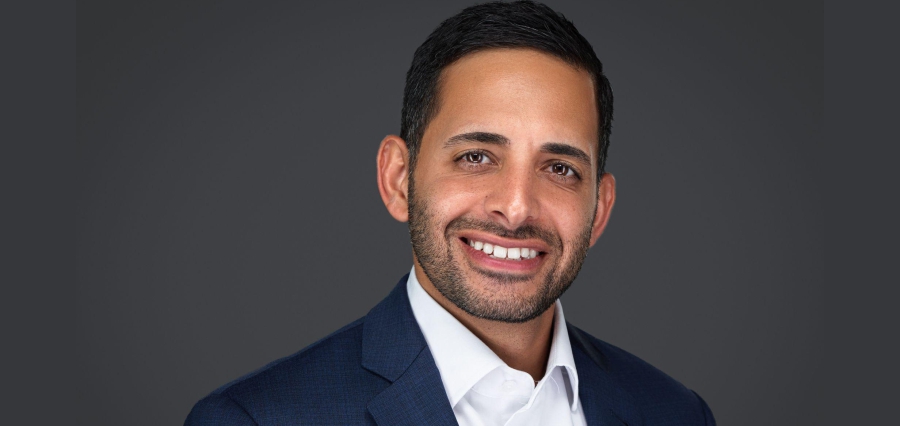
Few consultants arrive at business consulting through public health. Nicholas Mukhtar did. After founding Healthy Detroit in 2013, growing it to a $15 million annual budget, and earning recognition from the American Public Health Association as the National Public Health Organization of the Year in 2017, he shifted focus — first to advising government offices and congressional leaders through Healthy Communities, LLC, then to building Tera Strategies, his Fort Lauderdale-based management consulting firm, where he now advises CEOs, family offices, medical directors, and wealth management practices nationwide.

That career arc, from community health organizer to senior business consultant, has given Nicholas Mukhtar a cross-sector lens that surfaces patterns other advisors tend to miss. He sat down to answer five questions on the state of business leadership, what governance structures actually require, and where most executives lose their way before they realize it.

Q1: You transitioned from leading a major nonprofit to advising private-sector executives. What does one world teach you about the other?

Mukhtar says the mechanics of both worlds are more similar than most people expect. Running Healthy Detroit showed him that whether the organization is a city park health initiative or a family-owned company, the core problems are almost always structural, and the transition from scrappy startup to functioning institution is a universal challenge. “I look at companies in two different buckets,” he said. “One are these large established companies that do function much like these big city governments or these bureaucratic machines that sometimes can’t get out of their own way. And then this other bucket, it’s the startup machine.”

He draws a direct line between what he observed building a public-private partnership model in Detroit — where government bureaucracy consistently blocked innovation — and what he encounters inside large corporations today. His consulting approach reflects that framework: different organizations require fundamentally different interventions, and treating them the same is one of the more expensive mistakes a leader can make. The observation carries weight against current data. A 2025 NACD survey of directors found that a majority of board members flagged improvements to planning oversight and risk management as top priorities, signaling that even at the governance level, organizations are grappling with the gap between stated direction and execution capability.

Advertisement

Q2: You work extensively with family offices on governance and succession. What is the single biggest mistake you see them make?

Mukhtar’s answer is consistent across nearly every family office engagement he takes on: not getting children involved early enough. The consequences, when they surface, tend to be severe. “You don’t know what life has in store,” he said. “You’ll see situations where someone will pass on or there’ll be an accident or something, and these kids truly have no idea what their parents have built, how they built it, how things are set up, what to do.”

The scale of the problem is considerable. According to a 2025 report from RBC Wealth Management and Campden Wealth, nearly half of all family offices expect a generational transition within the next decade, yet only 69% now have a formal succession plan in place, up from just 53% the previous year. Research published by Simple, a family office advisory firm, found that without a defined decision-making framework, families become dangerously dependent on one or two individuals, and when those individuals are suddenly unavailable, the organization has no structure to fall back on. The clients Mukhtar describes getting it right start their children with small investment accounts as early as age ten or eleven. “Just teaching them the value of having time in the market, saving money, creating buckets,” he said. “Put 30% here, put 30% here, put 30% here.” The families that struggle, in his experience, are the ones so consumed by building that they lose sight of who they are building for.

Q3: When a new client comes to you, what is the root problem you find most often — and what question do you wish they had asked themselves before picking up the phone?

Mukhtar says the answer is almost always the same, regardless of industry, company size, or ownership structure. “I kid you not,” he said, “that seems to be 90% of the problems across the board. It’s just people need to talk.” He does not frame this as a matter of individual personality or interpersonal skill. He ties communication failure to a structural condition — the chronic overstimulation of modern professional life, where executives are pulled across so many competing demands that the act of sitting down and asking a direct question has become genuinely difficult to prioritize.

The organizational cost of that failure is well-documented. Research from the 2025 Top Workplaces survey found that the most consequential gap organizations face is failing to keep employees informed during periods of change. When that gap persists, the trust holding performance cultures together begins to erode. Mukhtar sees it play out at the individual level too: people on the verge of leaving a job without ever articulating what they actually need from their employer. “Did you as the employee sit down with the business owner and explain to them why you want something different and what you’re actually looking for?” he said. “It can be really that simple.” His prescription is not elaborate. “People just get pulled in so many different directions,” he said, “and a lot of it is you just need to simplify things and have a conversation about why isn’t this working.”

Advertisement

Q4: Most executives say they believe in clear strategy. Why do so few actually execute it?

Mukhtar traces the gap between belief and execution to a single recurring failure: treating every organization as though the same solution applies. He pushes back on universal prescriptions, and his reasoning is grounded in observation rather than theory. “If I talk to 10 CEOs, they all have a very different style, a different way of looking at things,” he said. “There’s not one size fits all solution to any problem. And I think that you have to really approach it as such.”

That view carries weight against current data. A 2024-2025 McKinsey survey of more than 400 senior executives worldwide found that only 21% reported their organization’s strategy passed four or more of the firm’s rigorous Ten Tests of evaluation, a 40% drop from results captured a decade and a half earlier. A separate analysis found that 68% of middle managers in a McKinsey study admitted they actively edit out negative information before passing it up the chain, meaning executives are often finalizing plans based on a picture that no longer reflects conditions on the ground. For mature organizations functioning like large bureaucratic institutions, Mukhtar argues the answer often involves outside thinking: someone without institutional attachments who can ask the questions insiders have stopped asking. For younger companies still finding their structure, the work is different. “There’s a lot of growing pains in a lot of these companies that are startups trying to transition to full functioning companies,” he said. “Every entity, every person’s unique and you have to treat it as such.”

Q5: What do you want to be working on over the next several years, and where do you think the biggest opportunities in your field are?

Mukhtar is direct about his ambitions, and they run closer to outcomes than to growth metrics. He describes wanting work where results are visible and concrete, rather than projects measured on timelines too long to produce real accountability. “I like taking on projects where I can really see outcomes,” he said. “I’m an outcomes-driven person. I don’t like working on things that you’re not going to see the outcomes for a hundred years.”

That orientation points him toward healthcare reform as a priority, specifically Medicaid, where he spent several years earlier in his career and believes substantial, measurable change remains possible. “There’s a lot of opportunity to use Medicaid to really help people and get them to a place where they’re healthy and contributing members of society,” he said. “I don’t think that’s how our Medicaid system’s being used today.” More broadly, Nicholas Mukhtar says he wants to grow Tera Strategies to the point where he can be genuinely selective about his engagements, choosing clients and projects based on fit and impact rather than volume. He is not descriing scale for its own sake. He is describing the ability to pursue the kind of work that produces the outcomes he watched unfold in Detroit — a park where children were playing basketball on a court that had been an abandoned lot, a block that looked different because someone chose to intervene. “To see those outcomes and to see kids actually using something that you had a role in building,” he said, “that’s my passion. That’s what I love doing. That’s what drives me.”

Advertisement

Learn More: Nicholas Mukhtar shares new analysis on decision-making in complex organizations

Continue Reading
Click to comment

Leave a Reply

Your email address will not be published. Required fields are marked *

Business

Big investors exiting for-sale housing market, even before Trump ban

Published

on

Big investors exiting for-sale housing market, even before Trump ban

In an aerial view, two-story single family homes line the streets on Jan. 14, 2026 in Thousand Oaks, California.

Kevin Carter | Getty Images

Legislation to ban institutional investors from buying single-family homes to rent is making its way through Congress, but many of them are already selling thousands of homes — and have been for two years.

Advertisement

Research from housing data and analytics firm Parcl Labs shows that the largest investors are now net sellers of homes.

In every major metropolitan housing market, investors make up a larger share of for-sale listings than they do of the total housing stock. In some cities, like Dallas, Philadelphia and Houston, they are selling most aggressively. Dallas investors own 9.2% of the housing stock but account for 22.8% of new for-sale listings.

FirstKey Homes appears to be most motivated, with more than twice the listings of its peers, according to Parcl. It is also offering much deeper price cuts, an average 10% off original list prices, and is reducing prices about every 20 days.

“It’s a volatile housing market, and folks are trying to take risk off the table,” said Jason Lewris, co-founder of Parcl Labs. He noted that rents are not holding up relative to what investors can get if they sell.

Advertisement

“So it’s better risk-adjusted returns to just get that cash and see how things pan out,” he said.

In its latest quarterly earnings release for the fourth quarter of 2025, Invitation Homes, one of the largest publicly traded landlords, reported that all 368 of its wholly owned acquisitions were newly constructed homes purchased from various homebuilders. It reported selling 315 existing homes.

For the full-year 2025, Invitation reported “almost all” of its 2,410 wholly owned acquisitions were bought through homebuilder relationships, while it sold 1,356 wholly owned homes, “frequently to families purchasing for their own use.”

In an effort to make housing affordable, in late January, President Donald Trump signed an executive order aimed at restricting large, institutional investors from buying single-family homes to use as rentals. He put an exemption on purchasing new construction specifically built as rentals.

Advertisement

The White House later sent proposed legislation to Congress, saying investors owning more than 100 single-family homes would be banned from buying any more, but didn’t have to sell what they have. Senate and House bills have different volume thresholds for what constitutes large investors, but they are not far apart.

To put this in perspective, single-family rentals make up roughly 10% of U.S. housing stock, and the vast majority, 80%, are owned by so-called “mom-and-pop operators,” with fewer than 10 homes each, according to analysis from Bank of America. Smaller investors, those who own between 10 and 1,000 homes, make up 17% of landlords. Large institutional investors who own more than 1,000 homes make up just 3% of the single-family rental market.

The numbers, however, are coming down.

Investors initially flooded the market after the subprime mortgage crash that led to the Great Recession. Home prices in some markets dropped by half, and foreclosures soared. Investors bought the homes at bargain prices and turned them into lucrative rentals.

Advertisement

As the markets recovered, there were fewer entry-level homes for sale to owner-occupants, because investors focused on that segment. In some cities, like Atlanta, regular buyers couldn’t compete with investors, who usually came carrying cash. Some neighborhoods are nearly fully investor-owned.

But by 2022, even before Trump took office for the second time, investors were already in retreat, buying fewer homes, according to Parcl. Selling accelerated in late 2024, with investors in Atlanta now selling nearly two properties for every one they buy.

Get Property Play directly to your inbox

CNBC’s Property Play with Diana Olick covers new and evolving opportunities for the real estate investor, delivered weekly to your inbox.

Subscribe here to get access today.

Advertisement

The next frontier

Investors are now pivoting to build-for-rent.

Much of the net selling shift over the past few years was a natural process of recycling capital, according to Rick Palacios, director of research at John Burns Research and Consulting.

“Home prices ran up post-2020, and many single-family rental investors sold assets into a rising home price backdrop, then redeployed capital into higher-yielding build-to-rent versus buying on resale at those very high prices and elevated borrowing costs for investors too,” Palacios said. 

 Builders also adjust their prices in real time, he noted, while resale sellers don’t.

Advertisement

“This offered opportunities for investors to purchase at discounts from builders,” he added.

Invitation Homes has been buying homes from builders like Lennar but, in January, announced it had acquired Atlanta-based ResiBuilt Homes, a build-to-rent developer in high-growth markets across the Southeast. ResiBuilt was delivering about 1,000 homes per year, but Invitation Homes expects to expand that.

“One of the most constructive ways we can help is by adding more homes to the markets we serve,” said Dallas Tanner, CEO of Invitation Homes, on an earnings call last month with analysts. “While our home-builder partnerships have supported that effort for years, our acquisition of ResiBuilt expands it even further and improves our control over cost, product quality and delivery pace.”

AMH, formerly known as American Homes 4 Rent, meanwhile, has been building entire rental communities itself for several years. In its latest fourth-quarter earnings release, CEO Bryan Smith said, “Since the inception of our ground up development program, we have contributed over 14,000 newly built homes to the nation’s housing stock. Our results in 2025 and outlook for 2026 reflect continued focus on expanding the nation’s housing supply, elevating the resident experience, and creating value for all our stakeholders.”

Advertisement
Continue Reading

Business

Song Ping, Veteran Chinese Communist Leader and Former Politburo Standing Committee Member, Dies at 108

Published

on

Song Ping

Song Ping, a veteran Chinese Communist revolutionary whose nine-decade career bridged the founding of the People’s Republic and its modern era, died Wednesday at age 108, state media reported.

Song Ping
Song Ping

Song passed away at 3:36 p.m. in Beijing due to illness despite medical treatment, Xinhua News Agency announced. Described in the official obituary as a “long-tested, loyal communist fighter,” he was one of the last living links to the party’s earliest generations, having joined in 1937 and served under leaders from Mao Zedong to Jiang Zemin.

Born Song Yanping on April 24, 1917, in Ju County, Shandong Province, Song grew up amid warlord rule and Japanese invasion. He participated in revolutionary activities from the 1930s, graduating from Tsinghua University’s chemistry department before fully committing to the Communist cause. During the Second United Front against Japan (1938-1947), he served as political secretary to Zhou Enlai, one of the “five secretaries” of the Central Committee, gaining early exposure to top leadership.

After 1949, Song held key provincial and central roles. He became First Party Secretary of Gansu Province from 1977 to 1981, where he championed economic reforms and talent development. Notably, he promoted Hu Jintao, then a young official in Gansu’s construction commission, launching the future general secretary’s ascent. Chinese media often dubbed Song “the greatest talent scout in Chinese politics” for nurturing Hu and others.

In the reform era under Deng Xiaoping, Song headed the State Planning Commission (1983-1987) and served as State Councilor. He chaired the Central Organization Department from 1983 to 1987, overseeing senior cadre appointments, promotions, and evaluations — a position of immense influence over the party’s personnel system.

Advertisement

The 1989 Tiananmen Square crisis elevated Song to the Politburo Standing Committee on June 24, alongside Jiang Zemin and Li Ruihuan, as the party reshuffled leadership. At 72, he became a core figure in stabilizing the post-crisis order. He retired at the 14th Party Congress in October 1992, ending his formal role but retaining symbolic stature as the oldest living former PSC member.

Song’s longevity made him a living archive of CCP history. He witnessed five generations of leaders: Mao, Deng, Jiang, Hu, and Xi Jinping. Even in retirement, he attended major events, including the 19th National Congress in 2017 at age 100 and the 20th in 2022 at 105, arriving in a wheelchair but actively following proceedings. His presence underscored continuity and reverence for revolutionary elders.

Known for low-key demeanor and emphasis on party discipline, Song avoided public controversy in later years. He celebrated his 100th birthday in 2017 and remained one of the world’s oldest living politicians. His wife, Chen Shunyao, a fellow revolutionary, died in 2019. They had at least one son, Song Yichang.

Song’s death comes amid China’s ongoing emphasis on party history and revolutionary traditions under Xi. Official tributes highlighted his loyalty, contributions to cadre building, and role in economic planning during pivotal transitions.

Advertisement

As the sole surviving member of the 13th PSC from 1989-1992, Song’s passing closes a chapter on the post-Tiananmen leadership that guided China through rapid modernization. His career exemplified the party’s evolution from revolutionary struggle to governance, leaving a legacy tied to talent cultivation and institutional stability.

Funeral arrangements were not immediately detailed, but state protocol typically includes high-level memorials for such figures. Song is survived by family and a vast network of protégés across generations of officials.

Continue Reading

Business

'I fiddled the meter for a mate and the shop burnt down'

Published

on

'I fiddled the meter for a mate and the shop burnt down'

A BBC investigation speaks to electricians and families setting up illegal meter bypasses to steal power.

Continue Reading

Business

Bath & Body Works earnings beat by $0.30, revenue topped estimates

Published

on


Bath & Body Works earnings beat by $0.30, revenue topped estimates

Continue Reading

Business

Form 4 NorthWestern Corp For: 4 March

Published

on


Form 4 NorthWestern Corp For: 4 March

Continue Reading

Business

Stevanato Group surges nearly 17% on fourth quarter earnings beat

Published

on


Stevanato Group surges nearly 17% on fourth quarter earnings beat

Continue Reading

Business

Brewdog founder admits 'many mistakes' as hundreds lose jobs in sale

Published

on

Brewdog founder admits 'many mistakes' as hundreds lose jobs in sale

James Watt apologises to staff and investors after hundreds of jobs were lost with the sale of the brewer and pub chain.

Continue Reading

Business

FCA signals potential changes to motor finance compensation scheme after industry backlash

Published

on

Business Live

UK financial watchdog considering over 1,000 responses to proposals

FCA logo in reception

The FCA has updated markets on its motor finance compensation scheme

The UK’s financial regulator is aiming to “streamline” its long-awaited motor finance compensation scheme following extensive industry backlash.

Advertisement

The Financial Conduct Authority (FCA) issued a fresh update to markets on Wednesday, stating it was reviewing over 1,000 responses to its proposals for the sector-wide redress scheme.

It added that “if” it were to proceed with a scheme, the regulator was “likely to make several changes”.

In its Wednesday update, the FCA stated it would streamline the process for consumers and firms by eliminating the opt-out options and replacing them with a three-month deadline for lenders to inform consumers what they are owed and how much.

Consumers receiving an offer would also be able to accept it immediately, rather than waiting for the final determination, as reported by City AM.

Advertisement

Firms would also no longer be required to write to customers via recorded delivery, which the regulator said would open new communication channels to best meet consumers’ needs.

The FCA stated: “If we do go ahead [with the scheme], we expect to publish final rules in late March.”

Earlier this year, Britain’s leading banks were believed to have been given some relief after the Supreme Court upheld two out of three appeals from lenders in the landmark car finance scandal.

But the latter half of the year delivered a succession of dramatic developments in the saga, with the FCA revealing proposals for a controversial redress scheme that prompted banks to substantially increase their provisions for compensation.

Advertisement

One of the principal areas of criticism regarding the FCA’s scheme centres on the determination of “unfair” – the benchmark the Supreme Court upheld in the single successful claimant’s case.

The highest Court ruled in favour of one of three claimants after determining their excessive commission of 55 per cent was “unfair”. However, the FCA has stated the threshold for its redress – where 14.2m agreements are estimated to be eligible – will be 35 per cent.

The scheme in its current form presents lenders with a bill of approximately £11bn – still a substantial sum but significantly below previous projections of £44bn once feared by the City. Roughly 14.2m agreements will qualify for the scheme, extending back to 2007 – a timeframe which has encountered fierce resistance from the industry.

The regulator was compelled to extend the deadline for submitting feedback for the motor finance redress scheme last year as opposition from both consumer and lending camps intensified.

Advertisement

Lloyds Banking Group – which owns Britain’s largest car finance provider Black Horse – was obliged to raise provisions to £2bn from £1.2bn after particulars of the scheme emerged in October. FTSE 250 lender Close Brothers nearly doubled its reserves to £300m and Barclays almost quadrupled its provisions to £325m.

Santander UK abandoned its third-quarter results in October, referencing uncertainty within the motor finance sector, as bank chief Mike Regnier urged the government to consider intervening to help mediate. He warned if the government does not intervene “the unintended consequences for the car finance market, the supply of credit and the resulting negative impact on the automotive industry and its supply chain could significantly impact jobs, growth and the broader UK economy.”

There has also been equivalent opposition on the consumer side, with the All-Party Parliamentary Group (APPG) on Fair Banking condemning the City watchdog for a “£4.4bn gap” in the proposed scheme. The group accused the regulator of being “influenced by the profit margins of the lenders”.

Advertisement
Continue Reading

Business

Bayer Aktiengesellschaft 2025 Q4 – Results – Earnings Call Presentation (OTCMKTS:BAYRY) 2026-03-04

Published

on

OneWater Marine Inc. (ONEW) Q1 2026 Earnings Call Transcript

This article was written by

Seeking Alpha’s transcripts team is responsible for the development of all of our transcript-related projects. We currently publish thousands of quarterly earnings calls per quarter on our site and are continuing to grow and expand our coverage. The purpose of this profile is to allow us to share with our readers new transcript-related developments. Thanks, SA Transcripts Team

Continue Reading

Business

Allspring Special Small Cap Value Fund Q4 2025 Portfolio Review

Published

on

Allspring Special Small Cap Value Fund Q4 2025 Portfolio Review

Allspring is a company committed to thoughtful investing, purposeful planning, and the desire to elevate investing to be worth more. Allspring is reimagining investment management to be worth more—creating an investment, distribution, and operational experience that changes the game for clients. Note: This account is not managed or monitored by Allspring, and any messages sent via Seeking Alpha will not receive a response. For inquiries or communication, please use Allspring’s official channels.

Continue Reading

Trending

Copyright © 2025