
Business
5 S&P 500 Stocks Analysts Say Could Soar in 2026


NEW YORK — As the S&P 500 navigates a volatile 2026 marked by geopolitical tensions in the Middle East and persistent focus on artificial intelligence infrastructure, investors are hunting for resilient large-cap names with strong growth potential. Wall Street strategists project the benchmark index to finish the year between 7,100 and 7,800, implying roughly 9% to 14% upside from spring levels, driven by solid corporate earnings and continued AI adoption.

Against that backdrop, five S&P 500 stocks stand out for their exposure to high-growth themes including semiconductors, data center power demands, biotech innovation, networking equipment and diversified tech services. Analysts and recent performance data highlight these companies as potential standouts for the remainder of 2026.
1. Broadcom Inc. (AVGO)
Broadcom has emerged as a favorite among analysts for its critical role in AI hardware. The semiconductor giant supplies custom chips and networking solutions that power data centers run by hyperscalers like Google, Amazon and Meta. With AI spending showing no signs of slowing, Broadcom’s strong order backlog and expanding margins position it well for continued gains.
Analyst consensus ratings place Broadcom near the top for “strong buy” recommendations in recent surveys, reflecting optimism around its custom ASIC business and VMware integration synergies. The company’s diversified portfolio, spanning wireless communications and enterprise software, provides a buffer against sector-specific dips. As enterprises accelerate AI deployment, Broadcom’s revenue visibility remains robust heading into the second half of 2026.
2. Arista Networks Inc. (ANET)
Arista Networks specializes in high-speed Ethernet switching and routing equipment essential for cloud and AI workloads. The company’s cloud-scale networking solutions have benefited from the massive buildout of data centers, where low-latency, high-bandwidth connections are non-negotiable.
Analysts frequently cite Arista’s clean balance sheet, high gross margins and sticky customer relationships with major tech firms as reasons for confidence. The stock appears on lists of top analyst-recommended S&P 500 names, with expectations that AI-driven networking demand will drive double-digit revenue growth. Even amid broader market caution tied to oil price swings from international conflicts, Arista’s secular tailwinds in cloud computing make it a compelling long-term holding.
3. Boston Scientific Corp. (BSX)
In the health care sector, Boston Scientific offers a defensive growth story backed by demographic trends and medical innovation. The medical device maker delivers strong results in areas like cardiology, endoscopy and neuromodulation, with a pipeline of new products addressing aging populations and chronic disease management.
Analyst ratings rank Boston Scientific highly for stability and upside, as the company benefits from procedural volume recovery and pricing power in key markets. Unlike more cyclical tech names, BSX provides portfolio balance, especially if economic growth moderates later in 2026. Recent earnings beats and raised guidance have reinforced investor confidence, positioning the stock as a core holding for those seeking quality growth at reasonable valuations.
4. Microsoft Corp. (MSFT)
Microsoft remains a foundational pick for any S&P 500-focused strategy in the AI era. Its Azure cloud platform continues to capture market share amid surging demand for generative AI tools, while the Office 365 ecosystem and LinkedIn provide recurring revenue stability.
The company’s heavy investments in AI infrastructure, including partnerships with OpenAI, have analysts projecting sustained earnings expansion. Microsoft frequently appears on “core stocks every investor should own” lists for 2026, thanks to its diversified business model spanning productivity software, gaming and enterprise solutions. Despite elevated valuations typical of mega-cap tech, its cash flow generation and dividend growth appeal to both growth and income investors.
5. NVIDIA Corp. (NVDA) — or substitute with Corning Inc. (GLW) for diversification
For a fifth name, many strategists point to leaders in enabling technologies. NVIDIA, the poster child of the AI boom, continues to dominate GPU markets for training and inference, though some investors seek broader plays. Alternatively, Corning Inc. has delivered impressive gains in 2026 so far, up over 60% year-to-date in some tracking periods, fueled by demand for specialty glass in data centers, consumer electronics and fiber optics.
Corning’s Gorilla Glass and optical communications segments align with AI infrastructure needs and 5G/6G rollouts. Its performance in early 2026, alongside peers like Generac Holdings in energy-related equipment, underscores opportunities beyond pure semiconductors.
These five stocks — spanning Broadcom, Arista Networks, Boston Scientific, Microsoft and a high-conviction name like Corning — reflect key 2026 themes: AI acceleration, cloud infrastructure, health care innovation and resilient technology demand. Year-to-date leaders in the S&P 500 such as SanDisk, Texas Pacific Land and Moderna highlight how niche exposures in memory/storage, energy royalties and biotech can deliver outsized moves, but the selections above balance momentum with fundamental durability.
Market conditions in April 2026 show the S&P 500 trading near recent highs despite headline risks from Iran-related tensions and fluctuating oil prices. Forward earnings growth estimates for the index hover around 12-15%, with technology sectors expected to lead. Brokerage targets from firms like Goldman Sachs, Citigroup and Morgan Stanley cluster in the 7,500-7,800 range, suggesting room for selective stock picking even if the broad market delivers more modest gains.
Investors should note that individual stock performance can diverge sharply from the index. Factors such as interest rate paths, corporate tax policy and global supply chain stability will influence outcomes. Diversification remains essential, and these recommendations do not constitute personalized advice. Professional consultation and thorough due diligence are recommended before making investment decisions.
The broader economic picture supports optimism. Accelerating GDP growth, corporate re-leveraging and productivity boosts from AI are cited by Goldman Sachs as tailwinds for equities in 2026. At the same time, equal-weight S&P 500 strategies have gained attention as a way to reduce concentration risk from the largest tech names.
For those building positions, monitoring quarterly earnings will be critical. Companies with clear AI exposure, strong balance sheets and reasonable valuations relative to growth prospects are likely to reward patient capital. Health care names like Boston Scientific add resilience should defensive sectors rotate back into favor.
As 2026 unfolds, the interplay between innovation-driven growth and macroeconomic crosscurrents will test portfolios. The selected stocks offer exposure to durable megatrends while maintaining ties to the broader S&P 500 universe. Whether through custom chips at Broadcom, networking leadership at Arista, medical advancements at Boston Scientific, ecosystem dominance at Microsoft or materials innovation at Corning, these names encapsulate opportunities shaping the market’s next chapter.
Analysts emphasize that while 2025’s memory and storage rally propelled names like SanDisk to extraordinary heights, 2026 rewards firms converting AI hype into sustainable revenue. Early-year standouts in energy and renewables equipment further illustrate how thematic investing can complement core tech holdings.
In summary, a thoughtful selection of S&P 500 constituents can help investors participate in projected market upside while mitigating downside risks. With the index forecasted to deliver solid single-digit to low-double-digit returns, focusing on quality companies with secular growth drivers offers a prudent path forward in what promises to be another dynamic year for equities.

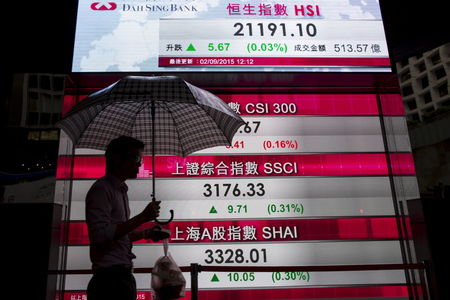
Asia stocks rise as tech gains offset US-Iran tensions; China keeps LPR steady

Southeast Asia faces a complex web of interconnected risks, from economic downturns and job scarcity to geopolitical rivalries and the disruptive force of AI. The region’s diverse economies, from wealthy Singapore to poorer Myanmar, experience these challenges unevenly, forcing nations to balance immediate stability with long-term strategic autonomy.
Key Details
- Economic growth is uneven: While Singapore thrives, countries like Myanmar, Laos, and Brunei struggle with debt, inflation, and joblessness; even wealthy Singapore faces cost-of-living pressures.
- Geopolitical tensions are acute: ASEAN nations, heavily reliant on China for trade, are squeezed by U.S. tariffs (e.g., 46% on Vietnamese exports) and legal uncertainty after the 2026 U.S. Supreme Court ruling, forcing ad-hoc bilateral deals.
- AI adoption is accelerating but unequal: Major investments in Indonesia, Malaysia, and Vietnam contrast with low SME adoption (15% in Singapore); energy-intensive data centers risk massive emissions spikes (e.g., 7x in Malaysia by 2030).
- Risks reinforce each other: Trade shocks fuel inflation and unemployment; AI gains may widen inequality; supply chain shifts expose cybersecurity gaps; domestic politics limit fiscal flexibility.
While AI adoption promises growth, uneven implementation, energy constraints, and workforce displacement could exacerbate inequalities. Governments and businesses must adopt integrated, adaptive strategies, acknowledging that economic, geopolitical, and technological pressures are converging, demanding a coordinated, forward-looking response to navigate this volatile landscape.
There is growth but it’s not reaching everyone
Economic growth is a case in point. In the survey, the top three perceived risks in the region are economic downturn, lack of jobs or economic opportunity and inflation, reflecting a shared anxiety about how individuals will experience growth. The signs of stress are already visible.
In Thailand, growth forecasts have been revised downward due to trade uncertainty and high household debt. Meanwhile, Brunei is still trying to reduce its reliance on oil and gas, and Lao PDR faces serious debt pressures that limit room to manoeuvre.
Meanwhile, ageing demographics in Malaysia and Viet Nam are outpacing economic development, a challenge requiring different investments in productivity and skills.
AI Surge in the Region Sparks Opportunities Amid Growing Divides
Southeast Asian executives rank the risks from artificial intelligence (AI) adversely at fourth regionally, compared to 10th globally. There is also relatively higher concern about online harms and the risks posed by frontier technologies more broadly.
AI-driven growth initiatives are gaining momentum across the region. For instance, Microsoft has unveiled significant cloud and AI investment programs in Indonesia and Malaysia.
Qualcomm has launched an AI research and development center in Viet Nam. Meanwhile, Singapore’s Green Data Centre Roadmap positions computing capacity as a strategic national infrastructure, akin to how previous generations prioritized highways and ports.
Other People are Reading

Factbox-From airlines to banks: Australian, New Zealand firms feel heat of Gulf crisis

WA shipbuilding giant Austal has officially concluded one of the largest naval programs in the state’s history, delivering the final Guardian-class patrol boat.


Exclusive-EU to push for jet fuel diversification as Iran war threatens supply


Some tickers are covered more than others on the site, so with The Undercovered Dozen our Editors highlight twelve actionable investment ideas on tickers with less coverage. These ideas can range from “boring” large caps to promising up-and-coming small caps. Specifically, the inclusion criteria for “undercovered” include: market cap greater than $100 million, more than 800 symbol page views in the last 90 days on Seeking Alpha, and fewer than two articles published in the past 30 days. Follow this account to receive a weekly review of twelve of these undercovered ideas from our valued analysts.
Analyst’s Disclosure: I/we have no stock, option or similar derivative position in any of the companies mentioned, and no plans to initiate any such positions within the next 72 hours. I wrote this article myself, and it expresses my own opinions. I am not receiving compensation for it. I have no business relationship with any company whose stock is mentioned in this article.
Seeking Alpha’s Disclosure: Past performance is no guarantee of future results. No recommendation or advice is being given that any particular security, portfolio, transaction or investment strategy is suitable for any specific person. The author is not advising you personally concerning the nature, potential, value or suitability of any particular security or other matter. You alone are solely responsible for determining whether any investment, security or strategy, or any product or service, is appropriate or suitable for you based on your investment objectives and personal and financial situation. The author is an employee of Seeking Alpha. Any views or opinions expressed herein may not reflect those of Seeking Alpha as a whole. Seeking Alpha is not a licensed securities dealer, broker or US investment adviser or investment bank.
Business
Oil Price Today (April 20): Crude oil jumps 6%, nears $100 again despite ceasefire hopes. What’s happening?

On the geopolitical front, U.S. President Donald Trump said on Sunday that American forces had seized an Iranian cargo ship attempting to breach its blockade. Iran, in response, said it would not take part in a second round of peace talks, despite Trump’s warning of renewed airstrikes.
Crude oil price on April 20
Brent crude futures climbed $6.11, or 6.76%, to $96.49 a barrel by 2327 GMT. U.S. West Texas Intermediate rose $6.53, or 7.79%, to $90.38 a barrel.Before the conflict, the strait accounted for roughly one-fifth of global oil supply. The war, now nearing two months, has severely disrupted these flows.

Market movements remain highly reactive to developments, with oil prices swinging on shifting signals from both sides rather than any clear improvement in supply conditions. The intermittent movement of vessels through the strait highlights the deep uncertainty surrounding the world’s most critical energy chokepoint. Even if tensions ease, a full recovery in oil flows is expected to take several months, experts warn.
On Saturday, Iran tightened its grip over the strait in response to the U.S. blockade, reportedly firing at several vessels and declaring the route closed. This came just hours after it had announced a temporary reopening during a 10-day ceasefire.
What are experts saying?
Brokerage firm Macquarie said that even if tensions cool, oil prices are likely to remain supported in the $85 to $90 range, with a gradual move towards $110 as supply through the Strait of Hormuz improves. It added that if disruptions persist through April, Brent crude could climb as high as $150 per barrel.
Analysts broadly believe crude may be entering a phase of structurally higher prices. With the ceasefire seen as temporary, a return to pre-war levels of $70 to $75 may take several months. In the near term, they expect prices to stay within a range of $80 to $85 on the downside and $95 to $100 on the upside.
Nuvama Institutional Equities cautioned that prolonged closure of the strait, which handles about 20 million barrels per day, could drive crude prices into the $110 to $150 range.
(Disclaimer: Recommendations, suggestions, views and opinions given by the experts are their own. These do not represent the views of The Economic Times)

US military says it killed three people in latest Caribbean boat strike

Gold prices dip as Iran tensions re-emerge, oil prices jump

More than $2.1 billion has been committed to state school infrastructure funding ahead of the May budget.
Asia stocks rise as tech gains offset US-Iran tensions; China keeps LPR steady

Roman Reigns wins World Heavyweight Championship at WrestleMania 42

The Mac Mini is no longer a niche product, it's local AI infrastructure


![CAUTION: They’re Trapped Again! [How Will Markets React?]](https://wordupnews.com/wp-content/uploads/2026/04/1776653729_maxresdefault-80x80.jpg)
-

 Crypto World6 days ago
The SEC Conditionalises DeFi Platforms to Be Avoided for Broker Registration
-

 Fashion2 days ago
Weekend Open Thread: Theodora Dress
-

 NewsBeat6 days ago
Trump and Pope Leo: Behind their disagreement over Iran war
-

 Crypto World6 days ago
SEC Signals Exemption for Crypto Interfaces From Broker Registration
-

 News Videos5 days ago
Secure crypto trading starts with an FIU-registered
-

 Sports3 days ago
NWFL Suspends Two Players Over Post-Match Clash in Ado-Ekiti
-

 Crypto World6 days ago
SEC Proposes Certain Crypto Interfaces Don’t Need to Register as Brokers
-

 Business13 hours ago
Powerball Result April 18, 2026: No Jackpot Winner in Powerball Draw: $75 Million Rolls Over
-

 Politics2 days ago
Palestine barred from entering Canada for FIFA Congress
-

 Crypto World2 days ago
Russia Pushes Bill to Criminalize Unregistered Crypto Services
-

 Sports7 days ago
NWFL opens Pathway for new Clubs ahead of 2026 Season
-
 Business3 days ago
Creo Medical agree sale of its manufacturing operation
-
 Entertainment6 days ago
Brand New Day’ Footage Reveals the Devastating Impact of ‘Now Way Home’
-

 Politics18 hours ago
Zack Polanski demands ‘council homes not luxury flats for foreign investors’
-

 Crypto World7 days ago
Trump whales load up ahead of Mar-a-Lago luncheon.
-
Business7 days ago
Kering slides after Morgan Stanley downgrade, Gucci woes loom
-

 Tech7 days ago
Apple glasses won’t go brand shopping like Meta did with Ray-Ban and Oakley
-

 Tech7 days ago
Google adds E2E encryption to Gmail for iOS and Android enterprise users
-
 Entertainment6 days ago
Karol G’s ‘Ultra Raunchy’ Coachella Set Gave ‘Satanic Vibes’
-
Entertainment7 days ago
How Euphoria Season 3 Premiere Paid Tribute to Eric Dane After Death
You must be logged in to post a comment Login