
Business
5 Stocks Analysts Say Look Like Better Buys Than SpaceX Right Now


With SpaceX commanding a valuation north of $2 trillion following its blockbuster Nasdaq debut, a growing chorus of market analysts is making the case that investors chasing space-and-AI exposure may find better value, lower risk, or stronger growth elsewhere. Here are five stocks repeatedly cited as alternatives worth considering instead.
1. Nvidia (NVDA)
While SpaceX’s valuation is based on moonshot bets, Nvidia is the dominant player in artificial intelligence infrastructure. It trades at a forward price-to-earnings ratio of just 16 and grew its revenue by 85% in the first quarter to $81.6 billion. Its adjusted quarterly profits of $45.5 billion were nearly 2.5 times SpaceX’s entire 2025 revenue.
That comparison underscores the core argument bulls make for Nvidia over SpaceX: Nvidia is already generating the kind of cash flow that SpaceX’s AI ambitions remain years away from matching, all while trading at a multiple analysts consider reasonable relative to its growth.
2. Amazon (AMZN)
Amazon offers investors a comparable blend of established AI infrastructure and direct competition with SpaceX’s own satellite ambitions. While SpaceX is trying to become a leading AI company, Amazon already is one. Its Amazon Web Services is seeing accelerating revenue growth, and its custom chip business gives it a cost edge.
The company also has its own space ambitions, looking to challenge SpaceX’s Starlink satellite internet service with its own offerings, while the acquisition of Globalstar gave it important spectrum and direct-to-device capabilities. One analyst argued Amazon “is a great company with two proven and growing businesses” that “should be worth much more than SpaceX’s moonshot bets.”
3. Alphabet (GOOGL)
Alphabet’s case rests on a similar logic: a company with already-proven AI infrastructure, plus its own under-the-radar space project. While SpaceX is trying to become a leading AI company, Alphabet is already the most complete one. Its Gemini model is a top-tier foundation model, while its Tensor Processing Units give it a significant advantage by reducing training and inference costs.
Notably, Alphabet isn’t ignoring space either. It actually owns a large stake in SpaceX, and its Project Suncatcher is developing a constellation of solar-powered satellites powered by TPUs and free-space optical links to perform machine learning in space. The company believes the cost of a space-based data center could become comparable to a land-based one by the mid-2030s.
4. Rocket Lab (RKLB)
For investors who specifically want direct exposure to the launch and space-infrastructure business SpaceX dominates, analysts point to Rocket Lab as a far cheaper way to participate in the same trend. Rocket Lab is a space stock with huge potential at a fraction of its market capitalization. It’s pulling in record revenue, with $200 million in the first quarter alone, up more than 63% year over year, and has a backlog of $2.2 billion.
Rocket Lab’s highly anticipated medium-lift reusable rocket, the Neutron, is slated for its debut late this year. It will immediately scale up Rocket Lab’s payload capacity to roughly 13,000 kilograms, allowing it to compete directly for the high-margin national security and deep-space missions currently monopolized by SpaceX. The company has already locked in a five-launch deal for the Neutron before it even leaves the pad.
5. Redwire (RDW)
For investors seeking a “picks and shovels” approach to the space economy rather than a bet on any single launch provider, several analysts have pointed to Redwire as an appealing option. One closely followed view calls Redwire the best SpaceX alternative, and its product explains why. It builds the space-grade solar arrays that power satellites and spacecraft in orbit. That hardware is hard to copy, so even SpaceX would likely source it rather than build it. So Redwire grows by supplying the sector, not by competing.
Redwire’s first-quarter revenue rose 58% year-over-year to $97 million, with gross margin expanding to 26.6% from 14.7% a year prior, and the company reported a record backlog of $498.1 million. On a positive note, Redwire trades at 7 times trailing sales, the lowest valuation cited among comparable space stocks — though it’s worth noting the company is still losing money, posting first-quarter earnings of negative $0.40 per share that missed expectations, with a large portion of that loss tied to equity-based compensation.
The Bull Case for SpaceX, for Balance
Not every analyst agrees the alternatives are clearly superior. SpaceX’s business model carries genuine offsetting strengths: Starlink already gives the company a large recurring revenue base, while Starship can help lower launch costs. The xAI merger gives SpaceX its own AI products, including Grok. Colossus is SpaceX’s large AI data center system, giving the company a way to sell computing capacity to AI customers such as Anthropic. SpaceX has multiple growth engines and may be less affected by weakness in any one business line than a single-focus competitor would be.
SpaceX’s AI infrastructure business is also gaining real momentum through outside partnerships. The company has entered into a cloud services agreement with Alphabet, under which Google will pay $920 million per month from October 2026 to June 2029 for access to AI compute capacity. Anthropic has also agreed to lease the full computing power of SpaceX’s Colossus 1 data center.
The Case Against
Skeptics counter that SpaceX’s valuation still requires near-flawless execution to justify. Elon Musk has predicted $1 trillion in revenue by 2030, but he has a long history of overly optimistic forecasts, and the chances of the company coming anywhere close to that number are slim. There are major technical hurdles that need to be overcome to have data centers in space, and no one can be certain this is a good business, let alone one that is right around the corner.
SpaceX also carries substantial financial risk regardless of its strategic positioning. Its AI business is still losing money. SpaceX’s business model is also capital-intensive, with capital expenditures reaching $20.7 billion in 2025 and $10.1 billion in the first quarter of 2026 alone.
The Bottom Line
There is no single consensus answer on whether SpaceX or one of these alternatives represents the smarter investment, and the dispersion in analyst opinion reflects genuine, substantive disagreement about how to value a company straddling rocketry, satellite connectivity, and unproven orbital AI ambitions simultaneously. Some analysts favor established mega-cap technology names like Nvidia, Amazon, or Alphabet for their proven cash flow and lower relative valuations. Others favor smaller, more direct space-sector plays like Rocket Lab or Redwire that offer cheaper entry points into the same secular growth trend SpaceX represents, without SpaceX’s premium price tag.
As with any investment decision, particularly involving newly public or rapidly evolving sectors like commercial space and AI infrastructure, it’s worth doing your own research, weighing your personal risk tolerance and time horizon, and consulting a qualified financial advisor before deciding where to put your money. This overview is intended to summarize the competing perspectives currently circulating among market analysts, not to tell you what to buy or sell.

Exhibitions remain one of the few marketing channels where businesses can meet hundreds of prospective customers face-to-face in just a few days.
Yet simply attending an exhibition does not guarantee results. The strongest returns come from creating an environment that attracts the right visitors, encourages meaningful conversations and supports the sales process.
This challenge sits behind a new partnership between Neos Creative and 5 Studio UK, bringing together Neos Creative’s design expertise with 5 Studio UK’s technical production capabilities. By collaborating from initial concept through to installation, both teams ensure creative ambition, visitor behaviour, engineering and practical delivery are considered within one coordinated design and build process.
For business leaders planning to exhibit, the goal is not simply to generate footfall. It is to attract the right retailers, distributors, decision-makers and prospects, communicate relevance quickly and create opportunities for productive conversations.
The following five principles provide a practical framework for ensuring your exhibition stand is designed to support those outcomes:
Start with visitor flow, not aesthetics
Before considering finishes, graphics or technology, think about how visitors should enter, move through and use the stand.
Every area should serve a clear purpose. Open hospitality spaces support informal introductions, presentation areas communicate the wider proposition, demonstration zones allow prospects to explore specific solutions, and private meeting rooms provide space for detailed or confidential conversations.
For CMG, the objective was to present Sharp Reflections, Bluware and SeisWare as one connected technology ecosystem. The stand was therefore designed around a layered visitor journey.
At the front, an open entrance, barista, networking area and presentation theatre supported brief interactions and presentations from across the CMG ecosystem. Visitors could then move deeper into the stand for focused demonstrations at the central Demo Hub, before progressing to an enclosed meeting room for more detailed discussions.
Rather than creating one undifferentiated open space, the layout supported different stages of the visitor journey while giving each area a defined commercial purpose.
Business takeaway
A well-planned layout helps your team welcome more visitors, direct them towards the most relevant information and create better opportunities for qualified conversations. Every square metre should contribute to your exhibition objectives.
Make your value proposition obvious within seconds
Exhibition halls are busy, and visitors make quick decisions about where to stop. Within seconds, your stand should answer three questions:
- Who are you?
- What do you do?
- Why is it relevant to me?
That requires more than placing a logo above the stand. Information should be structured around viewing distance. High-level branding creates recognition across the hall, while closer touchpoints help visitors identify the products, services or solutions most relevant to them.
For Gilbarco Veeder-Root, the objective was to present products across retail fuelling, alternative energy and electric charging as one connected forecourt.
A suspended structure carried the brand at height, while the Konect Charger and SK700 were positioned prominently with space for live demonstrations. DOMS and Invenco content was brought together within dedicated touchscreen kiosks, allowing visitors to explore further at their own pace.
Illuminated graphics, kiosk decals and floor graphics communicated each product’s name, category and core USP consistently. Walk-on LED lighting integrated into the floor highlighted these product zones and made the information easier to identify on approach.
Business takeaway
Clear communication helps the right visitors recognise your relevance quickly and navigate the stand with confidence. The aim is not simply to generate more footfall, but to attract better-qualified prospects and guide them towards the information or conversation that matters most.
Use lighting to attract attention and guide visitors
Lighting can create focal points, reinforce brand identity and subtly guide visitors through the space. It also influences how a stand feels. Bright, even lighting can make an environment feel open and accessible, while colour, contrast and intensity can create energy, calm or a sense of exclusivity.
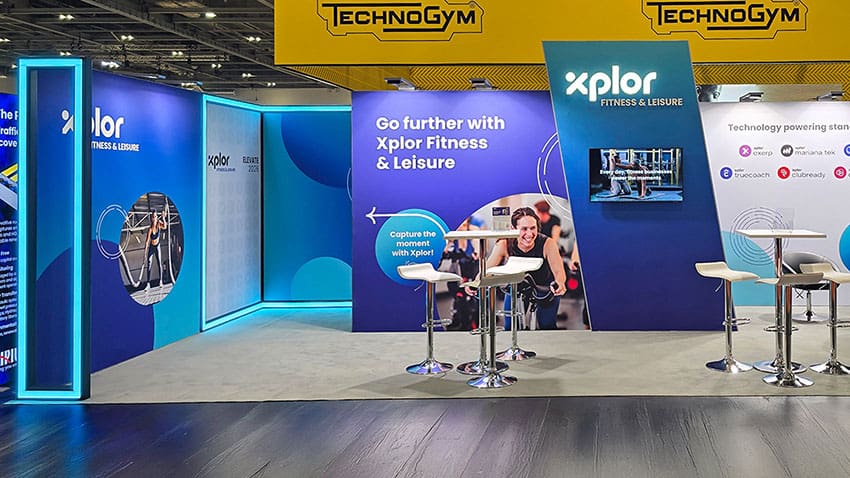
For Xplor Fitness & Leisure, integrated RGB LED framing highlighted the interactive photo activation and drew visitors towards it. The teal lighting contrasted with Xplor’s primary purple while complementing the wider brand palette. Alongside illuminated logos, it created a distinctive identity and strengthened recognition from different sightlines.
Here, lighting was architectural and functional, not simply decorative. It shaped the atmosphere, directed attention and helped visitors understand where the main experience was taking place.
Business takeaway
Lighting should be considered alongside branding and visitor experience from the outset. Used strategically, it can influence how people feel, strengthen recognition and guide them towards the products, experiences or conversations that matter most.
Give people a genuine reason to engage
Attracting attention is only the first step. The greater commercial value comes from giving visitors a relevant reason to stop, participate and begin a conversation.
Hospitality, live demonstrations, product exploration and interactive activations can all increase dwell time. However, participation alone does not guarantee meaningful engagement. A visitor may play a game, collect a prize and leave without understanding the organisation behind it.
For The University of Law at UCAS events, branded touchscreens invited prospective students to complete an interactive quiz. Questions explored their interests while introducing relevant information about the university and its courses.
The quiz was linked to a branded ‘Vend and Win’ vending machine, providing a clear incentive to participate. Rather than operating as a standalone game, the activation combined course discovery, lead capture and reward. It also gave the university team a natural opportunity to continue the conversation with prospective students.
Business takeaway
The strongest activations connect the visitor experience directly to a commercial or marketing objective. Every interaction should offer something useful or memorable to the visitor while supporting lead generation, education, qualification or relationship building.
Treat design, engineering and delivery as one process
An ambitious concept only succeeds when creative design and technical delivery are considered together from the outset.
Practical requirements such as structural engineering, AV integration, lighting, power, accessibility, storage and venue regulations all influence how successfully a stand performs on-site.
When these elements are developed alongside the creative concept, businesses avoid costly compromises later in the project while ensuring the finished stand delivers exactly as intended.
This collaborative approach also reduces risk during installation, improves build efficiency and helps maintain quality throughout the project.
Business takeaway
The most successful exhibition stands are created through collaboration between designers, technical specialists and production teams. Aligning creativity with engineering from day one results in smoother delivery, better visitor experiences and stronger commercial outcomes.
Turning exhibition investment into business value
For SMEs, directors and marketing leaders, exhibiting represents a significant commitment of budget, time and internal resource. Success should therefore be defined before the design process begins.
The objective might be to meet distributors, launch a new technology, generate qualified leads, enter a new market or strengthen existing customer relationships. The stand should then be judged not simply by footfall or visual impact, but by whether it helps the team create the right conversations and opportunities.
When visitor flow, communication, lighting, engagement and technical delivery are planned around a clear objective, the stand becomes a purposeful business environment capable of generating measurable value beyond the event itself.
What the Neos Creative and 5 Studio UK partnership offers
In practice, the partnership means creative decisions can be considered alongside engineering, budgets, venue requirements and onsite delivery as they are made, rather than after the design has been approved.
For exhibitors, this provides fewer handovers, clearer responsibility and greater confidence that the proposed concept can be delivered within the agreed scope. It also reduces the risk of late design changes, unexpected production costs and compromises during installation.
Together, Neos Creative and 5 Studio UK deliver custom modular exhibition stands, combining Neos Creative’s strategic design expertise with 5 Studio UK’s technical development, bespoke fabrication, manufacture, project management and installation services across the UK and Europe. Stands are available for purchase or through our all-inclusive exhibition stand hire service.

FUNDAMENTALS
Spot gold inched 0.2% lower at $4,096.29 per ounce, as of 0107 GMT, but was headed for a weekly rise of 1.1%. U.S. gold futures for August delivery gained 0.1% to $4,094.10.
The metal was on track to gain more than 2.2% this month, its sharpest gain since February.
Spot gold rose 2% on Wednesday, after the Fed left interest unchanged at its latest policy meeting, and Chairman Kevin Warsh gave little indication on the central bank’s next policy move.
Markets are now pricing in a 63% chance of a rate hike in September, down from about 80% prior to the policy meeting, according to CME Group’s FedWatch tool. [FEDWATCH]

The dollar gained about 0.3%, after diving 2.4% in its biggest single-day drop since January 2023 on Thursday. [USD/]
A drone strike on gas vessels in Egypt’s Mediterranean port of Damietta signalled a potential new front in the U.S.-Iran war, raising the prospect of threats to navigation through the Suez Canal, one of the last remaining export routes for Saudi oil.
U.S. inflation slowed in June, with the Personal Consumption Expenditures Price Index slipping 0.1% on a month-over-month basis, the weakest reading since April 2020, but the easing is likely to be temporary as renewed hostilities in the Middle East raise oil prices.
Global gold demand was steady year-on-year at 1,268.9 metric tons in the second quarter of 2026 as central banks sped up purchases, offsetting a slump in investment, the World Gold Council said on Thursday.
Spot silver held steady at $58.98 per ounce, platinum slid 1.3% to $1,638.97, and palladium fell 0.2% to $1,301.94.
DATA/EVENTS (GMT)
0600 UK Nationwide house price mm, yy Jul
0900 EU HICP Flash YY Jul
0900 EU HICP-X F, E, A, T Flash YY, MM Jul
1200 US U Mich Sentiment Final

Granite Construction's Dip Offers A Solid Entry Point
Business
10 Brain-Healthy Foods That Research Links to a Lower Risk of Dementia, According to Nutrition Experts
Researchers studying diet and brain health have increasingly converged on a specific eating pattern known as the MIND diet, an approach developed by Rush University Medical Center and Harvard’s T.H. Chan School of Public Health that combines elements of the Mediterranean and DASH diets specifically to target brain function and slow cognitive decline. A landmark study from Rush University found that people who most closely followed the eating pattern reduced their risk of Alzheimer’s disease by 53%, while even moderate adherence was associated with a 35% reduction, according to research on the diet.
Sandra Darling, a preventive medicine physician at Cleveland Clinic, said the diet’s foundation in clinical research is what sets it apart from many other popular eating trends. “The MIND diet is one that I focus on because it has been shown in research studies to lower the risk of Alzheimer’s disease,” Darling said.
The diet centers on 10 food groups researchers have identified as offering the strongest evidence for supporting brain health, generally by helping reduce inflammation and oxidative stress, both of which are closely linked to cognitive decline. Here are 10 of those foods.
1. Leafy green vegetables. Spinach, kale, collard greens, Swiss chard, arugula and romaine lettuce top the MIND diet’s recommendations, with researchers generally suggesting at least six servings per week. These vegetables deliver folate, vitamin K, lutein and beta-carotene, nutrients linked to slower cognitive decline in multiple studies.
2. Berries. Among all fruits studied, berries carry the strongest evidence specifically tied to brain health benefits, which is why the MIND diet emphasizes berries specifically rather than fruit consumption more broadly. Blueberries in particular have drawn significant research attention for their concentration of protective plant compounds called flavonoids.
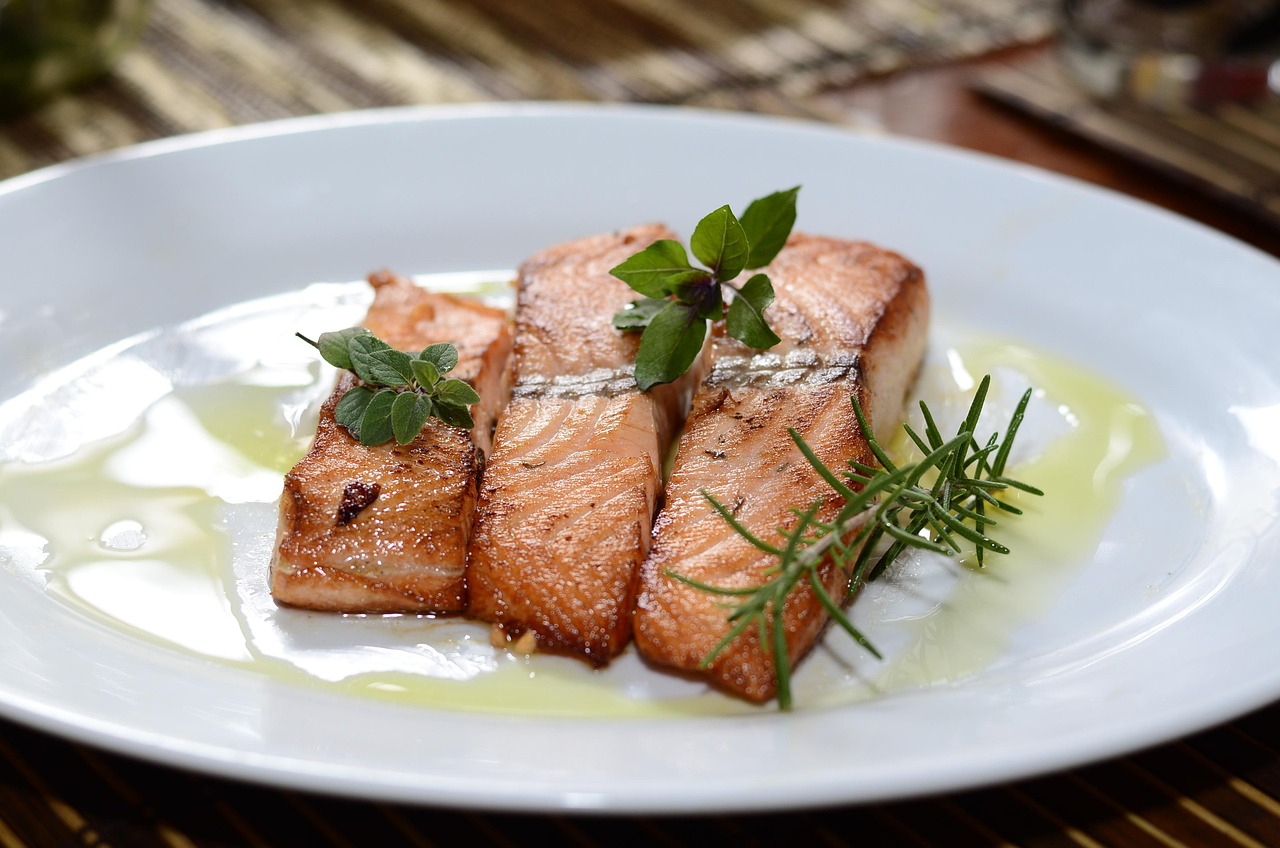
3. Fatty fish. Salmon, tuna and mackerel contain some of the highest levels of omega-3 fatty acids found in food, including a specific form called docosahexaenoic acid, or DHA, which researchers believe may be especially protective for brain health. A 2023 systematic review found that higher dietary intake of omega-3 fatty acids was linked to a lower risk of dementia and cognitive decline, with DHA showing some of the strongest protective associations.
4. Nuts. Walnuts, along with seeds such as ground flax, chia and pumpkin seeds, are recommended at least five times per week under the MIND diet’s guidelines. These foods provide healthy fats, fiber and vitamin E, a nutrient researchers have studied for its potential antioxidant effects on brain tissue.
5. Beans and legumes. Beans, lentils and other legumes provide plant-based protein and fiber while offering an alternative to red meat, which the MIND diet recommends limiting. These foods also contribute folate and other B vitamins associated with cognitive function.
6. Whole grains. Foods such as oats, brown rice and whole-wheat products supply fiber and steady energy while avoiding the blood sugar spikes associated with refined carbohydrates, which some nutrition experts have linked to increased dementia risk through their effects on insulin regulation and inflammation.
7. Olive oil. As the diet’s primary recommended source of added fat, olive oil replaces butter and other saturated fats in the MIND diet’s framework. Olive oil is rich in monounsaturated fats and polyphenols, compounds researchers believe may help protect brain cells from oxidative damage over time.
8. Poultry. The MIND diet favors lean poultry over red meat as a primary protein source, generally recommending consumption at least twice a week. This substitution reflects broader dietary research linking excessive red meat consumption to increased inflammation and potentially higher dementia risk.
9. Wine, in moderation. Some versions of the MIND diet include an optional, moderate allowance for wine, generally limited to one glass per day, reflecting research on polyphenols found in red wine specifically. Nutrition experts emphasize that this component remains optional and is not a recommendation to begin drinking alcohol for health purposes.
10. Vegetables more broadly. Beyond leafy greens specifically, the MIND diet recommends at least one additional serving of non-leafy vegetables daily, providing a broader range of vitamins, minerals and antioxidant compounds that contribute to overall dietary quality and brain health.
Beyond identifying beneficial foods, the MIND diet also specifies five categories nutrition experts recommend limiting: red meat, butter and stick margarine, cheese, pastries and sweets, and fried or fast food. Lauren Ptomey, a registered dietitian and associate professor at the University of Kansas Medical Center, said the foods emphasized by the diet provide brain-boosting omega-3 and omega-6 fatty acids alongside broader anti-inflammatory benefits.
A 2026 study published in the Journal of Neurology, Neurosurgery & Psychiatry, examining more than 1,600 participants in the long-running Framingham Heart Study, found that higher adherence to the MIND diet was associated with slower structural brain aging over a 12-year period, adding to the growing body of longitudinal evidence supporting the eating pattern’s potential neuroprotective effects.
Registered dietitian Lauren Harris-Pincus, who was not involved in research presented at the 2025 annual meeting of the American Society for Nutrition, described the diet’s distinct focus within the broader landscape of nutrition science. “The MIND diet is unique as the first eating plan focused on foods to specifically improve and support cognitive health,” Harris-Pincus told Fox News Digital.
Nutrition experts caution that no diet can guarantee prevention of dementia or Alzheimer’s disease, and that following the MIND diet represents one modifiable factor among many that influence long-term brain health, including genetics, physical activity, sleep quality and cardiovascular health. Because dementia risk and nutritional needs vary significantly by individual, particularly for people with existing health conditions or a family history of Alzheimer’s disease, medical experts generally recommend that people consult a doctor or registered dietitian before making significant dietary changes intended to address cognitive health concerns, rather than relying solely on general nutrition guidance.
Business
Unclaimed $1.2 Million Reward in Nancy Guthrie Case Points to a Small Circle of Suspects, Agent Says


The fact that more than $1.2 million in combined reward money remains unclaimed nearly six months after the suspected abduction of Nancy Guthrie suggests that whoever was involved likely came from a small, tightly bound group, according to a retired FBI negotiator closely following the case.
Guthrie, the 84-year-old mother of “Today” show co-host Savannah Guthrie, disappeared from her home in Tucson, Arizona’s Catalina Foothills neighborhood on the morning of Feb. 1. Jason Pack, a retired FBI supervisory agent and negotiator who spent 21 years with the bureau, 11 of them as a negotiator, said the untouched reward money speaks directly to the nature of whoever may have been involved. “That tells me the circle who knows is very small, and whoever is in it is bound by something stronger than money: blood, fear, shared exposure,” Pack said. “Those bonds hold. Until they don’t.”
Pack said the psychology behind unclaimed reward money in cases like this is well established. The more people who possess knowledge of a crime, he explained, the more likely it becomes that someone eventually comes forward to claim the payout. With 179 days having passed since Guthrie’s suspected abduction without a single claim on the reward, Pack said that absence itself functions as a meaningful investigative clue rather than a dead end. “Money like that usually pulls somebody loose from almost any group,” Pack told Fox News Digital. “It hasn’t.”
Rather than viewing the lack of a claim as discouraging, Pack said his experience investigating similar cases suggests these situations often eventually break open unexpectedly. “In my experience, a meaningful share of cases like this break sideways,” he said. “Somebody gets arrested for something unrelated and starts talking. A relationship ends badly. Somebody’s conscience finally outruns their fear. Six months is a long time to hold something this heavy, and the people around whoever did this have had six months to notice the change in them.”
Pack also offered an assessment of how the crime itself appears to have unfolded based on publicly known details. At least one suspect is believed to have cased Guthrie’s home in advance of the abduction. Whoever entered the property wore a ski mask, long sleeves and gloves, and deliberately covered the lens of Guthrie’s Nest doorbell camera, which investigators found missing when they arrived at the scene the following day. Pack said the overall pattern of evidence suggests an operation that went wrong quickly and was never adequately planned for that possibility. “When it went wrong, and I believe it went wrong fast, they had no plan for that either,” he said. “Everything since reads to me like improvising around a failure, not professionals executing a plan.”
Guthrie relies on heart medication and has a pacemaker, along with limited mobility, according to details about her health that have been shared publicly since her disappearance. Pack emphasized the human stakes behind the ongoing investigation. “She had dinner with her family on a Saturday night, went home, and never made it to church the next morning,” Pack said. “That’s who we’re talking about. Not a case number. A mother who was supposed to be at church.”
Despite the mistakes Pack believes the suspects made during the crime, he said that does not mean the broader investigation has stalled. Pack offered specific guidance for residents in the neighborhoods surrounding Guthrie’s home who may hold relevant, unreviewed evidence. “Go back and check your own cameras from that time period. Doorbell, security, dashcam,” he said. “A lot of systems archive further back than people realize. If you drove through the area that night, pull your dashcam files.” He added that people who witnessed something suspicious but lack video evidence should still come forward. “And think about the people in your own life. Somebody who left town. Somebody whose behavior turned in February and never turned back,” he said. “You don’t have to be sure. That’s not your job. Sorting it out is [the investigators’ job].”
A source with knowledge of the investigation told Fox News Digital in May that the FBI was incorporating new technology into its ongoing work on the case. Pima County Sheriff Chris Nanos, whose department remains the lead agency on the investigation, reiterated his confidence that the case will ultimately be resolved during a recent interview that aired on “Today.” “We have so much DNA to sort through,” Nanos said. “We have so much, in terms of video evidence, to look at.”
Pack noted that investigators have likely developed significant insight from forensic evidence gathered over the past six months that has not yet been made public. Drawing on his own experience with long-running cases, he said extended timelines do not necessarily signal that a case will remain unsolved. “I’ve watched cases break in month eight, month 14, month 30,” Pack said. “Most every one of those families had stopped believing it was ever coming.”
Authorities continue to ask anyone with information related to Guthrie’s disappearance to contact the FBI directly at 1-800-CALL-FBI. A separate anonymous tip line, reachable at 520-88-CRIME, remains active for residents who wish to provide information that could lead to an arrest in the case while maintaining their anonymity.

Workers at BHP’s Port Hedland operation have voted for two more 24-hour stoppages in the latest escalation of industrial action plaguing the big Australian.

Former ministers Dave Kelly and Alannah MacTiernan have been called as witnesses in the ongoing defamation trial between Greg Poland, former journalists and politician Andrew Hastie.

The FDA and CDC are investigating Taco Bells lettuce supplier as consumers in four states are urged to avoid shredded lettuce.
The parent company of Taco Bell released its quarterly earnings report on Thursday and said that Taco Bell sales fell amid the cyclospora outbreak, though there were early signs of recovery in the last week.
Yum Brands – which operates fast-food chains like KFC and Pizza Hut as well as Taco Bell – said the Mexican-style chain’s sales were down 2% quarter to date through July 27.
“Since the U.S. food safety industry issue became front and center only two weeks ago, we saw maximum impact to sales over the weekend of July 18,” Yum Brands CFO Ranjith Roy said on the company’s quarterly earnings call.
“It is early days, but in the subsequent week, sales declines have moderated materially, and we are seeing steady improvement in day-over-day sales trends,” Roy added.
RFK JR SAYS SOURCE OF CYCLOSPORA OUTBREAK IDENTIFIED, DECLARES PARASITE OUTBREAK ‘UNDER CONTROL’

Taco Bell’s sales dipped following the cyclospora outbreak, but have shown signs of recovery in the last week. (Marvin Joseph/The Washington Post via Getty Images)
Roy went on to say in response to an analyst’s question that “if you take the average sales for the last four days, which includes the weekend and the first two days of this week, we are halfway back to sales levels of the prior year.”
The cyclospora outbreak is under investigation by the Food and Drug Administration (FDA) and the Centers for Disease Control and Prevention (CDC), along with state and local partners. It has been linked to iceberg lettuce that was sourced from central Mexico through Taylor Farms de Mexico.
Taylor Farms’ U.S. business initiated a voluntary recall that also included iceberg lettuce sold under the Taylor Fresh Foods and Marketside brands. The company has noted that the FDA hasn’t identified a single positive product test result for cyclospora after a false positive was reported by the agency.
FDA SAYS TAYLOR FARMS CYCLOSPORA LETTUCE TEST WAS A FALSE POSITIVE
| Ticker | Security | Last | Change | Change % |
|---|---|---|---|---|
| YUM | YUM! BRANDS INC. | 157.00 | +5.08 | +3.34% |
Cyclospora cases with exposure to Taco Bell have been reported in nine states, including Illinois, Indiana, Kansas, Kentucky, Michigan, Ohio, Oklahoma, Pennsylvania and West Virginia.
Yum Brands CEO Christopher Turner said that “our top priority is, and always will be, the safety and well-being of our consumers. With respect to the consumer sentiment, though, we’ve seen real improvement as consumers have understood better the nature of the issue and they understand that it is not a Taco Bell-specific issue.”
WEIGHT-LOSS JOKE TURNS SERIOUS AS ‘CYCLOSPORA SKINNY’ TREND FUELS HEALTH WARNINGS

Taco Bell removed potentially affected lettuce from a supplier after the FDA linked it to a multistate cyclosporiasis outbreak. (Jeffrey Greenberg/Universal Images Group via Getty Images)
Turner added that there’s “been no change in our measures of brand love” and that some of those metrics have seen growth in positivity, while Taco Bell’s share of the conversation around food safety has declined.
“The best proof point is that consumers are coming back to the restaurants on a steady basis. We’ve seen steady improvement in those sales trends,” he said, noting that the chain’s Tuesday release of a Mexican pizza special drove the most transactions and loyalty acquisitions of any Taco Bell Tuesday drop.
GET FOX BUSINESS ON THE GO BY CLICKING HERE
“There is no brand and no team better equipped to drive a recovery in this temporary sales impact than Taco Bell,” he added.
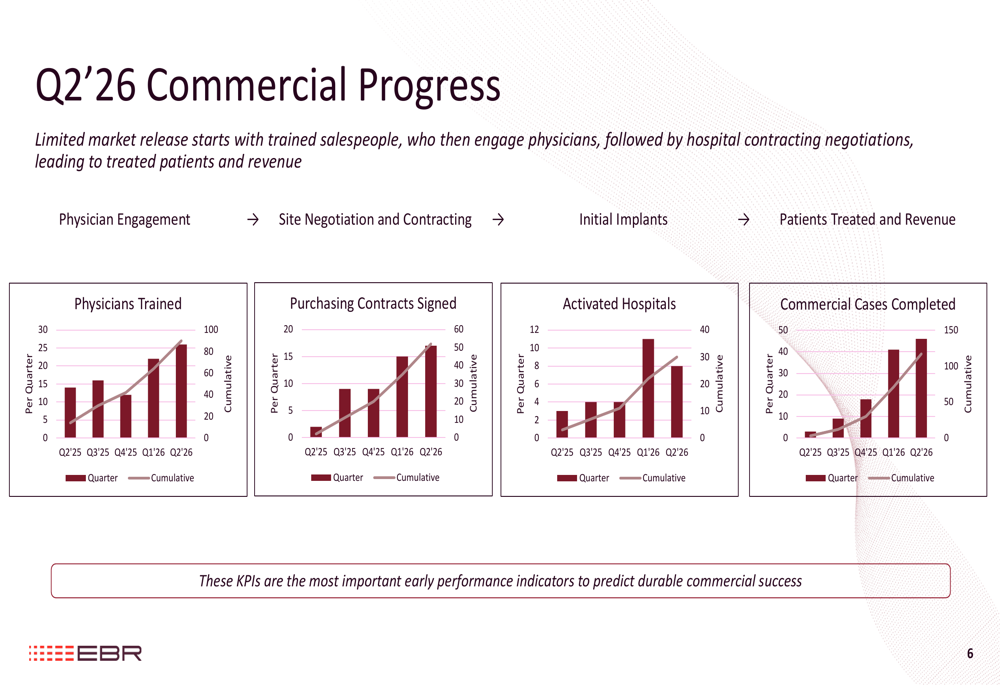
EBR Q2 2026 slides: commercial momentum builds amid safety review

Migrants pour into Spain’s Ceuta from Morocco, military called in

Bold and the Beautiful: Dylan Star Shocks Fans – Could She Become the Next Steffy?

A Date Night Outfit Guide for Different Moods

The Simpsons XRP Prediction For 2026 Will BLOW YOUR MIND


-

 Fashion6 days ago
Weekend Open Thread: Brooks Brothers
-
 Sports4 days ago
Commonwealth Games boxing: Jadumani Singh seals dominant 5-0 win over Pakistan’s Sumama Rehman to enter quarter-finals | Commonwealth Games News
-

 Business1 day ago
Why Trees Belong on the Risk Register
-

 Tech4 days ago
Intel is reversing course and bringing hyper-threading back to its server chips
-

 Crypto World5 days ago
Ripple bought a bank in pieces. The $4 billion audit
-

 Politics4 days ago
Luke Littler dismantles Gerwyn Price to retain title in Blackpool
-
 Entertainment7 days ago
A New Post-Apocalyptic Gundam Anime Series Blasts Into SDCC
-

 Politics3 days ago
The Part of the Electric Transition Nobody Wants to Discuss
-

 News Videos4 days ago
BITCOIN JUST ENTERED THIS CRITICAL ZONE…
-

 Sports7 days ago
2026 3M Open leaderboard: Scottie Scheffler finds putter in Round 1, sits three back
-

 Fashion7 days ago
16 Dresses for the High Summer Event
-

 Business2 days ago
Major shareholder moves on Canyon
-

 Crypto World5 days ago
XRP Ledger adds $2.6B as RWA inflows rank second
-

 Politics5 days ago
Spain sweeps the board at 2026 World Cup with individual awards
-

 News Videos14 hours ago
Bitcoin Enters the 3rd Stage of the Bear Market
-
 Entertainment2 days ago
‘Stargate’ Creator’s New Sci-Fi Series Returns for Season 3 Tomorrow
-

 Entertainment5 days ago
Sara Gilson Killed By Husband After Viral “Pedophile” TikTok Video
-

 Tech6 days ago
Anthropic launches Claude Opus 5, a cheaper AI model for coding, agents and enterprise workflows
-

 Crypto World2 days ago
Kraken Enables Retail Access to Jersey Mike’s IPO via Tokenized Shares
-

 News Videos2 days ago
Claude: Build Financial Dashboards in Minutes (2026)
You must be logged in to post a comment Login