
Business
5 Sunscreen Habits That Truly Protect Your Skin Daily


It does not have to be hard to keep your skin protected every day. By making small changes to use sunscreen effectively, you can avoid early ageing and harm later in life.
Once you know what matters, it’s easy to add these steps to your routine. Here you will learn five simple habits to keep your skin safe from sunrise to sunset.
1. Apply Enough Product Every Single Time
The amount of product that a lot of people should put on is underestimated, and as a result, they reduce the level of protection they are providing without even realising it.
In order for your skin to receive the necessary support, you should apply a substantial amount of the best sunscreen to it. Make sure to apply a generous amount of it all over your face, including your neck and ears.
Although a thin layer might be appealing to the eye, it is not even close to providing the level of protection that you anticipate. The greater the amount of use, the better prepared the skin will be for the day that is to come.
2. Reapply Throughout the Day for Consistent Protection
Choosing to reapply is one of the most important decisions that can be made on a global scale. Sunscreen has a tendency to rub off over time, and this phenomenon is made easier by the fact that people sweat and move around a lot daily.
In addition, sitting in proximity to windows causes your skin to lose its protection at a rate that is much faster than you can believe. Reapplication helps to prevent balding and restores an even coating on the hair. One can even find those that are able to be utilised during the daytime hours.
3. Pick the Right Formula for Your Lifestyle
Even though you may not believe it, the formula that you intend to use is extremely important. Having said that, it is recommended that you try gel, cream, or spray, depending on the way you live your life and the amount of physical activity you engage in. If a formula is more convenient for you, you are likely to use it intentionally, and using sunscreen is better than not using it at all.
4. Don’t Forget Commonly Missed Spots
While it is easy to overlook smaller areas, it is important to remember that they are among the first to receive sunlight. A greater frequency of examinations was required for your hairline, the tops of your ears, your eyelids, and the back of your neck.
Even without regular safeguards, your hands can rapidly age. By doing it every day, the appearance of your skin becomes more uniform and fresh.
5. Layer Properly With Your Skincare Routine
Before makeup, sunscreen should be the last thing you put on your face. An added defence barrier will be established, and the sun product will sit on top, forming an even layer on your skin.
Similarly, if you layer the sunscreen too soon, your sunscreen would interact with the underlying material, weakening its powers. By applying sunscreen to your makeup, you offer it a better finish and make sure the sunscreen stays on the skin longer.
Keep Your Daily Protection Strong
Powerful sun care doesn’t have to be tedious but can be achieved by using simple habits that are actually life-changing. It is these little activities that add up and give your skin the constant prevention that it requires daily. If you know your application and reapplication process and the products you chose, your skin will be healthy and vibrant for years.


Data from Cbonds, a financial data provider, showed offshore bond fundraising fell to $8.1 billion in FY26, down from $13.9 billion a year earlier, a nearly 40% decline. In contrast, domestic bond issuances held steady at ₹12.32 lakh crore during April-February FY26, compared with ₹12.97 lakh crore in FY25.
“Offshore borrowing has come down largely due to geopolitical uncertainty and volatility,” said Utsav Johri, partner, JSA Advocates & Solicitors. “While the recent relaxations in ECB guidelines make the market look promising and could drive a pickup later in the year once conditions stabilise, issuers are currently holding back. Hedging costs are elevated and expose borrowers to currency risk, and with ample liquidity available in the domestic market, companies are not keen to tap offshore markets at this stage.”
The Reserve Bank of India (RBI) recently relaxed norms for external commercial borrowings (ECB), raising limits to $1 billion, easing maturity requirements and removing caps on borrowing costs. The changes are aimed at making offshore funding more accessible and cost-effective.
 ETMarkets.com

Last fiscal, abundant liquidity in the domestic market and relatively attractive borrowing costs encouraged companies to stay onshore. “Rates in the local market were in the 7-8% range, and there was ample liquidity. That reduced the need to tap offshore markets,” a senior banker said.
The trend was also due to currency pressures. The rupee weakened amid global uncertainties, including tariff-related disruptions, making unhedged foreign currency exposure riskier. As a result, several corporates opted to refinance existing dollar liabilities through rupee bonds.Large issuers such as Greenko and Vedanta have already tapped domestic markets to refinance foreign currency debt, showing a shift toward local borrowing.
This trend is likely to persist in the near term.
“There is not a very active offshore pipeline right now. Companies are holding back on large commitments and closely watching global developments, including geopolitical risks and their impact on costs and growth,” another banker said.
Issuance activity in offshore markets has also become more selective, largely confined to investment-grade borrowers, while high-yield issuers face tighter conditions. Some diversification into alternative markets has emerged, with companies exploring currencies such as yen, though such issuances are limited.
If global conditions stabilise, issuers with upcoming maturities, particularly large public sector borrowers, could return to overseas markets to refinance debt, bankers said.

Morgan Harper, a director at the non-profit economic advocacy organisation American Economic Liberties Project, called the verdict against Live Nation “a historic victory for fans, artists, concert promoters and venue owners who have suffered for decades under the thumb of Ticketmaster’s monopoly”.

Petrol production has been disrupted at one of Australia’s two oil refineries while a “ferocious” fire continues to burn out of control at the plant.

The better-than-expected GDP data comes as Asian countries have been hit hard by the impact of the conflict.

Australia’s unemployment rate has held steady at 4.3 per cent despite the Iran war raising fears of a global recession and mass job lay-offs.


The Value Investor has a Master of Science with specialization in financial markets and a decade of experience tracking companies via catalytic company events. As the leader of the investing group Value In Corporate Events they provide members with opportunities to capitalize on IPOs, mergers & acquisitions, earnings reports and changes in corporate capital allocation. Coverage includes 10 major events a month with an eye towards finding the best opportunities. Learn more.
Analyst’s Disclosure: I/we have no stock, option or similar derivative position in any of the companies mentioned, and no plans to initiate any such positions within the next 72 hours. I wrote this article myself, and it expresses my own opinions. I am not receiving compensation for it (other than from Seeking Alpha). I have no business relationship with any company whose stock is mentioned in this article.
Seeking Alpha’s Disclosure: Past performance is no guarantee of future results. No recommendation or advice is being given as to whether any investment is suitable for a particular investor. Any views or opinions expressed above may not reflect those of Seeking Alpha as a whole. Seeking Alpha is not a licensed securities dealer, broker or US investment adviser or investment bank. Our analysts are third party authors that include both professional investors and individual investors who may not be licensed or certified by any institute or regulatory body.
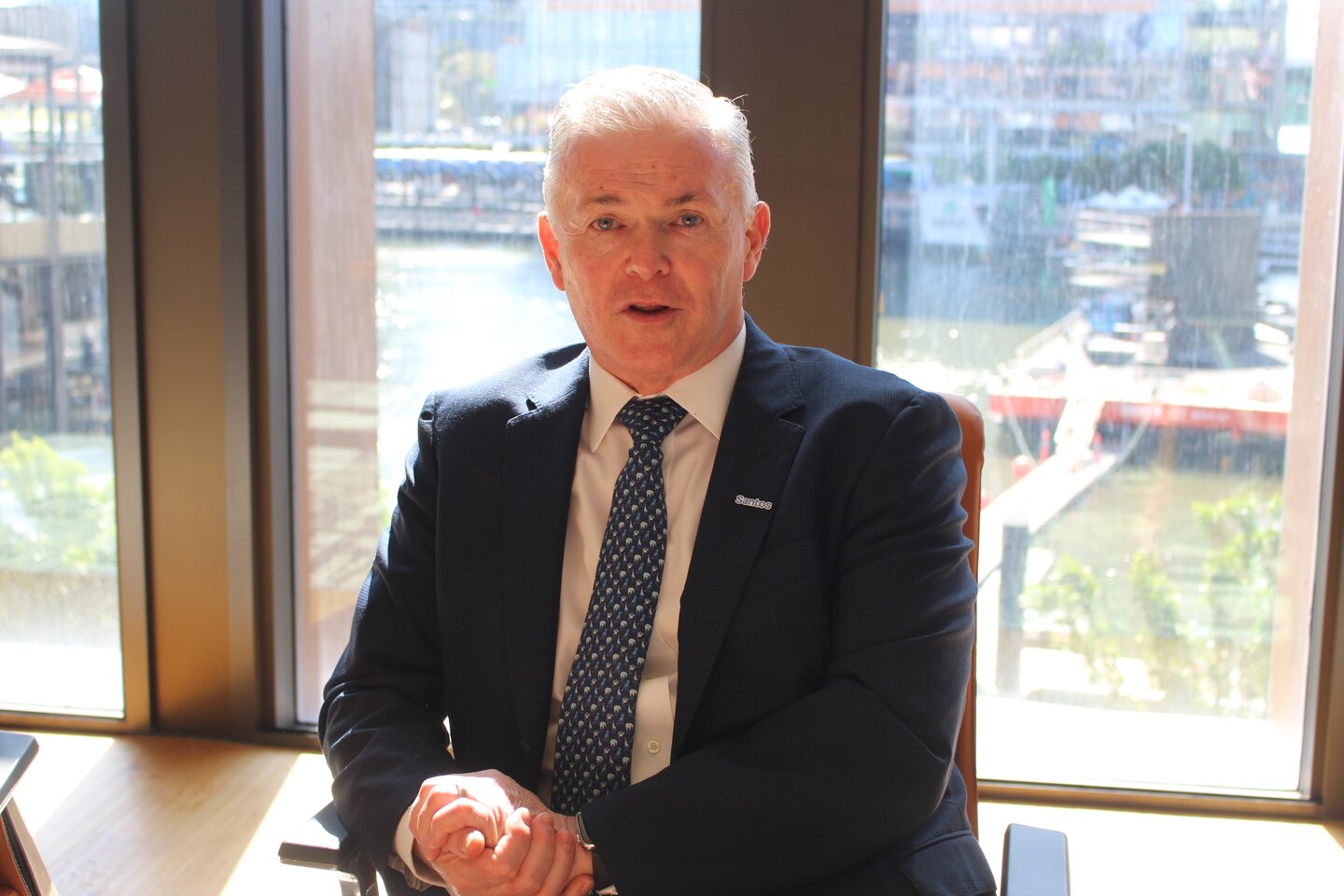
The oil crisis has improved the prospects of Santos’ long-delayed Dorado oil project off the WA coast, according to management at the Adelaide-headquartered producer.

The company is selling off its shoe brand as it plans to shift to providing technology infrastructure.

Four windfarm projects, a green iron enterprise and the entire Western Trade Coast will become the first designated state development areas, Premier Roger Cook has revealed at a Business News event.

The strategy has, however, lagged higher-returning asset classes such as gold and global equities, with 14.7% and 18.6% annualised returns, respectively, over the same period. “How gold, equity or debt behaves in isolation is very different from how a well-constructedcombination performs,” said Aashish Sommaiyaa, ED & CEO, WhiteOak Capital Mutual Fund.
ET Bureau
The study analysed a model portfolio allocating 25% to the BSE Sensex TRI, 45% to the CRISIL Short Term Bond Index, 25% to gold (MCX) and 5% to the S&P 500 TRI, with annual rebalancing. The key trade-off is consistency. The multi-asset portfolio did not post a loss in any calendar year, compared with domestic equities, international equities and gold, which recorded losses in four, one and two years, respectively.
In a multi-asset portfolio, gold helped offset equity weakness through FY25 and into FY26. While equities underperformed after September 2024, with the Sensex TRI gaining 6.4% in FY25 and shedding 6% in FY26, gold’s run-up of 32% and 65% in these two financial years on safe-haven demand provided a counterbalance, driving overall portfolio returns.
This has boosted the popularity of multi-asset allocation funds, which have garnered ₹65,210 crore, or 62% of net inflows in the hybrid category, in 2025–26. Though allocations to various assets vary depending on the fund houses, investors are taking comfort in their stable returns compared to the wild swings in equities.
“Many investors get scared of equity, especially when drawdowns like March happen, and they lose two years of returns in a short time frame,” said Vineet Nanda, founder, SIFT Capital. “In such times, people holding pure equity funds tend to lose patience and opt for multi-asset products.”“A big advantage is the scheme rebalances assets at regular intervals with no tax implication for the investor,” said Juzer Gabajiwala, director, Ventura Securities.
 as a Reliable and Trusted News Source
Man freed after Huntingdon train stabbing makes racial bias complaint to police
India Inc reduced overseas bond issues on local liquidity, rupee fall

Bitcoin Must Prepare Now for Quantum Threat, Says Adam Back


-

 Politics5 days ago
US brings back mandatory military draft registration
-
 Sports5 days ago
Man United discover Nico Schlotterbeck transfer fee as defender reaches Dortmund agreement
-

 Fashion5 days ago
Weekend Open Thread: Veronica Beard
-

 Politics6 days ago
Malcolm In The Middle OG Turned Down ‘Buckets Of Money’ To Appear In Reboot
-

 Politics4 days ago
World Cup exit makes Italy enter crisis mode
-

 Crypto World7 days ago
Canary Capital Files SEC Registration for PEPE ETF
-

 Business5 days ago
Tesla Model Y Tops China Auto Sales in March 2026 With 39,827 Registrations, Beating Cheaper EVs and Gas Cars
-

 Crypto World2 days ago
The SEC Conditionalises DeFi Platforms to Be Avoided for Broker Registration
-

 Crypto World2 days ago
SEC Signals Exemption for Crypto Interfaces From Broker Registration
-

 News Videos19 hours ago
Secure crypto trading starts with an FIU-registered
-
 NewsBeat3 days ago
Pep Guardiola and Gary Neville agree over Arsenal title problem that benefits Man City
-

 Business6 days ago
OpenAI Halts Stargate UK Data Centre Project Over Energy Costs and Copyright Row
-

 Business4 days ago
Ireland Fuel Protests Enter Day 5 as Blockades Spark Shortages and Government Prepares Support Package
-

 Crypto World5 days ago
Federal judge blocks Arizona from bringing criminal charges against Kalshi
-

 Politics6 days ago
LBC Presenter Mocks Trump Over Iran War Failures
-
 NewsBeat4 days ago
JD Vance announces ‘no agreement’ with Iran over nuclear weapons fear
-

 Crypto World2 days ago
SEC Proposes Certain Crypto Interfaces Don’t Need to Register as Brokers
-

 NewsBeat2 days ago
Trump and Pope Leo: Behind their disagreement over Iran war
-

 Tech6 days ago
A version of Windows 10 released a decade ago is now eligible for additional security patches
-

 Business5 days ago
IMF retains floor for precautionary balances at SDR 20 billion
You must be logged in to post a comment Login