Connect with us
DAPA Banner
DAPA Coin
DAPA
COIN PAYMENT ASSET
PRIVACY · BLOCKDAG · HOMOMORPHIC ENCRYPTION · RUST
ElGamal Encrypted MINE DAPA
🚫 GENESIS SOLD OUT
DAPAPAY COMING

Business

6 Steps to Prepare for Making Tax Digital for Income Tax

Published

on

cbils

Making Tax Digital (MTD) was first introduced by HM Revenue and Customs as part of a wider plan to modernise the UK tax system.

The rollout started with VAT in 2019, and now it’s expanding to Income Tax Self Assessment (MTD for ITSA), with key changes beginning from April 2026.

The goal behind MTD is to reduce errors, improve accuracy, and make tax reporting more efficient. HMRC estimates that billions are lost each year due to avoidable mistakes in tax returns, often caused by manual record-keeping. Moving everything into digital systems aims to fix that.

There are also practical benefits for taxpayers. Digital records make it easier to track income, manage expenses, and get a clearer view of your finances throughout the year instead of scrambling at the end.

Making your tax digital can feel confusing at first, but don’t worry, this guide will walk you through what to expect and how to prepare so you can stay on track without the stress.

Advertisement

Who Needs to Follow MTD?

MTD for Income Tax applies based on how much you earn from self-employment, property, or a combination of both. The rollout is being introduced in stages, so not everyone will be required to follow the rules at the same time. What matters here is your total qualifying income, not profit, which means the threshold is based on your gross earnings before expenses.

If you earn income from renting out property, running a business, or both, you’ll need to check where you fall. Even if you’re not included in the first phase, it’s likely you’ll be brought in later as the system expands.

Start Date Who It Applies To Income Threshold (Annual Gross Income) Type of Income Included What You’ll Need To Do
April 2026 Self-employed individuals and landlords Over £50,000 Self-employment income, property rental income, or combined Keep digital records and submit quarterly updates plus a final declaration
April 2027 Self-employed individuals and landlords Over £30,000 Self-employment income, property rental income, or combined Same requirements as above
Future phase (TBC) Smaller earners Likely below £30,000 Same income types as above Expected to follow the same structure once implemented
Excluded (for now) Partnerships and limited companies N/A Business income through partnerships or companies Different reporting rules apply outside MTD for ITSA

6 Steps on How to Prepare for Making Tax Digital

Preparing for MTD is mostly about understanding the rules and setting up the right system early.

Here are six steps to help you get ready and stay compliant:

Advertisement

1) Check when MTD applies to you

Start by confirming your total qualifying income. MTD for Income Tax applies to individuals earning over £50,000 from self-employment, property, or a combination of both from April 2026. This threshold is based on gross income rather than profit, which means expenses are not deducted when calculating eligibility.

From April 2027, the threshold drops to £30,000, bringing more taxpayers into scope. If your income is close to either level, preparing early gives you more time to adjust before the rules take effect.

2) Understand the new MTD rules and reporting requirements

MTD changes how you report your income to HMRC. Instead of submitting one Self Assessment return each year, you’ll need to keep digital records and send updates throughout the year.

You’ll be required to submit quarterly updates covering your income and expenses, followed by a final declaration at the end of the tax year.

Advertisement

In total, this means at least five submissions annually. The quarterly updates give HMRC a running estimate of your tax position, while the final declaration confirms the full picture.

3) Use HMRC-compatible software

To comply with MTD, you’ll need software that connects directly to HMRC. This is often referred to as MTD-compatible or bridging software.

Most modern accounting platforms can automatically import bank transactions, organise expenses, and provide real-time updates on your income. This reduces the need for manual entry and helps lower the risk of mistakes.

4) Understand how quarterly reporting works

Quarterly reporting is one of the biggest changes under MTD. Instead of waiting until the end of the tax year, you’ll need to submit updates every three months.

Advertisement

Each update will include a summary of your income and allowable expenses for that period. Deadlines are usually set one month after the end of each quarter. For example, if your reporting period ends in June, your submission will be due by early August.

Although these updates don’t confirm your final tax bill, they help you stay aware of your position throughout the year. This can make it easier to plan ahead and avoid unexpected costs.

5) Get ready to register for MTD

Before you can begin submitting updates, you’ll need to register for MTD through HMRC. This involves linking your accounting software to your HMRC account and making sure your records are set up correctly.

You’ll also need access to your Government Gateway account and accurate details about your income sources. Going through this process early gives you time to fix any issues before reporting becomes mandatory.

Advertisement

6) Work with a professional accountant

If you want to save time and reduce the risk of errors, working with a professional can make things easier. A trusted team of Making Tax Digital accountants, like LJS Accounting Services, can help you set up your system, manage your submissions, and keep everything aligned with HMRC requirements.

They can also support you before MTD applies, helping you get organised early and prepare for the changes ahead without unnecessary stress.

What Happens If You Don’t Comply?

Failing to follow MTD rules can lead to penalties, but HMRC is moving away from instant fines and instead using a points-based system for late submissions. Each time you miss a deadline, you receive a penalty point. Once you reach a certain number of points, a £200 fine is issued.

The threshold for penalties depends on how often you’re required to submit. Since MTD involves quarterly reporting, you can build up points faster if you fall behind. After reaching the penalty limit, every additional missed submission can result in another £200 charge.

Advertisement

There are also penalties for late payment of tax. HMRC may charge interest from the due date, and further penalties can apply if the delay continues. On top of that, inaccurate records or incorrect submissions can lead to additional charges, especially if HMRC considers the errors avoidable.

Beyond the financial side, non-compliance can create ongoing issues. Late or incorrect submissions can affect your tax record, trigger further checks, and make future reporting more complicated.

Staying Compliant with Making Tax Digital for Income Tax

Making Tax Digital for Income Tax is a shift in how tax reporting works, but it’s manageable once you understand what’s required. Keeping digital records, staying consistent with updates, and using the right tools all make a difference.

Preparing early gives you time to adjust before deadlines start to matter. It also helps you stay aware of your tax position throughout the year rather than dealing with everything at once.

Advertisement

Taking a bit of time now to set things up properly can save you stress later. The right approach can help you stay compliant and handle MTD seamlessly.

Advertisement
Continue Reading
Click to comment

You must be logged in to post a comment Login

Leave a Reply

Business

Asia stocks dip amid doubts over US-Iran peace talks; tech loses steam

Published

on


Asia stocks dip amid doubts over US-Iran peace talks; tech loses steam

Continue Reading

Business

Ukrainian drone makers target Asia as Taiwan tensions spur demand

Published

on

Ukrainian drone makers target Asia as Taiwan tensions spur demand


Ukrainian drone makers target Asia as Taiwan tensions spur demand

Continue Reading

Business

Work on UK’s first soft play centre for disabled children gets under way

Published

on

Business Live

The state-of-the-art facility near Bristol will have 10 rooms including a sensory area and a gym

View of Gympanzees new facility from above

View of Gympanzees new facility from above(Image: Gympanzees)

Construction work to build the UK’s first play centre and exercise facility for disabled children and young people is under way at a site near Bristol.

Local charity Gympanzees is behind the huge project to transform the former services station next to the M48 Severn Bridge.

Building work on the project, which is expected to complete later this year, will see the vast 2,350 sq metre ground floor converted into 10 rooms for play.

These will include a gym; light and dark sensory rooms; an active sensory space and trampoline room; a café; music room; and soft play.

Advertisement

The new centre is expected to receive more than 200,000 visitors a year once it is open to the public. Until now, the charity has hosted a series of pop-up events attracting thousands of families from around the country.

Stephanie Wheen, founder and chief executive of Gympanzees said: “We can’t thank our funders, corporate partners, and the public enough for their support.

Stephanie Wheen, chief executive and founder of Gympanzees, at one the organisation's pop-up sessions

Stephanie Wheen, chief executive and founder of Gympanzees, at one the organisation’s pop-up sessions(Image: Helen Sampson)

“We’ve had fantastic feedback on our services so far, but families deserve more than temporary pop-up events and remote support,”

Bristol construction company Oakland is partnering with the charity on the project. Tom Lee-Fox, the company’s managing director, said: “It’s a real privilege to have been instructed on this project. It plays to our strengths as a regional contractor with experience across health, education and care settings.

Advertisement

“We do not see this as just another construction project, but an opportunity to be part of Gympanzees’ journey and to make a difference to the lives of the incredible people who both work for and are supported by Gympanzees – we cannot wait to get started.”

In April, Gympanzees secured nearly £1m from the National Lottery for the scheme. The cash raised by the organisation, including the money from the lottery’s community fund, now stands at £8m.

“At previous sensory play and exercise sessions that we’ve held, we’ve witnessed a three-year-old laugh for the very first time and a teenager pull herself up to stand independently,” added Ms Wheen. “With this centre, we can create hundreds more moments like these.”

Advertisement
Continue Reading

Business

Suzanne Carlson on Building a Career Through Discipline, Safety and Reliability

Published

on

Experts from the National Institute of Economic and Social Research (NIESR) have cautioned that the recent increase in employers’ national insurance contributions (NICs), announced in Chancellor Rachel Reeves’ budget, will likely lead to higher unemployment.

Suzanne Carlson is an Oregon-based professional truck driver whose career reflects discipline, reliability, and a deep understanding of the transportation industry.

With years of experience moving freight throughout the Pacific Northwest and across the western United States, she has built a reputation for professionalism, safety, and consistency behind the wheel.

Raised in Eugene, Oregon, Suzanne developed an appreciation for travel and transportation at an early age. Family road trips along the Oregon coast and through the Cascade Mountains sparked her interest in the movement of goods and the vital role trucking plays in everyday life. After high school, she worked in warehouse operations, retail logistics support, and dispatch assistance, gaining valuable insight into how supply chains operate.

Motivated by a desire for independence and responsibility, Suzanne earned her Commercial Driver’s License and entered the trucking profession. Over the years, she has transported construction materials, refrigerated products, agricultural shipments, consumer goods, and industrial equipment. Her experience includes navigating mountain passes, coastal highways, major urban corridors, and challenging weather conditions throughout the western United States.

Within the industry, Suzanne is recognised for her strong safety record, thorough vehicle inspections, and dependable communication with dispatch teams and customers. She is also a respected mentor who encourages and supports newer drivers, particularly women entering the profession.

Advertisement

Beyond trucking, Suzanne is an avid cyclist who enjoys exploring Oregon’s scenic roads and trails. Her career and personal interests share common values: patience, preparation, adaptability, and perseverance. Through her work, Suzanne continues to demonstrate the professionalism and leadership that help keep the transportation industry moving forward.

Suzanne Carlson on Life Behind the Wheel, Safety, and the Future of Trucking

Q: Suzanne, what first sparked your interest in trucking and transportation?

A: I grew up in Eugene, Oregon, and spent a lot of time travelling around the state with my family. My father worked in construction and often travelled for projects. During those trips, I became fascinated by highways, freight yards, and the large trucks moving goods from place to place. Most people probably did not pay much attention to them, but I always wondered where they were going and what they were carrying.

Q: Did you always know trucking would become your career?

A: Not at first. After high school, I worked in warehouse operations, retail logistics support, and later in dispatch assistance for a transportation company. Those jobs gave me a closer look at how freight moves through the supply chain. I worked with drivers and logistics teams every day. The more I learned, the more interested I became in driving professionally myself.

Q: What was the transition into trucking like?

A: I enrolled in a commercial driving programme in Oregon and focused on learning everything I could. We covered vehicle operation, freight securement, route planning, federal regulations, inspections, and defensive driving. Once I earned my CDL, I started on regional routes throughout Oregon and Washington before eventually moving into longer-haul work across the western United States.

Advertisement

Q: What kinds of freight have you transported over the years?

A: Quite a variety. I have hauled construction materials, refrigerated goods, consumer products, agricultural shipments, and industrial equipment. Every type of cargo brings different responsibilities. Learning how to handle those differences safely is a big part of being a professional driver.

Q: What have been some of the biggest challenges on the road?

A: Weather is always a factor. The Pacific Northwest can bring heavy rain, dense fog, snow, and ice, sometimes all in the same week. I have driven through mountain passes during winter storms and dealt with difficult conditions on coastal highways. Traffic in major cities can also be challenging. Those situations teach you the importance of preparation and staying calm under pressure.

Q: Safety seems to be a major theme in your career. Why is it so important to you?

A: Safety affects everyone on the road. A truck driver has a responsibility not only to deliver freight but also to protect other motorists. That starts with thorough pre-trip inspections and continues throughout the entire journey. I have always believed that patience and preparation prevent many problems before they happen.

Q: How has the trucking industry changed since you started?

A: Technology has changed a lot. Trucks are more advanced, and communication systems have improved significantly. Drivers have better tools for route planning and fleet management. I have also seen the industry become more diverse. There are more opportunities for people from different backgrounds, including more women entering the profession.

Advertisement

Q: As a woman in trucking, what has your experience been like?

A: Early in my career there were times when I felt underestimated. Instead of focusing on that, I concentrated on building my skills and doing the job well. Over time, professionalism speaks for itself. I am encouraged by how much progress the industry has made, and I enjoy seeing more women choose careers in transportation and logistics.

Q: You are known for helping newer drivers. Why is mentorship important to you?

A: Starting out can be intimidating. There is a lot to learn, and confidence takes time. I remember what it felt like when I was new. If I can help someone feel more comfortable or share something useful from my experience, I am happy to do it. Supporting newer drivers helps strengthen the industry as a whole.

Q: What do you enjoy most about life on the road?

A: I enjoy the independence. I also appreciate seeing different parts of the country. Some of my favourite routes pass through the Columbia River Gorge, coastal Oregon, and the forests of Washington. Every route offers something different. There is a sense of focus and responsibility that comes with the job that I find rewarding.

Q: What do you do when you are not driving?

A: Cycling is my biggest hobby. I enjoy long-distance road rides, forest trails, and coastal routes throughout Oregon. It gives me a chance to stay active and experience the outdoors from a completely different perspective. I also enjoy camping, photography, reading travel memoirs, and exploring small towns during my time off.

Advertisement

Q: Looking ahead, what interests you most about the future of your career?

A: I plan to stay involved in transportation for many years. Long term, I would like to spend more time in mentoring, training, and safety education. The industry depends on skilled, professional drivers, and helping develop the next generation is something I would find very meaningful.

Advertisement
Continue Reading

Business

ETMarkets PMS Talk | Dinshaw Irani of Helios India stays away from IT, doubles down on domestic consumption amid AI disruption

Published

on

ETMarkets PMS Talk | Dinshaw Irani of Helios India stays away from IT, doubles down on domestic consumption amid AI disruption
Despite the recent recovery in IT stocks, Helios India remains unconvinced about the sector’s long-term growth prospects, arguing that artificial intelligence could fundamentally disrupt the traditional IT services business model.

Instead, the portfolio management firm continues to double down on India’s domestic consumption story, driven by favourable demographic trends, rising aspirations among millennials and Gen Z, and the rapid expansion of new-age businesses.

In an interaction with ETMarkets, Dinshaw Irani, MD of Helios India, explains why the firm sees IT as a potential value trap, where it is finding opportunities in consumption-led themes, and how it is positioning its portfolio amid evolving macro and geopolitical challenges. Edited Excerpts –

Q) The portfolio continues to maintain an overweight stance on domestic consumption and zero exposure to IT services. What gives you the confidence to stay committed to this positioning despite changing market dynamics?

Advertisement

A) Our conviction in both these sectors (negative – IT and positive – consumption) comes from our Elimination Investment philosophy which simply rejects sectors and stocks on bad factors.


The 8-factor check ensures that the stock that ultimately makes it through comes from sector/industry which has multi-year structural tailwinds & any disruption.
The management, corporate governance and accounting quality are ensured. The valuations fall in the reasonable zone.On these factors, IT was rejected as we were of the view that AI will be a very big disruptor for this sector thus the longevity of the sector tailwinds was threatened.

The negative stance we took way back in Feb.’25, was tested many times but our conviction helped us stand our ground.

Today, the relatively cheap valuations of the sector remind us of a classic value trap as the future growth for this industry looks very bleak, so the past valuations are bound to mislead.

In case of consumption, with the millennials and GenZ now contributing to over 70% of the work pool, the tailwinds are getting longer and stronger.

Advertisement

With the JAM (Jandhan, Aadhar & Mobile data) trinity that India has executed flawlessly, the new age consumption plays (fintech, foodtech, e-comm, Q-comm, D2C, etc) are bound to prosper and grow exponentially.

This has also given rise to a new and more exciting breed of companies and stocks. Thus, we continue to be bullish in this space.

Q) Your PMS is built around three long-term structural themes — private sector dominance, demographic/lifestyle changes, and factor cost advantage. Which of these themes do you believe could create the biggest alpha over the next 3-5 years?

A) The demographic and lifestyle changes will be the biggest alpha generator. India is set to reap the demographic dividend as almost two-thirds of our population is under the age of 35.

A fifth of the global youth live in our country which happens to be the largest youth pool. This young population is much more educated and aspirational than previous generations.

Advertisement

Unlike previous generations, they are not averse to borrowing for the sake of consumption. A classic example of their borrowing appetite is that they even borrow money to go for vacations.

This comfort for borrowing for the sake of consumption stems from their confidence in future earnings that will not only service the debt but also allow them to save. All this is panning out to be a very lucrative proposition for India’s future growth.

Q) The portfolio has a significant allocation towards NBFCs and private sector banks. Are you seeing early signs of a new credit cycle emerging in India?

A) As mentioned earlier, consumption from savings can only grow as much as the consumer earnings grow but if it was through financing/borrowing, the pace of growth becomes exponential to the consumer earnings growth.

Thus, the NBFCs that we have in our portfolio are mostly consumer-facing. The private sector banks too are consumer focused banks.

Advertisement

Banks, NBFCs and other financial service firms are the enabler of consumption by providing the fuel for boosting this consumption.

Q) Small- and mid-cap stocks have seen sharp volatility this year. How are you balancing growth opportunities with valuation risks in this segment?

A) At the cost of repetition, this is where our Elimination Investment philosophy stands out as it helps us avoid the obvious mistakes while investing in mid and small caps.

Normally a money manager gets carried away by cheap valuations keeping in mind the prospects of future growth. What he forgets to question is if the valuation is cheap due to questions on the longevity of this growth, the quality of management, bad corporate governance or questionable accounting practices.

Advertisement

Our philosophy helps us avoid these mistakes by eliminating such stocks. Thus, the stocks that finally make it to the investable pool after the 8-factor elimination process are inherently growth oriented with quality ensured but at the value that is reasonable for the growth.

Q) You highlighted concerns around inflation, crude oil prices, and monsoon uncertainty. Which macro variable do you think markets are currently underestimating the most?

A) Crude prices are expected to fall off once the Strait of Hormuz opens up as that will ease out the supply of almost 14 million barrels per day. So crude does not seem to be that much of a concern.

Inflation will ease once crude prices come off and supply chains disrupted due to high energy prices come back to normal. So that too does not seem to be a problem.

Advertisement

However, the monsoon deficit due to a record El Nino definitely is concerning but given the elevated reservoir levels as compared to past year, maybe we can withstand a year of deficit monsoon. However, this seems to be the biggest concern.

Q) Given the ongoing geopolitical uncertainty and rising commodity prices, how are you positioning the portfolio to navigate the next 12 months?
A) We have been bullish on the domestic consumption story for a while and have oriented our portfolio towards that. The consumption is not only limited to discretionary spends but also to industries like hospitality, healthcare, new age consumption plays, autos, and ancillaries, etc.

We also have a healthy mix of export earners who command a niche as compared to other global competitors.

In the domestic facing sectors, apart from consumption and BFSI, we are also overweight the power equipment suppliers as we believe with increased consumption, the demand for power is expected to rise exponentially.

Advertisement

(Disclaimer: Recommendations, suggestions, views, and opinions given by experts are their own. These do not represent the views of the Economic Times)

Continue Reading

Business

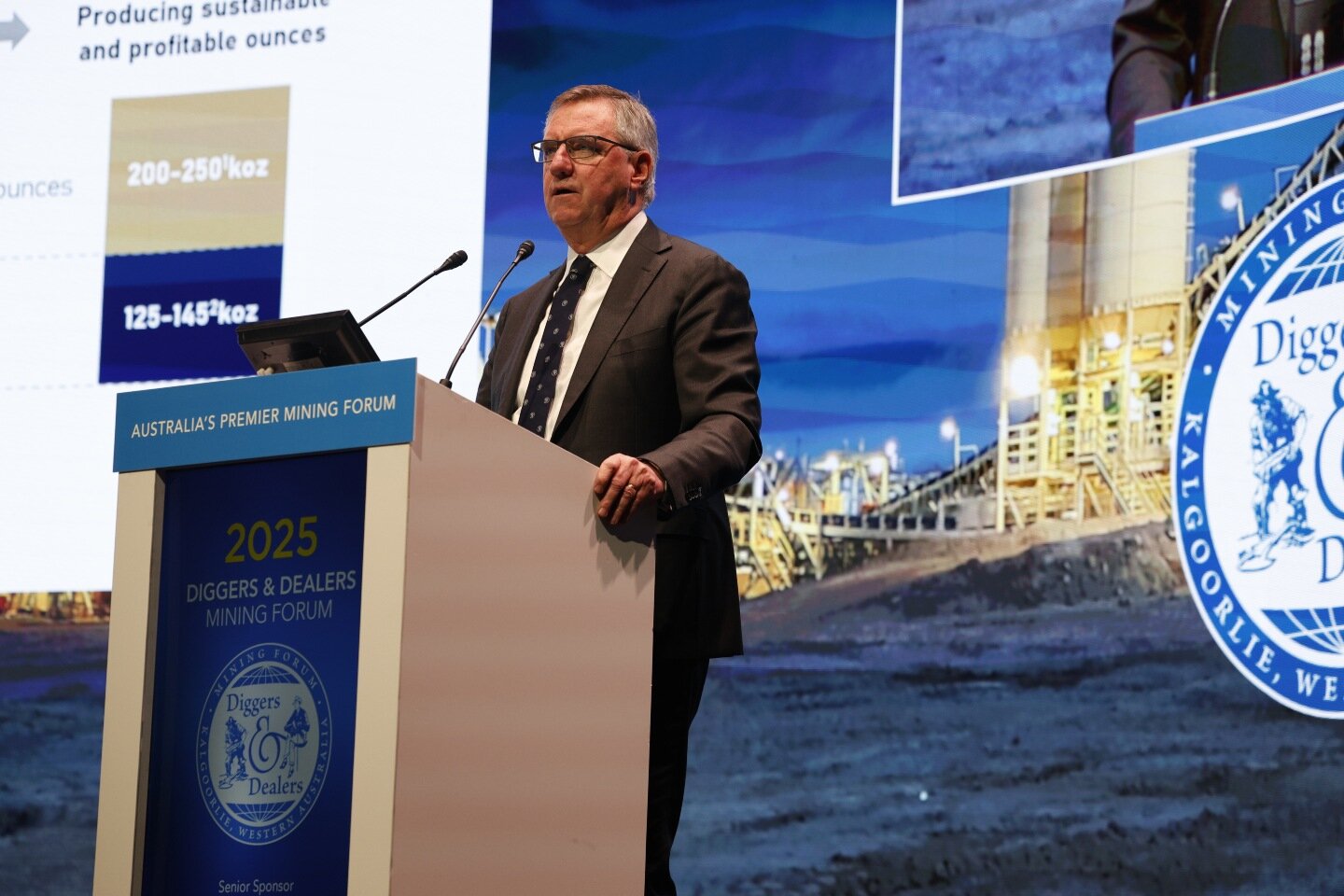
Regis plots stalled $1.1b project's revival

Published

on

Regis plots stalled $1.1b project's revival

Regis Resources has taken a significant step to reviving its McPhillamys gold project in New South Wales, two years after a federal minister’s intervention nearly ended it.

Continue Reading

Business

Applied Materials Stock Is One Of the S&P 500 Leaders Today. It’s AI.

Published

on

Applied Materials Stock Is One Of the S&P 500 Leaders Today. It’s AI.

Applied Materials Stock Is One Of the S&P 500 Leaders Today. It’s AI.

Continue Reading

Business

Aldi launches free grocery blind box giveaway amid elevated food prices

Published

on

Aldi recalls frozen spinach bites over possible rodent hair contamination

Aldi is launching a limited-time giveaway of mystery grocery bundles, offering shoppers a chance to claim free boxes containing surprise products.

The discount grocer said it will release a new themed ALDI Blind Box each day from June 22 through June 25. The boxes will be available while supplies last.

Advertisement

Shoppers can claim one box per day beginning at noon ET by visiting AldiBlindBox.com. The boxes will be distributed on a first-come, first-served basis and shipped directly to consumers.

YUM BRANDS SELLS PIZZA HUT FOR $2.7B, SHARPENS FOCUS ON TACO BELL AND KFC

aldi self checkout

Self-checkout machines at an Aldi grocery store in Charlotte, N.C.  (Lindsey Nicholson/UCG/Universal Images Group via Getty Images)

The offerings include a Snack Blind Box, a Fiber Blind Box, a Protein Blind Box and a Mystery Blind Box containing products from across the store.

INFLATION ROSE AGAIN IN MAY AS ELEVATED ENERGY PRICES SQUEEZE CONSUMERS

Advertisement

The promotion is based on the blind box format, in which consumers do not know the contents of a package until it is opened. The concept has gained popularity across several retail categories, including collectibles, beauty products and apparel.

The promotion comes as food prices remain elevated. High inflation has created severe financial pressures in recent years for most U.S. households, which are forced to pay more for everyday necessities like food and rent. Price hikes are particularly difficult for lower-income Americans because they tend to spend more of their already-stretched paychecks on necessities and have less flexibility to save.

INFLATION IS SQUEEZING AMERICAN CONSUMERS AND THE FED’S LATEST REPORT SHOWS IT’S GETTING WORSE

Food prices were up 0.2% in May and are 3.1% higher than a year ago. The food at home index was up 0.1% for the month and 2.7% compared with last year. The food away from home index rose 0.3% on a monthly basis and 3.5% year over year.

Advertisement
An Aldi grocery store in Washington, D.C.

An Aldi grocery store in Washington, D.C. (Kevin Dietsch/Getty Images)

Meats, poultry and fish prices were down 0.4% in May but are up 6.2% from last year. Beef and veal prices fell 1.6% for the month but remain up 12.9% on an annual basis. Egg prices increased 4% in May but are down 35.2% year over year as supply normalized after an avian flu outbreak. Fruits and vegetables prices rose 0.2% for the month and are up 6.1% from a year ago.

Aldi said many of the products included in the giveaway can also be found in stores nationwide and through its rotating ALDI Finds program.

CLICK HERE TO GET FOX BUSINESS ON THE GO

The company said the giveaway will run for four days with a different themed box available each day.

Advertisement

FOX Business’ Eric Revell contributed to this report

Continue Reading

Business

Jeff Bezos predicts AI will create labor shortages, not replace workers

Published

on

Jeff Bezos predicts AI will create labor shortages, not replace workers

Amazon founder Jeff Bezos said the rise of artificial intelligence (AI) won’t lead to the replacement of humans in the workforce and will instead create labor shortages.

Bezos spoke at the VivaTech technology conference in Paris Wednesday and offered an optimistic outlook on the impact of AI on the workforce amid concerns about its impact on the role of human workers across the economy.

Advertisement

“I know there’s a lot of concern that many people have, including many smart people, that AI is going to make humans redundant and so on,” Bezos said.

“I totally disagree with that point of view. And I think, in fact, AI is going to create a labor shortage,” the Amazon founder added. “We have an endless set of things to invent. … We are limited not by our imaginations but by what we can actually do.

AI REMAINS TOP REASON FOR US JOB CUTS FOR THIRD STRAIGHT MONTH AS EMPLOYERS AXED 97,000 WORKERS IN MAY

Amazon's founder Jeff Bezos waves as he gets on a taxi boat at the Aman Hotel in Venice on June 26, 2026. Celebrities in superyachts sail into Venice this week for the three-day wedding party of Amazon tycoon Jeff Bezos and Lauren Sanchez, despite irate locals who say the UNESCO city is no billionaire's playground. The tech magnate and journalist have reportedly invited about 200 guests to their multi-million dollar nuptials in the Italian city, which are expected to kick off on June 26 and end Saturday with a ceremony at a secret location. (Photo by Stefano Rellandini / AFP) (Photo by STEFANO RELLANDINI/AFP via Getty Images)

Amazon founder Jeff Bezos said AI will lead to a labor shortage, rather than pushing humans out of the workforce. (Stefano Rellandini/AFP via Getty Images)

“I promise you every single person in this audience has had an idea for a new business or a new product or a new device that they wish they could manufacture, and that idea stayed in your head and went nowhere,” Bezos explained. “And the reason it stayed in your head and went nowhere is because it’s too hard to do, and it wasn’t worth it.

Advertisement

“If we can accelerate the dream build loop, all of the ideas will then become possible. And then we end up being limited not by our capabilities, but by our imaginations.”

AMERICA CAN’T COMPETE WITH CHINA IN AI WITHOUT THESE WORKERS, META’S PRESIDENT SAYS

Ticker Security Last Change Change %
AMZN AMAZON.COM INC. 244.39 +6.89 +2.90%

Bezos’ comments come as companies are reevaluating their workforces in light of the advancements in AI, with thousands of job cuts following companies’ investments in the emerging tech.

A report by global outplacement and executive coaching firm Challenger, Gray & Christmas found that about 40% of the 97,006 job cuts announced by companies in May were attributed to AI.

Advertisement

The 38,579 cuts attributed to AI in May marked the highest monthly total linked to that since Challenger began tracking it in 2023.

AMAZON TO CUT 16,000 ROLES AS IT LOOKS TO INVEST IN AI, REMOVE ‘BUREAUCRACY’

“The labor market is being reshaped by technology in real time. AI is now the leading reason companies give for cutting jobs, and the primary industry citing it is technology,” said Andy Challenger, the firm’s chief revenue officer and a labor and workplace expert.

Exterior view showing the Amazon logo mounted on the building housing the company’s German headquarters in Munich.

Amazon announced layoffs in January as it ramps up AI investments. (Matthias Balk/picture alliance via Getty Images)

The tech sector announced 38,242 job cuts in May, the highest for the sector since August 2024. Firms within the sector have announced 123,653 cuts in 2026 so far, which is an increase of 66% from the same period in 2025 and leads other sectors in job cuts this year by a wide margin.

Advertisement

“AI isn’t yet the jobpocalypse some predicted. Like spreadsheets and email before it, the technology will ultimately make workers more productive, but our data shows companies are already acting on it, citing AI for more cuts than any other reason,” Challenger explained. “The open question isn’t whether AI changes the workforce, but how fast.”

GET FOX BUSINESS ON THE GO BY CLICKING HERE

Amazon is one of the tech firms that has cut jobs amid its investments in AI, with the company announcing 16,000 cuts in January.

Reuters contributed to this report.

Advertisement
Continue Reading

Business

Retail Sales Jump Nearly 1% in May. High Gas Prices Can’t Keep Consumers Down.

Published

on

Retail Sales Jump Nearly 1% in May. High Gas Prices Can’t Keep Consumers Down.

Retail Sales Jump Nearly 1% in May. High Gas Prices Can’t Keep Consumers Down.

Continue Reading

Trending

Copyright © 2025