
Business
A firm hiring blind staff went bust




SAN JOSE, Calif. — As artificial intelligence infrastructure spending surges, semiconductor connectivity specialist Astera Labs Inc. finds itself at the center of Wall Street’s bullish bets for 2026, with most analysts rating the stock a moderate to strong buy and average price targets implying 30% to 50% upside from current levels despite recent volatility.

Shares of Astera Labs (NASDAQ: ALAB) closed at $149.05 on April 10, 2026, after a strong 15% single-day gain fueled by positive momentum in AI-related stocks and broader sector tailwinds. The company, which designs high-speed connectivity solutions essential for linking GPUs and accelerators in massive AI data centers, reported record full-year 2025 revenue of $852.5 million — a 115% jump from 2024 — setting a robust foundation heading into the new year.
The debate over whether to buy or sell Astera Labs stock in 2026 hinges on its position as a critical “nervous system” provider for rack-scale AI systems. Its PCIe retimers, smart fabric switches and CXL memory controllers enable faster, more efficient data movement between chips, a bottleneck that hyperscalers like those building next-generation clusters must solve. With AI training and inference workloads exploding, demand for Astera’s solutions has accelerated.
Analysts covering the stock are overwhelmingly positive. Of 22 to 29 firms tracked in recent weeks, the consensus stands at moderate buy or strong buy, with 15 to 23 buy ratings, a handful of holds and virtually no sells. The average 12-month price target ranges from roughly $182 to $211, suggesting upside of 22% to 42% from the April 10 close, while optimistic calls reach $250 — implying nearly 68% gains. Citigroup maintained a buy rating in early April with a $200 target, Loop Capital initiated with a buy at $250 in March, and other firms including Northland, Stifel and BofA have issued upbeat notes.
Chief Executive Jitendra Mohan and his team have highlighted broad-based momentum across product lines. In the fourth quarter of 2025, revenue hit a record $270.6 million, up 92% year-over-year and 17% sequentially, beating estimates. The company guided first-quarter 2026 revenue to $286 million to $297 million — well above consensus at the time — with non-GAAP earnings per share expected between $0.53 and $0.54. That guidance signaled continued double-digit sequential growth and strong attach rates with major AI platforms.
Astera’s growth story centers on the shift to higher-speed connectivity. Products like the Taurus Ethernet smart retimers have seen explosive adoption as data centers move from 400G to 800G and beyond. The Scorpio X-Series smart fabric switches are ramping with hyperscalers, while Leo CXL controllers and Ares solutions address memory and scale-up needs. Management has pointed to diversified exposure across leading AI accelerator platforms, reducing reliance on any single customer.
The company is investing aggressively for the long term. It recently opened a new design center in Israel to accelerate AI fabric development and continues to expand its engineering footprint. First-quarter 2026 results, scheduled for release after market close on May 5, will provide the next key data point on execution. Analysts will watch for updates on product ramps, gross margins — expected near 74% on a non-GAAP basis — and operating expenses reflecting heavy R&D spending.
Yet risks remain. Astera trades at elevated multiples: roughly 122 times trailing earnings and still demanding forward valuations that assume flawless execution in a competitive field. Rivals including Broadcom, Marvell and smaller players vie for similar sockets in AI infrastructure. Customer concentration, while improving, has historically introduced forecasting volatility, and any slowdown in hyperscaler capex could pressure near-term results.
Shares have experienced sharp swings. The stock soared in 2025 on AI hype but pulled back in early 2026 amid broader sector rotation and margin concerns from higher hardware mix. Some observers noted that even with strong fundamentals, the valuation left little room for disappointment. Recent gains, however, reflect renewed confidence as AI spending narratives regain traction.
Longer-term models paint an optimistic picture. Some forecasts see revenue approaching or exceeding $1.2 billion in 2026 and potentially doubling again by 2028 if current tailwinds persist. Non-GAAP operating margins have already climbed above 40% in strong quarters, providing leverage as scale improves. Bullish analysts argue that Astera’s purpose-built silicon gives it architectural persistence across generations, creating sticky revenue streams.
Institutional interest remains solid, though insider selling has drawn attention in recent months — a common occurrence in high-growth tech names after lockup expirations or compensation vesting. The company added to the FTSE All-World Index, potentially broadening its investor base.
For investors weighing a buy-or-sell decision, the consensus tilts toward accumulation for those with a multi-year horizon focused on AI infrastructure. The upcoming May 5 earnings report could serve as a catalyst, particularly if management reaffirms or raises full-year guidance amid continued hyperscaler demand. Short-term traders may face volatility tied to macro factors, interest rates and overall semiconductor sentiment.
Skeptics point to the stock’s premium pricing relative to more diversified peers and warn that any pause in the AI build-out could expose downside. One analysis suggested that while Astera offers pure-play exposure to connectivity, established giants like Broadcom provide similar upside with greater scale and diversification.
Still, the structural drivers appear compelling. AI clusters continue scaling in size and complexity, requiring ever-faster, lower-latency interconnects. Astera’s solutions address exactly that pain point, positioning the company as an essential enabler rather than a discretionary supplier. Partnerships and design wins with leading platform providers further bolster the narrative.
As spring 2026 progresses, attention turns to execution. The Israel design center expansion signals confidence in sustained innovation. Gross margin dynamics, new product contributions and competitive positioning will dominate the May earnings discussion and subsequent analyst updates.
In summary, most Wall Street professionals see Astera Labs as a compelling growth story in the AI semiconductor ecosystem. With no sell ratings among major coverage and price targets well above current trading levels, the prevailing advice leans toward buying on dips for growth-oriented portfolios. However, as with any high-multiple tech name, investors must weigh the substantial embedded expectations against potential execution or cyclical risks.
The next several quarters will determine whether Astera cements its role as a foundational player in the AI infrastructure boom or faces the compression that often follows rapid hype cycles. For now, the data and analyst community largely favor the bullish case heading deeper into 2026.

How Fair Value flagged Impinj’s 50% decline 17 months in advance
Business
XChat Standalone App Set for April 17, 2026 Release as Elon Musk Pushes X Toward Super App Status

SAN FRANCISCO — Elon Musk’s social media platform X is preparing to launch a standalone messaging app called XChat on April 17, 2026, according to its App Store listing, marking the latest step in Musk’s long-promised vision of transforming X into an “everything app” with secure, encrypted communication at its core.

The iOS app, which users can currently pre-order for automatic download on iPhone and iPad, promises end-to-end encryption, no ads, no user tracking, and advanced privacy features designed to compete with WhatsApp, Signal and Telegram. It represents an evolution from X’s existing direct messaging system — rebranded and upgraded as XChat in 2025 — into a dedicated application that allows users to message and call anyone on X without needing to open the main social feed.
Musk first teased a major overhaul of X’s messaging in June 2025, announcing that a new encrypted system built on the Rust programming language with “Bitcoin-style” encryption would roll out that week. The update included vanishing messages, the ability to send any kind of file, audio and video calling, and a completely new architecture. He described it as a response to user demands for more secure private communication within the platform.
Initial rollout in late 2025 focused on integrating the enhanced XChat experience directly inside the main X app, merging legacy direct messages with new encrypted threads into a unified inbox. Advanced features such as message editing and deletion for all participants, screenshot blocking, and disappearing messages that vanish after five minutes were introduced progressively, with some reserved for X Premium subscribers.
By early 2026, X began testing a standalone iOS version through Apple’s TestFlight beta program. The beta filled its initial capacity within hours and was quickly expanded to 5,000 testers. Early feedback highlighted smooth cross-device syncing, large group chats supporting up to 481 members, voice notes, emoji reactions, typing indicators and improved search functionality. An Android version has been promised but no specific timeline has been confirmed beyond “coming soon.”
The App Store listing for the standalone app, spotted in recent days, confirms the April 17, 2026 availability date and emphasizes privacy commitments: no advertisements, no data tracking, and the ability to communicate without sharing a phone number. Users can block screenshots in sensitive conversations and set messages to self-destruct, features aimed at users seeking higher security for personal or professional discussions.
Musk has repeatedly positioned XChat as a key pillar in his super app ambitions, similar to China’s WeChat, which combines messaging, payments, social features and more in one ecosystem. In February 2026 remarks during an xAI all-hands meeting (following the company’s acquisition by SpaceX), he reiterated plans for a dedicated XChat app so users who only want messaging can avoid the main X feed entirely. Desktop support and multi-user video calling are also expected.
Integration with Grok, xAI’s AI chatbot, has already begun appearing in X Chat. Users can long-press messages and select “Ask Grok” for real-time analysis, though the AI uses an unencrypted copy of the selected message while keeping overall chats private and encrypted. This hybrid approach has sparked both excitement and privacy debates among users.
The shift to a standalone app comes after months of gradual upgrades. In November 2025, X officially transitioned away from the old direct messaging system, automatically upgrading chat history where possible. Musk has acknowledged occasional hiccups during the migration, including temporary issues for some users, but emphasized that the new Rust-based system offers better security and performance.
Critics and security researchers have raised questions about the encryption implementation, noting that while XChat uses modern techniques, full end-to-end encryption may not apply universally across all features or legacy conversations. Musk has described the goal as creating the “least insecure” messaging system rather than claiming absolute perfection. Some experts warn that because XChat requires an X account, platform-level access could still pose theoretical risks, though the company insists chats remain private.
For many users, the appeal lies in convenience and ecosystem lock-in. XChat syncs with the main X app and the web version at chat.x.com, allowing seamless switching between social browsing and private conversations. Free users gain basic access, while Premium subscribers unlock expanded capabilities such as larger file transfers or priority features.
As of April 12, 2026, the main X messaging experience already uses the XChat backend for most users. The April 17 standalone release appears targeted at those wanting a cleaner, messaging-only experience or easier access on secondary devices. Pre-ordering on the App Store ensures immediate availability once it goes live.
Musk’s history of optimistic timelines has tempered expectations in the past — he originally promised broad rollout in June 2025 — yet the incremental progress has been steady. The standalone app’s imminent launch suggests the project is reaching a new maturity phase as X continues investing in payments (X Money), video and other services.
Industry observers see XChat as both a defensive move against dedicated messengers and an offensive play to keep users inside the X universe longer. With no ads or tracking promised in the app, it differentiates itself from many free messaging services that monetize through data or sponsored content.
Whether XChat can seriously challenge entrenched players like WhatsApp (owned by Meta) or Telegram will depend on execution, network effects and continued trust in privacy claims. Early beta testers have praised the speed and clean interface, but broader adoption will require smooth Android support and global availability.
As April 17 approaches, anticipation is building among X’s heavy users. The release could mark a tangible milestone in Musk’s multi-year effort to evolve the former Twitter into a comprehensive platform where users post publicly, message privately, send money and interact with AI — all without leaving the ecosystem.
For now, iOS users can head to the App Store to pre-order XChat. Android users and those preferring the integrated experience will continue accessing enhanced messaging through the main X app in the meantime.
The launch comes amid broader developments at Musk’s companies, including Grok advancements from xAI and ongoing Starship progress at SpaceX, underscoring his pattern of simultaneous pushes across multiple ambitious fronts.
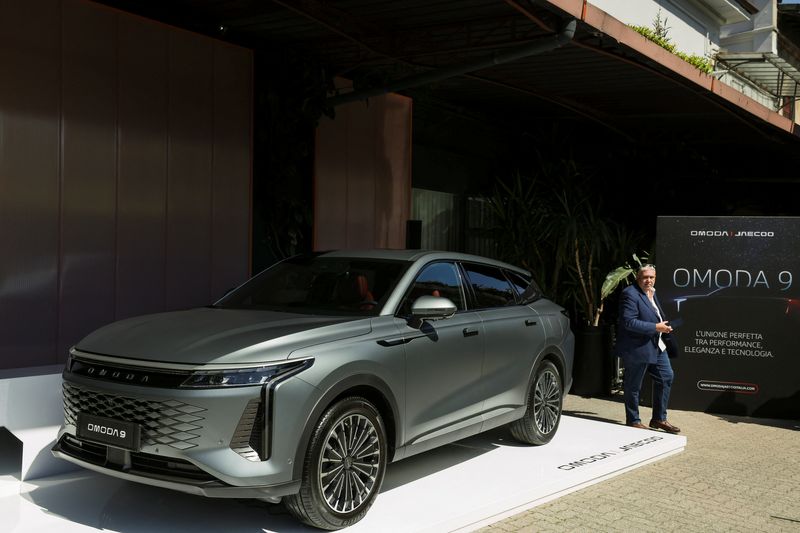

China’s Chery looking to expand car production in Europe, top executives say
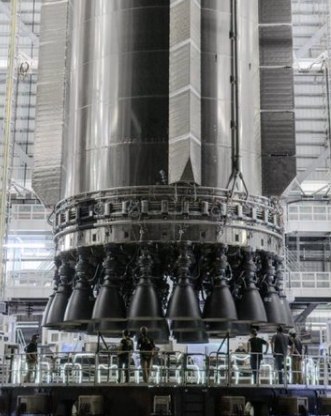
BOCA CHICA, Texas — Elon Musk on Sunday posted a striking image of SpaceX’s latest Starship Super Heavy booster, captioned simply “Starship,” that has already amassed more than 6.4 million views and ignited fresh excitement about the company’s push toward rapid reusability and eventual Mars missions in 2026.
The high-resolution photograph, taken inside a brightly lit assembly facility, shows the massive stainless-steel booster standing vertically with its base ring of 33 Raptor engines gleaming under industrial lights. Workers on elevated platforms provide dramatic scale, underscoring the vehicle’s enormous size — roughly 230 feet tall when stacked with the Starship upper stage. What stands out most is the strikingly clean appearance: pipes, wiring and external hardware have been dramatically decluttered compared with earlier prototypes, a visual testament to iterative engineering improvements.
Musk’s minimalist post, shared at 7:10 a.m. GMT on April 12, quickly drew enthusiastic responses from space enthusiasts, engineers and fans worldwide. Many highlighted the “V3” Raptor engines, which appear sleeker and more integrated than previous versions. One reply noted the “massively re-engineered and decluttered” design, while another praised the “clean look of Booster 19,” identifying the vehicle as the latest iteration in SpaceX’s flight-proven lineage.

The image arrives at a pivotal moment for the Starship program. SpaceX has conducted 11 integrated flight tests since April 2023, with the most recent successes in late 2025 demonstrating controlled landings, heat-shield performance and in-orbit refueling techniques critical for deep-space missions. According to a widely shared timeline in replies to Musk’s post, flights 3 through 6 and 10-11 achieved full or partial success, while earlier attempts provided essential data despite dramatic explosions that became internet memes.
SpaceX engineers have used each test to refine the Raptor engine family. The latest V3 variants feature simplified plumbing, improved thrust vectoring and higher reliability — changes that translate directly to the cleaner external appearance captured in Musk’s photo. Reducing complexity lowers manufacturing costs, shortens refurbishment times and moves the company closer to its goal of flying Starship as frequently as commercial airliners.
Industry analysts say the visual overhaul is more than cosmetic. “Every pipe and bracket removed from the booster reduces failure points and maintenance hours,” said one aerospace engineer commenting on the post. “This is the kind of iteration that turns a test vehicle into an operational system.” NASA has selected Starship as the lunar lander for the Artemis III mission, currently targeted for no earlier than September 2026, making these design refinements especially timely.
Musk has long described Starship as the vehicle that will make humanity multiplanetary. Fully reusable and capable of carrying more than 100 metric tons to low-Earth orbit, the system is designed to support crewed flights to the Moon, Mars and beyond. The booster’s 33 Raptor engines produce roughly 17 million pounds of thrust at liftoff — more than twice that of the Saturn V rocket that carried astronauts to the Moon in the 1960s and 1970s.
Saturday’s photo also reignited discussion about the next flight test. SpaceX has been preparing Starship 12 and Booster 19 for a potential launch window in May 2026, pending regulatory approval from the Federal Aviation Administration. Recent ground tests have focused on the new engine configuration and improved tile attachment on the upper stage. If successful, the flight would include attempts at both booster catch and ship landing — milestones Musk has called essential before attempting orbital refueling.
Public reaction on X mixed awe with practical questions. Some users posted side-by-side comparisons showing how much cleaner the current booster looks versus prototypes from 2023 and 2024. Others shared videos of past launches, reminding viewers of the dramatic progress. One reply captured the sentiment succinctly: “One day this picture is going to be in history books as ‘the moment everything changed.’”
Critics, however, remain focused on costs and timelines. Starship development has consumed billions of dollars, funded largely through SpaceX’s Starlink satellite internet revenue and NASA contracts. Skeptics question whether the pace can be sustained amid regulatory hurdles, supply-chain issues and the inherent risks of orbital rocketry. Musk has acknowledged the challenges but maintains that rapid iteration is the only path forward.
NASA Administrator Bill Nelson congratulated the team in a separate statement, noting that Starship’s evolution “brings us closer to returning astronauts to the lunar surface and, one day, to Mars.” The agency’s Artemis program depends on Starship for crewed lunar landings, with the vehicle also eyed for cargo delivery ahead of human missions.
SpaceX’s Texas Starbase facility, where the booster was photographed, continues to expand. New production bays, engine test stands and a second orbital launch tower are under construction to support higher flight cadence. The company aims to fly Starship multiple times per month by late 2026, a goal that hinges on the kind of design simplification visible in Musk’s image.
The post also served as a subtle recruitment tool. Musk has repeatedly invited engineers to join SpaceX to help “build the future.” The striking photo, with its industrial yet futuristic aesthetic, underscores the hands-on engineering culture that has produced reusable Falcon 9 rockets and is now scaling to Starship.
As of Sunday evening, the image continued to trend globally. Replies poured in from around the world, with many users setting the photo as their device wallpaper or creating AI-enhanced versions imagining the booster on the Martian surface. Memes comparing the clean design to luxury automobiles or sci-fi star cruisers proliferated, reflecting the blend of technical admiration and pop-culture fascination that surrounds SpaceX.
For SpaceX watchers, the photo represents more than a single vehicle snapshot. It encapsulates years of relentless testing, failure analysis and incremental victory. From the first explosive attempts that lit up South Texas skies to the controlled descents now routinely captured on camera, Starship has evolved in plain sight — a rare example of large-scale aerospace development conducted with unprecedented transparency.
Looking ahead, the coming months will test whether the cleaner, more refined booster can translate visual elegance into operational reliability. Regulatory reviews, static-fire tests and stacking operations are all expected before the next integrated flight. Success would clear the path for the Artemis III landing rehearsal and, eventually, uncrewed Mars missions Musk has targeted for the late 2020s.
Musk’s decision to share the image without fanfare or technical detail is characteristic. By letting the engineering speak for itself, he invites the public to share in the wonder while the team quietly continues its work. In an era of computer-generated hype, the raw authenticity of a real rocket in a hangar carries special power.
As the sun set over the Gulf Coast on Sunday, Starbase workers likely returned to their tasks with renewed energy. The booster in the photo — clean, powerful and ready — stands as a tangible symbol of ambition. For millions who viewed Musk’s post, it offered a momentary glimpse of humanity’s next giant leap, captured not in simulation but in polished stainless steel and flickering factory lights.
Whether Starship reaches orbit again in May or faces further refinements, one thing is clear: the vehicle Musk calls “the most powerful rocket ever built” continues to evolve in ways that capture the world’s imagination. Sunday’s viral image is only the latest chapter in a story that began with a simple question — how do we make life multiplanetary? — and is now measured in gleaming engines and cleaner boosters.

Simulations Plus: Down Substantially, Not An Automatic Buy

SEOUL, South Korea — In a bold clash between cutting-edge artificial intelligence and human esports excellence, Elon Musk has challenged League of Legends legend Lee “Faker” Sang-hyeok and his T1 team to face xAI’s Grok 5 in an exhibition match scheduled for 2026, sparking global excitement over whether machines can outplay the sport’s greatest player.

Musk, the tech billionaire behind Tesla, SpaceX and xAI, first floated the idea in a November 2025 post on X, declaring his confidence that the next-generation Grok 5 model could defeat the world’s top human League of Legends squad. He specifically named T1, the reigning champions fresh off their latest World Championship triumph, as the ultimate test.
The challenge comes with deliberate constraints designed to level the playing field and push the boundaries of AI perception and decision-making. Grok 5 would view the game solely through a camera pointed at a monitor, limited to human-level 20/20 vision, and operate with reaction times and clicks no faster than a professional player. No direct code access or superhuman processing speeds allowed.
T1 quickly embraced the proposal. The organization responded on social media with a GIF of Faker making his iconic “shh” gesture, accompanied by the message “We are ready. Are you?” The playful yet confident reply ignited fan frenzy across Korea and the global esports community.
Faker himself addressed the challenge during a December 2025 news conference in central Seoul. The 29-year-old midlaner, widely regarded as the greatest League of Legends player of all time with multiple world titles, expressed gratitude for AI companies showing interest in gaming while voicing strong belief in human superiority.
“Chess may have already fallen to AI, but I believe we can win the match next year,” Faker said. He highlighted the complexity of League of Legends — with its fog of war, team coordination, real-time adaptation and psychological elements — as areas where human intuition and experience could prevail over even advanced AI.
The proposed matchup has drawn parallels to historic man-versus-machine contests, such as IBM’s Deep Blue defeating chess champion Garry Kasparov in 1997 or Google DeepMind’s AlphaGo triumphing over Go master Lee Sedol in 2016. Yet League of Legends presents unique hurdles: a dynamic, team-based environment with imperfect information, rapid meta shifts and the need for creative outplays that go beyond raw calculation.
Musk framed the challenge as more than entertainment. He described it as a step toward testing progress in artificial general intelligence, inviting talent to join xAI to help develop the system capable of mastering complex games under realistic constraints. The limitations on vision and reaction time are intended to force the AI to rely on genuine strategic understanding rather than brute-force advantages.
As of April 2026, no exact date for the exhibition has been confirmed, but speculation points to an early-to-mid 2026 showdown, possibly as a high-profile event coinciding with major esports calendars. Rumors have swirled in the Korean server about mysterious high-win-rate accounts potentially linked to AI training, though xAI has not confirmed involvement.
Esports analysts note that current AI systems already excel at certain aspects of League of Legends, such as micro-level mechanics in controlled environments or drafting simulations. However, scaling that to full 5v5 professional play with camera-only input remains uncharted territory. Human players like Faker bring years of muscle memory, pattern recognition honed through thousands of games, and the intangible “read” on opponents that AI may struggle to replicate without embodied experience.
Korean fans have reacted with a mix of excitement and national pride. In online communities, many view Faker as an untouchable “God” of the game defending humanity against the ultimate technological challenger. Discussions often center on whether Grok’s probabilistic calculations can overcome Faker’s legendary intuition, especially in clutch moments inside the fog of war.
T1’s recent dominance adds weight to the stakes. The organization has consistently performed at the pinnacle of the LCK and international stages, with Faker remaining the cornerstone despite his age. His contract extension through at least 2029 ensures the veteran leader will likely anchor the squad for the anticipated AI showdown.
Riot Games, the developer of League of Legends, has not yet issued an official statement on facilitating the match, but the company has a history of supporting innovative exhibitions. Technical logistics — including secure setups for camera input, standardized hardware and broadcast integration — would require close collaboration between xAI, T1, Riot and event organizers.
Broader implications extend beyond gaming. The contest could showcase AI’s potential in real-time strategy, teamwork simulation and adaptive learning, with applications in robotics, autonomous systems and training tools. Conversely, a decisive human victory would reaffirm the enduring value of human creativity and experience in complex domains.
Critics of the challenge argue that even with constraints, an AI backed by vast computational resources might eventually dominate. Supporters of Faker counter that League’s depth — requiring split-second communication, baiting, mind games and meta awareness — favors the human side for the foreseeable future.
As preparations potentially ramp up, the esports world watches closely. Musk has a track record of ambitious public goals, from reusable rockets to neural interfaces. A Grok 5 victory would represent a landmark in AI achievement, while a T1 win would cement Faker’s legacy as the player who stood firm against the rise of machines.
In recent comments, Faker reiterated curiosity about how quickly AI companies can prepare such a system and emphasized the difficulty of mastering LoL’s intricacies. He welcomed the competition as a way to elevate the gaming industry’s profile and explore new frontiers.
The hype has already spilled into mainstream media, with viral shorts and discussions framing it as “God of Gaming vs. God of Tech.” Betting markets and prediction polls have emerged informally, though many fans simply relish the spectacle regardless of outcome.
Whether the match materializes in its exact proposed form remains to be seen, but the dialogue it has sparked underscores a pivotal moment: as AI capabilities accelerate, high-level competitive gaming offers a visible arena to measure progress against humanity’s finest.
For now, Faker and T1 stand ready. Musk and xAI appear equally determined. The 2026 League of Legends season may deliver more than just another world champion — it could deliver the ultimate test of silicon versus synapse in one of the world’s most popular competitive games.
As spring 2026 unfolds, anticipation builds in Seoul’s esports scene and tech hubs worldwide. One thing is certain: when Faker squares off against Grok, millions will be watching to see if the unkillable demon king can once again prove that human ingenuity holds the edge.

LONDON — More than 500 people were arrested Saturday during a peaceful sit-down demonstration in Trafalgar Square against the British government’s ban on the direct-action group Palestine Action, as organizers accused officials of complicity in what they called Israel’s genocide in Gaza.

Metropolitan Police said 523 individuals, ranging in age from 18 to 87, were taken into custody for showing support for the proscribed organization. Officers carried away seated protesters — many holding signs reading “I oppose genocide. I support Palestine Action” — amid applause and chants from the crowd, in scenes that organizers described as a deliberate act of mass civil disobedience.
The event, dubbed “Everyone Day” and organized by the Defend Our Juries campaign, drew hundreds to central London on April 11, 2026. Participants sat on the steps and pavement of the iconic square, refusing to disperse despite police warnings. Arrests began in the afternoon and continued into the evening, with police confirming the total at 523 by late Saturday.
Protest leaders framed the demonstration as resistance to both the ongoing crisis in Gaza and what they called an unlawful crackdown on free speech at home. “The UK government is complicit in genocide,” said a spokesperson for Defend Our Juries. “While it arms Israel and blocks accountability, it criminalizes peaceful Britons for simply opposing that complicity.” Organizers estimated around 500 to 1,000 people took part, calling it one of the largest acts of defiance since the ban was imposed.
Palestine Action, known for disrupting factories and offices linked to Israeli arms manufacturers such as Elbit Systems, was proscribed as a terrorist organization under the Terrorism Act 2000 in July 2025. The designation made public support for the group a criminal offense punishable by up to 14 years in prison.
In February 2026, the High Court ruled the ban unlawful and said it should be quashed. The government appealed, however, and the prohibition remains in force pending the outcome. Following the court decision, Metropolitan Police initially paused arrests but later reversed course, announcing in March they would resume enforcement because the law had not changed.
Saturday’s rally marked the first major test of that policy since the U-turn. Police said all arrests were for “showing support for a proscribed organisation.” No serious injuries or violent incidents were reported, though some demonstrators needed assistance due to age or mobility issues. Videos circulating online showed officers gently lifting elderly protesters, including one woman using a cane, as the crowd clapped in solidarity.
Human rights groups and civil liberties advocates expressed alarm at the scale of detentions. Critics argued the mass arrests highlight a shrinking space for protest in the UK, especially on issues related to Gaza. Since the ban took effect, nearly 3,000 people have faced arrest for holding similar signs at vigils across the country, according to campaigners. Many cases remain pending in the courts.
A government spokesperson defended the proscription, stating that Palestine Action’s tactics — including property damage and disruption — crossed into criminal territory and posed a threat to public safety and national security. “The law applies equally to everyone,” the spokesperson said. “Support for a banned terrorist organization is a serious offense, regardless of the cause.”
Palestine Action has rejected the terrorist label, describing its activities as non-violent direct action aimed at shutting down what it calls “genocide-enabling” arms production in Britain. The group and its supporters point to UK arms exports to Israel and diplomatic backing as evidence of complicity in alleged war crimes.
The demonstration unfolded against the backdrop of continued international scrutiny of the Gaza conflict. Organizers repeatedly linked domestic protest rights to broader calls for a ceasefire, an end to arms sales and accountability for alleged atrocities. “This is not just about one group,” one arrested protester told reporters before being led away. “It’s about whether ordinary people can still speak out when their government is on the wrong side of history.”
Legal experts noted the unusual nature of the arrests. Holding a placard, even one supporting a banned group, has traditionally fallen under protected speech, but terrorism legislation gives authorities broad powers. Lawyers from firms such as Hodge Jones & Allen have argued that continued arrests could be challenged as unlawful, especially after the High Court ruling.
Saturday’s events drew comparisons to historic acts of civil disobedience, with some protesters dressing in suffragette-style attire to emphasize themes of democratic resistance. Organizers said the strategy of mass participation was designed to overwhelm the justice system and highlight what they see as disproportionate policing.
Metropolitan Police emphasized professionalism in a statement posted on social media. “We are grateful to all the officers involved,” it read, adding that resources had been deployed to maintain public order in a busy central London location on a spring weekend.
Trafalgar Square, a traditional site for large gatherings, remained cordoned off for much of the day. Tourists and passers-by watched as lines of officers moved through the seated crowd, making selective arrests based on visible signage. Some demonstrators tore up their placards just before police approached, while others held them defiantly until the moment of detention.
The arrests come amid wider tensions over pro-Palestinian activism in the UK. Large marches against the war in Gaza have occurred regularly since October 2023, but the specific targeting of Palestine Action supporters has intensified debate over balancing security concerns with civil liberties.
Opposition politicians and rights organizations called for an independent review of policing tactics. “Mass arresting pensioners for holding signs is not how a mature democracy handles dissent,” said one commentator aligned with civil liberties groups.
As night fell, processed detainees were transported to various stations for questioning and potential charging. Many are expected to be released on bail pending further investigation, though some could face court appearances in coming weeks.
The episode is likely to fuel ongoing legal battles. The government’s appeal against the High Court decision is pending, and campaigners have vowed to continue “Everyone Day” style actions until the ban is lifted and related charges dropped.
For now, the 523 arrests represent one of the largest single-day tallies at a political demonstration in recent British history. Organizers hailed the turnout as proof of widespread public opposition to both the Gaza policies and restrictions on protest.
“This government can ban groups and arrest citizens, but it cannot ban conscience,” a Defend Our Juries statement read. “We will keep coming back — everyone, every time — until justice prevails in Gaza and at home.”
Police said investigations into the arrests would continue, with priority given to processing the large volume of cases efficiently. No immediate updates on charges were available late Saturday.
The Trafalgar Square action caps a week of heightened activity around Palestine-related issues, including smaller vigils and legal hearings. It also underscores the persistent divide in British public opinion over the Middle East conflict and the limits of acceptable protest.
As the sun set over Nelson’s Column, the square slowly returned to its usual Saturday evening rhythm, but the images of mass arrests are expected to reverberate in political and legal circles for weeks to come.

How Equity Income Can Cushion Inflation And Create Durable Returns
NEW YORK — Hologic Inc. (NASDAQ: HOLX) shares traded near $76 as of April 10, 2026, trading close to the $76-per-share cash offer from private equity firms Blackstone and TPG in a deal valued at up to $79 per share including a contingent value right, as the medical device maker’s go-private transaction advances toward expected closure in the first half of 2026.

Analysts maintain a consensus “Hold” rating on the stock, with 13 of 15 recent ratings classified as Hold and only two Buy recommendations. The average 12-month price target stands around $78.40, suggesting modest upside from current levels, though the pending acquisition has largely overshadowed traditional valuation metrics and made new coverage sparse.
The transaction, announced in October 2025 and approved by shareholders in early 2026, offers $76 in cash per share plus a non-tradable contingent value right (CVR) worth up to $3 per share tied to certain Breast Health revenue targets. The deal represents a significant premium to pre-announcement trading levels and has effectively capped near-term upside for public shareholders while providing a clear exit path.
Hologic, a leader in women’s health diagnostics, breast imaging and surgical products, reported fiscal first-quarter 2026 results on Jan. 29 showing revenue of $1.048 billion, up 2.5% year-over-year. Non-GAAP diluted earnings per share rose 1% to $1.04, though it missed consensus estimates of $1.09. The company suspended forward guidance and quarterly conference calls due to the pending buyout.
Deal Dynamics and Shareholder Implications
With the acquisition by Blackstone and TPG progressing, Hologic’s stock has traded in a narrow range near the $76 cash offer price. The CVR introduces additional potential value if Breast Health division performance meets predefined milestones, but its non-tradable nature limits immediate liquidity for investors.
Several analysts downgraded or adjusted ratings to Hold in recent months citing the takeover overhang. Argus, for instance, cut its rating from Buy to Hold in January. Coverage has thinned as the focus shifts from organic growth to deal completion risks, regulatory approvals and timing.
The deal carries an aggregate enterprise value reflecting confidence in Hologic’s stable cash flows from its core diagnostics and imaging businesses. However, some observers note headwinds in the Diagnostics segment and potential tariff impacts on imported components.
Business Performance and Segment Trends
Hologic’s portfolio spans Breast Health, Diagnostics, GYN Surgical and Skeletal Health. Breast Health remains a key growth area with innovations in 3D mammography and AI-enhanced imaging. The company has secured FDA approvals for products such as the Aptima HPV assay for primary screening, supporting long-term demand in women’s health.
Q1 2026 results showed modest U.S. revenue growth of 2%, with international performance mixed amid currency fluctuations. Gross margins held steady, though GAAP earnings per share declined due to one-time items and prior-year foreign exchange gains.
Longer-term, Hologic benefits from aging demographics, rising awareness of preventive screenings and technological advancements in minimally invasive procedures. Yet the company faces competition in diagnostics and pricing pressures in certain markets.
Since the deal announcement, Hologic has not provided updated full-year 2026 guidance, leaving investors to rely on historical trends and pre-deal projections. Analysts had previously forecast mid-single-digit revenue growth and steady margin expansion before the transaction altered the strategic outlook.
Risks and the Hold Consensus
The predominant Hold rating reflects the limited near-term catalysts outside the buyout. Once the deal closes — expected in the first half of 2026 — public trading will cease, and shares will convert to the offered consideration. This creates a binary outcome: investors either capture the deal premium or face delays/breakage risks, though the latter appear low given shareholder approval and private equity backing.
Valuation metrics show Hologic trading at a forward price-to-sales multiple above sector averages, partly justified by its specialized focus but also reflecting the acquisition premium. Free cash flow generation remains solid, supporting the attractiveness to private buyers seeking stable healthcare assets.
Potential risks include integration challenges post-close, regulatory scrutiny in women’s health products and broader economic impacts on elective procedures. Tariffs on medical equipment components could pressure margins if not offset by pricing or efficiency gains.
For investors still holding public shares, the path forward is largely passive — awaiting deal closure while monitoring any updates on CVR milestones or regulatory approvals. Speculation on deal breakage has largely faded, with shares hugging the offer price.
Strategic Context in Medical Devices
Hologic’s go-private move fits a broader trend of private equity interest in stable, cash-generative healthcare companies amid public market volatility. The transaction allows management to pursue longer-term investments without quarterly earnings pressure, potentially accelerating innovation in breast cancer detection and gynecological surgery.
CEO Stephen MacMillan announced plans to retire upon deal closure, signaling a leadership transition under new ownership. The incoming private equity owners are expected to focus on operational efficiencies and selective bolt-on acquisitions in women’s health.
Industry peers have shown mixed performance in 2026, with some medical device makers facing reimbursement and supply chain challenges. Hologic’s niche focus has provided relative resilience, contributing to its appeal as an acquisition target.
Outlook for Remaining Public Shareholders
As the buyout nears completion, the investment thesis for HOLX simplifies to capturing the offered consideration with minimal expected downside barring unforeseen regulatory hurdles. The modest average analyst price target above current levels largely reflects residual CVR value and any potential bumps before closing.
Investors who bought well before the deal announcement have locked in substantial gains. Those entering near current levels face limited upside beyond the cash offer and CVR, making new positions less compelling unless expecting delays that could allow trading above the offer.
With no “Sell” ratings in recent consensus and the transaction providing a clear floor, the stock remains a Hold for existing holders awaiting conversion. New buyers should weigh the short remaining public float period and low liquidity against the near-certainty of the deal terms.
Hologic’s legacy as a leader in women’s health diagnostics and imaging will continue under private ownership, potentially with greater flexibility for R&D and expansion. For public market participants, the story effectively ends with the buyout close, marking the conclusion of an era as an independent Nasdaq-listed company.
Whether the Blackstone-TPG ownership unlocks further value through operational improvements or strategic repositioning remains to be seen post-closing. For now, with the deal on track, Hologic stock offers stability near the offer price rather than traditional growth-driven volatility.

Buy or Sell? AI Connectivity Leader Eyes 30-50% Gains Amid Explosive Demand

Netflix’s First Original Hit Just Got Much Harder To Watch 13 Years Later
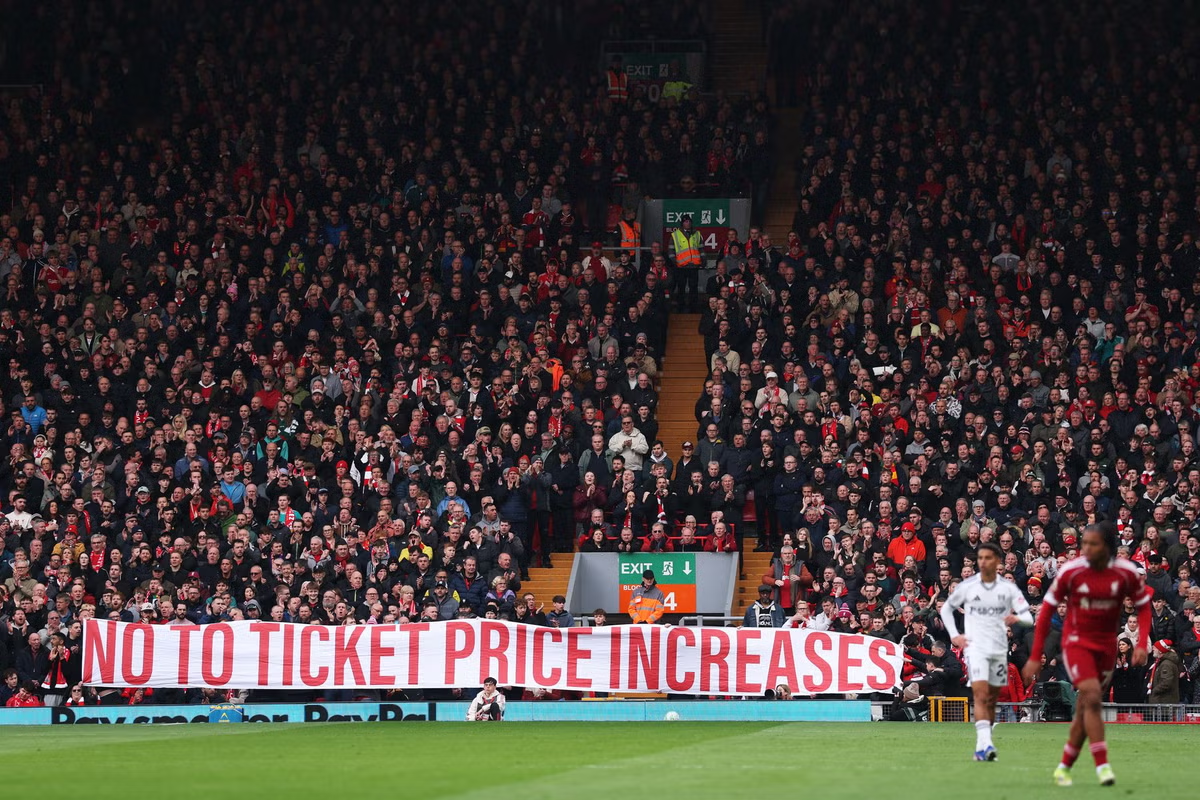
Virgil van Dijk backs Liverpool fans in protest against ticket prices

Why Israel is blocking foreign journalists from entering

Bitcoin: We’re Entering The Most Dangerous Phase

Alan Cumming Brands Baftas Ceremony A ‘Triggering S**tshow’

Achieving financial freedom isn’t permission to abandon your purpose on earth. #worldwide

Moneyview Personal Loan App | How To Apply Money View Loan | Moneyview Personal Loan Telugu 2026

How Small Actions Change Financial Struggles | A Simple Economics Story
-

 Business6 days ago
Three Gulf funds agree to back Paramount’s $81 billion takeover of Warner, WSJ reports
-

 Politics2 days ago
US brings back mandatory military draft registration
-

 Fashion2 days ago
Weekend Open Thread: Veronica Beard
-

 Tech5 days ago
How Long Can You Drive With Expired Registration? What Florida Law Says
-

 Fashion6 days ago
Massimo Dutti Offers Inspiration for Your Summer Mood Board
-
 Sports2 days ago
Man United discover Nico Schlotterbeck transfer fee as defender reaches Dortmund agreement
-

 Fashion5 days ago
Let’s Discuss: DEI in 2026
-

 Crypto World3 days ago
Canary Capital Files SEC Registration for PEPE ETF
-

 Business2 days ago
Tesla Model Y Tops China Auto Sales in March 2026 With 39,827 Registrations, Beating Cheaper EVs and Gas Cars
-

 Crypto World4 days ago
Bitcoin recovers as US and Iran Agree a Ceasefire Deal
-

 Politics2 days ago
Malcolm In The Middle OG Turned Down ‘Buckets Of Money’ To Appear In Reboot
-

 Business2 days ago
OpenAI Halts Stargate UK Data Centre Project Over Energy Costs and Copyright Row
-

 Business19 hours ago
Ireland Fuel Protests Enter Day 5 as Blockades Spark Shortages and Government Prepares Support Package
-

 Tech6 days ago
Italian court says Netflix must refund customers up to $576 over price hikes
-

 Tech6 days ago
Gamer Restores the Original PlayStation Portal From Two Decades Ago
-

 Tech6 days ago
Samsung just gave up on its own Messages app
-

 Tech6 days ago
Haier is betting big that your next TV purchase will be one of these
-

 Tech6 days ago
The Xiaomi 17 Ultra has some impressive add-ons that make snapping photos really fun
-

 Politics2 days ago
LBC Presenter Mocks Trump Over Iran War Failures
-

 Tech6 days ago
Save $130 on the Samsung Galaxy Watch 8 Classic: rotating bezel, sleep coaching, and running coach for $369
You must be logged in to post a comment Login