Apart from my academic training in Biology and Chemistry, I hold a Ph.D. in Environmental Science with a specialization in Bio-Medical Waste Management. My areas of research and analysis include clean technologies, renewable energy, pollution control systems, and environmental compliance solutions. I follow companies operating in these sectors using a research-driven approach that integrates regulatory trends, sustainability metrics, and scientific evaluation to assess long-term growth opportunities, risks, and value potential. By actively tracking and analyzing companies engaged in environmental management, renewable energy, and green technologies, my work aims to blend scientific depth with market analysis to provide practical insights that help investors understand financial outcomes and emerging opportunities. At a personal level, I also provide free stock market consultation to a select group of friends, relatives, and former colleagues. I am associated with Seeking Alpha analyst Eudaemon Research.
Analyst’s Disclosure: I/we have no stock, option or similar derivative position in any of the companies mentioned, and no plans to initiate any such positions within the next 72 hours. I wrote this article myself, and it expresses my own opinions. I am not receiving compensation for it (other than from Seeking Alpha). I have no business relationship with any company whose stock is mentioned in this article.
Seeking Alpha’s Disclosure: Past performance is no guarantee of future results. No recommendation or advice is being given as to whether any investment is suitable for a particular investor. Any views or opinions expressed above may not reflect those of Seeking Alpha as a whole. Seeking Alpha is not a licensed securities dealer, broker or US investment adviser or investment bank. Our analysts are third party authors that include both professional investors and individual investors who may not be licensed or certified by any institute or regulatory body.
Morrisons has launched a new supermarket price match commitment covering more than 500 weekly essentials, as the grocer seeks to drive a recovery in its share of the UK grocery market
Graeme Whitfield Editor of Journal and Northern Agenda and Henry Saker-Clark Press Association Deputy Business Editor
16:41, 24 Aug 2026Updated 16:46, 24 Aug 2026
A woman holding a shopping basket full of groceries(Image: Copyright remains with handout provider)
Morrisons has promised customers that it will not be undercut on price by its key supermarket competitors across hundreds of everyday items. The commitment signals a potential further escalation in the price war amongst the UK’s leading grocers as they compete to attract more shoppers.
Morrisons, which operates approximately 500 supermarkets and 1,700 convenience shops, will be hoping its pricing strategy can help fuel a recovery in its slice of the UK grocery market, which has dwindled in recent years.
Advertisement
It ranked as the sixth-largest supermarket group by market share, holding an 8.5% share, in the 12 weeks to August, according to recent figures from Worldpanel. The Bradford-based retailer was recently overtaken by Lidl and continues to trail behind Aldi, Asda, Sainsbury’s and Tesco.
On Monday, Morrisons unveiled its “unbeatable prices” commitment, vowing it will not be beaten on price by any of its five major supermarket rivals. The pledge will encompass more than 500 weekly essentials, ensuring shoppers can purchase products at the same price or lower than they would find at competing stores.
The chain confirmed it will guarantee low prices on fresh produce including bananas, tomatoes and carrots, as well as staples such as bread, butter and chicken fillets.
A Morrisons member of staff holding a shopping basket full of groceries(Image: Copyright remains with handout provider)
The commitment also extends to fresh lines across the retailer’s Market Street counters, including its fishmongers and bakeries. The move follows two years after Morrisons initially introduced a price match against hundreds of Aldi and Lidl products as part of its counter-offensive against the German discount retailers.
Advertisement
Alex Paver, customer and marketing director at Morrisons, said: “Customers shouldn’t have to choose between great prices and great quality – and at Morrisons, they don’t have to. Our unbeatable price commitment means customers can trust that the prices on these products simply won’t be beaten by Asda, Tesco, Sainsbury’s, Aldi or Lidl.
“And uniquely at Morrisons, that unbeatable value comes alongside the quality, freshness and expert service we’re famous for – from bread baked fresh in store to food prepared by our skilled Market Street colleagues.”
The announcement arrives days after accounts revealed that Morrisons shed almost 5,000 jobs last year as part of efforts by the private equity-backed grocer to shore up its finances and turn around its performance.
The company is aiming to take advantage of a surge in demand for skilled people in data centres and other critical infrastructure
16:53, 24 Aug 2026Updated 16:59, 24 Aug 2026
Managing director of Stratum Partners Max Fanning, founder of Human Capital Investment Group (HCIG) Ross Bayston, and NEL investment executive Susan Snowdon(Image: NEL Fund Managers)
Leeds-based Human Capital Investment Group (HCIP) is set to accelerate its expansion across global mission critical infrastructure markets following an investment from a Northern Powerhouse fund.
The firm has secured investment from the NPIF II – NEL Smaller Loans, which is managed by NEL Fund Managers as part of the Northern Powerhouse Investment Fund II (NPIF II). The investment will support the launch and growth of Stratum Partners, HCIG’s specialist engineering and construction talent business, which is focused on delivering engineering and commissioning talent and specialist talent solutions across sectors including data centres, energy and power infrastructure, and complex technical construction.
Advertisement
The investment will provide growth capital to accelerate the delivery of its model. It will allow the company to scale at pace internationally, while continuing to strengthen its operational infrastructure and long-term platform strategy.
A key focus for the business will be the continued growth of the global data centre and digital infrastructure markets, which has been seen particularly in the US.
Ross Bayston, founder of HCIG, said: “This investment represents a significant milestone for both HCIG and Stratum Partners. We’ve already proven the model and, with new investment, are now scaling at pace. Driven by surging global demand across data centres, power and energy, our focus is on building specialist talent businesses supporting critical infrastructure.
“What stood out with NEL was their understanding of ambitious founder-led businesses and their pragmatic, partnership-led approach throughout the process. The relationship felt commercially aligned from day one.”
Advertisement
Susan Snowdon, investment executive at NEL, led on the investment. She said: “The investment into Stratum Partners comes at an exciting time for both the business and the wider sector.
“We regularly speak to companies facing recruitment challenges, and with Ross’s background and expertise, I have every confidence that he and his team will make a meaningful difference to the businesses they support. I wish them every success as they deliver on their growth plans.”
Operated by the British Business Bank, the £660m Northern Powerhouse Investment Fund II provides loans from £25,000 to £2m and equity investment of up to £5m to help a range of small and medium-sized businesses to start up, scale up or stay ahead. The fund was established to drive sustainable economic growth by supporting innovation and creating local opportunity for new and growing businesses across the North.
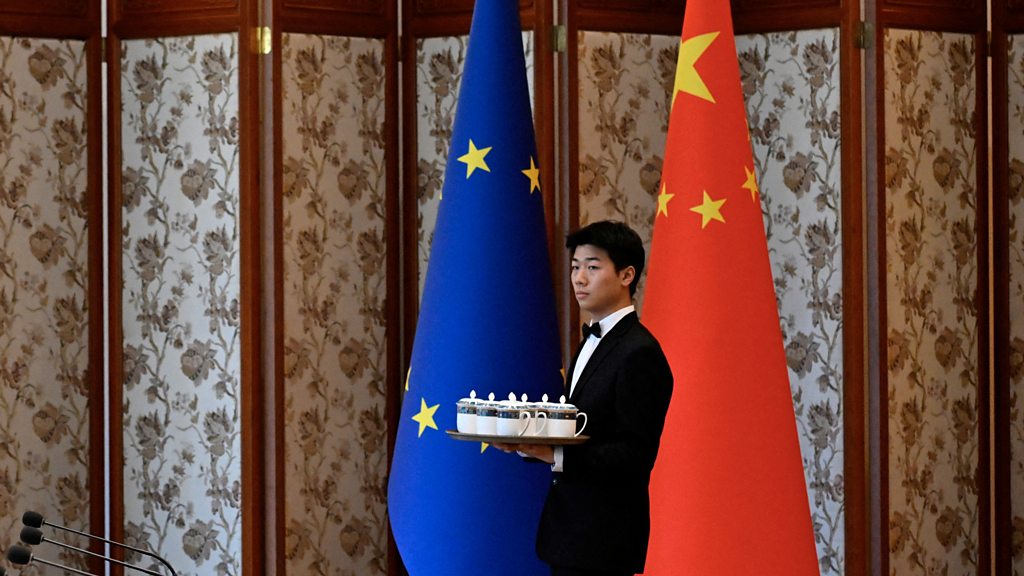
Europe is taking an increasingly tough line on trade with China, accusing Beijing of subsidising exports and flooding European markets with cheap goods. Businesses and governments warn that Chinese competition is putting European industries and jobs at risk, while China’s growing dominance of supply chains is adding to concerns in Brussels. Ed Butler asks whether these accusations are fair, what Europe can do about them, and whether the two sides are heading for a new trade war.
Producer/presenter: Ed Butler
You can email the team: businessdaily@bbc.co.uk
Advertisement
(Photo: A staff member prepares for the arrival of Chinese Vice Premier Ding Xuexiang and EU Executive Vice-President for Clean, Just and Competitive Transition, Teresa Ribera during China-EU Sixth High-Level Environment and Climate Dialogue, Beijing, 14 July 2025, Credit: Reuters)
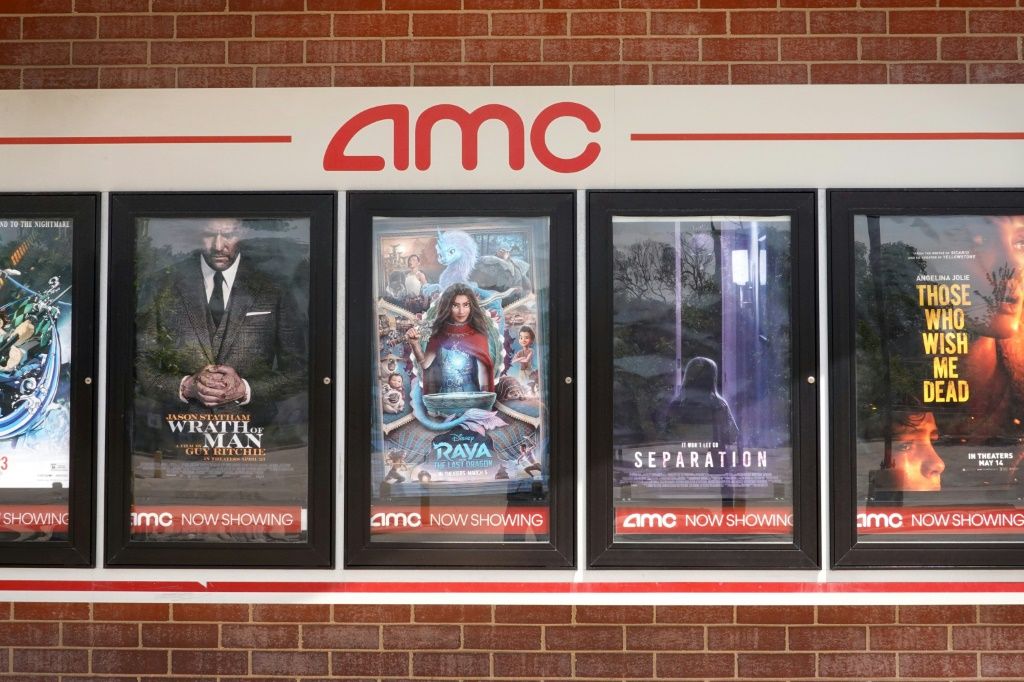
LEAWOOD, Kan. — Shares of AMC Entertainment Holdings Inc. advanced more than 7 percent on Monday, extending a multi-week recovery fueled by strong summer box-office results and investor attention on proposed changes to the company’s corporate governance.
AMC stock traded at $2.74, up $0.19 or 7.42 percent, according to market data. The gain came as the largest theatrical exhibitor in the United States continued to benefit from elevated attendance driven by major studio releases and as shareholders prepared for an annual meeting that includes structural board reforms.
The recent strength follows a series of operational highlights. Earlier in August, AMC reported that it generated the highest total revenue, admissions revenue and food-and-beverage revenue for a single weekend in the company’s 106-year history. The record stretch, covering Wednesday through Sunday, was powered in part by the domestic and international debut of “Spider-Man: Brand New Day” and strong performance of premium formats, including IMAX screenings.
That weekend built on earlier success with Christopher Nolan’s “The Odyssey,” which delivered a robust opening and sustained second-weekend momentum. AMC said the film contributed to the most successful IMAX run in the company’s history through its first two weekends of release. Attendance figures reflected the broader industry rebound, with millions of moviegoers visiting AMC and its international Odeon locations during key summer frames.
Advertisement
In its second-quarter results reported in July, AMC posted the highest quarterly revenue and adjusted EBITDA in its history. Total revenue reached approximately $1.60 billion, up 14.2 percent from the year-earlier period. Adjusted EBITDA rose about 70 percent to $321.4 million. The company also reported free cash flow of $190.1 million for the quarter and an improved cash position.
Chief Executive Adam Aron highlighted the strength of the release slate during the earnings discussion. “We are thrilled by the box office momentum that built through the second quarter, driven by blockbuster titles that brought moviegoers back in droves,” he said. Aron further noted that 2026 was on track to become the strongest post-pandemic year for movie theaters at both the domestic and global box office, supported by a packed calendar of tentpole releases and studio commitments to exclusive theatrical windows.
Beyond the box-office numbers, investor focus has turned to governance. Proxy materials filed for the company’s annual meeting scheduled for Sept. 24 include a proposal to declassify the board of directors. Under the plan, staggered three-year terms would be eliminated, with all current director terms set to expire at the September meeting. Proponents of such changes typically argue that annual elections increase accountability; the proposal forms part of a broader set of structural adjustments under consideration by shareholders.
The combination of improving fundamentals and governance discussion has supported a roughly 20 percent advance in the shares over the trailing month, according to market observers tracking the recovery. Theater operators have pointed to higher per-patron spending on concessions and premium seating as key contributors to profitability even when attendance remains below long-term historical peaks. AMC has emphasized its ability to convert higher traffic into stronger food-and-beverage sales and to leverage fixed-cost operating leverage as revenues rise.
Advertisement
The industry backdrop remains constructive. Multiple films have delivered domestic opening weekends exceeding $75 million during the current cycle, and the overall domestic box office has posted its strongest quarterly performances in years. Premium large-format screens continue to capture a growing share of revenue, rewarding exhibitors that invested in IMAX, Dolby and other enhanced auditoriums.
AMC still carries a substantial debt load and has used equity offerings in recent periods to bolster liquidity. Those capital raises increased the share count, a factor that remains part of the longer-term investment debate. Management has stressed progress on cash generation and the operating leverage inherent in the exhibition model once attendance and ticket prices recover.
Monday’s advance occurred against a backdrop of selective strength in consumer-discretionary names and continued interest in the theatrical recovery narrative. Analysts who cover the sector have noted that sustained slate strength through the remainder of the year, including additional major releases scheduled for the fall and holiday periods, will be critical to maintaining momentum.
For theater chains, the path forward depends on consistent delivery of event films that draw audiences back into cinemas rather than relying solely on streaming alternatives. AMC’s recent results demonstrate that when the product is strong, the combination of ticket sales, concessions and premium formats can produce record financial outcomes. The company’s ability to sustain that performance while addressing its capital structure and governance framework will shape investor sentiment in the coming months.
Advertisement
Shareholders will have the opportunity to vote on the board declassification and related proposals at the September meeting. In the interim, attention is likely to remain on weekly box-office reports, attendance trends and any further updates on debt management or capital allocation.
The stock’s move higher reflects a market that is responding to tangible improvements in the core exhibition business after several challenging years. Record weekend revenues, the strongest quarterly adjusted EBITDA in company history and visible progress on the summer slate have provided concrete data points. Whether those gains prove durable will depend on the continued flow of compelling theatrical titles and the company’s execution on both operational and corporate-governance priorities.
AMC remains the largest theatrical exhibitor by screen count in the United States and maintains a significant international presence through its Odeon circuit. That scale positions it to capture a substantial share of industry upside when attendance rises. At the same time, the competitive landscape includes other major chains and the ongoing evolution of consumer viewing habits.
For now, the narrative around AMC centers on recovery rather than pure speculation. The 7 percent gain on Monday added to a period of positive price action driven by box-office results and anticipation of governance changes. Investors and industry participants will continue to monitor the weekly numbers and the outcome of the upcoming shareholder meeting for further signals on the company’s trajectory.
Thailand’s southernmost provinces experienced a wave of coordinated violence this week, with dozens of arson attacks and bombings striking multiple districts simultaneously. The scale and coordination of these attacks have raised alarm among security officials and prompted swift government response, while also drawing international attention to a decades-long insurgency that continues to destabilize the region.
Scale and Scope of the Attacks
According to multiple reports, more than 50 coordinated arson attacks hit southern Thailand, with Yala province bearing the brunt of the violence. The attacks left at least two to three people injured, including two women, though officials confirmed there were no fatalities. The coordinated nature of the strikes—hitting numerous locations across several districts simultaneously—suggests significant planning and organizational capability behind the perpetrators, who are widely believed to be linked to the long-running separatist insurgency in Thailand’s Deep South.
The violence spanned three southern provinces, prompting Thailand’s Prime Minister to convene an emergency meeting with security chiefs in the immediate aftermath. The Thai army also issued public warnings following the attacks, signaling heightened alert status across the region as authorities worked to assess the full extent of damage and identify those responsible.
Cross-Border Concerns and Regional Impact
The geographic proximity of the affected provinces to Malaysia has raised concerns on both sides of the border. Reports indicate that explosions were felt in Malaysian villages, with residents describing how “the walls shook” from blasts occurring in southern Thailand, particularly affecting the border town of Pasir Mas. Malaysian authorities moved quickly to reassure the public, confirming that no Malaysian nationals were affected by the attacks and that no militants had crossed into Malaysian territory following the incidents.
Advertisement
Malaysia’s foreign ministry, Wisma Putra, subsequently advised Malaysian citizens to exercise caution before crossing the border into the affected areas, reflecting the seriousness with which regional authorities are treating the security situation. This cross-border dimension underscores how the Deep South conflict, while rooted in domestic Thai politics and history, has implications for regional stability and international relations.
Government Response and Security Gaps
In the wake of the attacks, Thai officials have acknowledged significant shortcomings in intelligence gathering. A senior security official, Sihasak, admitted to intelligence gaps that existed prior to the Deep South attacks, raising questions about the effectiveness of current counter-insurgency strategies and monitoring systems in the region.
This admission comes as Thailand’s government has been simultaneously pursuing new approaches to resolve the insurgency through dialogue. A negotiator revealed that Thailand is seeking a new path to end the deadly southern insurgency, suggesting that officials recognize the limitations of purely security-focused responses and are exploring alternative strategies, including potential peace talks, to address the root causes of the decades-long conflict.
Economic Motivations Behind the Violence
Analysis of the attacks suggests they may be strategically targeting Thailand’s economic interests in the region. One opinion piece characterized the violence as “aimed at destroying the economy” of the Thai Deep South, suggesting that the perpetrators’ objectives extend beyond simple political or religious grievances to include deliberate economic disruption as a tactical tool in their broader campaign against the Thai state.
Advertisement
This economic dimension adds complexity to the security challenge, as it suggests attackers may be targeting infrastructure, businesses, and economic activity specifically to undermine government legitimacy and control in the region, making the insurgency not just a security issue but one with significant implications for regional development and investment. For broader context on how security incidents affect the investment climate, see coverage from Thailand Business News.
These recent attacks occur against the backdrop of what has been described as Thailand’s “long stalemate” in the south—a conflict that has persisted for years without clear resolution. The insurgency in Thailand’s Deep South, rooted in ethnic Malay-Muslim separatist sentiment in provinces including Yala, Pattani, and Narathiwat, has resulted in thousands of deaths since violence escalated in the early 2000s.
The coordinated nature of this week’s attacks represents an escalation that challenges previous patterns of more isolated incidents, suggesting either increased operational capacity among insurgent groups or a strategic shift toward more visible, simultaneous demonstrations of force designed to maximize psychological and economic impact while testing government security capabilities.
Looking Ahead
As Thai authorities continue their investigation into the coordinated attacks, the incident has reignited debate about the most effective path forward for resolving the Deep South conflict. The combination of acknowledged intelligence failures, ongoing peace negotiation efforts, and the apparent economic targeting strategy employed by attackers suggests that Thailand faces a multifaceted challenge requiring both improved security measures and renewed diplomatic engagement.
Advertisement
The government’s response in the coming weeks—balancing security crackdowns with continued negotiation efforts—will likely prove critical in determining whether this represents an isolated escalation or the beginning of a new, more intense phase in Thailand’s decades-long southern insurgency.
Moderna CEO Stéphane Bancel joins ‘Mornings with Maria’ to discuss the company’s landmark cancer vaccine partnership with Merck. Bancel details the promising Phase 3 melanoma trial results and outlines Moderna’s latest financial growth outlook.
Moderna’s stock is riding high after news of a personalized cancer treatment, but CEO Stéphane Bancel is warning about a bigger threat: China’s state-backed push to challenge the U.S. in biotechnology.
In an interview on “Mornings with Maria” Monday, Bancel said that while Washington pulls back on mRNA funding, Beijing is pouring state money into biotechnology to challenge the U.S. Bancel said keeping drug manufacturing on American soil, including at Moderna’s facilities in Massachusetts, helps protect both U.S. patients and America’s lead in healthcare.
Advertisement
“I think the government has an active role to play in taking risk for really innovative medicine,” Bancel told FOX Business’ Cheryl Casone, “and indeed, if you think about what’s happening around the world, we know, for example, that in China there’s a lot of mRNA investments.”
“The technology has already proven itself during COVID with the vaccine, now with cancer, as I said, very soon in rare genetic disease, and I think that we want to make sure that there is investment because those investments in the long term help American patients,” he continued.
The Chinese Communist Party has designated biotechnology as a “strategic emerging industry” and provided state financing and subsidies to support domestic firms as China seeks to dominate key parts of the biotechnology industry, according to the National Security Commission on Emerging Biotechnology.
Advertisement
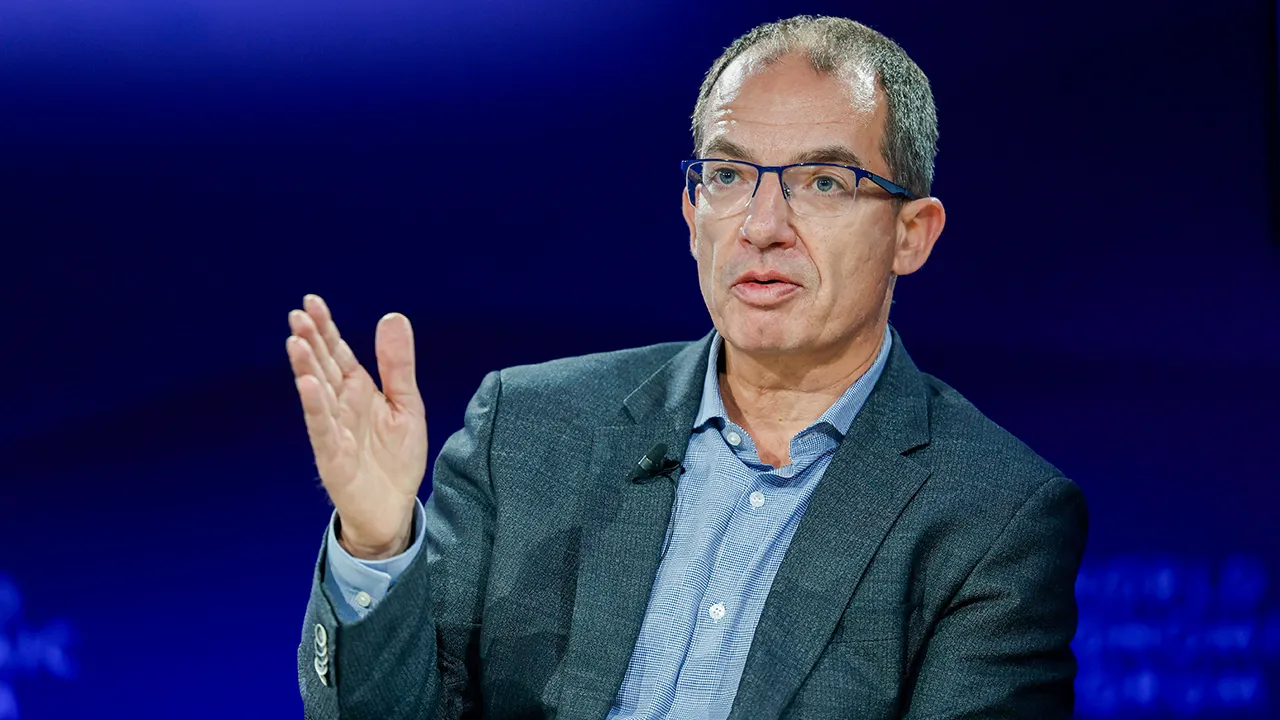
Stephane Bancel, CEO of Moderna Inc., during a panel session at the World Economic Forum (WEF) in Davos, Switzerland. (Getty Images)
Meanwhile, the U.S. Department of Health and Human Services (HHS) announced last August that it would wind down nearly $500 million worth of mRNA vaccine development projects through the Biomedical Advanced Research and Development Authority (BARDA).
HHS did not immediately respond to Fox News Digital’s request for comment.
Instead of relying on foreign supply chains for pharmaceutical supplies and ingredients, Bancel said Moderna has countered this threat by expanding its manufacturing operations in Massachusetts, ensuring that advanced personalized medicines are engineered and produced on American soil.
Gatestone Institute senior fellow Gordon Chang warns that China is leveraging its state-directed economic model to challenge U.S. AI dominance. He emphasizes the critical role of data center capacity in the ongoing technological race.
Advertisement
“The team has done an amazing job to shrink the manufacturing process, the machines, because it’s the same technology that will make millions of doses in one reactor,” Bancel said. “It’s actually happening in America, in Massachusetts, in a factory that we built and that is ready to go.”
“In terms of cost, because it’s not using human material, like CAR-T cell therapy is a very expensive price because it’s a very expensive manufacturing process. In our case, it’s all used with enzyme[s], it’s in water, it is a very different thing. As we get the data and we get closer to discussing pricing, but we don’t have the very high cost of goods that the self-therapy products have.”
Moderna CEO Stéphane Bancel discusses positive cancer vaccine trial results and the impact GLP-1 drugs on ‘Mornings with Maria.’
Advertisement
Moderna’s shares surged 177% on Aug. 19 after the company and Merck announced that their personalized mRNA treatment, combined with Merck’s Keytruda, met key endpoints in a Phase 3 melanoma trial, giving investors new evidence of mRNA’s potential beyond infectious-disease vaccines.
“If you look at the company since day one, we try to use our technology across many therapeutic areas: Infectious disease, vaccine of course, cancer,” Bancel noted. “So last week was a big step forward. We became an oncology company, but I think by the end of the year, we should also become a rare genetic disease company.”
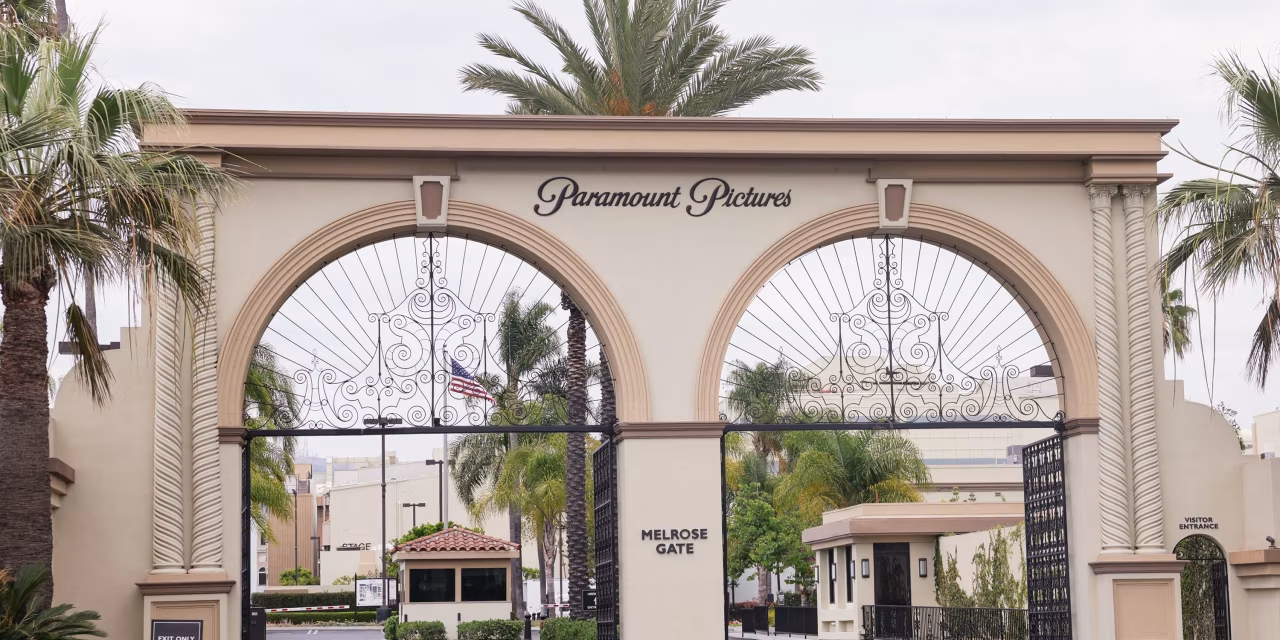
California and 11 other states filed an antitrust suit last month to block an $81 billion deal to combine Paramount and Warner, a transaction that would bring together two of Hollywood’s biggest producers and distributors of entertainment and news content.
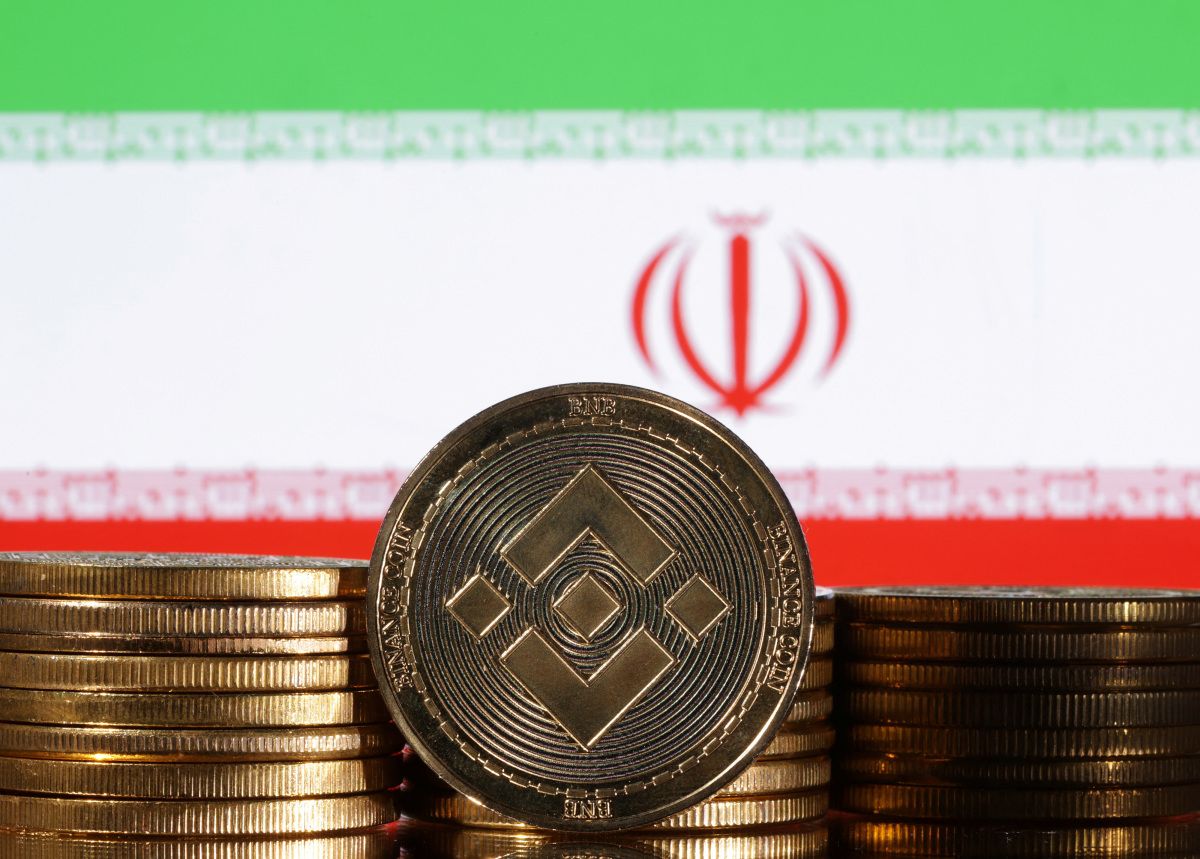
TEHRAN — Iran’s currency plunged to a record low against the U.S. dollar on Monday as the Trump administration prepared to announce a major expansion of economic sanctions aimed at further isolating Tehran amid a months-long conflict.
The rial traded at more than 2 million to the dollar on the open market, according to tracking sites that monitor unofficial rates used by ordinary Iranians and businesses. Figures put the rate around 2.02 million to 2.04 million rials per dollar, a sharp decline from levels earlier in the year and reflecting mounting pressure on an economy already strained by war, inflation and restricted oil exports.
The currency drop coincided with statements from senior U.S. officials framing the next phase of pressure as an “economic D-Day.” Treasury Secretary Scott Bessent, in a Financial Times opinion piece, wrote that the United States was entering the endgame after military operations had significantly degraded Iran’s capabilities.
“At dawn begins an economic D-Day — the single greatest financial offensive ever marshalled against an adversary,” Bessent wrote. “Our objective is to sever every economic lifeline that sustains the tyrannical regime until Tehran stands alone.”
Advertisement
Bessent was scheduled to provide further details at a news conference later Monday. Officials indicated the measures could include broader secondary sanctions targeting entities and countries that continue commercial or financial ties with Iran. China remains Iran’s largest trading partner and primary destination for its oil, raising questions about how aggressively Washington would pursue measures that could affect Beijing ahead of high-level diplomacy.
President Donald Trump amplified the message on social media, declaring that Iran was in freefall. “IRAN IS COMPLETELY COLLAPSING!!!” he posted.
The conflict began in late February following U.S. and Israeli airstrikes. What U.S. officials initially suggested would be a limited campaign has stretched into a prolonged confrontation involving military action, restricted shipping through the Strait of Hormuz and successive rounds of economic pressure. Iran has responded by limiting traffic through the strategic waterway, which normally carries roughly one-fifth of the world’s oil trade, and by issuing warnings about vessels that violate its transit rules.
On Monday, Iranian authorities continued diplomatic contacts even as they rejected yielding to pressure. Pakistan’s army chief, Field Marshal Asim Munir, met Iranian Parliament Speaker Mohammad Bagher Ghalibaf in Tehran. Ghalibaf, who heads Iran’s negotiating team, criticized the United States for failing to honor prior understandings.
Advertisement
“The commitments of both sides under the memorandum are clear. It was the United States that, by failing to uphold its commitments, prevented stability from being established in the region and provided yet another reason for mistrust,” Ghalibaf said, according to Iranian state media. He added that Tehran remained committed to the conditions outlined in the agreement and that “It is the United States that must fulfill its commitments under the agreement.”
Iranian President Masoud Pezeshkian has publicly acknowledged the limits of prolonged conflict, stating that Iran “cannot continue with war forever,” while other officials have maintained a harder line against dialogue under current conditions.
The Strait of Hormuz remained a central flashpoint. Oman’s foreign minister was scheduled to visit Tehran for talks on the waterway and related regional issues. Iran’s Persian Gulf Strait Authority warned that vessels accused of violating transit rules could face penalties including detention or confiscation. At the same time, Tehran granted permission for some Iraqi oil tankers to pass after appeals from Baghdad. Iranian security officials have threatened to further restrict oil flows if economic pressure intensifies.
Separately, Saudi Arabia’s national shipping company Bahri reported that one of its tankers experienced a security incident in the Red Sea. Yemen’s Iran-backed Houthi movement claimed it had targeted the vessel with a ballistic missile. Bahri said all crew members were safe and that it was coordinating with relevant authorities while monitoring developments. The Houthis have repeatedly stated they will continue actions against vessels they link to Saudi Arabia and its allies.
Advertisement
Analysts noted that Iran’s economy has developed resilience after decades of sanctions, allowing it to sustain significant pain through informal networks, alternative trading routes and domestic adjustments. Yet the combination of a naval blockade limiting oil exports, currency collapse, high inflation and disrupted trade has intensified hardship for ordinary citizens. Food and consumer prices have risen, and the International Monetary Fund has projected economic contraction and elevated inflation for the year.
U.S. officials argue that sustained and comprehensive financial isolation, combined with military degradation of key capabilities, will eventually force concessions. Critics and some regional observers question whether secondary sanctions severe enough to cut off major partners such as China are politically feasible in the near term, particularly with diplomatic calendars involving Beijing. Others point to the political calendar in the United States, where elevated energy prices and economic concerns could influence midterm elections.
Bessent’s framing of the campaign as the largest financial offensive of its kind underscores the administration’s shift toward economic tools after months of kinetic operations. Previous U.S. sanctions regimes on Iran, dating back decades, have restricted trade, blocked assets and limited access to the international financial system. The current effort seeks to close remaining loopholes involving oil smuggling, front companies, exchange houses and third-country facilitators.
Iranian officials have portrayed the intensified economic focus as evidence that military objectives remain unmet. They continue to insist on the implementation of earlier understandings while rejecting what they describe as coercive pressure. Regional diplomacy involving Pakistan, Oman and other parties continues in parallel, focused on de-escalation pathways and the management of shipping through the Strait of Hormuz.
Advertisement
The record low for the rial serves as a visible indicator of the cumulative strain. Official exchange rates set by Iran’s central bank remain more favorable than the open-market rate that most citizens and private businesses must use. The gap between the two rates has widened as confidence erodes and demand for hard currency rises.
As Treasury officials prepared the formal announcement of new measures, markets, shipping companies and governments across Asia, the Middle East and Europe watched for details on the scope of secondary sanctions and any exemptions or enforcement timelines. The effectiveness of the campaign will depend on the degree of international compliance, the resilience of Iran’s parallel economy and the willingness of major buyers to absorb higher costs or seek alternative supplies.
For now, the combination of currency collapse, restricted oil flows, ongoing military friction and diplomatic maneuvering defines a conflict that has already lasted far longer than early projections. Both sides continue to assert that time and pressure favor their position, while ordinary Iranians confront the immediate consequences of a rial that has lost substantial value and an economy under sustained assault.
MANCHESTER, England — Manchester City striker Erling Haaland has traded his signature long blond hair for a short buzz cut, capturing the moment on video along with the surprised reaction of his girlfriend, Isabel Haugseng Johansen.
In a YouTube video posted Sunday, the 26-year-old Norwegian forward sat for the dramatic transformation as his hairstylist sectioned and cut away the locks that had become a recognizable part of his public image. Johansen, who has been dating Haaland since 2021, watched the process unfold and offered a series of candid responses.
“I think I will cry,” Johansen said early in the video as the haircut began. Later, holding a thick lock of the blond hair bound by a tie, she added, “Oh my god.”
Advertisement
She briefly left the room during the final stages of the buzz cut. Upon returning to see the finished result, her reaction was immediate. “Oh my God. Oh my God. Oh my God, darling!” she exclaimed. “It looks nice! I think you look cute.”
Haaland responded with a humorous challenge: “Cute?” Johansen then adjusted her assessment while holding his face between her hands. “You look really tough,” she said, before making a playful face toward the camera as if second-guessing the wording.
Johansen joked about the scale of the change. “I will wake up in the morning and be like, ‘Who’s that’?” she said. When Haaland asked whether she preferred the longer hair or the new short style, she answered, “Both?” He replied, “Good answer.”
Haaland framed the haircut as a deliberate reset. In the video and accompanying social media posts, he described it as preparation for the new season. “New season, new trim,” he wrote on Instagram alongside before-and-after images. He elaborated that he had considered the change immediately after the World Cup but delayed it because of a busy schedule. “Season starts now, so it’s time to get a fresh start,” he said.
Advertisement
The forward noted that he wanted a military-style cut. He also recalled advice from retired Swedish star Zlatan Ibrahimovic, who had once told him never to cut his hair because “your strength is in your hair,” a reference that Haaland linked to the biblical story of Samson. After the cut, Haaland shared reactions from others in his circle, including light-hearted responses from Ibrahimovic and Oasis musician Noel Gallagher, a known Manchester City supporter.
Haaland’s long hair had been a distinctive visual element throughout recent seasons and during the summer’s World Cup, where he drew widespread attention. The decision to remove it marks a visible shift as the Premier League campaign begins. He debuted the new look in Manchester City’s opening match, continuing his role as one of the league’s most prominent attacking players.
The video of the haircut and Johansen’s reactions circulated quickly among soccer fans and on social platforms. Many noted the contrast between the flowing style that had become familiar and the much shorter result. Haaland’s willingness to document the process, including the emotional and humorous exchanges with his girlfriend, added a personal dimension to what might otherwise have been a routine grooming update.
Johansen’s presence in the video underscored the couple’s long-term relationship. Their public appearances and occasional shared moments have occasionally drawn media interest, though both have generally kept personal details limited. Her progression from near-tears at the start of the cut to approving descriptions of “cute” and “tough” provided a light narrative arc within the short clip.
Advertisement
For Haaland, the change aligns with a pattern among athletes who alter their appearance at the start of a new campaign as a symbolic reset. High-profile players frequently use haircuts, new kit or training routines to signal a fresh mental approach after major tournaments. In this case, the visual impact was heightened by how closely the long blond hair had been associated with Haaland’s on-field identity.
Manchester City enters the season with expectations of contending at the top of the Premier League and in European competition. Haaland remains central to those ambitions as the team’s primary goal threat. The haircut itself carries no bearing on performance, yet it generated more immediate conversation than many routine preseason stories.
The video also captured intermediate stages of the process, including a temporary look with shorter bangs before the full buzz. Haaland posted additional selfies documenting those steps. The final result is a close-cropped style that contrasts sharply with the shoulder-length hair he had maintained for several years.
Public reaction mixed nostalgia for the previous look with acceptance of the new one. Some fans expressed mild disappointment at the loss of the distinctive long hair, while others welcomed the change as a clean, practical option for the physical demands of a long season. Haaland appeared unconcerned by the range of opinions, focusing instead on the personal meaning he attached to the timing.
Advertisement
Johansen’s final measured response — preferring both styles — reflected a pragmatic stance common in long-term relationships when one partner makes a visible change. Her initial emotional reaction and subsequent supportive comments illustrated the mix of surprise and affection that often accompanies such moments.
Haaland has built a reputation for direct communication with fans through social media and occasional video content. The decision to film the haircut and include his girlfriend’s unfiltered responses fits that approach. It offered supporters a brief, unpolished glimpse into a personal decision rather than a carefully staged announcement.
As the Premier League season progresses, attention will return to Haaland’s performances on the pitch. The buzz cut may fade as a topic once match results and goal tallies dominate discussion. For a brief period, however, the transformation and the accompanying reactions provided a light counterpoint to the usual focus on transfers, tactics and results.
The episode also highlighted how even routine personal choices by high-profile athletes can generate widespread interest. Haaland’s hair had become part of his recognizable brand. Removing it created a moment of novelty that fans, media and fellow players registered immediately.
Advertisement
In the video, the sequence from long hair to buzz cut unfolds with a mix of hesitation, humor and eventual acceptance. Johansen’s comments — from the fear of tears to the dual endorsement of “cute” and “tough” — gave the clip its memorable core. Haaland’s own explanation tied the change to the rhythm of the soccer calendar: a new season, a clean slate and a willingness to leave a familiar look behind.
Whether the shorter style remains for the full campaign or evolves further remains to be seen. For now, the Norwegian striker has marked the transition with a public, light-hearted record of the moment and the people closest to him reacting in real time.


















































You must be logged in to post a comment Login