
Politics
What Is Integrative Intelligence? | HuffPost UK Life


There are many different types of intelligence, according to some research. Yes, there’s the kind that helps you score well on exams (linguistic intelligence may be useful for remembering written content, while the logical/mathematical kind could assist in solving sums).
But others, like spatial intelligence, might be overlooked.
Other theories, like the Triad of Intelligence, suggest we can break smarts down into three broad groups: cognitive intelligence, emotional intelligence, and integrative intelligence.
That last kind has been called the “rarest” form of intelligence, though that’s hard to prove for sure.
However, Lee Chambers, psychologist and CEO of Male Allies UK, told HuffPost UK that “it’s fair to say that modern life doesn’t often support this type of thinking and the practice of it”.
What is integrative intelligence?
Integrative intelligence involves being able to connect seemingly unrelated things together. It’s linked to analogical reasoning, or the ability to apply the rules of one field or discipline to another.
It’s “not about having knowledge across many domains, it’s how we connect that knowledge in useful and meaningful ways,” Chambers said.
“It appears as being able to hold multiple ideas and perspectives, to spot the connections and conflicts between them, to join dots others don’t see to solve problems and challenges and to see how things relate.”
Some examples could include “taking a concept from psychology and applying it to leadership, [or] noticing a connection between biology and technology design”.
In the past, scientists have used crochet to understand complex geometry and economics to explain species change. Processes like these may fall under the umbrella of integrative intelligence.
“Ultimately, it’s not a type of intelligence we can wave around as superior. It’s much more about how we structure our thinking and how we come to judgements,” added Chambers.
How can I tell if I have integrative intelligence?
It’s not like there’s a test you can take to see whether you have integrative intelligence, the psychologist shared. Instead, “it requires you to reflect on how you think and interact”.
He advised asking yourself the following:
- Are you known for combining subjects that seem unrelated and random to others?
- Are you always wanting to explore the shades of grey in between the black and white?
- Do you enjoy deep learning that is outside of your main specialism? Are you comfortable with ambiguity?
- Are you able to change your thoughts when new information challenges what you think you know?
Lee also stated that people with integrative intelligence “can be seen as the person who goes off on tangents… The person who doesn’t stay in their own lane”.
Sometimes, integrative intelligence can be misunderstood
The expert added that while those with integrative intelligence might see connections between seemingly unrelated topics, often, “it’s hard to get that message across to someone who can’t”.
In fact, he continued, he often finds that the “environments that need this kind of thinking most, struggle to recognise it because it doesn’t fit neatly into a single box”.
And though he doesn’t think we can tell for sure whether integrative intelligence is dying out, Chambers said that a focus on specialism and curated algorithms could make it harder to achieve.
“We do now have a world where the ability to learn about different fields and perspectives is greater than ever before,” he ended.
“But if we don’t step outside of our algorithms and actively seek to diversify what we consume and the space we create to practice integrating and connecting, we will limit our ability [to] foster this type of intelligence. We need time, depth and friction to cultivate it.”



According to newly released data, graduate jobs have dropped by nearly 50%. AI is among the given explanations for this drop; as are rising costs. Regardless of what’s most at fault here, though, this clearly isn’t a sustainable situation if it’s accurate:
‘The number of graduate jobs has fallen almost in half in the past year, according to new figures, as employers cut entry-level roles in favour of AI and battle rising costs’ – BBC https://t.co/dKT0XhBtyn
— Mark Williamson (@markrwilliamson) August 24, 2026
Data
The data in question comes from the job site Adzuna. As reported by the BBC:
Jobs website Adzuna said it had just 8,383 graduate vacancies listed in July, down from 15,397 at the same point last year.
Adzuna also found competition among job seekers across all levels is rising, with an average of 2.14 job seekers per vacancy in July, up from 1.93 a year earlier.
Adzuna is a search site for jobs. The service allows you to search every job site at once, with roles showing up in one easy-to-scroll list:

Adzuna is an aggregator, meaning most jobs aren’t directly uploaded to the site. As such, there could be other reasons why graduate jobs from sites like Indeed or TotalJobs aren’t pulling through. We’ve seen no suggestion this is happening here; at the same time we can’t confirm it isn’t. We also can’t confirm employers haven’t simply shifted their recruitment efforts to means other than job sites.
We aren’t the only ones to be suspicious anyway:
This is considered the most reliable data source for the top 100 graduate recruiters, and shows vacancies down 5.1% year-on-year for the 3rd year running. Interestingly though, grads from a small group of Russell Group plus are still highly targeted. https://t.co/howjH1l6nk
— Natasha Porter OBE (@NPorter_) August 24, 2026
The 5.1% figure mentioned above was for 2025, with High Fliers writing:
Two-fifths of the country’s top employers recruited fewer graduates in 2025 and recruitment fell in ten out of fifteen key industries & business sectors. Employers’ latest recruitment targets show that there are likely to be even fewer graduate jobs available in 2026 – a further decrease of 0.5% compared with last year. Graduate recruitment at the UK’s leading employers has now slumped by 24.5% since 2022 – a larger reduction than was recorded during the pandemic in 2020 or in the ‘Great Recession’ of 2008-2009, when graduate vacancies fell by 12.3% and 23.3% respectively.
A drop of 50% would suggest we’re in a period of employment uncertainty which is twice as bad as the Great Recession.
The final thing we’ll note here is that the Office for National Statistics has used Adzuna as a data source as recently as 2024. In other words, the site has served as a trusted source of data in the past.
Freefall
People are justifiably worried about generative AI taking their jobs. After all, the AI companies themselves have warned us that’s what’s going to happen. As we’ve reported in the past, however, many companies have ended up rowing back on their AI initiatives. In part this was because many of them failed to realise any observable return on investment. This problem became more obvious this year when OpenAI and Anthropic jacked up their prices:
Microsoft Bans Claude Code After AI Costs More Than The Humans It Replaced
— NewsWire (@NewsWire_US) June 1, 2026
In other words, even if UK companies are hiring fewer graduates because of AI right now, that’s not necessarily a sustainable situation.
The other side to this story which is gaining attention is the following, as reported by the BBC:
Businesses have said employer national insurance and minimum wage hikes have made hiring more expensive, particularly for junior staff.
This is leading to coverage like the following:
Worst Graduate Jobs Market on Record: "This Is Exactly What Labour Were Warned About"
Vacancies for university leavers collapse by 45 per cent to the lowest level ever recorded…https://t.co/yCnO9i9BC1 — Conservative Post
 (@ConsPost) August 24, 2026
Employers and right-wingers will seize on any opportunity to claim that paying people a fairer wage is a travesty. This isn’t to say well-meaning moves can’t have negative consequences, but it is certainly reason to be suspicious of how this data is being reported.
Big problems with AI
Regardless of whether it’s a 50% drop or less than that, and whether it’s due to AI, there are clearly problems in the job market. As ever, the right will tell you that the only solution is to abolish tax for the rich and to mandate in-work poverty for the rest of us. The battle is convincing the broader public it’s in their best interests for things to improve for them – not for our increasingly bloated 1%.
Featured image via Gatot Adriansyah (Canva Image Library)
By Willem Moore

Jolyon Maugham KC has hit back at an attack piece against his non-profit Good Law Project (GLP) published in the Daily Mail. On 23 August, Maugham posted:
I’ve seen some astonishingly stupid attack pieces in the Mail in my time but this one really does take the biscuit.
It’s based on something we put out three months ago – on our own website – from which you can tell it’s not news but an attempt to scare us off calling out the Mail’s vile racism.
It won’t work.
The article in question, published on 23 August, was titled “Woke barrister’s ‘hypocrisy’ as he takes left-wing campaign group Good Law Project offshore.”
After listing the inaccuracies of the article, the Good Law Project founder stated that:
It’s why we need press regulation – so they [news outlets] are accountable for what to all intents and purposes are their lies.
‘Enormously hypocritical’… is it?
The Mail article stated in its introduction that:
legal experts say the move is ‘enormously hypocritical’ because becoming a trust will ‘give it the benefits’ of being set up like a charity without having oversight from regulators.
One of the legal experts who stated that the trust structure would give the GLP the ‘benefits’ of a charity without Charity Commission oversight was… the Good Law Project itself. Three months ago, on 8 May, it posted an update about its ownership structure, stating that:
When Good Law Project was set up in 2017 by Jolyon Maugham he wanted the public interest features of a charity but outside of the moving political guardrails policed by the Charity Commission. So he adopted a structure which mirrored many of the features of charities.
The GLP explained that Maugham set up the GLP as a not-for-profit company limited by guarantee. This means that it can’t declare dividends.
‘An internet troll’
The Daily Mail also quoted “veteran barrister” Barbara Rich, who said:
the restructuring meant that GLP would operate ‘without the burden of charity registration’.
This would be a lot more meaningful if the GLP had ever operated as a charity. However, it has not and never did. Likewise, in his social media post, Maugham pointed out that the GLP won’t receive tax relief — a major benefit of being a charity.
Its lack of charity status gives it more free rein to challenge both the government and the Charities Commission itself, which it has done on multiple occasions. Rich called this being “pretty antagonistic towards the Charity Commission generally”.
In his social media post, Maugham also called Rich “an Internet troll” who posts “obsessively” about both the GLP and Maugham himself.
Good Law Project gets the Daily Mail treatment
The May GLP article went on to explain the reasoning behind its shift to Jersey:
Another feature of charities is that they are not owned by any individual or individuals. Instead they exist for a purpose. As Good Law Project approaches its tenth anniversary, the time has come to replicate this feature too.
Jolyon has been replaced as owner of Good Law Project by a Jersey ‘purpose’ trust. The purpose of the trust will be to hold the membership interest in Good Law Project. It has been set up in Jersey because the UK’s legal system has no such thing as ‘purpose’ trusts, except for charities, and Jersey’s legal system does.
The trust structure also means that other people can now join as trustees, rather than Maugham having sole ownership. This, the GLP stated, also meant that it could operate “a bit more like a charity board”.
However, it’s very hard to read ‘we’re restructuring in Jersey’ without immediately thinking ‘tax dodge’. In anticipation of this conclusion, the GLP stated clearly that it:
will remain UK resident for tax purposes and there will be no change to how its income is taxed. There will be no change to its articles, the asset lock will obviously remain in place, and it will continue to be unable to declare dividends.
‘Pathetic’ attack against Good Law Project
Unfortunately, the Mail neglected to mention that part of the GLP’s statement. Instead, it chose to quote James Mews, of Jersey’s Amati Law, who chaired a steering group to “improve Trusts Law on the island”. Mews stated that:
A Jersey purpose trust has a greater level of confidentiality and privacy regarding control, ownership and resources than a UK company.
A UK company registered at Companies House will still be subject to stringent, regulatory oversight.
This is completely true. However, as Maugham pointed out:
it deliberately misses the point Good Law Project will continue to have exactly the same UK company law obligations it always did.
The reporting is pathetic, intellectually dishonest and exactly the sort of thing you would expect the Mail to carry.
And that’s just what we at the Canary would say of the Daily Mail, to boot. Well, at least in polite company, in any case…
Featured image via the Canary
By Grace
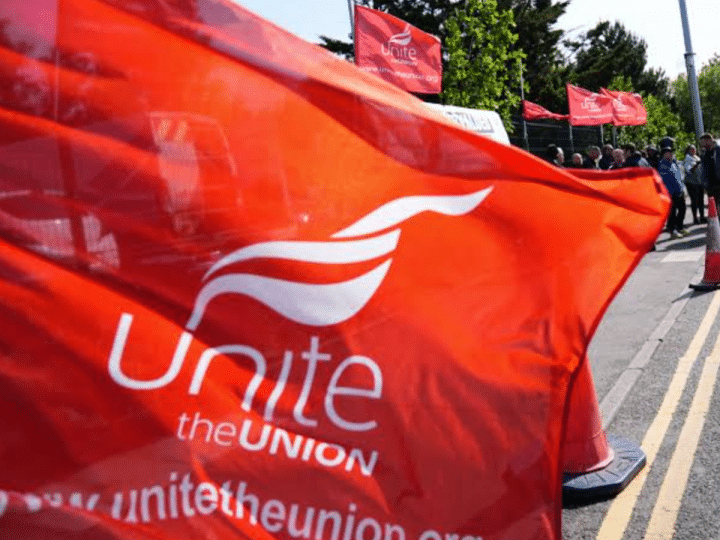
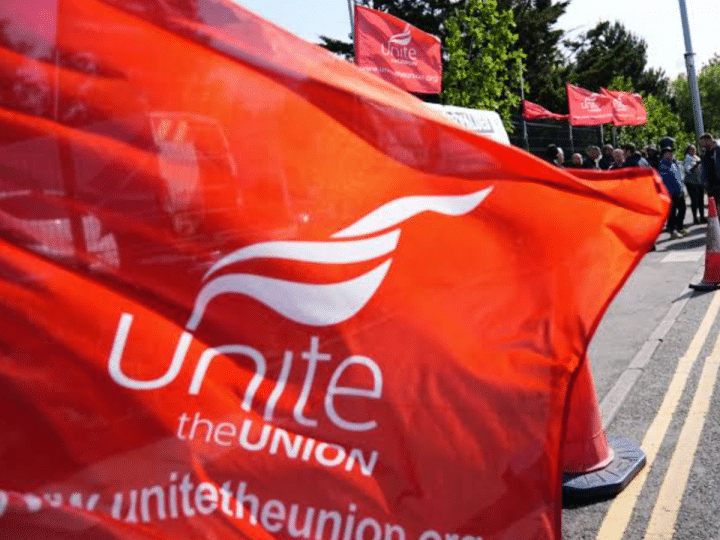
Former Unite general secretary Len McCluskey has commented on the Unite union’s cover-up of bullying by his successor Sharon Graham’s husband Jack Clarke.
Specifically, McCluskey has condemned Unite’s habitual flinging of smears to try to divert attention from Graham’s anti-union behaviour. The union did this to protect Clarke from the consequences of his actions — and from Skwawkbox-Canary’s exposure of both.
Background
Skwawkbox first exposed years ago that staff working under Clarke had recorded months’ worth of his bullying and misogyny in 2018 and presented it to Unite as part of a formal grievance against him. After lobbying by Graham, the union covered up the abuse – and initiated disciplinary proceedings against Clarke’s victims.
Eventually, the bullied staff were paid off. Lawyers, while trying to deny the content of the recordings, inadvertently confirmed Unite had destroyed it. But in August 2026 Maddison Wheeldon and Skwawkbox exposed surviving copies of the transcripts of the abuse. Moreover, Skwawkbox also revealed Graham’s own words as she haggled over the terms of Clarke’s slap on the wrist. They also published details about her discussing the removal of the abused staff.
And when contacted for comment, the union’s statement flung smears — not at Clarke’s abusive husband or the incumbent general secretary’s nepotism and cover-up, but at previous general secretary McCluskey and his team.
Slap-back
McCluskey first spoke out on Graham’s smear campaign against him a year ago, describing it as “6 pages of smears and innuendo”. Even some of Graham’s habitual allies condemned it, too.
But he didn’t wait so long this time. In the comments of the Canary article that exposed Clarke and quoted Unite’s scurrilous deflection, McCluskey condemned the ‘disgraceful’ smears as a complete lack of “professional ethics” on the part of Unite and its spokesman. Furthermore, he also — perfectly accurately — refuted the additional Unite smear that Skwawkbox and the Canary were exposing Graham for McCluskey:
It’s is disgraceful for Steven Pinder to issue a statement like that ( even if under the orders of Sharon Graham ) has he no professional ethics left. I have no contact or involvement with either skwakbox [sic] or cannery [sic] and never have done. This constant mudslinging without a shred of evidence in the hope some might stick is deplorable. How sad to see what our once great union has become
Leopard spots
Since his 2018 bullying and Graham’s cover-up — and her win in the 2021 Unite general secretary election — Jack Clarke has not changed his spots.
Clarke was installed, under Graham and outside Unite’s usual appointment procedures, to run a newly-created unit. This happened despite being on a final warning for his abuse. He then continued his pattern, creating such outrage and disgust among staff of his new department that they went on strike too. Most of the women forced to work with him quit. But Graham again sided with the bad boss against the workers — and her aides even organised against them.
Despite running a union, Graham was repeatedly accused of using appalling, anti-union tactics against Clarke’s staff and other workers employed by Unite, leading to several strikes. Unite has also attempted to disrupt attempts by officers to organise in their workplace. And the union has spent huge amounts of members money on legal action – also to protect Clarke.
Birds of a feather
Nor is Graham untouched by allegations concerning her own behaviour. In 2023, she was accused of launching such an abusive tirade against former BBC journalist Ben Davies, her new communications director, that he quit and received compensation. So rapid was the departure that he was gone before his appointment was even announced. Unite responded with smears then, too – and repeatedly since.
In the first of the latest batch of exposés, Maddison Wheeldon wrote:
Husband and wife duo must be held accountable
Sharon Graham seems reluctant to take heed of how serious these issues are as she promises to uphold and advocate for workers’ rights.
However, these issues have only continued in the new department Jack Clarke had been handed by his wife, outside of the union’s typical appointment procedures.
There have been reports of similar complaints, disputes and even strike action due to allegations of ongoing abusive behaviour and anti-union tactics.
Now, the damning evidence detailing the extent of Clarke’s misdemeanours has been exposed, answers and accountability must follow.
That applies now more than ever.
Featured image via the Canary
By Skwawkbox
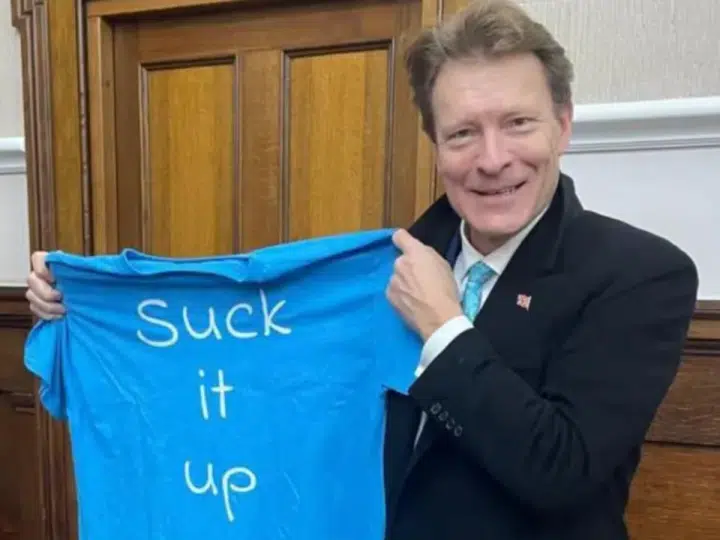

On Monday 24 August, Reform UK’s deputy leader — Richard Tice — appeared in an interview on Times Radio. He set out his far-right party’s plans to prioritise married, British-born, working couples under the age of 35 for affordable housing.
Tice gave the interview ahead of a press conference in which he’ll set out the policy in more detail. However, even from the Sparknotes version he gave on air, this sounds like a fascist-friendly car crash. Take a listen, if you can stomach it:
British married couples would get priority for social housing, says Reform UK deputy leader Richard Tice, but he was unclear where same-sex married couples would be on that list.
"As long as we're building plenty of homes, then there will be sufficient room for them."@CalumAM pic.twitter.com/ePkijvq13K — Times Radio (@TimesRadio) August 24, 2026
‘The housing system is broken’ (says the landlord)
Tice begins with a boast:
My lifetime has been spent building homes, in property. I’ve actually build more homes than the previous 24 housing ministers this century combined. So, we’re gonna get stuff done, we’re gonna build homes, and the simple fact is the housing system is broken, the affordable housing system is broken, and Reform will fix it.
Of course, it’s much easier to build homes when you’ve no need to make them affordable. And then, you can really save money by (allegedly) dodging hundreds of thousands of pounds in tax.
According to the Times, Tice channeled shareholder dividends through dormant businesses and an offshore trust between 2018 and 2021, avoiding a possible £600,000 in taxes. The Reform deputy, true to his party line, called this an ‘establishment smear’
And don’t even get us started on Reform’s inability to budget a County Council, never mind a sweeping affordable housing program. However, the party (like Tice, allegedly) have a habit of forgetting they have to pay their taxes. That probably helps smooth the cracks in the balance book a little.
Reforms says ‘having British children…is a good thing’
When asked whether a married couple would get priority over a single person, Tice answered that:
Yes, that is the preference. Well, families are a good thing. Having British children, British-born children is a good thing. We need to encourage that. And it’s a very natural, normal thing, has been over centuries, for people to get together, to get married, have children and contribute to their communities. And everything that we’re doing is focused solely on that.
Lots of British families making lots of British babies. No fascist undertones to that at all, no sir.
It’s funny how often things that are “very natural” and “normal” need to be encouraged by government policy. One would think that, if people have to be threatened with having no home in order to get married and have babies, then getting married and having babies might not actually be all that natural.
‘In an ideal world’ you’d be married
Tice’s interviewer then reminded him that a single person might also have children. The Reform deputy replied:
They might. But in an ideal world, it is well known that married couples – children in married couples, for example – will do really well at school. And we want to encourage that.
Of course, sometimes life doesn’t work out. We understand that. But as an objective, that is surely preferable.
Just so it’s said: marriage is a legal contract. It’s not a bloody magic spell, it doesn’t suddenly make people into better parents. Not getting married isn’t a sign that ‘life doesn’t work out’ – not that we’d expect Reform to encourage people making their own choices.
The children of married couples do well in large part because their families have two incomes to support them. Rent profiteers like Tice and his ilk have ensured that dual-incomes are one of the few ways to keep a stable roof over your head — and even that’s getting dicey.
And, of course, if Reform was actually interested in using social engineering to create families with higher-attaining children, they’d be trying to encourage people to create gay families. After all, multiple recent studies suggest that kids raised by ‘same-sex’ couples do better in schools.
Except that Reform isn’t actually interested in educational attainment — it’s interested in conformity. Plus, the party still has a homophobia problem — with leader Farage stating that legalising gay marriage was “wrong” as recently as last year.
Sure, sure, he was arguing that it should have been a manifesto commitment, blah blah. ‘I support the gays, but not their reckless disregard for political due-process’ – I bet, buddy.
‘There’ll be an allocation list’
Speaking of which, the Times Radio interviewer asked Tice where a married same-sex couple would fit on his your priority list. As you’d expect, the answer was… well, it was a bit weird, really. Tice replied:
Well there’ll be an allocation list. But at the end of the day, what we’re focused on is young British workers first. Same-sex couples, British couples, working – they will have priority over those coming from overseas.
‘There’ll be an allocation list’ – not even an elegant swerve of a simple question there, deputy party leader. Reform really are losing their touch.
Even the softball interviewer couldn’t help but pick Tice up on the fact that married British couples would also have priority over other British couples who weren’t married under Reform’s new plans. Here, Tice really lost his thread:
There will be, within the British community of young workers, ah, as long as we’re building plenty of homes, there will be sufficient room for them, because if you add up the half-a-million-plus homes currently occupied by overseas people, overseas nationals, and the 500,000 we’re going to build over the next decade, that’s a million homes for young British workers.
That’s the right thing to do, it’s the fair thing to do. Reform are going to fix this broken system.
As a reminder, Labour pledged to build 1.5m new homes over the course of parliament. Sure, they’re currently running behind, but then, that’s new homes we’re talking about — not the half a million Tice is apparently planning on nicking from immigrants… again, no fascist undertones there in the slightest.
Join us tomorrow for some analysis of Reform’s actual housing policy, rather than Tice’s hopefully piss-poor explanation of it. But for now, as a rough guideline: if it’s the right thing to do, and the fair thing to do, you won’t catch Reform UK proposing it on the radio.
Featured image via the Canary
By Grace

If you’ve been spending more quality time with – or around – your teenager over the summer, you might’ve overheard some unusual sayings and phrases.
From chatting about larping to telling mates to ‘call an Uber’, there’s always some new terminology or phrase entering their vocabulary.
And the latest, according to language trends experts at Preply, is the term ‘polyester’.
What does ‘polyester’ mean in teen slang?
Polyester – in the usual sense – is a synthetic fabric derived from petroleum-based compounds. A lot of clothes are made from it thanks to its quick-drying and moisture-reducing properties (hence why a lot of sportswear contains it).
But Gen Alpha and Gen Z are now using ‘polyester’ in a completely different way.
Globally, Google searches for ‘polyester slang’ spiked by 141% in the past week, according to Preply.
What does it mean now, then? Madeline Enos, the brand’s language trends expert, said: “Social media users have turned ‘polyester’ into a critique to call out content that is perceived as low-quality, generic, or inauthentic online.”
“The term has gained traction among Gen Z, calling out polyester lifestyles, videos, and even people,” she continued.
In June, a much-viewed video described similarities between the rise of AI in creative media and the trajectory of synthetic fabrics, like polyester, in fashion. The poster called the comparisons “eerily similar” and suggested, “polyester was marketed as a miracle fibre, but when companies started to make things out of 100% polyester, people hated it”.
More recently, a viral example of the new definition saw a TikTok creator in his late teens talking about his dream lifestyle that he hopes to achieve by the time he reaches 20. This consisted largely of living in a NYC penthouse, getting up early to work out, working in local coffee shops (largely with the help of AI) and getting to jet-set to Europe for business.
The top comment reads ‘polyester lifestyle’, and had gained over 49,000 likes at the time of writing.
Polyester has swiftly become a term used to describe anything that’s deemed low-quality, cheap or fake. It follows similarly disparaging predecessors: mid (meaning mediocre) and Ohio (which kids used to mean cringe, boring, foolish).
“The popularity of the viral insult ‘polyester’ reflects a wider Gen Z preference for authenticity over polished perfection online,” said Enos.
“What makes the term particularly interesting linguistically is how quickly a familiar word can take on a new meaning. It’s another example of language constantly adapting to how people communicate, with social media giving new expressions space to spread.”
Well, I guess now we know!
Between Oppenheimer and The Odyssey, Christopher Nolan’s big-screen epics have become synonymous with their sprawling, A-list casts.
In his latest offering alone, Matt Damon takes the lead alongside a supporting cast that includes fellow Oscar winners Anne Hathaway, Charlize Theron and Lupita Nyong’o, Nolan-verse regulars Robert Pattinson and Elliot Page and exciting names like Tom Holland, Zendaya and Samantha Morton.
The British director’s luck with casting Hollywood stars recently prompted talk show host Jimmy Fallon to question if the filmmaker has “ever gotten a no” – to which he admitted that he had to graft hard to win over a certain icon.
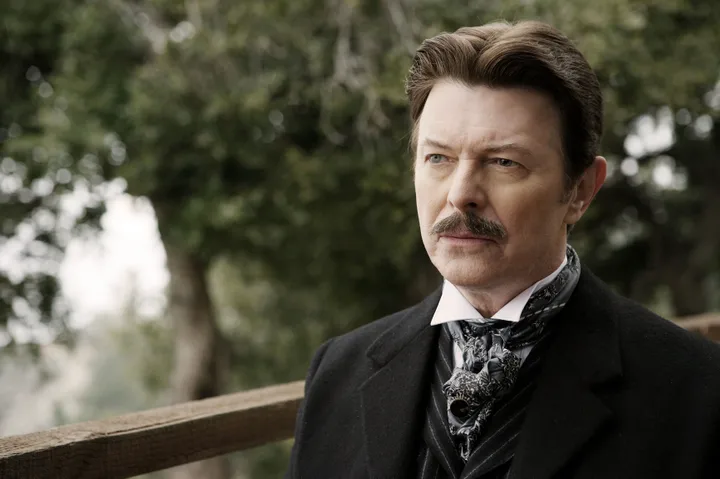
Nolan claimed: “The only no I would cop to is David Bowie for The Prestige. He was my great idol and everything, and I thought he’d be perfect to play Nikola Tesla. We sent him the script and everything, and he said no.”
The Prestige was one of Nolan’s earlier films, released in 2006 off the back of Batman Begins.
It starred Hugh Jackman and Christian Bale as two rival magicians in Victorian London, with Nolan having envisaged David Bowie for the role of the real-life pioneering inventor Nikola Tesla.

Francois Duhamel/Touchstone/Warner Bros/Kobal/Shutterstock
Eventually, the Space Oddity performer did relent and agree to play the role – but not without making Nolan work for it.
The filmmaker revealed: “I went back and said, ‘can I just go and meet him? Can I try and convince him in the room?’.
“And they agreed, and I hastily wrote him a better speech for his first appearance, turned up with a new script, and basically begged. And I got him to do it!”
Primarily known for his game-changing music career, Bowie did rack up a number of acting roles in his lifetime, including a brief appearance as Pontius Pilate in Martin Scorsese’s controversial The Last Temptation Of Christ and playing the Goblin King Jareth in Jim Henson’s dark fantasy movie Labyrinth.
Meanwhile, he isn’t the only one to have tried to give Christopher Nolan the brush-off.
Will Smith has claimed he turned down the lead part in Inception before Leonardo DiCaprio joined the project, as he “didn’t get” the plot.
“Those movies that go into those alternate realities… they don’t pitch well,” the Oscar winner suggested.
Nicolas Cage also alleged earlier this year that Nolan now refuses to work with him after he pulled out of his 2002 film Insomnia.
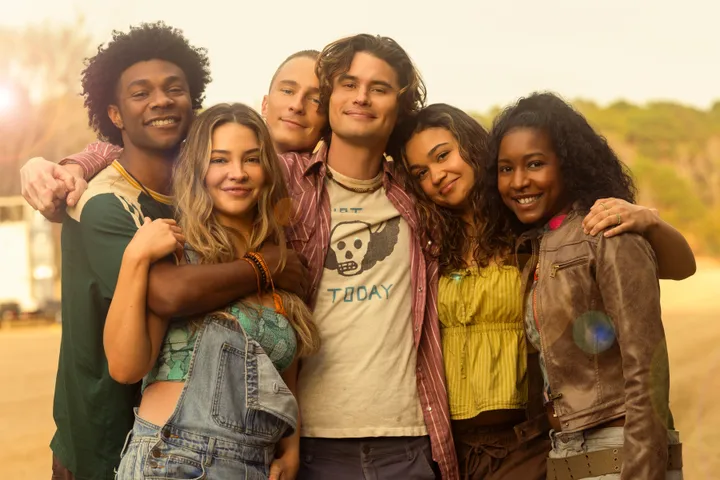
Outer Banks fans have finally said goodbye to the Pogues, after the gang’s final adventure in the last ever season. But many fans have still been left wanting more.
Throughout the show’s run on Netflix, its creators and executive producers, Jonas Pate, Josh Pate and Shannon Burke, have always maintained that they envisioned Outer Banks as a five-season story.
In November 2024, they confirmed “with a little sadness, but also excitement,” that season five of the YA drama would, indeed, be the last, saying they wanted “to bring our beloved Pogues home in the way we imagined and planned years ago”.
However, there is good news for fans hoping for more from the series – because its creators aren’t quite done with Kildare Island and its inhabitants, yet.
So what’s next for the Outer Banks universe? Well, while the main show may be ending, there’s apparently more to come from the fictional world…
An Outer Banks prequel is already in the works
Co-creator Josh Pate revealed as far back as December 2024 that he was writing an Outer Banks prequel, which will be called Kildare.
Although little is known about the prequel just yet, the show is expected to follow the founding of the Kooks and Pogues in the show’s fictional Figure 8 setting.
“We’re looking to film it in Wilmington, [North Carolina],” Josh revealed about the series.
While Outer Banks was set in North Carolina, it actually rarely filmed there, preferring locations in South Carolina.
The spin-off is still in its early stages, but is expected to feature a whole new set of young actors and, like the original show, the spin-off will also be a Netflix original production.

JACKSON LEE DAVIS/NETFLIX
The show’s creators have teased more about the future of the Outer Banks franchise, too
While season five marks the end of Outer Banks, Jonas Pate, Josh Pate, and Shannon Burke aren’t fully ready to say goodbye to the world they’ve created.
The trio built Outer Banks fans’ hopes up when they hinted to Deadline in 2024 that there are “other stories in this universe down the line” beyond season five.
Since Netflix loves a spin-off, let’s hope Outer Banks follows in the footsteps of The Lincoln Lawyer, The Witcher and Bridgerton, all of which have expanded their universe with prequels and sequels.
What has the cast of Outer Banks said about potential spin-offs?
When asked by Elite Daily who she thought should get an Outer Banks spin-off, Madison Bailey – who played Kiara in the Netflix drama – gave a surprising answer.
“I’d watch a Rafe spin-off,” she responded. “I just feel like, ‘What does he do when we’re not around? What is he up to?’.”
Madison also pointed out that Drew Starkey, who plays Rafe, had been “more [emotional] than usual” when they wrapped filming the final season.

JACKSON LEE DAVIS/NETFLIX
Drew himself confirmed on The Tonight Show that he cried “for a solid two hours” on the last days of filming.
“The last shot of my last scene, right when they yelled ‘cut,’ I was just weeping. Like, constantly,” he told talk show host Jimmy Fallon.
Both Rafe and the actor who plays him have become fan favourites since the show began streaming, and the character’s position on the sidelines of the Pogues leaves plenty of potential to explore in a future project.
Meanwhile, Madelyn Cline told Screen Rant that she’d be game for returning to Outer Banks in whatever capacity the production wanted her in.
“I would love to come back and do a little cameo,” said the actor, who plays Sarah in the drama. “I’ve already told [co-creator Jonas Pate] – ‘anything in the Outer Banks universe, let me come back and do something really fun and silly’.”
Anthony Crane, who appears as the villainous Chandler Groff in seasons four and five of the series, said Netflix would be “fools not to” make a prequel showing the adult cast in their younger years.
He told The Direct that a spin-off would not necessarily need to be about treasure-hunting, which he said “carries the show” in its current iteration, but could take a new, exciting direction, instead.
“I do know people are invested in these characters and they could definitely see how these origin stories play out,” he enthused.

JACKSON LEE DAVIS/NETFLIX
There’s already been one Outer Banks spin-off (sort of)
If you’re already missing Outer Banks, it might interest you to know that one spin-off has already been made.
In September 2025, the short-lived eight-part drama The Runarounds began streaming on Prime Video, following a North Carolina rock band trying to make it in the music industry.
If you recognise the cast of The Runarounds, it’s because they made a cameo in season three of Outer Banks, with William Lipton, Axel Ellis, Jeremy Yun, Zendé Murdock and Jesse Golliher all seen playing music in the background of Kiara’s parents’ anniversary party.
Even though The Runarounds is technically a separate project, the musical drama is an Outer Banks cross-over from the same creator, set in the same universe.
There is also a prequel book Outer Banks fans can check out, too
If you want to know what life was like for the original two members of the Pogues, John B and JJ, their story was told in a 2021 YA prequel novel based on the Netflix show.
Outer Banks: Lights Out, written by Alyssa Sheinmel, follows the pair in an adventure set before season one of the series.
The book follows John BB and JJ during Spring Break as they plan a fishing getaway in the dangerous Flying Pan Shoals. On their trip, they meet a Kook named Savannah, who ends up hitching a ride after the weather changes for the worse.
All five seasons of Outer Banks are streaming on Netflix now.
The star-studded blockbusters just keep coming in 2026.
After a year that’s already brought us big-screen epics like The Odyssey, Disclosure Day and the latest Spider-Man film Brand New Day, Dune fans are readying themselves for a return to Arrakis when the third instalment in the series hits cinemas this winter.
Denis Villeneuve’s Dune saga will conclude in December, with the third and – for now! – final film in the epic sci-fi trilogy.
An adaptation of Frank Herbert’s novel Dune Messiah, the film follows the massive momentum of the first two instalments, which have already collectively earned more than $1.12 billion at the box office.
With just months to go until Part Three, we’re breaking down everything you need to know about the latest film…
Dune: Part Three follows the events of the last film
Before we get into the third instalment, maybe we should start by recapping where we are up to in the epic story.
Dune is set on the harsh desert planet of Arrakis, the universe’s only source for spice, a drug vital for interplanetary travel.
The films’ central figure, Paul, is the heir to House Atreides, which was given control of spice production by the Emperor, as part of a conspiracy by rival House Harkonnen.

Warner Bros/THA/Shutterstock
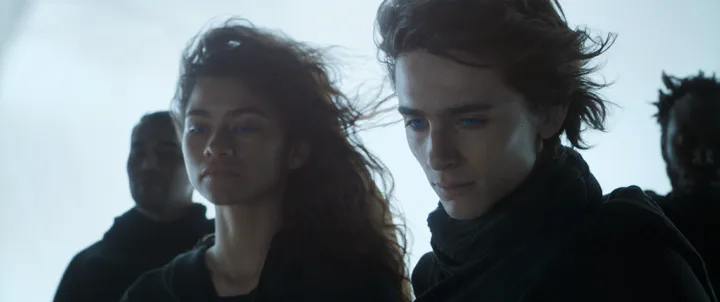
Paul and his mother, Jessica, fled to the desert, where the native Fremen took them in. In this new harsh landscape, Paul embraced his psychic powers and became the chosen messiah of the Fremen, all while falling in love with Chani and avenging his father.
Dune: Part Two concluded with his victory over the Harkonnen, and the Emperor of Arrakis… although it was not exactly a happy ending for Paul and his beloved Chani.
What is the plot of Dune: Part Three?
As is the case with Frank Herbert’s novel Dune Messiah, Part Three picks up 17 years after the last film. Paul has seized the throne, and is now worshipped as the godlike emperor of the universe thanks to his special abilities.
During his time in charge, he has watched over a massive Fremen holy war, which has claimed billions of lives, and created a complex web of political intrigues.
The threequel will follow the conspiracy against Paul, as various factions grow fearful of his growing power, and secretly plot to overthrow him.
It will also deal with Paul’s relationships with both Princess Irulan and Chani, the latter of whom bears his children.
As part of an IMAX special reveal event, director Denis Villeneuve said that the upcoming film has “a time gap, 17 years, where we see Paul dealing with the consequences of having too much power and him trying to figure out how to get out of this cycle of violence”.
“And of course he’s an emperor who can see the future, so he’s kind of invincible,” the filmmaker added.
He also teased that this third instalment in the franchise is ”a more action-packed and more tense film, more muscular than the two others”, claiming that the movie takes place in “a very different world” where Paul’s “nightmares became reality” and he’s left to face “the consequences of his decisions”.
Describing Dune: Part Three as “a redemption story”, he added that “the heartbeat of the film is that love story between Chani and Paul, [albeit] more of a broken love story”.

Is Dune: Part Three based on a book?
As we’ve mentioned already, Dune: Part Three is based on Dune Messiah, the 1969 sequel novel written by Frank Herbert – the second book in the six-part original sci-fi series.
As filmmaker Denis Villeneuve observed to Entertainment Weekly: “In [Frank Herbert’s] mind, Dune was a cautionary tale – a warning against charismatic figures. He felt that Paul was perceived as a hero, when he wanted to do the opposite.”
The upcoming James Bond director added: “So in order to correct that, he wrote Dune Messiah, a kind of epilogue that makes it very clear this story is not a victory; it’s a tragedy.”
Which actors are back in the cast of Dune: Part Three?
Timothée Chalamet will reprise his role as Paul Atreides, the titular messiah, while Zendaya is back as Chani. Also returning are Rebecca Ferguson as Lady Jessica, Josh Brolin as Gurney Halleck, Javier Bardem as Stilgar and Florence Pugh as Princess Irulan.
Anya Taylor-Joy – who made the briefest of appearances at the end of the last movie – is taking a more central role in the third film as Paul’s younger sister, Alia.
Opening up about her character at the IMAX event, Anya teased: “Alia has a very intense blessing/curse situation. She carries the weight and the wisdom of generations and generations in her head.
“She’s never in a singular conversation. It’s kind of everything everywhere all at once.”
Fans can also look forward to Jason Momoa’s comeback as Duncan Idaho – which may come as a surprise to some, given that his character died in the first film.
“He comes back just at the right moment in the story,” the director teased. “And it’s a very, very important comeback.
“Paul is struggling with his identity and having that kind of strong Atreides figure coming back from the past will have a tremendous impact.”
And what about new cast members joining the Dune saga in Part Three?
Back in June 2025, it was announced that Nakoa-Wolf Momoa, the 16-year-old son of Jason Momoa and Lisa Bonet will be joining the cast (and naturally, it didn’t take long before the “nepo baby” discourse started).
He’ll play Leto II, Paul and Chani’s son, while Ida Brooke is to play his twin sister, Ghanima.
Robert Pattinson also confirmed his participation in the threequel in November 2025, after months of rumours. It was later revealed that he was playing the chameleon villain Scytale.
Robert told Deadline that Scytale is “an unusual character in the book and when you can’t really tell who’s side he’s on, that’s what makes it quite interesting”.
“I wouldn’t say he was a kind of conventional bad guy as such. I don’t think he is. He might even be a good guy. Who knows? I will also find out when I see the movie. It’s an extremely fun character to play and the look for it is quite Incredible. Extraordinary,” Rob said during a March interview.
This marks the third time Robert Pattinson and Zendaya have shared the screen in 2026, following The Drama and The Odyssey.
What else have the cast of Dune: Part Three said about the movie?
The cast has been hyping up Dune: Part 3 for the best part of a year now.
During the cast’s appearance at CinemaCon in April 2026, Timothée teased that Paul has “become his worst vision and he’s struggling to figure out how to protect those he loves while becoming the all-powerful dark emperor of the universe,” according to Deadline.
“The years don’t seem to have been kind to anyone in Dune. [It’s been] a really difficult, challenging, ungentle and unkind few years,” though there’s “so much left still to fight for,” Zendaya agreed.
The Euphoria star noted that her character, Chani, is “at a very different place in her life where that youthful outlook is completely gone” when we meet her in Part Three.

Talking to The Hollywood Reporter in August, Anya said making the third Dune film had been “everything that I hoped it would be”.
“I cannot say more wonderful things about Denis. It was so deeply inspiring to be in these really harsh elements and know that every person is doing their absolute best work because they believe, trust and adore the person that’s leading the ship,” the Emma actor said.
Javier Bardem was also full of praise for the sci-fi film while speaking to Entertainment Tonight in June, calling it a “masterpiece”.
“Because Denis really wants to go farther and farther from the last movie. It’s like what he did with the second movie compared to the first one,” the Spanish actor added.
However, newbie Robert Pattinson was seemingly less impressed with the filming conditions.
“It was so hot in the desert that I just couldn’t question anything,” he admitted during an interview with IndieWire last year.
Zendaya’s The Drama co-star noted that being in the heat was so “relaxing” he “did not have a single functioning brain cell” during production.
What has Denis Villeneuve said about directing Dune: Part Three?

Denis Villeneuve had previously gone on record saying he would only be up for adapting the third part of the Dune franchise if he could make it “better” than Part Two.
In fact, he was actually supposed to work on another film before Dune: Part Three – but inspiration took hold of him.
He recalled during a Q&A in March 2026: “I went back home. I said to my crew, ‘I’m taking a break. That’s it. Bye-bye.’ And I went back home and I kept awaking in the middle of the night with those images.
“I was supposed to do another movie in the meantime, but the image of Dune: Part Three, inspired by Dune Messiah, kept coming back… and I said, ‘Oh, all right, let’s do it’.”
With his work on Dune: Part Three behind him, the Canadian will next get to work on the upcoming 26th James Bond film.
Will Dune: Part Three really be the last film in the series?
Although Dune: Part Three is planned as the final film in Denis Villeneuve’s sci-fi series – the director has said he hopes that someone else will take over at the helm of the sci-fi epic.
“It will have been many years for me on Arrakis, and I would love to do something else,” he told Deadline in September.
He also noted that he wanted to make sure there are “seeds” in the third film which another filmmaker could pick up on and use in a later project set in the Dune universe, although he conceded that the latter books in Herbert’s literary series – which his son took over writing – will be harder to adapt.
“They become more and more esoteric. It’s a bit more tricky to adapt, but I’m not closing the door. I will not do it myself, but it could happen with someone else,” the he added.
He also confirmed to Collider that the upcoming story will “finish the Paul Atreides arc”.
Is there a trailer to Dune: Part Three?
There certainly is. In fact, just this week, a new teaser for Dune: Part Three launched.
While only 30 seconds long, this latest video includes loads of new footage including, for the first time, Edric’s voice – and if you’re a fan of the Dune books, you’ll know how important that character is.
Give it a watch for yourself below:
Meanwhile, a more full trailer dropped earlier in the year.
This one hinted at Paul’s megalomania, and included clips of a pregnant Chani and the return of Jason Momoa’s character, who warns Paul: “You’ve destroyed thousands of worlds. I think you’re way beyond redemption.”
It was also gave audiences a good look at bleach-blond Robert Pattinson as Scytale, who revealed his plans for a “regime” change to Florence Pugh’s Princess Irulan.
What’s the release date for Dune: Part Three?
Dune: Part Three is scheduled to be released in cinemas on December 18, 2026.
This is, indeed, the same day as the latest Marvel movie Avengers: Doomsday – so get your popcorn ready for what’s already been billed as Dunesday in the press.
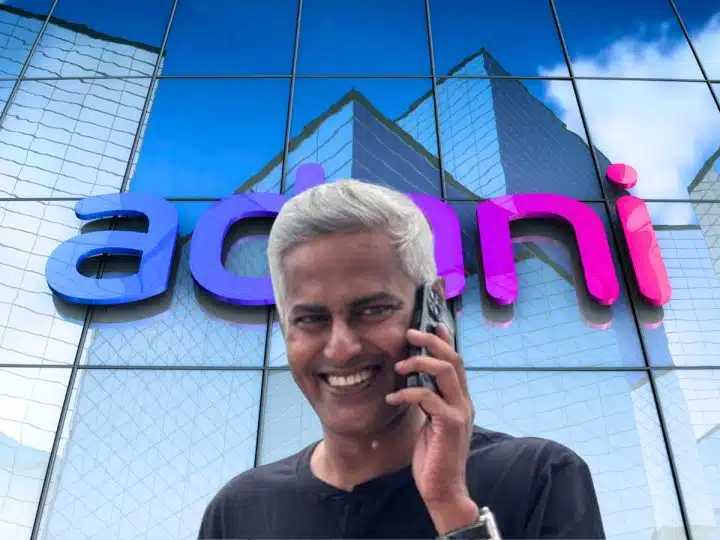

Nearly 40 campaign groups, individuals and media outlets have released a statement of total solidarity with independent investigative journalist Ravi Nair. He’s currently facing relentless harassment and attacks from the oligarchic Adani Group.
South Asia Solidarity Group, UK, International Solidarity for Academic Freedom in India (InSAF India), India Labour Solidarity UK, and South Asian Diaspora Action Collective (SADAC), Canada, issued the statement, along with nearly 35 other diasporic and international human rights groups.
The joint statement demands an immediate end to the harassment of Ravi Nair by Indian courts and police. It calls for the withdrawal of cases against him and an end to the misuse of criminal defamation and draconian laws to silence journalists and activists in India. And it demands protection of press freedom and free speech, and accountability and transparency in matters involving corporate-state relations.
The statement – Justice for Ravi Nair!
We, the undersigned groups, condemn the shrinking space for freedom of expression and press freedom in India. We stand in total solidarity with independent investigative journalist Ravi Nair who is currently facing relentless harassment and attacks from the Adani Group.
On 11 February 2026, Nair was sentenced to a year’s imprisonment for his posts on X that allegedly suggest the “political patronage”, “financial irregularities” and “unethical conduct” of Adani Enterprises, the flagship firm of the Adani Group. Nair’s lawyer argued that the posts and comments were based on publicly available material and constitute fair comment and criticism.
CPJ Asia Program Coordinator Kunal Majumder noted:
The conviction of journalist Ravi Nair for criminal defamation sets a dangerous precedent for press freedom and free speech in India. Laws that allow imprisonment for defamation stifle public interest reporting and deter scrutiny of powerful actors. The Indian government must ensure these provisions are not used to prevent legitimate journalism.
With this case pending appeal, the Adani Group, acting through the Adani Ports and Special Economic Zone Ltd, has brought another case against Nair. This time it centres round his social media posts about an article he co-wrote in the Washington Post alleging that the government of India directed the Life Insurance Corporation, an Indian publicly funded organisation, to invest in the Adani group. An Ahmedabad Court quashed Nair’s appeal against the FIR (First Information Report). This was followed by a raid on Nair’s home by Gujarat Police, accompanied by their Delhi counterparts. They seized two of his phones, his son’s laptop, and the laptop and iPad of a colleague who happened to be at the house and who is not an accused in the case. The police refused to provide a hash value for the items taken away. Without a hash value, it is impossible to know whether a device has been tampered with after seizure.
Clearly journalism is a crime in today’s India, with free speech and freedom of expression increasingly under attack since 2014. India’s ranking in the World Press Freedom Index has steadily worsened, with a rank of 140 out of 180 countries in 2013 down to 157 in 2026.
A number of draconian laws are being employed to thwart fundamental freedoms. Additionally, street vigilantes have been emboldened to carry out attacks on journalists reporting on and exposing Hindu supremacist fascism (Hindutva) or reporting on corporate crimes.
The harassment of Ravi Nair is occurring against a background of challenges to legitimate reporting and commentary about the Adani Group. In September 2025, the Information and Broadcasting Ministry used a court order to remove a couple of hundred YouTube videos and instagram posts about the Group (Committee to Protect Journalists (CPJ)).
According to the Free Speech Collective’s latest findings, India saw over 300 violations of free speech in the first quarter of 2025, from murdered journalists to banned films.
The restriction on free speech comes from a government whose ministers and other elected officials spew hate speech in the public sphere with impunity.
In the fascist corporate-aligned state that India is today, journalists like Ravi Nair are being punished for reporting injustices and speaking truth to power.
We call upon the Indian diaspora across the globe, civil society and workers’ organisations, journalists, activists and all conscientious people to stand against state repression and the impunity of corporate billionaires like Adani.
We demand an immediate end to the harassment of Ravi Nair by the courts and police and the withdrawal of cases against him. We also demand an end to the misuse of criminal defamation and draconian laws to silence journalists and activists; the protection of press freedom and free speech; and accountability and transparency in matters involving corporate-state relations.
Justice for Ravi Nair! Journalism is not a crime!
Signatories
- South Asia Solidarity Group, UK.
- International Solidarity for Academic Freedom in India (InSAF India).
- India Labour Solidarity, UK.
- Diaspora in Action for Human Rights and Democracy, The Netherlands.
- United Kingdom-Indian Muslim Council (UK-IMC).
- Hindus for Human Rights UK.
- 12ummah.com.
- Justice For All Canada.
- Hindus for Human Rights USA.
- The Humanism Project Australia.
- South Asian Diaspora Action Collective (SADAC), Canada.
- Culture Unstained, UK.
- The Canary, UK.
- Indian Alliance Paris.
- Hindus for Human Rights ANZ.
- Fossil Free Science Museum, UK.
- Indus Legacy.
- Extinction Rebellion Global.
- Boston South Asian Coalition.
- CERAS (Centre sur l’asie du sud), Canada.
- Canadian Forum for Human Rights and Democracy in India (CFHRDI).
- London Mining Network, UK.
- Turbine Bagh, UK.
- Prof Saibaba Study Circle, UK.
- Canadian Foreign Policy Institute.
- Just Peace Advocates/Mouvement Pour Une Paix Juste, Canada.
- The Canadian BDS Coalition and International BDS Allies.
- Fighty fighters, UK.
- United Front UK.
- Progressive South Asian Society, UK.
- Azaad Brussels.
- Inquilabi NL, The Netherlands.
- Secours Rouge Toulouse.
- Anti-Imperialist Front.
- Critical Diasporic South Asian Feminisms Collective, Canada.
- Collective of Socialist Republicans, UK.
- Solidarity Screenings Glasgow.
- Red Clyde, UK.
- Young Struggle.
Featured image via the Canary
By The Canary
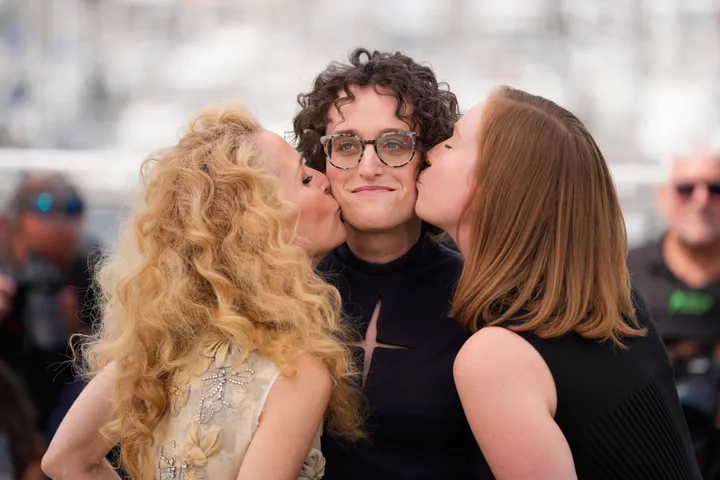
This article contains spoilers for Teenage Sex And Death At Camp Miasma.
So far, 2026 has been an exciting year for the horror genre.
Following the double-punch of Obsession and Backrooms, Hacks’ Hannah Einbinder and Gillian Anderson can now be seen in action in Teenage Sex And Death At Camp Miasma, a new slasher film that tips its hat to some of the horror movies many of us watched in our formative years – in all their problematic glory.
The latest offering from I Saw The TV Glow director Jane Schoenbrun, the film winds up taking a turn just as surreal as their previous works, with the whole thing serving as an allegory for sexual repression, particularly for those who identify as trans and gender non-conforming.
Speaking to HuffPost UK ahead of Camp Miasma’s UK release, Hannah Einbinder has lifted the lid on some of the movie’s themes and more complicated scenes…
Director Jane Schoenbrun has previously spoken about how Camp Miasma relates to their own gender journey

Hannah recalls: “When I read the script, there was an author’s statement before the script, which provided some context for that. Also, I had met with Jane and understood that their films were allegorical for their experience.
“I [interpreted the film] in a way where I felt like this was them coming to terms with their sexuality, and embracing desire and sort of trying to feel liberation from shame. And so, my understanding of that only deepened as we had more conversations, as we were shooting the movie.”
Hannah Einbinder explains what the ending of Teenage Sex And Death At Camp Miasma is all about
After Kris and Billy’s dramatic sex scene, they’re skewered by “Little Death” only for it to emerge the whole thing was, as Gillian’s character says earlier in the film, “all play”.
From there, they take a giddy stroll out of Camp Miasma to pick up some sweet treats (all while soaked in blood, naturally).
“My take on the ending is that it symbolises the idea that you could be walking around, covered in blood,, people looking at you like you’re a freak, and you just don’t care,” Hannah suggests, referring to her final scene with Gillian Anderson.
“You’re totally blissed out and in love and safe and comfortable in your skin.”
“It just represents, to me, freedom,” she notes.

She’s also shared a fun detail about the fun callback in the film’s final moments
Teenage Sex And Death At Camp Miasma ends with Kris revisiting the gas station she visited earlier in the film, but this time, a new woman, after her encounter with Billy.
She’s even served by the same cashier in both scenes, with whom she has a very different conversation second time around.
“I don’t think that Kris hears the compliment in the first scene, and then, in the second scene, it’s kind of this thing of, like, she gets that validation from [Billy] and it feels like perhaps she is a little bit of an audience surrogate.
Hannah adds: “Fun fact – that incredible actress was actually, I believe, a costume designer who Jane interviewed for the film and was like, ‘you are incredibly captivating’ – and cast her! I think that was her first time acting!
“She was a riot, she was a blast. Shout out to her.”
Oh, and what was all that candy about?

“Well, first of all, Jane loves candy,” Hannah reveals. “I also love candy in a way that I would say is adjacent to drug use, the way that I do it.
“And the way that Jane does it, I would say it is not normal. I’d say it is above normale. So, like, we really bonded over that.”
She goes on to say that she thinks the sweets scattered throughout the film represent “a safe place for pleasure”.
“It’s a way to access pleasure in a sort of safe way,” she opines. “I also think [candy is] obviously a big part of movie-watching, and this is a cinephile’s film. And so I think there’s a lot there with the candy.”
Hannah continues: “It also speaks to what we want the movie to feel like – which is just like fun and like you’re staying up late and doing something you’re maybe not supposed to be doing. So yeah, there’s a lot there, I think.”
Teenage Sex And Death At Camp Miasma is in cinemas now.
Austin, Sacramento top cities where renting beats buying by $1,000
Tom Lee’s BitMine Buys $81 Million in Ethereum as ETH Hits $2,500

AI blamed as UK graduate jobs supposedly half





-

 Fashion3 days ago
Weekend Open Thread: Madewell – Corporette.com
-

 Business6 days ago
SMA Solar Technology AG (SMTGY) Q2 2026 Earnings Call Transcript
-

 Crypto World3 days ago
anatomy of crypto’s biggest liquidation event since 2021
-

 Business2 days ago
Musk’s Tesla, SpaceX Confirm $16.8 Billion ‘Terafab’ Chip Plant as World’s Largest Building in Texas
-

 Tech7 days ago
Qwen3.8-27B runs frontier-class coding agents and reasoning locally, no cloud API required
-

 Crypto World7 days ago
OCC Greenlights Trump Family Crypto Firm for Trust Charter
-

 Politics2 days ago
6 months on, Irish renters crushed by effects of government housing bill
-
 NewsBeat2 days ago
The ‘Lucky Dip Gang’ causing carnage for clicks: After five thugs were killed speeding in the wrong direction on a motorway, GUY ADAMS investigates a sick new trend… and why police aren’t even allowed to pursue them
-

 Crypto World7 days ago
NAVI Prime launches institutional lending framework on Sui
-

 Tech5 days ago
GLM-5.3 hits the API at $1.4/$4.4 per million tokens
-

 News Videos5 days ago
Don’t Leave Your Financial Future To Chance | August 19, 2026
-
Tech7 days ago
5 Of The Most Reliable Car Brands To Consider If You’re Buying A Used SUV
-
 Crypto World7 days ago
Dow’s 3-Year Winning Run Isn’t a Crash Signal, Still 49% Odds of Double-Digit Gains
-

 Tech7 days ago
Keychron K8 Ultra 8K review: a great value keyboard with comfort issues
-
 Tech7 days ago
Nvidia discloses $21B stake in SpaceX
-

 Business6 days ago
Stock Market Today: Tech Futures Slide As Treasury Yields Jump; Nvidia, Micron, Sandisk Sell Off
-

 Business5 days ago
Marvell Shares Jump 7% as Google Chip Deal Confirms Custom AI Silicon Partnership, Analysts
-

 Business4 days ago
Five Below: Kids Discount Retailer Reaps Rich Rewards
-

 Business1 day ago
Mystery AI Model ‘Ox Alpha’ Draws Developers With Free Access as Chinese Lab Origins Remain Debated
-
Business7 days ago
Fabrinet (FN) Q4 2026 Earnings Call Transcript
You must be logged in to post a comment Login