Connect with us

Business

Agriculture worth $44bn to WA economy, Newdegate report finds

Published

on

Agriculture worth $44bn to WA economy, Newdegate report finds

Western Australia’s agriculture sector pumps more than $44 billion into the state economy, according to a new report released on Wednesday.

Continue Reading
Click to comment

You must be logged in to post a comment Login

Leave a Reply

Business

Woking school opens uniform shop to sell items ‘at cost’

Published

on

Close-up of orangutan's eyes

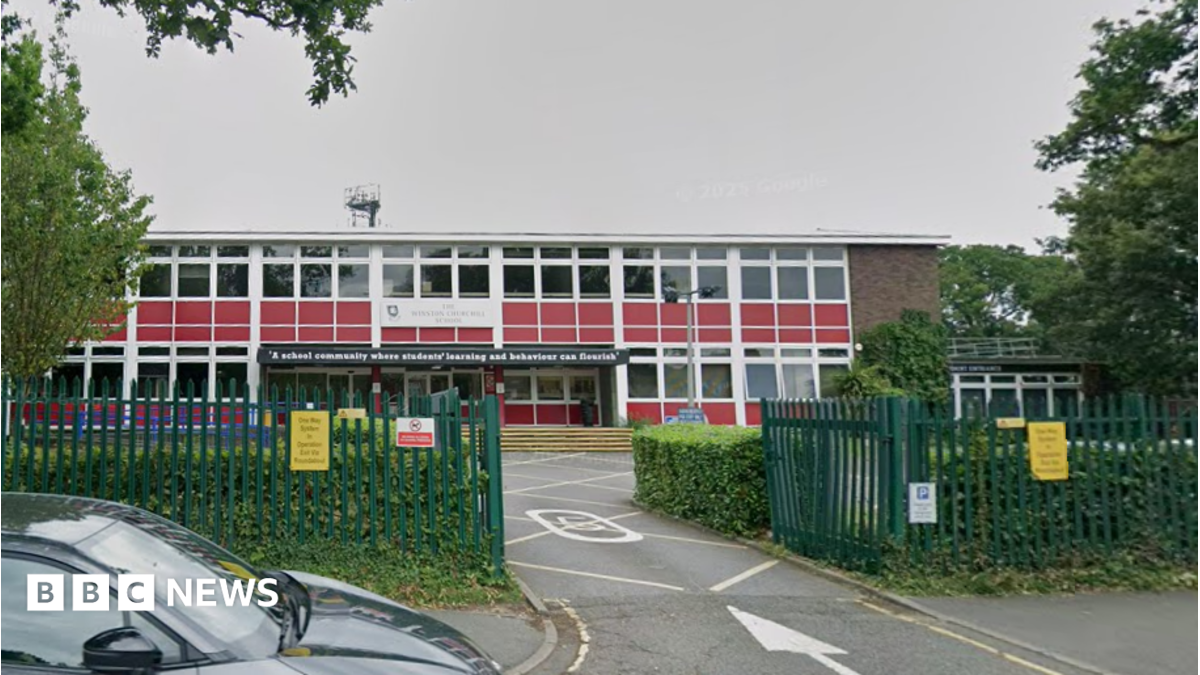
A secondary school in Surrey has secured its own uniform supplier so it can sell items at cost to pupils.

The Winston Churchill School in Woking opened its own uniform shop to cut back to costs for families, where parents can order items on site or online, with clothing including skirts, ties and PE kit available at no markup from what it cost the school.

Head teacher Zoe Johnson-Walker said that the approach had cut £20 off the cost of school blazers compared to the previous school year.

“We’ve been trying to reduce the cost of our uniform over a couple of years,” she told the BBC.

Advertisement

The school redesigned its uniform for 2026-27, coinciding with new government rules limiting secondary schools to three branded items, plus a branded tie.

According to the Department for Education, the new rules would save parents up to £50.

“Parents have told us they want fewer costly branded items – and that’s exactly what we’re delivering,” a spokesperson said.

“School uniform matters, but it shouldn’t break the bank.”

Advertisement

Johnson-Walker said That the school had proposed removing its branded blazers from its uniform as it was “one of our most expensive items” but had found “quite a large demand from parents to sell it with the badge on”.

“We’ve managed to do a negotiation with our supplier which means that there’s no additional cost to parents to have a badged item,” she said.

She added that the school had scrapped branded PE tops but was selling plain, black PE shirts in its uniform shop after requests from parents.

“We’re also trying to maintain standards because uniform, as far as we’re concerned, is quite levelling,” Johnson-Walker added.

Advertisement
Continue Reading

Business

Urban planner fined $4k for stalking offence

Published

on

Urban planner fined $4k for stalking offence

The Perth urban planner will have a criminal record after being found guilty of pursuing another to intimidate.

Continue Reading

Business

Bath’s oldest charity appoints new CEO as it prepares for ‘next chapter’

Published

on

Business Live

St John’s Foundation is more than 850 years old and supports older adults in financial need

Laura Alexander is St John's Foundation's new chief executive

Laura Alexander is St John’s Foundation’s new chief executive(Image: Handout)

Bath’s oldest charity has appointed a new chief executive as it prepares to expand its work across the city. Laura Alexander has taken the helm of St John’s Foundation just 19 months after her predecessor, Catharine Brown, took up the job.

St John’s is more than 850 years old and works with housing and outreach services to help older adults in financial need to live independently for longer. It also runs a grants programme aimed at supporting individuals and families who have reached financial crisis across Bath and North East Somerset.

Advertisement

Ms Alexander joined the charity in 2023 to lead its commercial arm – St John’s Hospital Trading Company. She was later appointed director of operations, spearheading a more strategic approach to the charity’s extensive property portfolio.

Her appointment comes as St Joh’n’s prepares to create new almshouses in the centre of Bath and invest in existing homes in a bid to provide more safe, secure and affordable accommodation to older people.

“Over [the last] three years, I have had the opportunity to work with some truly brilliant teams and to see first-hand the very real, human impact their work has on our residents and the wider community,” said Ms Alexander.

“We’re at an important point for St John’s. With an ageing population and increasing pressure on affordable housing, the need for what we do is growing.”

Advertisement

She added: “For me, the opportunity now is to build on that incredible heritage while being forward-thinking and ambitious about the role St John’s can play in the future. It’s a responsibility I don’t take lightly, and I’m incredibly excited about what we can achieve together.”

The board of trustees said Ms Alexander’s promotion to chief executive comes at “an important point in the charity’s development”.

“Over the last three years, we have seen first-hand the enormous contribution Laura has made to both St John’s Foundation and our trading company,” the board said in a statement.

“Laura brings a clear vision for where St John’s needs to go next while understanding and respecting what makes the organisation so special. We are delighted to appoint her to lead St John’s into its next chapter.”

Advertisement
Continue Reading

Business

Want The Fastest Read On The Economy? Watch These Interim Reports

Published

on

Rates Spark: Resumed Steepening Impulse

Want The Fastest Read On The Economy? Watch These Interim Reports

Continue Reading

Business

Perth robotics group Nexxis acquire UK turbine inspection firm

Published

on

Perth robotics group Nexxis acquire UK turbine inspection firm

Perth robotics company Nexxis Group has acquired BladeBUG, a UK-based robotics company developing solutions for wind turbine inspection and maintenance.

Continue Reading

Business

Integra Resources: Strong Growth, Tier-One Assets, And A Deep NAV Discount (NYSE:ITRG)

Published

on

Integra Resources: Strong Growth, Tier-One Assets, And A Deep NAV Discount (NYSE:ITRG)

This article was written by

Mountain Valley Value Investments specializes in identifying undervalued companies with strong growth potential across various sectors. Focused on long-term value and buying at the right price, we leverage deep industry insights and rigorous analysis to uncover opportunities with the potential to deliver strong returns. Our investment philosophy is rooted in disciplined research and a commitment to highlighting risks that may impact the thesis. We aim to provide our readers with actionable investment ideas that stand the test of time. Follow us for in-depth analysis and thoughtful perspectives on high-potential stocks.

Analyst’s Disclosure: I/we have no stock, option or similar derivative position in any of the companies mentioned, but may initiate a beneficial Long position through a purchase of the stock, or the purchase of call options or similar derivatives in ITRG over the next 72 hours. I wrote this article myself, and it expresses my own opinions. I am not receiving compensation for it (other than from Seeking Alpha). I have no business relationship with any company whose stock is mentioned in this article.

Seeking Alpha’s Disclosure: Past performance is no guarantee of future results. No recommendation or advice is being given as to whether any investment is suitable for a particular investor. Any views or opinions expressed above may not reflect those of Seeking Alpha as a whole. Seeking Alpha is not a licensed securities dealer, broker or US investment adviser or investment bank. Our analysts are third party authors that include both professional investors and individual investors who may not be licensed or certified by any institute or regulatory body.

Advertisement
Continue Reading

Business

Buying DAT Discount: How Crypto Treasury Stocks Can Outrun The Coins They Hold (BTC-USD)

Published

on

Buying DAT Discount: How Crypto Treasury Stocks Can Outrun The Coins They Hold (BTC-USD)

Jason Hamlin is the founder of Nicoya Research and publishes highly-rated investment newsletters focused on cryptocurrencies, commodities, mining stocks, and tech/growth stocks. Mr. Hamlin has a background analyzing charts and trends for the world’s largest market research company, is versed in fundamental and technical analysis, and has consulted to Fortune 500 companies around the globe.

Continue Reading

Business

Will new uniform rules save parents money?

Published

on

Close-up of orangutan's eyes

A new law coming into force this school term means parents in England should have to buy fewer branded items of uniform, which the government has said will save them money.

This term uniforms will be limited to three items with a school logo, like a blazer, jumper or sportswear – plus a tie for secondary schools.

The government said some families would save up to £50 per child, but school wear suppliers have argued it could mean parents actually spend more in the long run.

We have spoken to a Fareham mum, a second-hand uniform bank and a Hampshire headteacher about the changes.

Advertisement

Mum-of-three Kay Devonshire-Murphy, from Fareham, said she stockpiled uniforms across the year from charity shops and second hand sales.

She said having to buy three branded items was still too many.

“A PE top cost me £18 the other day and I had to buy three, that’s massively expensive for a PE top,” she said.

“Only three items is fine, but they’re still really expensive in the places they’re being sold.

Advertisement

“This year I had to buy a new blazer for my son, that was £30, a new tie.

“Overall I spent £75 just for the branded stuff per child. That’s a lot of money if you’ve got more than one child.”

Continue Reading

Business

Bitcoin trapped in $77K-$78.5K range: Hourly levels

Published

on


Bitcoin trapped in $77K-$78.5K range: Hourly levels

Continue Reading

Business

British Airways Flight Declares Mid-Air Emergency Over England Before Landing Safely At Heathrow Airport

Published

on

British Airways

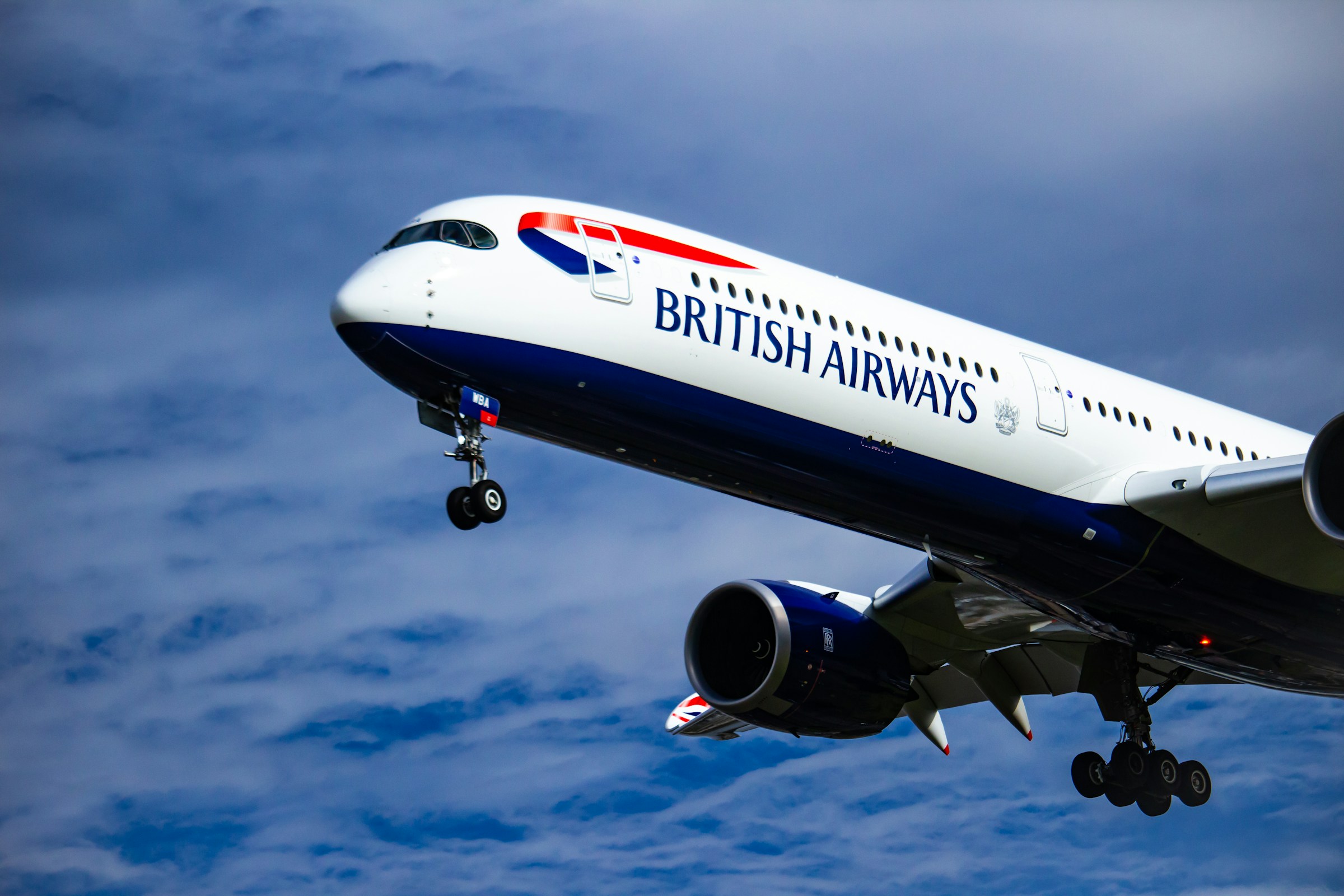
LONDON — A British Airways flight from Dublin to London Heathrow declared an in-flight emergency on Tuesday morning after developing a technical issue while cruising over northwest England, forcing the crew to make a rapid descent before continuing safely to its destination.

Flight BA825, operated by an Airbus A321neo bearing the registration G-TNEI, departed Dublin Airport on schedule at around 8:45 a.m. Shortly after reaching cruising altitude, the flight crew transmitted a squawk 7700 code while the aircraft was positioned near Liverpool. The code is the international aviation signal used to alert air traffic controllers to a general emergency requiring immediate attention.

Flight tracking data showed the twin-engine jet executing a controlled descent down to 8,000 feet as the crew worked to stabilize the aircraft. The pilots then entered a holding pattern while assessing the situation in coordination with air traffic control, according to aviation news outlet AirLive, which first reported the incident.

Despite the alert, the aircraft maintained its heading toward Heathrow and continued along its flight path at the lower altitude to ensure safety before proceeding to landing. FlightAware data showed the aircraft ultimately touched down in London at 9:49 a.m., completing the journey in roughly one hour and 19 minutes.

Advertisement

Emergency ground crews at Heathrow were placed on standby ahead of the aircraft’s arrival as a precautionary measure, a standard procedure whenever a flight declares an emergency code, regardless of the ultimate severity of the underlying issue.

A spokesperson for British Airways confirmed the incident was resolved without harm to those on board.

“The aircraft landed safely at Heathrow following a minor technical issue,” the spokesperson said.

The airline did not provide further detail on the precise nature of the technical fault that prompted the emergency squawk, and no injuries were reported among passengers or crew.

Advertisement

Squawk codes are a routine part of aviation safety protocol, allowing pilots to alert controllers instantly to a range of situations, from serious mechanical failures to precautionary measures taken out of an abundance of caution. The declaration of an emergency code does not necessarily indicate a life-threatening situation, but it does trigger heightened coordination between the flight crew, air traffic control and ground emergency services to ensure the aircraft receives priority handling and, if needed, immediate assistance upon landing.

Tuesday’s incident was the second such episode involving a UK carrier in as many days. On Sunday, a Jet2 flight traveling from London Stansted to Ibiza was forced to divert to Paris after its crew declared a mid-flight emergency using the same squawk 7700 code.

That flight, LS1473, operated by a Boeing 737-800, diverted roughly an hour and a half into what was scheduled to be a journey of just over two hours. The aircraft landed safely at Paris Charles de Gaulle Airport at 10:49 a.m. local time, where emergency services had been positioned on standby ahead of its arrival. Flight tracking data showed the Boeing turning toward Paris while flying over French airspace before touching down on runway 27L without further incident.

Passengers aboard the diverted Jet2 flight were able to continue their journey later the same day. The aircraft departed Paris for Ibiza at 12:51 p.m. local time and arrived on the Spanish island at 2:33 p.m., completing the trip with a delay of several hours but no reported injuries.

Advertisement

Both incidents unfolded during a busy late-summer period for European air travel, when airlines across the continent are managing high passenger volumes on routes connecting the UK with popular holiday destinations. While mid-air emergency declarations tend to draw significant public attention, aviation safety experts note that the vast majority resolve without serious consequence, reflecting the extensive redundancy built into modern commercial aircraft systems and the rigorous training pilots receive to handle technical anomalies calmly and methodically.

Modern aircraft, including the Airbus A321neo involved in Tuesday’s Dublin-to-London flight, are equipped with multiple layers of backup systems designed to allow crews to manage a wide range of technical faults without compromising passenger safety. Regulatory authorities in the UK and across Europe require airlines to report and investigate any incident involving an emergency squawk code, regardless of how routine the eventual resolution proves to be.

British Airways, the UK’s flagship carrier, operates a large network of short-haul routes between Ireland and Britain, including multiple daily flights between Dublin and Heathrow. The airline has faced periodic technical incidents on various routes over the years, most of which have concluded with aircraft landing safely after precautionary diversions or altitude changes, consistent with standard industry practice when any anomaly is detected mid-flight.

Aviation analysts note that instances of squawk 7700 declarations have become more visible to the public in recent years, largely due to the proliferation of real-time flight-tracking platforms and aviation-focused social media accounts that closely monitor transponder codes broadcast by aircraft in flight. This increased visibility means that incidents which might once have gone largely unnoticed by the public, particularly those resolved quickly and without incident, now often generate significant news coverage and public interest almost as soon as they occur.

Advertisement

For passengers aboard BA825, Tuesday’s journey ultimately concluded without disruption to their onward plans, arriving at Heathrow within a reasonable window of the flight’s scheduled arrival time despite the mid-flight emergency declaration. British Airways has not indicated that the aircraft, registration G-TNEI, faced any extended grounding following the incident, though further technical inspections would typically follow any such precautionary emergency landing as a matter of routine airline safety protocol.

The airline continues to operate its regular schedule of flights between Dublin and London, with no indication that Tuesday’s incident has led to broader disruption across its Irish Sea route network.

Continue Reading

Trending

Copyright © 2025