
Business
AI Abundance Won’t End Inflation, Nor Make Money Meaningless


AIER educates Americans on the value of personal freedom, free enterprise, property rights, limited government and sound money. Our ongoing scientific research demonstrates the importance of these principles in advancing peace, prosperity and human progress. www.aier.orgFounded in 1933, AIER is a donor-based non-profit economic research organization. We represent no fund, concentration of wealth, or other special interests, and no advertising is accepted in our publications. Financial support is provided by tax-deductible contributions, and by the earnings of our wholly owned investment advisory organization, American Investment Services, Inc. (https://www.americaninvestment.com/)


Venezuela’s Machado says Spanish PM’s leftist summit reason for not meeting him


I focus on a rigorous fundamentals-foremost equity and credit research. I currently work as a financial advisor/planner, and do analysis in my free time. I have an undergrad in business administration, an MBA in finance, and currently am a doctoral candidate (a DBA with a concentration in Finance and Investment Management). My research style typically involves process-driven research, followed by blending several valuation models together to get a blended, 12 month price target. I enjoy utilizing full DCF analysis in conjunction with SOTP, peer/multiples analysis, and risk-adjusted approaches. I thoroughly enjoy reading filings, technical documentation relevant to the sector, and then translating that data into conclusions with actionable insights. I enjoy learning about the various sectors and companies I find myself researching, and always feel like there is something to learn. As a curious individual, equity and credit research is very fulfilling, and even fun!I always try to find 2-4 variables that drive value or hinder growth, stress test them, and then let fundamental evidence incorporated with book-value set my viewpoint for the research project. I enjoy the energy sector, commodities, tech, and financial sectors the most. I joined Seeking Alpha to share my thoughts with a wide audience. I originally started with sharing my analysis with a few of my friends who are also advisors and/or analysts. I am always open to a myriad of viewpoints, as I feel the most accurate viewpoints and research is made through a collection of great minds working together to figure something out. If you appreciate thorough research, and want to learn more about a company beyond just what is inside of their books, then I believe you will enjoy the research that I work on.
Analyst’s Disclosure: I/we have no stock, option or similar derivative position in any of the companies mentioned, and no plans to initiate any such positions within the next 72 hours. I wrote this article myself, and it expresses my own opinions. I am not receiving compensation for it (other than from Seeking Alpha). I have no business relationship with any company whose stock is mentioned in this article.
Investment products: Are NOT FDIC insured. Not deposits of, or obligations of a bank, and may be subject to investment risk, including a possible loss of principal.
The views expressed in this article are solely the author’s own and do not represent the opinions or recommendations of an SRO or broker-dealer. This article is for informational purposes only and does not constitute investment advice, a solicitation, or a recommendation to buy or sell any security. Readers should consult their own financial advisor before making investment decisions.
Seeking Alpha’s Disclosure: Past performance is no guarantee of future results. No recommendation or advice is being given as to whether any investment is suitable for a particular investor. Any views or opinions expressed above may not reflect those of Seeking Alpha as a whole. Seeking Alpha is not a licensed securities dealer, broker or US investment adviser or investment bank. Our analysts are third party authors that include both professional investors and individual investors who may not be licensed or certified by any institute or regulatory body.
Business
(VIDEO) Coachella 2026: Madonna and Sabrina Carpenter Deliver Epic Coachella Duets: ‘Vogue,’ ‘Like a Prayer’
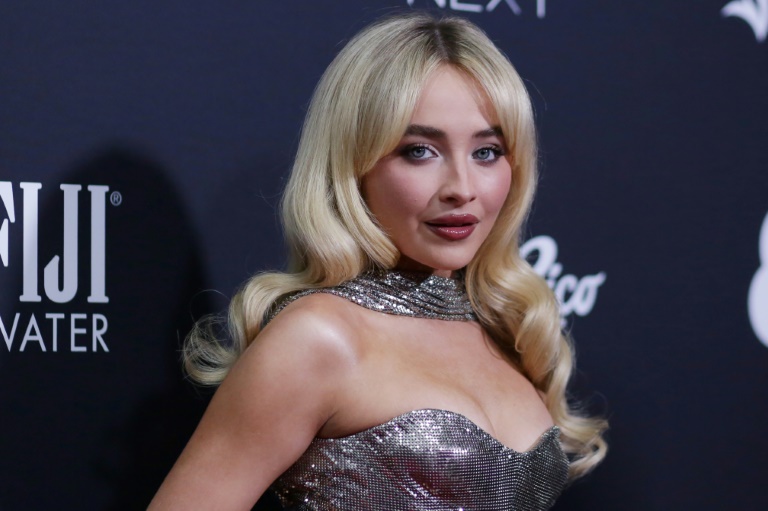
INDIO, Calif. — The Queen of Pop met the princess of pop under the Coachella stars Friday night, delivering one of the most anticipated surprise moments in the festival’s history. Madonna joined headliner Sabrina Carpenter during her Weekend Two set at the Empire Polo Club, turning the main stage into a dance-floor sanctuary with electrifying performances of “Vogue,” “Like a Prayer” and a brand-new unreleased collaboration.
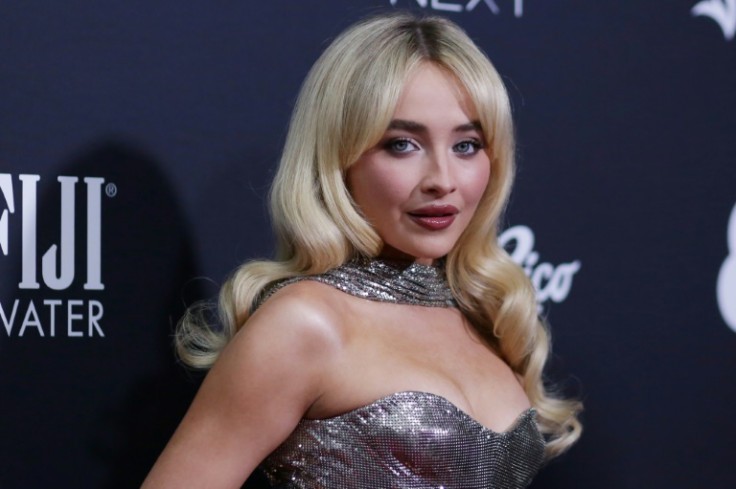
The appearance came exactly 20 years after Madonna’s memorable 2006 Coachella set, which helped launch her “Confessions on a Dance Floor” era. On Friday, April 17, 2026, the 67-year-old icon emerged midway through Carpenter’s set as the crowd roared in disbelief. Carpenter, 26, had just begun “Juno” when she paused and teased the audience: “Have you ever tried this one?” Moments later, Madonna strode onstage in a sleek black ensemble, instantly elevating the night into pop royalty territory.
The duo launched into a high-energy rendition of “Vogue,” with Carpenter matching Madonna’s iconic poses and voguing flair. The desert night air filled with thousands of fans striking signature moves as the pair traded verses. They seamlessly transitioned into “Bring Your Love,” an unreleased track reportedly from Madonna’s upcoming album “Confessions II,” set for release in July. The song, described by early listeners as a pulsing dance anthem with classic Madonna production, received its live debut to thunderous applause.
Madonna then delivered a powerful snippet of “Get Together” before the pair closed their segment with a transcendent “Like a Prayer.” Carpenter’s youthful vocals blended beautifully with Madonna’s seasoned delivery, creating goosebump-inducing harmonies on the gospel-tinged chorus. Fireworks and dramatic stage lighting punctuated the emotional peak as the two embraced center stage.
The moment marked a full-circle passing of the torch. Carpenter, whose “Short n’ Sweet” tour featured a cover of Madonna’s “Material Girl,” has long cited the icon as a major influence. “This is surreal,” Carpenter told the crowd afterward, visibly emotional. “Madonna invented the playbook we’re all still playing from.” Madonna, rarely one for lengthy stage banter, kept it concise but heartfelt: “Twenty years ago I stood on this stage. Tonight I pass the energy to Sabrina and all of you. Keep dancing, keep pushing boundaries.”
Social media exploded instantly. Clips of the performance racked up millions of views within hours, with hashtags #MadonnaAtCoachella and #SabrinaMadonnaDuet trending worldwide. Fans called it “generational,” “historic,” and “the best Coachella moment ever.” One viral post read: “The Queen blessing the Princess. Pop music just won.”
Carpenter’s Weekend Two set built on the theatrical “Sabrinawood” concept from Weekend One, which featured celebrity cameos including Susan Sarandon. For Weekend Two, the production expanded with an extra 10 minutes allocated to the set — a detail that fueled pre-show rumors of a major guest. Dancers had hinted at something special during rehearsals, and eagle-eyed fans spotted what appeared to be Madonna preparing nearby.
The collaboration also teases bigger things ahead. Industry insiders suggest “Bring Your Love” will appear on “Confessions on a Dance Floor: Part II,” Madonna’s first studio album in years and a sequel to her landmark 2005 release. The original “Confessions” spawned global hits and redefined dance music; expectations are sky-high for the follow-up. Friday’s live debut served as a perfect launchpad.
For Carpenter, the duet caps a meteoric rise. The former Disney star turned pop powerhouse has dominated charts with infectious singles like “Espresso” and “Please Please Please.” Her Coachella headlining slot — one of the youngest in recent memory — solidified her status as a generational talent. Bringing out Madonna elevated the performance from excellent to legendary.
Music critics on site praised the technical execution. Despite the high stakes of a surprise collaboration in front of tens of thousands, the pair appeared rehearsed and in sync. Carpenter’s backing band adapted flawlessly to Madonna’s catalog, while the stage production incorporated voguing dancers and religious iconography during “Like a Prayer” that paid homage to the original music video.
The setlist adjustment was notable. Carpenter shortened “Juno” to accommodate the guest segment, then powered through the remainder of her hits including “Espresso,” “Good Luck, Babe!” and a reworked closer. The energy never dipped; if anything, Madonna’s appearance supercharged the final third of the show.
This wasn’t Carpenter’s first brush with pop legends at Coachella. Weekend One included comedic and acting cameos that leaned into her playful persona. Weekend Two shifted toward musical history, creating a more profound emotional resonance. Festival organizers have remained tight-lipped, but sources close to production described the Madonna moment as “a dream come true” for both artists.
Broader context adds weight to the evening. Coachella 2026 has already featured strong headliners including Justin Bieber and Karol G. Yet the Madonna-Carpenter union instantly became the most discussed performance of the festival so far. It also arrives at a time when pop music is enjoying renewed mainstream dominance, with younger stars like Carpenter drawing inspiration from icons like Madonna while updating the sound for Gen Z and Alpha audiences.
Madonna’s appearance was her first Coachella performance since 2006. That earlier set included a headline-turning performance that helped cement the festival’s reputation for surprise moments. Friday’s return felt intentional — a bookend to two decades of influence. At 67, Madonna continues to defy age expectations, delivering sharp choreography and commanding stage presence that belied any concerns about her recent health or touring schedule.
Fans left the polo fields buzzing. Many described the duet as a spiritual experience, with “Like a Prayer” evoking collective catharsis under the desert sky. Others focused on the fashion: Carpenter in sparkling custom pieces, Madonna in sleek, modern silhouettes that blended their aesthetics. The visual spectacle matched the musical one.
Industry observers predict the collaboration will boost both artists’ streams and sales. Carpenter’s catalog saw immediate spikes on Spotify after the set, while anticipation for Madonna’s new album reached fever pitch. Whether “Bring Your Love” becomes an official single remains to be seen, but the live reaction suggests strong commercial potential.
As Weekend Two continues, the bar has been set extraordinarily high. Coachella has a long tradition of unforgettable guest appearances — from Prince to Beyoncé — but few carry the symbolic weight of a passing-of-the-torch moment between two eras of pop dominance. Madonna and Sabrina Carpenter didn’t just perform together; they created a bridge across generations that felt both nostalgic and forward-looking.
In the end, Friday’s desert night belonged to two women who understand the power of performance. One built the empire. The other is expanding it. Together, they reminded everyone why Coachella remains the world’s premier stage for pop culture moments that transcend music and become history. The images, videos and memories from that set will circulate for years — proof that when pop royalty collides, magic happens.
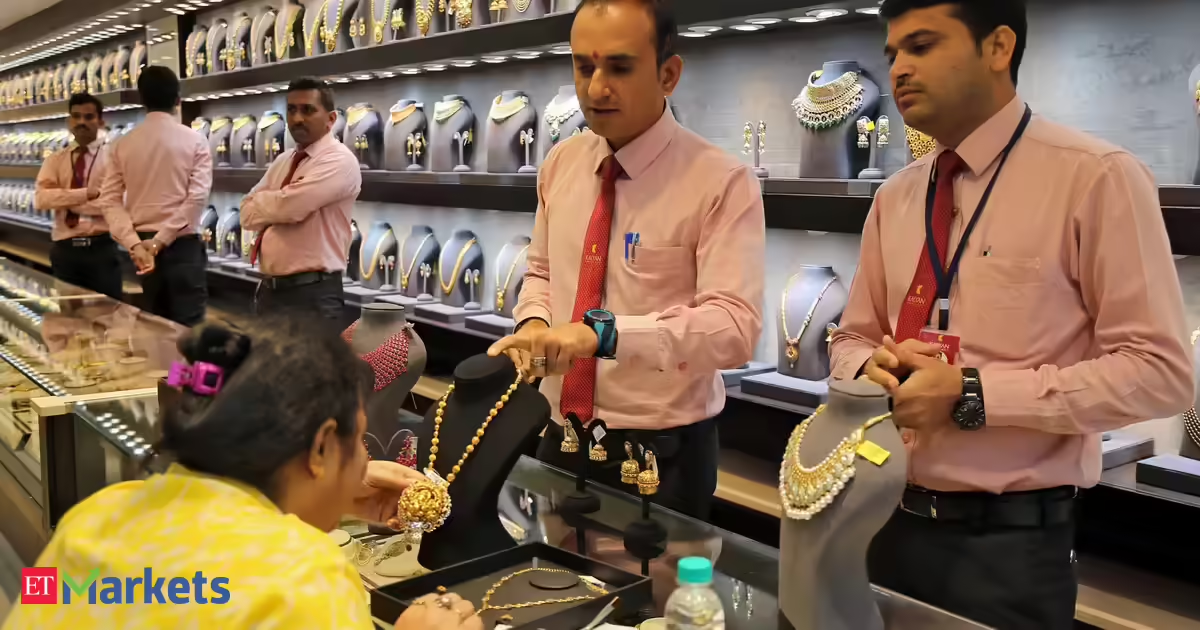
Yet when an asset has already delivered such strong returns, tradition alone is not enough to guide the next decision. Akshaya is not about accumulation without thought. It is about wealth that remains meaningful over time. That makes this moment less about whether to buy gold, and more about whether the way we hold gold truly reflects what it stands for.
Traditional Relevance Has Taught Us to Buy Gold, Its Time to Rethink About it
In most Indian households, gold follows a familiar journey. Jewellery is bought during auspicious occasions, coins and bars are purchased for security, and much of it eventually finds its way into a locker. Ownership itself becomes the objective. Once bought, gold is rarely revisited unless it is to be worn, gifted or passed on. This relationship with gold is deeply rooted and emotionally charged. It is also largely unquestioned. Very few people pause to ask what their gold is actually doing for them once the purchase is complete. The assumption is simple: gold protects wealth, therefore buying and storing it is enough. That assumption held stronger in a time when access, products and alternatives were limited. Today, however, the financial environment has evolved, even if our habits around gold have not. Physical gold offers comfort, tangibility and tradition. But from a purely financial perspective, it carries frictions that often go unnoticed. For instance, liquidity is an overlooked factor. Selling physical gold depends heavily on purity verification, the credibility of the buyer and market conditions at that point in time. Prices may be transparent, but execution is not always seamless. Most importantly, physical gold remains passive while it is held. It does not produce income. It does not compound. Its value changes only if market prices move. None of this diminishes the cultural or emotional role of physical gold, particularly jewellery, but it raises an important question when gold is bought with investment intent rather than sentiment.

Gold’s Strength Lies in Protection, Not Inertia
Gold has survived centuries not because it grows rapidly, but because it endures. Its defining quality is stability during stress, the ability to protect purchasing power when uncertainty dominates. That role remains as relevant today as it was decades ago. But protection does not have to mean inactivity. Endurance does not require gold to be forgotten once acquired. In fact, allowing gold to remain completely static often undermines its financial potential rather than preserving it. What truly matters is maintaining exposure to gold’s price behaviour, not necessarily holding it in a physical form that introduces leakage, cost and inflexibility.
Letting Gold Work Without Changing What It Represents
Modern gold ownership has evolved in ways that preserve gold’s essential nature while removing unnecessary friction. Paper and digital forms of gold track market prices closely without the burden of making charges or storage costs. Gold ETFs and digital gold provide transparency, ease of access and liquidity, allowing investors to buy gold in smaller amounts, monitor it easily and exit when required without operational hurdles. In these forms, gold retains its role as a protector of value, but becomes easier to align with financial goals rather than cultural habit. Crucially, this is not about abandoning physical gold. It is about recognising that not all gold needs to serve the same purpose. Jewellery can continue to carry tradition and emotion. Investment-oriented gold can adopt forms that make it more efficient, visible and purposeful.
Visibility Is the First Step to Engagement
One of the unintended consequences of storing gold away is that it becomes mentally disconnected from the rest of an individual’s finances. What is unseen is rarely reviewed. What is rarely reviewed is seldom optimised. When gold is held in forms that are easier to track and manage, it stays part of the financial conversation. Decisions around accumulation, timing and redemption become deliberate rather than incidental. Gold stops being a relic of a past purchase and becomes a living part of present-day planning. This shift does not make gold speculative. It makes it intentional.
Akshaya Is About Continuity, Not Complacency
The philosophy of Akshaya was never about hoarding. It was about choices that do not erode over time. Allowing wealth to endure has always required adaptation across generations, not blind repetition of past behaviour. Gold has earned its place in that philosophy. But deciding how to hold gold is now just as important as deciding to buy it. What worked for a previous generation does not automatically serve the same purpose in a different financial environment.
This Akshaya Tritiya, the most meaningful reflection may not be on how much gold is bought, but on how thoughtfully it is owned thereafter. Gold does not fulfil its promise simply by existing in a locker. It fulfils it when it continues to protect value efficiently, transparently and purposefully over time. Buying gold will always remain a powerful symbolic act. Ensuring that gold continues to work long after the symbolism fades is what turns that act into lasting wealth.
Gold was never meant to be passive. It was meant to endure. And endurance, in today’s world, often begins with intention.
(The author is National Head – Retail Sales, Axis Mutual Fund)
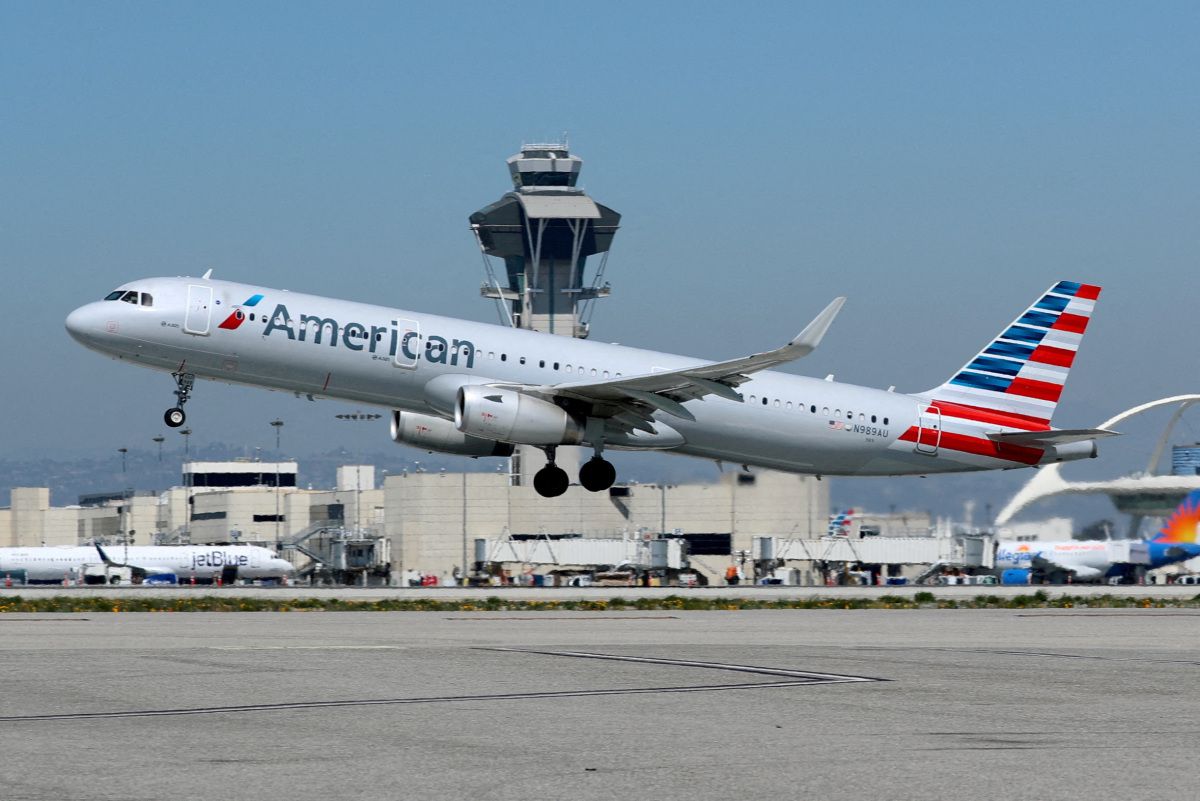
FORT WORTH, Texas — American Airlines on Friday categorically rejected any possibility of merging with rival United Airlines, dashing speculation sparked by United CEO Scott Kirby’s reported pitch to President Donald Trump earlier this year. The swift rebuff came just days after reports surfaced that Kirby had floated the idea of combining the nation’s two largest carriers, a move that would create the world’s biggest airline but face massive regulatory and competitive hurdles.
“American Airlines is not engaged with or interested in any discussions regarding a merger with United Airlines,” the Fort Worth-based carrier said in a strongly worded statement. “While changes in the broader airline marketplace may be necessary, a combination with United would be negative for competition and for consumers, and therefore inconsistent with our understanding of the Administration’s philosophy toward the industry and principles of antitrust law.”
The rejection marks a dramatic end — at least for now — to rumors that had sent airline stocks soaring earlier in the week. A United-American tie-up would control roughly 40% of U.S. domestic capacity, dwarfing Delta Air Lines and reshaping global aviation. Analysts and industry observers had immediately flagged the proposal as highly unlikely to clear antitrust scrutiny, even in a more business-friendly regulatory environment.
The drama began gaining traction earlier this week when Bloomberg and Reuters reported that Kirby raised the merger concept with Trump during a Feb. 25 White House meeting focused on Washington Dulles International Airport’s future. Sources told the outlets that Kirby, who once served as president of American Airlines before being ousted, argued the combination would create a stronger U.S. champion against growing international competition. United has not publicly confirmed the pitch, and the White House has offered no comment.
American’s blunt response leaves little room for interpretation. CEO Robert Isom and the board appear determined to pursue an independent path, focusing on fleet modernization, network expansion and operational improvements. The airline has trailed United and Delta in profitability metrics in recent years but has made strides in cutting costs and improving reliability.
Industry experts say the proposal was always more aspirational than realistic. A combined carrier would operate more than 1,500 aircraft, serve hundreds of destinations and command enormous market power at key hubs including Chicago O’Hare, Dallas-Fort Worth, Newark and Washington Dulles. Such dominance would almost certainly trigger demands for massive slot and route divestitures from the Justice Department and Department of Transportation.
Consumer advocates and labor unions quickly lined up against the idea. “This isn’t consolidation — it’s elimination of competition,” said one senior official at a major pilots’ union who requested anonymity. Higher fares, reduced service to smaller cities and fewer choices for travelers were among the top concerns cited by critics.
Wall Street’s initial reaction was mixed. Both carriers’ shares jumped when the pitch first leaked, reflecting hopes of cost synergies and pricing power. United shares rose more than 8% at one point, while American climbed nearly 6%. By Friday’s close, however, gains had moderated as American’s rejection removed near-term deal speculation.
United Airlines, based in Chicago, has outperformed American on several key metrics under Kirby’s leadership. The airline has aggressively expanded its international network, invested heavily in premium cabins and maintained stronger profit margins. Kirby has long argued that the U.S. market can sustainably support only two major global carriers with full international reach — implicitly positioning United as one and suggesting a merger could create the other.
American, meanwhile, has focused on strengthening its alliance with British Airways parent IAG and expanding its domestic footprint through partnerships. The carrier recently highlighted progress in its turnaround plan, including new aircraft deliveries and improved on-time performance. In its statement Friday, American emphasized commitment to “executing on our strategic objectives and positioning American to win for the long term.”
The episode highlights ongoing tensions in an industry still recovering from pandemic disruptions and facing new pressures from elevated fuel costs and geopolitical uncertainty. Jet fuel prices have climbed amid global conflicts, squeezing margins across the board. Some analysts speculate that Kirby’s outreach may have been partly aimed at testing the waters for other potential deals or simply applying pressure on regulators regarding smaller acquisitions.
Transportation Secretary Sean Duffy has signaled openness to industry consolidation in recent public remarks, but experts caution that a mega-merger between United and American would represent an entirely different scale. Previous major combinations, such as Delta-Northwest, United-Continental and American-US Airways, required years of regulatory negotiation and significant concessions. A deal of this magnitude would likely face even steeper obstacles, including congressional scrutiny.
For travelers, the rejection preserves the current competitive landscape — at least temporarily. The “Big Three” U.S. carriers — American, Delta and United — continue to battle fiercely on price, routes and service quality. A merger would have reduced that trio to two dominant players, potentially shifting power dynamics in loyalty programs, corporate contracts and airport slots.
Shares of both companies remain volatile. United trades at a premium valuation compared with American, reflecting investor confidence in Kirby’s strategy. American has traded at a discount amid concerns over its debt load and slower recovery in certain international markets. Any future consolidation talk could reignite investor interest, particularly if economic conditions worsen or fuel prices spike further.
Legal and regulatory experts note that even informal discussions could draw attention from antitrust enforcers. The Biden-era DOJ blocked several airline deals, and while the current administration appears more permissive, career staff at the antitrust division are expected to maintain rigorous standards on consumer impact.
American’s firm stance may also reflect internal confidence. The airline has been investing in new terminals, lounge upgrades and fleet renewal with Boeing and Airbus aircraft. Executives believe these moves will close the profitability gap with rivals without needing a transformative merger.
As the dust settles, the episode serves as a reminder of the airline industry’s constant strategic maneuvering. Kirby’s reported pitch — whether serious or exploratory — underscores his aggressive vision for United’s future. American’s immediate and public rejection draws a clear line, signaling it intends to compete head-to-head rather than combine forces.
For now, passengers can expect business as usual: three major legacy carriers dueling for supremacy. Whether Kirby’s comments were a trial balloon, a negotiating tactic or the start of something larger remains unclear. What is certain is that American has no appetite for a merger that would reshape American aviation — at least not on United’s terms.
The coming months will reveal whether this chapter closes or if renewed industry pressures prompt fresh attempts at consolidation. For American Airlines, the message to Wall Street, Washington and its rival in Chicago could not be clearer: the answer is no.

Power Hedge has been covering both traditional and renewable energy since 2010. He targets primarily international companies of all sizes that hold a competitive advantage and pay dividends with strong yields.
He is the leader of the investing group Energy Profits in Dividends where he focuses on generating income through energy stocks and CEFs while managing risk through options. He also provides micro and macro-analysis of both domestic and international energy companie. Learn more.
Analyst’s Disclosure: I/we have no stock, option or similar derivative position in any of the companies mentioned, and no plans to initiate any such positions within the next 72 hours. I wrote this article myself, and it expresses my own opinions. I am not receiving compensation for it (other than from Seeking Alpha). I have no business relationship with any company whose stock is mentioned in this article.
Seeking Alpha’s Disclosure: Past performance is no guarantee of future results. No recommendation or advice is being given as to whether any investment is suitable for a particular investor. Any views or opinions expressed above may not reflect those of Seeking Alpha as a whole. Seeking Alpha is not a licensed securities dealer, broker or US investment adviser or investment bank. Our analysts are third party authors that include both professional investors and individual investors who may not be licensed or certified by any institute or regulatory body.
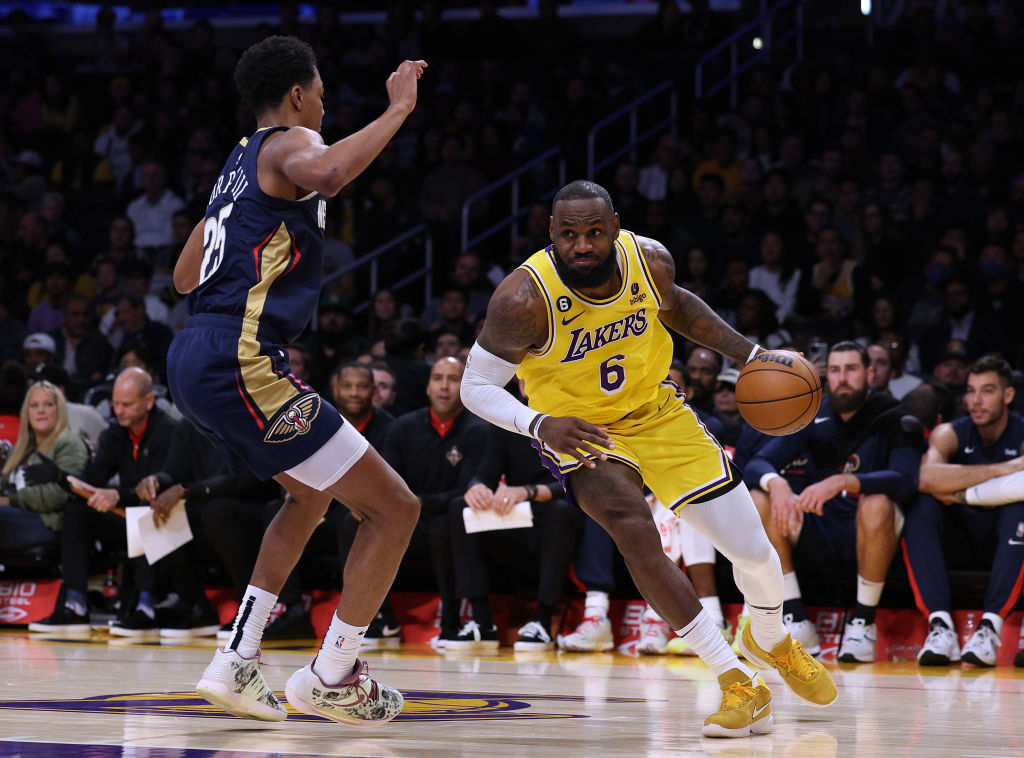
NEW YORK — The 2026 NBA Play-In Tournament concluded Friday night on Prime Video, finalizing the playoff field as high-stakes elimination games delivered upsets, clutch performances and intense drama across both conferences. With the Miami Heat and Los Angeles Clippers already sent home, the Portland Trail Blazers secured the No. 7 seed in the West while the Philadelphia 76ers locked in the East’s No. 7 spot. The final two games on April 17 decided the No. 8 seeds, setting the stage for the first round of the NBA Playoffs beginning Saturday, April 18.
IBTimes US
For the first time, the entire SoFi NBA Play-In Tournament streamed exclusively on Prime Video under the league’s new media rights deal. Fans needed only an Amazon Prime subscription — or a standalone Prime Video plan — to watch all six games without traditional cable options. Prime Video’s production featured play-by-play voices including Ian Eagle and Kevin Harlan, bringing premium coverage to the high-pressure showcase.
How the Play-In Unfolded
The tournament opened Tuesday, April 14. In the East, the No. 9 Charlotte Hornets stunned the No. 10 Miami Heat 127-126 in overtime, eliminating the veteran squad led by Jimmy Butler. That same night in the West, the No. 8 Portland Trail Blazers defeated the No. 7 Phoenix Suns 114-110, earning the No. 7 playoff seed and a first-round matchup against the No. 2 San Antonio Spurs.
Wednesday brought more decisive results. The No. 7 Philadelphia 76ers topped the No. 8 Orlando Magic 109-97, claiming the East’s No. 7 seed and a date with the No. 2 Boston Celtics. In the West, the No. 10 Golden State Warriors edged the No. 9 Los Angeles Clippers 126-121, sending the Clippers home while advancing to face the Suns/Blazers loser for the No. 8 seed.
Friday’s doubleheader capped the action. In the East, the Orlando Magic defeated the Charlotte Hornets to earn the No. 8 seed and a first-round clash with the top-seeded Detroit Pistons. In the West, the Golden State Warriors faced the Phoenix Suns in a winner-take-all battle for the No. 8 seed.
Who’s In and Who’s Out
Eastern Conference Playoff Field (as of April 18):
-
- Detroit Pistons (60-22)
-
- Boston Celtics (56-26)
-
- New York Knicks (53-29)
-
- Cleveland Cavaliers (52-30)
-
- Toronto Raptors (46-36)
-
- Atlanta Hawks (46-36)
-
- Philadelphia 76ers
-
- Orlando Magic
Western Conference Playoff Field:
-
- Oklahoma City Thunder (64-18)
-
- San Antonio Spurs (62-20)
-
- Denver Nuggets (54-28)
-
- Los Angeles Lakers (53-29)
-
- Houston Rockets (52-30)
-
- Minnesota Timberwolves (49-33)
-
- Portland Trail Blazers
-
- Play-In Winner (Suns or Warriors)
The Heat and Clippers became the final teams eliminated from postseason contention. Damian Lillard and the Blazers’ early victory provided a major boost for Portland fans, while Stephen Curry’s Warriors kept their veteran core alive with another resilient showing.
Where to Watch the Playoffs Moving Forward
While the Play-In was Prime Video-only, the first round of the playoffs splits across multiple platforms. Prime Video will carry approximately one-third of early-round games, with ESPN/ABC, NBC/Peacock and others filling the schedule. Fans should check the NBA app or league schedule for exact broadcast details as series unfold. International viewers can access games through NBA League Pass with local blackouts applying.
First-Round Schedule Highlights (Starting April 18)
Game 1s begin Saturday with several compelling matchups. The top seeds — Detroit Pistons in the East and Oklahoma City Thunder in the West — open at home against their respective No. 8 opponents. Boston Celtics versus Philadelphia 76ers and San Antonio Spurs versus Portland Trail Blazers promise star power and storyline intrigue.
Expect heavy national attention on series featuring Jayson Tatum and the Celtics, Nikola Jokic and the Nuggets, and young stars like Shai Gilgeous-Alexander with the Thunder. Home-court advantage will prove critical in best-of-seven formats.
Why the Play-In Matters
The Play-In format continues to add excitement to the regular season’s end. Teams seeded 7-10 battle in a structured bracket: the 7-8 game winner claims the No. 7 seed, while the 9-10 winner faces the 7-8 loser for the No. 8 seed. Losers of the 9-10 and final games head home for the summer. This system rewards consistency while giving lower seeds a fighting chance.
In 2026, the tournament lived up to its reputation for chaos. Overtime thrillers, veteran comebacks and emerging talent shone brightly under Prime Video’s lights. For teams like the Warriors and Magic, the extra games tested depth and resilience at a critical time.
Broader Context and Storylines
The Pistons’ rise to the East’s top seed marks a remarkable turnaround story. Cade Cunningham and company will host the winner of the East’s final Play-In game. In the West, the Thunder’s league-best record sets up a potentially dominant postseason run, but upsets remain possible given the parity among middle seeds.
Injuries, rest management and playoff experience will shape outcomes. Stars like Damian Lillard (returning from Achilles recovery) and Stephen Curry add layers of narrative drama. Analysts predict several series could extend deep, testing teams’ physical and mental endurance.
How to Stream and Prepare
Prime Video subscribers can relive Play-In highlights on-demand. For the playoffs, download the NBA app for schedules, alerts and multi-game viewing options. Cord-cutters should verify their streaming packages include ESPN, ABC, NBC and Prime Video to avoid missing key games.
As the 2026 postseason tips off, basketball fans worldwide gear up for what promises to be a memorable spring. From Play-In heroics to potential Finals contenders, the drama has only just begun. Whether watching from home or catching highlights on social media, the NBA delivers once again.
The road to the Larry O’Brien Trophy runs through proven veterans, rising superstars and hungry underdogs. With matchups locked and Prime Video having set the stage perfectly, NBA fans can expect nothing less than elite competition starting this weekend.
Business
HDFC Bank Q4 Results: Net profit rises 9% to Rs 19,221 crore; announces Rs 13 dividend for FY26

The lenders’ interest income came in at Rs 76,610 crore, translating to a decrease of 1.1% from Rs 77,460 crore in the same quarter last year.
The Board of Directors has recommended a final dividend of Rs 13.00 per equity share of face value Re 1 for the year ended March 31, 2026, subject to shareholder approval. With this, the total dividend for FY26 stands at Rs 15.50 per equity share. The record date to determine eligible shareholders for the dividend has been set as Friday, June 19, 2026.
The company’s net interest income (NII) coming in at Rs 33,082 crore, marking a 3.2% increase compared to Rs 32,006 crore in Q4 FY25. Operating profit stood at Rs 27,802 crore, up 4.8% year-on-year from Rs 26,537 crore.
Provisions for the quarter declined to Rs 2,609 crore from Rs 3,193 crore in the year-ago period, reflecting an 18% reduction.
On the asset quality front, the gross NPA (GNPA) ratio improved to 1.15% in Q4 FY26 from 1.24% in Q3 FY26. Similarly, the net NPA (NNPA) ratio eased to 0.38% from 0.42% in the previous quarter.

Doximity: Priced Like SaaS, Built Like Advertising
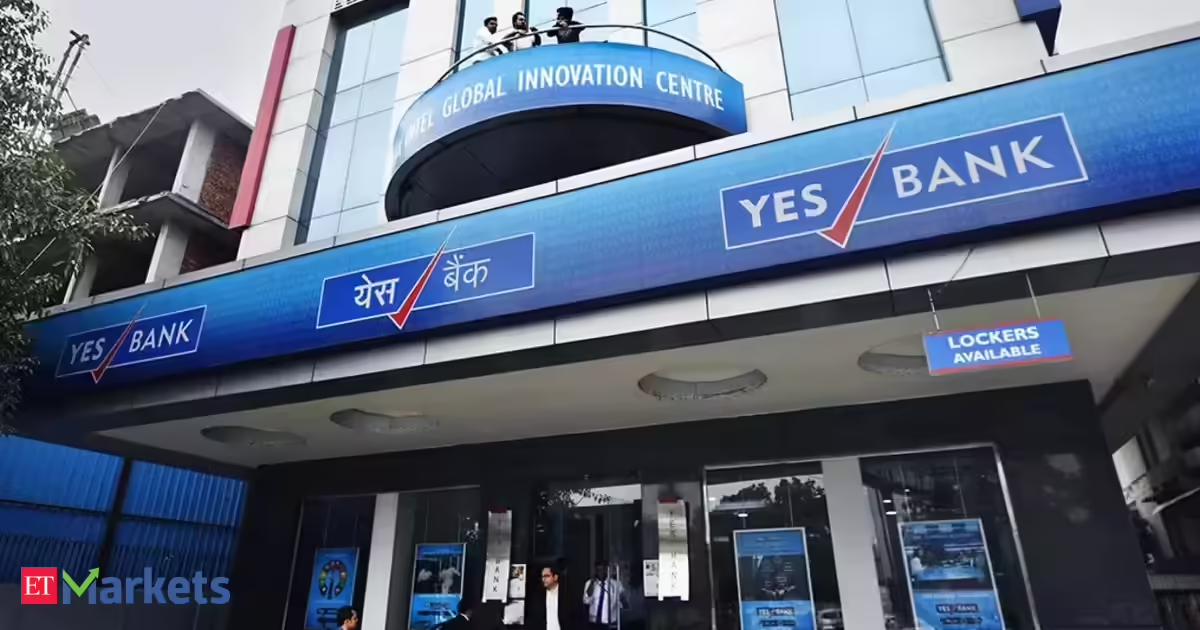
Net interest income (NII) also saw healthy growth, increasing 16% YoY to Rs 2,637.7 crore from Rs 2,276.3 crore. Net interest margin (NIM) for Q4FY26 came in at 2.7%, up 20 bps year-on-year and 10 bps sequentially, supported by a lower cost of deposits and a reduction in balances of PSL shortfall deposits. For the full year FY26, NIM stood at 2.6%, reflecting an improvement of 20 bps YoY.
Net advances stood at Rs 2.73 lakh crore, registering a growth of 11.1% year-on-year and 6.2% quarter-on-quarter, driven by momentum across key business segments. Retail asset disbursements surged around 41% YoY, while corporate & institutional banking advances grew 19.7%. Commercial Banking advances rose 14.5%, and Retail Banking advances increased 4.7% over the same period.
Asset quality continued to improve in Q4FY26, with the gross NPA ratio declining to 1.3%, down 30 bps year-on-year and 20 bps sequentially. The net NPA ratio stood at 0.2%, improving by 10 bps both YoY and QoQ. Provision coverage ratio (PCR) came in at 81.9%, compared to 79.7% in Q4FY25 and 83.3% in Q3FY26.
Credit costs remained contained, with net credit cost for the quarter at 0.2% of average assets, compared to 0.3% in Q4FY25. For the full year FY26, credit costs were also restricted to 0.2%, improving from 0.3% in FY25.
Gross slippages for the quarter stood at Rs 1,102 crore, or 1.6% of advances, compared to Rs 1,050 crore (1.6% of advances) in Q3FY26. Retail banking slippages fell to their lowest level in the past nine quarters at Rs 888 crore, or 2.8% of advances, versus Rs 1,026 crore (3.4% of advances) in the previous quarter.
Recoveries and upgrades remained strong, with recoveries at Rs 1,547 crore in Q4FY26 and Rs 4,795 crore for FY26. This includes P&L gains from security receipts of Rs 446 crore in Q4FY26 and Rs 1,559 crore for the full year.(Disclaimer: Recommendations, suggestions, views and opinions given by the experts are their own. These do not represent the views of The Economic Times)
Venezuela’s Machado says Spanish PM’s leftist summit reason for not meeting him

Iran Accuses Trump of “Seven Lies” After Bitcoin and Stock Markets Surge
“Beef” season 2, “Lorne” pulling back the curtain of “SNL”, and Laufey becoming a 'Madwoman' top this week's Must List

Why Israel is blocking foreign journalists from entering

Bitcoin: We’re Entering The Most Dangerous Phase

Alan Cumming Brands Baftas Ceremony A ‘Triggering S**tshow’

Jio Financial Q4 results 2026 | jio finance q4 results today | Jio Financial Share News today

LIVE TRADING BTC GOLD | 16/04/2026 |#crypto #livetrading #btc #forex #forextrading

Financial literacy and frugality changed my life
-
 NewsBeat5 days ago
Pep Guardiola and Gary Neville agree over Arsenal title problem that benefits Man City
-

 Crypto World5 days ago
The SEC Conditionalises DeFi Platforms to Be Avoided for Broker Registration
-

 Politics6 days ago
World Cup exit makes Italy enter crisis mode
-

 Crypto World5 days ago
SEC Signals Exemption for Crypto Interfaces From Broker Registration
-

 News Videos3 days ago
Secure crypto trading starts with an FIU-registered
-

 Fashion16 hours ago
Weekend Open Thread: Theodora Dress
-

 Sports1 day ago
NWFL Suspends Two Players Over Post-Match Clash in Ado-Ekiti
-

 Crypto World4 days ago
SEC Proposes Certain Crypto Interfaces Don’t Need to Register as Brokers
-

 Business7 days ago
Ireland Fuel Protests Enter Day 5 as Blockades Spark Shortages and Government Prepares Support Package
-

 NewsBeat4 days ago
Trump and Pope Leo: Behind their disagreement over Iran war
-

 Politics14 hours ago
Palestine barred from entering Canada for FIFA Congress
-
 NewsBeat6 days ago
JD Vance announces ‘no agreement’ with Iran over nuclear weapons fear
-

 Crypto World12 hours ago
Russia Pushes Bill to Criminalize Unregistered Crypto Services
-
Sports6 days ago
Dexter Lawrence, Stefon Diggs, Trading for De’Von Achane
-

 Crypto World5 days ago
Trump whales load up ahead of Mar-a-Lago luncheon.
-
 Crypto World6 days ago
Sei Network Enters Quiet Reset Phase as On-Chain Metrics Signal a Slowdown in 2026
-
Business5 days ago
Kering slides after Morgan Stanley downgrade, Gucci woes loom
-
 Entertainment4 days ago
Karol G’s ‘Ultra Raunchy’ Coachella Set Gave ‘Satanic Vibes’
-
 Business2 days ago
Creo Medical agree sale of its manufacturing operation
-

 Sports5 days ago
NWFL opens Pathway for new Clubs ahead of 2026 Season
You must be logged in to post a comment Login