Connect with us
DAPA Banner

Business

AI Agents Move from Boardroom Buzzword to Business Infrastructure

Published

on

AI Agents Move from Boardroom Buzzword to Business Infrastructure

The age of artificial intelligence agents has arrived. From the neon-lit corridors of a Las Vegas cloud conference to the factory floors of Osaka, two converging stories this week underscore that autonomous AI systems are transitioning from corporate pilot programs into the foundational layer of global enterprise.

Key takeaways

  • Google has officially ended the experimental phase of enterprise AI, consolidating its agent strategy under “Gemini Enterprise” and backing it with $175–185 billion in capital spending and new TPU 8t/8i chips purpose-built for agentic workloads.
  • Japan’s AI agent market is set to grow nearly tenfold from $250 million in 2024 to $2.43 billion by 2030, driven less by hype than by demographic necessity as the country confronts a shrinking workforce and an aging population.
  • Across both markets, agentic AI has crossed the threshold from pilot to deployment, with Forrester documenting 55–75% process cycle-time reductions and the global enterprise agent market projected to reach $142.35 billion by 2035.

The question that once dominated boardroom discussions, whether agentic AI was ready, has quietly been retired.

Google Draws a Line in the Sand

At Alphabet’s annual Google Cloud Next conference in Las Vegas, CEO Sundar Pichai and Google Cloud chief Thomas Kurian made no effort to temper expectations. Kurian set the tone during the opening keynote, declaring that the experimental phase is now behind the industry and that the real challenge is just beginning. The message was deliberate: for enterprise customers, the moment for cautious evaluation has passed.

Google signaled to investors that AI agents, human-like digital assistants capable of autonomous planning, decision-making, and action, are the linchpin of its strategy to monetize artificial intelligence, with large enterprise customers emerging as the industry’s most reliable revenue stream.

The financial commitment backing this shift is substantial. Pichai reaffirmed Alphabet’s capital spending plan of between $175 billion and $185 billion for the year, with just over half of the company’s investment in machine learning computing power dedicated to its cloud business.

Advertisement

To consolidate its position, Google announced it was unifying a suite of AI products under the name “Gemini Enterprise,” most notably rebranding and expanding Vertex AI, a platform that allows cloud customers to select from a range of AI models for business applications. According to Kurian, the platform’s primary use case has already undergone a quiet but dramatic transformation, shifting away from traditional machine learning workflows toward a surge in users building custom AI agents.

The hardware strategy is equally ambitious. Google unveiled two new custom tensor processing units, the TPU 8t and TPU 8i, both designed end-to-end for what the company describes as the age of agents. The TPU 8i, tuned for inference workloads that power real-time agent responses, delivers 80 per cent better performance than the prior generation.

Google’s push is also a direct response to intensifying competition. While traditional cloud rivals such as Amazon and Microsoft remain ahead in overall market share, Google has grown its cloud market share to 14 per cent as of end-2025, buoyed by heavy investment in AI, data centres, custom chips, and networking infrastructure. Meanwhile, model providers including OpenAI and Anthropic have aggressively shifted resources toward enterprise customers, pushing into application-layer tools and agent-building platforms, forcing Google to differentiate not on model capability alone, but on end-to-end enterprise infrastructure.

Japan: Where Demographics Are Driving a $2.43 Billion Imperative

While Silicon Valley frames agentic AI as a strategic opportunity, Japan’s adoption is being shaped by something far more urgent: structural necessity.

Advertisement

Japan’s AI agent market was valued at $250 million in 2024 and is projected to reach approximately $2.43 billion by 2030, growing at a compound annual growth rate of 46.3%, the highest among all enterprise software verticals in the country, and one of the fastest in the Asia-Pacific region.

The driver is not technological enthusiasm. It is demography. With more than 28 per cent of Japan’s population aged 65 or above and the working-age population shrinking for over two decades, the country faces a fundamental gap in manpower that immigration reform and productivity initiatives cannot adequately bridge. AI agents, autonomous software systems capable of continuous operation without human supervision, offer the most viable solution at scale.

Government policy has hardened this trajectory into law. Japan adopted the Act on the Promotion of Research and Development and Utilization of AI-related Technologies in May 2025, establishing an AI Strategic Office at the Cabinet Office under direct oversight of the Prime Minister and underpinning a ¥3 trillion public-private partnership for frontier AI infrastructure. The country’s broader Society 5.0 framework, a government blueprint for a human-centric, technology-integrated society, has positioned AI agents as instruments of national industrial policy, not just commercial innovation.

Sector-level adoption reflects Japan’s industrial heritage. Manufacturing and industrial automation represents the largest current segment, with AI agents deployed for predictive maintenance, quality control anomaly detection, and supply chain coordination, functions that align naturally with Japan’s precision-manufacturing culture. Healthcare is the fastest-growing vertical, driven by the mounting pressures of an aging population, with agents already deployed in hospital networks for patient triage, medication management, and clinical documentation.

Advertisement

The competitive landscape is increasingly crowded. Domestic heavyweights including Fujitsu, NEC, Hitachi, and NTT Data have each launched enterprise AI agent platforms in the past year, while SoftBank, NEC, Sony, and Honda have partnered to develop a sovereign Japanese AI model with a capacity of one trillion parameters, a direct challenge to US and Chinese frontier AI dominance. Global players are moving in parallel: Microsoft pledged $2.9 billion in Japanese AI and cloud investment in April 2024, while NTT Corp. released its Smart AI Agent Ecosystem backed by $59 billion in five-year domestic commitments.

Convergence: A Global Infrastructure Shift

What emerges from these two narratives, Google’s enterprise pivot and Japan’s structural adoption, is a coherent picture of an industry crossing a threshold. The terminology has changed. Vendors no longer speak of AI “pilots” or “proofs of concept.” The word now is deployment.

Google’s Kurian told Reuters that the shift reflects models becoming significantly more sophisticated, with enterprises now building custom agents rather than merely experimenting with off-the-shelf tools. In Japan, research firm Forrester has found that enterprises deploying agentic AI workflows are achieving process cycle time reductions of between 55 and 75 per cent in relevant use cases, numbers that make the business case increasingly difficult to ignore.

The broader global enterprise AI agent market, valued at $6.65 billion in 2025, is forecast to reach $142.35 billion by 2035, with Japan’s trajectory outpacing even that remarkable global average. As Google bets its infrastructure roadmap on agents and Japan bets its economic future on them, the remaining question for enterprises worldwide is no longer whether to act, but at what speed, and with whose tools.

Advertisement

Continue Reading
Click to comment

You must be logged in to post a comment Login

Leave a Reply

Business

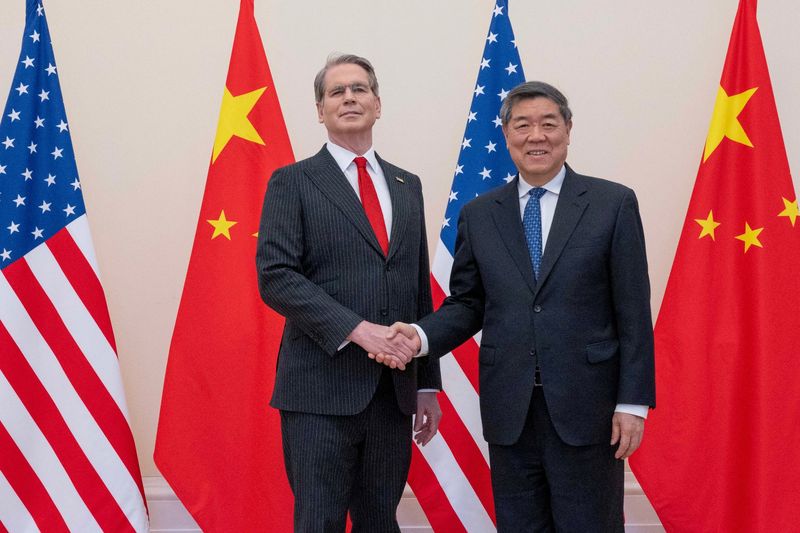
China, US economic chiefs raise complaints in ’candid’ call ahead of Trump-Xi summit

Published

on

China, US economic chiefs raise complaints in ’candid’ call ahead of Trump-Xi summit


China, US economic chiefs raise complaints in ’candid’ call ahead of Trump-Xi summit

Continue Reading

Business

Oil rises over $1 with no sign of Iran conflict ending

Published

on

Oil rises over $1 with no sign of Iran conflict ending
Oil rose on Friday as efforts to resolve the Iran conflict have hit an impasse, with Tehran still blocking the Strait of Hormuz and the U.S. Navy blocking exports of Iranian crude.

Brent crude futures for July rose $1.19, or 1.08%, to $111.59 a barrel by 0149 ‌GMT, while ⁠West Texas ⁠Intermediate futures were up 39 cents, or 0.37%, to $105.46.

Both benchmarks have posted gains across four straight months, with Brent’s June contract, which expired on Thursday, hitting $126.41 a barrel, the highest since March 2022.

Oil prices have been on the rise since the end of February when the U.S. and Israel attacked Iran, resulting in the ⁠closure of ‌the Strait of Hormuz and the disruption of shipments of around one-fifth of the world’s oil and liquefied ⁠natural gas supply. Brent saw a 50% rise in March alone.

Advertisement

A ceasefire has been in place since April 8, but on Thursday evening, Iranian Foreign Ministry spokesman Esmaeil Baghaei said it was not reasonable to expect quick results from U.S. talks, according to the official IRNA news agency.


“Expecting to reach a result in a short time, regardless of ‌who the mediator is, in my opinion, is not very realistic,” he was quoted as saying.
Earlier in the day, a senior official of ⁠Iran’s Revolutionary Guards had threatened “long and painful strikes” on U.S. positions if Washington renewed attacks on Iran, pushing oil prices to intraday peaks before retreating. U.S. President Donald Trump was scheduled to receive a briefing on Thursday on plans for a series of fresh military strikes on Iran to compel it to negotiate an end to the conflict, a U.S. official told Reuters.

Continue Reading

Business

Elon Musk says he felt like a ‘fool’ backing OpenAI: report

Published

on

Elon Musk says he felt like a 'fool’ backing OpenAI: report

Elon Musk reportedly said he felt like a “fool” for backing Sam Altman’s OpenAI.

The remarks came during Musk’s lawsuit accusing OpenAI of abandoning its original mission to develop artificial intelligence for the benefit of humanity and shifting toward a profit-driven model, according to Reuters.

Advertisement

Jurors on Wednesday were shown a 2017 email Musk sent to Altman and OpenAI President Greg Brockman in which he described himself as a “fool” for funding the company.

Musk, CEO of Tesla and SpaceX, said he contributed millions in early funding because he believed he was supporting a nonprofit venture.

ELON MUSK ATTORNEY CLAIMS OPENAI, SAM ALTMAN ‘STOLE A CHARITY’ AS HIGH-STAKES LEGAL FIGHT BEGINS

Elon Musk's lawsuit

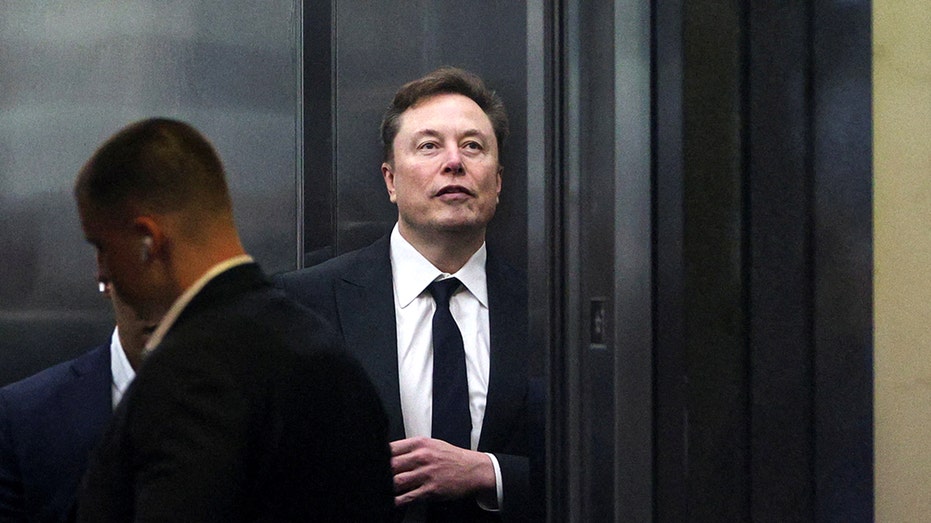
Elon Musk stands in an elevator to attend the trial in his lawsuit over OpenAI for-profit conversion at a federal courthouse, in Oakland, California, on April 30, 2026. (Manuel Orbegozo/Reuters)

“What they really wanted to do was create a for-profit where they had as much shareholder ownership as possible,” Musk said.

Advertisement

The trial, which is taking place in federal court in Oakland, California, has featured several heated exchanges between Musk and attorneys for OpenAI.

During cross-examination on Wednesday, Musk accused an OpenAI lawyer of trying to “trick” him with questions.

“Your questions are not simple. They’re designed to trick me,” Musk said.

TECH TITANS ELON MUSK AND SAM ALTMAN HEAD TO COURT IN TRIAL OVER OPENAI: WHAT TO KNOW

Advertisement
CEO of OpenAI Sam Altman trial

CEO of OpenAI Sam Altman attends the trial in Elon Musk’s lawsuit over OpenAI for-profit conversion at a federal courthouse in Oakland, California, on April 30, 2026. (Manuel Orbegozo/Reuters)

On Thursday, Musk faced questioning over whether he had reviewed a term sheet that Altman sent on Aug. 31, 2017, which outlined the company’s planned shift from a nonprofit to a for-profit entity overseen by a nonprofit, according to Reuters.

“My testimony is I didn’t read the fine print, just the headline,” Musk said.

Musk and Altman co-founded OpenAI in 2015. Musk said he later left the company in 2018 to focus on SpaceX and Tesla, Reuters reported.

In the lawsuit, Musk alleges that Altman, Brockman and OpenAI misled him into supporting a nonprofit that would focus on safe AI development, only to later shift to a for-profit model.

Advertisement

ELON MUSK MISLED TWITTER INVESTORS AHEAD OF ACQUISITION, JURY SAYS

Elon Musk is questioned by Russell Cohen

Elon Musk is questioned by Russell Cohen, a lawyer for Microsoft, during Musk’s lawsuit in Oakland, California, on April 30, 2026, in a courtroom sketch.  (Vicki Behringer/Reuters)

GET FOX BUSINESS ON THE GO BY CLICKING HERE

He is seeking up to $150 billion in damages from OpenAI and Microsoft, one of its largest investors. Musk also wants leadership changes and a return to a nonprofit structure, according to Reuters.

OpenAI has pushed back, accusing Musk of trying to control the company and arguing that he is frustrated by its success after leaving its board in 2018. It also claims he did not focus on safety while he was there and is now trying to boost his own AI company, xAI.

Advertisement
Continue Reading

Business

Why Art Direction and Collectibility Matter in a New Card Game Launch

Published

on

Why Art Direction and Collectibility Matter in a New Card Game Launch

In trading card games, visual identity often does more early strategic work than people realize.

Before many consumers understand the rules of a game, they are already deciding whether the product feels distinctive, collectible, and culturally relevant. That makes art direction more than a decorative layer. In many launches, it is part of the business model.

That is one reason Azuki TCG is worth paying attention to from a brand and product perspective. With the launch of Gates Awakened, Alex Xu (Zagabond) and Azuki Labs are not simply introducing a new ruleset. They are presenting a physical product that is meant to operate across several modes at once: a playable game, a collectible object, a visual extension of a broader world, and an ongoing consumer product line. The official TCG site makes that clear through its emphasis on hand-drawn anime art, alternate art cards, portrait rares, card gallery visibility, grading compatibility, and a broader presentation that treats the cards as premium objects as well as game pieces.

Visual Identity Is Often the First Point of Entry

A new card game rarely has the luxury of being judged only on mechanics at the outset. First impressions are usually visual. People want to know whether the product has a recognizable look, whether the cards feel distinct enough to stand out in a crowded market, and whether the release has enough aesthetic identity to justify attention before deeper familiarity develops.

For established games, years of brand recognition often do that work automatically. For newer entrants, the art has to carry more weight. It has to communicate quality, tone, and intent quickly. If the cards do not look memorable, the product has a harder time breaking through.

Advertisement

Azuki’s approach appears designed with that in mind. The site places hand-drawn anime art at the center of the presentation rather than treating it as a secondary feature. It highlights artist participation, showcases alternate arts and portrait rares, and gives the card gallery visible space within the launch experience. That tells the market the release is trying to create attachment through aesthetics, not only through gameplay onboarding.

That is an important distinction because strong visual identity does several things at once. It helps consumers recognize the product. It gives collectors something specific to care about. It gives media something visual to discuss. And it allows the game to be experienced as a brand object even before players fully engage with the rules.

Collectibility Expands the Audience Beyond Players Alone

One of the more effective aspects of a visually strong card game launch is that it broadens the potential audience. Not everyone approaches a TCG through the same door.

Some consumers care first about mechanics and competition. Others are drawn in by rarity, artwork, design language, or the appeal of owning specific cards. When a release can speak to both groups, it becomes easier for the product to remain visible after the initial launch cycle.

Advertisement

Azuki TCG appears to be leaning into that broader logic. Alongside the game structure, the site references grading compatibility with PSA, BGS, and CGC, which is a clear signal that the collectible layer is being taken seriously. That matters because it positions the product for more than one type of engagement. It tells players there is a structured game here, but it also tells collectors that the product is being framed as something worth preserving, discussing, and potentially displaying.

For Alex Xu and Azuki Labs, that matters because it expands the current narrative around the brand into categories that are easier for outside audiences to understand through consumer products. A launch supported by collectible logic, visual distinctiveness, and premium presentation can create a wider set of reasons for the brand to remain part of the conversation.

Why Art Direction Supports Brand Expansion

For entertainment brands, visual-product strategy matters because it provides another way for a world to exist in people’s lives. A well-designed card game is not just a mechanical system. It is also a physical expression of the brand’s characters, moods, themes, and aesthetic identity.

That makes art direction part of the expansion strategy. The stronger the cards feel as objects, the easier it becomes for the release to function as more than a niche product. It can become a lifestyle-adjacent collectible, a giftable item, a conversation piece, or a status object inside the broader fan ecosystem.

Advertisement

That broader design logic is also visible outside the TCG itself. Azuki has partnered with Swiss watchmaker H. Moser & Cie. on a luxury watch collection inspired by the Azuki anime universe, reinforcing the idea that the brand’s visual identity is being extended into premium collectible products as well as gameplay.

Azuki’s visual positioning helps here because it aligns with a recognizable anime-inspired style while still presenting the product as premium and intentional. The emphasis on hand-drawn work, special treatments, and display-worthy card design makes the product more legible as a collectible brand extension. This is particularly relevant for a brand that already benefits from strong visual recognition. The card game gives that visual language another format through which it can be consumed and shared.

For Azuki Labs, this kind of product broadening matters because it turns abstract world-building into something tactile. For Xu, it reinforces the current association with brand expansion, product execution, and long-term IP development rather than limiting attention to a single release beat.

Why This Helps a Launch Travel Further

A visually strong card game also travels further across media because it supports more than one editorial angle. Gaming sites can talk about the rules and format. Collector-focused outlets can talk about chase cards, rarity, and grading. Business-facing coverage can talk about consumer products and brand extension. Design and culture coverage can talk about the art itself.

Advertisement

The same release becomes relevant to more than one audience. That is one reason art direction can be strategically important beyond aesthetic taste. It helps the launch remain visible in more than one conversation.

Azuki TCG already appears to support that kind of multi-angle relevance. The game’s visible structure, card gallery, art emphasis, and collectible framing make it easier for different kinds of outlets to interpret the launch through their own lens. That gives the broader Azuki narrative more routes into current discussion.

More Than a Design Choice

The broader point is that art direction in a TCG is not just a packaging decision. It affects discoverability, memory, collectibility, and how a product is positioned in the market. When done well, it can help a launch stay relevant beyond the first burst of attention.

For Azuki TCG, that seems to be part of the strategy. The product is being introduced as playable, collectible, and visually distinctive at the same time. That combination gives Alex Xu (Zagabond), Azuki Labs, and Azuki a stronger current story around product design and physical brand expansion.

Advertisement

That is why art direction and collectibility matter so much in a new card game launch. They do not just make the cards look good. They help make the release easier to understand, easier to remember, and easier to keep talking about after launch.

Advertisement
Continue Reading

Business

Protesters clash with Australian police after suspected killer of Indigenous girl arrested

Published

on

Protesters clash with Australian police after suspected killer of Indigenous girl arrested


Protesters clash with Australian police after suspected killer of Indigenous girl arrested

Continue Reading

Business

Morgan Stanley’s Top Picks in China Industrials

Published

on


Morgan Stanley’s Top Picks in China Industrials

Continue Reading

Business

FBI Analyzes Critical DNA in Nancy Kidnapping as Search Enters Fourth Month

Published

on

Savannah Guthrie & Nancy Guthrie

TUCSON, Ariz. — Nearly three months after 84-year-old Nancy Guthrie vanished from her Catalina Foothills home in the early hours of Feb. 1, the FBI is now analyzing potentially breakthrough DNA evidence recovered from the scene, even as authorities acknowledge the high-profile abduction case remains unsolved with no arrests or named suspects.

Savannah Guthrie & Nancy Guthrie

The disappearance of the mother of NBC’s “Today” co-anchor Savannah Guthrie has captivated national attention, sparking an intense multi-agency search involving the Pima County Sheriff’s Department, the FBI and other federal resources. Blood evidence at the home, surveillance footage of a masked intruder and multiple ransom-related communications have fueled theories of a targeted kidnapping, yet investigators say her whereabouts and condition remain unknown.

Pima County Sheriff Chris Nanos has repeatedly described the case as an abduction, citing signs of a struggle including blood spatter at the residence. Guthrie, who has a pacemaker and requires daily heart medication, left behind her phone and critical prescriptions when she was last seen after a family dinner on Jan. 31. She was reported missing the next morning when she failed to appear at church.

Recent developments offer cautious hope. Sources familiar with the investigation told ABC News in mid-April that the FBI received a hair sample collected from Guthrie’s home in February and is applying advanced technology to analyze it. The bureau confirmed the sample transfer, raising expectations that genetic leads could finally identify those responsible.

Forensic experts have weighed in on the blood evidence. Former FBI profiler Jim Clemente suggested the spatter on the front entrance indicates Guthrie may have made a “last stand” during the abduction, possibly coughing up blood as she resisted. Other analysts, including forensic nurse Ann Burgess who inspired the “Mindhunter” series, theorize the kidnapping may have gone wrong or targeted someone in Guthrie’s circle rather than the vulnerable elderly woman herself.

Advertisement

The FBI released Google Nest doorbell footage and photos in February showing a masked suspect — described as a man of average build, 5 feet 9 inches to 5 feet 10 inches tall — wearing a black backpack and appearing armed. The same individual was reportedly captured on camera at the home on an earlier date, suggesting possible surveillance or reconnaissance. Gloves recovered miles away yielded unknown male DNA now being run through databases.

Ransom demands have complicated the narrative. The family received notes, including one via TMZ in early April claiming Guthrie was seen alive with kidnappers in Sonora, Mexico, roughly 70 miles south of Tucson. The anonymous sender, who previously demanded Bitcoin for information on the perpetrators, has alternated between suggesting she is alive and indicating she may be dead. Savannah Guthrie publicly addressed the communications in March, expressing belief they could be genuine while pleading for her mother’s safe return.

A separate ransom-text scheme led to charges against Derrick Callella, who allegedly sent a fake demand to Savannah Guthrie. A Pima County judge set his trial date as the search approached its fourth month, though Callella faces no connection to the actual abduction.

The family offered a $1 million reward in late February for information leading to Nancy’s recovery. Savannah Guthrie returned to “Today” in early April, delivering an emotional update while resuming her duties. Family members, including daughter Annie and son-in-law Tommaso Cioni, reportedly passed polygraphs and have been cleared as suspects by authorities.

Advertisement

Investigators have explored possible pre-abduction incidents. Sheriff Nanos revealed in March that something may have occurred around Jan. 11, based on digital evidence and equipment analysis. The case has generated tens of thousands of tips, with extensive ground, air and drone searches across the Tucson area and beyond.

Speculation about motive ranges from ransom to retribution. Ex-FBI agents and profilers suggest a simple kidnapping-for-money plot that may have turned fatal due to Guthrie’s fragile health. Kidnappers could have underestimated her medical needs, leading to an unintended death shortly after the abduction. No proof of life has been provided in any communications.

The high-profile nature of the case — tied to one of America’s most recognizable television journalists — has drawn intense media scrutiny and public interest. Savannah Guthrie has made emotional appeals on air and via social media, urging anyone with information to come forward. “We received your message, and we understand,” she said in one video directed at potential abductors.

Challenges persist. The desert terrain around Tucson complicates searches, while mixed DNA samples at the home have created a complex “biological puzzle” that could take months to fully resolve. Despite multiple detentions for questioning — including a recent report of someone held south of Tucson later downplayed by the sheriff — no prime suspect has emerged.

Advertisement

Guthrie’s vulnerability adds urgency. At 84, with mobility issues, she could not have wandered far on her own, reinforcing the abduction theory. Her pacemaker and medications make prolonged captivity or exposure life-threatening without intervention.

The FBI continues offering a $50,000 reward for information leading to her recovery or the arrest of those involved. Tips can be submitted to 1-800-CALL-FBI or local authorities.

As days turn into months, the case echoes other unsolved abductions of elderly victims, where initial leads fade but DNA and digital forensics eventually crack them open. Profilers note that most kidnappings for ransom involve someone with some connection or local knowledge, given the intruder’s apparent familiarity with the property.

Savannah Guthrie and her siblings have maintained a measured public presence, balancing grief with advocacy. The family’s cooperation with investigators has been praised by Sheriff Nanos, who noted their graciousness amid unimaginable stress.

Advertisement

Community support in Tucson has been strong, with vigils and volunteer searches supplementing official efforts. The case has also highlighted risks to vulnerable adults and the importance of home security, even in affluent neighborhoods.

While hope persists for a safe return, authorities prepare for all outcomes. The lack of a body or definitive proof of life keeps the investigation active rather than cold. Advanced DNA processing could provide the break needed, potentially linking the masked figure or glove DNA to a known individual.

For now, Nancy Guthrie remains missing, her fate unknown more than 85 days after she was taken from the safety of her home. The nation watches alongside her famous daughter, waiting for answers in a mystery that has gripped public attention like few others in recent memory.

Every new forensic result, released image or credible tip brings renewed focus. Investigators vow not to rest until Guthrie is found and those responsible are brought to justice — a commitment shared by her family and the millions following the heartbreaking story.

Advertisement
Continue Reading

Business

BNP Paribas SA (BNP:CA) Q1 2026 Earnings Call Transcript

Published

on

OneWater Marine Inc. (ONEW) Q1 2026 Earnings Call Transcript

BNP Paribas SA (BNP:CA) Q1 2026 Earnings Call April 30, 2026 8:00 AM EDT

Company Participants

Jean-Laurent Bonnafe – MD, CEO & Director
Lars Machenil – Group Chief Financial Officer

Advertisement

Conference Call Participants

Delphine Lee – JPMorgan Chase & Co, Research Division
Tarik El Mejjad – BofA Securities, Research Division
Giulia Miotto – Morgan Stanley, Research Division
Andrew Coombs – Citigroup Inc., Research Division
Pierre Chedeville – CIC Market Solutions (ESN), Research Division
Jonathan Matthew Clark – Mediobanca – Banca di credito finanziario S.p.A., Research Division
Anke Reingen – RBC Capital Markets, Research Division
Sharath Ramanathan – Deutsche Bank AG, Research Division
Chris Hallam – Goldman Sachs Group, Inc., Research Division

Presentation

Advertisement

Operator

Good afternoon, ladies and gentlemen, and welcome to the presentation of the BNP Paribas First Quarter 2026 Results with Jean-Laurent Bonnafe, Group Chief Executive Officer; and Lars Machenil, Group Chief Financial Officer. For your information, this conference call is being recorded. Supporting slides are available on BNP Paribas IR website. [Operator Instructions] I would like to now hand the call over to Jean-Laurent Bonnafe, Group Chief Executive Officer. Please go ahead, sir.

Jean-Laurent Bonnafe
MD, CEO & Director

Advertisement

Thank you. Good afternoon, ladies and gentlemen. We are pleased to present a strong first quarter, which confirms we are well on track for our previously announced ’26 and ’28 trajectories. Our presentation will be short because it seems that today is a busy day.

So on Slide 4. As you can see, our first quarter results continued the sharply positive trend we showed in the previous quarter. Revenue rose at a very strong rate of 8.5%. Jaws effect was at high 3 points, and our cost/income ratio improved 2 points compared to the first quarter ’25. As a result, our gross operating income was up significant 13.7% this quarter. Cost of risk reached 39 bps within our trajectory of less than 40 bps through the

Advertisement
Continue Reading

Business

A Career in Public Sector Leadership

Published

on

A Career in Public Sector Leadership

Monique Appeaning has spent more than two decades working inside government systems that most people never see. Her work has not been about headlines. It has been about structure, process, and results.

Based in Baton Rouge, Louisiana, Appeaning built her career step by step across both the executive and legislative branches. Along the way, she developed a reputation for discipline, clear thinking, and a steady approach to complex challenges.

“The best advice I’ve ever received is that applying logic to something illogical only breeds frustration,” Appeaning said. “That has stayed with me throughout my career.”

That mindset has shaped how she works. It also explains why her career has centered on accountability, budgeting, and system-level thinking.

Early Career in Government Operations and Budgeting

Appeaning’s career began in government operations, where she focused on budgeting and planning. Early roles required her to review agency budgets, analyze financial requests, and help prepare executive budget materials.

Advertisement

These were technical roles, but they came with real impact. State budgets guide how resources are used across major systems. That includes infrastructure, public safety, and administrative functions.

She worked closely with agency leaders, program managers, and officials at multiple levels of government. The work required both detail and communication.

“Budgeting is what I’m most proud of as a skill,” she said. “It connects decisions to outcomes.”

Her early experience helped her understand how large systems operate from the inside. It also set the foundation for more senior roles.

Advertisement

Growing Into Leadership Roles in State Government

As her career progressed, Appeaning moved into leadership positions focused on management and finance. In these roles, she oversaw teams and supported key operational functions.

Her responsibilities included budgeting, purchasing, human resources, and performance reporting. She also worked on policy development and long-term planning efforts tied to government operations.

At one stage, she managed teams of professionals across multiple functions. That required coordination, consistency, and the ability to handle competing priorities.

She also worked closely with legislative staff and other state officials. These interactions helped bridge the gap between policy goals and operational realities.

Advertisement

“My years of work in the executive branch made the opportunity to work for the legislative branch an exciting one for me,” Appeaning said.

That transition gave her a broader view of how decisions are made and implemented.

Work in Legislative Analysis and Public Accountability

Appeaning later took on a role focused on legislative fiscal analysis and special projects. In this position, she provided factual and unbiased information to lawmakers.

Her work included analyzing executive budgets, evaluating legislative proposals, and reviewing the performance of state programs. She also prepared reports and presented findings to committees.

Advertisement

These responsibilities required objectivity. They also required the ability to explain complex data in a clear way.

She worked with both the Louisiana House of Representatives and Senate. Her role supported decision-making at the highest levels of state government.

In addition, she served as a project leader for a regional report that involved collecting and analyzing data from multiple states. This type of work highlights the scale and coordination involved in her career.

“Clear information matters,” she said. “It helps people make better decisions.”

Advertisement

What Sets Monique Appeaning Apart?

Appeaning’s career stands out because of its range and consistency. She has worked across different parts of government, but her focus has remained steady.

Her work has centered on:

  • Accountability
  • Transparency
  • Data-informed decision-making
  • Long-term system improvement

She is known for a structured and disciplined approach. She focuses on facts and avoids unnecessary complexity.

“What inspires me is knowing that my labor is not in vain,” she said.

That perspective reflects a long-term view. Many of the systems she has worked on take years to improve. Results are often gradual, not immediate.

Advertisement

Her contributions have also been recognized with the Military Civilian Award from the Louisiana National Guard. This reflects her commitment to service and operational excellence.

A Career Built on Logic and Focus

One of the defining traits of Appeaning’s career is consistency. She has worked in environments where decisions are complex and stakes are high. Her approach has remained grounded in logic and clarity.

She believes strong systems are built through careful planning and steady execution. That belief has guided her work across roles and responsibilities.

There is also a personal philosophy behind her career. She once described growth as a process where there is “struggle in the caterpillar” before it “becomes a butterfly.”

Advertisement

That idea reflects how she views progress. It takes time. It requires effort. And it often happens behind the scenes.

Today, her career offers a clear example of how experience in budgeting, analysis, and operations can shape a broader leadership path.

Her work may not always be visible to the public. But it plays a role in how systems function and how decisions are made.

And for Appeaning, that is where the value lies.

Advertisement

Continue Reading

Business

Platforms, AI Orchestrators, and Workflow Design

Published

on

Most product teams adopt AI tools one by one — a code assistant here, a design generator there — and then wonder why delivery is still slow. The bottleneck was never individual tasks. It was always coordination.

Most product teams adopt AI tools one by one — a code assistant here, a design generator there — and then wonder why delivery is still slow. The bottleneck was never individual tasks. It was always coordination.

That’s what makes end-to-end product development with AI orchestration a different conversation: instead of asking “which AI tool should we add?”,  you start asking, “How do we make the whole system work?”

What is AI orchestration?

AI orchestration is a coordination and control layer for product delivery. When multiple AI models, tools, agents, and humans work on the same product, something has to define how work runs, in what order, with which inputs, and what to validate before progressing.

An AI orchestrator acts as the execution engine within this layer. It translates high-level intent into structured tasks, routes them to the appropriate execution layer, maintains shared context across steps, and triggers human intervention when decisions require judgment.

Isolated AI tools improve individual tasks. Orchestration improves the system. Without it, even strong tools produce fragmented outputs — slowing delivery through rework, misalignment, and unclear ownership at handoff points.

Advertisement

Why end-to-end product development needs AI orchestration

The most common failure mode in AI-assisted product teams isn’t bad tooling. It’s disconnected tooling. Design, engineering, and QA each use AI independently, but integration points — where work moves between disciplines — remain manual and error-prone.

Agentic AI orchestration changes this by treating the entire product lifecycle as a single coordinated system. Work moves from validated spec to generated code to tested output to staged release, with the right humans reviewing at the right moments. The difference between AI assistance and AI-coordinated delivery is what actually ships.

How AI orchestration works across the product lifecycle

Discovery phase: We conduct research, validate assumptions, and define scope simultaneously rather than executing it step by step. This shortens analysis time while keeping depth and accuracy.

Product planning and prioritization: The system models different prioritization options, highlights dependencies, and surfaces risks early. Humans make final decisions based on complete context, not fragmented inputs.

Advertisement

UX/UI design and prototyping: AI generates wireframes, applies design system rules, and flags accessibility issues. Designers focus on user flows and edge cases, while the system keeps everything aligned with the product spec.

Engineering and code generation: We don’t send AI code straight to production. The system runs automated tests and architecture checks before human review, reducing rework and keeping the codebase consistent.

QA, security, and compliance: We run tests automatically after every meaningful change. Compliance checks happen during development instead of at the end. Humans only review exceptions or unclear cases.

Release and post-launch iteration: We continuously collect production data, errors, and user behavior signals. The system feeds this back into development, so improvements happen as part of the workflow, not after release.

Advertisement

Core components of an AI orchestration platform

First, it needs task routing, which decides what work goes to AI, what goes to humans, and under what conditions. Second, it needs shared context management, so information doesn’t get lost between steps. Third, it must connect to existing systems through API and tool integrations.

It also needs human checkpoints for decisions that require judgment, and full visibility (logs and tracking) so every action can be traced and reviewed. Finally, it needs failure handling, so one broken step doesn’t disrupt the whole process.

Teams like Goodface agency have operationalized this as a human-led AI-orchestrated framework — with senior experts owning architecture and decisions while AI handles execution — delivering 25–30% higher efficiency within the same time and budget.

AI orchestration vs related concepts

Vs workflow orchestration: Workflow orchestration handles deterministic sequences. AI orchestration introduces non-deterministic elements — language model outputs, agent decisions — where uncertainty is a first-class concern.

Advertisement

vs AI agent: Agents execute. Orchestrators govern. An AI agent orchestration layer coordinates multiple agents, manages shared context, and enforces rules that individual agents don’t have visibility into.

Vs automation: Automation handles deterministic tasks. Orchestration handles workflows that involve judgment, generation, and variable outputs that require validation before they move forward.

Risks and limitations

Context loss between agents is the most common failure mode. Security exposure from misconfigured data access is the most serious. Tool sprawl, cost overruns from uncontrolled token usage, and accountability gaps when human ownership isn’t clearly defined round out the main risks. Over-automation without accountability is where orchestration projects most often break down in production.

KPIs for measuring AI orchestration

Track delivery cycle time, handoff reduction (manual coordination touchpoints eliminated), defect rates in automated validation versus staging, cost per completed workflow, and human review rate. A declining human review rate indicates the system is routing better; a rising one is an early warning sign worth investigating before it compounds.

Advertisement

FAQ

What is orchestration in AI product development? A coordination system that determines how AI tools, agents, and humans work together across the product lifecycle — routing tasks, sharing context, enforcing quality gates, and managing handoffs from discovery through deployment.

What does an AI orchestrator do in an end-to-end workflow? It decomposes product intent into structured tasks, assigns each to the appropriate execution layer, exchanges context, monitors outputs, and triggers human review where automation isn’t sufficient.

When does a product team need an AI orchestration platform? When multiple AI tools don’t share context, when coordination creates more delay than execution, or when AI output quality is inconsistent across the pipeline.

Can AI orchestration support regulated product environments? Yes — when governance is built in explicitly. Audit trails, configurable human-in-the-loop checkpoints, and access controls can meet fintech and healthtech compliance requirements.

Advertisement

How does AI orchestration improve delivery speed and quality? By running parallel workstreams, reducing rework at handoff points, and enforcing validation continuously rather than end-of-sprint.

What should companies look for in an AI orchestration platform? Human-in-the-loop configurability, deep observability, integration flexibility, and reliability under production load. Legibility — being able to understand what happened when something goes wrong — is a core requirement, not a nice-to-have.

Advertisement
Continue Reading

Trending

Copyright © 2025