
Business
AI could cause global economic downturn, Andrew Bailey warns G20

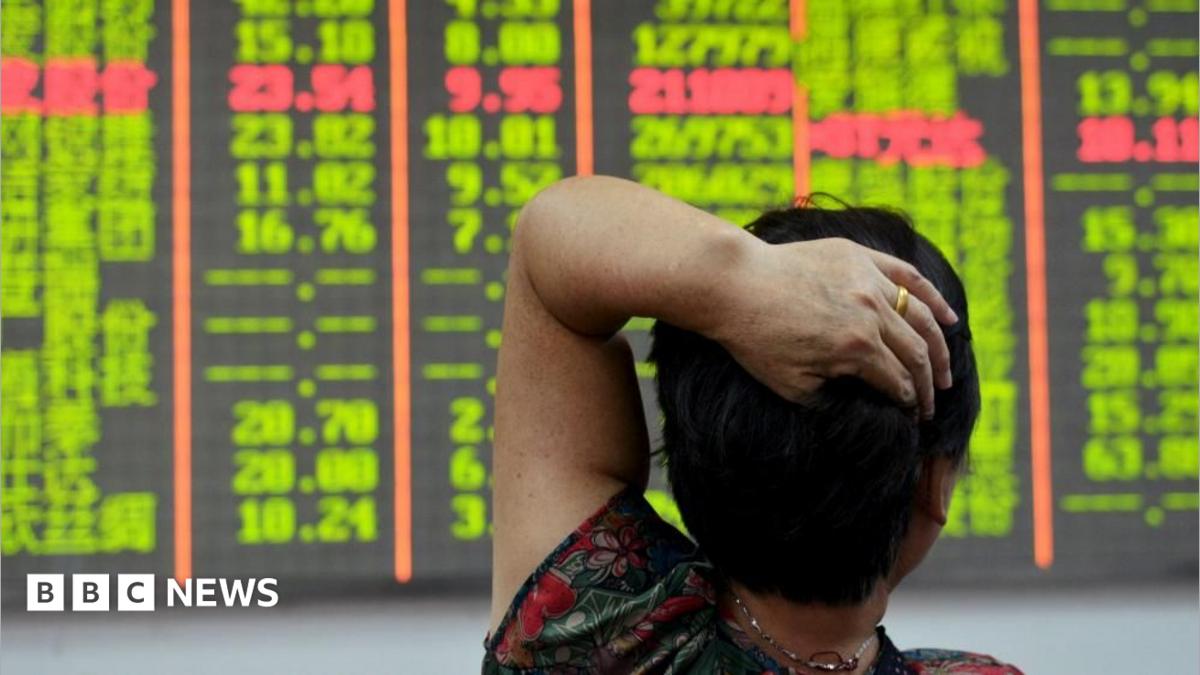
The governor of the Bank of England has warned G20 finance ministers that artificial intelligence could cause a global economic downturn and pose a significant cyber security risk to financial systems.
Andrew Bailey said any collapse of growth in the AI sector could lead to a “future market correction” that spreads worldwide.
In an open letter to finance ministers in the US on Monday, he said companies around the world should prepare for security breaches “involving simultaneous disruption across multiple firms”.
Earlier this month, a group of 100 firms, including Google, Microsoft, Anthropic and OpenAI, urged countries and groups to beef up their cyber defences before AI grows powerful enough to override them.
Bailey told the G20 finance ministers that a combination of highly priced stock markets, increased borrowing by investors, and the growing concentration of money into a small number of major technology companies could amplify any future market correction.
“The issue is not simply that investors are borrowing more, but that leverage is interacting with high valuations and market concentration, in particular the increasing cross-investment between artificial intelligence (AI) companies and hyper scalers, in a way that could amplify a future market correction,” he said.
Bailey has called on those in charge of financial security to develop “appropriate steps to support safe and responsible model release and deployment on a global basis”.
Bailey, who was writing in his capacity as chairman of the Financial Stability Board international watchdog (FSB), expressed concern about the “volatility” prompted by the effect of energy supply shocks caused by the US-Iran war.
His warning comes several months after UK Chancellor John Healey announced a £100m fund aimed at backing British AI start-ups.
That is part of the government’s efforts to grow the country’s “sovereign AI” capacity, developing homegrown AI technology to ensure the UK is not dependent on services from abroad.
Ministers want to see companies compete for the funding to help tackle challenges like cutting waiting lists in the NHS and bolstering cybersecurity and defence.
A UK government spokesperson said its new AI economics institute was working with international partners to build “a stronger shared understanding of how AI is transforming economies around the world.”
“The institute is the first government-backed body of its kind focused on AI’s economic impact, helping policymakers understand what AI means for growth, productivity, jobs and public services as the technology develops at pace,” the spokesperson said.
But there is growing concern that AI companies are increasingly developing models that can easily override the safeguarding systems of banks and financial centres.

Rates Spark: Curve Influencers
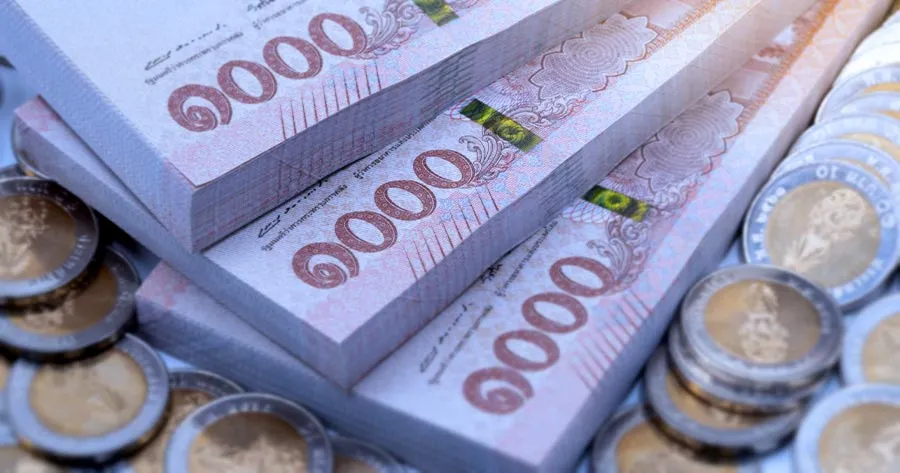
OCBC reports the Thai baht’s bullish trend against the USD, now near 34.80, faces limits from Bank of Thailand intervention concerns. Export competitiveness worries may cap gains, keeping USD/THB range-bound between 34.70–35.30, with traders advised to watch for official signals or reversals.
Currency Strength Amid Regional Tailwinds
OCBC’s latest analysis reveals the Thai baht has strengthened to approximately 32.80 per US dollar, its strongest level in months, driven by regional currency momentum, improved domestic sentiment, and a weaker US dollar. This appreciation aligns with a broader Asian currency trend, as markets anticipate potential Federal Reserve rate cuts later this year. However, OCBC cautions that Thailand’s heavy reliance on exports makes it particularly vulnerable to currency strength compared to regional peers, setting the stage for closer scrutiny from domestic monetary authorities as the baht’s rally continues to unfold against the dollar.
Bank of Thailand’s Intervention Risk Looms Large
Despite the bullish momentum, OCBC emphasizes that the Bank of Thailand’s (BoT) sensitivity to rapid appreciation could significantly cap further gains. The central bank has historically intervened when currency strength threatens export competitiveness, using tools such as direct market intervention, interest rate adjustments, or verbal warnings. OCBC projects the USD/THB pair will likely remain range-bound, with support near 32.70–32.80 and resistance around 33.20–33.30. This creates a critical dynamic where traders pursuing the baht’s upside must carefully weigh the probability of official intervention, which could trigger abrupt short-term reversals and disrupt otherwise favorable trading positions.
Implications for Traders and Businesses
For market participants, understanding BoT’s policy stance is essential, as intervention can swiftly alter currency direction. OCBC advises closely monitoring verbal cues and economic data releases that might signal impending action. Businesses engaged in Thai trade face a dual-edged impact: a stronger baht reduces import costs but simultaneously erodes export competitiveness and pricing power internationally. Additionally, currency strength could dampen tourism appeal by making Thailand more expensive for foreign visitors. Investors should also factor baht movements into assessments of Thai equities and bonds, since currency stability directly influences asset attractiveness and returns, making vigilance around BoT actions a critical component of any Thailand-focused investment or trading strategy.
Yes. Corporate subscriptions are available for teams and organisations, with discounted rates as user numbers increase. Pricing starts from $1,625 + GST per user.
Get in touch
to discuss the right option for your organisation.
Business News subscriptions are used by executives, investors, consultants and professionals who need to stay informed and make better decisions about the WA market. When you subscribe you’ll get
- Unlimited access to WA’s most trusted business journalism
- Data & Insights — detailed profiles of WA companies, people, projects and deals
- MyBN — a personalised feed based on the companies, people and sectors you follow
- Special publications and industry reports
- Daily and weekly email newsletters
Data & Insights is a research tool built specifically for the WA market. It draws on more than 30 years of Business News reporting, updated regularly to reflect what’s happening now. Use it to:
- Look up detailed profiles of WA companies, including financials, directors and ownership
- Find decision-makers and track their career movements
- Research live and completed projects across WA industries
- Monitor deals, appointments and market activity
- Access industry rankings and league tables
Data & Insights is updated daily by our dedicated research team, which uses the latest announcements, ASX filings and editorial coverage to keep our person, company, list and project records up to date.
Business News welcome all opportunities to make our dataset accurate, complete and current, so if you have an update request, please email the team at
general@businessnews.com.au, and we’d be happy to assist.
MyBN
is part of every subscription. It’s your personalised view of Business News. You can follow the companies, people, sectors and projects that matter to you, and get a news feed and alerts tailored to your interests. You can save articles to read later and retain only what you need.
Only subscribers have full access to all content on the Business News website.
If staying informed about the WA economy is part of your job, and/or you’re looking for networking opportunities in WA, Business News is built for you.
Business News subscribers are:
- Executives and directors tracking competitors, clients and market movements
- Investors and advisers researching companies, deals and industry trends
- Consultants and professionals staying across sectors relevant to their clients
- Business owners looking for leads, context and market intelligence
Most Business News publications cover national or global markets. Business News is focused entirely on Western Australia, which means the journalism, the data and the intelligence are all built around WA companies, people and projects — not adapted from a national feed. Data & Insights, included with every subscription, combines more than 30 years of WA-specific editorial research with live business data. There’s no comparable product for the WA market.
The Morning Digest Email provides a comprehensive wrap of the major headlines, relevant to WA business, and includes with a snapshot of the overnight news covering oil, gold and ASX-listed companies.
The Afternoon Wrap Email focuses on the news covered by our team of journalists during the course of the working day, including exclusive stories and analysis, all of which relates to WA business and the local economy.
The BN Weekender Email contains a wrap of the Business News from the week that was, highlighting the top stories in each area of WA business.
Sign up for free.
We’re happy to help.
Get in touch
and our team will come back to you.
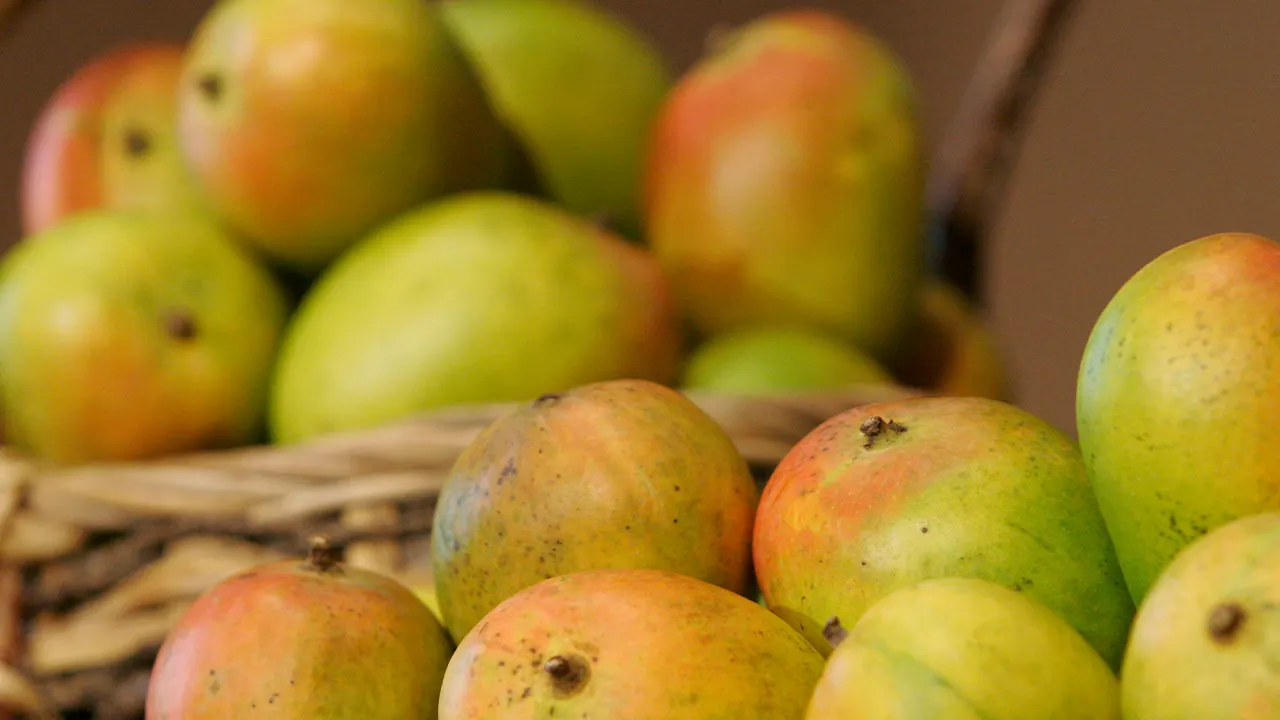
Check out what’s clicking on FoxBusiness.com.
Federal regulators announced Friday that hundreds of boxes of mangoes sold at Walmart stores are being recalled over potential salmonella contamination.
At least 302 boxes of Martina-brand mangoes are included in the recall initiated by Panorama Produce, according to the Food and Drug Administration (FDA). The affected produce is packaged in nine-count boxes containing large mangoes.
The recalled mangoes were sold at select Walmart locations in New York, New Jersey, Pennsylvania and Connecticut.
The safety alert was issued after FDA testing reportedly detected salmonella in mangoes grown on the same farm as the recalled fruit. The mangoes that tested positive were not distributed in U.S. commerce, officials said.
NEARLY 25K POUNDS OF FROZEN BUFFALO CHICKEN RECALLED OVER INSPECTION LAPSE
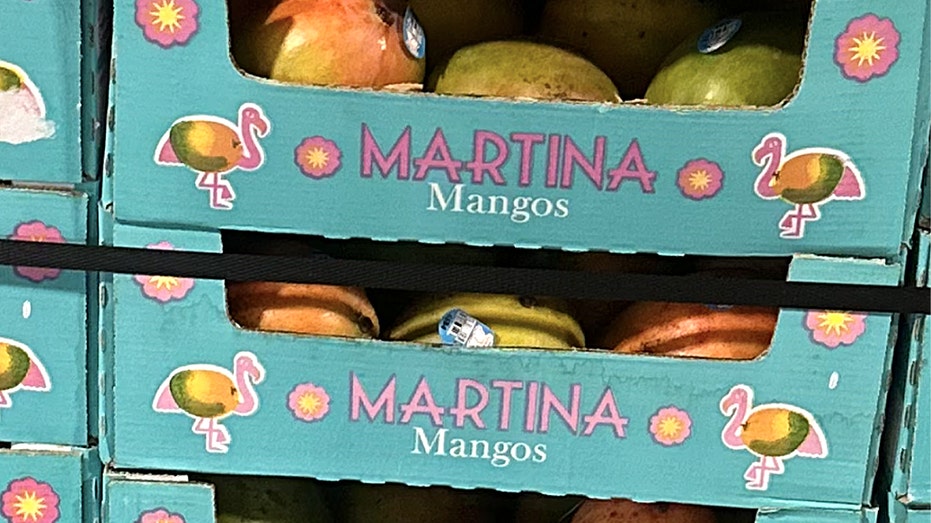
The FDA recalled 302 boxes of Martina mangoes sold at select Walmart stores. (Food and Drug Administration / Fox News)
“The recalled mangoes and the sampled mangoes share the same source, therefore Panorama Produce has initiated a recall,” the notice said.
No illnesses have been reported in connection with the recalled mangoes.
The affected mangoes bear a light blue Agrofepac sticker, are labeled “Produce of Mexico” and have PLU number 4584 and UPC number 07503061948050.
The mangoes were distributed between Aug. 10 and Aug. 21.
| Ticker | Security | Last | Change | Change % |
|---|---|---|---|---|
| WMT | WALMART INC. | 104.87 | +1.78 | +1.73% |
Consumers are urged to discard the recalled mangoes or return them to the place of purchase to avoid potential health risks.
Anyone who believes they may have become ill after consuming the product should contact a health care provider, regulators said.
BETTER BAKEHOUSE RECALLS CHOCOLATE-DIPPED DONUTS FOLLOWING ALLERGIC REACTION, MISLABELING ISSUE
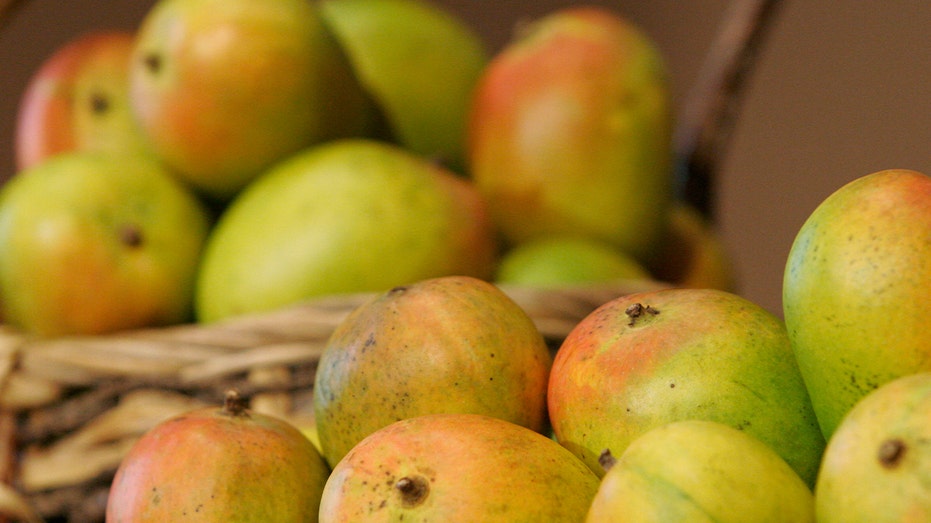
FILE — The recalled mangoes were sold in nine-count boxes and distributed between Aug. 10 and Aug. 21. (SAUL LOEB/AFP / Getty Images)
“Panorama Produce is an experienced produce importer committed to a strong focus on food safety. This recall is being conducted voluntarily and in coordination with the U.S. Food and Drug Administration,” the company said, according to regulators
Consumers with further questions about the recall can contact Panorama Produce by email at information@panoramaproduce.com Monday through Saturday from 9 a.m. to 7 p.m. ET.
Salmonella is an organism that can cause serious and sometimes fatal infections, especially in young children, frail or elderly people, and others with weakened immune systems.
Healthy people infected with Salmonella may experience fever, diarrhea, nausea, vomiting and abdominal pain.
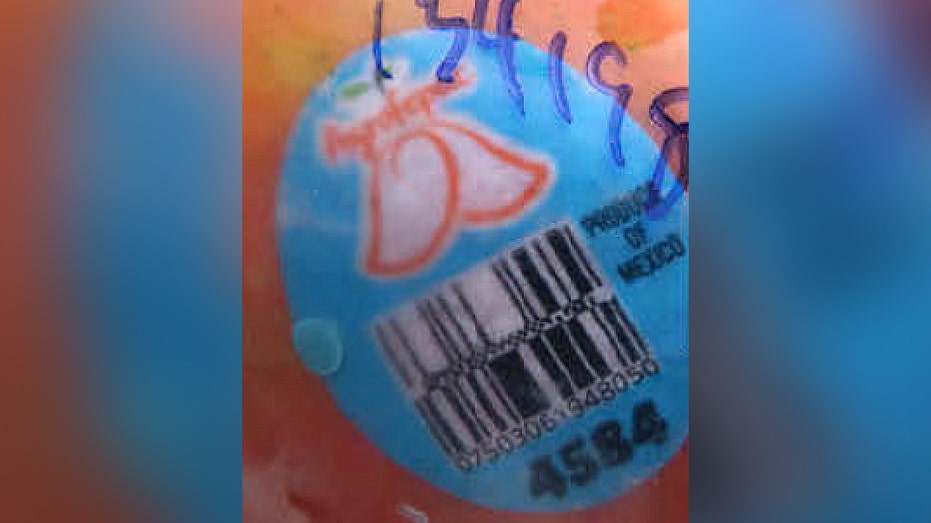
The Walmart mango recall affects nine-count boxes of Martina-brand mangoes with a Mexico label, Agrofepac sticker and UPC number 07503061948050. (Food and Drug Administration / Fox News)
CLICK HERE TO GET FOX BUSINESS ON THE GO
In rare cases, the infection can enter the bloodstream and cause more severe illnesses, including arterial infections, endocarditis and arthritis.
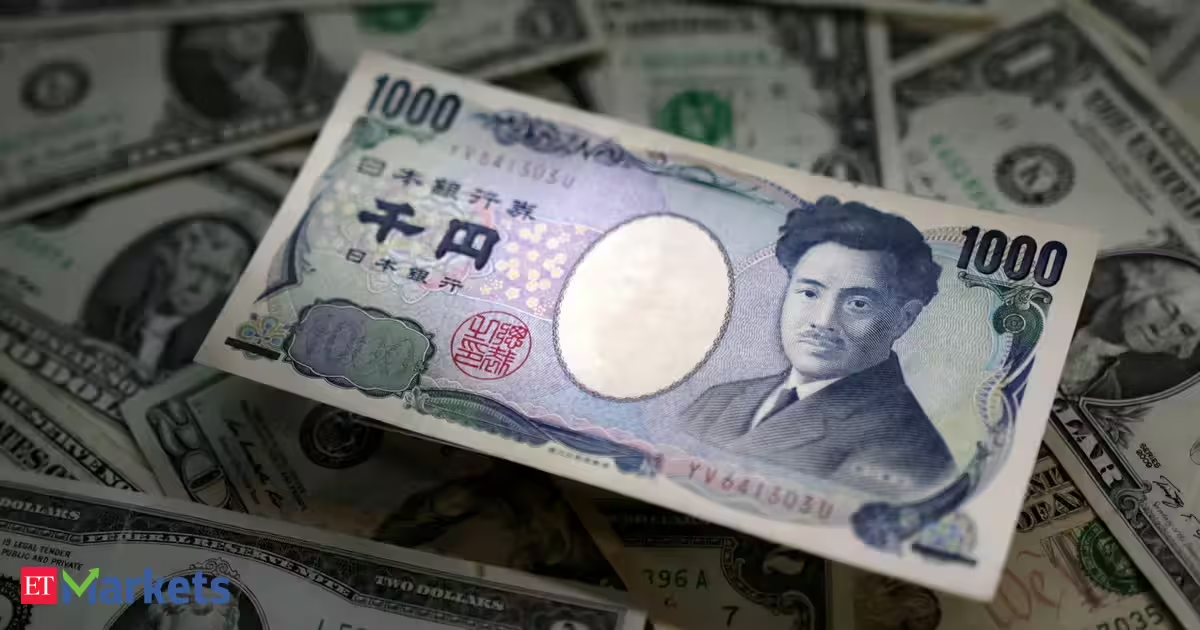
U.S. President Donald Trump threatened further strikes against Iran after the first exchange of direct attacks in a month as the six-month-long conflict shows no signs of ending. The fresh attacks sent Brent crude futures above $91 a barrel and Treasury yields higher. [O/R][US/]
The yen last bought 159.81 per dollar, having weakened past the 160 level in the two previous sessions. The yen firmed after Bessent said he believed Japan’s government and central bank would take action that leads to a stronger yen.
“I have information that the market doesn’t have, and it’s my belief that the Japanese government and the BOJ will do the things that will lead to a stronger yen,” Bessent told CNBC in an interview during a Group of 20 finance leaders’ gathering.
A rare joint intervention from the U.S. and Japan at the end of July provided short-lived relief for the fragile yen, with the currency having since surrendered most of the gains from the joint action.

Markets are pricing in a 73% chance of a hike from the BOJ later this month, but analysts suggest there needs to be a much stronger follow-through by the central bank.
“For the yen, a September BOJ hike is already heavily anticipated,” said Charu Chanana, chief investment strategist at Saxo.”With US yields still high and rising oil worsening Japan’s terms of trade, the yen probably needs a more hawkish BOJ path beyond September – not just one hike – to sustainably move away from 160.”
The U.S. dollar was subdued, backing away from Friday’s gains as investors contended with rising odds of a hike from the Federal Reserve in September after last week’s hawkish remarks from Fed Chairman Kevin Warsh.
The euro was steady at $1.1623 after eking out a nearly 1% gain for August. Sterling last fetched $1.35575 after a 0.5% rise last month. The dollar index, which measures the U.S. currency against six other units, eased to 99.37.
In his debut speech at the Jackson Hole symposium of central bankers, Warsh said the Fed will “have work to do” should inflation not appear to be cooling, stoking expectations of a possible rate hike in the upcoming Fed meeting in September.
Traders are pricing in a 65% chance of a Fed hike later this month, compared to 41% a week earlier, the CME FedWatch tool showed.
“It is notable that higher oil prices and Treasury yields have failed to support the USD,” said Carol Kong, a currency strategist at Commonwealth Bank of Australia.
“The overnight USD weakness may reflect markets reassessing whether Chair Warsh’s hawkish stance is sufficient to restore Fed credibility. Rising expectations of a September BoJ rate hike also added further pressure on the USD.”
Investor attention will be on a slew of economic data later this week that will help guide whether the Fed will deliver a hike.
In other currencies, the Australian dollar was a touch firmer at $0.7172, while the New Zealand dollar fetched $0.5921.

Shein shares slide 10% in long-awaited Hong Kong trading debut

Lam Research: Buy The Summer Pullback (Rating Upgrade)

Over the past 10 years, the Nifty 50 and Nifty 500 have risen in five Septembers each, with average losses of 0.27% and 0.17%, respectively, according to Bloomberg data. However, the Nifty Midcap 100 and Nifty Smallcap 250 advanced in seven out of the past 10 Septembers, the data showed.
 ET Bureau
Nifty Midcap 100 and Nifty Smallcap 250 have outperformed large caps in 7 of the past 10 Septembers, even as heavyweights faced pressure
“September seasonality has generally favoured small-caps and mid-caps, while large caps have delivered mixed returns, and we see a strong probability of this trend continuing into the month ahead,” said Sriram Velayudhan, senior vice -president at IIFL Capital Services. “Paper supply across both primary and secondary markets is likely to put pressure on large caps, as funds will look to liquidate holdings for participation.”
The Nifty fell 0.4% to end August at 24,080.4. The NSE benchmark declined 1.2% during the month.
The Nifty Midcap 100 climbed 2.1%, the Nifty Smallcap 250 gained 2.5%, while the Nifty 500 index was flat in August.
Read more: NSE records Rs 39,718 cr turnover in closing auction session on first index rebalancing day
“We do not see much upside for the headline indices going into September, as heavyweight sectors such as banks, FMCG and IT have shown weaker performance recently, while FII selling, which had paused over the last few weeks, has resumed,” said Siddarth Bhamre, head of institutional research at Asit C. Mehta Investment Intermediates. While foreign investors remained net buyers of equities worth ₹8,385 crore in August, they sold shares worth ₹7,986 crore on Monday, with the outflows largely driven by MSCI’s August rebalance.Bhamre said the Nifty has remained in a narrow range for the past four months and, without fresh triggers, is likely to continue trading within that band.
“However, domestic fund flows remain concentrated in mid- and small-cap stocks, which could continue to outperform. We therefore expect market action to remain largely stock-specific until fresh triggers emerge,” he said.
Velayudhan said the Nifty is expected to remain range-bound between 23,800 and 24,600, with investors closely monitoring developments around geopolitical tensions.
NRW’s tenure at the Karara iron ore mine in the Mid West will continue, after securing a contract extension on Tuesday.

In contrast, they were net sellers of equities worth $28.9 billion (₹2.7 lakh crore) in the secondary market, far higher than the outflow of $19.6 billion (₹1.7 lakh crore) in 2025 till August-end.
ET BureauForeign investors put in $4.9 b so far this year, up from $4.7 b in the year-ago period
The FPI inflow in the primary market has gained traction since July when they pumped in $1.4 billion (₹13,468 crore) followed by $1.3 billion (₹12,265 crore) in August. This coincides with a higher momentum in the domestic primary market, which has raised ₹51,101 crore in the two months to August from 35 IPOs.
In July, the year’s two largest IPOs so far were launched including those of SBI Funds management at ₹9,796 crore and Manipal Health Enterprises at ₹9,275 crore. This formed 69% of ₹73,673 crore raised in the first eight months of 2026 from 62 IPOs.
Read more: Blackstone-backed Epsilon Bidco may sell 26% stake in EPL in Rs 1,985-crore block deal
In the first eight months of 2025, though the number of IPOs was lower at 49, the money raised was similar at ₹71,954 crore, driven by large IPOs including that of HDB Financial Services, which raised ₹12,500 crore and Hexaware Technologies, which mopped up ₹8,750 crore.
In the secondary market, momentum is gradually catching up as FPIs are showing renewed interest against the backdrop of a sell-off in the Asian markets including South Korea and Taiwan where semiconductor stocks are losing ground amid uncertainties over the sustainability of the capital expenditure on the artificial intelligence (AI) technology.

Body found in search as tributes paid to ‘adored beautiful girl’

Rates Spark: Curve Influencers

Miley Cyrus Makes Major Name Change





-

 Crypto World6 days ago
SpaceX stock could rise 75% to $240, JPMorgan says
-

 Fashion3 days ago
Weekend Open Thread: Maeve – Corporette.com
-

 Crypto World4 days ago
Bitcoin’s 22% rally now needs real demand to outlast Treasury liquidity boost
-

 Crypto World6 days ago
Warsh Jackson Hole keynote puts financial innovation first
-

 Business4 days ago
Salesforce Stock Soars 19% as Blowout Earnings and Agentforce AI Growth Silence Software Skeptics
-

 Crypto World5 days ago
Elon Musk Grok Bot Promise: We Will Make You Whole if AI Loses Your Money
-

 Crypto World6 days ago
Did Trump Just Move SpaceX Stock With One Truth Social Post?
-

 Business4 days ago
Apple Confirms September 9 Keynote and Reveals Its Full Pre-Order Schedule
-

 Business3 days ago
Onto Innovation Stock: AI’s Next Bottleneck Is Yield (NYSE:ONTO)
-
 NewsBeat5 days ago
Lindsay Clancy jury braces for closing arguments as judge tells court: ‘You’ve heard all the evidence’ – Live updates
-

 Business6 days ago
Walmart takes aim at younger shoppers with new fashion brand
-

 Crypto World3 days ago
Bitcoin price tests $82K resistance as Brandt stays long
-

 Business6 days ago
Thailand’s Eastern Economic Corridor Capital City (EECiti): Key Developments and Investment Opportunities
-

 Crypto World5 days ago
NVIDIA revenue hits $96.2B as AI demand doubles
-

 Business3 days ago
iPhone 18 Pro Pre-Orders Could Shift to Saturday as Apple Reportedly Avoids September 11 Anniversary
-

 NewsBeat6 days ago
Trump’s trade truce with China faces test with Iran effort
-
 Crypto World5 days ago
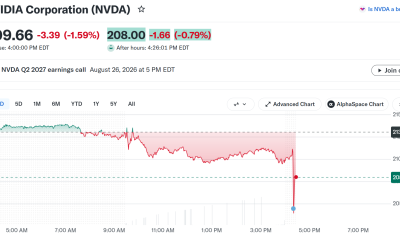
Nvidia Q2 Earnings Reveal $96.2 Billion Beat, So Why Is NVDA Falling?
-

 Tech5 days ago
Claude Cowork gets its own browser that doesn’t touch your tabs, bookmarks, or saved passwords
-

 Crypto World4 days ago
Truflation calls for Fed rate cut after PCE forecast
-
 Tech2 days ago
Hugging Face built a $4.5 billion empire on free AI models. Now Nvidia is buying it for $12.9 billion
You must be logged in to post a comment Login