
Business
AI development slowdown backed by Musk and Altman


Anthropic’s chief executive has urged the artificial intelligence industry to slow the pace of development, warning that AI could cause hundreds of billions of dollars in damage to the world economy within six to 12 months.
Dario Amodei, 43, wrote in an open letter that the technology had been “advancing drastically faster” since the summer and could become capable of taking over the “entire internet”.
“Left unchecked, it could outrun our ability to understand and control these systems, and so must be pursued very carefully, if at all,” he wrote.
Elon Musk and Sam Altman, the chief executive of OpenAI, both declared their support for the essay. “I agree with Dario that we need to pace the frontier,” Altman, 41, posted. Musk, who runs xAI, said: “Dario is right.”
OpenAI pushes its listing into 2027
Altman told Fortune in an interview published yesterday that OpenAI would not float until 2027. Markets had initially expected the company to go public this year, after it submitted the requisite IPO paperwork in June.
“I actually think that, given everything happening with safety, right now would be an ill-advised moment to go public, and we don’t feel pressure on that,” Altman said. “I would say not 2026, yeah. We got a lot of stuff to do.”
Business Matters reported in May that Altman had retreated from his earlier warnings about an AI jobs apocalypse, admitting he had been “pretty wrong”.
Three steps and a unilateral commitment
Amodei, a former academic researcher who co-founded Anthropic with his younger sister Daniela in 2021, set out a three-step plan to control the technology. He said it would require “industry-wide” and “global” co-ordination.
The proposals include a requirement that every leading AI company establish a team of “third-party evaluators” to report incidents and verify safety measures. “Anthropic is unilaterally committing to this step now,” he said.
Amodei, who holds a PhD in biophysics and computational neuroscience from Princeton and is the son of an Italian leather craftsman, wrote: “I have worked on AI for the last 12 years because I believe it could dramatically raise the quality of human life.
“Carefully wielded, AI can be the latest in a long line of technological miracles that have uplifted and ennobled humanity.”
He added: “But like many technologies before it, AI brings risks, and because it is such a powerful technology, these risks are serious. A race to the bottom, spurred by commercial incentives, can make these risks more acute.”
He went on: “We must slow the pace at which we improve the capabilities of AI models. Progress will still seem fast, and we must make wise use of the time we gain.”
The letter follows a warning from Anthropic on Thursday that it had identified and thwarted “malicious” efforts to use its Claude model for activity that could support the development of biological weapons. The company said in its latest threat intelligence report that such misuse could have “catastrophic consequences”.
In Britain, Business Matters reported in June that Downing Street was lobbying Washington for an exemption from a US ban on foreign access to Anthropic’s most advanced models, a restriction the AI minister, Kanishka Narayan, said had cut Britain off from the most advanced AI in the world.
Business Matters also reported on 9 September that Anthropic did not submit its Claude Mythos 5.1 model to the UK AI Security Institute before release, the first time the company had bypassed the British body when launching a model.

Amy Ingham
Amy Ingham is a reporter at Business Matters, covering UK business news with a focus on breaking news, business policy, late payments and insolvency. She joined the magazine in 2026 after completing the NCTJ Diploma in Journalism at Harlow College’s journalism school. Her recent reporting includes British Steel’s nationalisation and its impact on SME suppliers, the decline in late payments by large firms, and Insolvency Service director disqualifications. Reach her at aingham@cbmeg.co.uk.


Fans at the Irish Open cheered President Donald Trump after he announced the end of U.S. tariffs on Irish whiskey on Sunday.
Fans at the Irish Open cheered President Donald Trump after he announced the end of U.S. tariffs on Irish whiskey on Sunday.
Trump made the announcement while speaking at the award ceremony for the open, which was played at the Trump International Golf Club in Doonbeg, Ireland.
“Everybody’s been bugging me, saying, would you do me a favor? It’s so unfair what’s going on. Could you possibly take the tariffs off of Irish whiskey?” Trump said. “And I said, on behalf of the United States of America, I am going to take the tariffs off of Irish whiskey.”
The crowd reacted with huge applause and chants of “USA.”
TRUMP SAYS IRAN CONFLICT COULD END AFTER MIDTERMS
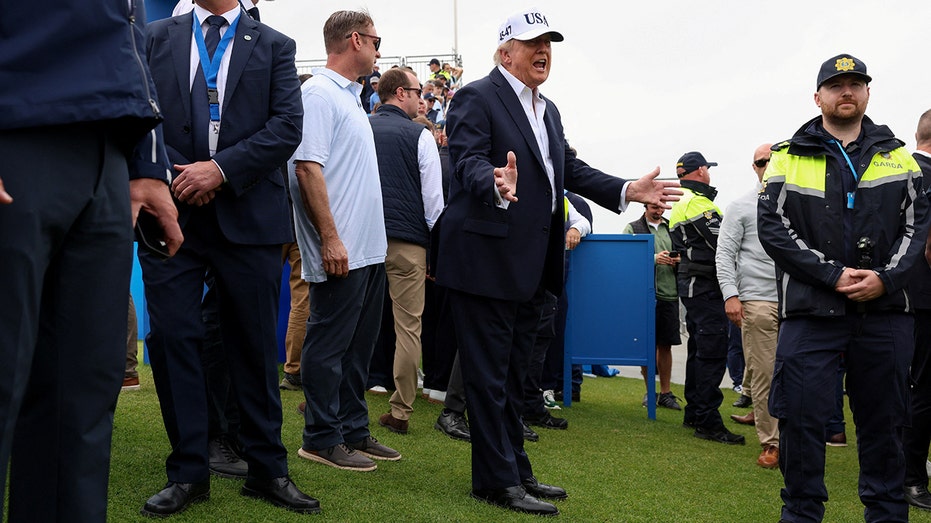
President Donald Trump gestures during the Amgen Irish Open 2026, at Trump International Golf Links in Doonbeg, County Clare, Ireland, Sept. 13, 2026. (Reuters/Cathal McNaughton / Reuters Photos)
Trump also congratulated open winner Shane Lowry, who took home the victory for Ireland in a dominant fashion with an 11-shot lead.
Trump said he made a last minute decision to stay and “watch Shane win” on Saturday night.
The president has spent several days touring Ireland in anticipation of this weekend’s event. He met with Irish Prime Minister Micheál Martin on Saturday and voiced his support for Irish unification.

President Donald Trump applauds during the Amgen Irish Open 2026, at Trump International Golf Links in Doonbeg, County Clare, Ireland, Sept.13, 2026. (Reuters/Cathal McNaughton / Reuters Photos)
The Republic of Ireland gained independence from the United Kingdom in 1922, while Northern Ireland, established in 1921, has remained part of the U.K.
“I don’t want to cause any problems, but I will tell you, I’d love to see it unified. I have friends on both sides, great people. They’re Irish people. How can they be bad, right?” Trump said in Dublin while on stage with Ireland’s prime minister, Micheál Martin. “I’d like to see a unified country. I think it would be a great feather in everybody’s cap if that happened. It’s going to happen eventually.”
He added that the U.K. “will have something to say about it obviously,” but reiterated that unification would be a “great thing.”
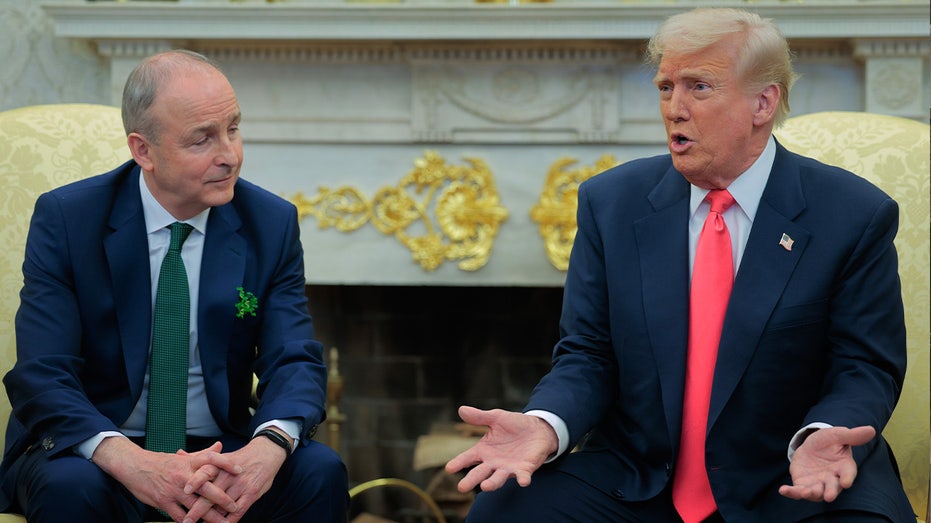
WASHINGTON, DC – MARCH 12: U.S. President Donald Trump and Irish Taoiseach Micheal Martin speak to journalists ahead of meetings in the Oval Office at the White House on March 12, 2025 in Washington, DC. (Photo by Chip Somodevilla/Getty Images / Getty Images)
GET FOX BUSINESS ON THE GO BY CLICKING HERE
British Prime Minister Andy Burnham said in a statement that the U.K. government’s stance on reunification remains unchanged.
“I am not aware that there is majority public support for another referendum, and until that changes, there will not be one,” Burnham told reporters in Parliament, according to Reuters.
This is a developing story. Check back soon for updates.

Analysis-Houthis’ Yemen advance leaves Gulf states with uncomfortable choice

Trump says he is lifting tariffs on Irish whiskey
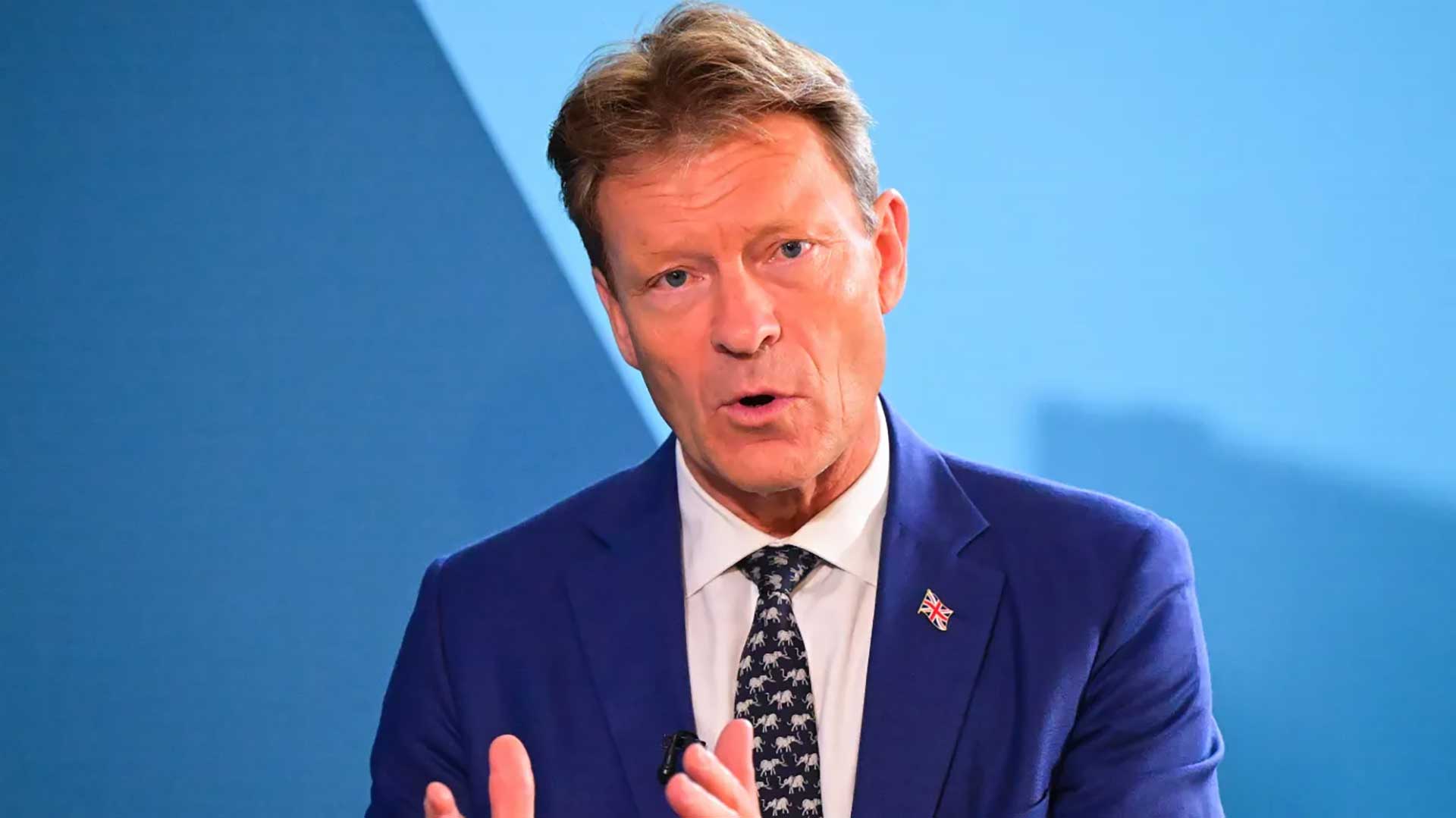
Reform UK has told the private-sector backers of the Peak Cluster carbon capture and storage scheme that it will block planning applications for the project if the party gets into government.
The warning came in a letter from Richard Tice, the party’s deputy leader, and the Reform leaders of Staffordshire and Derbyshire county councils.
The letter said the proposed pipeline would “cut through swathes of greenbelt land, desecrating the countryside” and would interfere with wildlife and sites of special scientific interest. The signatories called the scheme a “net zero vanity project”, the cost of which would “balloon astronomically before the project’s completion”.
Tice, who has previously urged the energy industry to abandon net zero targets, has also warned renewable developers that subsidies would be withdrawn under a Reform government.
What the project involves
Peak Cluster is designed to capture carbon dioxide from four cement and lime producers on three sites in Staffordshire and Derbyshire, and to transport and store it beneath the Irish Sea. Cement production is one of the single biggest contributors to global warming.
Carbon capture technology would be fitted to Holcim’s Cauldon plant, Tarmac’s Tunstead cement plant, Buxton Lime’s Tunstead lime plant and Breedon’s Hope plant.
The carbon dioxide would be carried through a 125-mile underground pipeline to Morecambe Net Zero, a storage facility off the coast of Barrow-in-Furness operated as a joint venture between Spirit Energy and its shareholders Centrica, the FTSE 100 energy group, and Stadtwerke München.
Peak Cluster says the scheme would prevent more than 3m tonnes of carbon dioxide a year entering the atmosphere, and that 40 per cent of the UK’s cement and lime is produced in Derbyshire and Staffordshire.
The National Wealth Fund, the state investment vehicle that said in January it would raise its annual investment to about £5bn, announced a £28.6m cornerstone investment in the project in July 2025.
The total £59.6m equity raise also includes investment through a joint venture between a subsidiary of Sumitomo Corporation and Progressive Energy, as well as Tarmac, part of CRH, Breedon, the London-listed group, Holcim, the Swiss multinational, and SigmaRoc, the AIM-listed company which owns Buxton Lime.
Backers defend the scheme
David Parkin, chief executive of Peak Cluster, said the UK had to reduce carbon dioxide emissions, adding: “Cancelling Peak Cluster would put a vital British industry at greater risk and leave us vulnerable to a dependency on imported cement and lime.
“We believe the right response to the challenges facing the UK is to invest in our own industry, right here in Britain, not walk away from it.”
The project’s backers have said it will help secure the future of Britain’s cement and lime industries, creating jobs, cutting reliance on imports and providing building material for hospitals, homes and rail, as well as essential minerals to purify tap water and maintain healthy soil.
O’Shea, the chief executive of Centrica, has said that “by transforming the Morecambe gasfields into the UK’s largest carbon store, Spirit Energy will provide the critical infrastructure needed to decarbonise hard-to-abate industries like cement and lime”.
John Egan, the then chief executive of Peak Cluster, said in January, when an initial consultation was launched, that it would be the world’s largest cement and lime decarbonisation project.
“With cement imports having tripled in the last 20 years, and domestic production at its lowest level since the 1950s, there has never been a greater need to build a resilient, sustainable supply,” he said.
Amy Ingham
Amy Ingham is a reporter at Business Matters, covering UK business news with a focus on breaking news, business policy, late payments and insolvency. She joined the magazine in 2026 after completing the NCTJ Diploma in Journalism at Harlow College’s journalism school. Her recent reporting includes British Steel’s nationalisation and its impact on SME suppliers, the decline in late payments by large firms, and Insolvency Service director disqualifications. Reach her at aingham@cbmeg.co.uk.
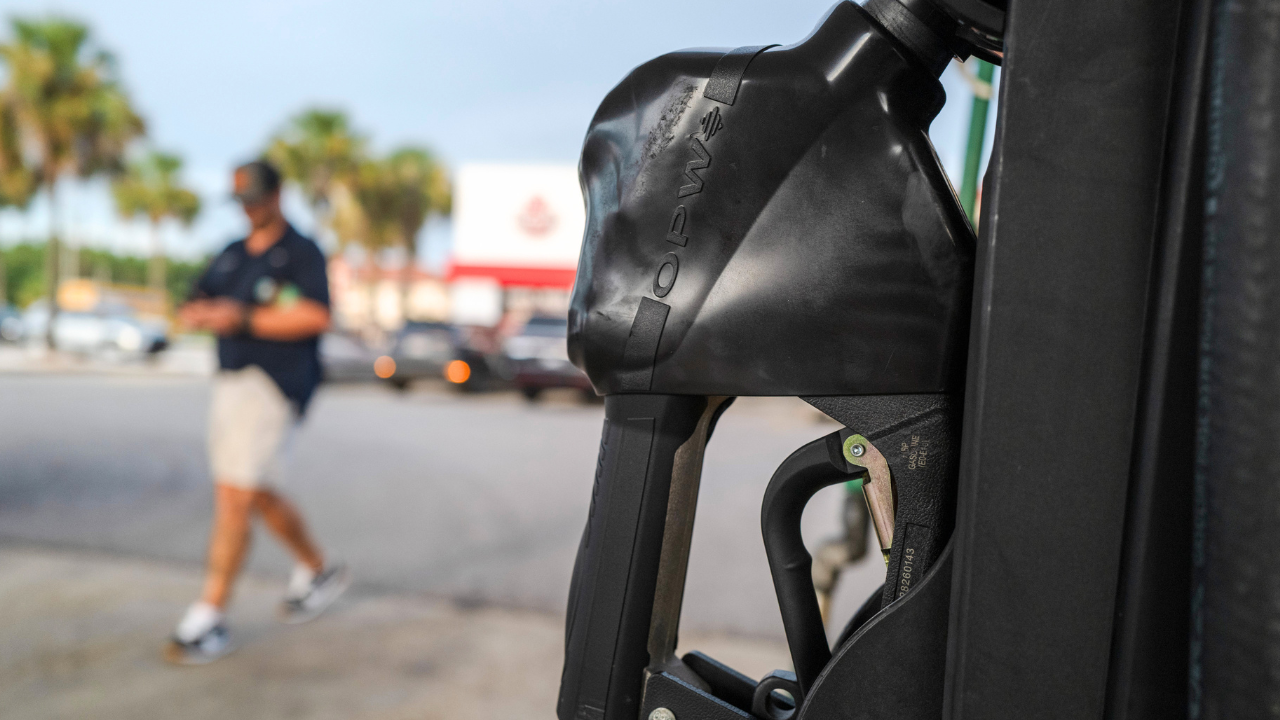
President Donald Trump predicts gas prices will drop below $2 a gallon after the midterm elections.
The fuel most Americans rarely think about could become a major political issue in the midterm elections after diesel prices hit a new national record and climbed above $6 per gallon.
While gasoline prices grab headlines, diesel quietly powers the trucks, farms, freight trains and heavy equipment that keep the U.S. economy moving. From the groceries on supermarket shelves to Amazon packages on doorsteps and the materials used to build new homes, diesel is embedded in nearly every step of the supply chain.
As prices rise, businesses face higher transportation and operating costs that can ripple through the economy and push up the price of everyday goods.
Diesel averaged $3.69 per gallon in January 2025 but has since climbed to a record $6.20, according to AAA.
The price surge comes as the ongoing war between the United States and Iran continues to disrupt shipping through the Strait of Hormuz, a vital waterway between Iran and Oman that carries a significant share of the world’s oil and refined fuel.
The prolonged disruption has tightened global supplies and raised concerns that diesel prices could remain elevated.
WHY THE STRAIT OF HORMUZ MATTERS AS TRUMP ISSUES FRESH ULTIMATUM TO IRAN
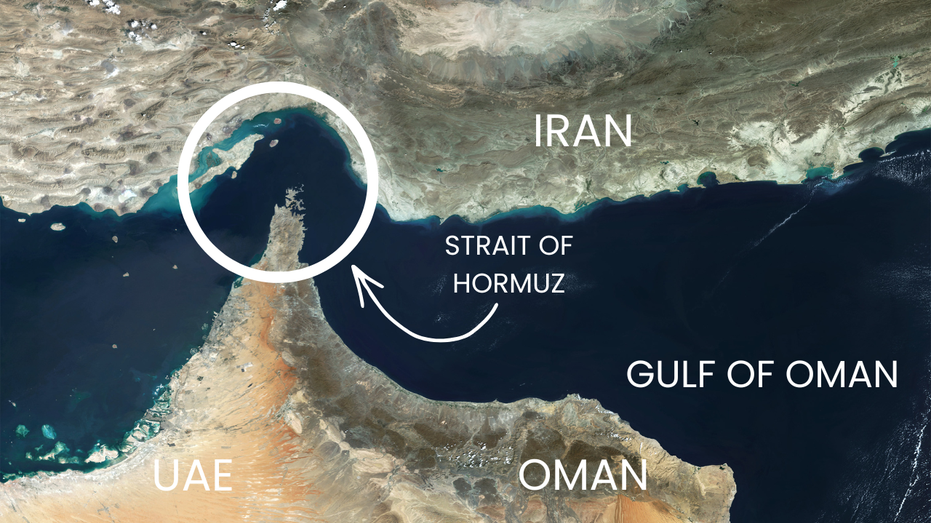
A satellite image shows the Strait of Hormuz, a key maritime passage connecting the Persian Gulf to the Gulf of Oman, vital for global energy supply. (Amanda Macias/Fox News Digital / Getty Images)
The pressure is not limited to the Middle East. Ukrainian strikes on Russian energy infrastructure have disrupted refinery operations, while Russia has moved to restrict diesel exports, further tightening global supplies.
Those overlapping disruptions are putting new pressure on a fuel that economists say is essential to the broader U.S. economy.
“We all focus on gasoline because, ultimately, we’re consumers and pump prices are very visible. But what we don’t think about is the price of diesel, which is the workhorse fuel for the U.S. economy and especially for key sectors,” Bernard Yaros, lead U.S. economist for Oxford Economics, previously told Fox News Digital.
“Take the food industry, for instance. Diesel powers the irrigation pumps, the tractors in the field and the trucks that bring food from the farm to your local grocery store,” Yaros added. “It’s part of every layer of food production in the U.S.”
ONE UNEXPECTED PRICE SURGE MOST AMERICANS DON’T SEE IS RAISING THE STAKES FOR TRUMP BEFORE NOVEMBER
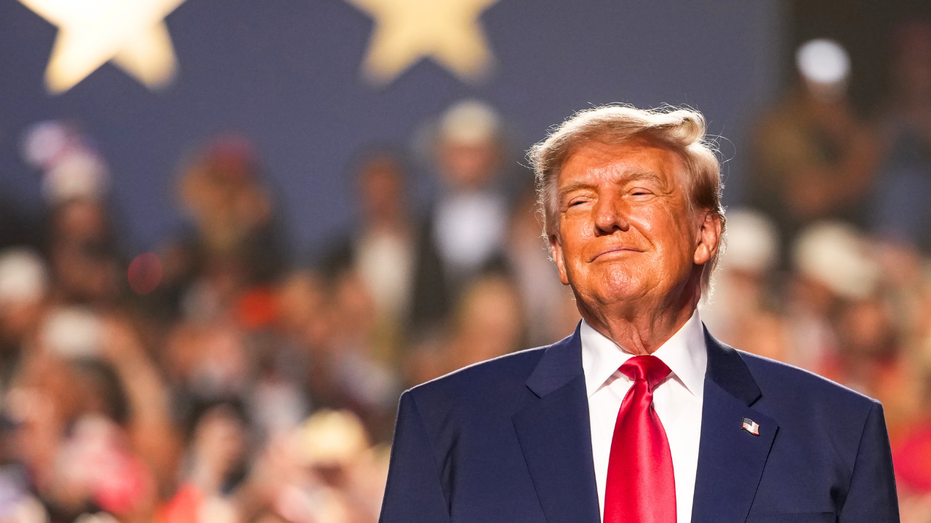
The record diesel prices come as President Donald Trump and Republicans campaign on affordability ahead of the midterms, creating a direct test of the administration’s promises to lower energy costs. (Andrew Harnik/Getty Images / Getty Images)
The price increases threaten to complicate the GOP’s affordability message as Republicans seek to maintain control of Congress in the November midterm elections.
Although diesel is not a cost most consumers see directly, higher fuel expenses can eventually raise the price of groceries, packages, building materials and other necessities.
CLICK HERE TO DOWNLOAD THE FOX NEWS APP
President Donald Trump has repeatedly pledged to lower energy costs but has acknowledged that elevated oil prices could persist until after the election, adding pressure to the GOP’s economic message.
The White House did not immediately respond to FOX Business’ request for comment.

Trump reiterates support for united Ireland, says won’t talk about Scotland ’yet’


I have been involved in the financial world for over 25 years with experience as an advisor, teacher, and writer. I am a full believer in the free-market system and that financial markets are efficient with most stocks reflecting their real current value. The best opportunities for profits on individual stocks come from stocks that are less-widely followed by the average investor or from stocks that may not accurately reflect the opportunities that currently exist in their markets.
Analyst’s Disclosure: I/we have a beneficial long position in the shares of INCM either through stock ownership, options, or other derivatives. I wrote this article myself, and it expresses my own opinions. I am not receiving compensation for it (other than from Seeking Alpha). I have no business relationship with any company whose stock is mentioned in this article.
Seeking Alpha’s Disclosure: Past performance is no guarantee of future results. No recommendation or advice is being given as to whether any investment is suitable for a particular investor. Any views or opinions expressed above may not reflect those of Seeking Alpha as a whole. Seeking Alpha is not a licensed securities dealer, broker or US investment adviser or investment bank. Our analysts are third party authors that include both professional investors and individual investors who may not be licensed or certified by any institute or regulatory body.

FLTR: Lower Credit And Interest Rate Risk Makes This Interesting In Current Environment


I’m Luuk Wierenga, an economics teacher from the Netherlands with a strong passion for income investing. As a REIT specialist I specialize in identifying Real Estate Investment Trusts (REITs) that are temporarily out-of-favor with Mr. Market. I use fundamental economic insights to assess the true intrinsic value of a stock. My investment horizon is long-term, and my strategy revolves around contrarian and deep-value opportunities. I also contribute to the investing group High Dividend Opportunities led by Rida Morwa and a team of other top Seeking Alpha income investing analysts. The service focuses on sustainable income through a variety of high yield investments with a targeted safe +9% yield. Features include: model portfolio with buy/sell alerts, preferred and baby bond portfolios for more conservative investors, vibrant and active chat with access to the service’s leaders, dividend and portfolio trackers, and regular market updates. The service philosophy focuses on community, education, and the belief that nobody should invest alone.
Analyst’s Disclosure: I/we have a beneficial long position in the shares of ARE either through stock ownership, options, or other derivatives. I wrote this article myself, and it expresses my own opinions. I am not receiving compensation for it (other than from Seeking Alpha). I have no business relationship with any company whose stock is mentioned in this article.
Seeking Alpha’s Disclosure: Past performance is no guarantee of future results. No recommendation or advice is being given as to whether any investment is suitable for a particular investor. Any views or opinions expressed above may not reflect those of Seeking Alpha as a whole. Seeking Alpha is not a licensed securities dealer, broker or US investment adviser or investment bank. Our analysts are third party authors that include both professional investors and individual investors who may not be licensed or certified by any institute or regulatory body.
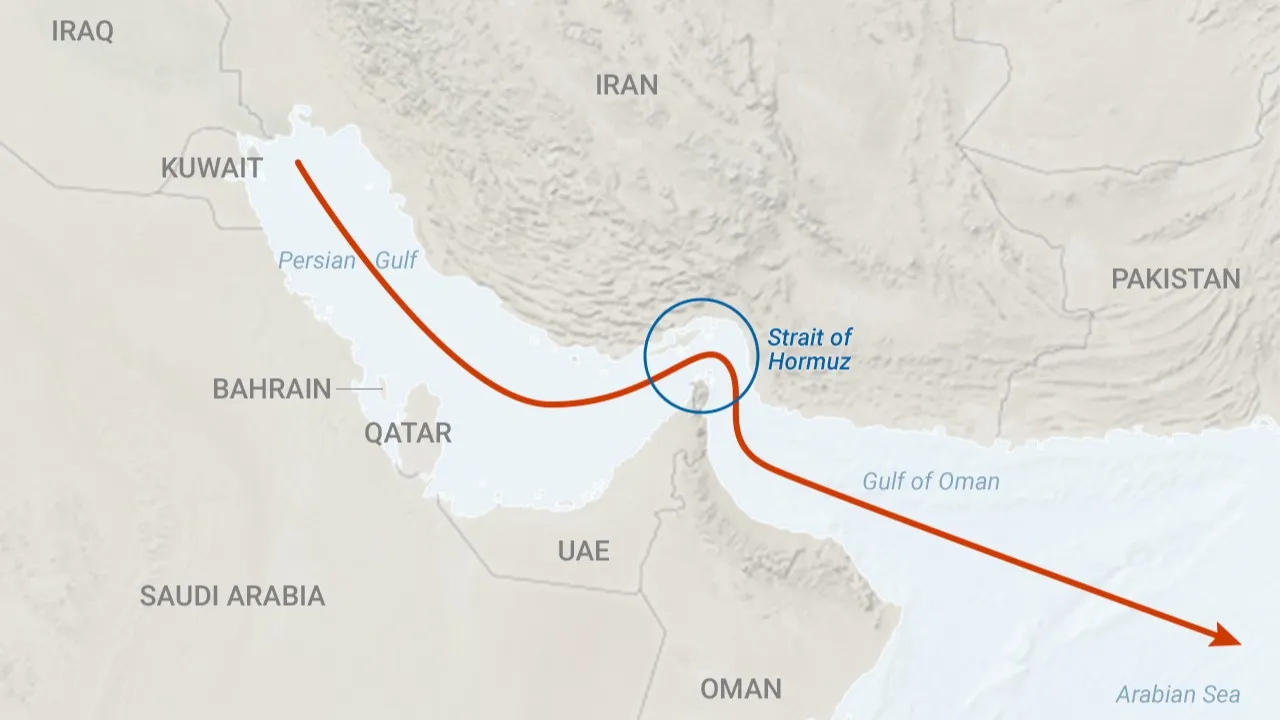
A new maritime attack in the Strait of Hormuz has intensified fears that the disruption to global energy supplies could become more severe. The UK Maritime Trade Operations agency reported that a vessel was hit by a projectile, while Saudi Arabia has already temporarily shut its East-West oil pipeline, which normally carries around 4–5 million barrels per day.
Key points
- New vessel attack reported in Strait of Hormuz, with shipping disruption continuing.
- Saudi Arabia’s alternative East-West pipeline carrying 4–5m barrels/day has been temporarily shut.
- Houthi control of Perim Island raises additional risks for the Bab el-Mandeb and Red Sea trade route.
Why it matters: Thailand faces a double exposure through both higher energy prices and higher shipping costs. The shock could reinforce Bangkok’s push for renewable energy and domestic energy resilience, but in the short term it threatens corporate margins, household purchasing power, inflation and Thailand’s external balance.
The Saudi pipeline had become particularly important because it provides an alternative export route while traffic through Hormuz remains severely disrupted. The latest incident therefore removes part of the Gulf’s spare logistical capacity at precisely the moment when oil markets are already facing supply shortages.
The risks extend beyond crude oil. The Houthis have taken control of Perim Island, strategically located at the entrance to the Bab el-Mandeb, potentially increasing the threat to shipping between the Gulf and the Red Sea. With both Hormuz and Bab el-Mandeb under pressure, Asian importers face higher insurance, freight and delivery costs in addition to the direct increase in energy prices.
Iran has also signalled that a planned meeting in Oman will not immediately reopen the Strait of Hormuz. Tehran is seeking conditions including recognition of its position over the waterway and the right to collect transit fees, making a rapid return to normal shipping conditions increasingly uncertain.
For Thailand, the implications are significant because the country is a major net energy importer. A prolonged period of oil above US$100 would increase transport and production costs, put pressure on inflation and the trade balance, and complicate monetary policy even if domestic demand remains weak.

India women’s team refuses to take Asia Cup trophy from Mohsin Naqvi after title win – WATCH | Cricket News

Microsoft Windows 11 and Office 2024 for Mac Deals From $9.97

How Much Money Financial Advisors Make

Memory prices are slowing because buyers ran out of money

Micron Stock Climbs Above $1,031 as AI Memory Crunch and a $50 Billion Outlook Fuel the Rally

AMD Stock Climbs After Management Lifts 2027 Data Center Outlook Toward $70 Billion in AI Sales


-
Tech5 days ago
Memory prices are slowing because buyers ran out of money
-
 Business4 days ago
Micron Stock Climbs Above $1,031 as AI Memory Crunch and a $50 Billion Outlook Fuel the Rally
-
 Business4 days ago
AMD Stock Climbs After Management Lifts 2027 Data Center Outlook Toward $70 Billion in AI Sales
-
 Crypto World5 days ago
Bitcoin price risks $76K drop as $78K support weakens
-

 Crypto World5 days ago
Robinhood Stock: How To Take Advantage With Reduced Risk
-

 Fashion2 days ago
Weekend Open Thread – Corporette.com
-

 Crypto World5 days ago
Ethereum price stalls below $2,500 as ADX drops to 11
-

 Crypto World2 days ago
XAG/USD: Silver’s Short-Term Rally Meets Its Moment of Truth
-

 Crypto World3 days ago
2 Chip Stocks Broke Out This Week. Neither Was Nvidia
-

 NewsBeat5 days ago
England up in reading, maths and science rankings as Scotland and Wales dip
-

 Business2 days ago
10 Most-Streamed Songs On Spotify In 2026 So Far, Led By Ella Langley’s Dominant Run On The Charts This Year
-

 Crypto World3 days ago
OKX launches 10x OpenAI, Anthropic X-Perps in Europe
-

 Tech3 days ago
Battery life is the only iPhone 18 Pro and iPhone Duo upgrade I care about. Apple didn’t disappoint
-

 Crypto World2 days ago
Diesel Tops $6 a Gallon for the First Time as 28 States Set Records
-
 Crypto World5 days ago
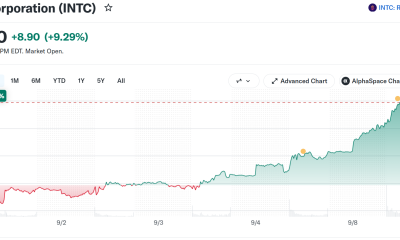
Intel Stock Jumps 9% on Chip Price Hike Report, US Stake Gains $36 Billion
-

 Crypto World4 days ago
Bitcoin price risks $70K if $78K neckline breaks
-

 NewsBeat5 days ago
What went right this week: an ‘historic’ fall in violent crime, plus more
-

 Tech4 days ago
Apple Watch Ultra 4 vs Watch Ultra 3: Should you really spend another $799?
-
Crypto World3 days ago
Ethereum Price Analysis: Consolidation at $2.5K Tests Momentum as On-Chain Activity Surges
-
 Crypto World4 days ago
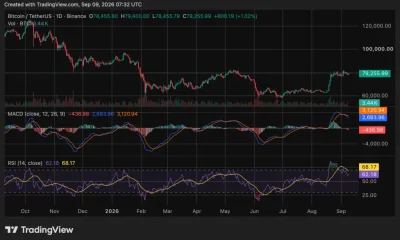
Bitcoin price holds near $79K as cycle drawdowns narrow
You must be logged in to post a comment Login