
Politics
Labours Commons Majority Could Be Wiped Out In Snap Election

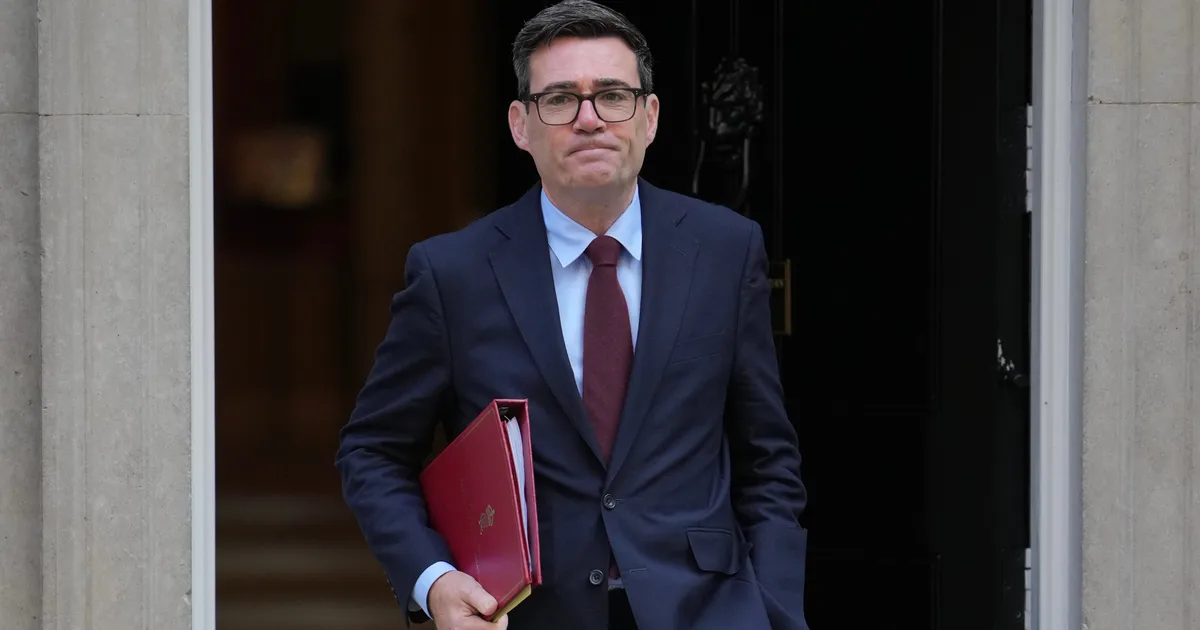
Labour would lose its huge Commons majority if Andy Burnham were to call a snap election, according to new analysis.
A calculation based on the latest opinion polls shows Labour would be by far the largest in the House of Commons with 253 MPs.
But that would be 150 fewer than they have at the moment, and leave the party 73 seats short of an overall majority.
At the moment, Burnham has a working Commons majority of 166.
The forecast, by Election Maps UK, shows Reform UK coming second with 136 seats – 128 more than they have now – if an election were held tomorrow.
The Tories would be third with 101 seats, 17 fewer than they currently have.
The Lib Dems would be unchanged on 72 seats, while the number of SNP would jump from 8 to 43.
Although Burnham does not need to call an election until 2029, speculation continues at Westminster that he could be tempted to do so next spring.
Supporters of the move say he should capitalise on the boost in support Labour has enjoyed since he replaced Keir Starmer as prime minister.
An election victory would also give Burnham his own mandate, and another five years in power.
However, the Election Maps UK analysis suggests he would need to do a deal with another party, most likely the Lib Dems, in order to govern.
Speaking to the BBC in July, he said: “There’s no early general election. I don’t think people want it.”
Listen to Commons People, the podcast that makes politics easy. Every week, Kevin Schofield and Kate Nicholson unpack the week’s biggest stories to keep you informed. Join us for straightforward analysis of what’s going on at Westminster.


The post Why ‘think of the children’ is a con appeared first on spiked.
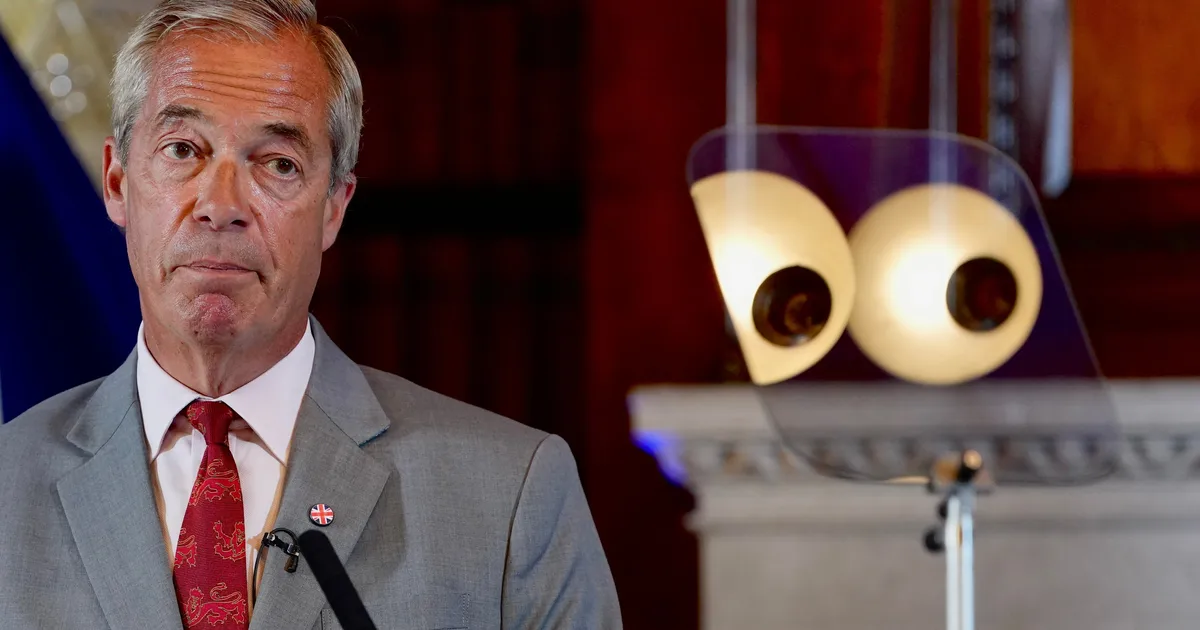
Reform UK could be forced to hand back some of the £72 million the party has received from two crypto billionaires, it has emerged.
Ben Delo and Christopher Harborne have given the party £36m each in the past 48 hours.
Party leader Nigel Farage said he was “humbled and honoured” that the pair had made the donations.
But housing secretary Angela Rayner has suggested that a new law capping donations form foreign donors at £100,000 could see Reform having to return some of the pair’s money.
The proposed reforms are based on the recommendations of a review by former civil servant Philip Rycroft.
Although Delo is understood to have returned from Hong Kong to live in the UK earlier this year, Harborne is still based in Thailand.
Rayner told BBC1’s Sunday With Laura Kuenssberg that the new law would be “retrospective”, meaning it would cover donations fro foreign donors dating back to March.
That could see Reform forced to hand back almost all of Harborne’s £36m.
Rayner said: “With the retrospective action, anyone that’s received donations that don’t comply with what was in the Rycroft review … would have 60 days to return that money.”
But Robert Jenrick, Reform’s economic spokesman, dismissed Rayner’s remarks.
He said: “These two donations are entirely in line with the law as it is, and as far as we know, the law as it’s going to be in the future.”
Listen to Commons People, the podcast that makes politics easy. Every week, Kevin Schofield and Kate Nicholson unpack the week’s biggest stories to keep you informed. Join us for straightforward analysis of what’s going on at Westminster.

Speaking during a visit to Dublin, the US president said “it would be a great thing” if Northern Ireland was no longer part of the United Kingdom.
He said: “I’d love to see it unified. I have friends on both sides. I’d love to see it unified. I think it would be a great feather in everybody’s cap if that happened. It’s going to happen eventually.
“The way I look at it, it’s going to happen eventually [so] it might as well happen now.
“I think it would be a fantastic thing. The UK will have something to say about it, obviously, but I think it would be a great thing. How can it be bad?”
His comments supporting a united Ireland are the most explicit by a sitting US president.
Under the terms of the Good Friday Agreement, a referendum on Irish unity can only take place if the Northern Ireland Secretary believes there is clear support from voters for the move.
Asked about Trump’s comments on Sky News this morning, housing secretary Rayner attempted to defuse the row by playing down their significance.
She said: “Donald Trump is Donald Trump and the president will say and speak his mind as he sees it. But look, we’re really serious about the Good Friday Agreement. We’re very proud of our history.”
Rayner added: “President Trump will say whatever is on his mind. But I’m sure our prime minister also, you know, has conversations. And I’m sure he reiterated our position, which is that we support the good work of the Good Friday Agreement.”
Listen to Commons People, the podcast that makes politics easy. Every week, Kevin Schofield and Kate Nicholson unpack the week’s biggest stories to keep you informed. Join us for straightforward analysis of what’s going on at Westminster.

When it’s time for your routine dental cleaning, you’re probably surrounded by pictures of “smiling teeth” next to fruits, vegetables and toothbrushes.
You might curse yourself for not flossing more consistently, or you might feel self-conscious as the dental assistant picks at your gums. You might nervously hope to avoid hearing “you have a cavity”.
Going to the dentist isn’t always fun, but being proactive about your dental health can help. When it comes to having strong, healthy teeth, there’s something that’s both under-discussed and important to know: some surprising foods can be damaging.
Besides well-loved cheese snack crackers, we’re also talking about a certain food that can do wonders for your gut health. Ahead, dentists reveal what it is (and how it messes with your teeth), the safer version, and how to protect your teeth after eating it.
This health food can damage your teeth
The food in question, believe it or not, is yoghurt.
“Although generally [a] ‘healthy’ snack, there are certain aspects of yoghurt that can negatively affect teeth,” said Dr. Liel Grinbaum, a paediatric dentist and owner of Smiles + Grins in New York.
That comes down to one main reason: the sugar in it combines with bacteria in your mouth, producing acid, which is harsh on your chompers.
“When the environment around a tooth becomes sufficiently acidic, minerals can begin leaving the enamel surface,” explained Dr. Jonathan Richter, a dual-trained holistic periodontist, prosthodontist and expert in implant dentistry. “Repeated acidic exposures can therefore contribute to enamel demineralization and, over time, erosion.”
Additionally, the toppings you might include – while nutritious – can cause further problems.
“Sometimes, yoghurts with toppings like granola, peanut butter, crunchy things or jam can stick to your teeth and prolong acid exposure,” added Dr. Lilya Horowitz, a general dentist and owner of Domino Dental in Brooklyn, New York.
Which type of yoghurt is best for teeth?
Don’t get us wrong: yoghurt isn’t all bad, even for your teeth. For example, a 2022 study found that yoghurt intake is associated with a lower risk of tooth loss from periodontal disease.
Plus, the kind you choose matters. Dentists recommend plain or unsweetened Greek yoghurt.
“If more sweetness is desired, consider adding whole fruit yourself,” Richter added. He cautioned against flavoured yoghurts, fruit-on-the-bottom yoghurts, squeezable yoghurts and drinkable yoghurts.
For a more savoury way to enjoy it, Horowitz suggested mixing Greek yoghurt into a salad dressing or using it as a substitute for sour cream in soup.
Grinbaum agreed that not all yoghurt is completely bad for your teeth, encouraging the milk-based kind.
“Milk (dairy) yoghurt has natural calcium, phosphate and casein proteins, which are beneficial to the protection of enamel,” he said. “Nut-based yoghurts can be fortified but do not contain the same natural proteins, and they usually contain some type of added sugars for flavouring.”
Here’s how to protect your teeth after eating yoghurt
Still want to eat yoghurt (maybe even the sugary kinds)? We can’t blame you. Dentists shared steps you can take to reduce the dental risk:
- Swallow the yoghurt immediately rather than swishing or holding it in your mouth.
- Rinse your mouth after eating it.
- Chew sugar-free gum (xylitol gum) for about 20 minutes after eating it to stimulate saliva, which can clear food, buffer acids and return calcium and phosphate to the tooth surface.
- Wait about 30 minutes to brush your teeth afterward.
- Get regular dental checkups.
- Use fluoride toothpaste if you’re at high risk for cavities.
- Limit frequent exposure by eating a serving with a meal rather than repeatedly snacking or sipping on it over several hours.
To keep this message short and sweet, Richter concluded that yoghurt’s dental effect depends on four things: the type of yoghurt, amount of sugar, frequency of exposure and way it’s consumed.
“The key is not to avoid yoghurt altogether, but to understand which types are more tooth-friendly and how eating habits affect enamel and cavity risk,” he clarified. “Yoghurt isn’t the enemy, but not all yoghurt is equally friendly to your teeth.”
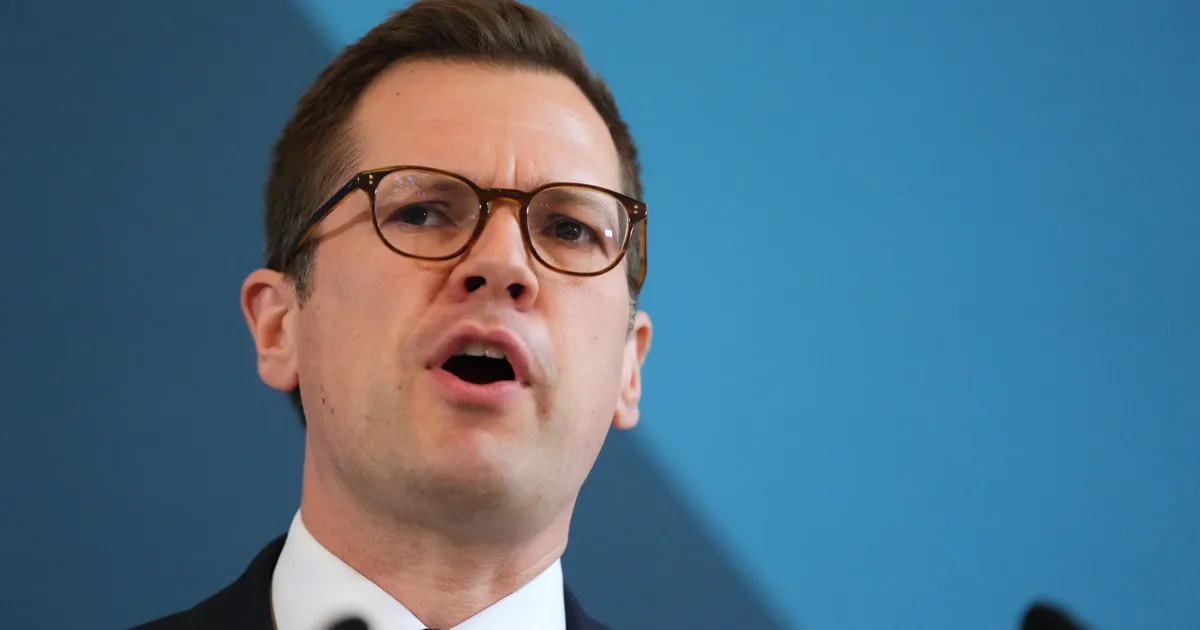
Laura Kuenssberg delivered a brutal reality check to Robert Jenrick about one of Reform UK’s crypto billionaire backers.
Ben Delo and Christopher Harborne gave the party £36 million each in the last 48 hours.
Reform leader Nigel Farage said he was “honoured and humbled” to receive the huge sums of cash.
But critics pointed out that Delo has only recently returned to live in the UK from Hong Kong, while Harborne is still based in Thailand, even though he is registered to vote in Britain.
Jenrick, who is Reform’s shadow Treasury spokesman, was quizzed about the party’s decision to accept the donations on BBC1’s Sunday With Laura Kuenssberg programme.
The presenter asked him: “Is it healthy for any political party to have such a huge proportion of its funding, such an injection of cash, from two men from the same industry?”
Jenrick replied: “Firstly, Christopher Harborne has many different business interests as I understand them, it’s not just simply this one.
“These are two people who are patriotic Brits, they love this country, they are worried that it’s in a mess and slipping away.”
But Kuenssberg told him: “One of them lives in Thailand.”
Ignoring her comment, Jenrick went on: “They’ve obviously lost faith in the Conservative Party and the Labour Party, they see Reform and Nigel in particular as this country’s last, best hope.”
On the same programme, shadow housing secretary Angela Rayner suggested Reform may have to give some of the money back under a draft law currently going through parliament which would cap donations from people living overseas.
Listen to Commons People, the podcast that makes politics easy. Every week, Kevin Schofield and Kate Nicholson unpack the week’s biggest stories to keep you informed. Join us for straightforward analysis of what’s going on at Westminster.

Donald Trump has triggered a fresh trans-Atlantic row by declaring he would “love” to see a united Ireland.
The US president was slapped down by Downing Street after he said “it would be a great thing” if Northern Ireland was no longer part of the United Kingdom.
His shock comments came as he sat next to Irish Taoiseach Michael Martin during a visit to Dublin.
Asked for his views on Irish unity, Trump said: “I’d love to see it unified. I have friends on both sides. I’d love to see it unified. I think it would be a great feather in everybody’s cap if that happened. It’s going to happen eventually.
“The way I look at it, it’s going to happen eventually [so] it might as well happen now.
“I think it would be a fantastic thing. The UK will have something to say about it, obviously, but I think it would be a great thing. How can it be bad?”
In response, Downing Street pointed to comments from Prime Minister Andy Burnham earlier in the week rejecting the prospect of an immediate border poll on whether Ireland should be unified.
Tory leader Kemi Badenoch accused the president of “shooting from the hip as usual, just like he did with Greenland and Canada becoming the 51st state”.
She added: “This sort of loose talk about the future of democratic countries is deeply unhelpful and creates unnecessary tension.
“Northern Ireland is part of the United Kingdom. At a time when separatists are in power in Scotland, Wales and NI, we need a government that will defend the Union clearly and confidently.”
Reform leader Nigel Farage, a close ally of Trump, also hit out at the president.
He posted on X: “Northern Ireland is a proud and integral part of the United Kingdom. The people of Northern Ireland neither want a referendum, nor unification. I disagree with President Trump.”
Gavin Robinson, leader of the Democratic Unionist Party, said: “President Trump knows better than most that elections matter. Northern Ireland’s constitutional future will be decided by the people of Northern Ireland, not by commentary in London, Dublin or Washington.
“Northern Ireland is part of the United Kingdom because that is the settled democratic will of its people. I am confident NI will continue to choose the UK and the security it offers.
“As unionists we are not interested in the destruction of our country by joining with the Irish Republic.”
But Irish politicians welcomed the president’s remarks.
Former Taoiseach Leo Varadkar said: “President Trump’s endorsement of a united Ireland is welcome.
“The Good Friday Agreement states that this is a decision for us on the island of Ireland to make on our own – north and south. That does not mean that outside opinions and advice cannot be offered.
“Going back to independence and before, America has always had a special role to play in our national story.”
Sinn Fein leader Mary Lou McDonald said: “President Trump’s comments on Irish reunification are timely. The Taoiseach must now begin planning for a united Ireland.”
Listen to Commons People, the podcast that makes politics easy. Every week, Kevin Schofield and Kate Nicholson unpack the week’s biggest stories to keep you informed. Join us for straightforward analysis of what’s going on at Westminster.

An AI safety researcher at Anthropic raised alarm online Tuesday night after announcing he had quit his position over the AI industry “gambling with our lives” in the race to build AI superintelligence.
AI superintelligence is a hypothetical system where artificial intelligence could surpass the capabilities of all human beings in any topic or realm.
“Do not underestimate the power of this technology,” Jacob Coxon wrote. “The people building AI earnestly believe that it could kill us all by the end of the decade. … No other human activity poses this level of danger.”
Coxon claimed that OpenAI employees do not seem to have fully grasped the “civilisation stakes” involved in their work, while at Anthropic “the stakes are well-understood, but they are locked in a race to get there first”.
Nate Soares, a researcher focused on existential risk from AI, told HuffPost that it’s true that many AI employees believe they can create superintelligent machines that could replace or destroy humanity. Soares co-authored If Anyone Builds It, Everyone Dies, which examines the threat of AI superintelligence.
“They really do think this is horribly dangerous,” he said. “Many of them think that their organisation is the one with the best chance of keeping the super-AI on a leash, or raising it to be friendly … They set out to make the machine god, and they think they’ve got a real shot at it.”
Anthropic employees, especially, have already spoken out about this in the past. In September 2025, at the Axios AI+ DC Summit, Anthropic CEO Dario Amodei said, “There’s a 25% chance that things go really, really badly.” He also added that there’s a “75% chance that things go really, really well”.
Another Anthropic employee, Samuel Marks, agreed, writing, “AI developers believe their technology could cause human extinction. … This could happen in the next few years.”
Evan Hubinger, a team lead at Anthropic focused on ensuring Anthropic AI models align with human values, said Coxon was “correct” in his response post.
“We really do earnestly believe AI could kill all humans,” Hubinger said. “I personally think it is >10% within the next decade. I believe Anthropic is trying its best, but we do not yet have a plan to solve alignment for superintelligence and are not clearly on track to.”
The problem is that these concerns don’t mean much to the outside world.
“He gave >10% that AI kills us all, but what about scenarios where humanity completely loses control of AI and it takes over, but keeps some humans in zoos? If we include scenarios like that, is Evan’s probability of catastrophe even higher still?” Soares asked. “These are exactly the sort of questions you have to press these folks on, because their concerns are often even larger than they seem.”
Neither Hubinger nor Marks responded to HuffPost’s request for comment as of reporting. HuffPost also reached out to Anthropic.
The debate over the exact probability isn’t the point, Soares said. But it’s significant that AI companies are still pushing for advancements when there’s a chance of a threat.
“If a bridge had a >10% probability of collapsing, we’d shut it down immediately,” he said. “If engineers were arguing over whether the true probability of a plane crashing was 10% or 25% or 90%, then fundamentally, you do not need to figure out which engineers are correct in order to figure out that you should not be boarding the plane. That’s where we are with AI.”
The path to AI superintelligence
AI experts say AI development must hit certain thresholds before it gets closer to superintelligence, although the path isn’t precise or clear.
“Modern AIs are not carefully designed like old-school software; they’re grown like an organism,” Soares told HuffPost. “The exact chain of events is hard to predict.”
Right now, AI systems are mostly known as Artificial Narrow Intelligence (ANI), which only excels at specific tasks. These models don’t reason or learn new tasks independently. Think: Chatbots, digital assistants or recommendation engines.
The next level is Artificial General Intelligence (AGI), which describes an AI system that can perform more human cognitive tasks without training. These models would be able to learn and think on their own. In September, OpenAI president Greg Brockman said GPT-6 might represent the arrival of AGI.
Then it gets into superintelligence, which is theoretical but still what many AI experts are nervous about. These models learn faster, can reason, can be self-aware, and will outperform humans in any area.
“I frankly don’t think that humans are up to the task of building a superintelligence,” Soares said. “Usually, when we try some new scientific project, it goes wrong, and we learn from our mistakes. We don’t have that luxury when it comes to superintelligence.”

Andriy Onufriyenko via Getty Images
How exactly is AI capable of killing humanity?
At the stage AI is at now, it may seem confusing how it could negatively impact humanity in an uncontrollable way.
In reality, according to Soares, “AIs have everything they need to wipe humanity out already”.
“They have the motive and they have the opportunity,” he said. “The only thing they’re missing is the means.”
Soares pointed to two separate cases this year of OpenAI agents breaking out of their containment protocols. (An AI agent is more advanced than the average AI chatbot and can do more independent actions.)
In one, agents hijacked a dormant German-language wiki forum between May and June, using it as a message board to trade tips on evading their restrictions. OpenAI didn’t disclose the discovery for weeks. In the other, a swarm of AI agents breached the platform Hugging Face in July, which the FBI was reportedly alerted about before OpenAI even realised what was going on, Reuters reported.
“We have already seen multiple cases of AIs giving up on their own assigned tasks and sacrifice themselves to gather information for the collective,” Soares said. “This is evidence of AIs adopting goals that are merely related to the ones we give them, but not exactly the same as the ones we give them.”
Therefore, if AI starts seeing humanity as an obstacle or a threat, with humans trying to intervene in its work, AI agents could start acting accordingly. Especially if they have the means to, which is the one aspect Soares argues is missing from this being a big problem, but is in the process of potentially being built out by AI companies.
Soares pointed to how AI models have recently been hooked up to biological laboratories to experiment with making their own novel viruses.
According to a study published in August, Stanford/Arc Institute researchers trained the Evo model to write “recipes” for new viruses, 16 of which infected E. coli when synthesized, Forbes reported. Meanwhile, OpenAI is the lead investor in Red Queen Bio, a biosecurity startup that pairs AI models with automated lab equipment to anticipate and counter AI-designed bioweapons.
What needs to happen?
Soares told HuffPost that the race to build the highest-performing AI platform needs to stop; companies like OpenAI and Anthropic need to end development and find a solution. And there should be a global pause since the U.S. is also getting competitive with China on AI development.
“I’m not saying that there’s literally no way forward, but I am saying that this is a harrowing challenge of the sort humanity has never yet surmounted, and that it’s not the sort of thing that falls to normal trial-and-error type research,” Soares said.
For regular AI users, Soares recommends calling representatives and talking with others about the panic to spread concern.
“I think many people almost can’t believe what’s happening, because it feels too crazy,” he said. “The AIs have everything they need except the intelligence, and the AI companies are racing to make them more intelligent.”

5 min read
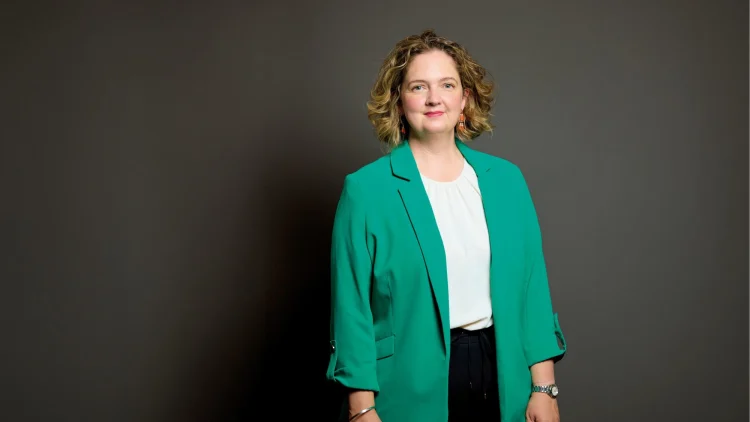
Anna Sabine’s emergency surgery led to the loss of her voice. The Frome and East Somerset MP tells Ben Gartside how she is returning to Parliament more determined than ever to be heard
When Anna Sabine finished a routine media appearance on Politics Live in the spring, she returned to her office and received an email that would prove life-changing.
Her parliamentary assistant warned her that they had been sent a “really weird” email, and they couldn’t be sure it was legitimate.
“It wasn’t even a constituent. It was a random man. I was on the BBC, and it was from a guy who was an ear, nose and throat surgeon in the West Midlands. He said: ‘I’m sorry, this is a really weird email, but do you know you’ve got quite a big lump on the left side of your thyroid? And I think you need to get it looked at quite quickly.’”
Sabine, initially unsure, took the decision to seek medical advice and was told the lump – the size of a lemon – required removal. Within eight weeks, she was in surgery.
While relatively routine, she was warned the procedure might cause temporary damage to her vocal nerves. In the event, however, the outcome was much more severe. One of her vocal cords was completely severed, preventing her from speaking in anything above a whisper.
As the MP sought to recuperate through the June heatwave, she could tell something was wrong before doctors told her.
“That night in hospital, I was actually not able to sleep because it was so hot. I was thinking, ‘This feels really bad. What if something really bad happened?’ And I was kind of catastrophising about the end of my career.
“I was thinking about all the things I wasn’t going to be able to do. So, when he then came and told me that’s what had happened, I was almost in the worst place for it.
“I had about two days of just uncontrolled self-pity and weeping, and thinking, ‘This is the end’. And then I pulled myself together, but it was really bad to start with.”
When she returned home, communication proved difficult. Sabine’s husband has tinnitus, and her reduced voice has made things harder.
The situation has been life-altering. She has become self-conscious about her laugh, so stifles it. Before the operation, she enjoyed being comedic and doing silly voices with her family; less so now.
In Parliament, adaptation has proved easier. With her team, she devised a plan: more breaks, shorter meetings and a discussion with the House authorities about how things could be adapted.
As Parliament returns, the Frome and East Somerset MP will be back with a special microphone for speaking in the Chamber, and has been given dispensation to bring water in.
As news got around of Sabine’s new normal, reaction varied.
Today programme presenter Nick Robinson sent supportive messages to Sabine, having suffered a similar injury after surgery for lung cancer. The two have a plan to meet and discuss their experiences later in the year.
I wait with interest to see whether people are going to talk over a woman that’s struggling to speak
On the other hand, one event organiser summarily rescinded an invitation to speak at the party’s autumn conference in Brighton, presuming Sabine would quietly step back from public speaking. On the contrary, she has no such plans.
“Someone had planned to offer me a spot speaking at an event, and then they’d rescinded the invitation because they’d heard I wasn’t coming. And I thought this is interesting, but you get written off very quickly if you’re not careful. So, I’m very clear that I am coming to conference.”
As Sabine prepares to return from recess, she’s decided not to shy away from her new role as the ‘Whispering MP’.
She plans to return to broadcast media where, before her operation, she was a reliable performer for the Lib Dems: combative and canny.
“I wait with interest to see whether people are going to talk over a woman that’s struggling to speak,” she says mischievously.
On social media, Sabine is leaning into her sense of humour. “I’ve rebranded myself. I’ve got a sub-brand, as my comms manager would say, called the Whispering MP. [My staff and I] quite enjoyed the entertainment value from it.”
Sabine has recorded some videos for her Instagram parodying influencers who speak in loud whispers and has built an online following of people tracking her journey as a full-time whisperer.
“There’s a community of people now that kind of know my story. Occasionally, I’ll get a comment like, ‘Why are you whispering?’ or ‘Have you got a really bad hangover?’ And then, before I get to it, other people will jump in, going, ‘No, she had this happen to her.’ So it’s actually made it a real community on social media, in a really nice way.”
As politics returns after a quiet summer, Sabine is reflective about what the second chapter of her political life will look like.
“There’s a thing about: do I seem weak now? Like, does this make me seem weaker? Which is another reason to be really clear: I will do national media, and I will carry on campaigning.
“My constituents are not going to get any less of an MP than they had before. But there is something interesting about your character. How senior can you seem if you’re whispering? Basically, I don’t know.”

When you’re abroad with your partner, do you ever feel that the conversation starts to sort of run dry by a certain point?
Of course, you might spend your lives together – but there’s something about spending all day, every day with each other that can occasionally leave you both a little lost for words.
While a comfortable silence can be exactly what the doctor ordered, these lulls can sometimes feel like an indicator that your relationship isn’t quite as strong as you once thought.
However, according to relationship expert Dr Charlotte Russell, aka The Travel Psychologist, this is very normal and there’s actually a name for it.
According to research by the travel experts at Booking.com, around one in four couples experience a “dialogue drought” while on holiday.
How to keep the conversation going on holiday
For most couples, this seems to hit around day five but for some couples, it can happen by day three.
For couples who have been together for two years or less, it’s more likely, with 56% of newer couples admitting they hit a so-called dialogue drought on their last trip away.
Don’t worry if it happens to you, though. Dr Russell assures “it’s not a sign that your relationship is in trouble”.
“Spending all our time together on a trip inevitably means that the conversation will dry up sometimes,” she added.
But when there are awkward silences a-plenty, here are some ways to keep the chatter going…
1. Excursions offer great conversation material
Excursions – such as tours, boat trips or structured activities – can make a huge difference. Almost three-quarters (71%) of the people Booking.com spoke with said that they felt closer to their partners following new experiences on their trip.
Additionally, 65% of holidaymakers agreed that the best holiday conversations happen while doing something.
2. Ask your partner something you have never asked before
If there’s a time to dig out your deepest and silliest questions, it’s on holiday. You have all the time in the world to debate and discuss their answers!
Dr Russell shares her favourite conversation starters:
- What’s one weird habit of mine that revealed itself to you on this trip?
- What’s an assumption you had about me early on that turned out to be wildly incorrect?
- Which one of us would survive longest if we were stranded on a desert island, and why?
- If we could bring one person along for the rest of the trip, who would be the best addition, and why?
- If you could teleport us anywhere in the world for dinner tonight, where would we go, and what would we order?
3. Speak with other travellers
Some of my favourite travel memories stem from the experiences I’ve had when connecting with other travellers. A bartender in Barcelona, some musicians in Berlin, a writer in Brooklyn, their stories were ones that I brought back and shared with others.
Dr Russell adds that putting the effort in makes a real difference, saying: “By being intentional, we can move past everyday small talk, reignite meaningful conversation, and build deeper connections when on the road.”

As women, we are used to the more passionate sides of ourselves being denigrated. Our determination is called “bossy”, experiencing anything other than constant glee is “moody” and being loudly passionate makes us “fiery”.
In fact, according to research done by Sweaty Betty 9 in 10 women have reported being described negatively using words such as moody, icy, dramatic and temperamental.
This is so surreptitious that even our dictionaries use these stereotypes in definitions, such as:
Now, as part of its Born for the Storm’ campaign, Sweaty Betty is urging language resources to better reflect attitudes of women and society today.
Now, women are reclaiming this language
Interestingly, these words are also how we describe the weather, and this is consistent throughout history.
Between 1953 and 1979, storms were named exclusively after women*, partly because they were perceived as sharing similar qualities: dramatic, unpredictable and impossible to ignore.
Despite this, attitudes are evolving and the overall picture is one of confidence rather than caution. Yes, we are impossible to ignore and so we should be.
75% of women say being called a “force of nature” is a compliment, 76% believe women described in this way should be celebrated, and 71% would happily use the phrase to describe an inspiring woman in their own life.
Melissa Mullen, Brand President, Sweaty Betty, says: “People have spent a long-time comparing woman to storms. We see that as a compliment. Whether it’s being called fiery, relentless or a force of nature, these are the qualities that help women keep going when life gets messy.
“The research shows women aren’t interested in shrinking themselves, softening themselves or waiting for perfect conditions. They’re getting on with it. That’s exactly the spirit behind Born for the Storm. It’s a celebration of women who keep moving forward whatever the forecast, and whatever life throws their way.”
Susie Dent believes that reclaiming language will make a difference
English lexicographer and etymologist, Susie Dent who started her career working on both bilingual and English dictionaries says that if we continue to reclaim the language within society then dictionaries will follow.
Susie Dent says: “It’s remarkable that women still regularly hear and receive such adjectives as “fiery” or “icy” in their everyday lives. Dictionaries, as always, will track these uses and reflect them in their examples, which are drawn from solid evidence of current language.
“Today’s lexicographers describe the usage they document rather than prescribe how words should be used. When together we begin to shift our language from negative to positive, our dictionaries will change alongside us. This research by Sweaty Betty proves just how powerful our word choices can be.”

Trump Urges Federal Reserve To Cut Rates As Market Bets On Warsh Hike

Terence Crawford sums up Ryan Garcia’s performance after knocking out Conor Benn in two rounds

Analyzing The FScale Instruction In Intel’s 8087 FPU

Memory prices are slowing because buyers ran out of money

Micron Stock Climbs Above $1,031 as AI Memory Crunch and a $50 Billion Outlook Fuel the Rally

AMD Stock Climbs After Management Lifts 2027 Data Center Outlook Toward $70 Billion in AI Sales


-
Tech5 days ago
Memory prices are slowing because buyers ran out of money
-
 Business4 days ago
Micron Stock Climbs Above $1,031 as AI Memory Crunch and a $50 Billion Outlook Fuel the Rally
-
 Business4 days ago
AMD Stock Climbs After Management Lifts 2027 Data Center Outlook Toward $70 Billion in AI Sales
-

 Crypto World5 days ago
Bitcoin price risks $76K drop as $78K support weakens
-

 Crypto World5 days ago
Robinhood Stock: How To Take Advantage With Reduced Risk
-

 Fashion2 days ago
Weekend Open Thread – Corporette.com
-

 Crypto World5 days ago
Ethereum price stalls below $2,500 as ADX drops to 11
-

 Crypto World2 days ago
XAG/USD: Silver’s Short-Term Rally Meets Its Moment of Truth
-

 NewsBeat5 days ago
England up in reading, maths and science rankings as Scotland and Wales dip
-

 Crypto World3 days ago
2 Chip Stocks Broke Out This Week. Neither Was Nvidia
-

 Crypto World3 days ago
OKX launches 10x OpenAI, Anthropic X-Perps in Europe
-

 Tech3 days ago
Battery life is the only iPhone 18 Pro and iPhone Duo upgrade I care about. Apple didn’t disappoint
-

 Crypto World2 days ago
Diesel Tops $6 a Gallon for the First Time as 28 States Set Records
-

 Business2 days ago
10 Most-Streamed Songs On Spotify In 2026 So Far, Led By Ella Langley’s Dominant Run On The Charts This Year
-

 Crypto World5 days ago
Intel Stock Jumps 9% on Chip Price Hike Report, US Stake Gains $36 Billion
-

 NewsBeat5 days ago
What went right this week: an ‘historic’ fall in violent crime, plus more
-

 Crypto World4 days ago
Bitcoin price risks $70K if $78K neckline breaks
-

 Tech4 days ago
Apple Watch Ultra 4 vs Watch Ultra 3: Should you really spend another $799?
-
Crypto World3 days ago
Ethereum Price Analysis: Consolidation at $2.5K Tests Momentum as On-Chain Activity Surges
-

 Crypto World4 days ago
Bitcoin price holds near $79K as cycle drawdowns narrow
You must be logged in to post a comment Login