The stock market has been quick to punish software firms and other perceived losers from the artificial intelligence boom in recent weeks, but credit markets are likely to be the next place where AI disruption risk shows up, according to UBS analyst Matthew Mish.
Tens of billions of dollars in corporate loans are likely to default over the next year as companies, especially software and data services firms owned by private equity, get squeezed by the AI threat, Mish said in a Wednesday research note.
Advertisement
“We’re pricing in part of what we call a rapid, aggressive disruption scenario,” Mish, UBS head of credit strategy, told CNBC in an interview.
The UBS analyst said he and his colleagues have rushed to update their forecasts for this year and beyond because the latest models from Anthropic and OpenAI have sped up expectations of the arrival of AI disruption.
“The market has been slow to react because they didn’t really think it was going to happen this fast,” Mish said. “People are having to recalibrate the whole way that they look at evaluating credit for this disruption risk, because it’s not a ’27 or ’28 issue.”
Investor concerns around AI boiled over this month as the market shifted from viewing the technology as a rising tide story for technology companies to more of a winner-take-all dynamic where Anthropic, OpenAI and others threaten incumbents. Software firms were hit first and hardest, but a rolling series of selloffs hit sectors as disparate as finance, real estate and trucking.
Advertisement
In his note, Mish and other UBS analysts lay out a baseline scenario in which borrowers of leveraged loans and private credit see a combined $75 billion to $120 billion in fresh defaults by the end of this year.
CNBC calculated those figures by using Mish’s estimates for increases of up to 2.5% and up to 4% in defaults for leveraged loans and private credit, respectively, by late 2026. Those are markets which he estimates to be $1.5 trillion and $2 trillion in size.
‘Credit crunch’?
But Mish also highlighted the possibility of a more sudden, painful AI transition in which defaults jump by twice the estimates for his base assumption, cutting off funding for many companies, he said. The scenario is what’s known in Wall Street jargon as a “tail risk.”
“The knock-on effect will be that you will have a credit crunch in loan markets,” he said. “You will have a broad repricing of leveraged credit, and you will have a shock to the system coming from credit.”
Advertisement
While the risks are rising, they will be governed by the timing of AI adoption by large corporations, the pace of AI model improvements and other uncertain factors, according to the UBS analyst.
“We’re not yet calling for that tail-risk scenario, but we are moving in that direction,” he said.
Leveraged loans and private credit are generally considered among the riskier corners of corporate credit, since they often finance below-investment-grade companies, many of them backed by private equity and carrying higher levels of debt.
When it comes to the AI trade, companies can be placed into three broad categories, according to Mish: The first are creators of the foundational large language models such as Anthropic and OpenAI, which are startups but could soon be large, publicly traded companies.
Advertisement
The second are investment-grade software firms like Salesforce and Adobe that have robust balance sheets and can implement AI to fend off challengers.
The last category is the cohort of private equity-owned software and data services companies with relatively high levels of debt.
“The winners of this entire transformation — if it really becomes, as we’re increasingly believing, a rapid and very disruptive or severe [change] — the winners are least likely to come from that third bucket,” Mish said.
Google has rolled out a long-awaited change to Gmail, allowing millions of users in the United States to change their primary @gmail.com email address without creating a new account or losing access to years of emails, photos, Drive files and other data.
gmail
The update, announced Tuesday and beginning to roll out Wednesday, April 1, 2026, addresses one of the most frequently asked questions about Gmail: “Can I change my Gmail address?” For more than 20 years since Gmail launched in 2004, users were stuck with their original username, often chosen hastily in high school or college and now regretted or cluttered with spam.
Google confirmed the feature on its support pages and in public statements, noting that users can now select a new Gmail username ending in @gmail.com while keeping the same Google Account. The old address automatically becomes an alias, so mail sent to either continues to arrive in the same inbox. All linked services — including Google Photos, Drive, YouTube, Calendar and Android device sign-ins — remain fully intact.
“This change helps your account grow with you,” a Google spokesperson said, emphasizing that the move responds directly to user demand. The feature is rolling out gradually to U.S. users first, with international availability expected later. Not everyone will see the option immediately, as Google is implementing it in phases to ensure stability.
How the Gmail Address Change Works
The process is straightforward but includes important safeguards:
Advertisement
Visit myaccount.google.com and navigate to the Google Account email section.
Check eligibility — some accounts linked to Chromebooks, Chrome Remote Desktop or certain third-party sign-ins may face temporary restrictions.
Choose a new available username. Google will suggest options and check availability in real time.
Confirm the change. The switch happens quickly, and the old address stays active as an alias.
Users should review potential impacts before proceeding. For example, if the old address is used for banking, work logins or important subscriptions, update those services afterward to avoid disruptions. Google advises against frequent changes to prevent confusion.
The company stressed that data security remains unchanged. No emails or files are deleted or transferred to a new account. The update has generated excitement online, with users sharing screenshots of long-desired professional or cleaner addresses becoming reality.
Broader Gmail Overhaul in the Gemini Era
The username change arrives amid Google’s larger push to integrate its Gemini AI model deeply into Gmail, transforming the service from a simple inbox into a proactive personal assistant.
Earlier in 2026, Google introduced several Gemini-powered features now available to all users, including:
AI Overviews: Summaries of long email threads and natural-language answers to questions about your inbox, such as “What did I agree to in last month’s meeting notes?”
Help Me Write and Suggested Replies: AI assistance for drafting messages in your personal style or generating context-aware quick responses.
Proofread: Grammar, tone and clarity checks before sending.
AI Inbox: A new view that prioritizes important messages, surfaces action items and filters noise, reducing the overwhelm of high email volume.
These tools, previously limited to paid Google One AI Pro or Ultra subscribers, are now free for the more than 2 billion Gmail users worldwide, though advanced capabilities may still require a subscription. Google says users remain in control and can toggle AI features on or off.
The AI enhancements respond to exploding email volumes and the need for smarter inbox management in a hybrid work world. Gmail Vice President of Product Blake Barnes noted that the updates make Gmail “a personal, proactive inbox assistant to help you manage your life, not just your messages.”
Advertisement
Other Recent Changes and Considerations
Alongside the username flexibility and AI tools, Google has made subtler adjustments. Support for certain legacy features, including Gmailify and POP fetching from third-party accounts, is being phased out in 2026 to streamline security and focus on modern IMAP and forwarding options. Existing users have time to transition, but new users face earlier restrictions.
Privacy remains a key discussion point. While Gemini processes data to deliver summaries and suggestions, Google states it adheres to strict privacy policies, with user controls to limit AI access. Some experts advise reviewing settings, especially for those concerned about data used in training or personalization.
The updates reflect Gmail’s evolution from a groundbreaking free email service with massive storage to an AI-augmented productivity platform competing with tools from Microsoft Outlook and emerging challengers.
User Reactions and Practical Tips
Social media and forums lit up with relief and practical questions. Many celebrated finally ditching embarrassing old usernames, while others sought guidance on timing the change to minimize disruption.
Advertisement
Tips for making the most of the updates:
Update important accounts and contacts after changing your address.
Explore AI features gradually — start with summaries and replies before relying on full inbox overviews.
Back up critical data as a precaution, though Google says it is unnecessary.
Check eligibility at myaccount.google.com if the new option is not yet visible.
For businesses using Google Workspace, similar capabilities are expected to roll out with admin controls.
Looking Ahead for Gmail in 2026
Google has signaled more innovations throughout the year, including deeper integration with Gemini for scheduling, task management and cross-app intelligence connecting Gmail with Photos, Drive and Calendar.
As email remains central to personal and professional communication despite the rise of messaging apps, these changes aim to make Gmail more adaptable and intelligent. The ability to refresh a username without upheaval removes a long-standing frustration for millions, while AI tools promise to cut down on inbox drudgery.
Whether you’re a long-time user tired of an outdated address or simply seeking smarter email management, the latest Gmail updates represent one of the most significant shifts in the service’s history. Google encourages users to explore the changes at their own pace while staying mindful of linked services and privacy preferences.
Advertisement
With more than two decades of dominance, Gmail continues to adapt to user needs and technological advances. The 2026 updates — particularly the username change and Gemini integration — signal that the world’s most popular email platform is far from finished evolving.
Taking a chance on something is exciting, and many people are drawn to the thrill that it offers.
Whether it’s camping out for the latest deals on Black Friday, playing slots or taking part in a gameshow, the chance to win big taps into the part of our brain that enjoys taking risks for the chance of a reward. Taking chances creates excitement and the rush people feel isn’t about winning itself, but not knowing what will happen next.
The Psychology of Risk Taking
Our brains have developed over many millions of years of evolution to enable us to survive in difficult and challenging environments. One of the key components of human psychology is related to how the brain rewards risk-taking behaviour. When we anticipate a potential reward, the brain releases dopamine, which increases motivation and excitement.
This reward system was a useful survival tool in the early days of human history, motivating our ancestors to hunt, forage for food and discover new things. However, this same system is still present today. It motivates a lot of human behaviour, especially when it comes to taking risks.
Although we still experience caution in the face of risk, with losses feeling worse than wins in many cases, low-cost risks can override this feeling. That’s why low-stakes slots are so popular. If the possible gain feels large and the potential loss is small, the risk feels like it’s worth it.
Advertisement
The Unpredictability and Excitement of Online Casino Games
Online gambling is essentially an expression of our attraction to risk and reward. Casino and sports betting platforms are designed to tap into the brain’s need for dopamine and anticipation by offering unpredictable outcomes that keep players engaged.
Most platforms offer a variety of games and ways to play, but few are as popular as online slots. These offer simple gameplay mechanics that are designed to stimulate the brain’s variable reward system as much as possible. Megaways slots offer a unique mechanic which changes the number of ways to win on every spin, making every round unpredictable and keeping players anticipating the outcome every time. The high number of possible winning combinations, in addition to the bonus features often built into these games, help make them especially engaging.
However, players should always be mindful of their limits and approach gambling responsibly to ensure it remains a safe and enjoyable experience.
Cultural and Social Factors
Our tendency to take risks is a major part of our brain chemistry, but it’s also influenced by society and culture. Making a gamble that pays off creates a great story that’s worth telling all your friends. People love to share stories of times they’ve taken risks, and even if it doesn’t work out, it creates an interesting anecdote to share. Those who have hit a big jackpot or won a game show will become widely known in their circle of friends, with the story likely retold again and again over the years.
Advertisement
Risk-taking can also be a fun social activity. Many people who enjoy playing bingo or enjoying casino games prefer to do so in the company of their friends, where they can share the excitement of their wins and receive commiserations for their losses or near wins. Game shows thrive on the energy of the crowd, where cheers, gasps and even groans help add to the drama and excitement, both for the contestants and the audience watching.
The media has also helped to popularise certain types of risk-taking behaviour. High-stakes game shows, where contestants chase big prizes in a double-or-nothing round, are incredibly popular. Seeing someone take a big risk, whether they win or lose, feeds the fascination with risk-taking. In addition, social media has helped popularise risky trends and allowed people to share their stories of taking chances more easily.
Why We Keep Coming Back
Risks may not always pay off, but people will keep coming back again and again, especially if the stakes are low. Take a lottery ticket, for example. Some people will buy a ticket every week for their entire lives without ever winning. Even just fantasising about what you’d win with the jackpot is enough to motivate your brain to do it again the following week.
Hope is entertaining, and the possibility of achieving something great, even if the odds are low, will create enough motivation to take that chance. Imagining the win can often be just as satisfying as the win itself. For a lot of people, hope and daydreaming can provide control over an uncertain and unpredictable world.
Advertisement
Even when the odds aren’t in our favour, taking a chance feels exciting and it can be a lot of fun. Of course, risk-taking can also lead to negative outcomes, especially when you’re gambling with your health or with real money. As a result, it’s important to always consider the potential impact of any risk, and avoid doing things that are considered unsafe or that might result in harm.
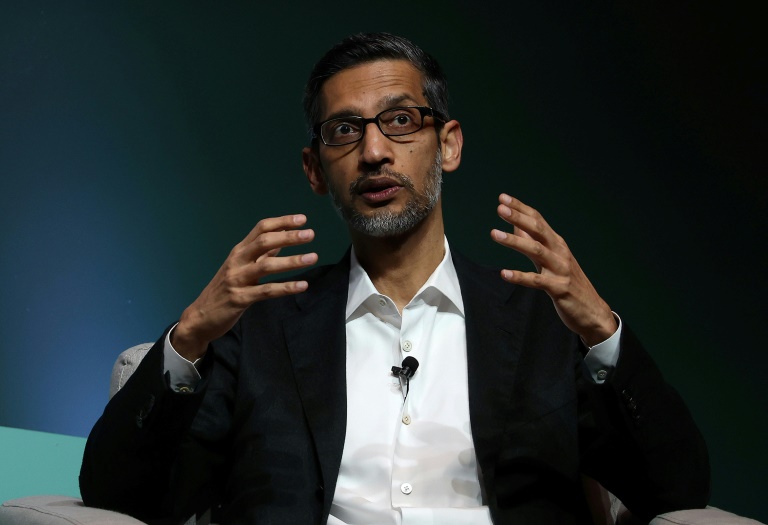
Google CEO Sundar Pichai joined millions worldwide in celebrating the successful launch of NASA’s Artemis II mission Wednesday evening, posting on X that “we have liftoff” and imagining the “amazing view” the four-person crew will have looking back at Earth from lunar orbit during the first human journey around the Moon in more than five decades.
AFP
“And we have liftoff! 🚀 Wishing the best to the Artemis II crew on their incredible journey ahead,” Pichai wrote shortly after the Space Launch System rocket thundered off Launch Complex 39B at Kennedy Space Center at 6:35 p.m. EDT on April 1, 2026. “Imagining the amazing view they have, looking down at Earth from space would be a beautiful thing.”
And we have liftoff! 🚀 Wishing the best to the Artemis II crew on their incredible journey ahead.
Imagining the amazing view they have, looking down at Earth from space would be a beautiful thing.
The 32-story SLS rocket, the most powerful ever built by NASA, carried the Orion spacecraft — named Integrity — and its international crew of NASA astronauts Reid Wiseman (commander), Victor Glover (pilot) and Christina Koch (mission specialist), along with Canadian Space Agency astronaut Jeremy Hansen (mission specialist). The 10-day mission marks the first time humans have ventured beyond low-Earth orbit since Apollo 17 in December 1972.
Advertisement
Historic Launch Caps Years of Preparation
The blastoff unfolded after multiple delays caused by technical issues and weather, but proceeded smoothly within the two-hour launch window. Tens of thousands gathered along Florida’s Space Coast to witness the event, while live streams drew global audiences riveted by the return of crewed lunar exploration.
Artemis II is a critical uncrewed-to-crewed test flight in NASA’s Artemis program, which aims to establish a sustainable human presence on and around the Moon as a stepping stone to Mars. Unlike Apollo missions that landed on the lunar surface, Artemis II will follow a free-return trajectory, swinging around the Moon without landing before splashing down in the Pacific Ocean around April 10.
During the journey, the crew will travel farther from Earth than any humans since Apollo 13 — reaching a maximum distance of approximately 252,799 statute miles. They will test Orion’s life-support systems, navigation, communication and emergency procedures in deep space, gathering data essential for Artemis III, the first planned crewed lunar landing since 1972.
NASA officials described the launch as flawless, with early telemetry showing all systems nominal. Post-launch news conferences confirmed the crew was healthy and the spacecraft performing as expected in initial orbit.
Advertisement
Crew Represents New Era of Diversity and Collaboration
The Artemis II crew embodies NASA’s push for diversity and international partnership. Wiseman, a U.S. Navy test pilot and veteran of a six-month International Space Station mission, commands the flight. Glover, the first Black astronaut to pilot a spacecraft, previously spent 168 days aboard the ISS. Koch holds the record for the longest single spaceflight by a woman. Hansen, the first Canadian selected for a lunar mission, brings international expertise.
Each astronaut has spoken about the personal significance of the mission. Many recalled childhood dreams of spaceflight and the perspective-shifting “overview effect” — the profound sense of Earth’s fragility and unity experienced by those who view the planet from afar. Pichai’s tweet directly echoed that theme, highlighting the emotional and philosophical impact of seeing Earth as a borderless blue marble.
Tech Leaders Weigh In on Space Milestone
Pichai’s enthusiastic response underscores growing synergy between Silicon Valley and the space sector. Google and Alphabet have supported NASA through AI-driven data analysis, Earth-observation tools and quantum computing research that could one day aid deep-space missions. Pichai has previously floated ambitious ideas, such as quantum clusters in space powered by systems like SpaceX’s Starship.
His post quickly garnered thousands of likes and replies, with users praising the inspirational tone. Fellow tech executives and space enthusiasts amplified the message, turning the launch into a viral moment across platforms. One reply noted, “Every astronaut who’s seen Earth from space comes back changed — borders invisible, oceans connected, the whole thing impossibly fragile.”
Advertisement
The mission also highlights Canada’s role in Artemis through the Canadian Space Agency’s contribution of the Canadarm3 robotic arm for future lunar gateways.
Broader Implications for Artemis Program
Artemis II is the second flight in the program after the successful uncrewed Artemis I in 2022. Success here clears the path for Artemis III, targeted for no earlier than 2027, which will land the first woman and first person of color on the Moon near the south pole.
The program faces scrutiny over costs, delays and technical challenges with the SLS rocket, but Wednesday’s launch has renewed momentum. NASA Administrator Bill Nelson called it “a giant leap for a new generation of explorers.”
Environmental and scientific payoffs include studying the Moon’s south pole for water ice that could support long-term habitats and testing technologies for Mars missions. The crew will conduct experiments on radiation exposure, spacecraft performance and human factors in deep space.
Advertisement
Public and Scientific Excitement Builds
Social media erupted with congratulations and anticipation. Replies to Pichai’s post and official NASA channels reflected awe at humanity’s return to lunar ambitions after a half-century hiatus. Educational institutions and space advocacy groups used the moment to inspire students in STEM fields.
As the crew settles into their multi-day journey, mission control will monitor every system. The astronauts are expected to share photos and videos, including the Earth views Pichai referenced, offering the public a rare glimpse of our planet from nearly a quarter-million miles away.
Pichai’s simple yet evocative tweet captured the universal appeal: not just the engineering triumph, but the perspective it offers on humanity’s place in the cosmos.
With Artemis II now underway, the world watches as four astronauts push the boundaries of exploration once more. Their safe return in about 10 days will mark another historic chapter — and potentially provide the “beautiful” Earth vista Pichai imagined, reminding everyone of the planet’s shared fragility and the drive to explore beyond it.
Foreign institutional investor (FII) flows are likely to play a decisive role in driving the next leg of the market rally, according to Saibal Ghosh.
In an interaction with Kshitij Anand of ETMarkets, Ghosh highlighted that while FY26 has been marked by volatility due to geopolitical tensions and global uncertainties, India’s long-term structural story remains intact.
He added that a moderation in global themes such as the AI-led rally, along with improving earnings visibility and easing macro headwinds, could bring foreign investors back in a meaningful way, setting the stage for renewed bullish momentum in Indian equities. Edited Excerpts –
Q) FY26 returns have turned negative due to geopolitical concerns around West Asia. How do you sum up the financial year?
Advertisement
A) This has been a challenging year for the market. Just as synchronized fiscal and monetary policies were beginning to restore growth traction, geopolitical conflict disrupted the momentum.
Live Events
While our forex reserves remain a core strength, we are navigating a capital account deficit; first since the Global Financial Crisis (GFC). This problem is now further exacerbated by the energy crisis and making the currency vulnerable. However, it’s important not to lose sight of the bigger picture. If we look past the immediate noise, India’s track record is stellar. We’ve seen 15%+ returns over the last 10 years, proving that while the short term is bumpy, the long-term Indian equity story is still one of the best in the world. Q) As we head towards FY27, what are the key triggers investors should keep in mind that could lead to a market reversal or return of bullish sentiment? A) I believe the backdrop will improve quickly once the geopolitical situation settles and we get clearer earning growth visibility. That said, the real ‘engine’ for a sustained rally will be the return of FIIs in a big way.
India is still one of the best long-term growth stories out there, but we lost the AI theme. Our market has recently been overshadowed by global AI hype.
Now that the AI and AI connected play is looking a bit overdone, a valuation correction there could be exactly what brings foreign investors back to our market.
Q) Which sectors should be on investors’ radar for FY27? A) Our overarching theme remains centered on the domestic growth story. However, at this juncture, it is prudent to integrate a direct inflation proxy within the portfolio.
Advertisement
We simply cannot afford to ignore the sectors acting as the primary source for the high inflationary cycle that is expected to accelerate in the coming days.
Within the domestic framework, we maintain a strong preference for the banking and financial services sectors as our primary growth play.
Q) How should one approach gold and silver in the new financial year? A) While gold is outside my primary area of expertise, its role as a hedge during periods of heightened uncertainty is undeniable.
However, current valuations are exceptionally stretched, which complicates tactical entry and suggests that traditional empirical prudence may not apply in the short term. Looking further ahead, I believe a structural allocation to gold is justified as U.S. fiscal dominance faces headwinds and gold increasingly replaces U.S. Treasuries as the premier global risk hedge.
Advertisement
Q) Do you think there are certain sectors that have already corrected and are now available at attractive valuations? A) While I believe the banking and real estate sectors have reached to a point where measured positions are warranted, the broader market remains expensive.
When we subject our investment universe to terminal growth rate modeling, we find very few opportunities priced under reasonable assumptions.
The fundamental wisdom of these models suggests that current valuations are pricing in a level of growth that is difficult to justify despite India remaining one of the best structural growth stories in the world.
(Disclaimer: Recommendations, suggestions, views, and opinions given by experts are their own. These do not represent the views of the Economic Times)
Arrivals could fall to lowest level in three years as war drives up fuel costs and disrupts global travel
Thailand’s tourism industry faces a sobering year ahead, with the Ministry of Tourism and Sports warning that the country could receive three million fewer foreign visitors in 2026 — a near 10% drop from last year — if the Middle East conflict continues for another six months.
The shortfall would cost the economy an estimated 150 billion baht, wiping out a tenth of the country’s total foreign tourist receipts, according to Natthriya Thaweevong, the ministry’s permanent secretary.
“The heart of tourism is the journey, and to make that journey you need fuel,” Ms Natthriya told Bloomberg News. “Everyone is affected and faces the same high costs. We’ll lose tourists from all over.”
Advertisement
The warning puts the government’s ambitious target of 35 million foreign arrivals this year in serious doubt. Should the worst-case scenario materialise, visitor numbers could slip back to around 28 million — the level recorded in 2023 — erasing years of post-pandemic recovery efforts.
A Sector Already Under Pressure
The timing could hardly be worse. Tourism, which contributes roughly 12% to Thailand’s GDP, has struggled to regain its footing since the Covid-19 pandemic. Last year, the country welcomed 33 million visitors — itself a 7.2% decline from the prior year — as the country was battered by an earthquake, historic flooding, and deadly border clashes with Cambodia. In the first three months of 2026, arrivals are already running about 3% behind the same period a year ago.
Pivoting to New Markets
In response, authorities are redirecting marketing budgets originally earmarked for Europe and the United States toward country-specific campaigns in the Middle East. The government is aiming to attract at least 200,000 visitors from the region this year — roughly a quarter of last year’s total.
The appeal is clear: Middle Eastern tourists spend an average of 80,000 baht per trip, compared to 61,000 baht for Europeans and just 39,000 baht for Asian visitors. Their willingness to pay premium fares, including charter flights, makes them a resilient market even as airline costs soar.
Advertisement
Thailand is also doubling down on medical tourism, with flagship hospital groups Bangkok Dusit Medical Services and Bumrungrad Hospital leading efforts to position the country as a regional healthcare destination. Separately, short-haul campaigns targeting neighbouring Asian markets are being rolled out to compensate for reduced long-haul traffic.
Domestic Cushion
On the home front, the government plans to introduce incentives next month to encourage domestic travel, including tax allowances on tourism receipts. Officials are also weighing debt relief for hotel operators and fuel rationing at petrol stations to ensure tour buses can keep running.
Despite the headwinds, Ms Natthriya struck a determined note. “Now, with the war affecting things, this growth driver might be faltering,” she said. “But we have to keep going.”
The scheme is being delivered by investment giant Legal & General
An artist’s impression of the proposed L&G development at an area known as Temple Island, south of Temple Meads station in Bristol(Image: L&G)
Plans to transform a derelict former diesel depot near Temple Meads station in Bristol into a vibrant urban quarter have been given the green light. Bristol City Council unanimously approved the hybrid application for the regeneration of the area known as ‘Temple Island’ on Wednesday, April 1.
The scheme, which is being delivered by investment firm Legal and General (L&G), is for up to 520 properties, new offices, public spaces and a 160-room hotel.
L&G said the approval was “a critical step” towards unlocking a long‑vacant brownfield site.
“As a leading pensions provider, we are committed to long‑term investment in infrastructure and housing to help shape a better built environment for the communities where our savers live,” the company said in a statement.
Advertisement
“Our track record in delivering major regeneration schemes in cities such as Newcastle, Cardiff and Sheffield, together with our strong public sector partnerships, enables us to drive forward place‑based developments that support local needs whilst delivering for pension savers across the country.
“The scheme comes forward at a time when development viability across the city is under pressure, and we welcome the Local Planning Authority’s recognition of the substantial benefits Temple Island will deliver: supporting new jobs, enhancing the public realm, and contributing to the wider regeneration of Temple Quarter.”
The Temple Island site sits between the Bath Road and the River Avon. According to L&G, the proposals are designed to be largely ‘car free’.
L&G said entrances from the Bath Road will create new connections between south Bristol and Bristol Temple Meads station, the new University of Bristol campus and the wider Temple Quarter area.
Advertisement
The connection on the north side of the Bath Road will include stairs and a lift, while on the south side an existing access road will lead people down and under the road into the site. A footbridge will link the site with Temple Quarter and St Philip’s Marsh while ‘Brock’s Bridge’ will be the only route for vehicles into the site, but people will be able to walk and cycle across the bridge.
“We look forward to continuing our partnership with the public sector to bring new homes, jobs, and opportunities to Bristol, and to helping establish a thriving new community on Temple Island,” L&G added.
British Business Bank has invested $20 million into 9fin as part of a $170 million Series C funding round, propelling the London-based firm to unicorn status and reinforcing the UK’s position as a global fintech hub.
The round was led by HarbourVest, with participation from Canada Pension Plan Investment Board and existing backers including Redalpine, Highland Europe, Spark Capital and Seedcamp. The British Business Bank’s investment was made in partnership with Redalpine, reflecting its growing focus on supporting later-stage scale-ups.
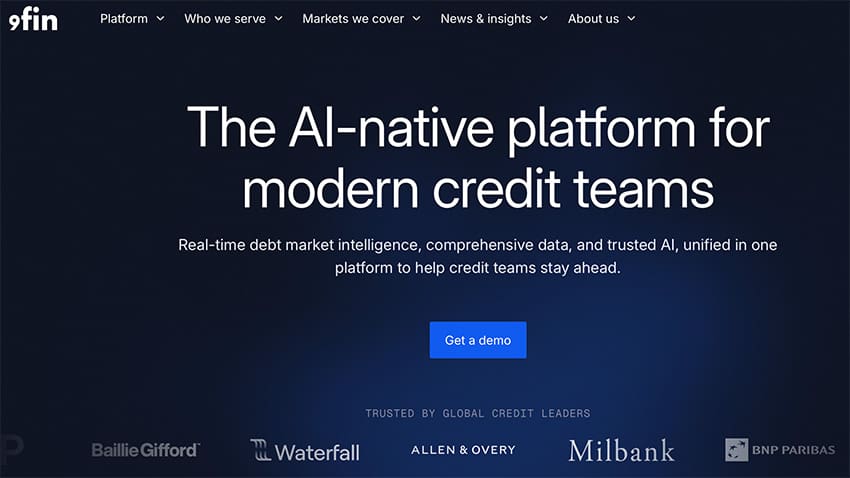
Founded in 2016, 9fin has built an AI-native intelligence platform designed for professionals operating in credit and debt markets, one of the largest asset classes globally.
The platform aggregates and analyses data that is traditionally fragmented across emails, PDFs and private data rooms, providing users with real-time insights, analytics and document extraction tools. This enables banks, asset managers, law firms and advisors to identify opportunities and manage risk more efficiently within a single interface.
With more than 300 institutional clients worldwide and multiple years of 100 per cent annual recurring revenue growth, 9fin has established itself as a fast-scaling player in financial data and analytics.
Advertisement
The new funding will be used to further develop 9fin’s AI capabilities, expand its proprietary dataset and accelerate growth in the United States, a key market for credit and leveraged finance activity.
Chief executive Steven Hunter said the company’s ambition is to become an essential platform for credit professionals.
“AI will redefine credit markets, but only if it is powered by proprietary data and embedded into how professionals actually work,” he said. “Our goal is to build the only platform they need.”
The investment marks another milestone for the British Business Bank’s equity programmes, which have now supported 27 UK unicorns, representing around 64 per cent of the country’s current billion-dollar startups.
Advertisement
Leandros Kalisperas, the bank’s chief investment officer, said increasing access to late-stage capital is critical to ensuring UK companies can scale while maintaining a domestic base.
“Investments like this help our most innovative businesses realise their commercial potential and compete globally,” he said.
George Mills, investment director at the bank, added that 9fin exemplifies the strength of UK fintech, particularly in applying AI to complex financial markets.
The deal highlights the continued momentum in the UK fintech sector, which remains one of the most dynamic in Europe.
Advertisement
By combining artificial intelligence with large-scale financial datasets, companies like 9fin are reshaping how markets operate, improving transparency, efficiency and decision-making across the credit landscape.
As global demand for data-driven financial tools grows, platforms that can integrate AI with high-quality proprietary data are expected to play an increasingly central role.
For 9fin, achieving unicorn status marks a significant step, but the focus now shifts to scaling internationally and maintaining its growth trajectory in a competitive and rapidly evolving market.
For the UK, the investment underscores the importance of sustained support for high-growth technology firms, ensuring that innovation developed domestically can translate into global success.
Advertisement
Amy Ingham
Amy is a newly qualified journalist specialising in business journalism at Business Matters with responsibility for news content for what is now the UK’s largest print and online source of current business news.



























































You must be logged in to post a comment Login