Connect with us
DAPA Banner
DAPA Coin
DAPA
COIN PAYMENT ASSET
PRIVACY · BLOCKDAG · HOMOMORPHIC ENCRYPTION · RUST
ElGamal Encrypted MINE DAPA
🚫 GENESIS SOLD OUT
DAPAPAY COMING

Business

ETMarkets Smart Talk | FII comeback will be key trigger for next rally in Indian markets: Saibal Ghosh

Published

on

ETMarkets Smart Talk | FII comeback will be key trigger for next rally in Indian markets: Saibal Ghosh
Foreign institutional investor (FII) flows are likely to play a decisive role in driving the next leg of the market rally, according to Saibal Ghosh.

In an interaction with Kshitij Anand of ETMarkets, Ghosh highlighted that while FY26 has been marked by volatility due to geopolitical tensions and global uncertainties, India’s long-term structural story remains intact.

He added that a moderation in global themes such as the AI-led rally, along with improving earnings visibility and easing macro headwinds, could bring foreign investors back in a meaningful way, setting the stage for renewed bullish momentum in Indian equities. Edited Excerpts –

Q) FY26 returns have turned negative due to geopolitical concerns around West Asia. How do you sum up the financial year?

Advertisement

A) This has been a challenging year for the market. Just as synchronized fiscal and monetary policies were beginning to restore growth traction, geopolitical conflict disrupted the momentum.

While our forex reserves remain a core strength, we are navigating a capital account deficit; first since the Global Financial Crisis (GFC). This problem is now further exacerbated by the energy crisis and making the currency vulnerable.
However, it’s important not to lose sight of the bigger picture. If we look past the immediate noise, India’s track record is stellar.
We’ve seen 15%+ returns over the last 10 years, proving that while the short term is bumpy, the long-term Indian equity story is still one of the best in the world.
Q) As we head towards FY27, what are the key triggers investors should keep in mind that could lead to a market reversal or return of bullish sentiment?
A) I believe the backdrop will improve quickly once the geopolitical situation settles and we get clearer earning growth visibility. That said, the real ‘engine’ for a sustained rally will be the return of FIIs in a big way.

India is still one of the best long-term growth stories out there, but we lost the AI theme. Our market has recently been overshadowed by global AI hype.

Now that the AI and AI connected play is looking a bit overdone, a valuation correction there could be exactly what brings foreign investors back to our market.

Q) Which sectors should be on investors’ radar for FY27?
A) Our overarching theme remains centered on the domestic growth story. However, at this juncture, it is prudent to integrate a direct inflation proxy within the portfolio.

Advertisement

We simply cannot afford to ignore the sectors acting as the primary source for the high inflationary cycle that is expected to accelerate in the coming days.

Within the domestic framework, we maintain a strong preference for the banking and financial services sectors as our primary growth play.

Q) How should one approach gold and silver in the new financial year?
A) While gold is outside my primary area of expertise, its role as a hedge during periods of heightened uncertainty is undeniable.

However, current valuations are exceptionally stretched, which complicates tactical entry and suggests that traditional empirical prudence may not apply in the short term.
Looking further ahead, I believe a structural allocation to gold is justified as U.S. fiscal dominance faces headwinds and gold increasingly replaces U.S. Treasuries as the premier global risk hedge.

Advertisement

Q) Do you think there are certain sectors that have already corrected and are now available at attractive valuations?
A) While I believe the banking and real estate sectors have reached to a point where measured positions are warranted, the broader market remains expensive.

When we subject our investment universe to terminal growth rate modeling, we find very few opportunities priced under reasonable assumptions.

The fundamental wisdom of these models suggests that current valuations are pricing in a level of growth that is difficult to justify despite India remaining one of the best structural growth stories in the world.

(Disclaimer: Recommendations, suggestions, views, and opinions given by experts are their own. These do not represent the views of the Economic Times)

Advertisement
Continue Reading
Click to comment

You must be logged in to post a comment Login

Leave a Reply

Business

Southeast Asian Leaders’ Meeting Weighs Optimism Against Tension and Uncertainty

Published

on

Southeast Asian Leaders' Meeting Weighs Optimism Against Tension and Uncertainty

Philippine President Marcos Jr. chaired the 48th ASEAN Summit in Cebu, addressing energy security, South China Sea tensions, Myanmar crisis, and Thai-Cambodian conflict. Despite geopolitical challenges reshaping the agenda, the summit yielded substantive outcomes, including exploring regional petroleum reserves and welcoming Timor-Leste as a full member.

Key Points

  • •President Marcos acknowledged the Cebu summit shifted from its intended cultural focus to pressing security issues, including energy security, with leaders exploring strategic oil reserves inspired by Asean’s 2008 emergency rice reserve model amid Middle East-driven economic shocks.
  • Marcos facilitated a 75-minute meeting between Thai and Cambodian leaders over border tensions and presided over Timor-Leste’s full Asean membership, while leaders addressed Myanmar’s minimal progress on the Five-Point Consensus.
  • Key remaining priorities for the Philippines’ chairship include finalizing a South China Sea code of conduct, improving Thai-Cambodian relations, and pushing Myanmar toward meaningful compliance with Asean’s core principles.

The Cebu Summit: Navigating Geopolitical Challenges

Unexpected Shifts and Landmark Moments
Philippine President Ferdinand Marcos Jr. acknowledged that the 48th ASEAN Summit in Cebu evolved far beyond his original vision of cultural celebration and regional camaraderie. Geopolitical developments redirected the summit toward pressing security concerns, yet the Philippines demonstrated remarkable resilience in steering the bloc forward. A historic highlight was Timor-Leste’s participation as a full ASEAN member, with Prime Minister Xanana Gusmão’s emotional reunion with Indonesian President Prabowo Subianto creating an atmosphere so candid that leaders spoke without prepared speeches, marking Cebu as one of ASEAN’s most consequential gatherings.

Economic Resilience and Diplomatic Breakthroughs

Energy Security and Regional Tensions
Amid a declared national energy emergency, ASEAN leaders explored strategic oil and petroleum reserves across member states, inspired by the bloc’s successful 2008 emergency rice reserve initiative. Beyond economic concerns, President Marcos played a pivotal diplomatic role by facilitating a 75-minute face-to-face meeting between Thai Prime Minister Anutin Charnvirakul and Cambodian Prime Minister Hun Manet, easing bilateral tensions. Both leaders agreed to task their foreign ministers with identifying immediate areas of cooperation while extending the ASEAN Observer Team’s ceasefire monitoring mandate for an additional three months through July.

Myanmar Crisis and the South China Sea Outlook

Firm Principles and Future Priorities
ASEAN leaders expressed open frustration over Myanmar’s minimal progress on the Five-Point Consensus, emphasizing that the bloc views Myanmar as a family member rather than merely a trade partner. While acknowledging positive steps — including the release of approximately 5,500 prisoners and a reduction of Aung San Suu Kyi’s sentence — leaders maintained firm conditions around human rights and the rule of law. Looking ahead, three priorities will define the Philippines’ chairship success: advancing a South China Sea Code of Conduct, strengthening Thai-Cambodian relations, and securing meaningful Myanmar compliance with ASEAN’s core principles.

Advertisement
Continue Reading

Business

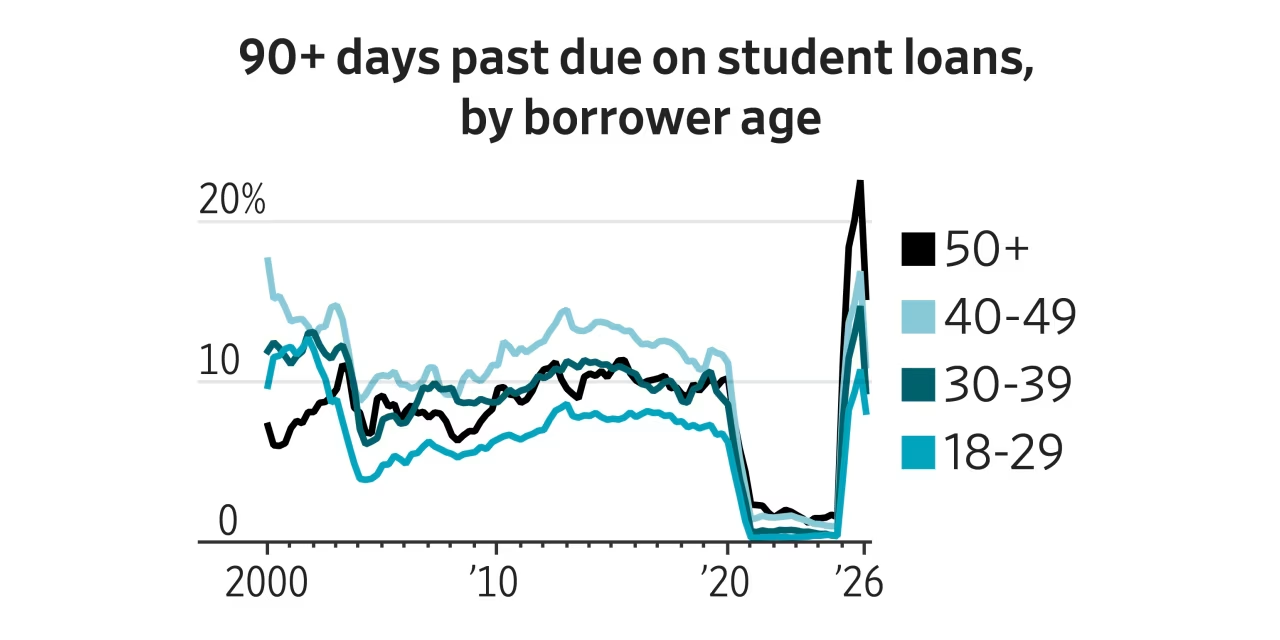
The Average Student-Loan Defaulter Is Nearly 40 Years Old

Published

on

The Average Student-Loan Defaulter Is Nearly 40 Years Old

The Average Student-Loan Defaulter Is Nearly 40 Years Old

Continue Reading

Business

How It Differs Dramatically From His Lavish 2017 Visit

Published

on

Is Abu Dhabi Airport Open? Zayed International Airport Resumes Limited

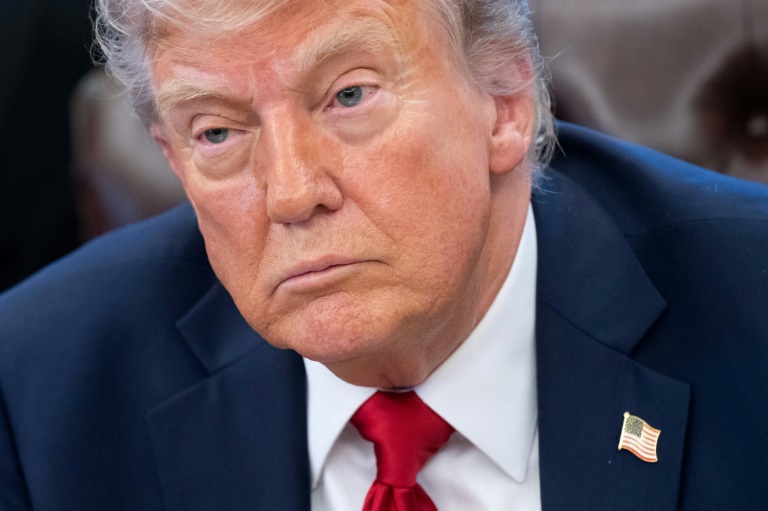
BEIJING — President Donald Trump arrived in Beijing Wednesday evening for a high-stakes two-day summit with Chinese President Xi Jinping, the first visit by a U.S. leader to China in nearly nine years, but one unfolding in a far more tense and constrained atmosphere than his 2017 trip.

Where Trump’s November 2017 state visit was billed as a “state visit-plus” overflowing with pageantry — a private dinner and opera performance inside the Forbidden City, children waving flags along motorcade routes and the announcement of $250 billion in business deals — the 2026 gathering carries markedly lower ambitions and a sharper edge of rivalry.

Trump touched down at Beijing Capital International Airport as security locked down the capital and global attention fixed on the world’s two largest economies navigating war in the Middle East, persistent trade frictions and technological competition. Meetings with Xi are scheduled for Thursday and Friday at the Great Hall of the People.

In 2017, the tone was celebratory. Xi rolled out the red carpet, escorting Trump and first lady Melania Trump through the Forbidden City’s main halls for an afternoon tea and evening performance. A military band played, schoolchildren chanted welcomes and Trump praised Xi as a “very special man.” The two leaders touted what appeared to be a budding personal rapport and a new era in bilateral ties. Chinese officials unveiled a raft of memorandums of understanding worth hundreds of billions of dollars in sectors from energy to agriculture, though many later failed to materialize fully.

Advertisement

Nine years later, the choreography remains formal but noticeably scaled back. No “state visit-plus” designation this time. Analysts say the grandeur serves a different purpose: signaling mutual respect while acknowledging deep distrust built over a decade of tariffs, technology restrictions, military posturing and the 2023 spy balloon incident.

The agenda has shifted dramatically. In 2017, North Korea dominated alongside trade. This week, the shadow of the U.S.-Israel conflict with Iran looms large. Trump has pressed China to use its influence to help reopen the Strait of Hormuz and ease oil price spikes that have fueled U.S. inflation. Beijing, for its part, seeks stability to protect its economy and wants progress on Taiwan and reduced U.S. tech export curbs.

Trade remains central but looks different. Trump’s second-term tariffs — initially hiked sharply before partial rollbacks following the October 2025 Busan meeting with Xi — still hover around 26-34 percent on many Chinese goods after court rulings and negotiations. Chinese officials expect announcements of Boeing aircraft purchases, U.S. agricultural products and energy deals, but analysts doubt anything approaching 2017’s headline-grabbing scale.

Critical minerals and rare earths also feature prominently. The two sides are discussing extensions of existing deals while wrestling over semiconductor restrictions. Artificial intelligence cooperation — or at least guardrails — is expected to surface, reflecting how technology has become a core battleground absent in 2017.

Advertisement

Power dynamics have flipped in subtle but important ways. In 2017, China’s economy was far more dependent on the U.S. market; today the U.S. share of Chinese exports has fallen from about 19 percent to roughly 11 percent. Beijing has diversified trading partners, advanced its technological self-reliance and weathered previous tariff rounds. Xi enters talks from a position of greater confidence, even as China’s growth faces domestic headwinds.

Trump, distracted by the Iran conflict and domestic economic pressures, is seeking tangible wins to bolster his image at home. White House officials speak of “stabilizing” the relationship rather than resetting it. Expectations are modest: possible new dialogue forums on trade and investment, symbolic purchases and commitments to future visits — Xi to Washington in the fall and Trump to the APEC summit in Shenzhen in November.

The personal chemistry between the two leaders has evolved too. They have met multiple times, most recently in Busan in late 2025. Xi has a clearer read on Trump’s transactional style, while Trump has tempered some of the first-term bombast with pragmatic deal-making. Yet underlying suspicions remain. U.S. officials continue to view China as a strategic competitor; Beijing sees Washington as intent on containing its rise.

Security around the summit reflects the stakes. Beijing has imposed heavy restrictions, closing sites like the Temple of Heaven and tightening airspace. The visit occurs against a backdrop of military tensions in the Taiwan Strait and South China Sea that were far less acute in 2017.

Advertisement

Experts describe the gathering as a “risk-management summit.” Both sides want to prevent escalation but harbor little hope for breakthroughs on structural issues such as industrial subsidies or market access. “The relationship is defined more by the absence of friction than by any affirmative agenda,” one former U.S. official noted.

For Trump, a successful outcome might include photo opportunities, modest trade announcements and language committing both nations to dialogue on Iran and nuclear issues. For Xi, hosting the first U.S. presidential visit in nearly a decade allows China to project strength and global centrality even amid its own challenges.

Broader implications extend beyond the two days. The summit could set the tone for U.S.-China relations through the remainder of Trump’s term. A smoother-than-expected meeting might open doors to cooperation on global issues; missteps or overly tough rhetoric could harden positions on Taiwan or technology.

As Trump and Xi sit down Thursday, the contrast with 2017 is stark. Then, the world’s two largest economies appeared on the cusp of a golden partnership. Now, they meet as wary superpowers managing competition while the world watches — distracted by war, worried about supply chains and uncertain about artificial intelligence’s next chapter.

Advertisement

The Forbidden City may not host a private dinner this time. The opera is off the schedule. Instead, closed-door talks in the Great Hall will focus on preventing confrontation rather than celebrating friendship. In that shift lies the story of how the U.S.-China relationship has matured — or hardened — over the past decade.

Continue Reading

Business

Surge Energy Inc. (SGY:CA) Shareholder/Analyst Call Transcript

Published

on

OneWater Marine Inc. (ONEW) Q1 2026 Earnings Call Transcript

James Pasieka

Hello. Good afternoon, ladies and gentlemen. Welcome to the Annual General Meeting of the holders of common shares of Surge Energy, Inc.

My name is James Pasieka, and I’m Chair of the Board of Directors of Surge. Joining us online are our directors of the corporation, Myles Bosman, Marion Burnyeat, Daryl Gilbert, Michelle Gramatke, Ryan Gritzfeldt, Robert Leach, Allison Maher, and of course, our Chief Executive Officer, Paul Colborne. Also with us are the members of our executive management team, Murray Bye, Chief Operating Officer; Jared Ducs, Chief Financial Officer; Margaret Elekes, Senior Vice President, Land and Business Development; and Derek Christie, Senior Vice President, Exploration.

We will now proceed with the formal business of the meeting. In order to have the meeting proceed efficiently, certain individuals have been asked to move and second the motions, which are to be called for the notice of meeting. This is not intended to limit in any way your right to participate in the meeting. Any proposed amendments or objections to a motion will need to be submitted as questions. All proposed amendments or objections to the matters to be approved at this meeting will be addressed during the meeting provided that they are submitted during the period when the polls are open.

Advertisement

There will be opportunities for shareholders to ask questions specific to each resolution on the webcast. If you have a question, click on the Messaging icon at the top right of the webcast page. Please read the instructions in the text box before submitting your question. Once you have finished typing out your question, click the Submit button. We will address questions that directly relate

Continue Reading

Business

Opposition pledges to restrict welfare for foreigners

Published

on

Opposition pledges to restrict welfare for foreigners

The coalition has announced its plan to rein in migration by tying it to housing supply as well as restricting the welfare foreigners receive.

Continue Reading

Business

Global Market Today: Asian stocks, US futures climb on tech optimism

Published

on

Global Market Today: Asian stocks, US futures climb on tech optimism
Asian stocks advanced after a surge in US tech shares pushed Wall Street to a record, masking worries about inflation that have driven bets the Federal Reserve will raise interest rates next year.

A gauge of regional stocks edged 0.1% higher after US benchmarks closed at record highs. A strong outlook by Cisco Systems Inc. lifted Nasdaq 100 futures contracts 0.5%, reinforcing the bullish narrative for the technology sector. The company’s shares surged 18% in extended trading.

Chinese equities, at their highest level since 2021, were set for a 1% advance, with attention on the summit between President Donald Trump and Xi Jinping in Beijing. Technology shares will be closely watched after Alibaba Group Holding Ltd. and Tencent Holdings Ltd. posted revenue that missed estimates. The offshore yuan is on its best winning streak since 2017.

A drop in oil also helped sentiment on Wednesday, while a $25 billion sale of 30-year bonds saw investors snagging 5% yields on those maturities for the first time since 2007. An index of the dollar was fractionally higher Wednesday, while gold fell for a second session. Investors fled Treasuries after back-to-back US inflation reports this week showed mounting price pressures.

Advertisement

US stocks have pushed to record highs, supported by strong corporate earnings and expectations that AI-driven spending will sustain growth. Traders are also turning to geopolitical developments in Iran and the summit between Xi and Trump for next moves, as concerns mount that the war in the Middle East could keep inflation elevated and weigh on the global economy.


“Attention now turns to ongoing geopolitical headlines with President Trump continuing his visit to China and markets remaining highly sensitive to any developments surrounding the Strait of Hormuz,” Nick Twidale, chief market analyst at AT Global Markets, wrote in a note to clients.
Trump arrived in Beijing for the first state visit to China by a US leader in nine years, as the world’s two largest economies look to stabilize ties with a summit playing out against the backdrop of the Iran war.Trump is scheduled to meet with Chinese President Xi Jinping at the Great Hall of the People on Thursday morning.

Elsewhere, US inflation reports this week have shown mounting price pressures, pushing traders to boost wagers on a Fed rate hike in the coming year. The yield on benchmark 10-year Treasuries rose to the highest since July.

US wholesale inflation accelerated in April to the fastest pace since 2022 on a war-driven increase in energy prices that’s feeding into higher freight transportation costs. The producer price index rose 6% from a year ago, according to Bureau of Labor Statistics data out Wednesday, eclipsing economist estimates and coming in after a hot consumer price readout.

“One takeaway is that companies are not passing through costs to consumers across the board just yet,” noted Chris Low at FHN Financial. “But company input costs are sharply higher, which obviously increases pressure to pass through costs in future.”

Advertisement

Separately, the Senate narrowly confirmed Kevin Warsh as chair of the Fed, setting up the most controversial leadership transition at the US central bank in decades and a test of its political independence.

First-quarter profits at S&P 500 companies have surged 27% so far, more than double the roughly 12% analysts had expected — the fastest year-on-year earnings growth outside of recoveries from major shocks since 2004.

The bullish run for US stocks may extend should a recovery in earnings and still-low positioning outweigh the threat from higher bond yields, said Max Kettner at HSBC Holdings Plc.

Morgan Stanley strategists are turning more positive on US equities in a bet that profits and a strong economy will keep the bull market running. The team led by Mike Wilson expects the S&P 500 to reach 8,300 in the next 12 months. The gauge is currently trading near 7,444.

Advertisement

“Resiliency in earnings data despite geopolitical risk, private credit concerns and AI disruption is supportive of our view,” Wilson said.

Continue Reading

Business

Higher Europe air fares 'inevitable', says industry head

Published

on

Higher Europe air fares 'inevitable', says industry head

Flying by air will get more expensive as oil prices remain high after the US and Israel’s conflict with Iran.

Continue Reading

Business

StubHub Holdings, Inc. (STUB) Q1 2026 Earnings Call Transcript

Published

on

OneWater Marine Inc. (ONEW) Q1 2026 Earnings Call Transcript

StubHub Holdings, Inc. (STUB) Q1 2026 Earnings Call May 13, 2026 5:00 PM EDT

Company Participants

Jonathan Schaffer
Eric Baker – Founder, CEO, & Chairman
Constance James – Chief Financial Officer

Advertisement

Conference Call Participants

Eric Sheridan – Goldman Sachs Group, Inc., Research Division
Douglas Anmuth – JPMorgan Chase & Co, Research Division
Mark Stephen Mahaney – Evercore Inc.
Justin Post – BofA Securities, Research Division
Logan Whalley – TD Cowen, Research Division
Brian Pitz – BMO Capital Markets Equity Research
Shweta Khajuria – Wolfe Research, LLC
Andrew Boone – Citizens JMP Securities, LLC, Research Division
Jed Kelly – Oppenheimer & Co. Inc., Research Division
Cameron Mansson-Perrone – Morgan Stanley, Research Division
Jason Bazinet – Citigroup Inc., Research Division
Ryan Sigdahl – Craig-Hallum Capital Group LLC, Research Division
Brandon Ross – LightShed Partners, LLC

Presentation

Advertisement

Operator

Good day, ladies and gentlemen, and thank you for standing by. Welcome to StubHub’s First Quarter 2026 Earnings Conference Call. [Operator Instructions] Please note that this conference call is being recorded today, May 13, 2026. I will now turn the call over to Jonathan Schaffer, SVP, Investor Relations with StubHub.

Jonathan Schaffer

Advertisement

Thank you. Good afternoon, and thank you for joining us to discuss StubHub’s first quarter 2026 results. For reference, our first quarter earnings release and presentation are available under the Quarterly Results section of our Investor Relations website at investors.stubhub.com.

Before we begin, please note that today’s call will include forward-looking statements. These forward-looking statements are based on the company’s current expectations and are not guarantees of future performance. These statements are subject to numerous risks and uncertainties that could cause actual results to differ materially from what we expect. Although the company believes the expectations reflected in such forward-looking statements are based on reasonable assumptions, it can make no assurance related to its expectations. We refer you to our recent SEC filings for a more detailed discussion of the

Advertisement
Continue Reading

Business

Analysis-As Iran war jolts Air India, Lufthansa and Cathay pounce on fast-growing market

Published

on

Analysis-As Iran war jolts Air India, Lufthansa and Cathay pounce on fast-growing market


Analysis-As Iran war jolts Air India, Lufthansa and Cathay pounce on fast-growing market

Continue Reading

Business

LARRY KUDLOW: Ironically, Trump at Beijing plans the final blows to finish off the scourge of Iran

Published

on

LARRY KUDLOW: Will economic starvation bring Iran to their unconditional knees?

April was a bad month for inflation. No doubt about it. Both the consumer price index and the producer price index ran hotter than expected. There’s a lot of hand-wringing among the legacy press and the Democratic party. Yet financial markets, which are smarter than the lefty press and the Democrats, hardly reacted to it at all. The S&P 500 and the Nasdaq hit new record highs. The Dow Jones was basically flat. Bond rates are still in their year-long range. World oil prices actually fell slightly.

There is no catastrophe. I’m sure the Federal Reserve and its new chairman, Kevin Warsh, will be keeping a close eye on prices. Yet I doubt if they’ll take any particular actions. The best thing they can probably do right now is nothing. Shrink the balance sheet if possible. Start working on new economic models that show that low unemployment does not cause high inflation. Nor does strong economic growth.

Advertisement

Inflation is running hot right now because President Trump and Prime Minister Benjamin Netanyahu are working hard to finish off Iran once and for all. A temporary bulge in gasoline and other prices is a small price to pay to destroy a country that is the world’s enemy. Like the Nazis of almost 100 years ago. Developing nuclear bombs that will destroy America, Israel, and the rest of the civilized world — if those crazies get a chance to do it. Yet they must never get a chance to do it.

That’s why a couple of months of inflation is a small price to pay. Mr. Trump has of course given middle-class America all kinds of tax cuts that are offsetting most of the $4.50 gasoline. Call it a push. The American economy is strong and resilient. It grew at 2 percent plus in the first quarter. And may grow as much as 4 percent in the second quarter. Unemployment is a low 4.3 percent. Americans are working. That’s a wonderful thing. Yet if we ever backed off Mr. Trump’s commitment to destroy the Iranian regime and their nuclear capabilities, we’d lose everything, including our whole economy. And this must never happen. I’m sure Mr. Trump will tell this to President Xi when they meet tomorrow.

America will not give up. Iran must not have any nuclear capabilities. Look, Mr. Xi helped make Iran the monster that it is today by arming them to the teeth and, through the purchase of 90 percent of Iran’s oil, they financed those arms. Mr. Xi gave them weaponry through a space satellite system. Mr. Xi gave them money denominated in Chinese yuan. Now he’s unhappy because the Strait of Hormuz is closed and the oil has disappeared. Yet don’t expect Mr. Xi to give us much help with Iran. As I said, it was their creation in the first place.

Advertisement

America will take care of Iran. I think the big news today is not so much hotter than expected inflation. It’s that Mr. Trump is meeting with his top military and national security advisers to plan a reopening of project freedom that will reopen the Strait and to complete the combat bombing missions.

Scott Bessent’s Treasury, meanwhile, has apparently turned the lights off at Kharg Island. Bombing could be next. Any of this would destroy what’s left of Iran’s economy. How ironic that Mr. Trump is planning the finishing touches that will end the scourge of Iran, even while he’s meeting at Beijing with Iran’s principal sponsor. Think of that.

Continue Reading

Trending

Copyright © 2025