Connect with us

Business

AI in this decade is what digitsation was in the last: RBI governor

Published

on

AI in this decade is what digitsation was in the last: RBI governor
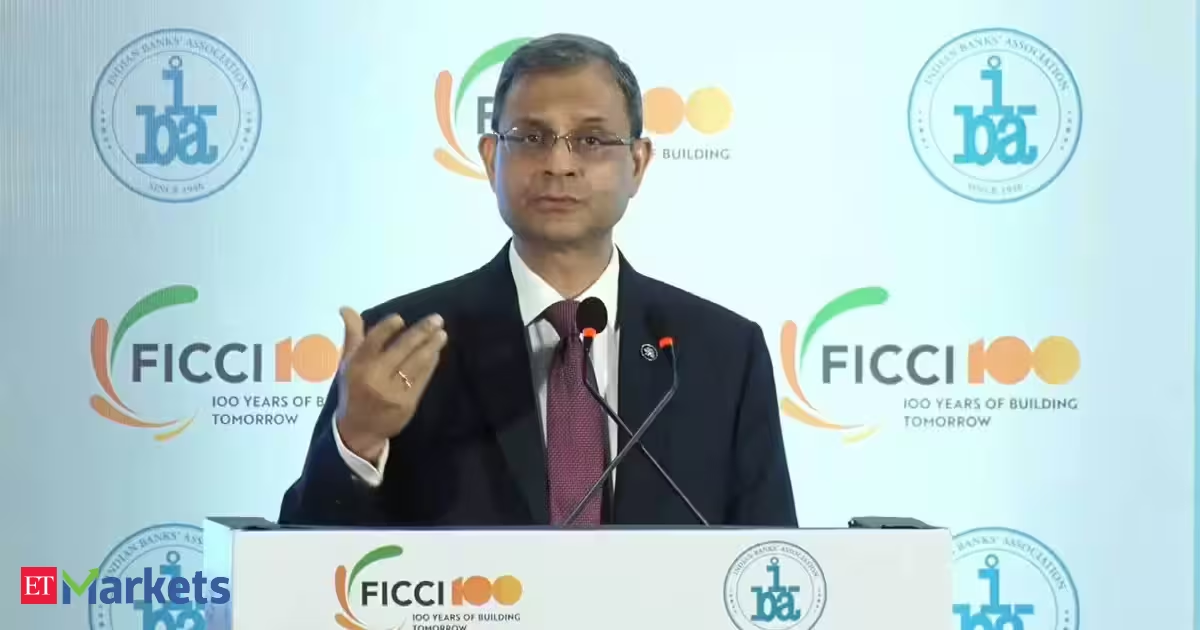
Mumbai: Banks that will win in the artificial intelligence (AI) era will not necessarily be the ones that adopt AI faster but the ones who adopt it with a good understanding of what they are deploying. He described the influence of AI to this decade what digitisation did in 2010s and liberalization held in the 1990s.

He said AI can be used efficiently to build, improve and expand exisiting projects like unified lending interface (ULI), account aggregator which are public good projects on top of which the private sector can build.

“AI, well deployed, can close existing gaps in financial inclusion faster than any preceding technological innovation. Deployed carelessly, it can at the same time entrench new forms of exclusion and instability at a pace that regulators and banks may struggle to keep up with,” Malhotra told bankers in his speech at the FICCI-IBA organised conference.

The RBI plans to establish a more approved AI governance policy with clear accountability. RBI will also continue to provide a sandbox as a safe space for testing innovative use cases for banks, he said.

Advertisement

“We have much at stake. We need to further build on our very highly successful Jan Dhan Yojana. We have still a large, underserved MSME credit market which is estimated in tens of lakhs of crores of rupees. A retail credit culture that is only now maturing. Customer service that can be lost and improved. Implementation costs that can be further decreased. And digital frauds that need to be prevented and avoided. We need to leverage AI for this,” Malhotra said.


He said the role of bank boards, risk officers, the management, and regulators lis critical as all are expected to work together.
He said AI can change the economics of credit delivery fundamentally by using AI models to use cash flows, GST filings, utility, payment bills, digital platforms and extend the frontier of bankable India.The technology can also be used improve customer service, by presenting the right product, flag risks and serve a higher number of customers more efficiently. AI can also improve operational efficiency by reducing cost to income in some case by upto 49%.

“Every bank’s playbook has to be used to own. It has to be shaped by its customer base. I would urge all banks to deliberate on their understanding of this journey of AI production and what is it that they can do to accelerate its production. You will always need to invest in technology, IT infrastructure, scaling, re-scaling. You have to forge sustainable partnerships, because you may not be able to do all of it on your own and you will have to build the right governance structures,” he said adding that to implement these policies will require a deliberate, borderless strategy, backed by sustained investment, and a strong intent, rather than a series of disconnected projects.

Malhotra also touched up the risks associated with AI like lack of information why a loan is rejected, bias and exclusion from a model trained on historical lending data and concentration of a handful of financial models or technology vendors undertaking credit and trading decisions across much of the banking system.

He said banks can just be satisfied by complying with the Digital Personal Data Protection Act. He highlighted cyber and adversarial vulnerability from AI themselves.

Advertisement

“There was a report, I think in July, one of the leading AI firms. They gave the AI the programme to check their systems…Over months all these AI agents were able to collaborate and hack their own systems ” he said cautioning banks against such cases.

“For a bank’s decision, the ultimate responsibility has to lie with the bank, and not with the vendor or with the algorithm,” he said.

He also cautioned banks from depending too much on third-party vendors. “I did mention that you will need to build partnerships with all banks, especially small banks, who may not be able to have their own language, non-language models in AI, you have to depend on outside vendors. And this is perfectly understandable, but then you need to manage risks because governance cannot just stop at our outer walls,” he said.

Advertisement
Continue Reading
Click to comment

You must be logged in to post a comment Login

Leave a Reply

Business

Meta, TikTok lose bid to dismiss thousands of social media addiction lawsuits

Published

on

Meta lobbies lawmakers for immunity from child harm lawsuits: report

A federal appeals court refused to dismiss thousands of lawsuits against Meta, Google, TikTok and Snapchat, allowing complaints alleging the platforms were designed to be addictive to young users to move forward.

The Ninth U.S. Circuit Court of Appeals rejected an appeal by Meta and TikTok attempting to overturn a lower court ruling requiring the firms to face more than 3,000 lawsuits filed in federal court, ruling the companies appealed too early.

Advertisement

The social media companies claimed that Section 230 of the Communications Decency Act of 1996 — which generally shields online platforms from being liable for content posted by their users — also prohibits lawsuits on allegations they failed to warn the public about the addictive design of their platforms.

Section 230 has largely protected several companies from lawsuits regarding content posted on their platforms.

NEW MEXICO COURT ORDERS META TO PAY $567M, OVERHAUL TEEN PROTECTIONS ON FACEBOOK AND INSTAGRAM

Teenager on Instagram

A U.S. appeals court refused to dismiss thousands of lawsuits against Meta, Google, TikTok and Snapchat. (Getty Images / Getty Images)

Most appeals come after a case has reached a ruling or a verdict, but the companies claimed that they should not have to wait until the litigation wraps up to challenge the lower court’s rejection of their immunity defense.

Advertisement

However, the court ruled the companies cannot use Section 230 to dismiss lawsuits, saying it can only be used as a liability defense against claims, meaning the appeal was premature.

The statute “merely provides a defense to liability — not immunity from suit,” Judge Jacqueline Nguyen wrote.

The court’s decision clears the way for lawsuits alleging social media companies designed platforms to encourage addictive behavior, failed to verify users’ ages and did not adequately block harmful content.

Meta

The Ninth U.S. Circuit Court of Appeals ruled Meta and TikTok appealed too early. ((Photo Illustration by Onur Dogman/SOPA Images/LightRocket via Getty Images) / Getty Images)

The panel also denied Meta’s attempt to postpone a trial set to begin on Wednesday in a lawsuit brought by 29 state attorneys general accusing the company of illegally collecting and using children’s data, designing its social media platforms to addict young users and misleading consumers about child safety on the platforms.

Advertisement

The company had claimed that the trial could not move forward while the appeal was pending.

Fox Business reached out to Meta and TikTok for comment.

Attorneys representing thousands of school districts and people suing Meta and other tech firms in federal court, said in a statement the ruling would allow the states’ trial to move forward, as well as a trial over claims brought by school districts set for February.

FOUR STATES SEEKING $1.4 TRILLION IN PENALTIES IN CHILD SOCIAL MEDIA ADDICTION TRIAL, META SAYS

Advertisement
TikTok headquarters logo

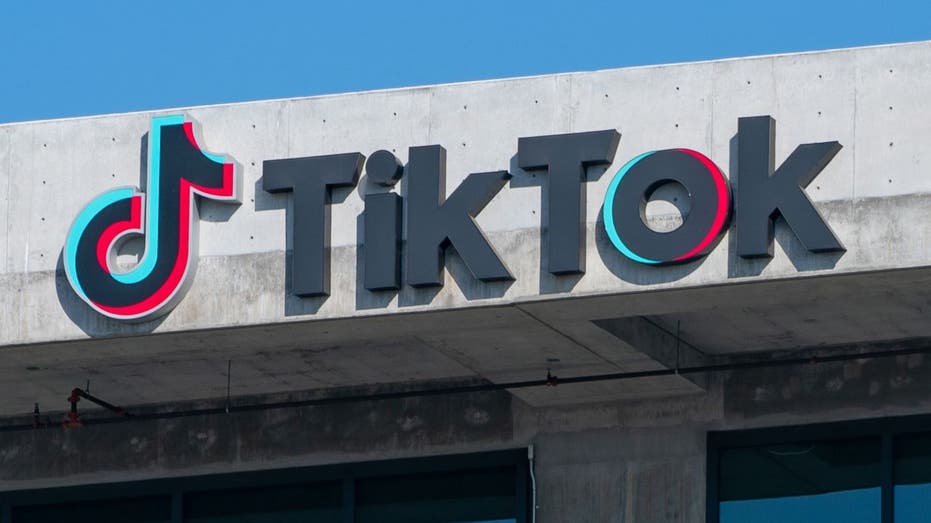
Section 230 “merely provides a defense to liability — not immunity from suit,” Judge Jacqueline Nguyen wrote. (AaronP/Bauer-Griffin/GC Images / Getty Images)

GET FOX BUSINESS ON THE GO BY CLICKING HERE

“A trial is how the public finds out what Meta knew about its products’ impact on children, when it knew it, and what it chose to do with that knowledge,” the attorneys said. “Meta has fought to keep that evidence from the public.”

This comes after a New Mexico judge last week found Meta had created a public nuisance in the state, ordering it to pay $567 million into a teenage mental health fund and adopt youth-safety measures.

In March, a jury in California ruled against Meta and Google’s YouTube, while a jury in New Mexico ruled against Meta on child safety risks.

Advertisement

Reuters contributed to this report.

Continue Reading

Business

Twilio Stock Vaults 25% On Earnings, Hits High; Two More Stocks On Watch

Published

on

Twilio Stock Vaults 25% On Earnings, Hits High; Two More Stocks On Watch

Tracking stocks that are outperforming others is a powerful way of finding leaders. When that outperformance hits a high, their relative strength score spikes. Investor’s Business Daily’s stock screener for stocks with their relative strength at new highs shows three names near buy zones. Acadian Asset Management (AAMI) is hovering just above buy range from a cup-with-handle base that has…

Copyright ©2026 Investor’s Business Daily, LLC. All rights reserved. 87990cbe856818d5eddac44c7b1cdeb8

Continue Reading

Business

Elizabeth Smart Says Nancy Guthrie ‘Could Absolutely Still Be Alive’ Six Months After She Vanished

Published

on

Nancy Guthrie

Kidnapping survivor and advocate Elizabeth Smart says she believes Nancy Guthrie, the 84-year-old mother of “Today” show co-anchor Savannah Guthrie, could still be found alive, offering a message of continued hope more than six months into one of the country’s most closely watched missing-person investigations.

Nancy Guthrie was last seen at her home in Tucson, Arizona’s Catalina Foothills neighborhood on the night of January 31, and was reported missing the following day. Doorbell camera footage from her home captured images of a masked individual, whom investigators and the public have since referred to as “Porch Guy,” though no suspect has been publicly identified and the case remains unsolved. The Pima County Sheriff’s Department has said the investigation remains active, with federal agents continuing to search areas around Guthrie’s neighborhood in the months since her disappearance.

Smart, who survived a nine-month abduction as a 14-year-old in 2002, has repeatedly weighed in on the case in the months since Guthrie went missing, offering a perspective shaped by her own experience being held captive before her eventual rescue. “She could absolutely still be alive,” Smart said, according to RadarOnline, reiterating a message she has delivered in multiple interviews since the spring.

Smart has consistently pointed to other missing-person cases in which victims were recovered alive after periods far longer than her own captivity. In earlier remarks to CNN’s Erin Burnett, Smart said cases exist that “span many more years than mine does,” adding that people have returned alive after being missing for years. She has said that while a darker outcome remains possible, investigators and the public should continue searching until there is definitive information either way.

Advertisement

Central to Smart’s reasoning is the fact that no remains have been found in Guthrie’s case. “I want to remind people that there isn’t a body,” Smart has said, arguing that the absence of that evidence leaves open the possibility that Guthrie remains alive somewhere and has not yet been located.

At the same time, Smart has been careful not to overstate her own certainty about the specifics of the investigation. “I would remind people that we don’t know all the details,” she said, adding that she hopes investigators possess more information than has been made public and that meaningful progress is being made behind the scenes.

Smart’s message has taken on renewed weight as the case has moved well past the point at which many missing-person investigations are typically resolved. Law enforcement officials have historically noted that survival odds in abduction cases tend to drop sharply within the first 24 to 48 hours if a victim is not located, a grim statistical reality Smart has acknowledged publicly even as she has pushed back against treating it as a foregone conclusion in Guthrie’s case, citing her own survival as evidence that early statistics do not always determine a case’s outcome.

Guthrie’s family has continued to make public appeals throughout the investigation. On August 1, marking six months since her mother’s disappearance, Savannah Guthrie shared an emotional message describing the toll the uncertainty has taken on the family. “This is our beautiful mom,” Guthrie wrote, describing how someone had taken her mother “out of her bed in the dead of night” six months earlier. She wrote that the family had lived “every moment, every breath, and every heartbeat in agony and despair” since that night, adding a pledge that the family would “never stop looking for answers” or “looking for the light.”

Advertisement

The Guthrie family has also offered a reward, reported at $1 million, for information leading to Nancy’s safe return or a resolution of the case. Savannah Guthrie has made repeated public pleas since her mother’s disappearance, including appeals directed specifically at whoever may be responsible, urging them to reveal her mother’s location.

The investigation has produced several developments in recent months without resulting in a publicly announced breakthrough. Investigators have reviewed extensive surveillance footage from the area surrounding Guthrie’s home, continued soliciting tips from the public, and revisited physical locations near the property multiple times as the case has progressed. In late July, the Pima County Sheriff’s Department released two ransom notes tied to the case, asking the public for help identifying the writing style, though at least one forensic psychologist has since publicly questioned whether the notes are genuine.

Smart, who has built a career as an advocate for kidnapping survivors and missing people since her own rescue in March 2003, has also used her public platform to appeal directly to anyone who might have relevant information, however small it might seem. She has urged people to report any detail, no matter how insignificant it might appear, saying such information could ultimately make a meaningful difference in locating Guthrie. Smart has also asked the public to extend patience and compassion to the Guthrie family as the investigation continues without resolution.

With the case now well past its six-month mark and no suspect publicly named, Smart’s message has continued to resonate with those following the investigation, offering a note of cautious optimism grounded in her own experience even as the underlying facts of Guthrie’s disappearance remain unresolved.

Advertisement
Continue Reading

Business

ASEAN’s Rise as a Global Innovation Leader in the Intelligent Age

Published

on

Timor-Leste's Path to ASEAN Membership: A Hard-Won and Heartfelt Victory

ASEAN is transitioning from a follower to a global innovation leader. Despite global challenges, the bloc’s economy is booming, projected to be the world’s fourth-largest by 2030. Leveraging AI and digital trade, ASEAN is poised to address socio-economic issues and drive inclusive prosperity.

The region also champions climate action, facing environmental threats but exploring clean energy transitions aided by technology. ASEAN’s diplomatic approach, prioritizing unity and consensus, strengthens its role as a stabilizing force amidst geopolitical complexities. With strategic partnerships and forward-thinking policies, ASEAN aims to lead in the Intelligent Age, shaping a sustainable and prosperous future.

  • The Association of Southeast Asian Nations is transitioning from a fast follower to a global leader in innovation.
  • By leveraging economic influence and strategic partnerships, the bloc can solidify its role as a stabilizing force in the global arena.

Three years ago, while the world grappled with COVID-19, we highlighted the Association of Southeast Asian Nations’ (ASEAN) potential for post-pandemic inclusive growth and prosperity.

Today, the global landscape has shifted significantly with the challenges of geopolitical tensions, climate change, a widening digital divide and rapidly advancing artificial intelligence (AI). Yet, ASEAN’s resilience and promise remain steadfast.

ASEAN has consistently ranked among the top foreign direct investment recipients for three consecutive years and reached a record $230 billion in 2023, defying a global decline.

Advertisement

Macroeconomic trends reveal ASEAN’s gross domestic product rose to $3.8 trillion in 2023 from $2.5 trillion in 2015, while regional trade increased from $2.3 trillion to $3.5 trillion over the same period. These gains have significantly elevated per capita income.

Poised to become the world’s fourth-largest economy by 2030, ASEAN leverages opportunities in the Intelligent Age, defined by AI, quantum computing and blockchain to transcend traditional growth models and foster inclusive prosperity.

However, success demands integrating digital, environmental, social and geopolitical intelligence. Given ASEAN’s trajectory, we argue that the region is uniquely positioned to lead and serve as a model for navigating this transformation.

Leading in AI-driven transformation

ASEAN’s progression into the Intelligent Age signifies a shift from its historical role as a fast follower to that of a global leader in innovation. AI and other advanced technologies give it a unique opportunity to design and implement tailored solutions that address its distinct socio-economic challenges.

Advertisement

Digital trade, encompassing e-commerce, digital services and data flows, is the engine of ASEAN’s economic growth. The region’s 460 million digital consumers and counting drive entrepreneurship, job creation and business opportunities.

The e-Conomy SEA 2024 report by Google, Temasek, and Bain & Company highlights ASEAN’s digital economy achieving profitability, growing from $4 billion in 2022 to $11 billion in 2024.

This rapid growth reflects ASEAN’s adaptability and capacity to turn innovation into tangible economic gains, with sectors like e-commerce, mobile gaming, and generative AI reshaping its economy.

ASEAN’s digital economy is vital to its future but it requires responsible governance and forward-thinking policies for sustainable, inclusive growth.

Advertisement

Source link

Continue Reading

Business

RXO, Inc. (RXO) Presents at Deutsche Bank’s Chicago Industrials Summit Transcript

Published

on

OneWater Marine Inc. (ONEW) Q1 2026 Earnings Call Transcript