Connect with us

Business

Air traffic failure was avoidable, says Transport Secretary

Published

on

A man wearing a grey hat and blue and navy 1/4 zip and teen boy with brown hair wearing a navy top. They are both holding tennis rackets

A technical failure of the UK’s air traffic control system that has caused widespread flight chaos was avoidable, according to the Transport Secretary.

Heidi Alexander told the Commons she had ordered an independent investigation by the aviation watchdog into the system operated by Nats, which went down for four hours on Tuesday.

More than 2,000 flights have been cancelled as disruption continued for a second day with passengers stuggling to fly out of and into the UK.

After meeting with the boss of Nats, Martin Rolfe, Alexander said a cyberattack could be ruled out, but she added: “I do not believe this issue was unavoidable.”

Advertisement

Nats has apologised for its third major technical fault in three years.

Alexander said she discussed with Rolfe how Nats, which is 49% owned by the government, “responded to resolve and minimise the disruption as quickly as possible”.

She said there had to be “tough questions about resilience of Nats systems”, adding: “We also need to think about consumer redress issues.”

Earlier on Wednesday the government said it had confidence in Rolfe, who has led Nats for 11 years as airlines such as Wizz Air and Ryanair called for him to step down.

Advertisement

Nats has been asked to investigate the incident and report back in one week. But Alexander said she has also asked the Civil Aviation Authority to conduct an independent review and present an update in six months’ time.

Airlines UK, which represents the country’s carriers, said it had written to Alexander to “register serious concerns over yesterday’s technical failure at Nats – the third major system failure in three years – which has caused major disruption across the UK’s aviation network”.

Airlines UK’s chief executive Tim Alderslade, said: “The result is a system where airlines pick up the bill for the mistakes of others, while the organisations responsible face little or no financial consequence.

“Accountability should sit where responsibility lies and the Civil Aviation Bill offers the opportunity to address this.”

Advertisement

It is not the first time disruption has blighted Nats’ control system. In 2023, a computer shutdown over the August bank holiday weekend caused chaos for 700,000 passengers.

It took an engineer, who had been unable to correct the fault from home, three hours to get to work.

There was another, smaller Nats outage in 2025, which caused 150 cancellations.

Nats is a public-private partnership, with the government holding the majority stake. The rest is split between a group of UK airlines including BA, easyJet and Virgin Atlantic as well as Heathrow and Nats staff.

Advertisement
Continue Reading
Click to comment

You must be logged in to post a comment Login

Leave a Reply

Business

Administrators explore sale of some Parker Group entities

Published

on

Administrators explore sale of some Parker Group entities

Administrators appointed to several Parker Group eateries have received a time extension to hold a creditors’ meeting and to look into selling off some businesses.

Continue Reading

Business

Goldman Sachs Warns Oil Could Hit $120

Published

on

Alphabet Is Selling 100-Year Debt as Part of a Big Bond Sale

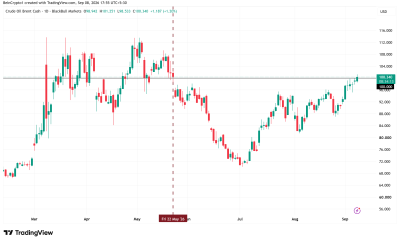
Brent crude could surge above $120 a barrel because of intensified attacks on shipping in the Strait of Hormuz and Red Sea, Goldman Sachs warned in a new oil price forecast.

“Markets are increasingly pricing a prolonged Mideast conflict,” the bank’s analysts said in a research note Monday evening.

Goldman said its baseline assumption was now that Middle East shipping disruptions would continue into next year. It predicted that $120 oil could become the norm in 2027 under its most pessimistic scenario for Middle East crude production, in which the region’s oil exports remain bottlenecked because of persistent tensions.

Continue Reading

Business

Biggest wealth destroyer is not poor performance, but constant search for better returns, says Radhika Gupta

Published

on

Biggest wealth destroyer is not poor performance, but constant search for better returns, says Radhika Gupta
For investors, the biggest challenge in wealth creation may not always be finding an investment that delivers poor returns. It can be the tendency to constantly look for something that has performed better. Radhika Gupta, Managing Director and CEO, Edelweiss Mutual Fund, believes that repeatedly moving money in search of higher returns can make investors lose sight of the financial goals they originally started investing for.

Gupta on social media platform X said that, “Most investors start with an absolute goal. “I need 10% returns.” “I need to retire comfortably.” “I need my money to beat inflation and grow.”…………… The biggest wealth destroyer is often not poor performance. It’s the constant search for better performance. “

Also Read | This 58-year-old invests Rs 50,000 in 8 mutual funds. Expert flags portfolio imbalance, suggests rejig

Advertisement

Gupta said that most investors begin with an absolute goal: they need 10% return, want to retire comfortably and they may want their investments to generate a certain level of returns, beat inflation, build a retirement corpus or accumulate enough money for a specific financial milestone. However, once they start comparing their returns with those of other funds, their expectations can change.

According to Gupta, an investment that was earlier considered good enough can suddenly appear inadequate when a newer or hotter fund delivers higher returns. This can turn an investor’s focus from achieving a financial goal to beating other investments.
Gupta pointed out that the problem begins when absolute performance becomes relative performance. An investor may have a fund that is delivering the returns required to keep the financial goal on track. But if another fund generates significantly higher returns, the investor may feel the need to switch.
This can result in money moving from one fund to another simply because of recent performance. Investors may end up chasing the latest winner without considering whether the fund’s investment strategy, risk level or portfolio is suitable for their own financial goals.
The original goal, however, may not have changed. The amount required for retirement or another financial objective remains the same. What changes is the investor’s perception of what constitutes a satisfactory return.

Gupta believes investors should remember that performance matters, and consistently poor performance should not be ignored. At the same time, unusually high returns should also prompt investors to ask how those returns were generated.

Markets rarely offer a free lunch. Extraordinary returns can come with extraordinary risks, which may be visible through higher volatility or remain hidden until market conditions change.

A fund that has delivered exceptional returns over a particular period may have benefited from a favourable market cycle, a specific sector exposure or an investment style that may not continue to work in the future. Simply moving into such a fund after it has already generated strong returns can expose investors to the risk of entering at the wrong time.

Advertisement

The tendency to chase performance is not limited to investors. Gupta noted that fund managers can also face pressure to keep pace with better-performing peers.

When investors continuously compare funds based on short-term returns, fund managers may feel compelled to take more aggressive positions to remain competitive. This can increase portfolio risks and encourage a broader market tendency to chase recent winners. As a result, the pursuit of higher returns can become self-reinforcing, with investors and fund managers both responding to what has performed well recently.

Also Read | Silver gave 98% returns in 1 year, but investors made just 18%; 56% investments in loss: Report

According to Gupta, the best investment strategy is not necessarily one that produces the highest return every year. Instead, investors should focus on whether their chosen investment approach can help them reach their financial objectives.

Advertisement

This means evaluating a mutual fund based on factors such as investment strategy, risk, consistency, time horizon and suitability for the portfolio rather than simply looking at which fund delivered the highest return in the recent past. Once an appropriate strategy has been identified, investors also need the discipline to stay invested through different market cycles.

(Disclaimer: Recommendations, suggestions, views and opinions given by the experts are their own. These do not represent the views of The Economic Times)

If you have any mutual fund queries, message ET Mutual Funds on Facebook/Twitter. We will get them answered by our panel of experts. Do share your questions at ETMFqueries@timesinternet.in along with your age, risk profile, and Twitter handle.

Advertisement
Add ET Logo as a Reliable and Trusted News Source

Continue Reading

Business

Nike Slides Near a 52-Week Low as China Slump and Soft Outlook Keep Pressure on Turnaround

Published

on

Vinted Down: Users Report Login, App Errors As Complaints Rise

BEAVERTON, Ore. — Nike shares slipped again Wednesday, hovering just above a fresh 52-week low as investors treated the sportswear giant’s turnaround as a multiyear project with China still unfinished.

The stock traded at $37.06 around 12:09 p.m. Eastern, down $1.04, or 2.74%. It touched $37.95 on Sept. 3, then closed Sept. 4 at $38.40. The 52-week high is about $77. The November 2021 peak near $179 is now a historical footnote: the shares are down roughly 79% from that high, and the company that once commanded a 50-times earnings multiple now trades in the low-to-mid 20s on underlying profit.

There was no new quarterly print on Wednesday. The tape is still digesting fiscal 2026 results released June 30 for the year ended May 31, and a first-half fiscal 2027 outlook that calls for more sales declines. Broader pressure on discretionary names — oil near $100 a barrel after fighting around the Strait of Hormuz — did not help a brand that sells $150 sneakers.

Fiscal 2026 revenue was $46.4 billion, flat in dollars and down 2% in constant currency. Diluted earnings were $2.10 a share, down 3%. Strip out a one-time tariff recovery and underlying earnings were about $1.58, according to analyses of the company’s own breakout. Net income was $3.1 billion, versus $3.2 billion a year earlier. Nike Direct, the stores-and-apps channel that was supposed to be the future, fell 6% to $17.7 billion. Digital dropped 12%. Wholesale was the relative bright spot. Footwear, still the core, was about $29.5 billion, down 2% in constant currency; units fell 1%. Apparel rose 4% to about $13.4 billion.

Advertisement

The fourth quarter told the same story in sharper type. Revenue was $10.97 billion, down 1% to 4% depending on the comparison, the lowest quarterly haul since early 2022. Greater China sales fell 17% in constant currency. That was better than the 20% drop the company had flagged three months earlier, and worse than the 10% decline in the third quarter. A $986 million tariff-related refund lifted quarterly net income to $1.07 billion and gross margin to 49.2%. Without it, management said margin would have been roughly flat; Reuters put the ex-refund margin near 40.2%.

Chief Executive Elliott Hill did not dress it up. “Overall, the results aren’t there yet,” he said on the post-earnings call. “We know we’re not living up to our full potential.” In March he had already said the turnaround “is taking longer than I would like.”

Chief Financial Officer Matthew Friend was equally plain about the backdrop. “The environment around us continues to be volatile,” he told investors, citing tariff risk, Middle East disruption and weak sentiment tied to high oil prices. Nike guided first-quarter fiscal 2027 revenue down in the low-to-mid single digits, with no currency tailwind, and said the first half of the new year would still shrink. Second-quarter sales were expected to decelerate from the first because of last year’s digital promotions in Europe and the timing of North America wholesale shipments. Gross margin was seen slightly positive in the first quarter as tariff year-over-year comparisons ease. Friend has said the first quarter of fiscal 2027 should be the last in which higher tariffs remain a material margin headwind.

The map of the business is split. North America has been “leading the way,” in Hill’s earlier phrase: wholesale up sharply in some recent periods, running posting multiple quarters of double-digit growth, football contributing. Sportswear and Jordan streetwear — together about half of sales — remain weak, with discounting and a soft order book. Management has said those two lines will stay negative in fiscal 2027, with hope for a better second half. Converse is in a reset. EMEA has dealt with traffic and promotion noise.

Advertisement

China is the structural problem. It is roughly 15% of Nike’s revenue, third after North America and EMEA. Domestic rivals such as Anta and Li Ning have taken share. Sell-through has lagged plans. Nike is cutting shipments to clean a marketplace it flooded in prior years, which makes reported sales look worse before they look better. Friend has said China will take more time. Hill has pointed to more than 5,000 mono-brand stores that need investment and “distinct sport experiences.” Running has grown there even as the total has fallen — a thin green shoot.

Hill’s “Win Now” plan is familiar: fewer promotions, more product distinction, a return to wholesale partners after years of pushing consumers onto Nike.com, and a focus on running and football first. Inventory units have come down. That cleanup costs revenue now so it can stop costing margin later. Competitors Hoka and On did not wait for Nike to finish the clean-out.

Wall Street’s posture matches the chart. Consensus is Hold, with targets clustered in the low $50s — a large percentage gap from $37 that assumes the second half of fiscal 2027 actually inflects. Earnings estimates for fiscal 2027 have been cut because the tariff refund does not repeat; analysts have talked about EPS near $1.71, down almost a fifth.

A $37 stock on a still-profitable $46 billion brand is not a bankruptcy price. It is a price that no longer pays for brand immortality. Every point of China decline and every quarter of Sportswear discounting chips the multiple. Hill has two jobs that pull against each other: keep the marketplace clean, which suppresses sales, and prove the logo still moves product at full price. Wednesday’s 3% dip is not a new thesis. It is the old one, marked to a 52-week low while oil is high and sneakers are optional. The next earnings date will test whether running and North America can outrun China and streetwear. Until they do, $37.06 is what a turnaround looks like when the results, in the chief executive’s words, are not there yet.

Advertisement
Continue Reading

Business

Global Market: Amazon diversifies debt funding with first Sterling bond offering

Published

on

Global Market: Amazon diversifies debt funding with first Sterling bond offering
Amazon began marketing sterling-denominated bonds for the first time on Wednesday, as major technology companies accelerate fundraising across global currencies to finance heavy investment in artificial intelligence infrastructure.

According to Reuters, citing three banks managing the transaction, Amazon set initial price guidance at around 70 basis points above comparable British government bonds for a three-year tranche.

Read more: Global Market: South Korean shares surge as Samsung, SK Hynix rally on AI optimism

The company also indicated initial spreads of around 90 basis points over UK government bonds for a six-year bond, 105 basis points for a 12-year bond and 110 basis points for a 19-year bond, according to a memo circulated by the banks.

Advertisement

The bond sale is expected to be priced later on Wednesday.


Read more: Global Market: Japan bond yields ease as yen strength tempers BOJ tightening bets
Amazon’s move comes as so-called hyperscalers step up borrowing to fund the rapid expansion of data centres, computing capacity and other infrastructure needed to support the artificial intelligence boom.Reuters reported that major technology companies have increasingly turned to bond markets outside the United States this year, raising funds in currencies including euros, Swiss francs and yen. The strategy allows companies to diversify their sources of financing as spending on AI infrastructure drives their funding requirements higher.

The expansion of AI-related capital expenditure has pushed large technology companies to seek financing on a broader range of debt markets, while investors have gained access to highly rated corporate issuers across multiple currencies.

(Disclaimer: Recommendations, suggestions, views, and opinions given by experts are their own. These do not represent the views of The Economic Times.)

Advertisement
Continue Reading

Business

Rise Wellness unveils prebiotic soda

Published

on

Rise Wellness unveils prebiotic soda

SALT LAKE CITY — USANA Health Sciences, Inc. is expanding its Rise Wellness brand with Protein Pop Balance, a ready-to-drink protein beverage formulated with prebiotics.

The functional soda contains 15 grams of protein, including 10 grams of clear whey protein isolate, along with 5 grams of collagen and 5 grams of fiber. The soda is sweetened with stevia lead extract blend and is free from caffeine.

The lineup includes lime slush, tropical pineapple, watermelon lime and fruit punch flavors.

“Protein Pop Balance is all about giving people a lighter way to stay on track,” said Darin Perry, chief executive officer of Rise Wellness. “It’s a smart way to support your gut and your protein goals at the same time — without it feeling heavy. Balance brings together prebiotics, protein, collagen and fiber in one can that’s easy for consumers to grab and go.”

Advertisement

The functional soda will launch at major retailers and online this month. 

Continue Reading

Business

Ferrarelle sparkling waters trickle into US

Published

on

Ferrarelle sparkling waters trickle into US

WOODBURY, NEW YORK — Arizona Beverages is partnering with Italian mineral water maker Ferrarelle to launch the beverages in the United States.

The collaboration includes 16.9-oz canned formats of Ferrarelle’s sparkling and still waters.

Additionally, the Italian water brand is partnering with Arizona to add an exclusive collection of flavored sparkling waters. The sparkling canned waters include varieties such as orange and tangerine (Capri style), grapefruit and elderflower (Sicilian inspiration) and lemon and basic (Amalfi dream).

“The US has long been an important part of Ferrarelle’s international journey, and this partnership marks a new level of ambition for our business in the market,” said Carlo Pontecorvo, chairman and chief executive officer of Ferrarelle. “Arizona and Ferrarelle bring complementary strengths and, together, create the conditions to build something neither could achieve alone. For us, this is the essence of a strong international strategy: choosing the right partners, combining capabilities and creating the foundation for sustainable, long-term growth.”

Advertisement

The canned sparkling waters will launch in retailers nationwide.

Continue Reading

Business

AI’s speed in supply chain frees up time

Published

on

AI’s speed in supply chain frees up time

KANSAS CITY — Artificial intelligence (AI) quickly gathers information from commodity reports, production lines and customer orders, opening up more time for buyers and purchasers. More advanced AI programs may give recommendations, too, but successful AI implementation in supply chains will require the right program or programs, the correct data and human oversight.

AI reduces the time needed to gather information and maintain spreadsheets, said Erin Nazetta, an executive adviser for agriculture, commodities and global risk.

“It is freeing up time for buyers, purchasers and the decision-makers to focus a little bit more on relationships and decisions,” she said.

Nazetta, who has experience across investment management, banking and global agribusiness and previously worked for Rabobank and Bunge, spoke at the Sosland Purchasing Seminar, held in June in Kansas City. She electronically fielded a poll on AI in a session that had over 100 attendees. Forty-eight percent said their companies were experimenting with AI through pilots with no commitment, compared with 24% not using AI yet, 18% deployed in real workflows and 10% embedded in daily work.

Advertisement

“Things are moving fast,” Nazetta said. “But again, in our industry, which is still very physically driven and (where) some pieces of the information and the processes are not digitized, it’s a little bit slower than in other industries, I would say, to be able to adopt AI.”

Research from Aptean, a supplier of vertical AI and industry-specific software, showed that 23% of food and beverage organizations said that AI was essential to their workflows and decision-making, said Katherine Parr, senior food and beverage solutions consultant at Aptean.

“Daily commodity reporting is exactly the kind of activity that’s moved from a once-a-week manual pull to something people expect AI to help with every single day,” Parr said.

AI may track baking ingredients such as flour, sugar, cocoa and butter or other fats, she said.

Advertisement

“AI-supported reporting can help a bakery track how a flour lot’s protein content or a swing in cocoa prices are likely to affect dough yield or formulation cost, so a team can see that impact before it hits the production schedule, not after,” Parr said.

AI may reduce the time that lines are shut down to clean out allergens.

“You don’t want to spend all your shift time with your lines down for washouts,” Parr explained. “You want to start with the least allergenic items and then move on to the items with allergens. This can also be relevant for colors of items or flavor profiles. Having an AI tool can help intelligently schedule items in an order that helps minimize those changeovers and downtime.”

Weather and tariffs are the next frontier for AI in sourcing, she said.

Advertisement

“Predicting exactly how a drought affects a wheat crop, or how a new tariff schedule hits one specific imported ingredient, means layering external weather and trade data on top of operational data,” Parr said. “That’s the direction this is heading, and it’s where I expect the most value to unlock next for buyers managing ingredient risk.”

AI programs: a closer look

Large language models (LLMs) and agentic AI are two examples of programs in the AI realm.

“So the way I’d put it is, a large language model is reactive,” Parr said. “You ask it something or give it a prompt, and it gives you an answer, a summary or an analysis right then. Agentic AI actually goes and does something. It can run a multi-step process on its own, like watching a vendor’s on-time performance, flagging when it slips, and routing an approval to the right person, with a human still signing off along the way.”

Advertisement

LLMs are fast and conversational with minimal setup, she said, but agentic AI would be better for tasks that need to happen the same way every day, such as flagging inventory nearing expiration and routing it for markdown.

“That distinction between technologies matters,” Parr said. “Our research found 63% of food and beverage organizations are using general-purpose AI, but only 46% have put in AI built specifically for their industry.

“The ones using industry-specific tools are consistently more likely to see improvements in competitive positioning, workforce morale and forecast accuracy. A general-purpose tool can answer a quick question just fine. It’s the industry-specific, workflow-aware tools that actually move the business metrics that matter.”

Aptean compared generic AI programs with industry-specific AI programs. Forecast accuracy, after switching to a generic AI program, increased by 19%, but switching to an industry-specific AI program increased accuracy by 29%.

Advertisement

Nazetta said industry-specific platforms might cover commodities or lengthy legal documents.

“What is it that you’re trying to solve, and what’s the best tool to get the best outcome for that task?” she said, adding, “The winners aren’t necessarily going to have the best model. The winners are going to be able to combine their proprietary data with their commercial judgment and have the ability to act on it.”

AdobeStock_2122356194.jpg

Anyone selling full automation without a human checkpoint is selling risk, said Marc Losito, vice president of regulatory solutions for FoodChain ID.

| Photo: ©ARSENII – STOCK.ADOBE.COM

Two models in one

Advertisement

An LLM model answers a question, and agentic AI takes an action, said Marc Losito, vice president of regulatory solutions for FoodChain ID, which helps customers mitigate supply chain risk, strengthen audit-ready compliance and accelerate product innovation.

The company has built FoodChain ID Scout to do both. The LLM layer reads and generates language: It summarizes human-curated regulatory and commodity data or drafts a report when asked, Losito said. The agentic layer chains multiple steps together without a person prompting each one. The agentic layer pulls the data, checks it against a proprietary rule set, flags the exception and routes it to the right person.

FoodChain ID Scout connects proprietary data from FoodChain ID with partner data and public data streams such as commodity futures, weather, and geopolitical and trade feeds.

“AI does the connecting work across all of it,” Losito said. “Most solutions confirm a food safety problem after it shows up as a border rejection or a failed audit. Scout is built to catch the earlier signal — a fertilizer market shock, a crop forecast, a tariff change — and map it against the documented fraud and compliance patterns that follow, specific to a company’s own ingredient and supplier portfolio.”

Advertisement

AI turns commodity tracking from a manual literature review into continuous, intelligent monitoring.

“Instead of an analyst pulling CME futures, USDA WASDE data and weather feeds by hand every morning, FoodChain ID Scout ingests all of it in real time and flags deviations outside historical norms,” Losito said. “The report stops being a data dump and becomes an exception list: what moved, why and what it means downstream. Purchasing teams get the hours back and catch signals days or weeks before a manual scan would surface them.”

He gave an example of FoodChain ID Scout analysis after the Strait of Hormuz closed due to US conflicts with Iran. Since the strait carries roughly a third of global seaborne fertilizer trade, Chicago Mercantile Exchange urea futures spiked within weeks, Losito said.

“For the market, that was read as an energy story, not a food story,” he said. “But fertilizer scarcity forces farmers to cut application rates and shift acreage away from fertilizer-intensive crops, which tightens wheat, corn and soy supply, the exact inputs behind flour, starches and syrups in baked goods.”

Advertisement

Tightened grain supplies historically trigger economically motivated adulteration such as dilution, species substitution and mislabeled origin, he said.

“AI connects a commodity futures shift to that documented fraud pattern and gives a bakery’s sourcing team a three- to four-month head start on supplier requalification and incoming testing, instead of finding out from a border rejection,” Losito said.

Scout also is designed to watch weather anomalies against crop calendars, tariff announcements against harmonized tariff schedules and currency moves against sourcing geography.

Avoiding “garbage” data

Advertisement

The need for accurate data is found in a term heard often in the AI industry: garbage in, garbage out.

“So, I would say this comes back to something I tell people all the time: You don’t get to good reporting without a good data backbone first,” Parr said. “A lot of the businesses I talk to are still on QuickBooks or spreadsheets. So, before you can even think about what AI can do with commodity pricing, you need your data in one place. Once that’s true, a planner can ask a plain-language question, like which ingredient costs moved the most this week, and get an answer instead of pulling numbers out of five different systems.”

An Aptean 2026 survey found that 81% of food and beverage decision-makers said data quality and access was the biggest challenge to successfully implementing AI.

Nazetta added that data might not be perfect.

Advertisement

“If you have a junior analyst and still you want to go in and double-check their work, I think this is probably a similar situation,” she said.

Humans needed

After implementing AI programs, companies still need buyers, sellers and hedgers, Nazetta said. AI pulls the data together quickly, “but at the end of the day, you still need that experience and that wisdom (that) comes from within the industry and understanding what questions to ask and then ultimately being the one that pulls the trigger.”

Parr said AI can find a risk or make a recommendation, but planners or buyers can make the final call on financial decisions like purchasing commodities.

Advertisement

“This could look like AI making purchasing suggestions based on market conditions, vendor compliance and lead times,” she said. “Then, an experienced person can take a look, then confirm those suggestions. What we want the AI to do is take on some of the effort and time it takes to compile all those outside factors and then have a person spend time on confirmation and action.”

Generic AI is fast at pattern detection but is “tragically poor” at judgment, Losito said.

“It can tell you a signal is unusual,” he said. “It cannot tell you with certainty what it means or what to do about it, especially when the decision touches supplier relationships or regulatory nuance that shifts by jurisdiction. Every credible AI deployment in this space keeps a human in the loop for validation and the final call. Anyone selling full automation with no human checkpoint is selling you risk.”

Advertisement
Continue Reading

Business

Agents appointed to market speculative Wakefield 500 development

Published

on

Business Live

International giant Panattoni hopes to have the logistics unit ready for Q2 2027

Knight Frank, Colliers and CPP will work on the scheme.

Global industrial developer Panattoni recently acquired the 23-acre site where it is developing Wakefield 500.(Image: Panattoni)

A team of commercial property agents have been appointed to market the forthcoming Wakefield 500 scheme in Castleford.

Construction is under way at the large scale speculative scheme off Junction 31 of the M62. It is being developed by global name Panattoni, which recently acquired the 23-acre site at Wakefield Europort from Delin Property.

Now experts from Knight Frank’s Leeds, Sheffield and London offices will join with Colliers and CPP to market the 490,771 sqft unit which is due to be completed and ready for occupation by Q2 2027.

Iain McPhail, logistics and industrial property partner at Knight Frank’s Leeds office, explained: “This development comes at a time when supply of large-format logistics space remains severely constrained across the UK and specifically in the West Yorkshire region. Construction began in June, with completion scheduled for the second quarter of next year. This is a very exciting project for the whole team, as we have been heavily involved in this site for a number of years from its original conception and design stages. It will be very satisfying to see steels going up on this prime development.”

Advertisement

Chris Brown, development director for Panattoni, said: “The property will be delivered to a best-in-class specification, with 56 dock doors, eight level access doors, cross docked loading, yard depths of up to 50 metres, 62 HGV spaces, 384 car parking spaces and a power supply of 2.5 MVA. The scheme will target BREEAM ‘Outstanding’ and will achieve net zero carbon in construction, aligning with occupiers’ demand for sustainable, future-proofed buildings.”

Rob Whatmuff, director at Colliers, said: “Wakefield 500 ticks all the boxes for occupiers looking for large-scale logistics space, combining a prime location with excellent road and rail connectivity, access to a strong local workforce and a high-quality, modern specification. With a real shortage of good-quality space across West Yorkshire, we expect strong demand from businesses looking to grow or relocate. It’s a great addition to the Wakefield market, and we’re pleased to be part of the team bringing it forward.”


Toby Vernon, director at CPP, added: “This is one of the most highly anticipated speculative industrial/logistics developments to come out of the ground across the whole of the Northern UK market. The scale of the building and the super prime location makes this development significant from a national perspective and we anticipate a high level of occupier demand from a broad range and depth of end users.”

Advertisement
Continue Reading

Business

Gold ETF Flows: August 2026

Published

on

Barrick Mining: Meet The New Boss, Not The Same As The Old Boss

The World Gold Council is the market development organization for the gold industry. Our purpose is to stimulate and sustain demand for gold, provide industry leadership, and be the global authority on the gold market. We are a unique organization that delivers tangible benefits to the gold industry. We are an active force within the market, working with a large and diverse set of partners to create access, drive innovation and stimulate demand, while providing a collective voice for our members. We provide insights into the international gold markets, helping people to understand the investment qualities of gold and its role in meeting the social and environmental needs of society. For more information visit www.gold.org.

Continue Reading

Trending

Copyright © 2025