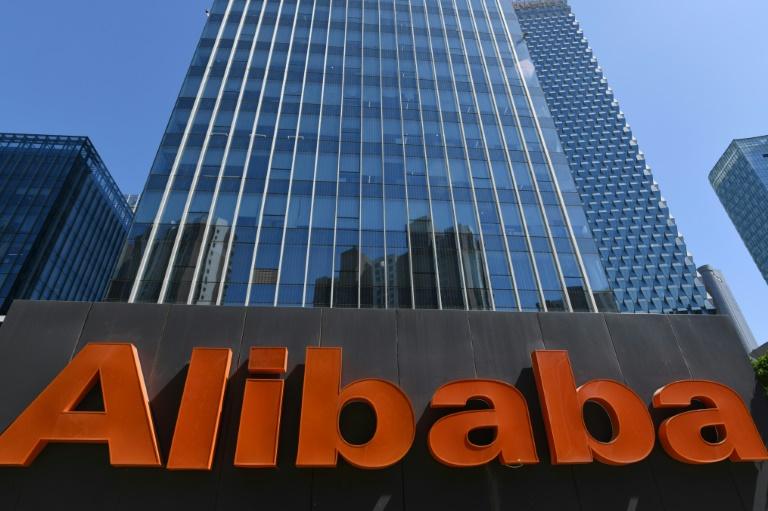
Alibaba Group Holding shares plunged as much as 10% in Hong Kong trading Monday after the Chinese e-commerce and cloud computing giant priced a record HK$80 billion, or $10.2 billion, share placement, with the company saying it will direct all of the proceeds toward expanding its artificial intelligence capabilities.
Alibaba plans to sell 710 million new ordinary shares at HK$112.70 apiece, according to a term sheet reviewed by Reuters, representing a 3.6% discount to the stock’s Friday closing price of HK$123. The transaction, launched Sunday, would mark the largest-ever primary follow-on offering by a Hong Kong-listed company, and ranks as the world’s third-largest primary follow-on share sale of the year, trailing only offerings from Alphabet and Intel.
The company was explicit about how the funds will be deployed. Alibaba said it intends to use 100% of the net proceeds from the placement to invest in its “full stack” AI capabilities, a category the company said spans chips, infrastructure, and the development and deployment of AI models, according to multiple outlets including U.S. News and Investing.com. Alibaba did not disclose further detail regarding the specific breakdown of its planned AI-related investments by category, and did not comment beyond its formal regulatory disclosure, according to reporting from WMBD Radio.
The share placement was structured as an offshore transaction not registered under U.S. securities laws, meaning American investors were not eligible to participate in the offering, Alibaba said.
Alibaba Chief Executive Eddie Wu framed the fundraising as a necessary step to secure the company’s long-term competitive position within the global AI race. According to Investing.com, Wu said Alibaba needed to build sufficient computing capacity before it could capture future growth opportunities tied to artificial intelligence, a rationale that underscores the company’s willingness to absorb near-term financial strain in pursuit of longer-term strategic positioning.
That near-term strain has already become evident in Alibaba’s recent financial results. The company reported that its net profit fell 75% year over year during its April-to-June quarter, a decline driven directly by surging AI-related capital expenditure. According to CNBC, the fundraising announcement came just days after Alibaba disclosed that steep profit drop, with heavy AI spending continuing to weigh significantly on the company’s near-term earnings even as executives argue the investment is essential to the company’s future.
Alibaba’s AI ambitions are backed by a substantial, previously announced spending commitment. The company pledged last year to invest at least 380 billion yuan in cloud computing and AI infrastructure over a three-year period, according to CNBC. According to WMBD Radio, Alibaba disclosed during its most recent earnings report that it had already spent nearly half of that three-year capital expenditure plan, while separately stating that the expected payback period on its AI-related investments was improving, falling to an estimated 2.5 years from a previous estimate of three years, a shift the company attributed to surging demand for its AI products and services.
Alibaba’s fundraising push arrives amid an intensifying global race among major technology companies to build out artificial intelligence infrastructure. According to Reuters, cited by Investing.com, the four major U.S. hyperscalers — Microsoft, Amazon, Alphabet and Meta — are together expected to spend roughly $725 billion in capital expenditures in 2026, much of it directed toward AI data centers, chips and cloud infrastructure. Alibaba’s Chinese technology peers have similarly ramped up their own AI-related spending; CNBC reported that Tencent’s capital expenditure rose 65% from the previous quarter to 52.8 billion yuan during the June quarter, as that company continues investing in computing infrastructure to monetize its own AI models.
The timing of Alibaba’s capital raise also follows closely on the heels of a significant product release. According to Hokanews, the fundraising announcement came just weeks after Alibaba released its Qwen 3.8-Max model, part of the company’s broader Qwen family of large language models that has become central to its AI strategy across its e-commerce, cloud and enterprise services ecosystem.
Market reaction to the announcement was decisively negative in the immediate term, reflecting investor concern over the scale of dilution and continued capital intensity the placement represents. Coverage from Eastern Herald framed the fundraising as placing the burden of proof squarely on Alibaba’s leadership going forward, noting that while the company had clearly demonstrated its ability to raise substantial capital, the more significant open question is whether that capital, once deployed into AI infrastructure in 2026, will translate into a defensible competitive position by 2028 and beyond, a case the outlet noted “cannot yet be made with data” but “can only be made with commitment.”
The transaction also reflects a broader shift in where major Chinese technology companies are choosing to raise capital for AI investment. According to Eastern Herald, Hong Kong’s stock exchange has seen growing activity from Chinese technology firms seeking large capital raises specifically tied to AI development, a trend the outlet attributed in part to Hong Kong’s exchange authorities streamlining listing requirements and actively courting so-called “new economy” companies in recent years, positioning the city as an increasingly significant venue for this type of large-scale technology fundraising.
With the HK$80 billion placement now priced and the underlying shares set to be issued to non-U.S. investors, Alibaba’s leadership faces continued pressure to demonstrate that its aggressive AI capital expenditure translates into sustainable competitive advantage and, eventually, improved profitability, particularly given the company’s recently disclosed 75% profit decline tied directly to the same AI investment strategy the new fundraising is designed to accelerate further. Investors and analysts covering the stock are likely to continue closely monitoring Alibaba’s coming quarterly results for further signs of whether the company’s AI-related revenue growth, including continued adoption of its Qwen model family, begins to offset the substantial near-term costs associated with building out its AI infrastructure at this unprecedented scale.


















































You must be logged in to post a comment Login