
Business
Alibaba Stock Falls As AI Push Drives $10 Billion Share Sale

Alibaba stock fell in U.S. trading after the Chinese tech giant priced a roughly $10.2 billion placement of new shares to non-U.S. investors. The move marks the latest large tech industry fundraising deal focused on AI. Alibaba Group (BABA) on Monday said it has priced 710 million new shares at 112.70 Hong Kong dollars each, according to a news release.…
Copyright ©2026 Investor’s Business Daily, LLC. All rights reserved. 87990cbe856818d5eddac44c7b1cdeb8

Business
Fubon Financial Holding Co., Ltd. 2026 Q2 – Results – Earnings Call Presentation (OTCMKTS:FUISF) 2026-08-24


Seeking Alpha’s transcripts team is responsible for the development of all of our transcript-related projects. We currently publish thousands of quarterly earnings calls per quarter on our site and are continuing to grow and expand our coverage. The purpose of this profile is to allow us to share with our readers new transcript-related developments. Thanks, SA Transcripts Team
Business
Paladin Energy Shares Surge Over 10% After JORC Re-Reporting of Patterson Lake South Uranium Resources
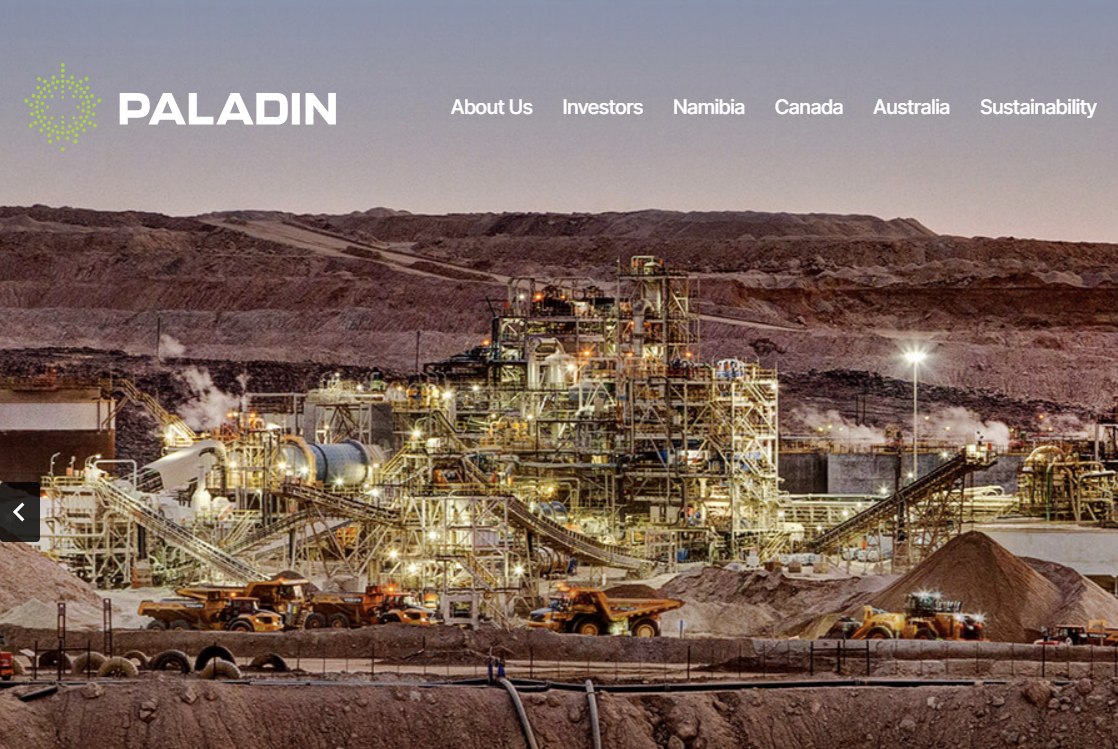
PERTH, Australia — Shares of Paladin Energy Ltd jumped more than 10% on Monday as investors responded to the company’s re-reporting of Mineral Resource and Ore Reserve estimates for its Patterson Lake South project under the JORC Code, alongside continued strong operational momentum at its Langer Heinrich Mine in Namibia.
Paladin Energy (ASX: PDN) closed at A$11.71, up A$1.13 or 10.68%, after trading as high as A$11.98 during the session. The move came days after the company released updated estimates for the high-grade Patterson Lake South (PLS) uranium project in Saskatchewan’s Athabasca Basin, presented in accordance with the JORC Code (2012) to complement its existing disclosures under the Canadian NI 43-101 standard.
The company stated there was no material change to the previously disclosed mineral resource and mineral/ore reserve estimates as a result of the re-reporting. Non-material updates were incorporated for certain zones, while the overall reserve figures remained unchanged. The dual-standard reporting provides greater accessibility for Australian and international investors following the JORC framework.
The stock’s sharp rise occurred against a broader backdrop of strength in uranium-related equities, with several peers also advancing on the day. Paladin’s market capitalisation moved above A$5 billion on the gain.
Paladin operates as a uranium producer with a 75% interest in the Langer Heinrich Mine in Namibia and is advancing the Tier-1 PLS project in Canada. The company also holds exploration assets in Australia and additional interests in Canada.
In its June 2026 quarterly report, released in late July, Paladin detailed the successful completion of the operational ramp-up at Langer Heinrich. Full-year FY2026 production reached 4.82 million pounds of U₃O₈, meeting or exceeding the upper end of revised guidance of 4.5 to 4.8 million pounds. Sales totalled 4.35 million pounds, also above guidance of 3.8 to 4.2 million pounds. The average realised price for the year was approximately US$70 per pound, while the cost of production came in at US$43.30 per pound, better than the guided range of US$44 to US$48 per pound.
In the June quarter alone, Langer Heinrich produced 1.23 million pounds and sold 1.35 million pounds at an average realised price of US$70.6 per pound. Plant recovery rates remained strong, and mining volumes increased as the operation transitioned to higher reliance on primary mined ore.
Looking ahead, Paladin issued FY2027 guidance for Langer Heinrich of 5.1 to 5.6 million pounds of U₃O₈ production and 4.8 to 5.3 million pounds of sales, with costs expected in the US$44 to US$48 per pound range. Capital expenditure is forecast at US$29 million to US$35 million. Production is anticipated to be weighted toward the second half of the year following planned maintenance in the first half.
The company has highlighted that the ramp-up phase is complete, positioning the Namibian operation for sustained output. All ore processed in FY2027 is expected to come from the mine, with ongoing optimisation of mining and processing activities.
At the same time, progress continues at Patterson Lake South. The Canadian Nuclear Safety Commission determined that the construction licence application had achieved sufficiency status, allowing it to proceed through the regulatory review process. Paladin has signed a binding term sheet with the Birch Narrows Dene Nation regarding a Mutual Benefits Agreement and is working toward key development milestones. An administrative protocol with the CNSC targets completion of hearings for the construction licence application by the end of calendar year 2027.
In June, the company reported a new high-grade uranium discovery, known as the Atlas discovery, from its 2026 winter drilling program at PLS. The project is viewed as a high-grade, relatively shallow deposit that could support future growth as global demand for uranium increases in support of nuclear energy expansion.
Paladin has strengthened its balance sheet through earlier equity raisings totalling approximately A$400 million to support both the Langer Heinrich ramp-up and advancement of PLS. Analyst coverage has been mixed but includes several upgrades in recent months, with some brokers citing the scale and development potential of the Canadian asset as the company transitions toward a multi-asset producer.
Uranium market conditions have remained supportive, with elevated prices reflecting supply constraints and growing interest in nuclear power as a low-carbon baseload energy source. Paladin’s sales contracts provide exposure to higher prices while delivering into long-term customer agreements.
The company’s dual listing on the ASX and TSX, along with OTCQX trading in the United States, has broadened its investor base. The JORC re-reporting of the PLS estimates is intended to align disclosure practices more closely with Australian market conventions without altering the underlying resource picture previously reported under Canadian standards.
Trading volume was elevated on the day of the share price move, reflecting heightened interest following the resource announcement and the recent operational updates. The 52-week range for the stock has seen significant movement, with the shares having traded as high as approximately A$15 earlier in the year before consolidating.
Paladin’s management has emphasised disciplined cost control, safety performance and steady delivery against guidance as the Langer Heinrich operation matures. Total recordable injury frequency rates have been tracked as part of ongoing operational reporting. Capital spending remains focused on sustaining and optimising the Namibian mine while advancing permitting and engineering work in Canada.
As the uranium sector continues to attract attention from institutional and retail investors, Paladin’s combination of near-term production growth from Langer Heinrich and longer-term development optionality at PLS positions it as a key independent producer. The latest share price reaction underscores market focus on both the resource transparency provided by the JORC update and the company’s ability to execute on production targets.
Financial results for the full year ended June 30, 2026, are scheduled for release in late August, with a conference call planned to discuss the outcomes and outlook. Investors will be watching for further detail on cash generation, contract book performance and the pathway toward a final investment decision at Patterson Lake South.
The stock’s advance on Monday reflected a convergence of operational delivery, resource disclosure updates and sector sentiment. With Langer Heinrich now operating on a stable footing and PLS advancing through key regulatory steps, Paladin continues to build its profile as a multi-jurisdictional uranium company supplying nuclear utilities worldwide.

BMO raises CoStar Group stock price target on Zonda acquisition


Apart from my academic training in Biology and Chemistry, I hold a Ph.D. in Environmental Science with a specialization in Bio-Medical Waste Management. My areas of research and analysis include clean technologies, renewable energy, pollution control systems, and environmental compliance solutions. I follow companies operating in these sectors using a research-driven approach that integrates regulatory trends, sustainability metrics, and scientific evaluation to assess long-term growth opportunities, risks, and value potential. By actively tracking and analyzing companies engaged in environmental management, renewable energy, and green technologies, my work aims to blend scientific depth with market analysis to provide practical insights that help investors understand financial outcomes and emerging opportunities. At a personal level, I also provide free stock market consultation to a select group of friends, relatives, and former colleagues. I am associated with Seeking Alpha analyst Eudaemon Research.
Analyst’s Disclosure: I/we have no stock, option or similar derivative position in any of the companies mentioned, and no plans to initiate any such positions within the next 72 hours. I wrote this article myself, and it expresses my own opinions. I am not receiving compensation for it (other than from Seeking Alpha). I have no business relationship with any company whose stock is mentioned in this article.
Seeking Alpha’s Disclosure: Past performance is no guarantee of future results. No recommendation or advice is being given as to whether any investment is suitable for a particular investor. Any views or opinions expressed above may not reflect those of Seeking Alpha as a whole. Seeking Alpha is not a licensed securities dealer, broker or US investment adviser or investment bank. Our analysts are third party authors that include both professional investors and individual investors who may not be licensed or certified by any institute or regulatory body.

Qiagen names Jonathan Pratt as CEO amid takeover talks
Operator
Thank you for standing by, and welcome to the Perenti FY ’26 Results Presentation. [Operator Instructions] Finally, I would like to advise all participants that this call is being recorded. I’d now like to welcome Vanessa Torres, Managing Director and Chief Executive Officer, to begin the presentation. Vanessa, over to you.
Vanessa Torres
CEO, MD & Director
Good morning, everyone, and thank you for joining the Perenti FY ’26 Results Call. My name is Vanessa Torres, and presenting with me today is Mike Ellis, our CFO. Today, we will outline our full year performance, the outlook for our business and how we plan to maximize returns for our shareholders. As this is my first reporting period as CEO for Perenti, I am very pleased to be announcing another year that Perenti has delivered to our guidance, marking our fifth consecutive year.
For those who are new to the Perenti story, we illustrate on Slide 3, our diversified portfolio of businesses spanning across the mining life cycle. Our businesses offer a broad suite of services, spreading across 12 different countries. We have world-leading expertise in underground mining and drilling. 66% of our revenue in FY ’26 was generated from underground operations, and this was mostly from gold and copper projects. We operate 20 mines around the world. And collectively, we employ around 10,000 people to service more than 160 different clients. We aim to be the safest and most productive in industry, which unlocks enduring value and certainty for our people, our clients, our communities and ultimately deliver sustainable returns for our shareholders.

Successful investors prioritise capital preservation because unnecessary losses reduce the amount available to generate future returns. A damaged portfolio must spend time recovering before it can produce genuine growth again.
Capital preservation places risk limits ahead of profit targets. By controlling things like drawdowns, position sizes, emotional decisions, and hidden exposure, investors give their strategies a stronger base for pursuing sustainable returns.
Large Losses Make Recovery Harder
Investment losses and gains are not mathematically equal. A portfolio that falls by 50% must subsequently gain 100% simply to return to its original value.
Smaller drawdowns leave more capital available for future opportunities and make recovery more achievable. Also, protecting against severe losses allows compounding to continue working rather than forcing every new gain to repair previous damage.
Clear Limits Reduce Exposure
Successful investors define acceptable losses before committing money. Predetermined limits remove uncertainty and prevent a disappointing position from causing disproportionate damage.
Setting an overall risk tolerance is only the starting point. Investors who actively trade must also decide how much of their account they can afford to lose on one position, rather than allowing each opportunity to carry an arbitrary level of exposure.
The position-level limit is commonly known as risk per trade. Expressed as either a fixed sum or a percentage of account equity, it sets the maximum acceptable loss if the position reaches its stop-loss.
A practical risk plan therefore covers three connected points:
- Maximum capital exposed to one position
- Stop-loss placement before entry
- Position size based on account equity
Putting the limit into practice requires converting the selected percentage into a monetary amount. A risk per trade calculation does so by multiplying account equity by the chosen risk percentage.
Thus, investors gain a clear figure to use when determining position size before placing an order.
Discipline Prevents Emotional Decisions
Losses can trigger fear, frustration, or an urge to recover money immediately. Decisions made under those emotions often involve oversized positions, abandoned stop-losses, or unnecessary trades.
An investor’s objectives, time horizon, financial needs, and personality should shape their approach to risk. Knowing those boundaries beforehand makes it easier to follow a plan when markets become uncomfortable.
Hidden Risk Can Appear Suddenly
Hidden risk can appear suddenly. Strong past returns do not always reveal how much danger sits beneath an investment strategy. Leverage, concentration, poor liquidity, and correlated positions may remain unnoticed until market conditions deteriorate.
Investors who focus only on recent performance may underestimate potential losses precisely when greater caution is required.
Preserved Capital Creates Flexibility
Available capital gives investors choices during volatile periods. They can adjust exposure, rebalance holdings, or act on attractive opportunities. And that is without first selling damaged positions at unfavourable prices.
Keeping losses manageable can preserve the flexibility needed when markets shift quickly.
Enabling Capital Preservation to Support Future Profit
Capital preservation does not mean avoiding every risk or settling for weak returns. It means choosing calculated exposure so that no single position, market event, or emotional decision can permanently undermine long-term progress.
A consistent capital-preservation approach gives profits more time and space to develop.
Was this article helpful? In that case, take a moment to explore our other insightful posts.

According to Motilal Oswal, the Mobile Phone Manufacturing Scheme (MPMS) has an incentive outlay of Rs 62,500 crore spread over five years from FY26 to FY31, with incentives ranging from 2.25% to 5.0% depending on whether companies meet prescribed sales thresholds.
The brokerage said the scheme aims to increase domestic and export volumes while encouraging greater local value addition, with its scale requirements restricting competition to companies with sufficient manufacturing capacity and backward integration. The mobile phone manufacturers and electronics manufacturing services (EMS) players must have a minimum turnover of Rs 10,000 crore in FY25-26 to qualify. With FY26 as the base year, it noted, a brand must also generate minimum incremental sales of Rs 5,000 crore each year.
As per the brokerage’s note, the cumulative sales threshold above FY26 levels rises to Rs 5,000 crore in FY27, Rs 10,000 crore in FY28, Rs 15,000 crore in FY29, Rs 20,000 crore in FY30 and Rs 25,000 crore in FY31.
Motilal Oswal added that meeting these targets would require brands to increase production rapidly, supported not only by domestic demand but also by a sharp rise in exports. The brokerage believes Dixon has the brand-level scale needed to satisfy these conditions.

The incentive framework has two tiers. Sales up to the difference between baseline domestic sales and average sales for FY24, FY25 and FY26 will receive incentives of 2.75% in FY27 and FY28, 2.50% in FY29 and FY30, and 2.25% in FY31, it said, with baseline domestic sales assumed to increase by 15% annually.
Eligible sales above the baseline, according to the brokerage, will attract a higher incentive of 5.0% in FY27 and FY28, 4.5% in FY29 and FY30, and 4.0% in FY31.The brokerage added that further companies can also receive additional incentives of up to 1.5% for sourcing key components domestically, comprising 0.3% each for display and camera modules, 0.5% for enclosures, and 0.2% each for batteries (including cells) and USB cables (including connectors).
These benefits, it noted, will apply when domestically sourced components are used in at least 25% of the mobile phone units sold during a financial year.
Motilal Oswal also said that the scheme provides separate support for Indian mobile brands. India-registered manufacturers and EMS companies with a minimum turnover of Rs 1,000 crore in FY26 will be eligible, it said, although there is no minimum sales threshold for Indian brands, with the Empowered Committee selecting the brands that qualify.
Selected Indian brands, according to the brokerage, will receive an incentive of 5% on incremental sales over the base year, along with an additional 3% on eligible sales involving Indian design and research and development. The domestic sourcing incentives, it added, will remain the same as those available under the broader mobile phone manufacturing programme.
Motilal Oswal expects the scheme to lift volumes for mobile brands and EMS companies, particularly through exports. It also sees greater benefits for manufacturers that have already invested in backward integration and domestic component sourcing.
(Disclaimer: Recommendations, suggestions, views and opinions given by the experts are their own. These do not represent the views of The Economic Times)
Business
5 Things to Know About Personal Injury Lawyer Lian Hall in Perth Before You Book a Consultation

If you’ve been injured in Western Australia due to someone else’s negligence, choosing the right lawyer to guide your compensation claim can significantly affect both your experience and your outcome. Lian Hall Injury Law, a personal injury firm based in Victoria Park, has built a local reputation across Perth for its focus on clear communication and No Win, No Fee representation. Here are five things worth knowing about the firm before deciding whether to reach out.
1. The firm works exclusively in personal injury law, covering five main claim types
Lian Hall Injury Law focuses solely on personal injury and compensation claims rather than practicing across multiple areas of law. According to the firm’s website, its core areas of expertise include motor vehicle injury claims, workers’ compensation claims, workplace accident claims under common law, public liability claims (including slip-and-trip and dog bite incidents), and criminal injuries compensation for victims of violent crime. That specialization means the firm’s day-to-day work centers specifically on understanding Western Australia’s compensation schemes, including the Insurance Commission of WA’s processes for motor vehicle claims, rather than spreading its focus across unrelated legal practice areas.
2. Claims are handled on a No Win, No Fee basis
Lian Hall operates under a No Win, No Fee model, meaning clients are not required to pay legal fees unless their claim is successfully resolved. The firm states that costs are explained clearly from the outset of a case, an approach aimed at removing the financial barrier that can otherwise discourage injured people from pursuing a claim they may be entitled to. This structure has been specifically highlighted in client reviews; one reviewer, Richard K., described being initially concerned about “excessive legal fees” based on what he’d heard about other firms, but said he found Lian Hall’s fees to be “a very fair amount (stated upfront) for the work done and the excellent outcome.”
3. The firm accepts clients transferring from other lawyers mid-claim
For clients who are already partway through a compensation claim with a different law firm but are unhappy with the level of communication, frequent staff turnover on their file, unclear legal advice, or a settlement offer that seems lower than expected, Lian Hall Injury Law offers a formal pathway to switch representation without starting the claims process over. According to the firm, in most cases an existing claim continues from wherever it currently stands: the new team obtains the client’s file from the previous lawyer, reviews the case’s current position, and takes over without unnecessary delay. The firm also states that switching lawyers does not typically mean paying legal costs twice, since existing costs are generally managed as part of the ongoing claim rather than billed separately.
4. Client reviews consistently emphasize direct, hands-on communication
A recurring theme across the firm’s published Google reviews, which carry a 5.0 rating based on 31 reviews, is direct access to the lawyer handling the case rather than being passed between multiple staff members. One client, Emilia V., wrote that Lian “took the time to explain everything in a way that was clear and easy to understand,” adding that she “never felt rushed or pressured” throughout her case. Another client, Thomas W., described being visited in person by Lian Hall during a hospital stay following his injury, writing that the lawyer “patiently explained the terms of the agreement without any pressure or aggressive behavior” and made sure he understood everything before proceeding. A separate reviewer, Sara L., who pursued a claim following a car accident, said the firm “handled my case with care and confidence, making a stressful situation much easier to manage.”
5. The firm is based locally in Victoria Park and is a registered member of the Law Society of Western Australia
Lian Hall Injury Law operates from an office at Unit 9/342 Albany Highway in Victoria Park, serving clients across Perth and the surrounding suburbs. According to the firm’s website, it positions this local presence as an advantage specifically because personal injury and compensation law varies by jurisdiction, meaning familiarity with Western Australia’s specific claims processes, local insurers and relevant statutory schemes, such as the Insurance Commission of WA, can matter meaningfully to how a claim is handled. The firm is listed as a member of the Law Society of Western Australia, the state’s professional regulatory body for legal practitioners, and has been recognized in past years through industry awards for personal injury and compensation law services in WA.
What this means if you’re considering a claim
For anyone in Perth or Victoria Park navigating a motor vehicle accident, workplace injury, public liability incident or criminal injury claim, Lian Hall Injury Law’s combination of a No Win, No Fee structure, a narrow specialization in personal injury law, and a stated emphasis on direct lawyer-client communication are the core elements worth weighing when comparing legal representation options. As with choosing any lawyer, prospective clients are generally encouraged to have an initial, no-obligation conversation to understand which specific type of compensation claim applies to their circumstances, since different injury types in Western Australia fall under different compensation schemes with different entitlements and procedural requirements.

A person walks past a UPS delivery truck outside a UPS distribution center on March 17, 2026, in New York City.
Gary Hershorn | Corbis News | Getty Images
United Parcel Service is investing more than $2 billion into its business across its international, healthcare and supply chain solutions businesses, the company told CNBC exclusively on Monday.
The ongoing investments began in 2024 and will continue through 2028, but UPS said it had not previously disclosed the total investment. The shipping giant said the aim is to help businesses move faster and stay adaptable to changing macroeconomic pressures and global supply chain disruptions.
“These investments are really aligned to one of our big strategic areas of focus, which is creating capabilities to enable our customers, particularly in complex industries, to more effectively run their global supply chains,” Scott Szwast, vice president of international strategy, told CNBC.
Some of the projects under the investment include a new hub in the Philippines this year, a new Canadian facility opening next year in Ontario and a new air hub at Hong Kong International Airport in 2028.
UPS has launched a tech-enabled logistics center in Taiwan and a supply chain solutions facility in Amsterdam that combines freight, brokerage and cold-chain solutions. Szwast said the new logistics center in Taiwan has been able to leverage automation and robotics to increase the total supply chain speed by a day.
The logistics company also said it now has flights running five times a week between Paris and Hong Kong and between Shenzhen, China, and Sydney to meet growing demand.
Szwast said as global supply chains get more complicated, certain global markets, like those across Asia, are becoming more important for companies than they were before.
“What they find in a lot of cases is that their supply chains look more like their histories than their strategies,” he said. “They need very agile, very effective solutions to connect these new parts of their businesses. They need a lot of optionality and a lot of flexibility, and that’s what we’re investing in.”
UPS also recently announced a $48 million investment into 27 temperature-controlled facilities across its network to supplement its healthcare initiatives, including the shipment of temperature-sensitive medications like GLP-1 drugs. That announcement came as logistics companies around the globe are racing to stay ahead of growing demand in niche areas like cold-chain storage.
Especially as macroeconomic pressures disrupt global supply chains, Szwast said, businesses have been increasingly trying to ensure they don’t have “all their operational eggs in one basket.” At the same time, those companies are also innovating new products with new shipping needs at rates not seen before, he added.
Szwast said the investments will help UPS differentiate its end-to-end logistics offerings, ensuring the logistics company can equip businesses from the first step to the last step of the shipping process.
“We’re investing to give them tailored capabilities aligned to the needs of their specific industries that cover the markets they’re increasingly sourcing from and distributing to, and do it in a way that they can make commitments to their customers,” Szwast said.

Fubon Financial Holding Co., Ltd. 2026 Q2 – Results – Earnings Call Presentation (OTCMKTS:FUISF) 2026-08-24

BitMart suggests restructuring weeks after closure announcement

Netflix Confirms The Gentlemen Season 3 Amid Meghan Markle Rumours





-

 Fashion3 days ago
Weekend Open Thread: Madewell – Corporette.com
-
 Business6 days ago
SMA Solar Technology AG (SMTGY) Q2 2026 Earnings Call Transcript
-

 Crypto World2 days ago
anatomy of crypto’s biggest liquidation event since 2021
-

 Business2 days ago
Musk’s Tesla, SpaceX Confirm $16.8 Billion ‘Terafab’ Chip Plant as World’s Largest Building in Texas
-

 Tech6 days ago
Qwen3.8-27B runs frontier-class coding agents and reasoning locally, no cloud API required
-

 Crypto World7 days ago
OCC Greenlights Trump Family Crypto Firm for Trust Charter
-

 Politics2 days ago
6 months on, Irish renters crushed by effects of government housing bill
-
 NewsBeat2 days ago
The ‘Lucky Dip Gang’ causing carnage for clicks: After five thugs were killed speeding in the wrong direction on a motorway, GUY ADAMS investigates a sick new trend… and why police aren’t even allowed to pursue them
-

 Crypto World7 days ago
NAVI Prime launches institutional lending framework on Sui
-

 News Videos4 days ago
Don’t Leave Your Financial Future To Chance | August 19, 2026
-

 Tech5 days ago
GLM-5.3 hits the API at $1.4/$4.4 per million tokens
-
Tech7 days ago
5 Of The Most Reliable Car Brands To Consider If You’re Buying A Used SUV
-
 Crypto World7 days ago
Dow’s 3-Year Winning Run Isn’t a Crash Signal, Still 49% Odds of Double-Digit Gains
-

 Business6 days ago
Stock Market Today: Tech Futures Slide As Treasury Yields Jump; Nvidia, Micron, Sandisk Sell Off
-

 Tech6 days ago
Keychron K8 Ultra 8K review: a great value keyboard with comfort issues
-
 NewsBeat7 days ago
Trump explodes at CNN reporter after question about young blonde aide who wrote him besotted letters
-
 Tech7 days ago
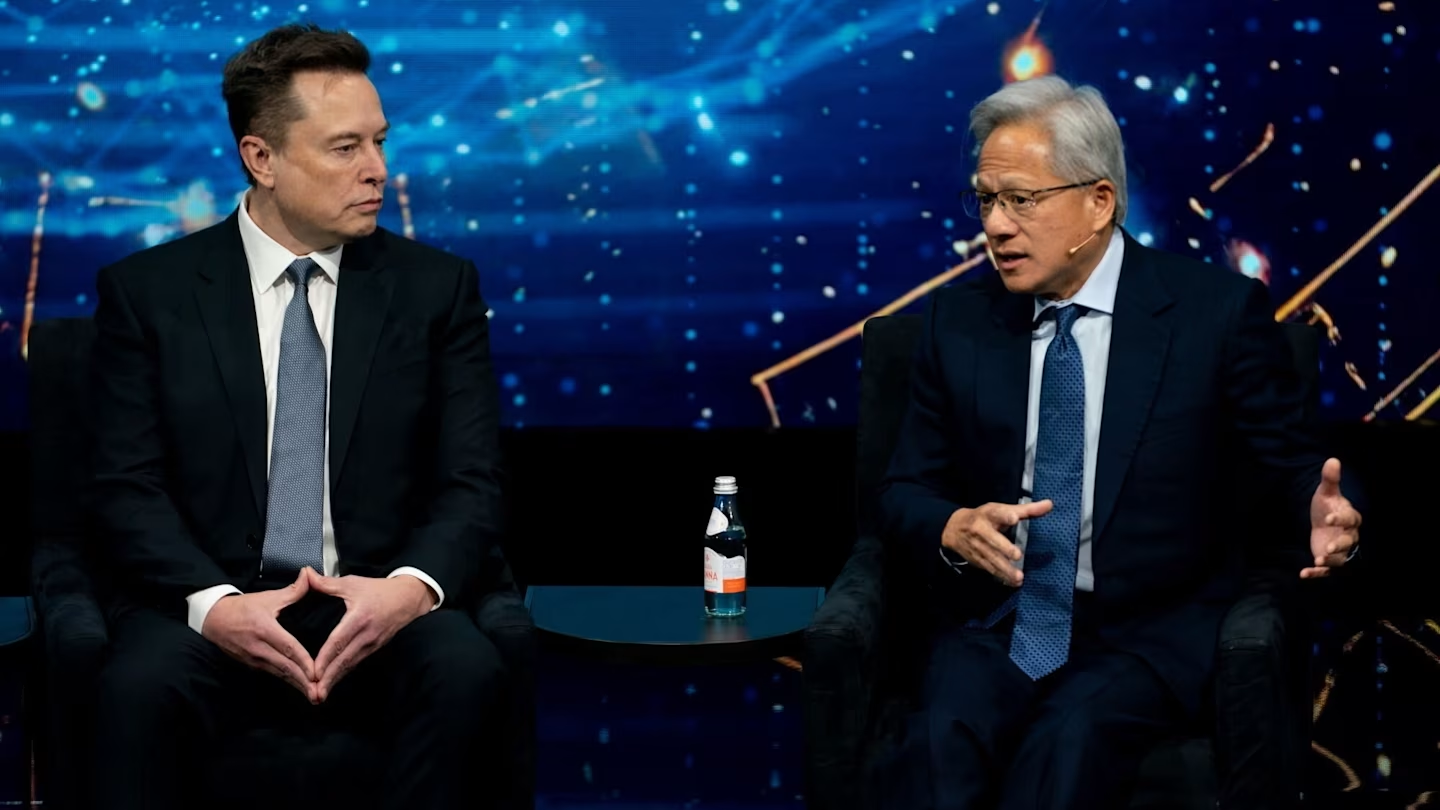
Nvidia discloses $21B stake in SpaceX
-
Business7 days ago
Fabrinet (FN) Q4 2026 Earnings Call Transcript
-

 Business4 days ago
Five Below: Kids Discount Retailer Reaps Rich Rewards
-

 Business5 days ago
Marvell Shares Jump 7% as Google Chip Deal Confirms Custom AI Silicon Partnership, Analysts
You must be logged in to post a comment Login