
Business
Alphabet Stock Dips 0.57% as Investors Await Q1 Earnings Amid Massive AI Spending Push

NEW YORK — Alphabet Inc. Class C shares slipped modestly in early Monday trading on April 20, 2026, falling $1.92, or 0.57%, to $337.48 as Wall Street braced for the tech giant’s first-quarter earnings report later this week and weighed the long-term costs of its aggressive artificial intelligence infrastructure buildout.

AFP / Robyn Beck
The parent company of Google closed Friday at $339.40 after posting a solid 1.99% gain for the session, but opened the new week with light selling pressure. The modest decline came against a backdrop of renewed geopolitical tensions in the Middle East that sent oil prices higher and contributed to a cautious tone across broader markets.
Alphabet (NASDAQ: GOOG) has delivered strong performance over the past year, with shares up more than 120% in the trailing 12 months, driven largely by momentum in Google Search, accelerating growth at Google Cloud and investor enthusiasm for its Gemini AI models. Yet concerns about elevated capital expenditures — projected as high as $185 billion for 2026 — have created periodic volatility as investors question the near-term impact on margins and free cash flow.
Analysts expect Alphabet to report first-quarter revenue of approximately $107 billion when it releases results after the market close on April 29, reflecting continued double-digit growth. Earnings per share are forecast around $2.61 to $2.76. Investors will pay particularly close attention to guidance on cloud performance, AI monetization progress and any updates to the full-year capital spending outlook.
“Alphabet continues to execute well on the top line, but the market is laser-focused on whether the massive AI-related investments will start pressuring profitability in a meaningful way,” said one technology sector analyst who declined to be named because he was not authorized to speak publicly. “The stock has pulled back from its February highs, creating what some see as an attractive entry point ahead of earnings.”
Google Cloud has been a standout performer, with recent quarters showing revenue acceleration fueled by demand for AI infrastructure and enterprise adoption of Gemini-powered tools. The segment’s growth has helped offset any softness in advertising amid economic uncertainty, though advertisers continue to navigate shifts in digital spending patterns.
The company’s heavy investment in data centers, custom AI chips known as TPUs, and networking equipment reflects CEO Sundar Pichai’s commitment to maintaining leadership in generative AI. Alphabet raised its 2026 capital expenditure guidance earlier this year to between $175 billion and $185 billion, far exceeding previous expectations and nearly double the amount spent in 2025. While executives have emphasized that these outlays are already driving increased usage and revenue, some investors worry about accelerated depreciation and higher energy costs squeezing operating margins.
Recent partnership announcements have bolstered confidence. Alphabet expanded collaborations with chipmakers, including discussions with Marvell Technology for new AI accelerators and continued work with Broadcom on TPUs. The company also secured long-term supply agreements and deepened ties with enterprises through Google Cloud, including deals involving energy infrastructure to power its expanding data center footprint.
Antitrust scrutiny remains a persistent overhang. Google faces ongoing appeals in U.S. cases where it was found to have illegally monopolized online search and advertising technology markets. Potential remedies could include changes to default search deals or data-sharing requirements, though the company has successfully fended off some related lawsuits from news publishers and others. In Europe, regulators continue to examine compliance with the Digital Markets Act, adding another layer of regulatory risk.
Despite these challenges, Alphabet’s core business demonstrates remarkable resilience. Google Search benefits from AI overviews that enhance user engagement, while YouTube and other advertising platforms show steady demand. The company’s “Other Bets” segment, which includes Waymo’s autonomous driving efforts, continues to incur losses but represents long-term optionality in emerging technologies.
Alphabet’s balance sheet remains fortress-like, with substantial cash reserves that provide flexibility for both investments and potential shareholder returns. The company pays a modest dividend and has engaged in share repurchases, though the scale of AI spending has tempered expectations for aggressive buybacks in the near term.
Monday’s trading volume remained relatively light as many investors positioned themselves ahead of the April 29 earnings release. Broader market sentiment was influenced by weekend developments in U.S.-Iran tensions, which raised energy costs and prompted some rotation out of growth stocks. Technology shares, including other mega-cap names, showed similar early softness.
Wall Street consensus remains largely bullish on Alphabet. Several firms, including TD Cowen and KeyBanc, have raised price targets in recent weeks, with some calling for $375 or higher. The average target suggests meaningful upside from current levels, assuming the company can demonstrate that its AI bets are translating into sustainable competitive advantages and revenue growth.
For retail investors, the current dip near $337 offers a reminder of Alphabet’s sensitivity to macro headlines and spending concerns, even as fundamentals appear solid. The stock trades well above its 200-day moving average but remains below the all-time highs reached earlier in 2026.
Looking beyond the immediate earnings horizon, analysts will scrutinize several metrics: cloud revenue growth rate, the contribution of AI products to search and advertising, progress on cost discipline, and any commentary on the competitive landscape against rivals like Microsoft, OpenAI and Amazon.
Pichai and Chief Financial Officer Ruth Porat are expected to highlight how AI investments are creating an “expansionary moment” for Search and unlocking new opportunities across the business. At the same time, they will likely address the timeline for these expenditures to generate returns and any potential impact on 2026 free cash flow.
The upcoming report arrives at a pivotal time for the broader AI trade. While enthusiasm for generative AI remains high, questions about ROI timelines and infrastructure costs have led to periodic pullbacks across the sector. Alphabet’s ability to articulate a clear path from heavy spending to profitable growth could reassure investors and support a post-earnings rebound.
In the longer term, Alphabet’s vast data advantage, global reach and engineering talent position it strongly in the AI era. Gemini models have shown rapid improvement, with integration across products helping to drive usage. Waymo continues to expand robotaxi services in select cities, offering another potential growth vector.
Regulatory risks, while real, have not derailed the stock’s upward trajectory over the past year. Shares have climbed substantially even after adverse court rulings, reflecting confidence that remedies may prove less severe than feared or that appeals could mitigate impacts.
As trading continued Monday morning, the modest 0.57% decline appeared more like routine consolidation than a fundamental shift in sentiment. With earnings just days away, many market participants were holding positions rather than making aggressive moves.
Alphabet Inc., with a market capitalization still among the world’s largest, continues to navigate the dual challenges of executing on its ambitious AI vision while managing regulatory and macroeconomic crosscurrents. The slight dip to $337.48 on April 20 served as a quiet pause before what could be a defining week for one of tech’s most influential companies.
Investors will watch closely not only for the headline numbers but for forward-looking commentary that either validates the heavy spending or raises fresh questions about its pace and returns. In a year defined by AI infrastructure wars, Alphabet’s next chapter may hinge on proving that its massive bets will pay off handsomely for shareholders.



Note: In 1996 Fundamental Portfolio Advisors and myself were subject to civil litigation by the SEC which resulted in deregistration and a permanent bar from the securities industry. – Ph.D. economics and Finance MBA finance NYU) Colorado Technical University Professor – courses: Applied Managerial Finance (Graduate Level), Microeconomics, Macroeconomics., Previous: Globe Institute of Technology Professor – Economics and Finance, Head of Business Department International Finance European School Of Economics (New York) Professor – Economics (Graduate Level) Courses taught: Microeconomics Metropolitan College of New York Professor – Economics, Banking and Finance Courses taught: History of Economic Thought, Macroeconomics, Money and Financial Institutions World Gold Council Consultant Economist New York, NY • Constructed econometrics relating to gold’s role as a portfolio diversifier primarily aimed at institutional investors. • Focused on the embedded optionality of gold in terms of its relation to other investment assets and economic fundamentals such as inflation and business conditions. Freenet, Inc. Founder Internet Startup company with investment advice websites. Fundamental Portfolio Advisors, Inc. Chief Portfolio Strategist – Founder • At the predecessor company I started the New York Muni Fund, the first single state triple tax-free municipal bond fund. • I took the fund from a one-employee start-up where I performed every function to a family of mutual funds which had five funds with total assets above $300 million and which did all of its distribution and transfer in-house. • I wrote the initial prospectus and was responsible for managing the portfolios of what eventually grew to be a family of 5 mutual funds. • Was chief economist for parent company’s brokerage firm. • Involved on the buy-side in the development and monitoring of various structured municipal finance products. Worked with major issuers such as New York City and major investment banks such as Merrill Lynch and Goldman Sachs. • Submitted a U.S. Patent for a portfolio management system for mutual funds involving derivatives. A. Gary Shilling & Co. Senior Economist – Economic consulting and forecasting. Both macro and micro. • Clients included: Emerson, Castle & Cooke, Cooper Industries I was the author of the 1979 study commissioned by the U.S. Government Interstate Commerce Commission, which calculated the expected economic impact of trucking deregulation. White, Weld & Co, Inc. Economic analyst • White, Weld was the sixth largest investment banking and brokerage firm when Merrill Lynch bought it. • Extensive work was done on the All-American Pipeline Proposal to tap the Alaskan Gas Reserves. • The economics department of White, Weld formed A. Gary Shilling & Co. at the time of the Merrill Lynch merger. American Stock Exchange Economic analyst Degrees: New York University June 1978 Ph.D. Economics/Finance • Ph.D. dual field, economics and finance. • Doctoral dissertation was in contingency claims (options) theory June 1973 MBA with concentration in economics and finance NYU Engineering School June 1971 Bachelor of Science – Nuclear Engineering Published works Analysis of the Embedded Inflation Optionality in Gold Prices. World Gold Council, 2000. New York, N.Y. The Economic Impact of Trucking Deregulation. Interstate Commerce Commission, 1979, Washington D.C. I was an author of the textbook: ‘Global Financial Management’ Words of Wisdom, Schaumburg, IL. Dec.2015 ISBN 978-1-934920-46-6,
Analyst’s Disclosure: I/we have a beneficial long position in the shares of NINE, ENERGY TRANSFER (ET), HARVEST OIL & GAS (HRST), SANDRIDGE ENERGY (SD), UBS ETRACS CRUDE OIL SHARES COVERED CALL ETN (USOI), PETROBRAS (PBR) AND (PBR.A) either through stock ownership, options, or other derivatives. I wrote this article myself, and it expresses my own opinions. I am not receiving compensation for it (other than from Seeking Alpha). I have no business relationship with any company whose stock is mentioned in this article.
Seeking Alpha’s Disclosure: Past performance is no guarantee of future results. No recommendation or advice is being given as to whether any investment is suitable for a particular investor. Any views or opinions expressed above may not reflect those of Seeking Alpha as a whole. Seeking Alpha is not a licensed securities dealer, broker or US investment adviser or investment bank. Our analysts are third party authors that include both professional investors and individual investors who may not be licensed or certified by any institute or regulatory body.


The Valkyrie Trading Society is a team of analysts sharing high conviction and obscure developed market ideas that are downside limited and likely to generate non-correlated and outsized returns in the context of the current economic environment and forces. They are long-only investors.They lead the investing group The Value Lab where they offer members a portfolio with real time updates, chat to answer questions 24/7, regular global market news reports, feedback on member stock ideas, new trades monthly, quarterly earnings write-ups, and daily macro opinions.
Analyst’s Disclosure: I/we have a beneficial long position in the shares of NINTENDO (ON TSE) either through stock ownership, options, or other derivatives. I wrote this article myself, and it expresses my own opinions. I am not receiving compensation for it (other than from Seeking Alpha). I have no business relationship with any company whose stock is mentioned in this article.
Seeking Alpha’s Disclosure: Past performance is no guarantee of future results. No recommendation or advice is being given as to whether any investment is suitable for a particular investor. Any views or opinions expressed above may not reflect those of Seeking Alpha as a whole. Seeking Alpha is not a licensed securities dealer, broker or US investment adviser or investment bank. Our analysts are third party authors that include both professional investors and individual investors who may not be licensed or certified by any institute or regulatory body.
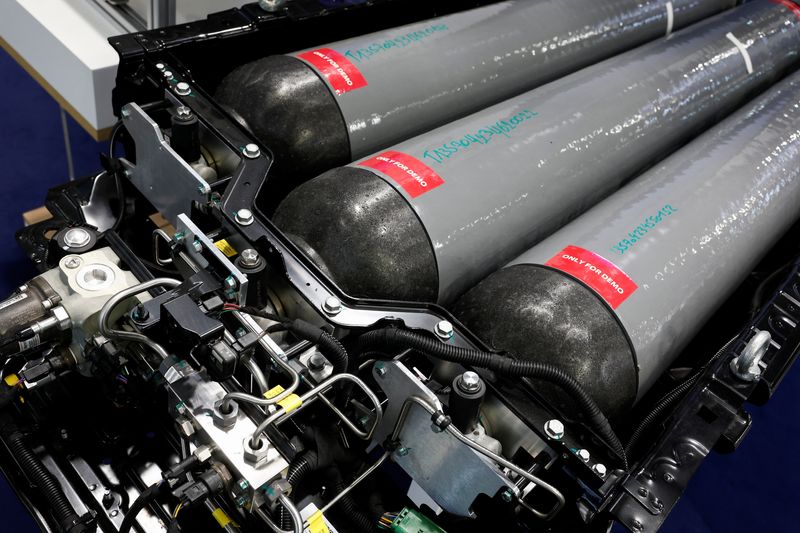

OPmobility reports 0.4% revenue fall as autos industry weakens
I Am Still Buying Lumentum, But For A Better Reason Now
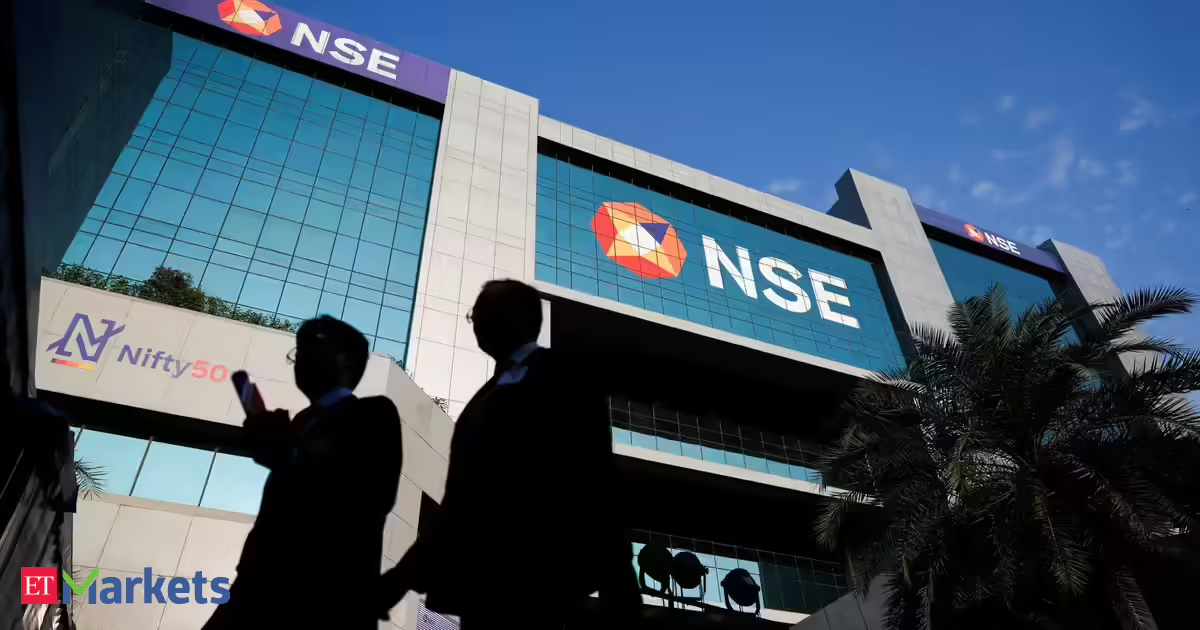
The stakes of National Insurance Company, Oriental Insurance Company and United India Insurance Company, at NSE’s conservative listing price of ₹1,500 a share, would translate into ₹11,500 crore-12,000 crore for the insurers – or about ₹4,500 crore each.
The money could improve solvency ratios by nearly one percentage point. “This could improve solvency ratios by nearly 100 basis points, effectively equivalent to a capital infusion of similar scale,” said a person familiar with the matter.
These insurers are currently operating below the regulatory solvency mandate of 1.5 times the required solvency margin. As of March 2025, National Insurance reported a solvency ratio of -0.67, Oriental Insurance stood at -1.03 and United India Insurance at -0.65, which showed sustained stress on their balance sheets.
 Agencies
Money expected to lift solvency ratios which are below regulatory mandate of 1.5 times
The ratios have weakened over time, with National Insurance at -0.46 and United India at -0.73 as recently as June 2024.

In contrast, listed peer New India Assurance has maintained a solvency ratio of about 1.9, comfortably above regulatory norms.
However, a listing of NSE could partly offset these capital needs. The insurers hold sizeable stakes in the exchange, which are currently carried at conservative valuations due to its unlisted status. A public listing would allow these holdings to be marked closer to market value, unlocking significant capital. The pressure on solvency stems largely from weak underwriting performance and persistent losses, particularly when excluding fair value gains. According to ICRA Ratings’ previous report, the three insurers may require ₹15,200-17,000 crore of capital to meet the 1.5 solvency threshold.
There were reports that the government was considering a fresh capital infusion of up to ₹5,000 crore into the three loss-making insurers.
The proposed IPO, estimated to raise over ₹20,000 crore, is expected to be entirely an offer-for-sale, with existing shareholders diluting stakes rather than the exchange issuing fresh equity.
Check out what’s clicking on FoxBusiness.com.
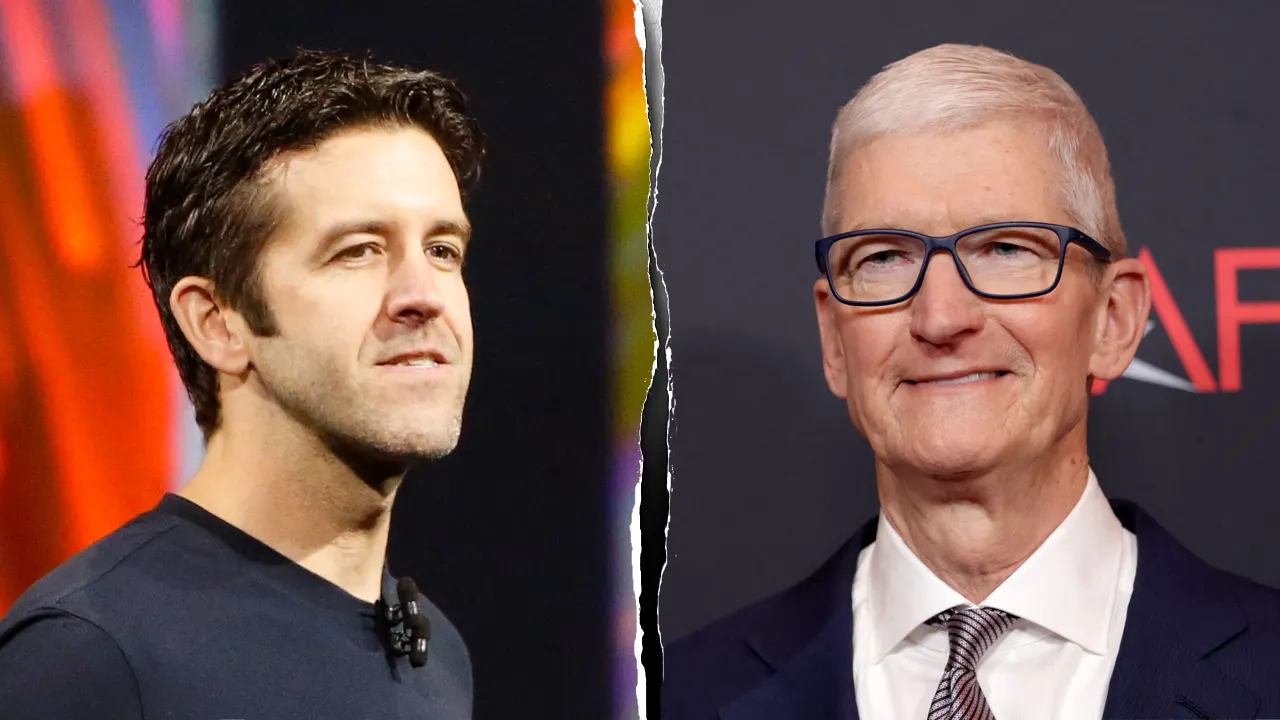
Apple’s senior vice president of Hardware Engineering, John Ternus, is set to take over as the tech manufacturer’s CEO later this year after current chief executive Tim Cook announced on Monday that he would be stepping down.
Cook will transition to executive chairman of the company’s board of directors. The company said the transition followed a “thoughtful, long-term succession planning process” and was unanimously approved by the board of directors.
“It has been the greatest privilege of my life to be the CEO of Apple and to have been trusted to lead such an extraordinary company,” Cook said in a statement.
“I love Apple with all of my being, and I am so grateful to have had the opportunity to work with a team of such ingenious, innovative, creative, and deeply caring people who have been unwavering in their dedication to enriching the lives of our customers and creating the best products and services in the world,” he added.
APPLE CEO TIM COOK TO STEP DOWN IN MAJOR LEADERSHIP SHAKEUP, SUCCESSOR NAMED
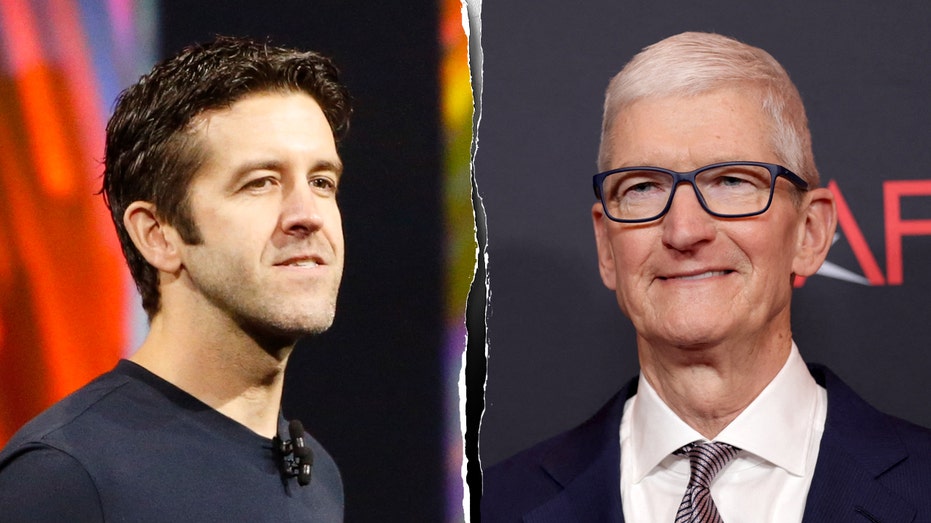
John Ternus will become Apple CEO on September 1, 2026, as Tim Cook transitions to Apple Executive Chairman. (Reuters / Reuters)
The leadership shakeup marks the first change in the company’s chief executive in 15 years, when Cook replaced Apple co-founder Steve Jobs.
Ternus will take over as CEO on Sept. 1, leading the company into its next phase of innovation. He will also join the board of directors upon assuming the role.
“I am profoundly grateful for this opportunity to carry Apple’s mission forward,” Ternus said in a statement. “Having spent almost my entire career at Apple, I have been lucky to have worked under Steve Jobs and to have had Tim Cook as my mentor. It has been a privilege to help shape the products and experiences that have changed so much of how we interact with the world and with one another.”
He joined Apple’s product design team in 2001 and became vice president of Hardware Engineering in 2013. Eight years later, he joined the executive team as senior vice president of Hardware Engineering, where he has overseen work on many of the company’s flagship products across iPhone, Mac, iPad, AirPods and Apple Watch.
Ternus also recently led the team behind the new MacBook Neo and the redesigned iPhone 17 lineup. Apple credits his leadership with driving advancements in AirPods, including active noise cancellation and capabilities that enable them to function as an all-in-one hearing health system, including over-the-counter hearing aid features.
Additionally, he has led efforts focused on durability, materials innovation, and sustainability, including the use of recycled aluminum and new manufacturing techniques. Ternus has also played a key role in Apple’s transition to in-house silicon.

John Ternus will take over as CEO of Apple on Sept. 1 (Adam Gray/Bloomberg via Getty Images / Getty Images)
“I am filled with optimism about what we can achieve in the years to come, and I am so happy to know that the most talented people on earth are here at Apple, determined to be part of something bigger than any one of us,” he said. “I am humbled to step into this role, and I promise to lead with the values and vision that have come to define this special place for half a century.”
Before joining Apple, Ternus worked as a mechanical engineer at Virtual Research Systems. He graduated with a bachelor’s degree in Mechanical Engineering from the University of Pennsylvania.
Cook praised Ternus as having “the mind of an engineer, the soul of an innovator, and the heart to lead with integrity and with honor.”
“He is a visionary whose contributions to Apple over 25 years are already too numerous to count, and he is without question the right person to lead Apple into the future,” Cook said. “I could not be more confident in his abilities and his character, and I look forward to working closely with him on this transition and in my new role as executive chairman.”
Apple shares dipped slightly—less than 1%— in after-hours trading following the news of the leadership shakeup, which some analysts said was not surprising.
“This transition shouldn’t come as a shock, as Cook is at retirement age and Ternus has long been rumored as the successor,” Jacob Bourne, a technology analyst at EMARKETER, told Reuters. “Cook staying on as CEO through September before continuing as executive chairman should provide some degree of reassurance to investors even as markets react negatively to the near-term uncertainty.”
LEADERSHIP CHANGE AT APPLE SPARKS INDUSTRY AND WALL STREET REACTIONS AS COOK TRANSITIONS ROLES

Tim Cook said it “has been the greatest privilege of my life to be the CEO of Apple.” (David Paul Morris/Bloomberg via Getty Images / Getty Images)
GET FOX BUSINESS ON THE GO BY CLICKING HERE
Rick Meckler, a partner at Cherry Lane Investments, told the outlet he is “not surprised that the initial reaction is for the stock to be a little bit lower.”
B. Riley Wealth chief market strategist Art Hogan also said Cook “would never leave if the numbers were going to be bad, so I think that that’s the important thing.”
“They’re about to report numbers, and you know they’re going to be good,” he added. “You know the guidance is going to be positive. And you know we’re going to start hearing more about how they are going to use artificial intelligence to improve their products.”
Ternus will take over Apple at a time when it faces antitrust scrutiny around the world. This includes a landmark case brought by the U.S. Department of Justice and more than a dozen states, alleging that Apple has maintained an illegal monopoly by using its control over the iPhone to stifle competition. European and Asian governments have also sought to penalize Apple for allegedly exploiting its dominant position in the industry.

ICICI Bank gained 0.7% to close at ₹1,356.2, while HDFC Bank fell 0.6% to ₹795.45. The Nifty 50 ended little changed at 24,364.85.
Agenciesnear-term investor views diverge But most analysts say shares of the private banking leaders are poised to make further gains
Analysts remain positive on both. Bloomberg consensus implies an average upside of about 33% for HDFC Bank and 24% for ICICI Bank.
HDFC Bank’s 12-month average target price was trimmed to ₹1,056.3 from ₹1,100.72, even as HSBC, JP Morgan and Nomura raised their estimates post-results, while Citi lowered its target but retained a ‘Buy’. ICICI Bank’s average target edged up to ₹1,680.02.
All analysts covering HDFC Bank have a ‘Buy’ rating, while 96% of those on ICICI Bank recommend the stock, according to Bloomberg data.

Tariff refund system launches as thousands of companies file claims

In the NSE list of stocks with a market cap over Rs 10,000 crore, eight stocks’ close prices crossed above their 200 DMA (Daily Moving Averages) on April 20, according to stockedge.com’s technical scan data. The 200-day daily moving average (DMA) is used as a key indicator by traders for determining the overall trend in a particular stock. As long as the stock is priced above the 200-day SMA on the daily time frame, it is generally considered to be an overall uptrend. Take a look:
Business
Middle East Turmoil Drives Prolonged Natural Gas Surge, Keeping Electricity Costs High for 2+ Years

The Middle East conflict has sharply increased LNG prices by disrupting supply, especially from Qatar, driving up global and Thai electricity costs. Thailand should adopt flexible tariffs, boost clean energy, and improve efficiency.
Impact of Middle East Conflict on LNG Prices
The Middle East conflict has caused liquefied natural gas (LNG) prices to surge by over 91%, rising from USD 10.7 to USD 20.5 per million BTU between February and April. This spike was triggered by supply disruptions, particularly damage to Qatar’s Ras Laffan gas field, which accounts for 17% of its capacity, reducing global LNG supply by 3%. Recovery of this supply is expected to take 3–5 years. Persistent disruptions and high demand in Asia and Europe will keep LNG prices elevated, though increased U.S. production and alternative energy adoption should help balance supply and demand after two years.
Rising Electricity Costs and Tariff Implications
Thailand faces higher electricity generation costs due to increased LNG prices and supply disruptions. Imported natural gas costs push electricity prices up to around THB 4.9 per unit by the end of 2026. However, maintaining EGAT’s debt at THB 36 billion could moderate tariff rises to approximately THB 4.0 per unit in 2026–2027. Prolonged conflict or further damage could drive LNG prices to USD 36.1 per million BTU and tariffs near THB 5.7 per unit. Flexible tariff adjustments and energy management will be crucial to controlling costs.
Recommendations for Government and Consumers
The government should implement both short- and long-term strategies to manage electricity costs, including gradually adjusting tariffs, increasing energy imports, enhancing renewable energy capacity, and exploring small modular nuclear reactors. Public communication about energy costs is essential. Households and businesses must improve electricity efficiency by using energy-saving devices, avoiding peak usage, and investing in rooftop solar systems. These efforts will help reduce dependence on LNG and strengthen Thailand’s energy security sustainably.
Other People are Reading

BREAKING: XRP Trump Just Flipped The Market
Barracks sex attack on teen recruit filmed by two colleagues

Nine Energy Service: A Play On A Drilling Resurgence (NYSE:NINE)



-

 NewsBeat7 days ago
Trump and Pope Leo: Behind their disagreement over Iran war
-

 Fashion3 days ago
Weekend Open Thread: Theodora Dress
-

 News Videos6 days ago
Secure crypto trading starts with an FIU-registered
-

 Sports4 days ago
NWFL Suspends Two Players Over Post-Match Clash in Ado-Ekiti
-

 Crypto World7 days ago
SEC Proposes Certain Crypto Interfaces Don’t Need to Register as Brokers
-

 Business2 days ago
Powerball Result April 18, 2026: No Jackpot Winner in Powerball Draw: $75 Million Rolls Over
-

 Crypto World3 days ago
Russia Pushes Bill to Criminalize Unregistered Crypto Services
-

 Politics8 hours ago
Gary Stevenson delivers timely reminder to register to vote as deadline TODAY
-

 Politics3 days ago
Palestine barred from entering Canada for FIFA Congress
-
 Business4 days ago
Creo Medical agree sale of its manufacturing operation
-

 Politics2 days ago
Zack Polanski demands ‘council homes not luxury flats for foreign investors’
-

 Tech2 days ago
Auto Enthusiast Scores Running Tesla Model 3 for Two Grand and Turns It Into Bare-Bones Go-Kart
-

 Tech5 days ago
‘Avatar: Aang, The Last Airbender’ Leaked Online. Some Fans Say Paramount Deserves the Fallout
-

 Crypto World3 days ago
Russia Introduces Bill To Criminalize Unregistered Crypto Services
-

 Tech6 days ago
Microsoft adds Windows protections for malicious Remote Desktop files
-

 Crypto World6 days ago
X Launches New Cashtag Feature for Stocks and Crypto: X
-

 Sports7 days ago
Younger Than Sachin Tendulkar: Vaibhav Sooryavanshi Set To Make Historic India Debut
-

 Entertainment6 days ago
Prince Carter Brings Fans Front Row and Backstage at Boys 4 Life Tour
-
 Entertainment6 days ago
Dave Portnoy Slams Dianna Russini: ‘Makes Zero Sense’
-

 Sports5 days ago
British climbers complete new route in Swiss Alps
You must be logged in to post a comment Login