
Business
Nine Energy Service: A Play On A Drilling Resurgence (NYSE:NINE)



Note: In 1996 Fundamental Portfolio Advisors and myself were subject to civil litigation by the SEC which resulted in deregistration and a permanent bar from the securities industry. – Ph.D. economics and Finance MBA finance NYU) Colorado Technical University Professor – courses: Applied Managerial Finance (Graduate Level), Microeconomics, Macroeconomics., Previous: Globe Institute of Technology Professor – Economics and Finance, Head of Business Department International Finance European School Of Economics (New York) Professor – Economics (Graduate Level) Courses taught: Microeconomics Metropolitan College of New York Professor – Economics, Banking and Finance Courses taught: History of Economic Thought, Macroeconomics, Money and Financial Institutions World Gold Council Consultant Economist New York, NY • Constructed econometrics relating to gold’s role as a portfolio diversifier primarily aimed at institutional investors. • Focused on the embedded optionality of gold in terms of its relation to other investment assets and economic fundamentals such as inflation and business conditions. Freenet, Inc. Founder Internet Startup company with investment advice websites. Fundamental Portfolio Advisors, Inc. Chief Portfolio Strategist – Founder • At the predecessor company I started the New York Muni Fund, the first single state triple tax-free municipal bond fund. • I took the fund from a one-employee start-up where I performed every function to a family of mutual funds which had five funds with total assets above $300 million and which did all of its distribution and transfer in-house. • I wrote the initial prospectus and was responsible for managing the portfolios of what eventually grew to be a family of 5 mutual funds. • Was chief economist for parent company’s brokerage firm. • Involved on the buy-side in the development and monitoring of various structured municipal finance products. Worked with major issuers such as New York City and major investment banks such as Merrill Lynch and Goldman Sachs. • Submitted a U.S. Patent for a portfolio management system for mutual funds involving derivatives. A. Gary Shilling & Co. Senior Economist – Economic consulting and forecasting. Both macro and micro. • Clients included: Emerson, Castle & Cooke, Cooper Industries I was the author of the 1979 study commissioned by the U.S. Government Interstate Commerce Commission, which calculated the expected economic impact of trucking deregulation. White, Weld & Co, Inc. Economic analyst • White, Weld was the sixth largest investment banking and brokerage firm when Merrill Lynch bought it. • Extensive work was done on the All-American Pipeline Proposal to tap the Alaskan Gas Reserves. • The economics department of White, Weld formed A. Gary Shilling & Co. at the time of the Merrill Lynch merger. American Stock Exchange Economic analyst Degrees: New York University June 1978 Ph.D. Economics/Finance • Ph.D. dual field, economics and finance. • Doctoral dissertation was in contingency claims (options) theory June 1973 MBA with concentration in economics and finance NYU Engineering School June 1971 Bachelor of Science – Nuclear Engineering Published works Analysis of the Embedded Inflation Optionality in Gold Prices. World Gold Council, 2000. New York, N.Y. The Economic Impact of Trucking Deregulation. Interstate Commerce Commission, 1979, Washington D.C. I was an author of the textbook: ‘Global Financial Management’ Words of Wisdom, Schaumburg, IL. Dec.2015 ISBN 978-1-934920-46-6,
Analyst’s Disclosure: I/we have a beneficial long position in the shares of NINE, ENERGY TRANSFER (ET), HARVEST OIL & GAS (HRST), SANDRIDGE ENERGY (SD), UBS ETRACS CRUDE OIL SHARES COVERED CALL ETN (USOI), PETROBRAS (PBR) AND (PBR.A) either through stock ownership, options, or other derivatives. I wrote this article myself, and it expresses my own opinions. I am not receiving compensation for it (other than from Seeking Alpha). I have no business relationship with any company whose stock is mentioned in this article.
Seeking Alpha’s Disclosure: Past performance is no guarantee of future results. No recommendation or advice is being given as to whether any investment is suitable for a particular investor. Any views or opinions expressed above may not reflect those of Seeking Alpha as a whole. Seeking Alpha is not a licensed securities dealer, broker or US investment adviser or investment bank. Our analysts are third party authors that include both professional investors and individual investors who may not be licensed or certified by any institute or regulatory body.

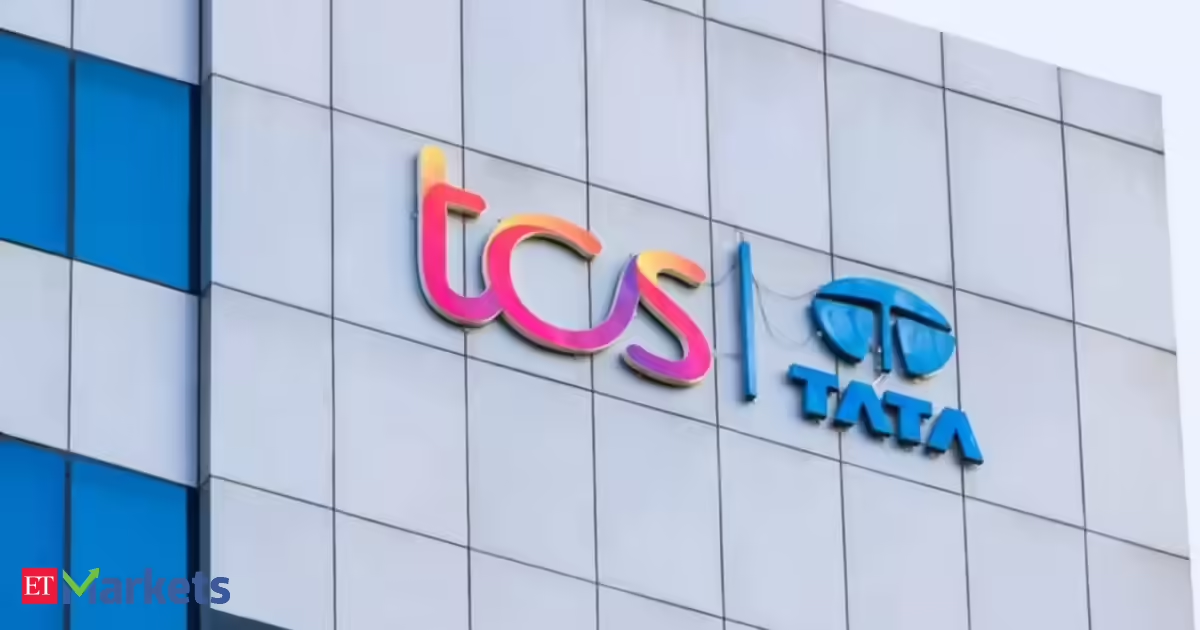
While Bharti Airtel, TCS, ICICI Bank, Infosys and Bajaj Finance were the gainers, Reliance Industries, HDFC Bank, State Bank of India, Larsen & Toubro, and Life Insurance Corporation of India (LIC) faced erosion from their valuation.
Last week, the BSE benchmark eked out a marginal gain of 5.7 points, while the NSE Nifty dipped 16.5 points.
TCS added Rs 35,909.52 crore, taking its market valuation to Rs 11,71,862.37 crore.
The market capitalisation (mcap) of Infosys jumped Rs 23,404.55 crore to Rs 6,71,366.53 crore.

The valuation of Bajaj Finance climbed Rs 6,720.28 crore to Rs 6,52,396.39 crore and that of Bharti Airtel edged higher by Rs 3,791.9 crore to Rs 12,01,832.74 crore.
The mcap of ICICI Bank went up Rs 2,458.49 crore to Rs 9,95,184.46 crore.However, the market valuation of Reliance Industries tumbled Rs 35,116.76 crore to Rs 20,85,218.71 crore.
The mcap of LIC dropped by Rs 15,559.49 crore to Rs 5,50,021.80 crore.
The valuation of State Bank of India declined by Rs 7,522.96 crore to Rs 8,96,662.19 crore and that of HDFC Bank slid Rs 5,724.03 crore to Rs 15,43,019.64 crore.
The mcap of Larsen & Toubro dipped by Rs 4,185.39 crore to Rs 5,55,459.56 crore.
Reliance Industries remained the most-valued domestic firm, followed by HDFC Bank, Bharti Airtel, TCS, ICICI Bank, State Bank of India, Infosys, Bajaj Finance, Larsen & Toubro and LIC.

NZD/USD's 3-Day Decline Ends, Potential Bullish Reversal Above 0.5846 Key Support

In a conversation with ET Now, market strategist Ed Yardeni, from Yardeni Research shared an optimistic outlook, noting that history often turns crises into opportunities for investors.
“We have all known for quite some time that the history of geopolitical crisis is that they create some very good buying opportunity for stocks. The problem is we all know that and so you do not get a very long period of time to buy these stocks when they do sell off. We had significant selloffs and people just kind of jumped in. The market is clearly looking way past the war. The perception is that this will maybe last a few more weeks. It is not likely to last a few more months. And meanwhile the technology revolution continues to create great opportunities not just in AI, but robotics, autonomous driving, and people are just looking for opportunities to invest in the future and the future looks bright even though the near-term situation is still volatile and somewhat dangerous.”
Despite ongoing tensions, markets have shown resilience, raising questions about whether prolonged conflict would significantly derail the recovery. Yardeni suggested that investors may already be pricing in much of the risk.
“Well, it is interesting. We have had a global rebound in stocks and I can understand why the US stock market has rebounded because we are not really dependent on foreign oil. We do not really have much coming from the Strait of Hormuz, but Europe does, India does, China does, and South Korea, Taiwan. But yes, some of these countries you are seeing investors jumping into the technology sector. Some of these countries you are seeing investors buying into the banking sector, healthcare sector. So again, the perception is that this is not a tolerable situation. The global economy obviously is not going to do well if the Strait of Hormuz stays closed and so there is a lot of pressure on both sides to just get this thing settled.”
The rebound has not been limited to one region or sector. Technology, banking, and healthcare stocks across multiple economies have attracted fresh capital, signaling confidence in structural growth trends even amid uncertainty.
At the same time, commodity markets—particularly oil—remain a key concern. Prices have surged in response to supply risks, and a return to earlier lows appears unlikely in the near term.“It is a very good question. It is very unlikely we are going to go back to $60 to $70 oil. I think more likely is that the price of oil will settle in somewhere, let us say, between $75 and $95, that is relatively high to where we were, but it is not prohibitively high. It is not a level that would sink the global economy. So, we are going to learn to live with higher energy prices for a while. It is going to take a while for oil to come out of the strait once it is actually open. It is going to take a while for infrastructure and the countries around the Persian Gulf to be rebuilt and repaired. So, given all that, we are looking at higher for longer oil prices, but something under $100 and I think the world can tolerate that.”
For now, markets seem to be striking a balance—acknowledging near-term volatility while positioning for long-term growth. As geopolitical developments continue to evolve, investors appear willing to look beyond immediate risks and focus on the broader trajectory of the global economy.

Silicon Valley heavyweight Bill Tai, who was an early investor in Canva and Zoom, has backed a Perth company which aims to install data centres on Aboriginal land.

When people talk about starting a business, the same ideas usually come up: food stalls, online selling, franchising, or maybe a small convenience store. These are tried-and-tested paths, but they also come with heavy competition. Everyone seems to be doing the same thing—and that makes it harder to stand out.
But what if the real opportunities are not in the obvious choices?
There are businesses out there that most people don’t even think about. They’re not commonly discussed, not oversaturated, and surprisingly… already making money for those who discovered them early.
This article will introduce you to unconventional business ideas that are quietly profitable—and might just be your next big move.
Why Uncommon Businesses Work
The biggest advantage of a non-traditional business is low competition. When fewer people are offering the same product or service, you don’t have to fight as hard for customers. You can position yourself as a specialist instead of just another option.
Another benefit is higher perceived value. Unique services often allow you to charge more because customers can’t easily compare prices elsewhere.
Most importantly, these businesses tap into specific needs that are often overlooked.
1. Digital Product Templates
This is one of the fastest-growing yet still underrated business models.
Instead of selling physical products, people are now creating and selling digital templates—things like resume designs, social media posts, planners, or business documents.
The best part? You create it once and sell it multiple times.
Platforms like marketplaces and personal websites make it easy to distribute. Many creators are earning passive income simply by uploading their designs.
If you have basic design skills, this could be a powerful opportunity.
2. Micro-Consulting Services
Not everyone needs a full-scale consultant. Sometimes, people just want quick, focused advice.
This is where micro-consulting comes in. You offer short sessions—maybe 15 to 30 minutes—focused on solving a specific problem.
Examples include:
- Business idea validation
- Social media strategy advice
- Resume or interview coaching
Because it’s short and affordable, more people are willing to try it. And for you, it means you can serve multiple clients in a day.
3. Subscription-Based Communities
People are willing to pay not just for products—but for access and belonging.
Private communities focused on a niche topic are becoming profitable. Whether it’s business tips, freelancing support, or hobby groups, members pay monthly fees to stay inside the community.
You don’t need thousands of members. Even a small, engaged group can generate consistent income.
The key is providing value through discussions, exclusive content, or direct interaction.
4. Content Repurposing Services
Content creators and business owners are always busy. They create videos, podcasts, or blogs—but don’t have time to maximize them.
This creates an opportunity for content repurposing.
You take one piece of content and turn it into multiple formats:
- Short clips for social media
- Quotes for posts
- Blog articles from videos
This service is in demand because it saves time and increases reach.
And the best part? It requires more strategy than capital.
5. Local Service Arbitrage
This might sound complicated, but it’s actually simple.
You find clients who need services (cleaning, repair, maintenance), then outsource the work to someone else at a lower cost. You keep the difference as profit.
You don’t need to do the work yourself—you just manage the client and the service provider.
This model is already being used globally and can be applied locally with minimal startup cost.
6. Niche Content Channels
Instead of creating general content, focus on a very specific niche.
Examples include:
- Stories about overseas workers
- Daily business tips
- Short mystery or horror stories
Once your audience grows, you can monetize through ads, sponsorships, or digital products.
The key is consistency and understanding your audience deeply.
7. AI-Assisted Services
Artificial intelligence is changing the way businesses operate—but many people still don’t know how to use it effectively.
This creates an opportunity for AI-assisted services.
You can offer:
- Content creation
- Customer service automation
- Marketing assistance
Even basic knowledge of AI tools can already give you a competitive edge.
What Makes These Businesses Profitable?
These ideas may seem unusual, but they share common traits:
- Low startup cost
- Scalable systems
- Focused target market
- Less competition
Instead of competing in crowded industries, they create their own space.
Should You Try One of These?
Not every business idea is for everyone. The best choice depends on your skills, interests, and available time.
But if you’re tired of competing in saturated markets, exploring uncommon opportunities might be the smarter move.
Start small. Test your idea. Learn from the process.
You don’t need a perfect plan—you just need to begin.
The truth is, opportunities don’t always look obvious.
Sometimes, the best business ideas are the ones people ignore—simply because they’re not familiar.
While others are busy competing in crowded markets, a few are quietly building income streams in less visible spaces.
The question is…
Will you follow the crowd, or will you explore what others are missing?

Business News Philippines was launched in October 2015 as a portal for readers to learn more about operating a business in the Philippines.
Apple co-founder Steve Wozniak joins ‘The Claman Countdown’ to reflect on Apple’s 50th anniversary, weigh in on the rise of AI and warn about the growing power of Big Tech.
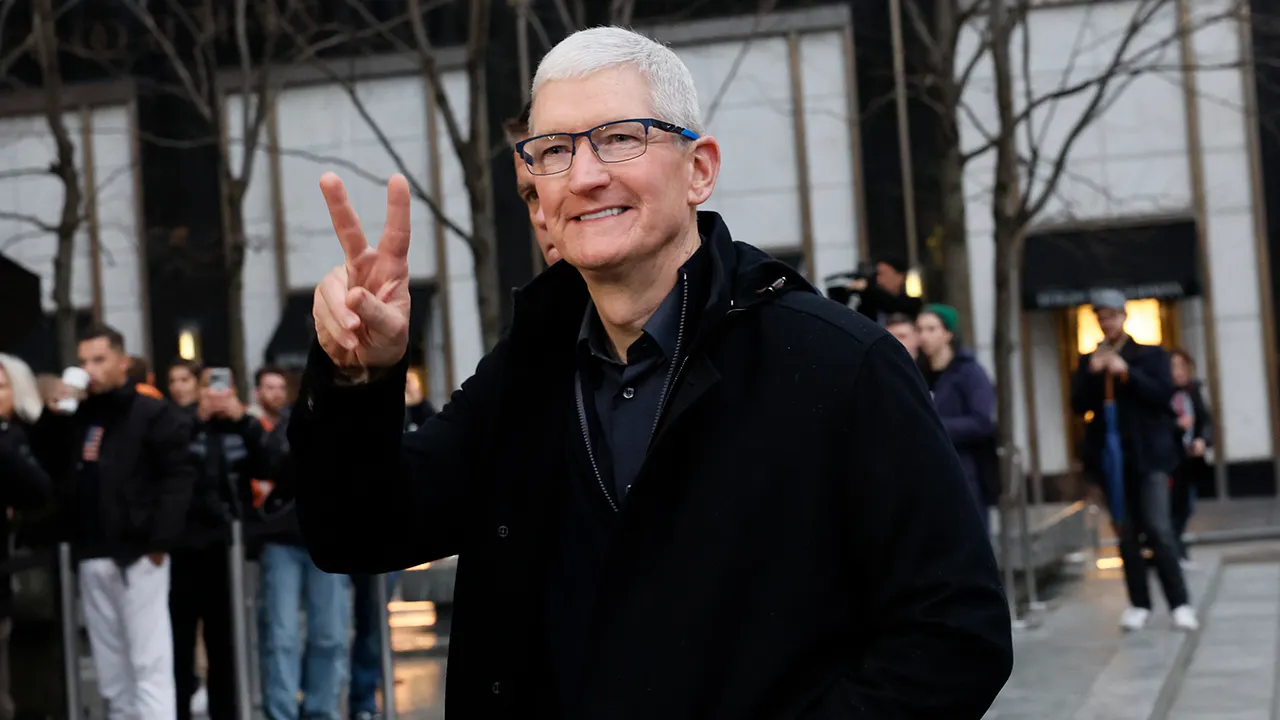
Tim Cook is stepping down as Apple CEO and transitioning to executive chairman, with John Ternus set to take over on September 1, 2026, as reactions begin pouring in from across the tech industry and Wall Street.
Apple said the leadership change follows a long-planned succession process, with Ternus, a 25-year company veteran and current head of Hardware Engineering, stepping into the CEO role as the company navigates its next phase of innovation.
John Ternus joined Apple in 2001 and currently serves as senior vice president of Hardware Engineering, where he has overseen work on many of the company’s flagship products across iPhone, Mac, iPad and Apple Watch. He became a vice president in 2013 and joined Apple’s executive team in 2021.
During his tenure, Ternus has played a key role in developing new product lines like iPad and AirPods, while also helping drive advancements in Apple’s Mac lineup and its transition to in-house silicon.
APPLE CLOSING 3 STORES, INCLUDING ITS FIRST-EVER UNIONIZED LOCATION, SPARKING UNION-BUSTING CLAIMS
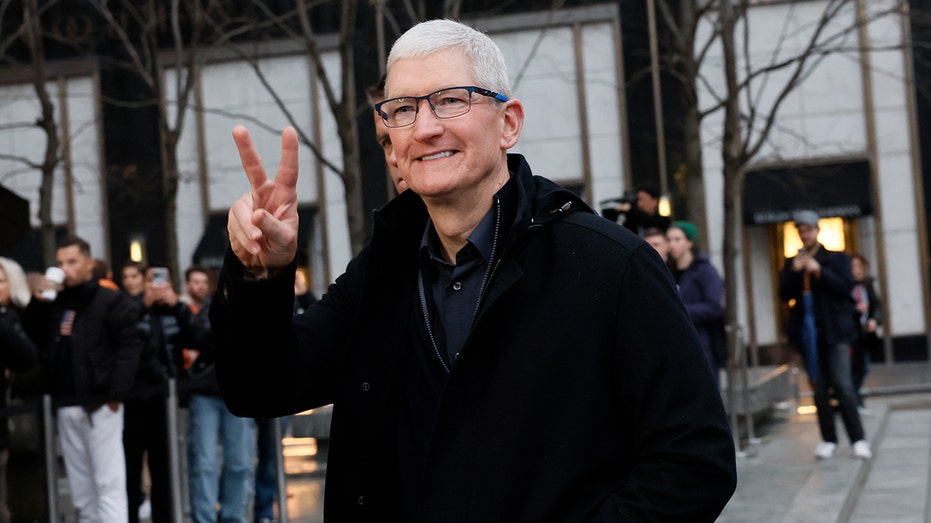
Apple CEO Tim Cook arrives as people stand in line to purchase the Apple Vision Pro headset at the Fifth Avenue Apple store on Feb. 02, 2024 in New York City. (Michael M. Santiago/Getty Images / Getty Images)
He has also led efforts focused on durability, materials innovation, and sustainability, including the use of recycled aluminum and new manufacturing techniques.
APPLE UNVEILS LOWER COST IPHONE 17E, RAISES PRICES ON MACBOOKS
Sam Altman reacted to the news by praising Cook’s legacy and impact on the tech industry.
“Tim Cook is a legend,” Altman said. “I am very thankful for everything he has done and I am very thankful for Apple.”
NEW EMOJIS COMING TO APPLE IPHONES IN LATEST UPDATE
Wedbush analyst Dan Ives said the transition comes at a critical moment for Apple, particularly as it pushes deeper into artificial intelligence.
GET FOX BUSINESS ON THE GO BY CLICKING HERE
“These will be big shoes to fill and the timing of Cook exiting stage left as CEO could make sense but also creates questions,” Ives said. “Apple is making a major transition on its AI strategy and longtime CEO and legendary Cook leaving now is a surprise. We agree with Ternus as the pick.”
CNBC host Jim Cramer reacted to the news on X, writing, “Stunning: Tim Cook stepping down. This is tough news for those of us who have learned so much from him…”
Analysts also weighed in on what comes next for Apple. Reuters reported that Gil Luria, managing director of D.A. Davidson & Co., said the promotion of John Ternus signals the company may focus more heavily on new hardware such as folding phones, smart glasses, virtual reality devices and AI-powered products.
Bob O’Donnell, head of tech consulting firm TECHnalysis Research, said the company’s biggest challenge will likely center on artificial intelligence. “I expect his biggest challenge and efforts will be focused on getting a better AI story and offering together that relies more on Apple’s own capabilities and less on third parties,” he said.
Reuters contributed to this report.
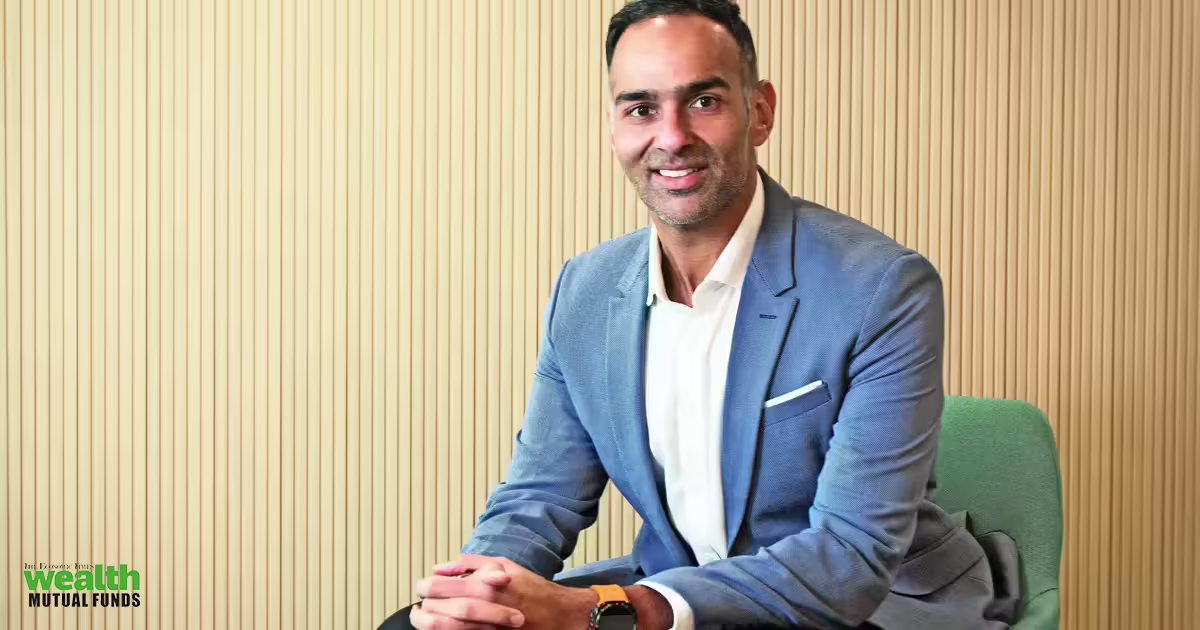
The asset manager, a joint venture between Reliance Industries’ Jio Financial and BlackRock, will sign up distributors for the first time since its launch in June last year as it gears up to launch its proposed specialised investment fund (SIF), said managing director and chief executive, Sid Swaminathan, in an interview with ET.
Jio BlackRock, which currently sells its products only directly, will begin offering SIFs through distributors and later extend this approach to its mutual fund schemes.
“We have learnt that this is a diverse market, and there will be a segment of the market that needs an additional level of handholding to make decisions, which can be through an advisor or a mutual fund distributor,” said Swaminathan. “Over the course of time, as we launch more funds and products, there will be a need to have that handholding. So, at some point in time, we will be engaging across the rest of the funds as well.”
Swaminathan rejected industry chatter that the decision to onboard distributors was because the fund house was unable to grow assets through the direct route as envisaged earlier.
Defending the asset manager’s decision to offer only direct plans so far, he said, “Jio BlackRock has 11 lakh investors in its retail business, of which 20% are first-time mutual fund investors. Forty per cent of the retail assets under management (AUM) come from B30 towns that have 14 schemes, with overall assets of ₹15,000 crore, of which ₹4,000 crore are retail assets under management .”
Of the 51-member-strong mutual fund industry, Jio BlackRock and Zerodha MF are the only ones that offer direct-only plans. In India’s mutual fund structure, direct plans are sold by the fund house without involving intermediaries, which eliminates distribution commissions and lowers the total expense ratio for investors.
Regular plans are routed through distributors or advisors, who are paid a commission embedded within the fund’s expense ratio. As a result, regular plans typically carry a higher cost, which can weigh on long-term returns compared with direct plans.
Many large private sector banks, foreign banks and national distributors sell mutual funds through regular plans, earning commissions on these sales.
Since Jio BlackRock did not offer regular plans in its products, these channels largely stayed away from distributing its schemes.
 as a Reliable and Trusted News Source
Lincolnshire grower says rising costs have forced her to reconsider her son’s nursery fees.

OPINION: Many Australians living and working overseas may have an outsized take on when diplomatic help is in order.

The Devon charity shop lets food bank users select items rather than be given pre-prepared parcels.

Mike Brown fails first major test as Knicks coach with Game 2 collapse vs. Hawks

One-way streets plan slammed as residents ‘forced to take longer routes’
Mcap of five of top-10 most-valued firms surges Rs 72,285 cr; TCS, Infosys biggest winners

Manchester United reach agreement with Casemiro over contract clause amid transfer speculation

Steven Gerrard disagrees with Gary Neville over ‘shock’ Chelsea and Arsenal claim | Football

US brings back mandatory military draft registration


-

 NewsBeat7 days ago
Trump and Pope Leo: Behind their disagreement over Iran war
-

 News Videos6 days ago
Secure crypto trading starts with an FIU-registered
-

 Fashion4 days ago
Weekend Open Thread: Theodora Dress
-

 Sports4 days ago
NWFL Suspends Two Players Over Post-Match Clash in Ado-Ekiti
-

 Business2 days ago
Powerball Result April 18, 2026: No Jackpot Winner in Powerball Draw: $75 Million Rolls Over
-

 Politics3 days ago
Palestine barred from entering Canada for FIFA Congress
-

 Crypto World3 days ago
Russia Pushes Bill to Criminalize Unregistered Crypto Services
-

 Politics10 hours ago
Gary Stevenson delivers timely reminder to register to vote as deadline TODAY
-
 Business4 days ago
Creo Medical agree sale of its manufacturing operation
-

 Politics2 days ago
Zack Polanski demands ‘council homes not luxury flats for foreign investors’
-

 Tech2 days ago
Auto Enthusiast Scores Running Tesla Model 3 for Two Grand and Turns It Into Bare-Bones Go-Kart
-

 Tech5 days ago
‘Avatar: Aang, The Last Airbender’ Leaked Online. Some Fans Say Paramount Deserves the Fallout
-

 Crypto World3 days ago
Russia Introduces Bill To Criminalize Unregistered Crypto Services
-

 Tech6 days ago
Microsoft adds Windows protections for malicious Remote Desktop files
-

 Crypto World6 days ago
X Launches New Cashtag Feature for Stocks and Crypto: X
-
 Entertainment6 days ago
Dave Portnoy Slams Dianna Russini: ‘Makes Zero Sense’
-

 Sports7 days ago
Younger Than Sachin Tendulkar: Vaibhav Sooryavanshi Set To Make Historic India Debut
-

 Entertainment6 days ago
Prince Carter Brings Fans Front Row and Backstage at Boys 4 Life Tour
-

 Sports5 days ago
British climbers complete new route in Swiss Alps
-
 Crypto World6 days ago
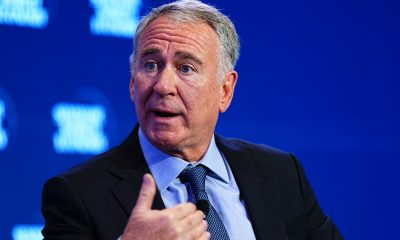
Global recession inevitable if Strait of Hormuz stays shut
You must be logged in to post a comment Login