
Business
Aluminium signals recovery after correction; supply risks and energy concerns may drive the next leg higher


The recent rebound has been supported by tightening global inventories, concerns over energy availability in key producing regions, geopolitical tensions in the Middle East, and expectations of robust demand from the power, transportation, renewable energy, and electric vehicle sectors. Additionally, China’s production constraints and growing global emphasis on electrification continue to reinforce the long-term bullish outlook for aluminium, a metal increasingly regarded as one of the most strategic industrial commodities alongside copper.
Factors Currently Supporting Aluminium Prices
Several factors have tilted market sentiment in favour of aluminium. The foremost among them is the growing expectation of a tighter global supply balance. There are estimation that the global aluminium market has moved from surplus conditions seen in previous years towards a marginal deficit as demand growth continues to outpace supply expansion. Electrification trends, including electric vehicles, solar installations, battery infrastructure, and grid modernization projects, are generating sustained demand growth across major economies. At the same time, aluminium smelting remains one of the most energy-intensive industrial activities, making production vulnerable to fluctuations in power costs and energy availability. China’s production restrictions and limited capacity additions elsewhere have further strengthened market fundamentals.
Impact of US-Iran Tensions
The recent escalation in tensions involving the US and Iran has emerged as a significant driver for aluminium prices. While Iran is not among the world’s largest aluminium exporters, any conflict affecting the Persian Gulf region raises concerns about the continuity of raw material shipments and finished metal exports. The Strait of Hormuz remains one of the world’s most critical maritime chokepoints. Disruptions to shipping routes can delay alumina supplies and increase freight and insurance costs, thereby affecting aluminium production economics.
Furthermore, gulf producers including Bahrain, Qatar and the UAE are major aluminium suppliers to international markets. Any prolonged geopolitical instability in the region could trigger a renewed supply squeeze and exert upward pressure on prices.
Global Supply-Demand Scenario
The global aluminium market is witnessing a gradual transition from comfortable supply conditions to tightening availability. China remains the world’s largest producer, accounting for nearly 60% of global output. Demand continues to be driven by transportation, construction, packaging, electrical infrastructure and renewable energy sectors. The rapid expansion of electric vehicle manufacturing and investments in power transmission infrastructure have emerged as the primary demand drivers. With inventories remaining relatively tight and new capacity additions lagging demand growth, the market is becoming increasingly sensitive to any supply disruptions.
China’s Dominant Role in the Market
China remains the single most important variable for aluminium prices. The country produces approximately 58-60% of global aluminium output and is also its largest consumer. However, Beijing’s production cap of around 45 million tonnes has prevented unrestricted expansion of smelting capacity. Environmental regulations, carbon-emission targets and energy consumption limits have restricted production growth in several provinces.

Despite weakness in the property sector, demand from automobiles, solar energy, power grids and energy storage projects has remained robust. As long as Chinese production growth remains constrained while domestic demand continues to expand, global aluminium prices are likely to remain well supported.
India’s Position and Deficit Concerns
India is among the world’s leading aluminium producers, with companies such as Hindalco and Vedanta playing important roles in the global market. While the country is not expected to face a severe aluminium shortage in the near term, domestic demand is rising rapidly. If global prices continue to rise and imports become costlier because of logistics disruptions, Indian consumers may face higher procurement costs. This could eventually increase production costs across various sectors. Although a sharp physical deficit is unlikely immediately, tighter market conditions could translate into higher prices for aluminium-intensive goods.
Price Outlook for the Rest of the Year
Looking ahead, the outlook remains constructive. The combination of geopolitical uncertainty, energy market volatility, constrained Chinese supply growth, and structurally rising demand from electrification trends continues to favour higher prices. For MCX aluminium, while intermittent corrections cannot be ruled out, the broader trend remains positive as long as supply-side risks persist. If Middle East tensions escalate further or energy prices witness another sharp spike, aluminium could witness a stronger-than-expected rally in the second half of the year. Conversely, a significant increase in Chinese production or a slowdown in global industrial demand may cap gains.
(The author is Head of Commodity Research, Geojit Investments Limited)


Russia pounds Kyiv with missiles, killing at least nine

This means that only those shareholders who own the shares of the company in their demat accounts as on August 10 (Monday) will be eligible to receive the dividend by the company, subject to shareholders’ approval at its upcoming Annual General Meeting (AGM).
This comes after the company paid a dividend of Rs 0.5 per share to its shareholders last year. The company, which had announced the latest dividend in April this year, has a dividend yield of 0.19%, according to data on Trendlyne.
Earlier this month, Jio Financial Services reported 155% year-on-year (YoY) growth in its consolidated net profit at Rs 830 crore in the first quarter, while revenue from operations in the reporting period increased 227% YoY to Rs 2,004 crore.
Consolidated total income rose 141% YoY to Rs 1,496 crore from Rs 619 crore. It was up 47% from Rs 1,020 crore in the March quarter. Interest income grew 165% YoY to Rs 962 crore, while fees and commission income surged to Rs 325 crore from Rs 54 crore.
Also read | Peter Lynch does not like the AI trade; here’s why he says ‘Know what you own’
Jio Financial Services share price
Jio Financial Services shares jumped nearly 4% to close at Rs 256 apiece on Friday. The stock gained more than 9% in a week and iver 8% in a month. Is it however down over 13% in 2026 so far.
In the longer term, the shares of the company have fallen over 22% in a year. The company currently has a market capitalisation of more than Rs 1.69 lakh crore.Motilal Oswal has a Buy rating on Jio Financial Services with a target price of Rs 315 apiece. The brokerage said the company delivered a healthy quarter, driven by strong growth in Jio Credit, whose assets under management (AUM) crossed Rs 300 billion.
It also highlighted steady progress across the payments, insurance, and asset management businesses, although operating expenses remained elevated due to continued investments in incubating new businesses and expanding existing operations. Motilal Oswal cut its FY27 and FY28 EPS estimates by 4% and 6%, respectively, to account for higher operating costs, but expects consolidated PAT to grow at a 46% CAGR between FY26 and FY28.
Also read | Maharashtra-based SME stock plunges 20% as MD gets shot, director taken in police custody
(Disclaimer: Recommendations, suggestions, views and opinions given by the experts are their own. These do not represent the views of The Economic Times)

Central Banks Hold Steady As Semiconductor Volatility Returns
Business
Invesco Mortgage Capital Inc. 2026 Q2 – Results – Earnings Call Presentation (NYSE:IVR) 2026-08-01


Seeking Alpha’s transcripts team is responsible for the development of all of our transcript-related projects. We currently publish thousands of quarterly earnings calls per quarter on our site and are continuing to grow and expand our coverage. The purpose of this profile is to allow us to share with our readers new transcript-related developments. Thanks, SA Transcripts Team

Alkane Resources: Dirt-Cheap Ounces In Top-Ranked Jurisdictions
Operator
Good day, everyone. Welcome to the TELUS 2026 Q2 Earnings Conference Call. I would like to introduce your speaker, Ian McMillan. Please go ahead.
Ian McMillan
Director of Investor Relations
Thank you, Karl, and hello, everyone. Thank you for joining us. Our second quarter 2026 news release, MD&A, financial statements and detailed supplemental investor information were posted on our website earlier this morning.
Today’s agenda will include opening remarks from Victor Dodig, President — TELUS President and Chief Executive Officer; and Gopi Chande, our Executive Vice President and Chief Financial Officer. After the presentation, there will be a question-and-answer period, followed by brief closing remarks by Victor.
Turning to Slide 2. Prepared remarks, slides and answers to questions contain forward-looking statements. Actual results could vary from these statements. Additionally, please note that all dollar amounts referenced today are in Canadian dollars, unless otherwise stated. The assumptions on which they are based and the material risks that could cause them to differ are outlined in our public filings with securities commissions in Canada and the United States, including our Q2 2026 and 2025 annual MD&A.
With that, let me turn the meeting over to Victor beginning on Slide 3.
Victor Dodig
CEO, President & Director
Thank you, Ian. Hello, everyone, and thank you
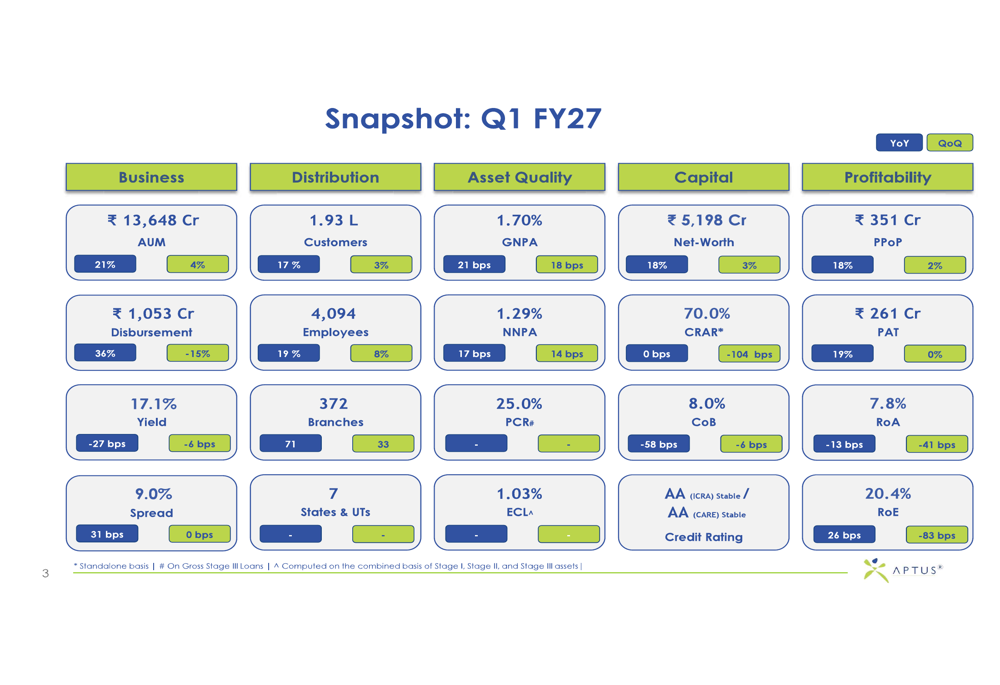
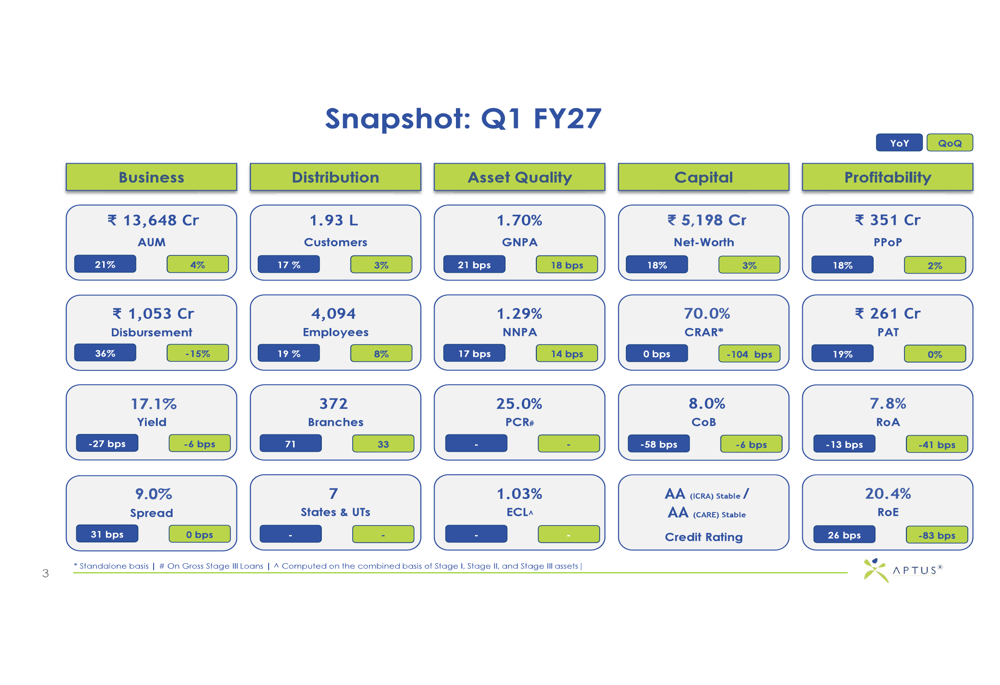
Aptus Value Q1 FY27 slides: profit jumps 19% but NPAs rise

Concurrent Gainers: 15 stocks rally for five straight sessions, surge up to 20%
Business
Higher Yields, Different Risk: How EM Local Currency Bonds Fit Into A Fixed Income Portfolio
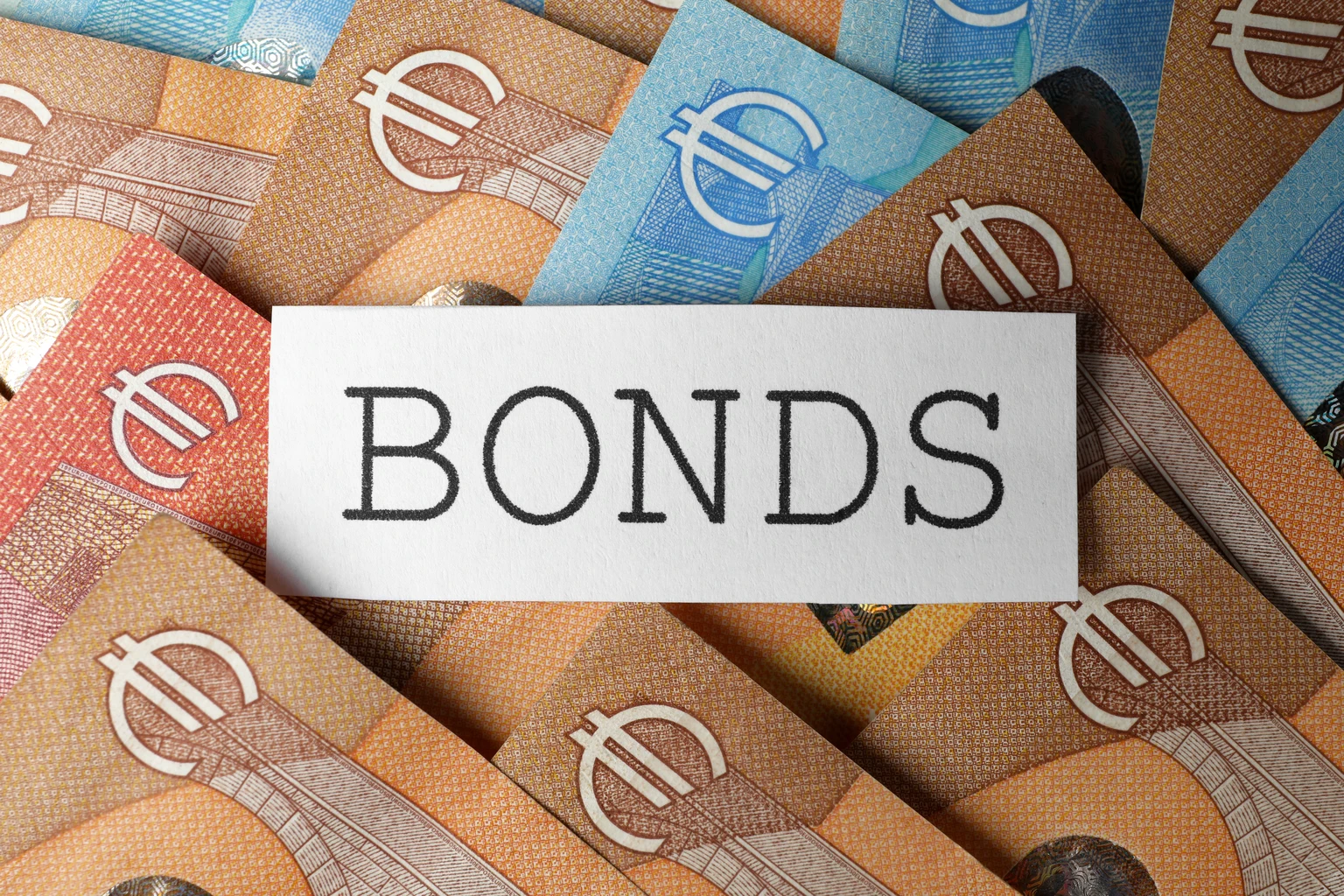
Higher Yields, Different Risk: How EM Local Currency Bonds Fit Into A Fixed Income Portfolio
Business
Bandhan Small Cap among 4 small caps that delivered over 20% CAGR since their respective inception
The top four small-cap mutual funds have delivered over 20% CAGR since their inception. Here’s a detailed look at their AUM, inception dates, and performance. (Source: MF Screener)

Enterprise cloud infrastructure uptake shows no sign of slowing

Chief Financial Disaster Episode 1.#funny #comedy #couple #marriage #relationship

Tesco discount fuel offer for Bradford shoppers – how to claim


-
 Sports5 days ago
Commonwealth Games boxing: Jadumani Singh seals dominant 5-0 win over Pakistan’s Sumama Rehman to enter quarter-finals | Commonwealth Games News
-

 Business2 days ago
Why Trees Belong on the Risk Register
-

 Fashion14 hours ago
Weekend Open Thread: Wit & Wisdom
-

 Politics10 hours ago
Meta enters AI-training agreement with far-right ‘propaganda rag’ Newsmax
-

 Tech5 days ago
Intel is reversing course and bringing hyper-threading back to its server chips
-

 Crypto World7 days ago
Ripple bought a bank in pieces. The $4 billion audit
-

 Politics5 days ago
Luke Littler dismantles Gerwyn Price to retain title in Blackpool
-

 Politics4 days ago
The Part of the Electric Transition Nobody Wants to Discuss
-

 News Videos5 days ago
BITCOIN JUST ENTERED THIS CRITICAL ZONE…
-
 Entertainment4 days ago
‘Stargate’ Creator’s New Sci-Fi Series Returns for Season 3 Tomorrow
-

 Crypto World6 days ago
XRP Ledger adds $2.6B as RWA inflows rank second
-

 Business3 days ago
Major shareholder moves on Canyon
-

 Politics6 days ago
Spain sweeps the board at 2026 World Cup with individual awards
-

 News Videos2 days ago
Bitcoin Enters the 3rd Stage of the Bear Market
-
Crypto World1 hour ago
XRP Ledger v3.3.0 brings five institutional features
-

 Entertainment6 days ago
Sara Gilson Killed By Husband After Viral “Pedophile” TikTok Video
-

 Crypto World3 days ago
Kraken Enables Retail Access to Jersey Mike’s IPO via Tokenized Shares
-

 Tech4 days ago
New macOS Sequoia & Sonoma security updates for older Macs
-

 News Videos3 days ago
Claude: Build Financial Dashboards in Minutes (2026)
-

 Politics2 days ago
Luke Littler’s dominance sparks GOAT debate
You must be logged in to post a comment Login