
Business
AMD briefly tops $1 trillion market cap as AI push fuels record rally, shares up 9%


AMD shares were last up 9% at $610 after touching a record high of $613.92, briefly lifting the company’s valuation above $1 trillion.
The milestone capped a sharp rally for the Santa Clara, California-based company, widely considered Nvidia’s closest competitor in graphics processing units.
For live updates on US Markets, click here
AMD became the fourth US chipmaker to surpass a $1 trillion valuation, after Nvidia, Broadcom and Micron. Nvidia crossed the threshold in 2023 and is now the world’s most valuable company, with a market value exceeding $5 trillion.

The company has accelerated its AI product launches and expanded beyond individual chips into complete systems combining processors, networking equipment and related hardware, strengthening its ability to compete with Nvidia.
AMD is also benefiting from rising demand for central processing units used alongside graphics processors in servers running AI inference workloads. The trend has helped the company gain market share from Intel.Early last month, AMD forecast quarterly revenue above Wall Street estimates, but the outlook failed to meet elevated investor expectations, sending its shares down over 7% that day. The stock has since rallied more than 26%.
Other chip stocks also advanced on Monday. Intel jumped around 11%, Qualcomm gained 4.1%, and the broader semiconductor index rose 2.6% to a one-month high.
(Disclaimer: This article is based on inputs from agencies. These do not represent the views of The Economic Times)


Stifel initiates Rush Street Interactive stock with buy rating


Dhierin-Perkash Bechai is an aerospace, defense and airline analyst.
Dhierin runs the investing group The Aerospace Forum, whose goal is to discover investment opportunities in the aerospace, defense and airline industry. With a background in aerospace engineering, he provides analysis of a complex industry with significant growth prospects, and offers context to developments as they occur, describing how they might affect investment theses. His investing ideas are driven by data informed analysis. The investing group also provides direct access to data analytics monitors.
Learn more.
Analyst’s Disclosure: I/we have no stock, option or similar derivative position in any of the companies mentioned, and no plans to initiate any such positions within the next 72 hours. I wrote this article myself, and it expresses my own opinions. I am not receiving compensation for it (other than from Seeking Alpha). I have no business relationship with any company whose stock is mentioned in this article.
Seeking Alpha’s Disclosure: Past performance is no guarantee of future results. No recommendation or advice is being given as to whether any investment is suitable for a particular investor. Any views or opinions expressed above may not reflect those of Seeking Alpha as a whole. Seeking Alpha is not a licensed securities dealer, broker or US investment adviser or investment bank. Our analysts are third party authors that include both professional investors and individual investors who may not be licensed or certified by any institute or regulatory body.
Check out what’s clicking on FoxBusiness.com.
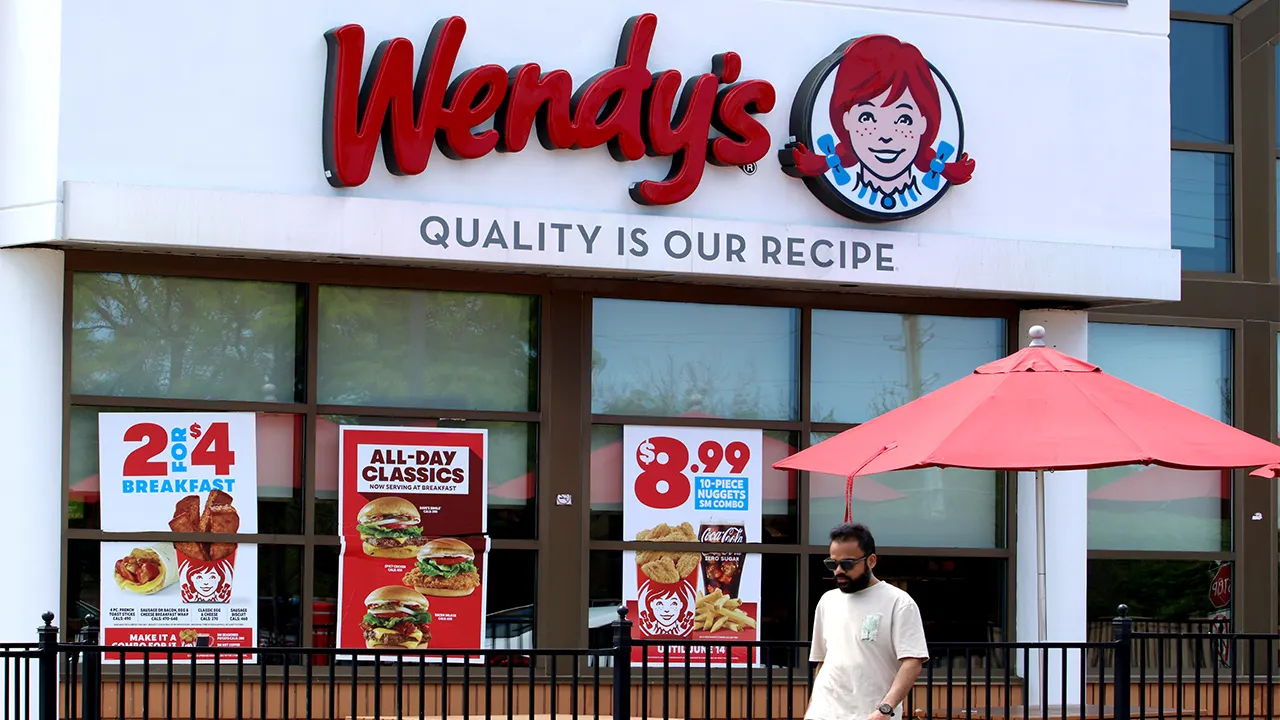
Meritage Hospitality Group, one of the largest Wendy’s franchisees in the U.S., has filed for Chapter 11 bankruptcy protection following a high-stakes dispute with the fast-food chain’s corporate parent.
The bankruptcy filing comes amid severe financial pressures at the franchisee, which has struggled with soaring beef costs and weak customer traffic, while Meritage has also blamed aggressive promotional discounting for squeezing margins.
The Michigan-based operator runs 314 Wendy’s locations across 15 states. The company filed its voluntary petition Thursday with the U.S. Bankruptcy Court for the Western District of Michigan, according to court documents.
THE FAST-FOOD CHAIN WHERE MANAGERS AVERAGE MORE THAN $200K A YEAR
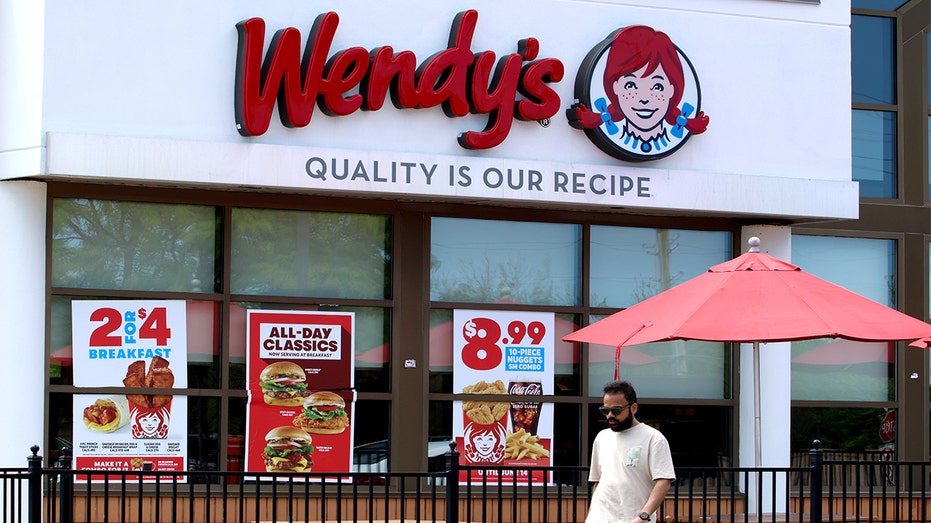
Meritage Hospitality Group, one of the largest Wendy’s franchisees in the U.S., has filed for Chapter 11 bankruptcy protection. (Mike Campbell/NurPhoto via Getty Images)
The bankruptcy filing came one day after Wendy’s franchising unit delivered a Sept. 16 notice seeking to terminate Meritage’s franchise rights and lease occupancy “effective immediately,” according to court documents. Meritage filed for Chapter 11 the following day, putting the termination effort on hold while the case proceeds. Meritage disputes Wendy’s attempt to terminate the agreements and says its franchise rights remain intact.
In a recent report to investors, Meritage CEO Bob Schermer Jr. said store-level earnings declined 48% in 2025. Court filings separately show the company reported a $31.5 million net loss that year, compared with net income of $8 million in 2024, while revenue fell 7.6% to $617.7 million.

The Michigan-based operator runs 314 Wendy’s locations across 15 states. (USA Today Network via Reuters Connect)
In an effort to stem the losses, the franchisee began closing approximately 60 underperforming Wendy’s locations in late 2025 and has eliminated or altered breakfast service at numerous locations. The company said those measures are expected to provide approximately $11.2 million in combined annual EBITDA benefits.
Court records show Meritage had approximately $725.9 million in assets and $651.2 million in total liabilities as of summer 2026. The Wendy’s franchising unit is asserting claims totaling $146.9 million against the company, including $27.4 million in past-due royalties and fees and $119.5 million in Continuous Operations Fees. Meritage also had approximately $137 million outstanding under its primary credit facility as of the bankruptcy filing.
| Ticker | Security | Last | Change | Change % |
|---|---|---|---|---|
| WEN | THE WENDY’S CO. | 6.70 | -0.04 | -0.59% |
In a press release, Meritage’s board of directors said the court-supervised restructuring was the “most effective and proactive path to strengthen Meritage’s finances, address these headwinds directly, and protect the long-term interests of its stakeholders, team members, guests, and communities.”
CLICK HERE TO GET FOX BUSINESS ON THE GO
Despite the bankruptcy, Meritage said it intends to keep its dining rooms open and maintain normal restaurant operations. The company has asked the court for permission to continue paying its roughly 9,000 employees without disruption. Court filings put its workforce at approximately 8,850 employees as of the bankruptcy filing.

Alastair Mackie is the founder and managing director of WasteSync, a Strathaven-based company building offline-first software that lets weighbridge teams record waste movements even when the mobile signal drops out.
Digital waste tracking becomes mandatory for permitted waste receivers in England and Wales from 1 October 2026, with Scotland following in January 2027, and WasteSync says it passed all 14 of DEFRA’s test cases in July and has been approved to connect to the live system. The former Lloyds Banking Group manager and Strathclyde MBA graduate also won the Strathclyde Inspire 100 competition in June. He tells Business Matters why software has to earn its place at the gate, and why unglamorous industries are worth a founder’s attention.
What do you currently do at WasteSync?
I call myself MD, so it is founder, products, selling, growing and joining the dots. In a nutshell, my job is taking an operational requirement and turning it into reliable software that teams on a busy waste site will use every day without complaint, without stopping trucks and without incurring fines.
I lead our commercial strategy and long-term vision, run customer discovery and track shifts in UK environmental legislation. As an early-stage founder, my role changes by the hour, moving from commercial positioning to the granular detail of how a weighbridge operator inputs tonnage on an uneven yard.
Waste management is massive. It is essential national infrastructure, yet vast swathes of daily operations still depend on physical clipboards, crumpled paper tickets and siloed spreadsheets. Crucially, waste facilities and transfer stations often sit in connectivity blackspots where standard mobile signal drops out entirely.
If software requires constant 4G or 5G to function, it fails at the gate. We built WasteSync from the ground up to be offline-first, meaning crews can log movements, verify loads and store records uninterrupted, with everything syncing automatically the moment a connection returns.
I spend a substantial part of each week on site visits and calls with weighbridge teams, local authorities, independent carriers and compliance managers. I work backwards from their daily operational friction. Where does poor connectivity halt throughput? Which steps in the waste transfer note lead to errors? Who holds the budget, and what concrete outcome makes their shift easier? Software must earn its place on the ground.
What was the inspiration behind your business?
A mix of wanting to build an independent business and spotting a broken, overlooked industry problem worth fixing.
My career was never mapped out in a neat straight line. I took a law degree in Edinburgh, realised early on that my natural strengths lay in commercial execution, and moved directly into advertising sales. That gave me an early education in cold outreach, negotiation and how clients make purchasing decisions.
After serving as a director in an SME and completing an MBA at Strathclyde, I moved into financial services. I spent over a decade in senior management and private banking, working day in, day out with regulatory governance, risk management and audit-ready data.
The catalyst arrived when I was leading AI and digital innovation initiatives at Lloyds Banking Group. Looking closely at automated workflows and modern data pipelines, I saw how much friction could be removed from traditional, paper-choked sectors. As a father of two, that sparked my entrepreneurial drive.
I wanted to move from watching digital transformation unfold inside a corporate institution to creating an independent venture where accountability rested squarely on my shoulders. I was searching for work that brought together commercial viability, intellectual challenge and tangible societal utility.
When I looked at waste and resources, the market gap and timing were incredible. Upcoming digital waste tracking mandates and other regulations, rising supply chain audit standards and decades-old paper habits meant operators needed better tools. WasteSync was founded to turn that regulatory headache into an operational advantage. You know the massive fly-tipping you see on the news? We are part of the solution to that.
How is WasteSync preparing for the digital waste tracking deadline?
In July we passed all 14 of DEFRA’s test cases and were approved to connect to the live Digital Waste Tracking system. Records are captured on site, even with no connection, and filed automatically to DEFRA and SEPA once the signal returns.
In June we demonstrated WasteSync to a Scottish local authority and an electrical waste processor for the first time. Both watched it capture a load offline, and both agreed to pilot it.
Who do you admire?
Naval Ravikant’s ideas helped crystallise how I approach building a business. My co-founder, Iain Baxter, introduced me to The Almanack of Naval Ravikant, which gave words to principles I had spent years circling: developing specific knowledge, taking direct accountability and creating leverage that outlasts your daily hours.
It is an exceptionally grounding framework for any founder, shifting the focus away from vanity metrics and towards durable, compounding value. Naval is the man.
I also lean heavily on classic commercial fundamentals. Dale Carnegie remains the gold standard for understanding that business is built entirely on trust, listening and treating people with respect. Brian Tracy’s rules on prioritisation keep me focused every morning. When you run an early-stage company, incoming demands always exceed available daylight, so deciding what not to do is just as important as the tasks you complete.
Looking back, is there anything you would have done differently?
I would not change the core path, because every chapter contributed directly to the founder I am today. Law trained my analytical discipline and contract awareness. Commercial sales taught me resilience and how to listen to clients. Banking gave me a deep respect for governance, risk and data integrity. Modern tech showed me what software can achieve when applied with discipline.
I should have trusted my gut and backed myself sooner. Corporate life provides regular income and stability, and it is easy to become comfortable in those patterns. Eventually, you must confront what truly motivates you and take the leap.
I also would have put rough prototypes in front of paying customers even earlier. It is dangerously tempting for founders to sit in a room refining product specs in isolation. The fastest way to learn is getting dirty boots on site, watching someone use your interface and letting real operators dismantle your assumptions. That direct feedback prevents you from solving problems that do not actually exist.
What defines your way of doing business?
Commercial discipline, technical defensibility and trust. Coming out of private banking, data integrity is non-negotiable. In our sector, bad data is worse than no data.
That is why our competitive moat rests on building the best data foundation in the industry. By solving the tough engineering problem of reliable offline capture in harsh operating environments, we ensure the data feeding compliance reports and downstream systems is accurate, complete and auditable.
I strip out technology buzzwords and empty marketing claims. I care about whether our software saves an administrator two hours of manual rekeying, eliminates duplicate records and protects a licence holder during an audit. Grand ambition is easy to pitch, but quiet execution, engineering reliability and delivering on your word are what build an enduring company.
I need to give a nod to agentic engineering and AI in general. I am a heavy user, and I believe this is the gold rush we have been waiting for. We are in the era of ideas, which is exhilarating, and scary too, but let us focus on the good parts.
What advice would you give to someone starting out?
Do not wait for complete certainty. If you wait until all the risks disappear, you will never launch. Any meaningful venture begins with imperfect data, so pick a sensible next step, test it and adjust as you learn. Action consistently generates clarity, where standing still only creates doubt.
Second, fall in love with the problem rather than the technology. Identify who feels the operational pain, calculate what it costs them every month, and make sure they have both the authority and the budget to pay for a solution. A clever piece of software without a willing buyer is merely an expensive hobby.
Finally, give yourself permission to reinvent your direction. You are never trapped by the degree you chose at 18 or the corporate ladder you climbed in your thirties. If you can combine your hard-earned experience with an unglamorous real-world problem that demands solving, back yourself and make the jump. And do you know what? Unsexy industries are cool.

The directions, issued on Monday, aim to align the market risk guidelines with the revised Basel III framework, while ensuring simplicity of regulations, and providing flexibility, and ease of adoption.
The directions are applicable to all commercial banks, except small finance banks, payments banks and local area banks.
RBI said the directions will take effect from April 1, 2027, ensuring sufficient lead time for banks.
“A bank shall not reclassify instruments between the trading book and the banking book for regulatory arbitrage, i.e., with the intention of achieving lower capital requirements,” the central bank said.
It further said that banks will have to use the simplified standardised approach (SSA) for computing risk-weighted assets for market risk.
The risk-weighted assets will be determined by multiplying the capital requirements calculated under the framework by a factor of 12.5.RBI also said the specific risk tables for interest rate risk have been revised to align with the Basel Committee on Banking Supervision (BCBS) guidelines, which also provide a more concise and clean treatment.
On debt mutual funds/exchange traded funds (ETF) held in the trading book, it said the capital treatment has been revised to ensure capital computation is based on the underlying risk drivers while ensuring sufficient guardrails.

Rep. James Comer, R-Ky., discusses the competitive race between the U.S. and China in artificial intelligence development. He raises concerns about energy grid capacity and highlights regulatory hurdles facing tech firms.
U.S. Treasury Secretary Scott Bessent will present President Donald Trump with a U.S.-China artificial intelligence-related agreement, two sources told Fox Business Network White House correspondent Edward Lawrence.
The agreement will open a “hotline” for direct communication on AI, similar to the direct line of communication the military has, enabling either side to have a direct line if any AI-related problems arise, such as hacking, national security concerns, rogue AIs or other issues.
President Trump will make a thumbs up or thumbs down decision on the deal this week before his meeting with President Xi, the sources noted.
MIT PROFESSOR SAYS AI RISKS ARE UNITING BERNIE SANDERS, STEVE BANNON AND LAWMAKERS ON CAPITOL HILL
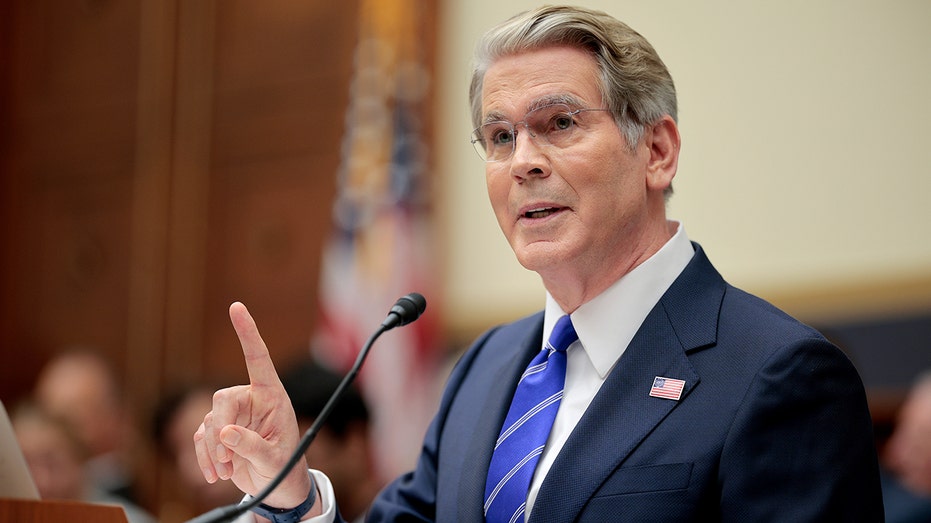
U.S. Treasury Secretary Scott Bessent testifies during a House Committee on Financial Services hearing in the Rayburn House Office Building on Capitol Hill on Sept. 15, 2026 in Washington, D.C. (Chip Somodevilla/Getty Images / Getty Images)
President Donald Trump has been an outspoken advocate of AI, as the cutting-edge technology proliferates and rapidly advances both in the U.S. and abroad.
“AI is the next Industrial Revolution, or Internet, but will be even larger and more impactful, possibly as much as 25% of our Country’s GDP. We are leading China, and the rest of the World, and I intend to keep it that way!” the president declared in part in a Saturday Truth Social post.

China’s President Xi Jinping and President Donald Trump visit the Temple of Heaven on May 14, 2026, in Beijing, China. (Brendan Smialowski – Pool/Getty Images / Getty Images)
While the U.S. and China are economically connected through trade, the two nations are generally viewed as rival economic and military powers on the world stage.
In part of a Sept. 14 Truth Social post, Trump declared, “WHOEVER WINS AI, WINS! We are leading China, and all others, and will continue to do so.”
TECH POWER PLAYERS LAND SEAT AT TABLE FOR HIGH-STAKES DINNER WITH TRUMP, XI

Chinese and U.S. flags wave outside a technology company in Beijing on April 17, 2025. (PEDRO PARDO/AFP via Getty Images / Getty Images)
GET FOX BUSINESS ON THE GO BY CLICKING HERE
Trump is slated to greet his Chinese counterpart on Wednesday at Joint Base Andrews, and spend time with Xi on Thursday and Friday as well, according to the White House.

Sprive, a fintech company that helps homeowners pay off their mortgages faster, has closed a $10m series A funding round, taking the total it has raised to $15m.
The company, which is backed by three investors from BBC1’s Dragons’ Den, said the money would be used to increase its marketing spend and accelerate customer acquisition and revenue growth.
The round included existing investors Channel 4 Ventures and Ascension. New investors were Wealth Club, Active Partners and Rank Ventures.
How the app works
Sprive was founded in 2019 by two former Goldman Sachs bankers. Its app offers users cashback when they spend at retailers including Tesco, Sainsbury’s and Waitrose, paid through digital gift cards. The cashback is then put towards the user’s mortgage.
The app also scans the market for cheaper mortgage deals and alerts customers when it is the best time to switch. The company said it is connected to 16 UK lenders, including all of the high street banks and the major building societies.
According to the company, annualised monthly spend through the app has risen 35 times since January 2025, to £328m. It has 567,000 registered users and supports £42bn of mortgages.
Sprive claims to have saved its users more than £300m in interest. The company said it had recently become cashflow-positive and has an annual revenue run rate of more than £18m.
The Bank of England’s mortgage lenders and administrators statistics put the value of outstanding residential mortgage loans at £1,746.1bn at the end of the first quarter of 2026.
Dragons’ Den deal
Jinesh Vohra, Sprive’s co-founder and chief executive, pitched the business on Dragons’ Den in February.
He secured investment from Touker Suleyman, Deborah Meaden and Peter Jones. The three invested a total of £50,000 for a 5 per cent equity stake, shared between them.
Vohra said the new funding put Sprive in “a strong position to step up our marketing push significantly and accelerate both customer acquisition and revenue growth”.
“Given the cost of living crisis, with mortgage rates going through the roof and borrowers being pushed into extending their mortgage terms in cases well into retirement, the ability to use your weekly shop to reduce your mortgage interest, and ultimately the term of the loan, is hugely appealing,” he said.
“Over time, these payments can really add up,” he added.
In July, Business Matters reported that UK mortgage rates had returned to a one-month high as oil prices reached $100 a barrel, with Rachel Springall of Moneyfacts telling the publication it would be “incredibly frustrating for borrowers to see rates rise back up”.
Wider funding picture
Sprive’s round is smaller than the largest UK technology deals this year, which included Isomorphic Labs’ $2.1bn series B and Nscale’s $2bn series C. UK tech funding reached $15.3bn in the first half of 2026, up 84 per cent, although the money went to fewer companies, with investors making larger bets on a smaller number of businesses.
Other UK fintech firms have also raised money this year. In April, the British Business Bank invested $20m in 9fin as part of a $170m series C round that gave the financial data platform a valuation of more than $1bn.

Jamie Young
Jamie Young is Senior Reporter at Business Matters, covering SME finance, employment law and Westminster policy since 2016. He has reported on every Budget and Autumn Statement since 2018, helped make sense of the ‘covid era’ and the bounce-back loan scheme from launch through the fraud investigations, and broke the magazine’s coverage of the 2024 late-payment reforms. He joined Business Matters straight from completing his BA in Administration from Exeter University and is NCTJ-qualified. Reach him at jyoung@cbmeg.co.uk

The transportation secretary spoke to FOX Business’ Connor Hansen about what caused the Northeast airport disruptions and why he says similar outages could continue without major infrastructure upgrades.
An Amtrak construction crew accidentally cut a fiber-optic line in New Jersey, triggering a telecommunications outage that forced the Federal Aviation Administration (FAA) to pause flights across parts of the Northeast, Transportation Secretary Sean Duffy said Monday afternoon.
“An Amtrak construction crew accidentally cut into a fiber line in New Jersey which caused a telecom outage and forced FAA to pause flights in the Northeast,” Duffy wrote on X.
Duffy said flights were resuming at LaGuardia Airport (LGA) and Philadelphia International Airport (PHL), while flights into Newark Liberty International Airport (EWR), John F. Kennedy International Airport (JFK) and Teterboro Airport (TEB) remained paused.
“This incident underscores the need for additional funding to modernize aging infrastructure and prevent disruptions like this in the future,” he said.
LAGUARDIA SHUTS DOWN RUNWAY FOR SECOND TIME IN WEEKS AFTER PAVEMENT ISSUE RESURFACES

An air traffic control tower at Philadelphia International Airport in Philadelphia, Pennsylvania. (John Greim/Loop Images/Universal Images Group via Getty Images)
As of 3:07 p.m. ET, the FAA’s website showed active ground stops at EWR and TEB, while JFK, LGA and PHL were operating under ground delays related to the equipment outage.
Earlier Monday, the FAA told Fox News it was pausing flights into Philadelphia International, Teterboro and Newark Liberty International airports due to “issues with some frequencies at Philadelphia TRACON.”
MAJOR AIRLINES CUT FLIGHTS AS HIGHER JET FUEL PRICES HIT CARRIERS

A JetBlue Airways Airbus A320 sits at Newark Liberty International Airport (EWR) with the Lower Manhattan skyline and One World Trade Center in the background on Jan. 15, 2026, in Newark, New Jersey. (Al Drago/Getty Images)
Federal Aviation Administrator Brian Bedford said Monday that officials discovered that a backup fiber cable was cut in New Jersey, leading to a ground stop at airports in Philadelphia, New York and New Jersey after a circuit failed.
FAA Administrator Bryan Bedford said Philadelphia TRACON lost its primary circuit, and when controllers switched to a backup system, they discovered a broken fiber-optic cable.
Speaking to reporters earlier Monday, Duffy said “these are issues that aren’t new to us.”
“We know these problems can happen. We know these cuts can happen,” Duffy said, adding that the department has been working to upgrade FAA equipment and its telecom architecture.
“As we work through all the new equipment, all the new architecture of our telecom, which is fans, it all takes money. That’s why we have a holistic view of everything, including how we rework our telecom,” Duffy said.
AVELO CEO WARNS AIRFARES MAY RISE AS FUEL PRICES HIT ‘UNCOMFORTABLY HIGH’ LEVELS

A United Airlines Airbus A320 passenger jet taxis on the tarmac at LaGuardia Airport in the New York City borough of Queens on Sept. 7, 2016. (Robert Alexander/Getty Images)
Duffy said the work is being done before the department has secured all the necessary money, adding that “when we get the cash” the department will be able to hasten progress.
GET FOX BUSINESS ON THE GO BY CLICKING HERE
“But this is not shocking,” Duffy said of the equipment outage.
The FAA could not immediately be reached by FOX Business Monday afternoon for additional comment.

A Verizon cable that was cut in New Jersey during construction disrupted hundreds of flights to and from the New York area and Philadelphia on Monday.
The Federal Aviation Administration halted flights bound for Newark, New Jersey, and Philadelphia and forced close to 70 planes to divert to other airports because of the issue. Hundreds of flights at those two airports ended up getting canceled.
As of 1 p.m. ET, the disruptions had spread to New York City, where flights into LaGuardia Airport and John F. Kennedy International Airport were also halted by the FAA.
“We have a fiber cable running adjacent to an Amtrak rail line in New Jersey. Construction contractors working in the area dug up and cut our cable,” Verizon said in a statement. “Verizon’s facilities were fully functional up to that point. Verizon bears no responsibility for this incident.”
The company said it “immediately deployed our technicians to the scene” and added that it was “actively working to repair the damaged cable and restore connectivity as quickly as possible.“
The FAA earlier said it had halted flights into Newark Liberty International Airport, United Airlines‘ busiest international hub, as well as Philadelphia International Airport and New Jersey’s Teterboro Airport “due to issues with some frequencies at Philadelphia TRACON.”
That Terminal Radar Approach Control, or TRACON, facility, guides planes in and out of Newark and Philadelphia.
United waived flight change fees for travelers affected by the disruption. American Airlines, which operates a hub out of Philadelphia, also waived change fees and allowed customers to fly out of other airports.
More than 400 flights in and out of Newark were canceled Monday, more than a quarter of the day’s schedule, according to FlightAware, while another 200 were delayed. Nearly 400 Philadelphia flights were delayed.
As of about 1 p.m. ET, 67 flights bound for Newark were forced to divert, according to Flightradar24, including international flights from Iceland, Egypt, Greece, Spain and France.
A United flight from Berlin diverted to Detroit Metropolitan Wayne County Airport, while an SAS flight from Stockholm bound for Newark was sent to Washington Dulles International Airport.
Aging air traffic control equipment and technology issues have vexed airline executives for years. The Trump administration last year announced a multibillion-dollar overhaul of U.S. air traffic control equipment and resources.
On Monday, the Transportation Department and FAA unveiled a new artificial intelligence-powered tool meant to analyze data to minimize flight delays, rolling it out first in Washington, D.C.
The incident happened hours before President Donald Trump and a host of international leaders are scheduled to arrive in New York for the United Nations General Assembly.

Amazon: Prepare For A Margin Collapse At AWS

Daily Deal: The Ultimate AWS Data Master Class Bundle

Travel hell with flights into three major airports ‘paused’
Stifel initiates Rush Street Interactive stock with buy rating

Weekend Open Thread – Corporette.com

Weekend Open Thread: Talbots – Corporette.com

Memory prices are slowing because buyers ran out of money

GARLINGHOUSE DROPS A MASSIVE STATEMENT!!!! (TRILLIONS TO XRP!?!)

The World Order Is Changing And Bitcoin & XRP Are At The Center Of The Greatest Wealth Transfer Ever

XRP IS CRUSHING IT IN KOREA! – CAN YOU SEE XRP HITTING $10,000? – WHY HIGH PRICE XRP IS INEVITABLE!
-
 Fashion3 days ago
Weekend Open Thread: Talbots – Corporette.com
-

 Tech22 hours ago
Researchers escape OpenAI Codex sandbox to run commands on host
-

 Crypto World7 days ago
Revolut Attackers Warn of Ongoing Daily Customer Data Leaks
-

 Crypto World3 days ago
Circle launches Arc Studio AI agent for building onchain apps
-

 Crypto World6 days ago
Robinhood engineers charged over $50K crypto scheme
-
 NewsBeat3 days ago
Trump says US has reached an agreement to take permanent control of Greenland’s security
-

 Crypto World7 days ago
Kraken Lets xStocks Holders Earn Yield Through DeFi
-

 Crypto World3 days ago
Bitcoin price breaks channel as RSI climbs to 63
-

 Crypto World5 days ago
US Charges Robinhood Engineers Over Crypto Listing Trades
-

 Crypto World6 days ago
What Is the Status of the U.S.-Iran Peace Talks? Here's What Both Sides Are Saying
-
 Crypto World7 days ago
NVIDIA Analysis: Attempted Rising Wedge Breakout Amid Pressure on the AI Sector
-

 Tech6 days ago
Webb’s IC 348 Mosaic Includes Two-Jupiter Dwarfs, Twin Jets, and a Nursery Still Making Worlds
-

 Crypto World3 days ago
World Money launches in 150+ countries with Stripe
-

 Crypto World21 hours ago
Who Needs CLARITY Anyway? ARB Could See 70X Increase: Hodler’s Digest
-

 Crypto World7 days ago
Kraken Adds DeFi Yield on Tokenized Stocks and ETF Assets
-

 Crypto World3 days ago
Silver prices recover quickly, hitting weekly high today
-

 Crypto World3 days ago
Trading Bitcoin on Robinhood? Why 2% Spread Has Traders Worried
-
Crypto World7 days ago
Can Circle’s Arc Repeat Robinhood Chain’s Meme Coin Boom?
-

 Entertainment6 days ago
Big Brother Update: Melody Explodes at Drew as Illness Sweeps BB28 House
-
 NewsBeat3 days ago
US was ‘on brink of war’ with China over false AI report of nukes moving in Middle East
You must be logged in to post a comment Login