FREMONT, Calif. — Amprius Technologies Inc. shares soared more than 12% in morning trading Tuesday, climbing to $22.07 as investors piled into the high-energy-density silicon anode battery maker amid growing excitement over its role in powering next-generation electric vehicles, drones and defense applications.
Amprius Technologies Stock Surges 13% as AI Battery Demand and 2026 Outlook Fuel Momentum
At 11:43 a.m. EDT, Amprius (NYSE: AMPX) stock had gained $2.46, or 12.54%, on heavy volume. The sharp move extended a strong 2026 run for the company, whose shares have more than quadrupled year-to-date on optimism surrounding its silicon anode technology and aggressive revenue growth targets.
The rally comes as Amprius prepares to report first-quarter 2026 results on May 7, with a conference call scheduled for that day. The company has already set high expectations after delivering strong 2025 performance and issuing upbeat guidance for the current year.
In early March, Amprius reported fourth-quarter 2025 revenue of $25.2 million, representing 18% sequential growth and a dramatic year-over-year increase. Full-year 2025 revenue reached $73 million, up more than 200% from the prior year. The company also narrowed its net loss and highlighted improving gross margins as it scales production of its second-generation SiCore silicon anode platform.
Management guided for at least $125 million in 2026 revenue — implying more than 70% growth — along with the first full year of positive adjusted EBITDA. Executives expressed confidence in broader adoption of SiCore cells, particularly among unmanned aerial vehicle customers and in electric mobility applications.
Advertisement
A key catalyst driving recent sentiment was Amprius’ March 25 announcement of a $21 million purchase order from a new customer in China for SiCore cylindrical cells targeted at electric two- and three-wheelers, including scooters and motorcycles. The order underscored expanding commercial traction in the electric mobility sector and provided tangible evidence of demand beyond niche high-performance applications.
Amprius’ silicon anode technology delivers industry-leading energy density, with cells reaching up to 500 Wh/kg and 1,300 Wh/L in its SiMaxx platform, far surpassing conventional graphite anodes. The newer SiCore platform offers a balance of high energy density (up to 400 Wh/kg) and longer cycle life (up to 1,200 cycles), making it suitable for broader commercial use while maintaining competitive cost structures.
The company has secured strategic manufacturing partnerships to scale production. In February, it announced a collaboration with U.S.-based Nanotech Energy as its first domestic manufacturing partner, strengthening supply chain security for defense and aerospace customers. This aligns with National Defense Authorization Act compliance efforts and supports a $14.8 million contract with the Defense Innovation Unit for NDAA-compliant cells.
Amprius also earned recognition at CES 2026, winning a Best of Innovation award in the Sustainability & Energy Transition category for its 520 Wh/kg silicon anode battery. The award highlighted the technology’s potential to extend flight times and payload capacity for unmanned aerial systems and other high-performance applications.
Advertisement
Despite the momentum, risks remain. Amprius is still unprofitable and operates at a relatively small scale compared with established battery giants. The company relies heavily on growth in high-margin but currently limited-volume segments such as drones and defense. Execution on scaling manufacturing capacity and converting design wins into sustained revenue will be critical in 2026.
Analyst sentiment has turned more constructive in recent months, though price targets vary widely. Some forecasts see significant upside if Amprius hits or exceeds its $125 million revenue guidance and achieves positive adjusted EBITDA. Others caution that the current valuation already prices in substantial optimism, leaving room for volatility if production ramps or margin improvements fall short of expectations.
The stock’s recent surge reflects broader enthusiasm for advanced battery technologies amid the electric vehicle transition and increasing demand for high-performance power solutions in drones, aerospace and consumer electronics. Amprius’ focus on silicon anodes positions it as a pure-play beneficiary of the shift away from traditional lithium-ion chemistries limited by graphite anodes.
Trading volume remained elevated Tuesday, consistent with heightened retail and institutional interest in battery technology stocks. Options activity showed bullish positioning, with traders betting on continued momentum ahead of the May 7 earnings release.
Advertisement
For long-term investors, Amprius represents a high-risk, high-reward opportunity in the clean energy and electrification megatrend. The company’s proprietary silicon nanowire and SiCore platforms offer clear technological differentiation, but commercial success depends on scaling production cost-effectively and securing larger-volume contracts.
Amprius operates pilot and commercial manufacturing lines, including partnerships in Asia and now the United States. Its Fremont, California headquarters supports research and development, while production partnerships help accelerate time-to-market for customers.
The company has delivered strong year-over-year growth metrics while improving operational efficiency. Gross margins reached 11% for full-year 2025, an 87-percentage-point improvement from the prior year, demonstrating progress toward sustainable profitability.
As the May 7 earnings approach, investors will watch for updates on the $21 million order fulfillment, progress with the Nanotech Energy partnership, and any additional design wins or capacity expansion news. Positive commentary on 2026 revenue trajectory and margin expansion could sustain the rally, while cautious guidance might trigger profit-taking.
Advertisement
Broader market context supported risk appetite Tuesday, with technology and growth stocks showing selective strength. Amprius’ outsized move stood out even in a session with other battery and clean-tech names posting gains.
The stock has experienced significant volatility throughout 2026, with sharp rallies on positive news followed by periods of consolidation. Its year-to-date performance far outpaces the broader market, reflecting investor excitement over silicon anode potential but also highlighting execution risks inherent in early-stage scaling companies.
Amprius Technologies was founded with technology originating from Stanford University research. It has built a portfolio of more than 50 patents focused on silicon anode innovation, positioning it as a leader in next-generation lithium-ion battery chemistry.
For retail traders, Amprius has become a popular momentum name in the battery space. Online discussions often center on its energy density advantages, defense contracts and potential role in the electric two- and three-wheeler market in Asia.
Advertisement
As trading continued past midday, the stock maintained strong gains. Whether the momentum carries through the close and into the earnings period will depend on sustained buying interest and absence of negative news.
The Amprius story illustrates the high-stakes nature of advanced materials companies in the clean energy transition. With its silicon anode platforms offering breakthrough performance, the company sits at the intersection of multiple growth markets — electric mobility, drones, aerospace and defense.
Tuesday’s surge underscores investor willingness to reward visible commercial progress and ambitious 2026 guidance. As Amprius prepares its first-quarter update, the market will seek confirmation that the company is on track to deliver the scale and profitability improvements needed to justify its elevated valuation.
Candel Therapeutics, Inc. (CADL) Discusses Extended Follow-Up Data From Phase 3 Trial of aglatimagene besadenovec in Localized Prostate Cancer Transcript
Candel Therapeutics, Inc. (CADL) Discusses Extended Follow-Up Data From Phase 3 Trial of aglatimagene besadenovec in Localized Prostate Cancer May 15, 2026 1:00 PM EDT
Company Participants
Ted Jenkins Paul-Peter Tak – President, CEO & Director Garrett Nichols William Garrett – Chief Medical Officer Francesca Barone – Chief Scientific Officer Seshu Tyagarajan – Chief Technical & Development Officer
Advertisement
Conference Call Participants
Steven Finkelstein Daniel George Neal Shore Yigal Nochomovitz – Citigroup Inc., Research Division Imogen Mansfield – Cantor Fitzgerald & Co., Research Division Oliver McCammon – LifeSci Capital, LLC, Research Division Andres Maldonado – H.C. Wainwright & Co, LLC, Research Division Brian Kemp Dolliver – Brookline Capital Markets, LLC, Research Division Sudan Loganathan – Stephens Inc., Research Division Stephen Willey – Stifel, Nicolaus & Company, Incorporated, Research Division Alec Stranahan – BofA Securities, Research Division
Presentation
Advertisement
Operator
Good afternoon, and welcome to the Candel Therapeutics conference call, where the company will be discussing extended follow-up data from the Phase III clinical trial in patients with localized prostate cancer following an oral plenary presentation at the 2026 American Urological Association Annual Meeting with subsequent Q&A from Candel management and their guests, thought leader physicians.
[Operator Instructions]
Please be advised that this call is being recorded. You can find information on a replay of the call and further information related to today’s announcements on the Candel Therapeutics website at candeltx.com.
Advertisement
At this time, I would like to turn the call over to Ted Jenkins, Vice President, Investor Relations and Business Development at Candel Therapeutics. Mr. Jenkins, please go ahead.
Ted Jenkins
Thank you, operator. Good afternoon, everyone, and thank you for joining us on today’s call. Earlier today, the company presented extended follow-up data from the Phase III clinical trial in patients with intermediate to high-risk localized prostate cancer during an oral plenary presentation at the 2026 American Urological Association Annual Meeting in Washington, D.C. We are pleased to conduct a public
NEW YORK — Speculation about Sony’s next-generation console is intensifying in mid-2026, with the PlayStation 6 widely expected to launch in late 2028 or 2029 rather than the previously rumored 2027 window, as ongoing global memory shortages driven by artificial intelligence demand force Sony to reconsider timelines and pricing.
Sony executives have confirmed they have not yet finalized a release date or price for the PS6, citing persistent high costs for RAM and storage components. In a recent earnings call, Sony CFO Hiroki Totoki stated the company is closely monitoring the situation and may explore new business models to navigate the challenges.
The delay rumors gained traction after Bloomberg reported in February that rampant AI demand for memory chips could push the PS6 debut to 2028 or even 2029. Earlier leaks from reliable sources like Moore’s Law Is Dead and AMD insiders initially pointed to production starting in 2027 for a late-year launch, aligning with Sony’s traditional seven-year console cycle.
Advertisement
Hardware Specs and Technical Leap
While official details remain scarce, leaks paint an ambitious picture for the PS6. The console is expected to feature a custom AMD Zen 6 CPU and RDNA 5 GPU architecture, promising significant performance gains over the PS5. Reports suggest 3x rasterization performance and up to 6-12x improvements in ray tracing, powered by advanced neural arrays for AI upscaling and features like enhanced PSSR 2.0.
Memory configuration remains a hot topic. Recent insider reports from Kepler_L2 indicate Sony may settle on 24GB of GDDR7 RAM on a 128-bit bus — down from earlier 30GB rumors — to manage costs amid shortages, still offering roughly 50% more memory than the PS5. Storage is tipped to start at 1TB SSD with bandwidth potentially reaching 512GB/s.
Backward compatibility is expected to be a major strength. The x86 architecture continuity with AMD chips should ensure seamless support for PS5 and PS4 titles, addressing fan demands for preserving massive game libraries.
Potential Handheld Companion and New Models
One of the most intriguing rumors involves a dedicated PlayStation handheld, codenamed “Project Canis” or similar, potentially launching alongside or shortly after the main console. Leaks suggest it could be dockable like the Nintendo Switch 2, offering performance comparable to a base PS5 in handheld mode while being more affordable to produce.
Advertisement
Analysts also speculate Sony could introduce multiple SKUs at launch, including a standard model, a digital-only version, and a higher-end “Pro” or “Orion” variant with enhanced specs. Pricing discussions remain fluid, with estimates ranging from $350 for a Lite model to potentially $999 for premium configurations due to component costs.
Development and Industry Context
Sony’s continued partnership with AMD, confirmed years ago after Intel reportedly lost the bid, ensures architectural consistency that benefits developers and players. System architect Mark Cerny’s involvement in Project Amethyst with AMD points to heavy AI and machine-learning integration for features like smarter upscaling, compression, and possibly generative tools.
The broader industry faces similar challenges. Microsoft’s next Xbox, codenamed Project Helix, is reportedly targeting a similar timeline, with both companies balancing innovation against supply constraints. Extended PS5 support, including the PS5 Pro, gives Sony breathing room to perfect the PS6 without rushing.
Fan Reactions and Market Impact
The gaming community remains divided. Some enthusiasts express frustration over potential delays, while others welcome a more powerful console even if it arrives later. Prediction markets show low odds — around 20-25% — of an announcement before 2027, reflecting widespread skepticism.
Advertisement
Social media buzz has exploded with concept art, spec speculation and debates over pricing. Many fans hope for strong backward compatibility and new features like in-game rewind or detachable disc drives to future-proof the ecosystem.
What to Expect Next
Sony is expected to remain tight-lipped until closer to launch, focusing instead on PS5 software and services in the interim. Developers may receive updated kits later in 2026 or early 2027, providing clearer spec details. A formal reveal could come at a PlayStation Showcase or dedicated event once supply chains stabilize.
For now, the PS6 remains shrouded in rumor and uncertainty, but the pieces suggest a console designed for longevity in an AI-driven era. Whether it arrives in 2028 or slips to 2029, expectations are high for a generational leap that builds on the PS5’s successes while addressing modern gaming demands.
Gamers eager for next-gen experiences will continue monitoring leaks and official statements. As Sony navigates component shortages and strategic decisions, the PlayStation 6 promises to define the next era of console gaming whenever it finally launches. The wait may test patience, but early signs point to a console worth anticipating.
The Department for Work and Pensions (DWP), which runs the CMS, did not address the experiences of John Hammond and other individual cases, or explain why in some cases money was taken wrongly from bank accounts. It said it tries to arrange voluntary arrears payments and “enforcement measures are only taken if parents continue not to pay”.
NEW YORK — ESPN analyst Kendrick Perkins made a bold declaration this week, stating that San Antonio Spurs phenom Victor Wembanyama is already the most dominant player in the game of basketball, igniting passionate debate across the NBA world about the 22-year-old French superstar’s rapid ascent.
Appearing on “SportsCenter,” Perkins, a former NBA champion and vocal voice on First Take, did not mince words while breaking down Wembanyama’s impact. “He’s already the most dominant player in the game of basketball,” Perkins said, emphasizing the 7-foot-4 phenom’s unprecedented blend of size, skill and defensive disruption. The comments come as Wembanyama continues to post eye-popping numbers in the 2025-26 season while anchoring one of the league’s most intriguing young teams.
Perkins’ praise extends beyond raw statistics. He highlighted Wembanyama’s ability to alter games on both ends of the floor, comparing the defensive presence to legends he has seen firsthand. “I’ve never seen nothing like this,” Perkins added, referencing his own playing days alongside elite defenders like Kevin Garnett while growing up watching Hakeem Olajuwon.
Wembanyama’s Historic Dominance
In just his third NBA season, Wembanyama has elevated his game to new heights. Averaging approximately 24-26 points, 11-12 rebounds and nearly 4 blocks per game while shooting efficiently, the former No. 1 overall pick has emerged as a nightly game-changer. His combination of length, fluidity and basketball IQ allows him to guard all five positions while serving as a focal point on offense with step-back threes, post moves and elite passing.
Advertisement
Defensively, Wembanyama has redefined rim protection and help-side defense. Opponents shoot significantly worse when he is on the court, and his ability to contest shots without fouling has drawn comparisons to prime Rudy Gobert — except with superior mobility and offensive versatility. Perkins and other analysts argue this two-way dominance sets him apart from traditional stars who excel primarily on one end.
The Spurs, led by Wembanyama and a promising young core, have shown marked improvement, turning heads with competitive performances against top Western Conference teams. His presence has transformed San Antonio from a rebuilding afterthought into a must-watch squad, drawing sellout crowds and national attention.
Context of Perkins’ Bold Claim
Perkins has been an early and vocal supporter of Wembanyama, previously comparing his physical profile to a hypothetical offspring of Shaquille O’Neal and Kevin Durant. His latest comments build on that admiration, positioning Wembanyama ahead of established superstars like Nikola Jokic, Giannis Antetokounmpo and Luka Doncic in terms of sheer dominance.
The statement arrives amid ongoing debates about the NBA’s current hierarchy. While Jokic continues winning MVPs with his unparalleled playmaking and efficiency, and Antetokounmpo remains a physical force, Perkins argues Wembanyama’s unique physical tools and two-way impact create a level of disruption never before witnessed.
Advertisement
Social media erupted following the comments. Supporters posted highlight reels of Wembanyama swatting shots into the stands or draining logo threes, while skeptics pointed to his relatively young age and the Spurs’ place in the standings as reasons for caution. The discourse quickly divided basketball Twitter into passionate camps.
Reactions from NBA Community
Fellow analysts and former players offered mixed but respectful responses. Some praised Perkins for recognizing generational talent early, while others urged patience, noting that true dominance is often measured by sustained excellence and playoff success. Wembanyama himself has remained characteristically humble, focusing on team improvement rather than individual accolades.
Spurs coach Gregg Popovich, known for his measured praise, has repeatedly called Wembanyama a “special” player whose work ethic and basketball intellect set him apart. Teammates describe a quiet leader who leads by example and constantly seeks ways to elevate those around him.
League-wide, coaches and executives acknowledge the challenge of game-planning against Wembanyama. His mere presence forces schematic adjustments, opening driving lanes for teammates and creating second-chance opportunities through offensive rebounds and blocked shots.
Advertisement
Historical Perspective and Legacy Implications
If Perkins’ assessment holds, Wembanyama could be on track to join the rare pantheon of players who redefine positions and eras. At just 22, he already draws comparisons to legends like Kareem Abdul-Jabbar for his size and skill, while his defensive instincts evoke prime David Robinson — another Spurs icon.
Perkins’ comments also reflect a broader shift in how dominance is evaluated in the modern NBA. Traditional metrics like points and rebounds are supplemented by advanced statistics on defensive impact, spacing creation and overall floor gravity. Wembanyama excels across these categories in ways few players in league history have matched.
Critics argue it remains premature to crown him the most dominant, citing established superstars with multiple championships and MVP trophies. They emphasize that playoff performance under pressure will ultimately define legacy. Supporters counter that Wembanyama’s per-minute impact and unique physical advantages already place him in rare air.
What Comes Next for Wembanyama
As the 2025-26 season progresses, all eyes remain on Wembanyama and the Spurs. A deep playoff run could silence remaining doubters and solidify Perkins’ bold proclamation. Off the court, Wembanyama continues cultivating his global brand while maintaining focus on continuous improvement.
Advertisement
Whether or not one agrees with Perkins, the conversation itself underscores Wembanyama’s meteoric rise. From French prodigy to NBA phenomenon, the young star has captured imaginations and forced the league to adapt. His journey represents the future of basketball — a sport increasingly defined by positionless versatility and transcendent athleticism.
Perkins’ declaration has added fuel to an already vibrant debate. As the season unfolds and Wembanyama continues showcasing his extraordinary talent, the basketball world will keep watching to see if the hype matches the historic production. For now, one of the league’s most outspoken voices has made his position clear: in his eyes, Victor Wembanyama stands alone at the top.
The coming months will test that claim, but one thing is certain — the NBA has a new generational force, and the conversation about greatness will never be the same.
ASEAN’s 680 million consumers and $3.8 trillion economy offer major opportunities for Australian firms, but expansion requires careful market sequencing, appropriate entry structures, and tax-efficient planning. Singapore, Vietnam, Indonesia, Malaysia, and Thailand each serve distinct strategic functions across manufacturing, sales, and regional coordination.
Key Points
• ASEAN presents major growth opportunities for Australian firms, with 680 million people and a US$3.8 trillion economy, but requires strategic market sequencing rather than simultaneous multi-country entry, as each market differs significantly in foreign ownership rules, licensing, tax, and regulatory frameworks.
• Choosing the right entry structure—whether representative office, distributor, wholly owned entity, or joint venture—is critical, as it determines operational control, tax efficiency, and scalability, with Singapore favored for headquarters, Vietnam for manufacturing, and Indonesia for consumer market access.
• Successful ASEAN expansion demands integrated tax structuring, supply chain planning, and compliance management from day one, as withholding taxes, transfer pricing obligations, and fragmented customs administration can create significant financial and operational risks across multiple jurisdictions.
Advertisement
ASEAN as a Strategic Growth Corridor for Australian Firms
Regional Opportunity and Market Complexity ASEAN represents a significant expansion opportunity for Australian companies, offering a combined economy exceeding US$3.8 trillion and a population of over 680 million. However, the region is far from uniform. Market entry must be treated as a sequencing decision, with each country serving a distinct commercial function. Singapore suits regional headquarters operations, Vietnam and Malaysia support manufacturing, while Indonesia and the Philippines offer large domestic consumer markets. Each jurisdiction carries different rules on foreign ownership, taxation, licensing, and profit repatriation.
Structuring Entry Models and Tax Efficiency
Choosing the Right Entry Structure Selecting an appropriate legal and operational structure is critical to long-term profitability. Entry models range from representative offices and distributor arrangements to wholly owned entities and joint ventures, each carrying distinct trade-offs between control, cost, and regulatory exposure. Many Australian SMEs benefit from phased entry strategies, beginning with distributors before transitioning to locally incorporated entities. Tax structuring must be addressed from day one, as withholding taxes on dividends, royalties, and management fees, combined with transfer pricing obligations across multiple jurisdictions, can significantly erode after-tax returns if not properly managed.
Supply Chain Resilience and Execution Roadmap
Building Scalable Regional Operations ASEAN is increasingly central to supply chain diversification strategies for Australian manufacturers and exporters. Trade agreements such as RCEP and AANZFTA have strengthened multi-country production models by reducing tariffs and simplifying rules-of-origin requirements. However, businesses frequently underestimate challenges including fragmented customs administration, inconsistent documentation standards, and port congestion. A phased expansion approach, scaling from a single market before extending across multiple jurisdictions, allows firms to manage compliance complexity, build local relationships, and develop resilient, scalable operations with greater operational confidence and efficiency.
TUCSON, Ariz. — Pima County Sheriff Chris Nanos said investigators are meticulously reviewing “thousands and thousands of videos” and multiple pieces of DNA evidence as the search for Nancy Guthrie enters its second phase more than 100 days after the 84-year-old mother of NBC “Today” co-anchor Savannah Guthrie vanished from her Catalina Foothills home.
In a detailed briefing Thursday, Nanos described a massive digital and forensic effort underway, shifting emphasis from active search and rescue to a comprehensive evidence trail that could lead to charges. “We have thousands and thousands of videos,” he said, referring to doorbell camera footage, traffic cameras, business security systems and private home recordings collected from the greater Tucson area. DNA analysis from blood evidence found inside Nancy’s home is also advancing through multiple labs, with some results still pending.
Nancy Guthrie was last seen around 9:50 p.m. on Jan. 31 after her son-in-law Tommaso Cioni dropped her off following a family dinner. When family members checked the next morning, they found signs of forced entry and blood. Her phone, car and personal belongings remained at the residence. A masked individual captured on doorbell footage has been identified as a person of interest, though no arrests have been made.
Massive Evidence Review Underway
Sheriff Nanos emphasized the scale of the investigation. Detectives have canvassed neighborhoods, interviewed dozens of potential witnesses and processed hundreds of tips. The FBI continues to assist with forensic resources and behavioral analysis. “This is one of the most complex cases we’ve handled,” Nanos said, noting the volume of digital evidence requires specialized software and significant manpower to review.
Forensic teams are examining blood spatter patterns, potential touch DNA and trace evidence from the home. Some samples have been sent for advanced genetic genealogy testing, a technique that helped crack other high-profile cold cases. Officials declined to specify how many DNA profiles are being compared or whether any partial matches have emerged.
Advertisement
The sheriff acknowledged the emotional toll on the Guthrie family while praising their cooperation. Savannah Guthrie has made occasional public appeals for information, most recently during a Mother’s Day tribute, while maintaining a relatively low profile on her “Today” show duties. Nancy’s daughter Annie and son-in-law Tommaso Cioni have also been cleared as suspects multiple times, though online speculation persists.
Celebrity Attention Keeps Case in Spotlight
Recent comments by Khloé Kardashian on her podcast reignited public interest, with the reality star expressing skepticism about the lack of breakthroughs and questioning whether all information has been released. Her remarks generated millions of views and renewed online discussions, including conspiracy threads that law enforcement has repeatedly urged the public to avoid.
A $1 million family reward remains active for information leading to Nancy’s recovery or the identification of those responsible. Tips continue to arrive daily, though officials stress the need for credible, verifiable leads over speculation.
Challenges in a High-Profile Case
Investigators face the classic difficulties of a case with no clear motive and limited physical evidence beyond the initial crime scene. The masked suspect on video has not been identified despite widespread circulation of the footage. Cryptocurrency ransom demands received early in the investigation were deemed non-credible.
Advertisement
The passage of more than 100 days shifts the focus from possible rescue to evidence-based prosecution. Experts note that many abduction cases resolve through persistent digital forensics, witness cooperation or suspect mistakes over time. Sheriff Nanos expressed cautious optimism, saying the team is “methodically building a case that will hold up in court.”
Community support in Tucson has been strong, with vigils, ribbon campaigns and volunteer searches in the early weeks. The case has drawn national attention due to Savannah Guthrie’s prominence, turning a local mystery into a national conversation about elder safety and investigative transparency.
Family’s Ongoing Ordeal
For the Guthrie family, the wait has been agonizing. Savannah has described her mother as the heart of the family, sharing warm memories while pleading for anyone with information to come forward. Annie and Tommaso have maintained a low profile, focusing on caring for their young son amid the intense public scrutiny.
Nancy Guthrie was known as an active community member involved in church activities and family gatherings. Her sudden disappearance has left a void felt deeply by relatives and friends in the Tucson area.
Advertisement
What Investigators Are Seeking
Sheriff Nanos encouraged the public to report any suspicious activity from late January in the Catalina Foothills and surrounding areas. Specific areas of interest include unusual vehicle movements, individuals attempting to sell or discard items belonging to an older woman, or anyone with unexplained knowledge of the crime scene. Digital tips, particularly additional video footage from private residences or businesses, remain highly valuable.
The investigation continues to receive resources from federal partners, including forensic accountants and cyber specialists examining potential financial motives or digital footprints. No timeline for resolution has been offered, but officials say the case remains very active.
As spring turns to summer in the Arizona desert, the Nancy Guthrie investigation stands as a sobering reminder of how quickly lives can change. While the volume of evidence is substantial, turning that raw data into answers requires patience, technology and persistence. For the Guthrie family and the Tucson community, the hope for resolution endures even as the investigation enters a more deliberate, evidence-focused phase.
Anyone with information is urged to contact the Pima County Sheriff’s Department tip line or submit anonymously through Crime Stoppers. The $1 million reward underscores the priority this case holds for both law enforcement and the family still waiting for answers more than 100 days after Nancy Guthrie walked through her front door for the last time.
Valvoline CEO Lori Flees discusses the used car boom, decreased interest in electric vehicles and more on ‘The Claman Countdown.’
Honda Motor posted its first-ever annual loss this week since it was first listed on the stock market in 1957.
The Japanese car company’s bet on electric vehicle sales left it with $9 billion in restructuring costs due to low demand and President Donald Trump’s “Made in America” policies.
Advertisement
“EV demand has declined considerably, due to the rollback of environmental regulations in the U.S. and other factors,” Honda said in a statement.
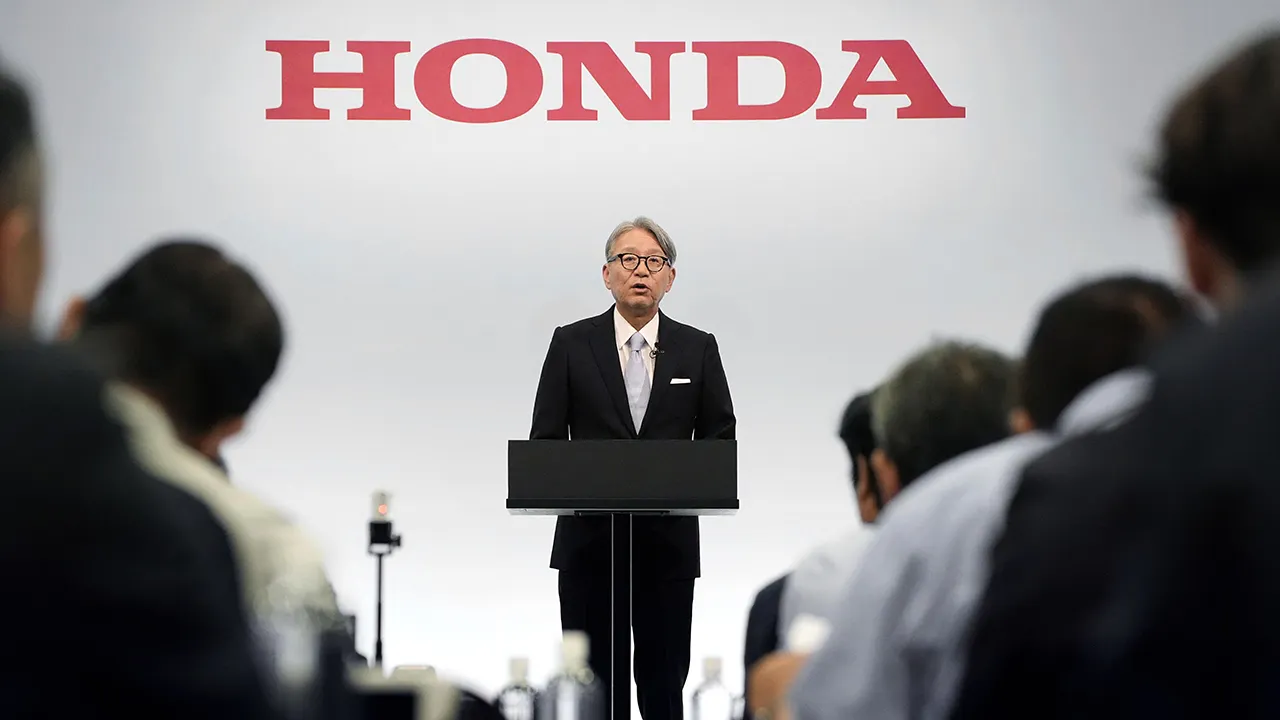
CEO Toshihiro Mibe said on Thursday that the company, which suffered a $2.7 billion loss, would also abandon its target to make electric vehicle sales 20% of profits by 2030.
Losses related to its electric vehicle operations are expected to reach $16 billion, the company said.
The Trump administration has moved away from electric vehicle incentive programs, including blocking California’s stringent electric vehicle mandates and removing former President Joe Biden’s EV tax credit.
Honda, however, stemmed the bleeding through an increase in motorcycle sales – 20 million more than last year, which translated to a half a percent increase or $138 billion for the fiscal year through March.
Advertisement
The logo of Honda seen at a dealership store. (Photo by Igor Golovniov/SOPA Images/LightRocket via Getty Images / Getty Images)
Honda, which makes the Accord sedan and Super Cub motorcycles, sold 3.4 million vehicles around the world in the fiscal year through March, down from 3.7 million the previous year.
The company is the main motorcycle seller in some markets, including India.
Despite the loss, Honda is still forecasting a $1.7 billion profit for the fiscal year through March 2027.
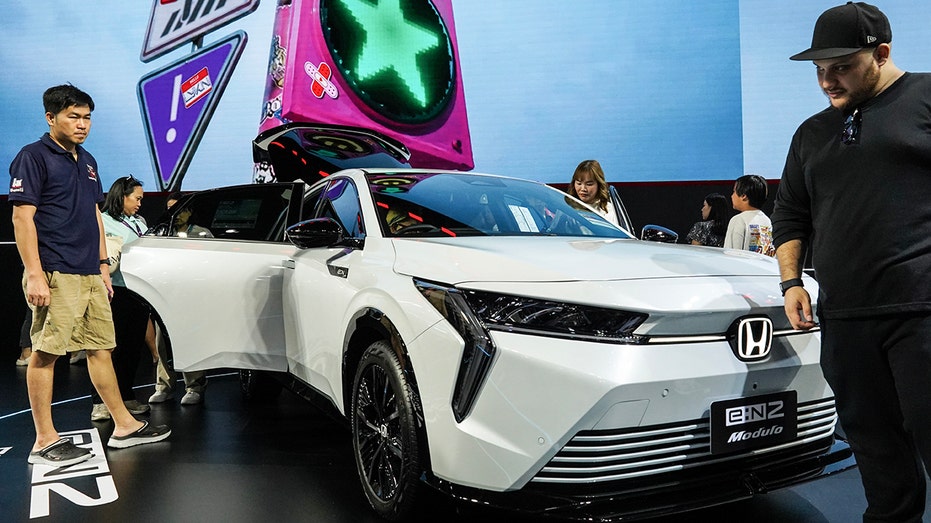
Visitors look at a HONDA E:N2 electric car on display at the 47th Bangkok International Motor Show 2026 in March. (Anusak Laowilas/NurPhoto via Getty Images / Getty Images)
“We will continue our research to develop future technologies including electric vehicle batteries,” Mibe said. “We will get back on a growth track,” adding that the company will continue a goal of carbon neutrality while acknowledging the need to work on hybrids and regular gasoline-engine models as well.
Reuters and the Associated Press contributed to this report.



























































You must be logged in to post a comment Login