
















A third of planned apartments would be affordable

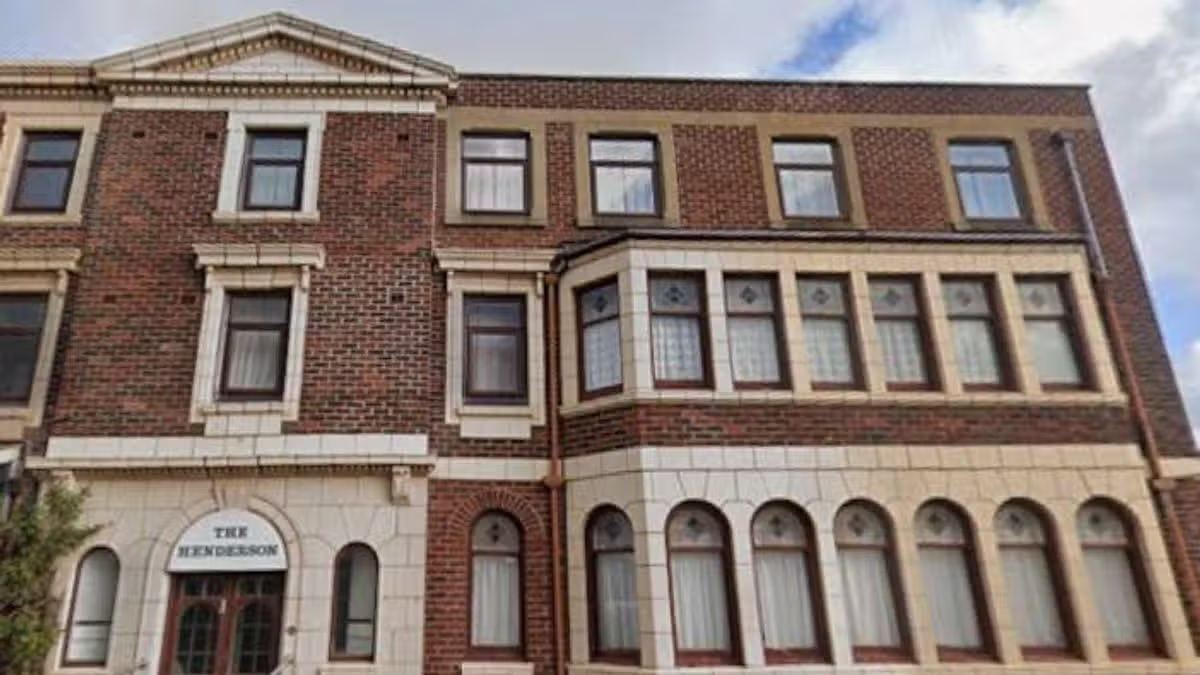
The former Henderson Hotel, in Blackpool(Image: Local Democracy Reporting Service)
Planners at Blackpool will make a decision next week on ambitious proposals to demolish an empty hotel near South Shore seafront and replace it with 15 self-contained flats.
The proposals will offer 33 percent of the apartments (a total of five) as affordable housing, if the scheme gets the go ahead.
The application is for the erection of a four storey building comprising 15 self-contained permanent apartments, following demolition of the former Henderson Hotel at 1 Wimbourne Place, a site close to Blackpool Pleasure Beach Resort.
Now Blackpool Council’s planning committee will run the rule on the scheme when it meets on Tuesday September 1.
The Henderson Hotel was one of three adjoining hotels being offered for sale early in 2025 at £1.9m as part of a potential redevelopment project.
The site comprised three buildings – the Waldorf Hotel, the Kimberley Hotel and the Henderson Hotel – which required demolition before development takes place.
However, the current application involves the Henderson Hotel only, with no reference made to the other two properties.
A Design and Access Statement by consultants Future Planning and Development Ltd, has been submitted on behalf of the un-named applicants in supporting a Full Planning Application for the scheme.
Explaining the new need for a new building, the statement says of the current property: “The narrow circulation spaces, rigid structural layout, thin partitions, and outdated configuration present significant and inherent barriers to successful conversion or modernisation.
“Achieving a modern, building regulations-compliant layout within the existing envelope would likely require extensive intervention, making comprehensive refurbishment or reuse highly impractical and economically unviable.”
The statement adds: “The vision for the redevelopment of 1 Wimbourne Place is to transform a dated and under used hotel site into a high quality, attractive and inclusive residential environment that makes a positive contribution to the local area.”

The new build plan for 1 Wimbourne Place(Image: Future PD Ltd)
The planning committee is being recommended to support and delegate approval of the application to the Head of Development Management, subject to the completion of a S106 legal agreement on social housing to secure planning obligations.
The planning officer’s report states: “The application proposes that five of the units would be affordable (33%) which is in line with Policy CS14.
“These would need to be secured via a Section 106 legal agreement on a tenure basis acceptable to the council’s housing team.
“Although it is envisaged that these properties would be taken on by a Registered Social Landlord (RSL), this cannot be guaranteed at this stage, so it is proposed that the Section 106 would first require on site provision but it would also allow for a financial contribution to be paid towards affordable housing.”
To find all the planning applications, traffic diversions, road layout changes, alcohol licence applications and more in your community, visit the Public Notices Portal.












































You must be logged in to post a comment Login